


Green Conveyor Belt: Malaysia’s Food-Grade Standard | DNC Automation
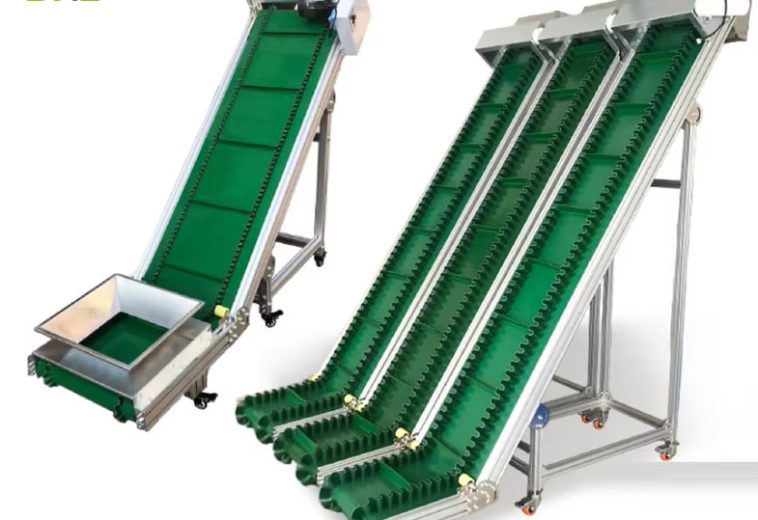
Green conveyor belts are the de facto standard for food-contact transport across Malaysian and Southeast Asian food manufacturing, yet the term is widely misunderstood by engineers and procurement managers who have never questioned why the color exists or what it actually means for food safety compliance. The green conveyor belt is not a single product — it is a category of flat conveyor belts manufactured in green color from PVC or PU compounds that have become the industry convention for food-contact transport across Malaysian biscuit factories, halal meat processing facilities, seafood lines, and beverage bottling plants. The specific green color serves three functional purposes: visual contamination detection (green belt fragments are visible against pale food products, triggering line stoppage before contamination reaches consumers), regulatory alignment with FDA and EU food contact color preferences for light-colored contact surfaces, and cultural alignment with Malaysian halal manufacturing convention, where green is the color associated with halal certification and many facilities designate green-belt lines as halal-only production zones. This guide covers every technical dimension of green conveyor belt selection — materials, types, compliance standards, halal implications, and installation requirements — for Malaysian food manufacturers ranging from Johor biscuit producers to nationwide halal meat processors.
What Is a Green Conveyor Belt?
A green conveyor belt is a food-grade flat conveyor belt manufactured in the color green, made from either PVC (polyvinyl chloride) or PU (polyurethane) compounds formulated and certified for food contact applications. The green conveyor belt is the colloquial industry name used across Malaysian, Singaporean, and broader SEA manufacturing for what the technical belt industry calls “food-grade flat belt” — the green color convention was established by major belt manufacturers that “green belt” and “food-grade flat belt” are effectively synonymous in Malaysian factory purchasing. Green conveyor belts are specified by their material (PVC or PU), thickness (2–5 mm), width (200–2,000 mm), surface texture (smooth, rough-top, chevron, or cleated), and food safety certification (FDA 21 CFR, EU Regulation 10/2011, REACH compliance). The green conveyor belt’s primary distinguishing characteristic from industrial belts is its food contact certification — without FDA or EU 10/2011 compliance documentation, a green belt is not a food-grade belt regardless of its color.
How Does a Green Conveyor Belt Work?
Green conveyor belts operate on the same mechanical principle as any flat belt conveyor, but their food-safe material formulation and surface properties require specific installation, tensioning, and cleaning protocols that differ from industrial belt conveyors.
Step 1: Belt Drive and Tension
Green flat belts are driven by a motorized head pulley, typically 80–200 mm diameter, at friction coefficients ranging from 0.35 (smooth PVC belt, dry pulley) to 0.55 (rough-top PU belt, rubber-lagged pulley). Belt tension is set using a screw take-up or counterweight gravity take-up at the tail pulley, calibrated to provide minimum tension for slip-free operation without over-tensioning the thin belt carcass. Over-tension is the primary cause of premature green belt failure — thin food-grade belts (2–3 mm) are not designed for the pre-tension levels appropriate for thick industrial rubber belts. DNC Automation’s conveyor commissioning procedure includes a belt tension verification step using a tension meter, confirming the specified slack-side tension before final sign-off.
Step 2: Product Contact and Transport
Product contact with the green belt surface occurs across the full belt width in the transport zone. Smooth green PVC belts have a friction coefficient of 0.3–0.45 against most packaged food products — sufficient to transport products on slopes up to 10° without slippage. Rough-top green PU belts (textured surface, friction coefficient 0.5–0.7) handle inclines to 25° for products like unwrapped biscuits, loose produce, and poultry pieces. The food-grade material formulation ensures that food oils, fats, sugars, and cleaning chemicals do not degrade the belt compound or migrate into the belt material, maintaining belt integrity and food safety compliance over a 2–5 year service life in typical Malaysian factory conditions.
Step 3: Belt Cleaning and Hygiene Maintenance
Green food-grade belts require systematic cleaning protocols — HACCP MS 1480 mandates daily cleaning schedules for food-contact conveyor surfaces in Malaysian food factories. Smooth PVC green belts clean effectively with warm water (maximum 60°C) and food-safe alkaline or neutral detergents. PU green belts tolerate more aggressive cleaning chemicals including hydrogen peroxide sanitizers and quaternary ammonium sanitizers, providing superior hygiene for high-care (ready-to-eat) food zones. Belt surface texture directly affects cleanability — smooth surfaces are easier to clean than rough-top or cleated surfaces, which trap food residue in texture grooves. DNC Automation designs food-grade conveyor systems with belt return path access panels, underside spray bars, and scraper blades that enable complete belt cleaning within the daily cleaning window specified in the factory’s HACCP cleaning schedule.
Step 4: Speed and PLC Control
Green belt conveyor speed is controlled by a Siemens VFD connected to the conveyor motor, adjustable from 5% to 100% of maximum design speed — typically 0.1–0.5 m/s for food processing and 0.3–1.5 m/s for packaging and transport applications. The Siemens S7 PLC monitors conveyor speed via encoder feedback and coordinates the green belt conveyor with upstream filling, portioning, or processing equipment to maintain product spacing and line flow. Tension feedback from load cells at the tail pulley provides the PLC with real-time belt tension data — enabling automatic tension adjustment and alerts when tension falls outside the calibrated range.
Why Are Green Conveyor Belts Important in Modern Manufacturing?
Types of Green Conveyor Belt
Five primary green conveyor belt surface types serve the range of Malaysian food manufacturing applications from flat-surface light packaging to steep-incline bulk produce transport.
1. Green Smooth Flat Belt
Green smooth flat belts are the most common green belt type in Malaysian food manufacturing — a uniform, smooth surface on both the carrying face and the underside. Smooth flat belts are specified for: horizontal transport of packaged food products, light inclines up to 10°, belt turns using radius curves, and applications requiring maximum surface cleanability. Smooth surface friction coefficient ranges from 0.30–0.45 (PVC) to 0.40–0.55 (PU), sufficient for horizontal and gentle-incline transport of most packaged products. Smooth flat green belts are the standard on Malaysian biscuit packaging lines (Munchy’s, Hwa Tai), beverage bottling lines (F&N — DNC client), and pharmaceutical packaging lines where belt surface hygiene is the primary selection criterion.
2. Green Rough-Top Belt
Green rough-top belts feature a textured carrying surface — typically a granular or structured pattern applied during manufacture — that increases product grip on inclines and prevents product sliding at conveyor speeds above 0.5 m/s. Rough-top surface friction coefficient: 0.50–0.70, enabling incline angles to 25° without product slippage. Malaysian food applications for rough-top green belts include: biscuit and cracker incline transport (loose unwrapped biscuits slide on smooth belts at inclines above 10°), fresh produce handling (fruits, vegetables), and poultry piece transport on chilled processing lines. Rough-top surface texture increases cleaning effort compared to smooth belts — additional scrubbing or extended spray time is required to remove food residue from texture grooves. DNC Automation specifies rough-top green PU belts for all food processing inclines above 12° where product slip is a risk.
3. Green Chevron (V-Groove) Belt
Green chevron belts feature a V-pattern or herringbone groove molded into the carrying surface, providing directional grip that prevents product rollback on steep inclines. The chevron groove pattern channels liquids away from the product contact zone while the groove edges grip product surfaces. Chevron green belts enable conveying inclines of 25°–35° for bulk loose products including fresh fruits, raw meat pieces, frozen products, and root vegetables. Malaysian seafood processing and palm oil fruit sorting lines use chevron green belts for inclined transport from processing floor to overhead sorting or grading equipment. Chevron surface belts require specialized belt cleaners (rotating brush type or high-pressure spray) to remove food residue from the groove channels — a cleaning infrastructure requirement that must be designed into the conveyor system from initial specification.
4. Green Cleated Belt
Green cleated belts feature bonded PVC or PU cleats — straight, angled, or box-shaped — attached to the carrying surface at regular pitch intervals. Cleats physically contain products between adjacent cleats, enabling transport on steep inclines of 30°–60° and vertical elevations that smooth or rough-top belts cannot achieve. Cleat height ranges from 10 mm to 50 mm depending on the product size and containment requirement. Malaysian food factories use green cleated belts for steep incline transport of bulk loose products: whole coconuts, fresh durians, raw root vegetables (cassava, sweet potato), and bulk grain or seed products. Cleated green belts require manual cleaning of the inter-cleat spaces — mechanical belt cleaners cannot access the cleat gaps — which limits their use in high-care hygiene zones to applications where daily manual cleaning is operationally feasible.
5. Green Open Mesh Belt
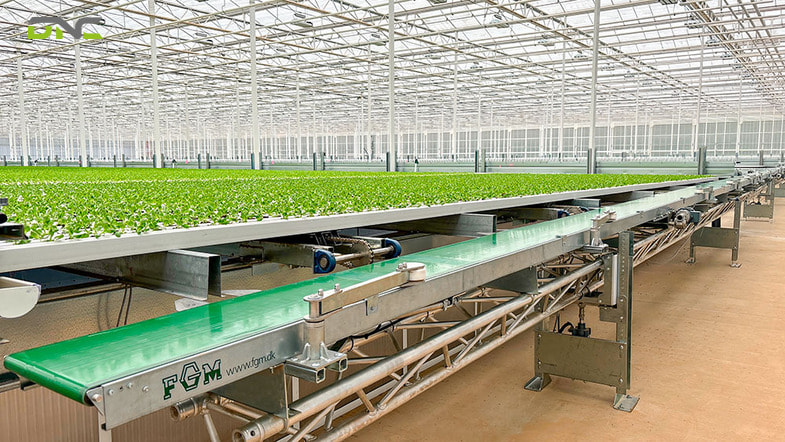
Green open mesh belts are woven or extruded belts with a pattern of openings that allow liquid drainage through the belt surface. Open mesh green belts are specified for applications where washing, cooling, or liquid drainage is required during product transport: washed produce (lettuce, herbs, leafy vegetables), fresh seafood (prawns, fish, shellfish requiring water removal), blanched or steamed food products (drainage of process water), and meat/poultry on chilling or marinating lines. Drainage percentage ranges from 30% to 70% depending on mesh opening size. Open mesh green belts maintain food contact compliance through FDA-certified mesh material (PP, PE, or POM) while providing drainage that solid-surface belts cannot achieve. Malaysian seafood processing facilities along the Pahang and Kedah coasts use open mesh green belts extensively for prawn processing and grading conveyor lines.
Green Conveyor Belt Type Comparison Table
| Belt Type | Incline Capacity | Friction Coef. | Cleanability | Best Application |
| Smooth Flat | 0°–10° | 0.30–0.55 | Excellent | Packaged food, bottling, pharmaceuticals |
| Rough-Top | 0°–25° | 0.50–0.70 | Good | Biscuit incline, produce, poultry |
| Chevron/V-Groove | 0°–35° | 0.60–0.80 | Moderate | Seafood, raw meat, frozen products |
| Cleated | 0°–60° | N/A (contained) | Difficult | Bulk loose, steep elevation |
| Open Mesh | 0°–20° | 0.40–0.60 | Excellent | Washdown, drainage, cooling lines |
Green conveyor belts improve energy efficiency through system-level optimization, not just material choice.
Key Components of a Green Conveyor Belt System
A complete green belt conveyor system for Malaysian food manufacturing comprises more than the belt itself — the frame, drive, cleaning system, and compliance documentation together determine whether the system delivers both operational performance and food safety certification.
Belt Material — PVC vs. PU. PVC (polyvinyl chloride) green belts are the most economical food-grade option, suitable for dry food products and moderate chemical exposure environments at temperatures from -10°C to +80°C. PU (polyurethane) green belts are specified for direct food contact in high-care zones, fatty or oily food products (meat, fish, poultry, baked goods with fat content), and applications requiring more aggressive cleaning chemicals. PU belts comply with FDA 21 CFR 177 and EU Regulation 10/2011, providing higher regulatory certainty for export-oriented Malaysian food manufacturers. PU belt service life is 1.5–2× longer than PVC in comparable conditions.
Frame — Stainless Steel or Aluminium Profile. Food-grade conveyor frames are manufactured from SS304 (standard food processing, HACCP-compliant) or SS316 (seafood, high-salt environments). Aluminium profile frames (Item, Bosch Rexroth standard) are used in dry food packaging applications where food-contact contamination risk from the frame is low and the benefits of rapid reconfigurability justify the material. All frame joints in food zones are designed without horizontal flat surfaces that collect water — sloped or tubular cross-members prevent moisture accumulation.
Drive — Hygienically Designed Motor. Food-grade conveyor motors are fully enclosed (IP65 minimum, IP69K for high-pressure washdown) with smooth external surfaces that minimize bacterial harborage. SEW-Eurodrive and Bonfiglioli drum motors — where the motor and gearbox are completely enclosed inside the drive drum — provide the cleanest drive solution for high-care food zones by eliminating external motor housings and drive shafts.
Compliance Documentation. Green belt food safety compliance requires: FDA 21 CFR 177 declaration of conformity (belt material), EU Regulation 10/2011 migration test results (for EU export markets), REACH SVHC declaration (no restricted substances), and NSF H1 grease certification (for bearing lubricants in food zones). DNC Automation supplies complete compliance documentation packages for all green belt conveyor systems, supporting Malaysian food manufacturers’ HACCP MS 1480 and ISO 22000 certification requirements.
Advantages of Green Conveyor Belts
Applications: Where Green Conveyor Belts Are Used in Malaysian Manufacturing
Green conveyor belts serve as the primary product-contact transport surface across the full breadth of Malaysian food manufacturing, from multinational FMCG brands to traditional food processors.
Biscuit and Snack Manufacturing — Johor and Selangor
Malaysian biscuit manufacturers including Munchy’s and Hwa Tai — primarily located in Johor and Selangor — use green rough-top and smooth flat belts on baking, cooling, and packaging lines. After baking, biscuits exit ovens at 80–120°C on steel mesh belts and transfer to green PVC smooth flat belts at the cooling tunnel exit, where they are cooled to ambient temperature before packaging. Incline transport of loose biscuits to packaging machines uses green rough-top belts at 15°–20° inclines. DNC Automation has supplied and installed green belt conveyor systems for Malaysian biscuit manufacturers with full Siemens PLC speed synchronization between baking output rate and packaging machine infeed rate, reducing gap and overlap defects at packaging by 60%.
Halal Meat and Poultry Processing
Halal meat processing across Malaysia — from abattoirs in Kelantan and Kedah to integrated poultry processing in Selangor — uses green belt conveyors as the primary transport surface in direct contact with halal-certified meat products. Green color convention intersects directly with Malaysian halal culture: green is the color of Islam, and many Malaysian food factories designate their green-belt conveyor lines as exclusively halal production lines, physically separated from non-halal lines by color-coded infrastructure. JAKIM’s halal certification requirements for food manufacturing facilities mandate that contact surfaces — including conveyor belts — are free from haram contamination and are manufactured from halal-permissible materials. PU and PP/POM belt materials are universally halal-permissible. Ramly Burger, a DNC Automation client, operates green PU belt conveyors across its halal beef patty processing lines, with DNC providing the complete automated conveyor system including forming, portioning, and packaging conveyors.
F&B Beverage Bottling — Selangor
F&N, a DNC Automation client and Malaysia’s largest beverage manufacturer, uses smooth green PVC flat belts for bottle transport between filling, capping, labeling, and palletizing operations. Bottle transport on green flat belts at 1.0–2.0 m/s requires precise belt tension and pulley alignment to prevent bottle toppling — a production disruption that stops the entire filling line. DNC Automation’s F&N conveyor installations include automatic belt tracking correction systems (training idlers with pneumatic actuators) that maintain belt centerline position to ±3 mm, preventing bottle tipping caused by belt edge wander.
Seafood Processing — Coastal Malaysia
Malaysia’s seafood processing sector — predominantly located in Pahang, Kedah, Penang island, and Sabah — uses green open mesh belts for prawn, fish, and shellfish transport in wet processing environments. Sea salt, fish oils, and cleaning chemicals create an aggressive chemical environment that demands PU or PE mesh material with high chemical resistance. DNC Automation designs stainless steel SS316 frame conveyor systems for seafood processing applications, with full IP69K-rated drives for high-pressure washdown cleaning and PU open-mesh green belts rated for continuous wet operation.
Benefits of Green Conveyor Belts for Malaysian Food Manufacturers
Green conveyor belt systems deliver food safety compliance, operational reliability, and total cost of ownership advantages that make them the correct specification choice for Malaysian food-contact conveyor applications.
Contamination detection. Green belt color enables visual detection of belt fragment contamination against pale-colored food products — a food safety advantage not available with dark-colored belts. A 5mm green PVC fragment on a light-colored biscuit is immediately visible to line operators and vision inspection cameras. The same fragment on a dark belt would require magnification or specialized lighting to detect. This color-based detection layer supplements metal detectors and X-ray inspection systems, providing a first-line contamination screen that adds negligible cost.
Regulatory compliance. FDA 21 CFR and EU 10/2011-certified green PU belts satisfy the food contact material requirements for Malaysian HACCP MS 1480 certification, ISO 22000 food safety management, and export market regulatory compliance. Using non-certified belts in food contact applications exposes Malaysian food manufacturers to food safety recall risk — an event that costs RM 500,000–RM 5,000,000 in product recall, regulatory fines, and brand damage based on Malaysian food recall history.
HACCP MS 1480 alignment. Malaysia’s HACCP standard (MS 1480) mandates food contact surface cleaning, maintenance, and record-keeping as critical control points. Green belt systems with proper frame design, drainage, and cleaning access satisfy HACCP’s sanitation infrastructure requirements, supporting certification audits by SIRIM or third-party certifiers.
Halal production segregation. Green-coded production infrastructure — belts, frames, bins, and PPE — provides a visible, auditable segregation mechanism for halal and non-halal production lines, supporting JAKIM halal certification requirements. DNC Automation designs complete halal/non-halal segregated conveyor systems with green-coded halal lines and visually distinct non-halal infrastructure, providing the physical evidence of segregation that JAKIM certification auditors require.
Lower life-cycle cost. PU green belts, while 30–50% more expensive than PVC initially, deliver 1.5–2× longer service life in food processing environments due to superior fat/oil resistance and chemical resistance. Total belt cost over a 5-year period is equivalent or lower for PU versus PVC in the majority of Malaysian food processing applications. DNC Automation provides total cost of ownership analysis for PVC vs. PU belt selection on a site-specific basis.
Common Design and Application Mistakes with Green Conveyor Belts
How to Choose the Right Green Conveyor Belt for Your Factory
Selecting the correct green conveyor belt type for a Malaysian food manufacturing application requires matching belt material, surface type, and compliance level to the specific food product, incline requirement, cleaning protocol, and regulatory framework.
Step 1: Identify food contact category. Direct food contact (belt touches unwrapped food) requires PU material with FDA 21 CFR and EU 10/2011 certification. Indirect food contact (belt transports packaged food) permits PVC with FDA 21 CFR certification. Non-food-contact adjacent zones permit industrial belts — but DNC Automation recommends food-grade belts throughout the production area to prevent accidental contact with non-certified surfaces during product handling.
Step 2: Determine incline angle. 0°–10° → smooth flat green belt. 10°–25° → rough-top green belt. 25°–35° → chevron green belt. 35°–60° → cleated green belt. For liquid drainage applications at any angle → open mesh green belt.
Step 3: Define cleaning requirements. High-care (ready-to-eat) zones: PU material, smooth surface, IP69K frame, daily CIP cleaning protocol. Standard food processing zones: PVC or PU, rough-top permitted, IP65 frame, daily washdown. Packaging zones (indirect contact): PVC smooth, IP54 frame, weekly cleaning.
Step 4: Verify halal requirements. If the production line carries halal-certified products for JAKIM certification, specify PU or PP/POM belt material (universally halal-permissible), designate the line with green color coding throughout, and document belt material halal-permissibility in your HACCP/halal certification files.
Step 5: Consult DNC Automation’s food-grade conveyor specialists. DNC Automation has installed green belt conveyor systems for F&N, Ramly Burger, Guan Chong Berhad, and numerous Malaysian food manufacturers under HACCP and halal certification frameworks. Our engineers provide complete green belt selection, frame design, cleaning system integration, and Siemens PLC control for turnkey food-grade conveyor systems. Get a Free Consultation to specify the correct green belt system for your HACCP and halal requirements.
Frequently Asked Questions About Green Conveyor Belts
What is the difference between green PVC and green PU conveyor belts?
Green PVC (polyvinyl chloride) belts are more economical, suitable for dry food products and indirect food contact at temperatures -10°C to +80°C. PVC belts are adequate for packaged food transport and dry food processing lines. Green PU (polyurethane) belts are specified for direct food contact with fatty or oily foods (meat, poultry, fish, baked goods), high-care ready-to-eat zones, and applications requiring more aggressive sanitizing chemicals. PU belts comply with both FDA 21 CFR 177 and EU Regulation 10/2011, providing broader export market compliance. PU belts have 1.5–2× longer service life in food processing environments due to superior fat and chemical resistance. For most Malaysian food factories, DNC Automation recommends PU belts for direct food contact zones and PVC for packaging and indirect contact zones.
Does a green conveyor belt meet HACCP requirements in Malaysia?
A green conveyor belt meets Malaysia’s HACCP MS 1480 food contact surface requirements if it carries FDA 21 CFR or EU 10/2011 certification, is installed in a food-grade frame with appropriate drainage and cleaning access, and is maintained according to a documented cleaning and inspection schedule. The belt color alone does not confer HACCP compliance — the certification documentation, installation design, and maintenance records together satisfy HACCP auditor requirements. DNC Automation provides complete HACCP compliance documentation packages for every green belt conveyor system it supplies and installs, including belt material certification, frame construction photographs, cleaning procedure documentation, and maintenance schedule templates.
Are green conveyor belts halal-compliant for JAKIM certification?
Green conveyor belts manufactured from PU (polyurethane), PVC (polyvinyl chloride), PP (polypropylene), POM (polyoxymethylene/acetal), or PE (polyethylene) are manufactured from synthetic polymer compounds with no animal-derived ingredients — making them inherently halal-permissible from a material standpoint. JAKIM halal certification for food manufacturing does not specifically certify conveyor belts, but requires that food contact surfaces be free from haram contamination and manufactured from permissible materials. DNC Automation provides belt material declarations confirming the absence of animal-derived additives or haram-origin plasticizers for all green belt conveyor systems supplied to JAKIM-certified Malaysian food manufacturers.
How long does a green conveyor belt last in a Malaysian food factory?
Green PVC belt service life in a Malaysian food processing environment: 12–24 months in wet/fatty product contact zones, 24–48 months in dry packaging zones. Green PU belt service life: 24–48 months in wet/fatty product contact zones, 48–72 months in dry packaging zones. Key factors affecting belt life include cleaning chemical concentration (over-concentration accelerates belt degradation), tracking accuracy (belt edge contact with frame guides causes accelerated edge wear), and tensioning precision (over-tensioning causes belt elongation and carcass fatigue). DNC Automation’s conveyor commissioning includes belt tension calibration and tracking adjustment that, combined with the correct belt specification, delivers service life at the upper end of these ranges.
What cleaning chemicals are compatible with green food-grade conveyor belts?
Green PVC belts tolerate neutral and alkaline food-safe detergents at concentrations and temperatures per the belt manufacturer’s chemical resistance chart. PVC belts are degraded by aromatic solvents, strong acids (pH < 4), and concentrated chlorine bleach above 200 ppm at temperatures above 40°C. Green PU belts tolerate a broader range of cleaning chemicals: alkaline detergents, neutral detergents, hydrogen peroxide sanitizers up to 5%, quaternary ammonium sanitizers, and dilute peracetic acid solutions. PU belts are incompatible with aromatic solvents and concentrated acids. DNC Automation provides a specific chemical compatibility list for each belt type supplied, cross-referenced with the cleaning chemicals in the customer’s HACCP cleaning schedule, ensuring that the specified cleaning protocol does not accelerate belt degradation.
Can DNC Automation supply and install green belt conveyor systems for export-certified Malaysian food manufacturers?
DNC Automation supplies, installs, and commissions complete green belt conveyor systems for export-certified Malaysian food manufacturers, including all FDA 21 CFR and EU 10/2011 belt material certification, SS304/SS316 frame construction, hygienically designed IP65/IP69K drives, Siemens PLC speed and tension control, and complete HACCP documentation packages. DNC’s clients include Ramly Burger, F&N, and Guan Chong Berhad — all operating under multiple food safety certifications including HACCP MS 1480, ISO 22000, and halal JAKIM certification. Talk to Our Engineers for a Free Consultation on green belt conveyor specifications for your Malaysian food factory.
Conclusion
Green conveyor belts are Malaysia’s food manufacturing standard — from the halal-coded poultry lines of Selangor to the seafood processing facilities of Pahang and Kedah. The correct green belt specification — PU for direct food contact and high-care zones, PVC for indirect contact and packaging, with the appropriate surface type matched to incline and product requirements — delivers food safety compliance, regulatory certification support, and belt service life that minimises total cost of ownership. DNC Automation designs and installs complete green belt conveyor systems, from belt specification through Siemens PLC control and HACCP documentation, as a single turnkey solution for Malaysian food manufacturers. Get a Free Consultation from DNC Automation to specify the correct green belt conveyor system for your production requirements. Explore our related guide on [Modular Conveyor Systems](/blog/modu-conveyor) for an alternative food-grade belt technology that may better serve washdown-intensive applications.
DNC Automation — Malaysia’s #1 Factory Automation Company | dnc-automation.com | Est. 2005 | ISO 9001:2015 | 35+ Engineers
- 155 views
- 0 Comment
Recent Comments