


Sortation Conveyor Systems for Smarter Automation
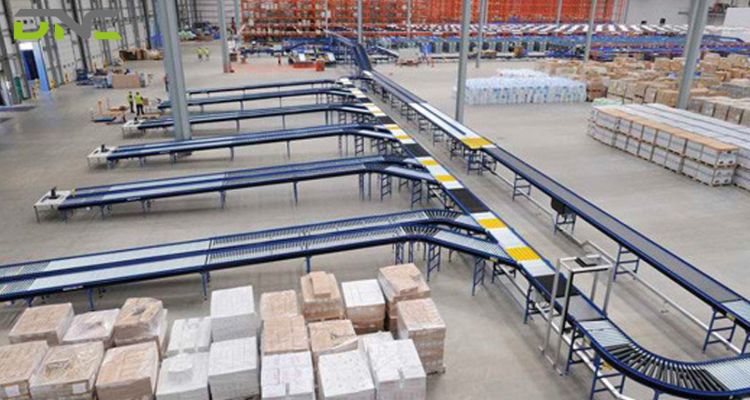
Growing order volumes, tighter delivery timelines, and rising labor costs are pushing warehouses and distribution centers to rethink manual sorting processes. Misrouted items, slow throughput, and inconsistent accuracy directly impact customer satisfaction and operational costs. This is where automation becomes essential. A sortation conveyor is designed to solve these challenges by automatically identifying, diverting, and routing products to the correct destination at high speed.
Businesses looking to scale operations, reduce errors, and improve workflow efficiency increasingly rely on automated sortation systems as a core part of modern material handling solutions.
What Is a Sortation Conveyor?
A sortation conveyor is an automated material handling system that transports products and sorts them to specific locations based on predefined criteria such as barcode data, destination, size, or order type.
Using sensors, scanners, and control software, the system identifies each item and diverts it to the correct lane or output point without manual intervention. Sortation conveyors are commonly integrated with warehouse management systems to ensure real-time accuracy and seamless order fulfillment. They play a critical role in high-volume environments where speed, precision, and consistency are essential for operational success.
How Does a Sortation Conveyor Work?
A sortation conveyor operates through a synchronized process that combines mechanical components, sensors, and software control to move items efficiently across a facility.
- Item Identification and Scanning: Products entering the conveyor are scanned using barcode readers, RFID sensors, or vision systems. This identification step ensures each item is linked to order data stored in the control system.
- Data Processing and Routing Logic: Once scanned, the system software determines the correct destination based on sorting rules. These rules may include delivery zone, customer order, or production workflow requirements.
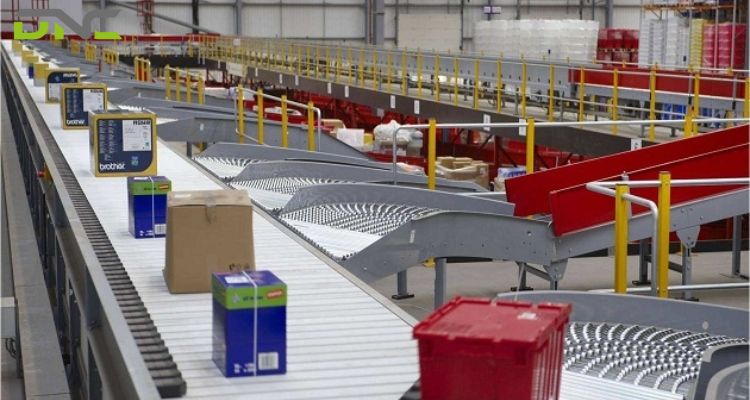
- Automated Diverting Mechanism: Based on routing decisions, items are automatically diverted using mechanisms such as sliding shoes, belts, or pushers, guiding them to the correct exit without stopping conveyor flow.
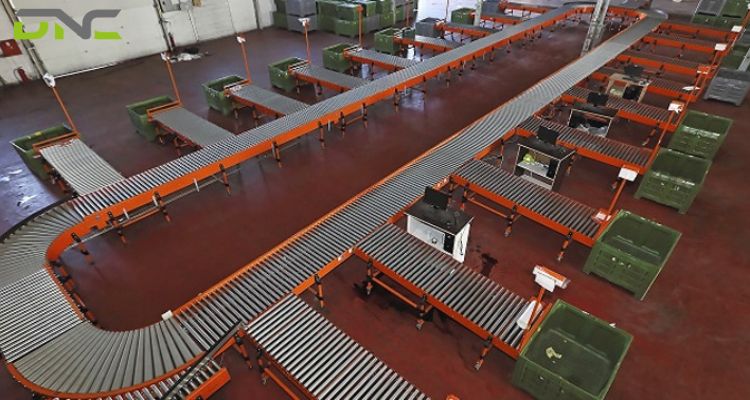
- Final Delivery to Output Points: Sorted items are discharged to packing stations, shipping lanes, or downstream conveyors, maintaining continuous movement and minimizing handling delays
Types of Sortation Conveyor Systems
Different types of sortation conveyors are designed to handle specific product sizes, speeds, and throughput requirements.
- Sliding Shoe Sorter: Sliding shoe systems use moving “shoes” that slide across the conveyor to gently divert items. They are ideal for high-speed operations handling cartons, totes, and polybags with minimal product impact.
- Cross-Belt Sorter: Cross-belt sorters use small conveyor belts mounted on carriers that move perpendicular to the main direction. They offer high accuracy and are suitable for fragile or irregular-shaped items.
- Tilt Tray Sorter: Tilt tray systems transport items on trays that tilt to discharge products at precise locations. They are commonly used in applications requiring gentle handling and consistent spacing.
- Pop-Up Wheel Sorter: Pop-up wheel sorters are cost-effective solutions for medium-speed sorting, using powered wheels that rise to divert items at angles.
Key Benefits of Using a Sortation Conveyor
Implementing a sortation conveyor delivers measurable improvements across warehouse and logistics operations.
- Increased Throughput and Speed: Automated sorting systems can process thousands of items per hour, significantly outperforming manual sorting and reducing order cycle times.
- Higher Accuracy and Fewer Errors: By relying on automated identification and routing, sortation conveyors minimize mis-sorts, improving order accuracy and reducing costly returns.
- Reduced Labor Dependency: Automation reduces the need for manual sorting staff, allowing labor to be redeployed to higher-value tasks while improving workplace safety
- Scalability for Future Growth: Sortation systems can be expanded with additional lanes or integrated with other automation technologies as business volumes increase.
Common Applications of Sortation Conveyors
Sortation conveyors are widely used across industries where fast and accurate item routing is essential.
- E-commerce Fulfillment Centers: Automated sortation ensures rapid processing of high-order volumes with varying destinations
- Distribution and Logistics Hubs: Sorting parcels by route, carrier, or delivery zone improves outbound efficiency and dock utilization.
- Manufacturing and Assembly Lines: Sortation conveyors route components to different production lines based on product configuration.
- Returns and Reverse Logistics: Automated sorting simplifies the handling of returned goods by condition, destination, or restocking process.
Factors to Consider Before Choosing a Sortation Conveyor
Before investing in a sortation conveyor, several factors should be carefully assessed.
- Product Characteristics: Size, weight, shape, and fragility determine which sorting technology is most suitable.
- Required Throughput and Speed: Understanding current and future volume requirements ensures the system can scale without performance limitations.
- System Integration Capability: The conveyor must integrate smoothly with existing warehouse management systems and control software.
- Available Space and Layout: Facility dimensions and workflow design influence system configuration and installation feasibility.
Sortation Conveyor vs Traditional Conveyor Systems
| Feature | Sortation Conveyor | Traditional Conveyor |
| Sorting Capability | Fully automated, rule-based | Manual or limited |
| Throughput | Very high | Moderate |
| Accuracy | Consistently high | Operator-dependent |
| Labor Requirement | Low | High |
| Scalability | Easily expandable | Limited |
Traditional conveyors focus mainly on transportation, while sortation conveyors combine movement with intelligent decision-making to optimize overall workflow efficiency.
Why Is a Sortation Conveyor Essential for Modern Automation?
A sortation conveyor is no longer just an optional upgrade but a foundational element of modern automated facilities. As customer expectations for speed and accuracy continue to rise, businesses must rely on systems that can deliver consistent performance at scale.
Automated sorting reduces operational bottlenecks, improves data visibility, and supports smarter decision-making across the supply chain. Investing in a sortation conveyor enables organizations to stay competitive, resilient, and prepared for future growth.
Why Choose DNC Automation as Your Sortation Conveyor Partner?
Choosing the right automation partner is just as important as selecting the right technology. DNC Automation provides end-to-end expertise in designing, integrating, and supporting sortation conveyor systems tailored to operational needs. With a strong focus on reliability, system performance, and long-term value, DNC Automation works closely with clients to ensure seamless implementation and measurable results. From concept design to system commissioning, DNC Automation is a trusted partner for delivering intelligent, future-ready automation solutions.
Contact us now to discuss your requirements and discover how the right sortation conveyor solution can support your business growth.
- 54 views
- 0 Comment
Recent Comments