



Belted Conveyor Systems: Design, Applications, and Advantages in Automated Material Handling
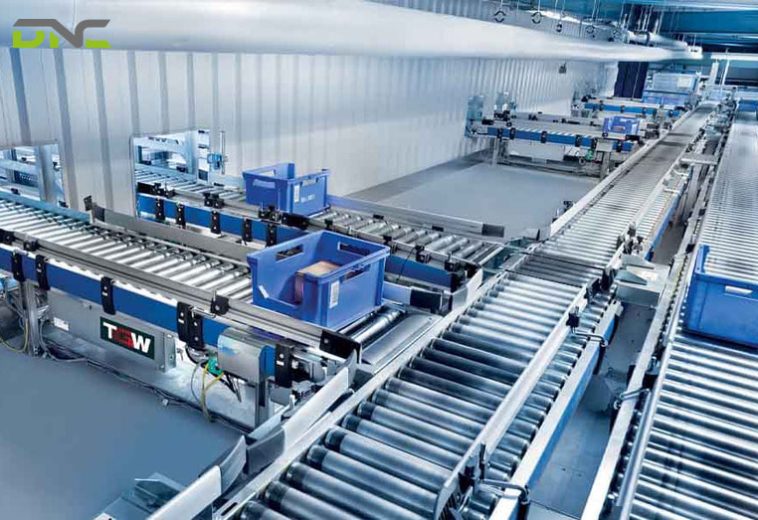
Belted conveyors are a key component in modern material handling systems where product stability and smooth flow are essential. By using a continuous belt surface, these conveyors provide full product support, minimize damage, and ensure consistent movement throughout the line.
What Is a Belted Conveyor and How Does It Work?
A belted conveyor is a material handling system that uses a continuous moving belt to transport products along a defined path. Unlike roller conveyors, which rely on discrete rollers for support, belted conveyors provide a fully supported conveying surface, making them ideal for items that are small, soft, unstable, or irregularly shaped.
How a Belted Conveyor Works
The system operates by looping a belt around drive and tail pulleys, creating continuous motion:
- A motor and gearbox rotate the drive pulley.
- The belt moves along a roller bed or slider bed, carrying products forward.
- Tensioning systems maintain proper belt tracking and prevent slippage.
- Products remain fully supported throughout transport, reducing tipping or product deformation.
Because the belt surface moves as one continuous element, belted conveyors deliver smooth, consistent flow, especially in applications where gentle handling and positional stability are critical.
What Types of Belted Conveyors Are Commonly Used in Industry?
In industrial material handling, belted conveyors are typically classified into five main types, based on belt structure, conveying direction, and application requirements. Each type is designed to address specific challenges related to product stability, space constraints, and system integration.
Flat Belted Conveyor
- The flat belted conveyor is the most fundamental and widely used configuration.
- Uses a smooth, continuous belt running over a slider bed or roller bed.
- Provides full surface support for cartons, totes, and packaged goods.
- Delivers stable, consistent flow with minimal product movement.
This type is commonly applied in packaging lines, assembly stations, and transfer points where simplicity and reliability are priorities.
Belted Roller Conveyor (Belt Over Rollers)
- This design combines a conveyor belt with rollers underneath, reducing friction while maintaining full product support.
- Rollers lower energy consumption and allow higher operating speeds.
- The belt prevents products from tipping or falling between rollers.
- Suitable for longer conveyor runs compared to slider-bed systems.
- Belted roller conveyors are often used in distribution centers and high-throughput systems.
Cleated Belted Conveyor
- Cleated conveyors use belts with integrated cleats or ribs to control product movement.
- Prevent rollback on inclined or declined sections.
- Allow steeper elevation changes than flat belts.
- Support consistent spacing between products.
- They are commonly found in food processing, packaging, and bulk handling applications.
Inclined and Declined Belted Conveyor
- Designed specifically for vertical transport within a facility, these conveyors optimize space usage.
- Belt surface texture and tension are critical to prevent slipping
- Incline angle depends on product weight and belt material.
- Often integrated between floor levels or mezzanines.
- Proper engineering is essential to balance throughput and stability.
Curve Belted Conveyor
- Curve belted conveyors enable directional changes without product transfer.
- Maintain product orientation through bends.
- Reduce transfer points, lowering risk of jams or damage.
- Ideal for compact layouts or complex conveyor networks.
- They are frequently used in e-commerce fulfillment and automated sorting systems.
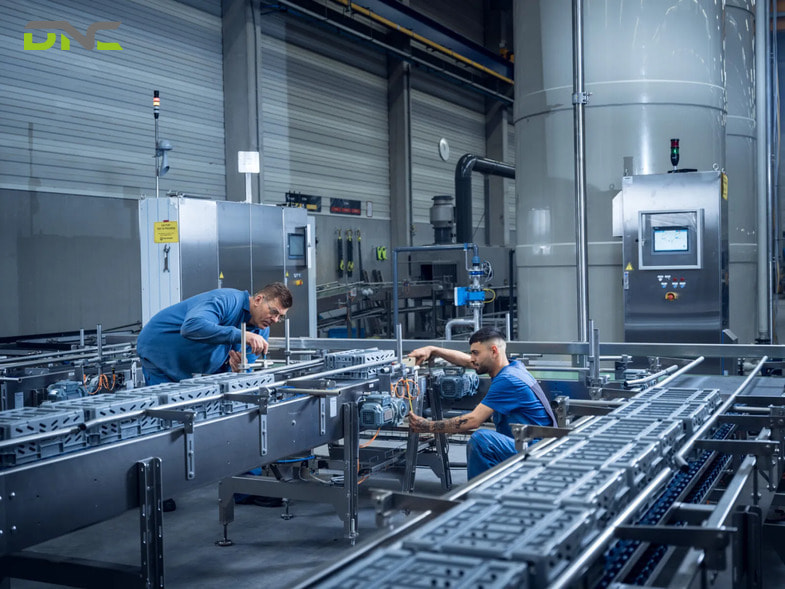
In industrial material handling, belted conveyors are typically classified into five main types
What Materials and Products Are Best Suited for Belted Conveyors?
Belted conveyors are best suited for products that require continuous support and stable movement during transport.
They are commonly used for:
- Soft or flexible items such as bags, sacks, and pouches that may sag or deform on rollers
- Small or lightweight products that could fall between roller gaps
- Irregularly shaped items with uneven or unstable bottoms
- Fragile goods that require gentle handling and minimal vibration
Because the belt provides a continuous surface, belted conveyors reduce product tipping, deformation, and surface damage compared to roller-based systems.
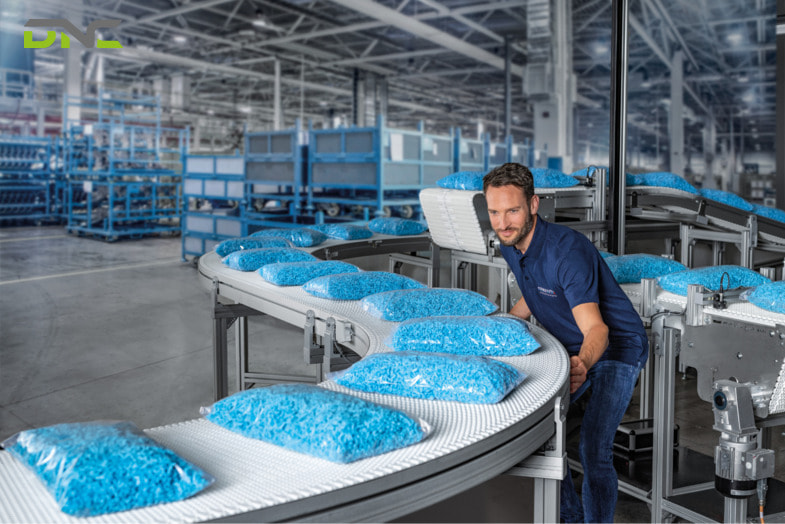
Belted conveyors are best suited for products that require continuous support and stable movement during transport.
How Is a Belted Conveyor Designed for Performance and Durability?
Designing a high-performance belted conveyor requires careful balancing of load, speed, and belt mechanics.
Key design considerations include:
- Belt material selection based on abrasion resistance, friction, and environmental exposure
- Load and tension calculations to prevent belt stretch, slippage, or premature failure
- Pulley alignment and tracking systems to ensure stable belt movement
- Drive sizing that matches throughput requirements without excessive energy consumption
Proper engineering ensures consistent operation, reduced maintenance, and long service life.
What Are the Advantages of Belted Conveyors?
Belted conveyors offer several operational advantages in applications where product stability and continuity are critical.
- Full product support is one of the most important advantages of belted conveyors. Because the belt provides a continuous conveying surface, products are fully supported throughout the entire transport process.
- Another key benefit is gentle handling. Belted conveyors move products smoothly with minimal vibration and impact, which helps prevent surface damage, deformation, or breakage.
- In terms of layout flexibility, belted conveyors can be designed to accommodate curves, inclines, and declines without compromising performance. This adaptability allows the system to follow complex facility layouts while minimizing product transfers between conveyor sections.
- The continuous belt motion ensures predictable movement and uniform spacing, making it easier to synchronize with downstream equipment such as robotic pick-and-place systems, scanners, or packaging machines.
These characteristics make belted conveyors a reliable choice for controlled, precision-oriented material handling.
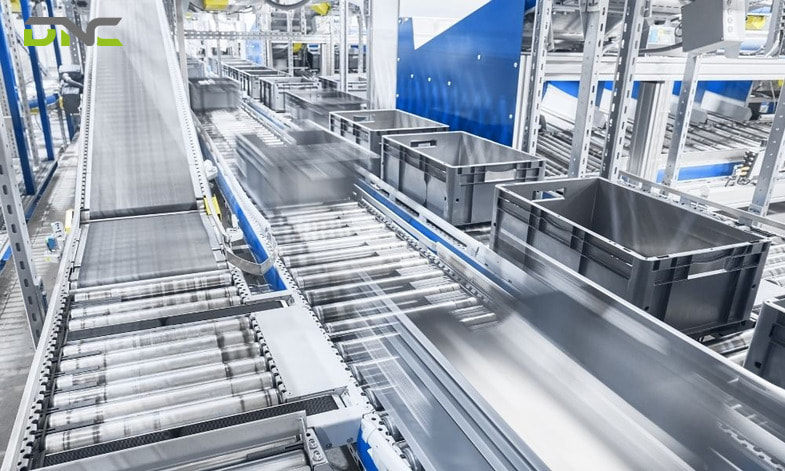
Belted conveyors offer several operational advantages in applications where product stability and continuity are critical.
When Should a Belted Conveyor Be Used Instead of a Roller Conveyor?
A belted conveyor is the preferred solution when roller conveyors cannot adequately support or control the product.
They should be used when:
- Products lack a rigid, flat bottom
- Items are too small or soft for roller spacing
- Gentle handling is more important than accumulation
- Continuous flow is required without start-stop logic
In many facilities, belted conveyors are also used as belt-over-roller hybrids to combine stability with higher throughput.
How Do Belted Conveyors Integrate into Automated Systems?
Belted conveyors are easily integrated into modern automated production and logistics systems.
- Sensor-based product detection for spacing and flow control
- PLC synchronization with upstream and downstream machines
- Speed matching to robotic cells, packaging lines, or sortation systems
- WMS/MES connectivity for tracking and reporting
This integration allows belted conveyors to function as an active component of an intelligent material handling system.
Why DNC Automation Is a Reliable Partner for Belted Conveyor Solutions?
DNC Automation approaches belted conveyor projects from a system-engineering perspective, not a component-selling mindset.
Our strengths include:
- Application-driven design tailored to product behavior and layout constraints
- Automation-first architecture, ensuring seamless PLC and system integration
- Robust construction standards for long-term industrial use
- Scalable solutions aligned with future expansion and automation goal
By focusing on performance, reliability, and system intelligence, DNC Automation delivers belted conveyor solutions that support sustainable operational efficiency.
- 2 views
- 0 Comment
Recent Comments