



Conveyor Belt Systems: Types, Components, and Installation Costs
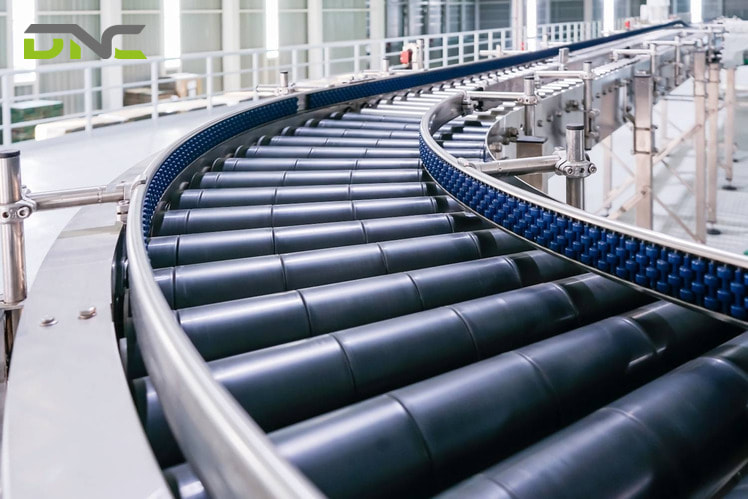
The conveyor system is the most flexible and simple material handling system. The equipment helps goods move automatically over long distances without any human intervention.
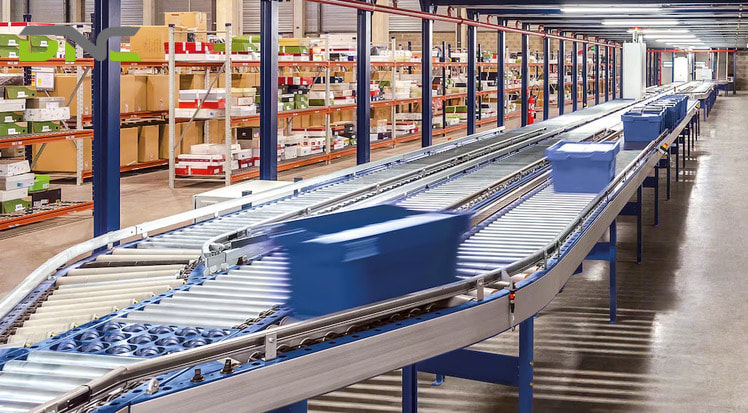
What is the conveyor belt?
The conveyor line has appeared since the early 20th century, with many different classifications such as rollers, belts, and modular conveyors… helping to optimize a lot of time and costs for many packaging production facilities.
So how is this device structured and operated? Let’s find out the details of the DNC Automation in the following article.
How much does it cost to install a conveyor system?
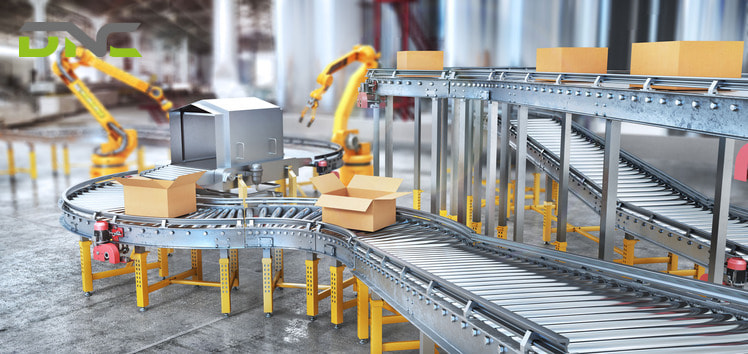
How much does it cost to install a conveyor? This is a difficult question but one that many people are interested in. Determining the price of the equipment depends on many other factors such as the scale of production, the type of conveyor desired, or the operating capacity of the equipment…
How much does it cost to install a conveyor system?
Many factors affect the price of a conveyor. However, most experts in the automation industry recommend that you budget around $1,500 per linear foot of conveyor.
The initial cost may seem quite high. But in the long run, this investment will significantly increase productivity and optimize your business’s production process.
How many types of conveyor belts are there?
Conveyors can be divided into 7 types: roller, belt, modular, flexible, slat, spiral, and pallet conveyors.
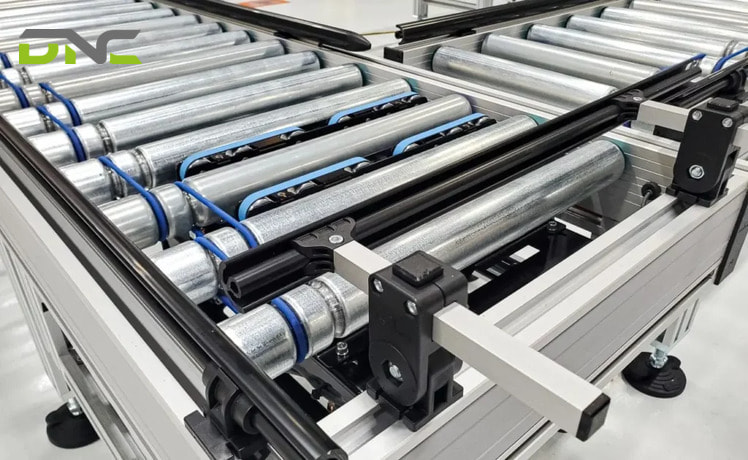
- Roller conveyors: Specialized for moving pallets, boxes, cardboard boxes, plastic crates, or products with solid bottoms. The equipment is designed based on rollers mounted in series on the rack, creating a vertical travel path so that the product can move by motor, gravity, or power.
Roller conveyors
- Flat belt conveyors: It is widely used in packaging lines with diverse surface structures such as rubber, fabric, or PVC… The device is powered through motors in the system, helping the movement process to be smooth and meet many items of different sizes.
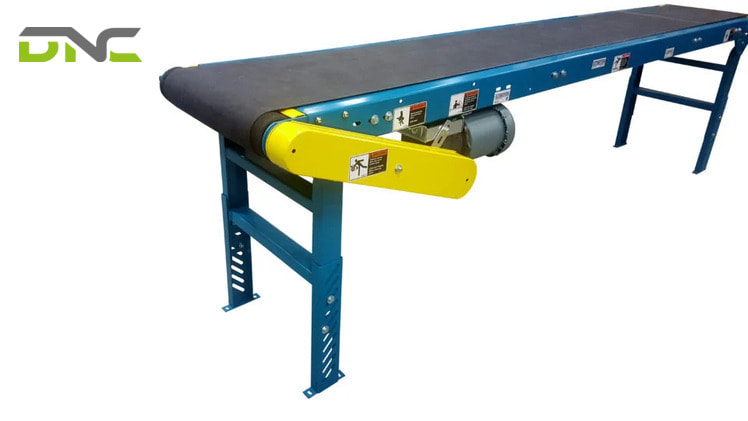
Flat belt conveyors
- Modular conveyors: Widely used in many industries requiring high hygiene. This type of conveyor is designed based on interlocking modules in a tiled style, providing high durability and flexibility.
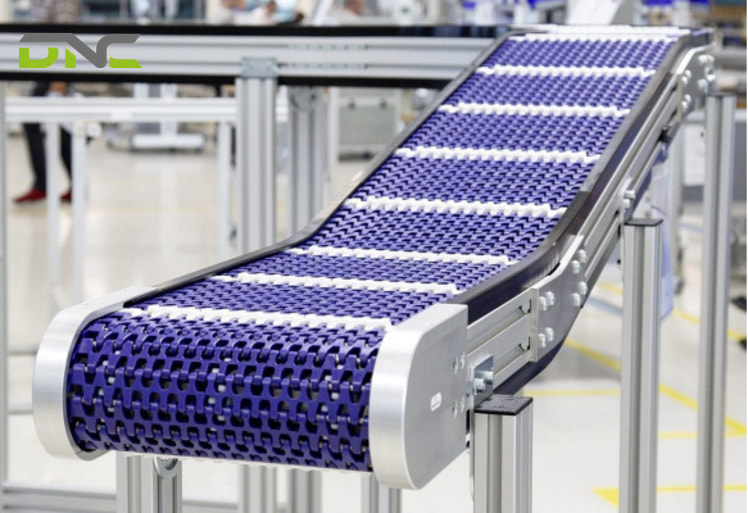
Modular conveyors
- Flexible conveyors: Suitable for loading and unloading goods or moving goods over large obstacles. With the ability to stretch and bend flexibly, these conveyors are versatile equipment that can respond well to complex terrain and many different areas.
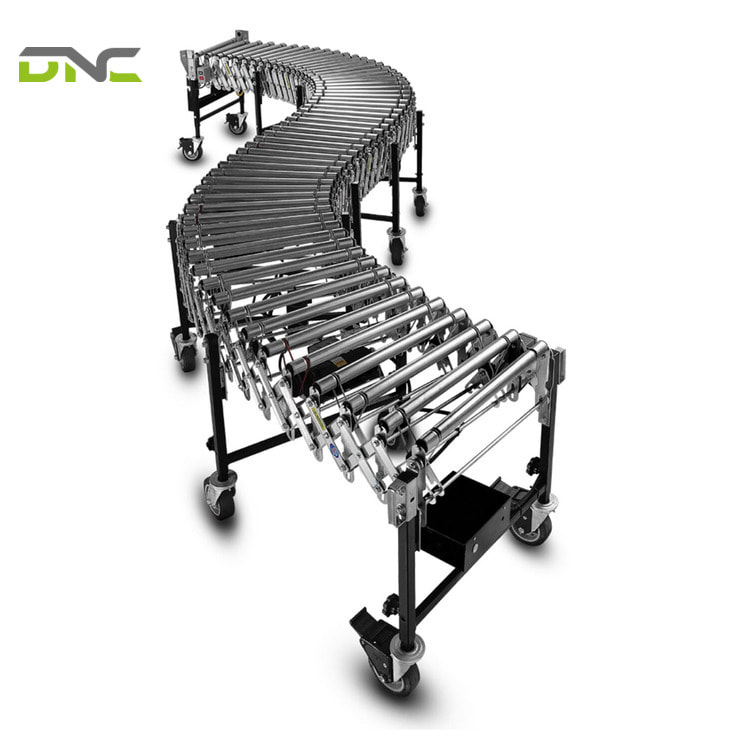
Flexible conveyors
- Slat conveyors: This is a flat surface device consisting of metal bars or plates linked together. Suitable for moving objects with higher than normal temperatures, for example moving high-temperature metal parts through a cooling area…

Slat conveyors
- Spiral conveyors: Compact structure, with a modern torsion shaft design, the device will help save space for your facility, allowing convenient movement of goods up and down without taking up much space.
- Pallet conveyors: Specially used in production lines and is suitable for transporting heavy goods and pallets to warehouses or docks.
What are the main components of a conveyor belt system?
The conveyor belt consists of three main parts: the conveyor belt support system, the transmission system, and the pulley system.
- The conveyor belt support system: is the part that reinforces the belts in the conveyor belt, is responsible for supporting the belts, and is capable of withstanding the weight of many types of goods.
- The transmission system: which specializes in providing operating energy, is responsible for controlling and deciding the direction of movement for the entire chain.
- The pulley system: is the part positioned on the frame of the conveyor belt, that decides the direction of movement of the goods, ensuring consistency in the movement of the entire product.
How to choose the right conveyor belt system for your needs?
You need to note the following tips to be able to choose a suitable conveyor chain:
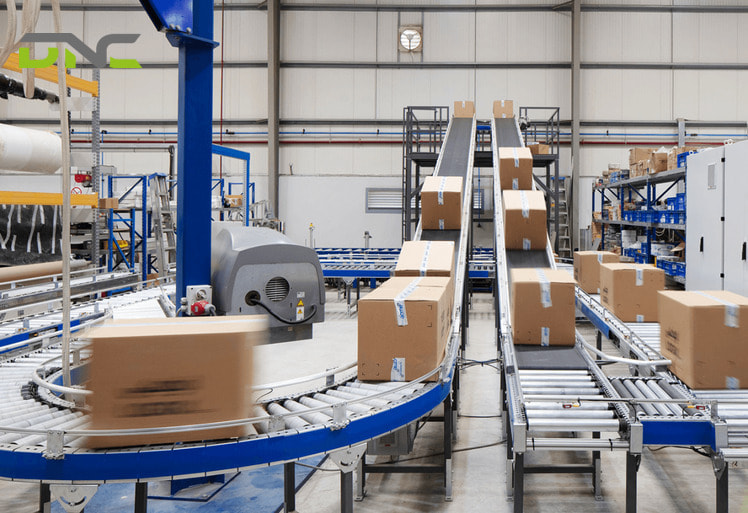
How to choose the right conveyor belt?
- Product specifications: you should carefully study the technical specifications of the conveyor, length, height, width, and working performance of the conveyor. In addition, parameters related to temperature and abrasion of the equipment should also be noted, to choose the type of conveyor with the appropriate surface structure and durable operation for a long time.
- Ensure warehouse layout and space: ensure that the conveyor cluster will not affect the dynamic space at your facility. Designing a space-optimized production line is extremely necessary, it not only helps ensure the safety of workers but also ensures the ability to clean and maintain equipment when necessary.
- Investment costs: consider and choose quality conveyors that bring long-term value to your facility. Although the initial cost may be a bit high, if you invest in the right quality equipment, the initial cost trade-off is well worth it.
- Some other notes: you need to pay attention to some other factors such as the level of friction during operation, the material of the surface layer, static electricity or anti-static, color preference…
Where to find reputable conveyor solutions?
There are many reputable conveyor solution providers in Malaysia, but here are 4 reasons why you should prioritize choosing conveyor solutions at DNC Automation:
- We have a team of technicians with extensive experience in the conveyor and machinery automation industry.
- We always aim to invest and develop conveyor lines in a modern, environmentally friendly, energy-saving direction.
- Commit to 100% genuine products, with clear certificates and origins, fast delivery time, ensuring your production line operates stably and smoothly.
- We are ready to support and help you find the conveyor solution that suits your scale and needs and is within your budget.
If you have any questions, please get in touch with us via the hotline below, we are happy to serve you!
- 125 views
- 0 Comment
Recent Comments