



The Importance of Conveyor Diverters in Optimizing Your Production Line
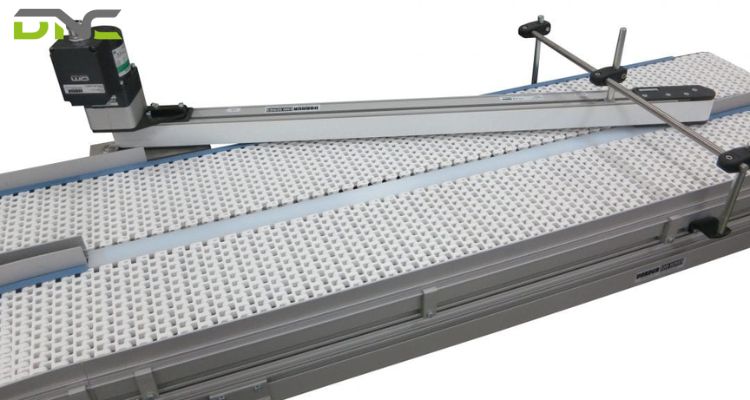
Pos Malaysia distributes parcels to 200+ delivery routes daily from its regional distribution centers — a confirmed DNC Automation client operation that increased parcel volume to 1 million+ per day as Malaysia’s e-commerce market expanded 180% since 2020. Routing each parcel manually to the correct outbound lane would require 15–20 sorters per shift working at full capacity with 3–5% misroute rates. A sliding shoe diverter conveyor system routes 2,400 cartons per hour to 20 sort destinations with 99.5% accuracy, controlled entirely by a Siemens SIMATIC PLC reading barcode scan data and executing sort commands in milliseconds. Conveyor diverters — the devices that redirect individual products from a main conveyor to one of several branch conveyors — are the automated traffic controllers of every logistics, food manufacturing, pharmaceutical, and electronics factory conveyor system. DNC Automation — Malaysia’s Top #1 Factory Automation Company since 2005, ISO 9001:2015 certified, Siemens partner, and Comau Italy’s only official Southeast Asia partner — delivers full turnkey diverter systems: layout design, PLC sort logic programming, Siemens SCADA divert accuracy monitoring, and 24/7 support. This guide defines every diverter type, specification, application, and selection criterion for Malaysian manufacturing and logistics operations.
What Is a Conveyor Diverter?
A conveyor diverter is a device or mechanism integrated into a main conveyor line that intercepts individual products and redirects them from the primary conveyor path onto one of two or more outfeed conveyor branches, based on destination data read from a barcode, RFID tag, weight measurement, or vision system scan at an upstream identification station. Conveyor diverters are the product routing decision points in any automated conveyor system — the equivalent of traffic interchange ramps routing vehicles from a highway to specific exit roads.
The divert decision sequence follows four steps: (1) an identification device (barcode scanner, RFID reader, weighing conveyor, or vision camera) reads product identity data as the product travels toward the divert point; (2) the PLC queries the WCS (Warehouse Control System) or MES to determine the correct destination for that product; (3) the PLC pre-stages the diverter mechanism at the correct outfeed angle; and (4) as the product reaches the diverter, the mechanism activates and deflects the product onto the target outfeed conveyor. Products without readable identification are routed to a reject or manual inspection lane — a critical GMP compliance requirement in pharmaceutical operations.
How Does a Conveyor Diverter Work?
Conveyor diverter operation timing is precise to within 50–100 milliseconds — the diverter mechanism must activate exactly when the leading edge of the target product reaches the divert point, not before (which would catch a preceding product) and not after (which would miss the product or catch it mid-body, causing jam or product damage).
Step 1 — Product Identification and Destination Assignment
A barcode reader (1D or 2D), RFID antenna, or weighing conveyor positioned 2–5 meters upstream of the divert point reads product identity data. Reading distance provides the processing time for the PLC to query the destination database and prepare the diverter. In DNC Automation installations, Siemens SIMATIC S7-1200 PLC processes the barcode scan result against the WCS destination table within 10–50 milliseconds — well within the 200–500 millisecond minimum time budget available at 2.5 m/s conveyor speed with 2-meter scanner-to-diverter distance.
Step 2 — Diverter Pre-Positioning
The diverter mechanism is pre-positioned to the target outfeed angle before the product arrives. For deflector arm diverters (pivoting arm), the arm extends to the divert angle. For sliding shoe sorters, the shoe array configuration is pre-set. For pop-up wheel diverters, the wheel array rises into position. Pre-positioning uses the conveyor transit time (product travel from scanner to diverter) to eliminate any divert activation latency — the mechanism is ready before the product arrives, not scrambling to actuate as the product reaches the divert point.
Step 3 — Product Interception at Divert Point
The product’s leading edge crosses the divert point at conveyor operating speed (0.5–2.5 m/s depending on diverter type). The active diverter mechanism deflects the product from its straight-ahead trajectory onto the target outfeed conveyor. Deflection force is applied gradually (not impact) in gentle diverter designs (sliding shoe, belt diverter) — fragile products in glass, electronics, or pharmaceutical packaging require diverter mechanisms that apply lateral force below the product’s tipping threshold.
Step 4 — Product Routing onto Outfeed Conveyor
The diverted product travels onto the outfeed conveyor at a speed determined by the divert angle, product coefficient of friction, and outfeed conveyor speed. For 30° sliding shoe diverters, product lateral velocity is well below main conveyor velocity — the product slides smoothly onto the outfeed without impact. For 90° pop-up wheel diverters, product lateral velocity equals main conveyor speed, requiring outfeed conveyor to run at the same speed in the perpendicular direction.
Step 5 — Diverter Reset for Next Product
After product departure confirmation (sensor at outfeed conveyor entry), the diverter mechanism resets to straight-ahead position (neutral/pass-through state) for the next product. Reset time determines minimum inter-product gap requirement — deflector arm diverters require 200–400 ms reset time, requiring minimum 500–800 mm product gaps at 2 m/s. Sliding shoe sorters reset individual shoes independently — no full system reset required between products — enabling tighter product gaps and higher throughput.
Step 6 — Reject and Exception Handling
Products with unreadable barcodes, incorrect weights, or no WCS destination record are routed to a reject lane automatically. DNC Automation’s PLC programming includes reject counting, reject type logging, and SCADA alarm generation for reject rate exceeding configurable thresholds. In pharmaceutical operations, every rejected product generates an MES exception record for GMP compliance documentation.
Types of Conveyor Diverter
Six diverter mechanism types serve distinct product types, throughput rates, and outfeed configurations. Selecting the wrong mechanism type causes product damage, jam events, or throughput limitations that undermine the system investment.
1. Sliding Shoe Sorter (High-Volume, High-Destination Count)
Sliding shoe sorters are the highest-throughput, highest-destination-count diverter type. Small angled plastic shoes — embedded in a series of slats that form the sorter belt surface — are individually controlled by linear actuators beneath the slat surface. When a product requires diverting, the shoes across the width of the product extend diagonally at 15°–30° angles, creating a friction vector that pushes the product sideways off the sorter belt onto an angled outfeed roller bed. Products experience no lateral impact — the diagonal shoe angles create a smooth sideways acceleration rather than a sharp deflection.
Sliding shoe sorter specifications: throughput up to 2,400 cases per hour, up to 20 sort destinations, product weight range 0.05–50 kg, minimum product gap 100–200 mm, conveyor speed up to 2.5 m/s. Products handled: corrugated cartons, polybags, soft-pack goods, bagged products, and most items with flat bases. Sliding shoe sorters are the standard specification for Malaysian e-commerce distribution centers, Pos Malaysia parcel sorting, and FMCG warehouse sortation systems.
2. Pop-Up Wheel / Roller Diverter (Right-Angle High-Speed)
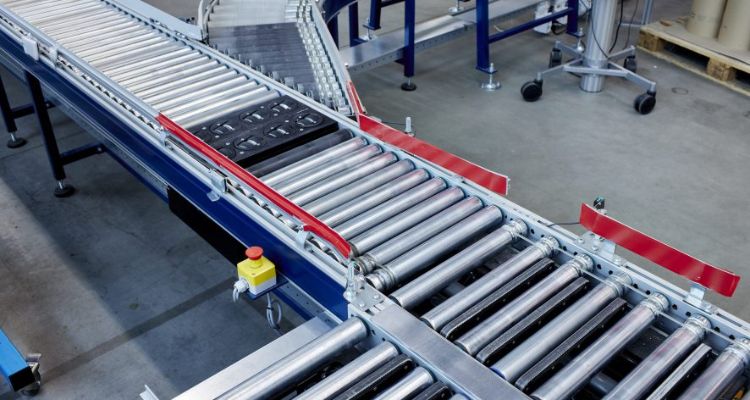
Pop-up wheel diverters use a matrix of motorized wheels or rollers that rise up through the main conveyor belt surface at 90° or 45° angles. When activated, the pop-up wheels lift the product off the main conveyor belt and drive it sideways onto a perpendicular outfeed conveyor. Pop-up diverters are specified for right-angle (90°) direction changes where the main conveyor continues straight but some products exit perpendicular. They are particularly suited to flat-bottomed rigid cartons with smooth undersides — irregular-base products may not sit stably on the wheel matrix.
Pop-up diverter specifications: throughput 1,500–2,400 cases per hour at 45° divert, up to 5 destinations per pop-up zone, product weight 0.1–50 kg. Multiple pop-up zones along the same main conveyor provide multi-destination routing. DNC Automation integrates pop-up diverter zones with Siemens SIMATIC PLC for multi-zone sequential destination assignment on long sortation conveyors.
3. Deflector Arm / Plow Diverter (Mechanical, Low-Cost Routing)
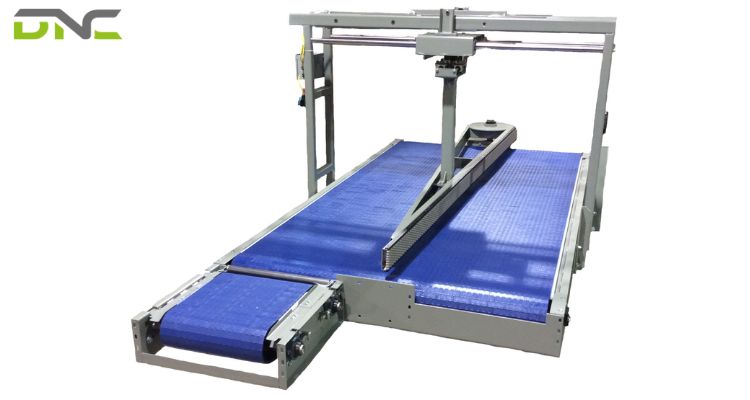
Deflector arm diverters use a pivoting arm (pneumatically or electrically actuated) that sweeps across the conveyor belt at an angle, deflecting products into 1–3 off-line destinations. Deflector arms are the most mechanically straightforward and lowest-cost diverter mechanism — one pneumatic cylinder, one pivot bearing, and one position sensor. Maximum throughput is limited by arm reset time (200–400 ms) to approximately 600–900 cases per hour. Deflector arms are specified for low-throughput routing applications: reject lanes, quality inspection diversions, and two-way line splitting on production lines with throughput below 15 products per minute.
Deflector arm specifications: 1–3 destinations, throughput 400–900 cases per hour, product weight up to 30 kg, pneumatic cycle time 200 ms. Applicable products: boxes, cartons, rigid containers — not suitable for soft-pack goods that the arm may deform or tip. DNC Automation specifies deflector arms as reject diverters in pharmaceutical and food factory lines where the primary sort is done by more complex mechanisms.
4. Belt Diverter (Gentle Transfer for Fragile Products)
Belt diverters use a short, angled belt conveyor that rises to meet the main conveyor surface and carries fragile products gently onto the outfeed at a controlled angle and speed. The belt diverter’s angled belt surface encloses the product from beneath — no lateral force impacts the product side. Belt diverters are specified for fragile packaging (glass bottles, blister-pack pharmaceuticals, delicate consumer electronics) where sliding shoe lateral force, deflector arm impact, or pop-up wheel sudden lift is not acceptable.
Belt diverter specifications: throughput up to 1,200 cases per hour, 2–4 destinations, product weight 0.05–20 kg, angle typically 30° or 45° from main conveyor direction. Belt diverters in Malaysian pharmaceutical facilities (Selangor pharma corridor) route blister-pack tablets and glass ampoule trays to specific packaging stations without the packaging impact that other diverter mechanisms would cause.
5. Pneumatic Arm Diverter (Fast, Lightweight Items)
Pneumatic arm diverters use a flat air-cylinder-driven arm that pushes lightweight products sideways off a flat belt conveyor. The arm extends across the conveyor width in 50–100 ms — fast enough for lightweight products (letters, envelopes, small polybags) at conveyor speeds up to 2 m/s. Pneumatic diverters are standard in postal letter sorting machines, small parcel routing, and pharmaceutical sachet sorting. Product weight is limited to 2–3 kg — above this weight, the arm impact force sufficient to reliably move the product also risks product damage.
6. Tilt Tray Sorter (Parcel and Irregular Item Sorting)
Tilt tray sorters carry each product in an individual horizontal tray that travels on a continuous loop track. At the target sort destination, the tray tilts sideways to dump the product into a chute. Each tray acts as an independent product carrier — product identity is assigned to a specific tray position, not timed to a linear position on a belt. Tilt tray sorters handle the widest range of product shapes (irregular parcels, polybags, soft items) but have higher capital cost than belt diverter systems. Postal processing facilities (Pos Malaysia) use tilt tray sorters for letter and small parcel sorting to hundreds of destinations.
Conveyor Diverter Type Comparison Table
| Type | Throughput | Destinations | Product Type | Impact Level | Relative Cost |
| Sliding Shoe Sorter | 2,400/hr | Up to 20 | Flat-based, 0.05–50 kg | Gentle | High |
| Pop-Up Wheel | 2,400/hr | Up to 5/zone | Rigid flat-base | Medium | Medium-High |
| Deflector Arm | 900/hr | 2–3 | Rigid cartons | Medium | Low |
| Belt Diverter | 1,200/hr | 2–4 | Fragile/any | Gentle | Medium |
| Pneumatic Arm | 1,800/hr | 2–3 | Lightweight <3 kg | Medium | Low |
| Tilt Tray | 3,600/hr | Unlimited | Any shape | Gentle | Very High |
Key Components of a Conveyor Diverter System
Identification System. Barcode readers (1D linear, 2D matrix), RFID antennas, weighing conveyors, and vision cameras at product ID stations feed destination data to the sort controller PLC. DNC Automation integrates Cognex vision systems and Sick barcode readers with Siemens SIMATIC PLCs — verified for communication latency under 10 ms, well within the timing budget for 2.5 m/s conveyor speed.
Sort Controller PLC. Siemens SIMATIC S7-1200 or S7-300 PLC manages all sort logic: product ID tracking from scanner through each conveyor zone to the divert point (product tracking on the conveyor), destination lookup, diverter pre-position sequencing, reject handling, and Siemens SCADA data logging. DNC Automation’s sort controller programming includes product tracking models that maintain correct sort assignment through each conveyor zone even if conveyor speeds change — preventing mis-sort events caused by product tracking loss.
Diverter Mechanism. The physical diverter device (shoe array, pop-up wheel matrix, deflector arm, or belt) actuated by pneumatic or electric linear actuators. Actuator response time is the critical parameter: the diverter must reach its active position within 50–100 ms of the trigger command. DNC Automation selects pneumatic or servo-electric actuation based on required response time, product weight, and divert frequency.
Siemens SCADA Divert Accuracy Monitoring. Siemens WinCC SCADA dashboards display real-time divert accuracy rate (diverted to correct destination / total products diverted), sort throughput per hour, reject rate per reason code, and diverter mechanism cycle count (predictive maintenance trigger). DNC Automation programs SCADA alarming for divert accuracy below 99%, reject rate above 2%, and mechanism cycle count approaching maintenance interval.
Outfeed Conveyors and Chutes. Each sort destination requires an outfeed conveyor, chute, or container to receive diverted products. Outfeed conveyor speeds must match product arrival velocity to prevent product pile-up or product bounce at the outfeed entry point. DNC Automation designs outfeed conveyor specifications as part of the complete diverter system layout — not as afterthoughts.
Applications: Where Conveyor Diverters Are Used in Malaysian Manufacturing
E-Commerce Parcel Sorting — Shah Alam, Bukit Raja, Johor
Malaysia’s e-commerce logistics sector has grown from RM 7.3 billion (2019) to over RM 20 billion (2025), with Shopee and Lazada’s logistics operations concentrating sortation infrastructure in Shah Alam, Bukit Raja, and Johor Bahru. Parcel sortation to 100–200 outbound destinations per shift requires sliding shoe sorter systems handling up to 2,400 parcels per hour. DNC Automation’s turnkey diverter systems for Malaysian e-commerce logistics include: conveyor layout design optimized for facility dimensions, Siemens PLC sort logic programmed to client WCS, barcode scan integration, Siemens SCADA throughput monitoring, and 24/7 engineering support via remote SCADA access.
Pos Malaysia Parcel Distribution
Pos Malaysia — a confirmed DNC Automation client — operates regional distribution centers routing 1 million+ parcels per day to 200+ delivery routes. DNC Automation’s sliding shoe diverter systems at Pos Malaysia facilities sort inbound parcels by barcode scan to outbound delivery route chutes automatically, replacing manual sort operations that previously required 15–20 sorters per shift with 3–5% misroute rates. Automated sort accuracy of 99.5% reduces misdelivery incidents that generate costly return-to-sender and re-delivery operations.
Food and Beverage SKU Routing — F&N, Ramly Burger
Food and beverage production lines produce multiple SKUs in sequence — F&N producing 100ml, 250ml, and 500ml Tetra Pak variants in consecutive production runs requires each variant to be routed to a different packaging lane or outbound staging area. Deflector arm or pop-up wheel diverters on the outfeed conveyor read product dimension data (from weight sensor or vision camera) and route each SKU to the correct downstream destination. DNC Automation programs F&B diverter sort logic with reject handling for products outside specification weight range — providing inline quality gating on production lines.
Pharmaceutical Batch Routing — Selangor Pharma Corridor
Pharmaceutical manufacturing in Selangor’s pharmaceutical cluster requires GMP-compliant batch routing — each batch of tablets must be routed to the specific packaging line assigned to that batch code, with 100% traceability logging. Gentle belt diverters or sliding shoe sorters are specified for pharmaceutical blister packs and tablet bottles — product handling forces must remain below package integrity thresholds. Every divert event is logged to the Siemens SCADA system with batch code, destination lane, timestamp, and operator ID — satisfying Malaysian NPRA (National Pharmaceutical Regulatory Agency) GMP documentation requirements.
Semiconductor and Electronics Routing — Penang
Penang’s EMS facilities route PCB sub-assemblies from test stations to repair, rework, scrap, or outbound packaging lanes based on test results. Pop-up wheel diverters on PCB handling conveyors read pass/fail signals from ICT or AOI stations and route failed boards to rework lanes and passed boards to outbound packaging. ESD-safe diverter mechanisms (ESD-dissipative belt surfaces, earth-bonded frames, 40–60% RH controlled environment) prevent electrostatic damage during divert operations on PCB sub-assemblies carrying unprotected ICs.
Benefits of Conveyor Diverter Systems for Malaysian Operations
99.5% Sort Accuracy Eliminates RM Losses from Misrouted Products. Manual sorting accuracy in Malaysian distribution centers ranges from 95–98% — generating 20,000–50,000 misrouted parcels per million items, each requiring re-handling at RM 3–8 per incident. DNC Automation’s automated diverter systems achieve 99.5% sort accuracy — reducing misroute events by 70–90% and eliminating the customer complaint and re-delivery cost associated with misrouted items.
80% Reduction in Sorting Labor Requirements. Replacing manual sorters with automated diverter systems eliminates the highest-turnover labor role in Malaysian logistics operations. At RM 2,500–3,500 per sorter per month, a 15-sorter replacement saves RM 37,500–52,500 per month — achieving payback on a complete DNC Automation diverter system within 18–30 months for most Malaysian logistics facility scales.
50% Operational Cost Savings Through Continuous Operation. Automated diverter systems operate continuously at consistent throughput — no fatigue, no break time, no shift handover losses. Manual sorting throughput degrades 15–25% during the final hour of each shift. Automated systems maintain full throughput to end-of-shift, delivering 50% operational cost savings on the sorting function alone compared to fully manual operations.
NIMP 2030 Smart Factory Compliance. Malaysia’s National Investment Master Plan 2030 targets 3,000 smart factory conversions. Conveyor diverter systems integrated with Siemens SCADA, barcode scanning, and WCS connectivity represent core smart logistics infrastructure. MIDA’s SAG Grant provides up to RM 1 million at 70:30 matching for qualifying automation investments — DNC Automation’s diverter system projects consistently qualify under SAG grant criteria and DNC supports clients through the full grant application process.
How to Choose the Right Conveyor Diverter for Your Factory
Define Sort Throughput and Destination Count. Sort throughput (products per hour) and destination count are the primary selection parameters. Under 900 cases/hour with 2–3 destinations: deflector arm is cost-effective. 1,200–2,000 cases/hour with 5–10 destinations: pop-up wheel zones or belt diverters. 2,000–2,400 cases/hour with 10–20 destinations: sliding shoe sorter. Above 2,400 cases/hour with unlimited destinations: tilt tray sorter.
Assess Product Characteristics. Product weight, base flatness, fragility, and coefficient of friction on conveyor surfaces all affect diverter mechanism selection. Fragile products (glass, blister packs, electronics) require gentle mechanisms (belt diverter, sliding shoe at low angle). Heavy products (above 20 kg) require robust pop-up roller or CDLR-type diverters. Irregular-base products (polybags, soft items) require shoe sorters or tilt trays — pop-up wheel mechanisms require flat bases for reliable contact.
Determine Identification Technology. Barcode-based identification requires clean, readable labels on products. RFID identification eliminates the label orientation requirement but adds tag cost. Weight-based identification handles unlabeled products but cannot distinguish same-weight items. Vision-based identification (DNC Automation integrates Cognex vision systems) handles barcodes, QR codes, OCR, and dimensional classification simultaneously — the most flexible identification method for mixed-product sortation lines.
Plan Siemens SCADA Integration from Day One. Diverter sort accuracy, throughput, and reject rate are critical operational KPIs that management needs visibility on in real time. Siemens WinCC SCADA integration planned during system design costs less than retrofitting SCADA after commissioning. DNC Automation includes Siemens SCADA dashboard setup in all diverter system projects above RM 200,000 — giving clients real-time operational visibility from day one of production.
Evaluate Malaysia-Specific Regulatory and SAG Grant Context. Pharmaceutical diverter systems in Malaysia must comply with NPRA GMP guidelines on batch traceability and documentation. Food factory diverter systems require HALAL-compliant materials for product contact surfaces. Both sectors qualify for MIDA SAG grant funding as smart automation investments. DNC Automation’s 20+ years of Malaysian factory automation experience ensures diverter system designs comply with NPRA, HACCP, and HALAL certification requirements specific to Malaysian industry.
──────────────────────────────────────────────────
Frequently Asked Questions About Conveyor Diverters
Q: What is the minimum product gap required between products on a sliding shoe sorter?
Sliding shoe sorters require a minimum product gap of 100–200 mm between consecutive products for reliable sort operation. Below 100 mm gaps, the shoe array for product N may not fully reset before product N+1 arrives, causing contaminated divert signals. Conveyors feeding the sorter must include a product spacing (gapping) conveyor that creates uniform 200–300 mm gaps between consecutive products before they reach the sorter infeed. DNC Automation designs gapping conveyors as part of every sliding shoe sorter installation.
Q: How does the PLC know which product is arriving at the diverter?
Product tracking is the PLC function that maintains assignment of each product’s destination from the identification scan point through every conveyor zone to the divert point. The PLC models each product as a “data packet” moving along the conveyor at belt speed, incrementing the product’s position counter on a timer interrupt. When the counter reaches the divert trigger threshold, the PLC activates the correct divert command for that product. DNC Automation’s product tracking models account for conveyor speed changes, product gap variations, and conveyor stop events — maintaining sort accuracy even when upstream conveyor conditions change.
Q: What happens if the barcode is unreadable?
Products with unreadable barcodes are routed to a no-read reject lane automatically. The PLC generates a no-read exception record logged with timestamp and conveyor image (if vision system is integrated). In pharmaceutical operations, every no-read rejection triggers a mandatory manual inspection record in the MES. DNC Automation programs configurable no-read rejection actions — some clients prefer no-read products to recirculate once for a second scan attempt before routing to the reject lane.
Q: Can a conveyor diverter handle both boxes and bags on the same system?
Mixed product streams (boxes, bags, polybags, irregular items) require sliding shoe sorters or tilt tray sorters — both handle the widest product base shape range. Pop-up wheel diverters require consistent flat bases and do not reliably handle flexible bags. Deflector arms can handle most product types at low throughput. DNC Automation designs mixed-product diverter systems by identifying the product mix characteristics during the pre-sale consultation and selecting the mechanism with the broadest product compatibility for the client’s specific product range.
Q: How does DNC Automation ensure 99.5% sort accuracy?
Sort accuracy depends on: (1) barcode read rate above 99.8% (Cognex or Sick readers calibrated to the specific label type and orientation); (2) product tracking accuracy — DNC Automation validates tracking models through 500-product commissioning tests before handover; (3) diverter mechanism reliability — actuator cycle tests verify 100,000+ cycle MTBF before commissioning; (4) gapping conveyor performance — consistent product spacing prevents tracking errors. DNC Automation conducts 4-hour sort accuracy trials during FAT (Factory Acceptance Testing) before system handover to clients.
Q: What is the typical project timeline for a complete diverter system installation in Malaysia?
Complete conveyor diverter system project timeline: pre-sale layout design and quotation (2–3 weeks), design approval and procurement (4–6 weeks lead time for sorter components), fabrication and factory testing (2–4 weeks), site installation (2–3 weeks), commissioning and FAT (1–2 weeks). Total: 11–18 weeks from project award to production handover. DNC Automation provides detailed project Gantt charts at project kick-off, with weekly progress updates to client project managers throughout the project.
Q: Does DNC Automation provide ongoing maintenance for diverter systems?
DNC Automation offers annual maintenance contracts covering: quarterly mechanism inspection (sliding shoe condition, actuator force test, belt/roller wear assessment), semi-annual sort accuracy verification trial, annual PLC firmware review, and 24/7 remote SCADA monitoring with engineering response. Remote SCADA access allows DNC Automation engineers to diagnose 60–70% of diverter fault events without site visit — reducing downtime from hours to minutes for common fault conditions. On-site response for hardware failures is guaranteed within 4–8 hours for Selangor/Penang/Johor clients on maintenance contracts.
──────────────────────────────────────────────────
Conclusion
Conveyor diverters are the decision-execution components that transform a one-way conveyor line into an intelligent product routing network. From Pos Malaysia’s parcel distribution to Shopee’s e-commerce fulfillment centers in Shah Alam and Johor to Selangor pharmaceutical batch routing, diverter systems deliver 99.5% sort accuracy at 2,400 cases per hour — accuracy and throughput no manual sorting operation can match sustainably. Malaysia’s NIMP 2030 commitment to 3,000 smart factory conversions, combined with MIDA’s SAG Grant of up to RM 1 million per facility, makes now the optimal time for Malaysian logistics and manufacturing operators to upgrade from manual sorting to automated diverter systems.
DNC Automation — Malaysia’s Top #1 Factory Automation Company since 2005, ISO 9001:2015 certified, 35 engineers, Siemens partner, and Comau Italy’s only official Southeast Asia partner — delivers complete turnkey conveyor diverter systems: layout design, Siemens PLC sort logic programming, SCADA monitoring, and 24/7 support. Talk to Our Engineers at dnc-automation.com for a free diverter system design and ROI analysis for your facility.
- 37 views
- 0 Comment
Recent Comments