



Incline Conveyor Systems for Efficient Material Handling
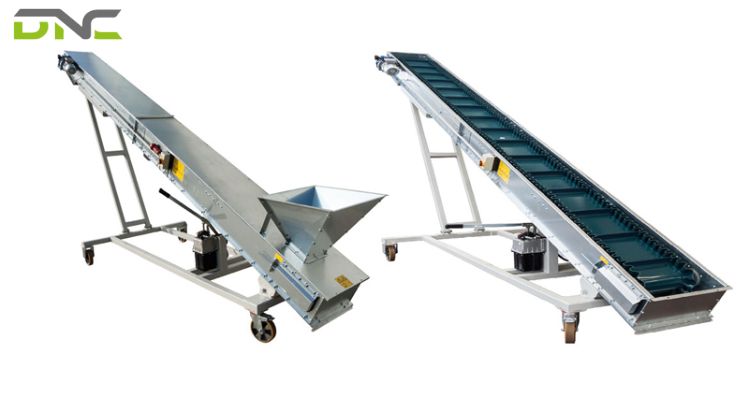
Incline conveyor systems play a critical role in modern automated production environments by enabling smooth material transfer between different height levels. Designed to optimize space, improve workflow efficiency, and support automation integration, incline conveyors are widely used across manufacturing, warehousing, and logistics operations. This article explains how incline conveyors work, the common system types, key benefits in automation, and where they are most effectively applied in modern industrial environments.
What Is an Incline Conveyor?
An incline conveyor is a material handling system designed to move products upward or downward along an inclined path, rather than on a horizontal plane. It allows materials to be transferred between different elevations while maintaining stability and controlled movement.
Incline conveyors typically use:
- Belts, modular chains, or rollers
- Cleats, sidewalls, or high-friction surfaces
These features prevent product rollback and ensure smooth elevation transfer, especially in automated environments where manual handling must be minimized.
How Incline Conveyor Systems Work
Incline conveyors operate by combining mechanical motion with friction control to move products securely along a slope. The system’s design ensures materials remain stable while transitioning between height levels.
Incline conveyors are engineered to handle different product shapes, weights, and surface characteristics without compromising flow consistency.
Key working principles include:
- Controlled belt movement: The conveyor belt moves at a regulated speed to prevent product rollback or tipping, ensuring smooth elevation transfer.
- Use of cleats or sidewalls: Cleats and sidewalls provide additional grip and containment, especially when conveying loose or packaged items.
- Angle optimization: The incline angle is carefully calculated to balance efficiency, safety, and product stability.
- Integration with automation controls: Sensors and control systems synchronize incline conveyors with upstream and downstream equipment.
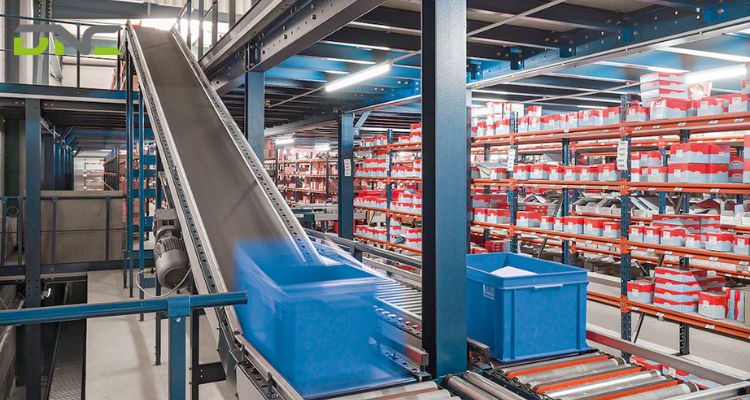
How do incline conveyors efficiently move products between levels?
Incline conveyor systems are designed to handle vertical product transfer reliably while maintaining continuous flow. Typical incline conveyor solutions offer the following performance characteristics:
- Moves products across 2 or more elevation levels, such as floors, mezzanines, or overhead conveyor lines.
- Operates at typical speeds of 20–60 m/min to maintain smooth flow without bottlenecks.
- Standard incline conveyor frames are commonly designed to handle loads of up to 500–1,200 kg
- Reversible operation helps reduce downtime during product removal or maintenance.
Key Components of an Incline Conveyor
Understanding the main components of an incline conveyor helps ensure proper system selection and long-term performance. Each element contributes to stability, efficiency, and durability. A well-designed incline conveyor balances mechanical strength with precision control.
- Conveyor belt or chain: Selected based on product type, load capacity, and friction requirements.
- Cleats and sidewalls: Added to prevent slippage and secure products during elevation changes.
- Drive and motor system: Provides consistent power and speed control for smooth operation.
- Frame and support structure: Built to withstand continuous operation and maintain alignment.
- Safety and control devices: Include sensors, guards, and emergency stops to support automation safety standards.
What types of incline conveyor systems are commonly used?
Incline conveyors are available in 5 main configurations, each designed to address specific product characteristics, incline angles, and automation requirements. Selecting the right type depends on factors such as product stability, material flow behavior, hygiene needs, and layout constraints.
Incline Belt Conveyors
Incline belt conveyors are commonly used to transport packaged goods, cartons, and bulk materials along a gentle to moderate slope. The continuous belt surface provides stable and consistent movement, making this type suitable for high-throughput production and logistics environments where product integrity must be maintained.
Key advantages:
- Smooth and stable product movement
- Suitable for light to medium loads
- High throughput capability
- Good protection for packaged or fragile products
Cleated Belt Conveyors
Cleated belt conveyors feature raised cleats attached to the belt surface to prevent products from sliding backward on steeper inclines. This design is ideal for conveying items with smooth surfaces or irregular shapes that require additional grip during vertical transport in automated systems.
Key advantages:
- Improved grip on steep incline angles
- Reliable transport for smooth or irregularly shaped items
- Reduced product rollback and spillage
- Consistent positioning during elevation changes
Sidewall Belt Conveyors
Sidewall belt conveyors use flexible sidewalls combined with cleated belts to fully contain materials as they move upward. They are especially effective for loose, granular, or bulk materials that must be prevented from spilling during inclined or near-vertical transfer.
Key advantages:
- Full material containment
- Effective for loose, granular, or bulk materials
- Ability to operate at higher incline angles
- Reduced material loss and spillage
Modular Incline Conveyors
Modular incline conveyors are built from interlocking plastic or metal segments, offering high flexibility in layout and easy replacement of individual sections. This type is well-suited for automated lines that require frequent reconfiguration, hygienic operation, or simplified maintenance.
Key advantages:
- Modular design allows easy reconfiguration
- Quick replacement of damaged sections
- Suitable for hygienic or washdown environments
- Good adaptability to changing production layouts
Z-Type Incline Conveyors
Z-type incline conveyors are designed to move products across multiple elevation changes within a compact footprint. By combining horizontal and inclined sections, they allow efficient vertical transport while maintaining product orientation and maximizing available floor space.
Key advantages:
- Efficient use of vertical space
- Maintains product orientation during transfer
- Compact layout for space-constrained facilities
- Supports complex multi-level automation flows
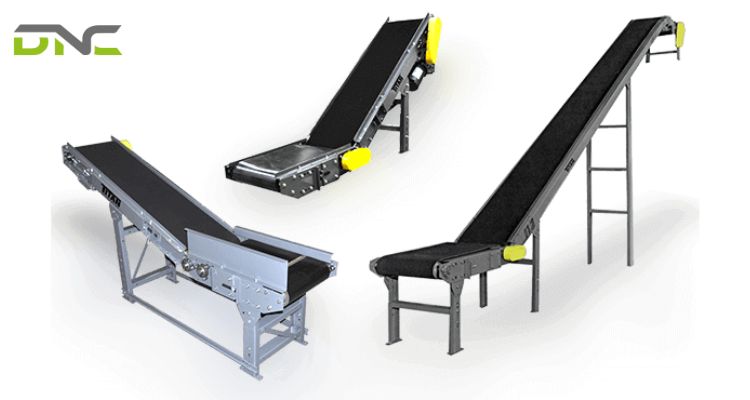
Industrial Applications of Incline Conveyors
Incline conveyor systems are widely adopted across industries where vertical material movement is essential. Their adaptability makes them suitable for both light-duty and heavy-duty automation environments. They support continuous flow while reducing manual intervention.
- Manufacturing lines: with transport components smoothly between process stages at different heights without interrupting production flow. This improves line balance, reduces manual handling, and supports synchronized automation.
- Packaging operations: Incline conveyors feed products consistently into machines such as fillers, sealers, and palletizers. Controlled elevation transfer ensures accurate positioning and minimizes product damage during high-speed packaging.
- Warehousing and distribution: Incline conveyor systems move cartons efficiently between floor levels, conveyors, and mezzanine platforms. This enables space-efficient layouts while maintaining continuous material flow in automated warehouses.
- Food and beverage processing: Incline conveyors handle packaged or raw products while maintaining controlled movement and hygiene requirements. Specialized belt materials and designs support safe and reliable elevation transfer in food-grade environments.
- Logistics and fulfillment centers: Incline conveyors support automated sorting, order consolidation, and dispatch operations. They help optimize vertical space usage while maintaining high throughput and operational accuracy.
What are the benefits of using incline conveyors in automated systems?
Incline conveyors offer measurable advantages in automated production environments by enhancing efficiency and layout flexibility. They enable smarter use of available space while maintaining consistent material flow. These systems support both operational and safety improvements.
- Improved space efficiency: Vertical transport reduces the need for long horizontal conveyors.
- Enhanced workflow continuity: Products move smoothly between process levels without manual handling.
- Increased productivity: Automated elevation transfer minimizes downtime and bottlenecks.
- Improved workplace safety: Reduces lifting and manual material handling risks.
- Scalability for future automation: Easily integrated into expanding production lines.
- Limited floor space requiring vertical movement
- Product instability when moving upward or downward
- Inconsistent flow between process stages at different heights
- Safety risks associated with manual lifting
- Integration challenges with automated equipment
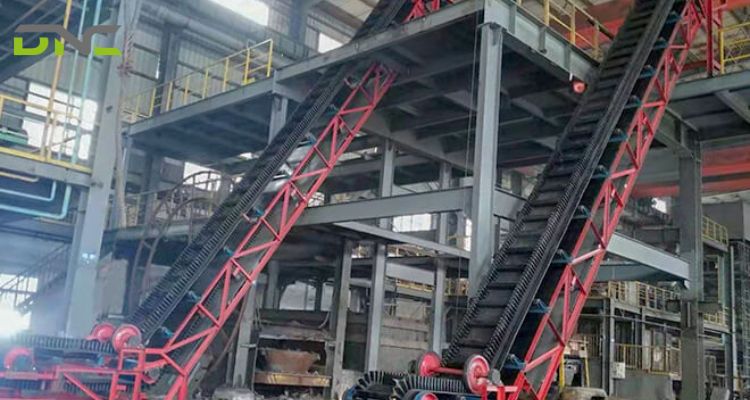
Why Is DNC Automation a Trusted Partner for Incline Conveyor Solutions?
Choosing the right partner is critical when implementing an incline conveyor system for automation-driven operations. A trusted automation provider delivers not only equipment, but also engineering expertise and long-term support.
DNC Automation specializes in designing and integrating incline conveyor systems tailored to real production requirements. Each solution is engineered to align with material characteristics, layout constraints, and automation control strategies. With a strong focus on reliability, scalability, and system integration, DNC Automation supports end-to-end project execution from concept and design to installation and optimization—ensuring incline conveyor systems deliver measurable operational value.
- 4 views
- 0 Comment
Recent Comments