



Interlock Pallet Racking System: Boltless Assembly Guide
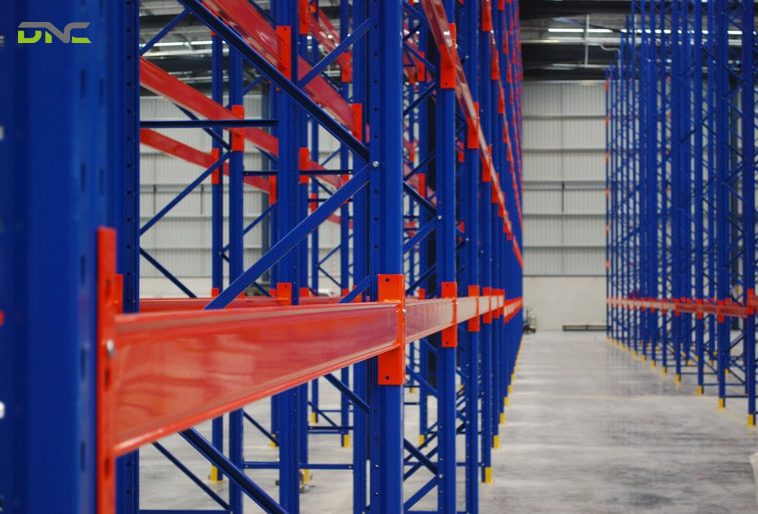
Interlock pallet racking systems use a teardrop or keyhole connector design that allows beams to lock into upright frames without bolts, tools, or welding — enabling assembly speeds 3–5× faster than bolted racking while maintaining load capacities of 1,000–3,500 kg per beam level. For Malaysian warehouse operators who need rapid installation (often during weekend shutdowns), frequent reconfiguration as product mix changes, and a racking system that relocates when lease terms expire, interlock racking provides structural performance equivalent to bolted systems with the flexibility of a modular assembly. This guide covers the interlock connection mechanism, specifications, structural analysis, safety considerations, and application criteria. DNC Automation integrates interlock racking systems across warehouse projects where installation speed and reconfigurability are primary requirements.
What Is an Interlock Pallet Racking System?
Interlock pallet racking — also called boltless, teardrop, or keystone racking — is a pallet storage system where beam-to-upright connections use a mechanical interlocking mechanism instead of bolts and nuts. The connector hooks on each beam end insert into precisely punched slots (teardrop-shaped, keyhole-shaped, or rectangular) along the upright column face, creating a secure structural connection through gravity and mechanical engagement.
The “interlock” in the system name refers to this connection method: the beam connector hooks interlock with the upright slots, and a safety clip or pin locks through both components to prevent accidental disengagement. The result is a beam-to-upright connection that can be assembled in 10–15 seconds (versus 2–3 minutes for bolted connections) while delivering comparable structural capacity.
Interlock racking is the dominant connection type for modern selective pallet racking worldwide. In the Malaysian market, all major racking suppliers — TTF, SKB Shutters, MR Space, Mecalux, SSI Schaefer — offer teardrop or keyhole interlock systems as their standard selective racking product. The term “interlock pallet racking” is sometimes used synonymously with “selective pallet racking” in the Malaysian market because the interlock connection is now the industry standard rather than a specialty feature.
The system’s key advantage: any warehouse operator with a rubber mallet and a set of safety clips can adjust beam heights, add beam levels, remove sections, or reconfigure entire warehouse layouts — without welders, structural bolts, or specialised tools. For Malaysian manufacturers operating in leased facilities with 3–5 year terms, this reconfigurability means the racking asset is portable — it moves when the business moves.
How Does the Interlock Connection Work?
Teardrop Connector Mechanism
The most common interlock system worldwide uses a “teardrop” slot pattern punched into the upright column face at regular intervals (50 mm or 75 mm pitch). Each beam end has 3–4 formed steel hooks that match the teardrop slot dimensions. The hooks insert into the slots from the front and drop into a locked position — the teardrop shape narrows at the bottom, preventing the hook from lifting out under vertical load.
Connection sequence:
- Align beam hooks with upright slots at the desired height
- Insert hooks into slots from the front face
- Allow beam to drop 5–10 mm into locked position (gravity engagement)
- Insert safety clip through the clip hole in the beam connector and upright — prevents upward displacement during forklift impact
Disassembly: Remove safety clip → lift beam upward 5–10 mm to clear teardrop lock → pull beam forward out of slots. Total disassembly time: 10–15 seconds per beam end.
Keyhole Connector Variant
Keyhole connectors use a circular-over-rectangular slot pattern (resembling a keyhole) instead of the teardrop shape. The beam hook inserts through the larger circular opening and drops into the narrower rectangular section. Functionally equivalent to teardrop but with a different manufacturing specification.
Compatibility note: Teardrop and keyhole slot patterns are NOT interchangeable between manufacturers. TTF teardrop beams do not fit Mecalux keyhole uprights. DNC Automation specifies single-manufacturer systems or verified cross-compatible systems to prevent incompatibility issues during installation and future expansion.
Structural Performance
The interlock connection transfers beam loads to the upright through a combination of shear (horizontal force on the hooks) and bearing (vertical force on the slot surfaces). EN 15512 requires connector testing to failure — with safety factors of 1.5–2.0× applied to the tested capacity to determine the rated working load.
Typical interlock connector ratings:
- Light duty: 1,000–1,500 kg per beam end
- Standard duty: 1,500–2,500 kg per beam end
- Heavy duty: 2,500–4,000 kg per beam end
These ratings depend on hook steel gauge (2.5–4.0 mm), slot dimensions, and the number of hooks per connector (3 or 4). The connector is typically the weakest link in the load path — beam and frame capacities exceed connector capacity in most configurations.
Safety Clip: The Critical Component
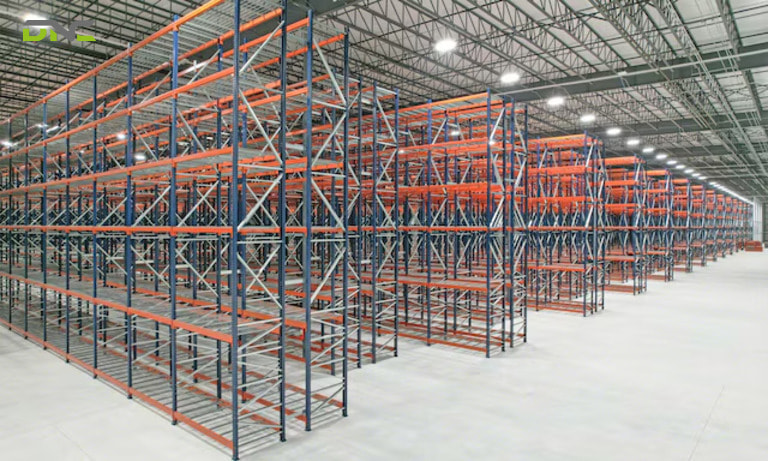
The safety clip (also called safety pin or locking pin) is a formed steel wire or stamped steel component that inserts through aligned holes in the beam connector and upright column. Its sole function: prevent the beam from lifting out of the upright slots during accidental impact.
Without safety clips, interlock racking is structurally unsafe. A forklift striking a beam with upward force (common during pallet placement and retrieval) can lift the beam clear of the teardrop lock — causing the beam to fall along with any pallets it supports. Safety clips eliminate this failure mode.
DNC Automation specifies safety clips on every beam-to-upright connection — no exceptions. Our post-installation inspection verifies 100% clip installation before handover to the client.
Safety Clip: The Critical Component
Types of Interlock Racking Configurations
Standard Selective Interlock
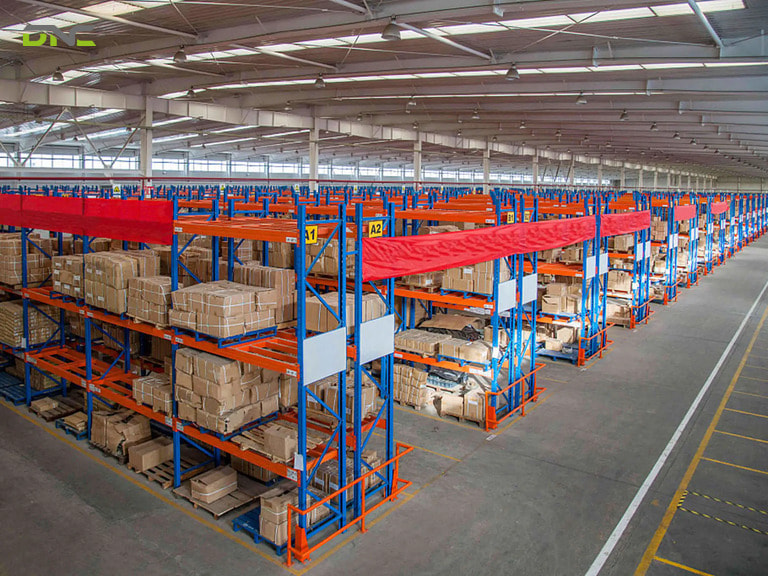
Single-deep selective racking with interlock beam connections. Every pallet position faces the aisle. Beam heights adjustable in 50 mm or 75 mm increments. This is the default racking configuration for 70% of Malaysian warehouse installations.
Double Deep Interlock
Two selective interlock rows placed back-to-back. Same interlock connections on all beams. Requires deep-reach forklifts for back-position access.
Interlock with Wire Decking
Standard interlock beams fitted with wire mesh deck panels for pallet support. Decking sits on the beam flanges (step beams) or clips onto box beam tops. Interlock connection allows deck installation and removal without tools — enabling quick deck replacement or cleaning.
Multi-Tier Interlock with Mezzanine
Interlock racking frames extended to support mezzanine floor platforms. The interlock system’s adjustability allows mezzanine height changes — valuable for facilities that reconfigure upper-level working zones seasonally.
Interlock Drive-In
Drive-in racking with interlock support arms connecting to upright frames. Less common than selective interlock because drive-in systems experience higher lateral forces (forklift operation within the structure) — some engineers specify bolted connections for drive-in arm attachments.
Key Components
Upright Frames
Punched column profiles with teardrop or keyhole slot patterns at 50 mm or 75 mm pitch. Column gauge: 1.5–2.5 mm depending on load classification. Diagonal and horizontal bracing connects columns into a rigid frame assembly. Standard frame depths: 800 mm and 1,000 mm.
Interlock Beams
Box beam or step beam profiles with formed steel hook connectors welded to each end. Hook count: 3 (light/standard duty) or 4 (heavy duty). Hook material: 2.5–4.0 mm formed steel. Beam lengths: 1,800 mm (1-pallet bay), 2,700 mm (2-pallet bay), 3,600 mm (3-pallet bay).
Safety Clips
Formed wire or stamped steel clips. One clip per beam-to-upright connection (two clips per beam — one at each end). Clip must be inspectable from ground level without disassembling the racking. DNC Automation specifies high-visibility (yellow or orange) clips for easy visual inspection during safety audits.
Base Plates and Anchors
Standard selective racking base plates: 120 × 120 mm to 200 × 200 mm. Chemical or expansion anchor bolts: M12 or M16, minimum 2 per base plate. No difference from non-interlock racking — the base connection is always bolted regardless of beam connection type.
Column Guards
Floor-mounted steel guards protecting upright columns from forklift impact. Standard for all aisle-end positions and recommended every 5th upright along high-traffic aisles. Guard rating: 10–25 kN impact force absorption.
Column gauge: 1.5–2.5 mm depending on load classification
Applications in Malaysian Warehouses
Leased Warehouse Facilities
Malaysian manufacturers operating in leased warehouses (3–5 year terms) need racking that relocates when the lease expires. Interlock racking disassembles in 1–2 days for a 1,000-position system, transports as flat-packed components, and reinstalls at the new location with minimal component replacement. Bolted racking systems lose 15–25% of components to thread damage, bolt shearing, and deformation during disassembly — interlock systems lose less than 5%.
Fast-Growing Operations
Businesses experiencing rapid growth need racking that scales weekly or monthly — adding bays, adjusting beam heights for new product dimensions, or reconfiguring zones for seasonal peaks. Interlock racking’s tool-free adjustment makes this scaling practical at the warehouse supervisor level, without scheduling contractor visits.
Multi-Tenant Warehousing
3PL providers managing multiple client zones in shared warehouses reconfigure racking layouts as clients onboard and offboard. Interlock racking enables zone boundary changes, beam height adjustments for different product profiles, and temporary aisle reconfigurations — all without structural modification.
Warehouse Expansion Projects
When expanding an existing warehouse, interlock racking from the original installation integrates directly with new racking — provided the same manufacturer and slot pattern are used. DNC Automation maintains manufacturer consistency across projects to ensure long-term expansion compatibility.
General Manufacturing Storage
Automotive parts, electronics, FMCG, building materials, and general manufacturing — the majority of Malaysian warehouse storage operates on interlock selective racking because it balances load capacity, adjustability, installation speed, and cost better than any alternative connection method.
Benefits of Interlock Racking
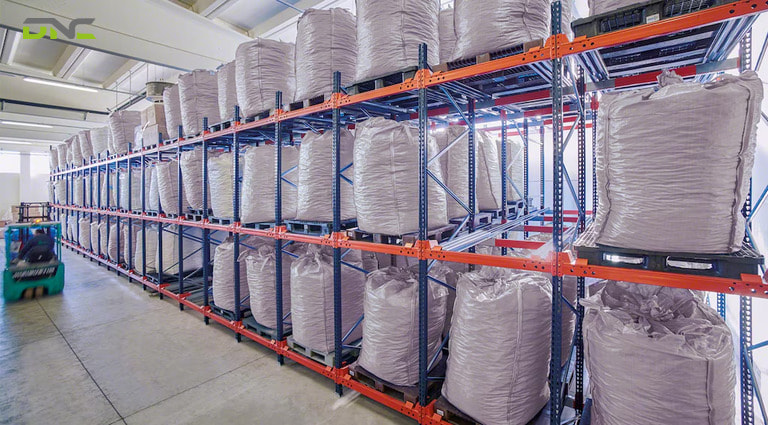
3–5× faster installation than bolted racking. A 1,000-position interlock system installs in 5–7 days versus 10–15 days for bolted. Weekend installation is feasible for systems under 500 positions — minimising operational disruption.
Tool-free beam adjustment. Beam height changes take under 5 minutes per beam with a rubber mallet and safety clips. No wrenches, no torque specifications, no bolt threading concerns.
Full relocatability. Interlock racking disassembles, transports, and reinstalls with less than 5% component loss — compared to 15–25% for bolted systems. This preserves the racking investment across facility moves.
Equivalent structural capacity. EN 15512-certified interlock connections deliver the same beam and frame load ratings as bolted connections. The interlock mechanism is not a compromise — it is an engineered alternative with independently tested performance.
Lower installation labour cost. Faster assembly = fewer labour hours = 20–30% lower installation cost. For Malaysian installations where contractor day rates are RM 200–350 per worker, this translates to RM 20,000–50,000 savings on a 1,000-position project.
Standardised global components. Teardrop interlock is the global standard — replacement beams, frames, and accessories are available from multiple manufacturers. This prevents single-supplier lock-in and ensures long-term spare parts availability.
Benefits of Interlock Racking
How to Specify Interlock Racking
Verify Slot Pattern Compatibility
Confirm that all beams and frames use the same slot pattern (teardrop, keyhole, or manufacturer-specific). Mixed slot patterns result in beam-upright incompatibility. DNC Automation maintains a manufacturer compatibility database and specifies single-pattern systems for every project.
Select Beam Connector Rating
Match connector rating to maximum beam load plus dynamic safety factor (1.5× for standard operations, 2.0× for heavy forklift traffic). A beam supporting 2,000 kg needs a connector rated at minimum 1,500 kg per end (static) × 1.5 dynamic factor = 2,250 kg per end.
Specify Safety Clips
One clip per connection — minimum. Clip material should resist fatigue and corrosion: galvanised or stainless steel wire (1.5–2.5 mm diameter) or stamped spring steel clips. Include spare clips (10% of total count) for replacement during inspections.
Plan for Future Expansion
Specify all components from a single manufacturer and document the slot pattern, beam profile, and connector type. Store this specification in the facility documentation — ensuring future expansion uses compatible components even if a different procurement team manages the purchase.
How to Specify Interlock Racking
FAQ — Interlock Pallet Racking System
What is an interlock pallet racking system?
An interlock pallet racking system uses hook-in (teardrop or keyhole) connectors that lock beams into upright frame slots without bolts or tools. The connection is made by inserting formed steel hooks into punched slots and securing with a safety clip. This boltless design enables 3–5× faster assembly, tool-free height adjustment, and full system relocatability while maintaining load capacities of 1,000–3,500 kg per beam level.
Is interlock racking as strong as bolted racking?
Interlock connections tested to EN 15512 deliver equivalent structural performance to bolted connections at the same load ratings. The safety clip prevents beam disengagement under impact. The connection type (interlock vs. bolted) does not determine overall system capacity — frame gauge, beam section, and height configuration are the governing factors. Interlock is the global standard for selective pallet racking precisely because it matches bolted performance with superior installation efficiency.
How long does interlock racking installation take?
A 1,000-position interlock system installs in 5–7 working days with a 4–6 person installation team. This is 50–70% faster than bolted racking installation. Weekend installation is feasible for systems under 500 positions. DNC Automation coordinates installation scheduling to minimise warehouse operational disruption — including night shift and weekend installation options.
Can I mix different manufacturers’ interlock racking?
Mixing manufacturers is generally not recommended because slot patterns (teardrop vs. keyhole vs. proprietary) vary between manufacturers. TTF beams do not fit Mecalux uprights. However, some manufacturers use the same teardrop standard (2″ × 1″ American teardrop). Verify physical compatibility through test assembly before committing to mixed-manufacturer procurement. DNC Automation ensures single-manufacturer consistency on all projects.
How much does interlock racking cost in Malaysia?
Interlock selective racking costs RM 350–600 per pallet position — identical to standard selective racking because interlock IS the standard beam connection method in modern racking. There is no cost premium for interlock versus bolted connections. Heavy duty interlock (2,500+ kg beams): RM 500–900 per position. Installation adds 10–15% of hardware cost.
Are safety clips really necessary?
Safety clips are mandatory on every beam-to-upright connection — no exceptions. Without clips, a forklift striking a beam with upward force can lift the beam out of the interlock slots, causing the beam and its pallet loads to fall. EN 15512 and DOSH guidelines require positive locking mechanisms (safety clips) on all boltless beam connections. Missing clips are a critical inspection failure requiring immediate correction.
Can interlock racking be used for heavy loads?
Heavy duty interlock connectors rate at 2,500–4,000 kg per beam end — supporting beam pair loads of 3,500–5,000+ kg. Combined with heavy gauge frames (2.0–2.5 mm columns) and deep box beams (120–160 mm), interlock racking handles the same heavy industrial loads as bolted systems. For extreme loads above 5,000 kg per beam, some engineers add bolted reinforcement to the interlock connection for additional security.
Conclusion
Interlock pallet racking systems deliver the structural performance of industrial racking with the assembly efficiency of modular construction — a combination that serves Malaysian warehouses requiring fast installation, frequent reconfiguration, and long-term relocatability. The teardrop interlock connection is not a budget compromise; it is the engineered global standard for pallet racking, delivering equivalent load capacity to bolted systems with 3–5× faster installation.
DNC Automation specifies, supplies, and installs interlock racking systems with verified manufacturer compatibility, 100% safety clip coverage, and post-installation structural inspection. Our 20+ years of warehouse engineering ensures every interlock installation meets EN 15512 structural standards and DOSH workplace safety requirements — providing a racking system that performs safely for its full 15–25 year service life.
- 4 views
- 0 Comment
Recent Comments