



Mobile Conveyor: A Detailed Guide to Flexible Material Handling Systems
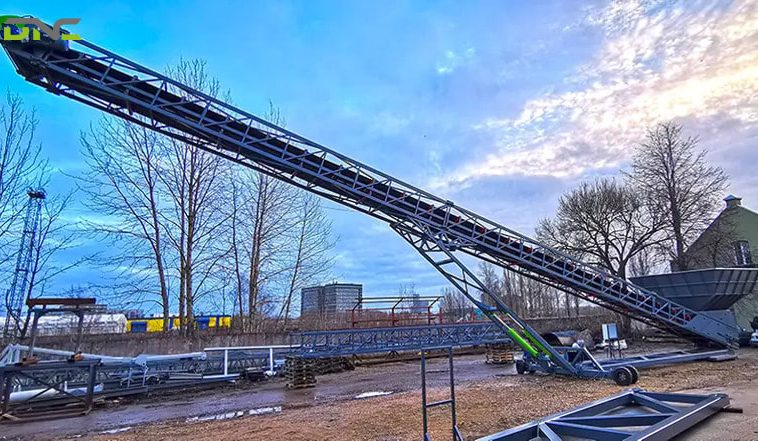
Mobile conveyor systems have become indispensable equipment for Malaysian warehouse operators, 3PL providers, and manufacturing facilities that must adapt to fluctuating throughput demands. Pos Malaysia — a DNC Automation client — processes millions of parcels daily across its distribution network, and during Lazada and Shopee mega-sale events like 11.11 and 12.12, parcel volume can spike 400% overnight. Stationary conveyor installations cannot respond to that kind of volatility. Mobile conveyors deploy in minutes, extend reach from dock to truck, and retract when the surge passes. DNC Automation, Malaysia’s Top #1 Factory Automation Company established in 2005, has engineered and commissioned mobile conveyor systems across Selangor logistics parks, Johor cross-border freight terminals, and airport cargo facilities. This article explains what mobile conveyors are, how they work, what types exist, and how Malaysian operators can select the right mobile conveyor system for their application — with real performance numbers and specific selection criteria.
What Is a Mobile Conveyor?
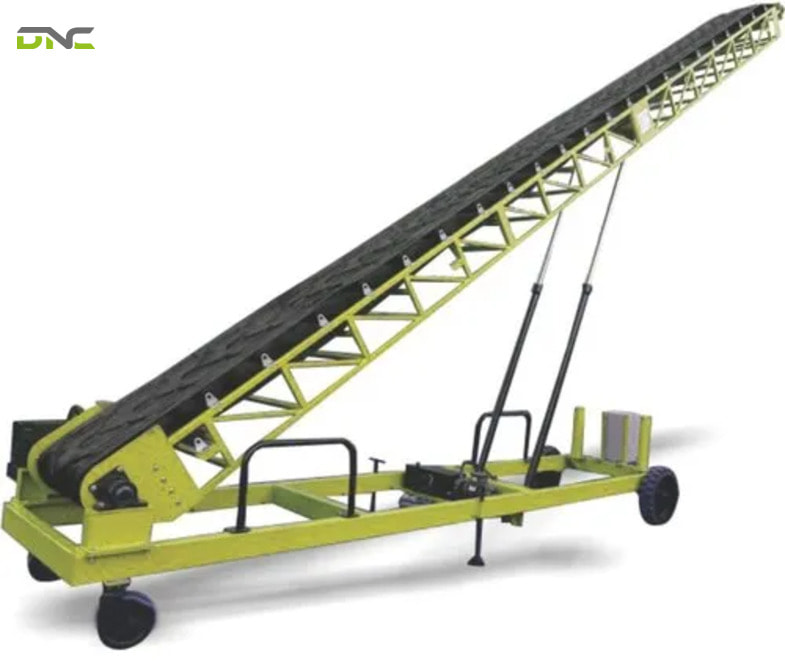
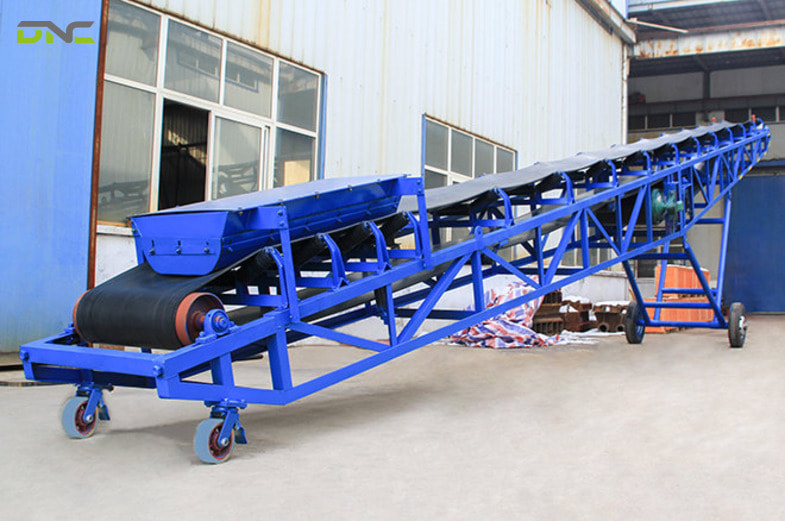
A mobile conveyor is a self-contained belt conveyor mounted on wheels, casters, or crawler tracks, allowing the entire unit to be repositioned without tools or structural modification. Unlike fixed conveyor installations embedded in building infrastructure, a mobile conveyor system requires no anchor bolts, no civil works, and no dedicated power conduit — the operator rolls it into position, connects to a standard power outlet (typically 240V single-phase or 415V three-phase), and begins operation.
Mobile conveyor systems deliver belt widths from 400mm to 800mm, operate at belt speeds from 0.5 to 2.0 m/s, and handle individual item loads up to 500 kg or distributed loads up to 1,500 kg across the belt surface. The defining attribute of a mobile conveyor is repositionability: the same unit that unloads a refrigerated trailer at 6 AM can be rolled to a different dock bay and extended to serve an outbound lorry at 2 PM.
Malaysian logistics operators have adopted mobile conveyors as core infrastructure rather than temporary equipment. The ASEAN conveyor market reached USD 3.1 billion in 2025 and is growing at 8.1% CAGR, driven significantly by e-commerce fulfillment and cross-border logistics growth in Malaysia’s Johor corridor.
How Does a Mobile Conveyor Work?
Mobile conveyor operation follows a straightforward sequence, but understanding each stage helps operators maximize throughput and avoid common misuse errors that accelerate wear.
Step 1 — Positioning and Deployment
The mobile conveyor begins as a compact unit parked against a wall or in a staging area. An operator rolls the unit on polyurethane casters (typically 150–200mm diameter, swivel front, fixed rear) to the desired position — usually aligned with a truck tailgate, dock leveler, or production line extension point. Telescoping models extend their belt carriage forward by 1.5–9m using a hydraulic or electric drive mechanism built into the frame. Inclined models adjust their angle using a hand-crank or electric actuator to match dock height differential.
Step 2 — Height and Angle Adjustment
Mobile conveyor frames incorporate scissor-lift or column-lift height adjustment mechanisms, typically providing 600mm to 1,400mm infeed height range. The operator sets the infeed height to match the truck floor height (standard Malaysian lorry floors range from 900mm to 1,350mm above ground). Belt angle adjustment — up to 18–25° maximum incline — accommodates height differentials between truck floor and warehouse floor without requiring dock levelers.
Step 3 — Power Connection and Speed Setting
The drive motor (0.25–2.2 kW typical range) connects to a standard electrical outlet. A variable frequency drive (VFD), standard on quality mobile conveyor systems, allows belt speed adjustment from 0.5 to 2.0 m/s. Operators match speed to the fragility of the cargo — 0.5–0.8 m/s for cartons containing glass or electronics; 1.5–2.0 m/s for durable industrial goods or aggregates.
Step 4 — Loading and Active Conveyance
Workers place packages, cartons, or bulk material onto the infeed end of the mobile conveyor belt. The belt carries items through the telescoped or inclined section to the outfeed point — typically the truck bed, dock floor, or downstream fixed conveyor. On telescoping units, the extended inner carriage retracts as the truck load grows, keeping the discharge point close to the load face.
Step 5 — Retraction and Repositioning
Once the truck is loaded or unloaded, the operator retracts the telescoping section, folds any hinged sections, and rolls the mobile conveyor to its next deployment point or storage position. Quality designs complete full retraction in under 90 seconds, enabling rapid bay turnover at high-volume distribution centers.
Key Drive Components
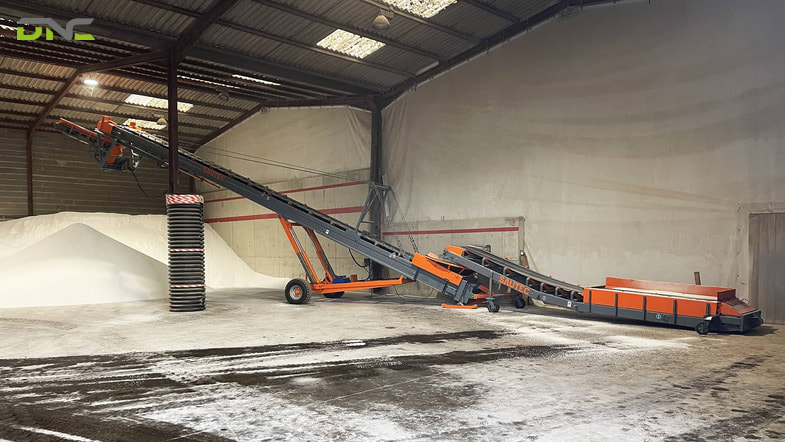
Mobile conveyor systems comprise a drive pulley (motorized head pulley), idler/tail pulley, belt tensioning system (take-up adjuster), carrying idlers (spaced 600–1,200mm depending on load), return rollers, and the undercarriage frame with wheels. Telescoping models add a nested inner frame on rollers or ball bearings, plus the extension actuator. The belt surface — typically PVC, rubber, or modular plastic — is specified based on whether the application involves smooth cartons, wet/oily materials, or sharp-edged industrial parts.
Types of Mobile Conveyor
Mobile conveyor systems divide into five distinct types, each engineered for a specific combination of reach, load, and terrain requirements.
1. Telescoping Mobile Conveyor
Telescoping mobile conveyors extend from a retracted length of 3–5m to a fully extended length of up to 12m, providing a telescoping stroke of 1.5–9m. The inner belt carriage slides out on precision linear bearings, maintaining belt tension throughout the extension range via a built-in belt storage system or automatic tensioner.
Telescoping mobile conveyors represent the highest volume deployment in Malaysian logistics. Pos Malaysia’s parcel distribution hubs, DHL and CJ Logistics facilities in Shah Alam, and cross-border freight operators in Johor Bahru all rely on telescoping units as their primary truck loading/unloading tool. Belt widths of 600–800mm accommodate standard Malaysian shipping carton sizes. Capacity reaches 1,200 cartons per hour at full belt speed.
| Specification | Telescoping Mobile Conveyor |
| Retracted Length | 3–5m |
| Extended Length | Up to 12m |
| Belt Width | 400–800mm |
| Belt Speed | 0.5–2.0 m/s |
| Max Item Weight | 50 kg/item |
| Power Requirement | 1.1–2.2 kW |
2. Inclined Mobile Conveyor
Inclined mobile conveyors feature a fixed-angle belt (18–25°) on a mobile undercarriage, designed specifically to bridge vertical height differences at loading docks. Malaysian manufacturing facilities with receiving docks set at non-standard heights frequently use inclined mobile conveyors to avoid the cost of dock leveler installation.
Inclined mobile conveyor belts must be cleated or chevron-profiled to prevent load rollback on the incline. Cleat heights of 25–75mm accommodate item size; taller cleats handle bulk bags and industrial components, while shorter cleats suit retail cartons. Inclined models are shorter (3–6m) than telescoping units but more compact and less expensive.
3. Folding/Portable Belt Conveyor
Folding portable belt conveyors include hinged sections that fold the unit to 50–60% of deployed length, enabling storage in tight spaces. Small warehouses, popup fulfillment centers, and seasonal operations — common in Malaysian FMCG distribution during Hari Raya and Chinese New Year restocking cycles — benefit from folding conveyors that store against walls when not deployed.
Folding conveyors are typically lighter (80–200 kg), narrower (400–600mm belt width), and carry lower loads (up to 30 kg/item) than telescoping units. Their portability makes them suitable for multi-level facilities where freight elevators impose weight limits on equipment movement.
4. Crawler/Tracked Mobile Conveyor
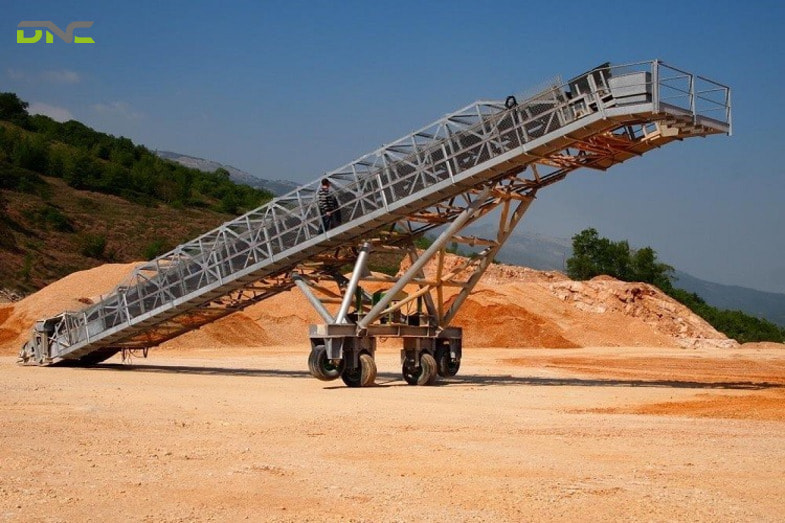
Crawler mobile conveyors replace wheeled undercarriages with rubber crawler tracks, enabling operation on unpaved surfaces, graded terrain, and outdoor environments. Aggregate quarries in Selangor and Johor, construction sites, and palm kernel shell handling at palm oil mills in Sabah and Sarawak deploy crawler conveyors where wheeled equipment cannot maneuver.
Crawler units are self-propelled (diesel or electric), reach lengths of 18–30m, and handle bulk materials — stone, sand, wood chips, biomass — rather than packaged goods. Belt widths reach 1,000mm and conveying capacities reach 300 tonnes per hour on heavy-duty crawler models.
5. Truck-Mounted Conveyor
Truck-mounted conveyors are permanently installed on delivery vehicles — the conveyor folds flat during transit and deploys hydraulically or manually at the delivery point. Feed mills, building materials distributors, and agricultural suppliers in Malaysia’s Sabah and Sarawak regions use truck-mounted conveyors to offload at remote sites without fixed dock infrastructure.
The truck-mounted conveyor extends 3–6m from the vehicle side or rear, operates on the truck’s PTO (power take-off) hydraulic system, and returns to transport position in under 2 minutes. Belt widths are narrower (300–450mm) and speeds lower (0.3–0.8 m/s) than dock-mounted units, reflecting the lighter parcel weights typical of delivery route operations.
| Type | Best Application | Length Range | Drive |
| Telescoping | Truck loading/unloading, 3PL | 3–12m | Electric (VFD) |
| Inclined | Height bridging at docks | 3–6m | Electric |
| Folding/Portable | Small warehouse, seasonal | 2–5m | Electric |
| Crawler/Tracked | Outdoor, aggregate, unpaved | 10–30m | Diesel/Electric |
| Truck-Mounted | Delivery vehicle, remote sites | 3–6m | PTO Hydraulic |
Key Components of a Mobile Conveyor System
Mobile conveyor systems share a common set of core components, though component quality and specification vary significantly across the price spectrum.
Drive Motor and VFD. The drive motor (typically 0.37–2.2 kW) connects through a variable frequency drive that controls belt speed precisely from 0 to maximum rated speed. A VFD also enables soft-start, eliminating belt jerk that damages packages at startup. DNC Automation specifies Siemens drive motors and control components on all mobile conveyor builds, leveraging DNC’s direct partnership with Siemens Germany.
Conveyor Belt. Belt selection depends on cargo type. PVC smooth surface (Shore A 60–70) suits retail cartons. PVC chevron/cleat belt handles inclined applications up to 25°. Rubber belt with 4mm top cover handles abrasive or heavy industrial materials. Food-grade white PVC or PU belt is required for direct food contact applications. DNC Automation stocks replacement belt inventory for all mobile conveyor types it commissions.
Frame and Undercarriage. Mild steel with powder coat finish is standard. Stainless steel SS304 frames are available for food-processing environments. The undercarriage caster set determines maneuverability: four swivel casters (front two with brakes) provide maximum agility for warehouse bay operations; two fixed rear casters with two front swivel provide stability for inclined applications.
Belt Tensioning System. Screw-type take-up tensioners (adjustable tail pulley) on basic models; gravity take-up on larger units. Proper belt tension prevents belt wander, reduces drive pulley slippage, and extends belt service life.
Safety Guards and Controls. Pull-cord emergency stop (E-stop) runs the full conveyor length, accessible from either side. Speed selection switch (typically 3 preset speeds), forward/reverse control, and digital speed display are standard on DNC-specified systems. Safety guards cover all in-running nip points per DOSH (Department of Occupational Safety and Health Malaysia) requirements.
Applications: Where Mobile Conveyor Is Used in Malaysian Manufacturing
Mobile conveyor systems appear across nearly every sector of Malaysian industry, but five application areas drive the majority of installations.
Warehouse and 3PL Logistics
Malaysian third-party logistics providers (3PL) operating in Selangor’s Shah Alam industrial corridor — the country’s highest-concentration logistics zone — depend on mobile conveyors for flexible dock capacity. Standard dock configurations cannot handle the 200–400% throughput surges that occur during Lazada 11.11 and Shopee 12.12 mega-sale events. DNC client Pos Malaysia processes over 1 million parcels on peak e-commerce days; mobile conveyors at outbound dock bays allow a single operator to unload a 40-foot container in 35–45 minutes compared to 90–120 minutes with manual labor alone.
Airport Baggage Handling
POS Aviation — a DNC Automation client — operates ground handling services at Malaysian airports including KLIA and Penang International. Mobile conveyors bridge the gap between aircraft cargo holds (at aircraft floor height, approximately 1.2–2.5m above tarmac depending on aircraft type) and baggage carts. Inclined mobile conveyors with stainless steel frames and anti-static belts handle checked luggage and air freight without damaging high-value cargo. The mobile format allows a single unit to service multiple aircraft stands as schedules demand.
E-Commerce Fulfillment Centers
Malaysia’s e-commerce logistics sector grew at over 20% annually through 2025, and fulfillment center designs must accommodate volume peaks without permanent infrastructure investment. Mobile conveyors in e-commerce applications typically run 16–18 hours daily during peak periods (November–December, Ramadan/Eid pre-restocking). Telescoping units at outbound shipping docks and inclined units at receiving docks represent the two highest-demand mobile conveyor applications in this segment.
Manufacturing Loading Docks
Manufacturing plants in Penang’s electronics cluster (including Sony, a DNC Automation client) use mobile conveyors to extend their fixed internal conveyor systems to loading dock areas during export shipment preparation. Rather than investing in permanent dock conveyors at every bay — many of which are active only a few hours per week — manufacturers deploy two or three mobile units shared across 8–12 dock bays.
Construction and Aggregate Handling
Crawler mobile conveyors serve Malaysia’s active construction sector — particularly infrastructure projects in Johor (Iskandar Malaysia development corridor) and East Malaysia (Sabah/Sarawak highway and energy projects). Aggregate — crushed granite, sand, laterite — requires a 1,000mm+ belt width crawler conveyor with rubber-topped belt and self-cleaning tail pulley. These units deliver 100–300 tonnes per hour at distances up to 30m, replacing 4–8 dump truck shuttles and eliminating dust and spillage on tight urban construction sites.
Benefits of Mobile Conveyor for Factory Operations
Mobile conveyor systems deliver measurable operational benefits that DNC Automation clients consistently report after commissioning.
Labor Reduction. A single operator with a telescoping mobile conveyor performs the work of 3–4 manual laborers at a loading dock. Malaysia’s rising minimum wage (RM 1,700/month as of 2025, with further increases legislated under NIMP 2030 workforce objectives) makes labor cost reduction a direct driver of mobile conveyor ROI. DNC Automation clients document 50% operational cost savings on dock operations after mobile conveyor deployment.
Human Error Reduction. Manual package handling generates handling damage claims — estimated at 1.5–3% of shipment value in conventional manual dock operations. Mobile conveyors reduce package drops, impacts, and mishandling by 80%, directly reducing damage claims and customer complaints. This aligns with DNC Automation’s documented 80% reduction in human error across automation deployments.
Deployment Speed. A telescoping mobile conveyor deploys from stored position to operational status in under 4 minutes. No tools, no permits, no contractor involvement. This speed-to-deployment makes mobile conveyors the only practical solution for responding to same-day throughput demand changes.
Infrastructure Cost Avoidance. Fixed conveyor installation in a warehouse dock requires civil works, electrical conduit installation, and structural supports — typically RM 80,000–RM 250,000 per dock bay for a full fixed system. A mobile conveyor serving the same function costs RM 15,000–RM 65,000 and serves multiple bays. Malaysian manufacturers can access SAG Grant funding (up to RM 1M, 70:30 matching under MIDA) to offset mobile conveyor investment.
Productivity Increase. DNC Automation’s field data across installed mobile conveyor systems shows 50% productivity increase in dock throughput — consistent with the industry-wide benchmark of 800–1,200 cartons/hour per mobile conveyor versus 200–350 cartons/hour per manual labor pair.
How to Choose the Right Mobile Conveyor for Your Factory
Selecting the correct mobile conveyor requires matching five key specification parameters to your specific operation.
- Required Reach and Extension. Measure the maximum depth of your deepest truck or container. Standard 40-foot containers require 11–12m of belt reach from dock face; 20-foot containers require 6–7m. Telescoping units with 9m stroke (3m retracted to 12m extended) cover all standard container lengths. If you only load/unload rigid-body lorries (3–6m deck length), a 6m fixed-length inclined unit may suffice.
- Belt Width and Load Per Item. Belt width must exceed the widest item by at least 100mm per side (minimum 200mm total clearance). A 600mm belt handles standard Malaysian shipping cartons (up to 500mm wide). Fragile or irregularly shaped loads require wider belts — 700–800mm — to prevent edge hanging and tipping. Maximum item weight must not exceed 50 kg for standard mobile conveyors; heavier individual items require a crawler or heavy-duty inclined unit.
- Incline Angle vs. Cargo Type. Smooth-surfaced cartons slide on inclines above 15°; specify cleated belt for any incline above 12°. Cleat pitch and height must match item dimensions — cleat spacing at 300mm intervals with 50mm cleat height suits standard carton sizes. For bulk aggregate (crawler units), incline of 18–22° is the practical limit for reliable conveying without rollback.
- Environment and Hygiene Requirements. Outdoor, tropical Malaysian conditions — high humidity, UV exposure, rain — require UV-stabilized belt compounds and galvanized or powder-coated frames. Palm oil environments (sticky, corrosive) require SS304 frames and oil-resistant belt rubber. Airport and food environments require NSF/food-grade belt surfaces and stainless steel contact parts.
- Power Availability. Dock areas in older Malaysian industrial buildings may have only single-phase 240V/15A outlets. Verify available power before specifying drive motor size. Most mobile conveyors under 6m length operate on single-phase; units above 8m typically require three-phase 415V supply for adequate drive power.
Frequently Asked Questions About Mobile Conveyor
Q: What is the difference between a mobile conveyor and a portable conveyor belt?
A mobile conveyor and a portable conveyor belt are the same category of equipment — both terms describe a belt conveyor on wheels or casters that can be repositioned without permanent installation. “Mobile conveyor” is the more widely used industrial term in Malaysia; “portable conveyor belt” appears more in retail and light-duty contexts. DNC Automation uses “mobile conveyor system” to describe units with VFD speed control, telescoping capability, and industrial-grade drive systems, distinguishing them from the lighter consumer-grade “portable belt” category.
Q: How long does a mobile conveyor take to set up?
A telescoping mobile conveyor deploys from storage position to full operational status in 3–5 minutes with a single operator. Positioning (1–2 min), extension to required length (30–60 sec), height adjustment (30–60 sec), power connection (15–30 sec), and speed selection (10 sec) account for the full setup sequence. This compares to 45–90 minutes for a temporary inclined conveyor rental involving manual assembly and leveling.
Q: Can a mobile conveyor handle bulk materials, or only packaged goods?
Mobile conveyor systems handle both packaged goods and bulk materials, but the design differs substantially. Packaged goods conveyors use smooth or lightly cleated flat belts. Bulk material mobile conveyors (primarily crawler-tracked units) use deep-cleated rubber belts or trough-form belts (carrying idlers angled at 20–35°) that cup the material to prevent spillage. Specifying a flat-belt mobile conveyor for bulk aggregate will result in spillage and rapid belt damage. DNC Automation engineers match belt profile and idler configuration to material type during system specification.
Q: What is the maximum incline angle for a mobile conveyor?
Most mobile conveyor manufacturers specify a maximum incline of 18–25° depending on belt type and material being conveyed. Smooth belt conveyors should not exceed 12–15° for smooth-surfaced loads. Cleated belt conveyors handle up to 25° for carton goods. Crawler conveyor bulk units handle aggregate at 18–22°. Exceeding the rated incline angle causes material rollback, accelerated belt wear on the top cover, and motor overload. DNC Automation specifies incline angle based on the specific product mix, not the machine’s maximum rated angle.
Q: How much does a mobile conveyor cost in Malaysia?
Mobile conveyor pricing in Malaysia ranges from RM 8,000–RM 15,000 for basic folding/portable units (light duty, 3–4m, single-phase) to RM 35,000–RM 65,000 for full-specification telescoping units (9m stroke, VFD, 800mm belt, SS304 contact parts) and RM 120,000–RM 350,000 for crawler mobile conveyors. Malaysian manufacturers can apply for SAG Grant (Smart Automation Grant under MIDA) to fund up to 70% of mobile conveyor investment, capped at RM 1M total project value. DNC Automation assists clients with grant application documentation as part of its project implementation service.
Q: How do Malaysian factories maintain mobile conveyors in tropical conditions?
Tropical Malaysian conditions (30–35°C ambient, 70–90% relative humidity year-round) accelerate specific wear modes in mobile conveyors: belt surface cracking (UV and ozone degradation), bearing corrosion in caster wheels and idler shafts, and drive belt slippage from moisture. DNC Automation’s maintenance protocol for mobile conveyors in Malaysian environments includes 500-hour belt inspection intervals (visual check for cracking, delamination, cleat wear), quarterly bearing re-greasing or replacement, monthly electrical connection inspection (tropical corrosion), and annual VFD inspection with thermal imaging. Replacing the belt covering every 18–24 months prevents catastrophic belt failure during peak operating periods.
Q: Is a mobile conveyor suitable for heavy loads like automotive parts?
Standard mobile conveyors (up to 500 kg/item, 1,500 kg distributed load) are suitable for packaged automotive parts — engine components, transmission assemblies in crates, bumper sets in cardboard packaging. Direct conveying of bare metal automotive stampings or sub-assemblies requires a heavy-duty mobile conveyor with roller chain belt surface (not rubber or PVC) and structural steel frame rated for the point loads generated by heavy parts placement. DNC Automation has supplied both rubber-belt and chain-surface mobile conveyors to Toyota and Sony facilities in Malaysia, configured for the specific part weights and handling conditions at each site.
Q: What safety certifications apply to mobile conveyors used in Malaysia?
Mobile conveyors operated in Malaysian workplaces fall under the Occupational Safety and Health Act 1994 (OSHA 1994) and its Machinery Regulations. Specific requirements include guarding of all in-running nip points, emergency stop accessible from both infeed and discharge ends, stability verification (anti-tip protection at maximum extension and incline), and electrical equipment compliance with Malaysian Electrical Safety Regulations. DNC Automation builds and certifies all mobile conveyor systems to these standards, and provides DOSH-compliant risk assessment documentation with each installation.
Conclusion
Mobile conveyor systems give Malaysian factory operators the flexibility to handle throughput surges, extend logistics reach, and reduce labor costs without committing to costly fixed infrastructure. From Pos Malaysia’s parcel docks handling 11.11 e-commerce spikes to POS Aviation’s baggage handling operations at KLIA, DNC Automation has engineered and delivered mobile conveyor solutions that deliver 50% productivity gains and 80% error reduction across the full logistics spectrum.
DNC Automation — Malaysia’s Top #1 Factory Automation Company since 2005 — brings 35 engineers, a 25,000 sq ft engineering facility, ISO 9001:2015 certification, and direct partnerships with Siemens Germany to every mobile conveyor project. Whether you need a single telescoping unit for a Johor logistics dock or a fleet of crawler conveyors for an East Malaysia aggregate operation, DNC Automation engineers the right solution.
- 19 views
- 0 Comment
Recent Comments