



Palletizing Systems: Complete Technology Comparison & Buyer’s Guide
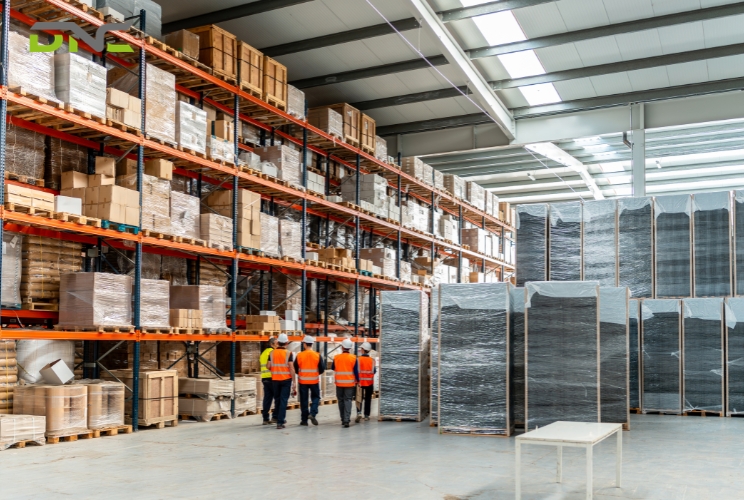
Palletizing systems span a technology range from RM 150,000 collaborative robots to RM 2,000,000 high-speed mechanical layer formers — each solving the same end-of-line challenge (stacking products onto pallets) through fundamentally different engineering approaches. For Malaysian manufacturers evaluating palletizing automation, the critical decision is not whether to automate but which system type matches your throughput, product variety, floor space, and budget constraints. This guide provides a side-by-side comparison of every palletizing technology available in the Malaysian market, with verified specifications, cost data, and selection frameworks that eliminate the guesswork from this capital investment. DNC Automation designs and integrates all palletizing system types — from Doosan cobots to Comau industrial robots to conventional mechanical palletizers.
What Are Palletizing Systems?
Palletizing systems are automated machines and integrated subsystems that stack finished products onto pallets in organised patterns at the end of production or packaging lines. The system receives individual products from upstream conveyors, arranges them into stable pallet loads following programmed stacking patterns, and discharges completed pallets for wrapping, labelling, and storage.
Every palletizing system performs five core functions: product reception (receiving from the packaging line), pattern formation (arranging products into layers), layer placement (transferring layers onto the pallet), pallet handling (dispensing empty pallets, discharging full pallets), and coordination (synchronising all operations through PLC-based control).
The palletizing systems market segments into five technology categories:
- Conventional mechanical — High-speed layer formers using mechanical sweeps and pattern tables
- Articulated robotic — Industrial robot arms with custom end-of-arm tooling
- Collaborative robotic (cobot) — Force-limited robots operating without safety fencing
- Gantry (cartesian) — Overhead XYZ motion systems
- Hybrid — Combinations of conventional layer forming with robotic placement
Each category targets a different intersection of speed, flexibility, cost, and footprint — making the selection dependent on operational requirements rather than absolute technology superiority.
Technology Comparison: All Five Palletizing System Types
Speed and Throughput
| System Type | Speed Range | Equivalent Manual Workers |
| Conventional | 15–60 cases/min | 8–24 workers (3 shifts) |
| Robotic | 8–30 cases/min | 4–18 workers (3 shifts) |
| Hybrid | 15–40 cases/min | 8–24 workers (3 shifts) |
| Gantry | 5–20 cases/min | 4–12 workers (3 shifts) |
| Cobot | 5–15 cases/min | 4–8 workers (3 shifts) |
Speed selection rule: Match palletizer speed to 120–150% of your packaging line output. A line producing 20 cases/minute needs a palletizer capable of 24–30 cases/minute to maintain continuous flow.
Flexibility and Changeover
| System Type | SKU Changeover Time | Multi-SKU Capability |
| Conventional | 30–60 minutes | Limited (mechanical adjustment) |
| Robotic | 2–5 minutes | Excellent (software recipe change) |
| Hybrid | 5–15 minutes | Good (partial mechanical, partial software) |
| Gantry | 2–5 minutes | Good (software recipe change) |
| Cobot | 2–5 minutes | Good (software recipe change, manual EOAT swap) |
Flexibility selection rule: If you run 5+ different products per day with changeovers, robotic or cobot systems eliminate the 30–60 minute mechanical changeover penalty that conventional systems impose.
Footprint Requirements
| System Type | Typical Footprint | Safety Zone |
| Conventional | 4 × 6 m to 6 × 10 m | Fenced perimeter |
| Robotic | 3 × 4 m to 5 × 6 m | Fenced perimeter |
| Hybrid | 4 × 6 m to 6 × 8 m | Fenced perimeter |
| Gantry | 2 × 3 m floor + overhead | Fenced perimeter |
| Cobot | 1.5 × 2 m | No fencing required |
Space selection rule: For facilities with less than 10 m² available at the line end, cobot palletizers are the only viable option. Gantry systems minimise floor-level footprint by operating overhead.
Investment and ROI
| System Type | Investment (RM) | Annual Labour Saving (RM) | ROI Period |
| Cobot | 150,000–500,000 | 360,000 | 5–17 months |
| Gantry | 300,000–1,200,000 | 360,000–540,000 | 10–33 months |
| Robotic | 400,000–1,500,000 | 540,000 | 9–33 months |
| Conventional | 500,000–2,000,000 | 720,000 | 8–33 months |
| Hybrid | 600,000–2,500,000 | 720,000 | 10–42 months |
Labour savings based on replacing 12–24 workers across 3 shifts at RM 2,500/month each
Product Handling Capability
| System Type | Max Weight/Pick | Product Types | Fragile Goods |
| Conventional | 50 kg/layer | Uniform cartons, bundles | Limited |
| Robotic | 20–700 kg | Any shape, any material | Excellent (force control) |
| Hybrid | 50 kg/layer + robotic | Mixed | Good |
| Gantry | 10–500 kg | Any shape | Good |
| Cobot | 5–30 kg | Light cartons, bags | Excellent (inherent force limit) |
Detailed System Profiles
Conventional Mechanical Palletizer
Conventional palletizers represent 50+ years of engineering evolution. Products flow through mechanical orienters, row formers, and layer accumulation tables before a horizontal sweep mechanism slides the completed layer onto the pallet.
Engineering architecture: Infeed conveyor → turner/orienter → row former → layer accumulation table → layer sweep → pallet elevator → pallet discharge
Malaysian adoption: High-speed F&B lines (Ramly, F&N, Dutch Lady production facilities), beverage bottling (mineral water, carbonated drinks), and canned goods manufacturers. Any single-SKU line running above 20 cases/minute justifies conventional palletizer investment.
Key specification: Layer cycle time determines throughput. A layer cycle of 6 seconds (table fill + sweep + pallet index) yields 10 layers/minute. At 6 cases per layer, this is 60 cases/minute.
Robotic Palletizer (Articulated Arm)
Articulated robots provide the optimal balance of speed and flexibility for multi-SKU Malaysian manufacturing. The robot’s software stores recipes for hundreds of stacking patterns — switching between products requires selecting a new recipe, not physical tooling changes.
Engineering architecture: Infeed conveyor → singulation/orientation → robot pick zone → pallet positions (1–4) → pallet discharge
Malaysian adoption: Multi-SKU F&B, pharmaceutical, consumer goods, and chemical packaging. DNC Automation integrates Comau robots (our exclusive Southeast Asia partnership) for payload ranges from 20 kg to 700 kg — covering every Malaysian palletizing application from light cartons to heavy drums.
Key specification: Robot reach determines maximum pallet height and multi-pallet serving capability. A Comau robot with 3,100 mm reach serves dual pallet positions while building pallet loads up to 1,800 mm height.
Collaborative Robot (Cobot) Palletizer
Cobots democratise palletizing automation for Malaysian SMEs. The inherent force-limiting of collaborative robots (maximum 150 N contact force per ISO/TS 15066) eliminates the safety fencing requirement — reducing installation cost by 30–40% and footprint by 60–70% compared to equivalent industrial robotic systems.
Engineering architecture: Simple infeed conveyor → cobot pick zone → single pallet position → manual or conveyor pallet exchange
Malaysian adoption: Growing rapidly among SMEs in Selangor and Johor industrial zones. Packaging operations running 5–12 cases/minute with limited floor space and budget find cobots ideal. DNC Automation integrates Doosan cobots — the M-series 25 kg payload model handles the majority of Malaysian carton and bag palletizing applications.
Key specification: Payload at full reach determines practical product handling. A 25 kg payload cobot at 1,700 mm reach handles standard F&B cartons (5–20 kg) with sufficient reach for 1,500 mm pallet height.
Gantry (Cartesian) Palletizer
Gantry systems mount on an overhead frame, moving the gripper in X, Y, and Z linear axes. The gantry head picks products from the infeed zone and places them on one or more pallets within the gantry’s working envelope.
Engineering architecture: Infeed zone → overhead gantry pick position → gantry XYZ travel → pallet positions → pallet discharge
Malaysian adoption: Heavy product palletizing (cement bags, building materials, paint drums) and multi-pallet configurations where a single overhead system serves 2–4 pallet positions. Manufacturing facilities with limited floor space but adequate overhead clearance benefit from the gantry’s minimal floor-level footprint.
Key specification: Gantry span determines how many pallet positions the system can serve. A 4 × 8 m gantry serves 4 pallet positions from a single overhead structure.
Hybrid Palletizer
Hybrid systems combine conventional layer-forming speed with robotic layer-placement flexibility. The mechanical layer former builds complete product layers at high speed; the robot arm or gantry picks the formed layer and places it on the pallet with programmable orientation.
Engineering architecture: High-speed infeed → mechanical layer former → robot/gantry layer pickup → pallet positions → discharge
Malaysian adoption: High-speed lines (20+ cases/minute) needing multi-SKU flexibility. The hybrid approach achieves conventional speeds for layer formation while offering robotic flexibility for layer orientation and multi-pallet serving.
How to Select the Right Palletizing System
Decision Matrix
Answer these five questions to narrow your selection:
- What is your peak line speed?
- < 8 cases/min → Cobot
- 8–15 cases/min → Cobot, Robotic, or Gantry
- 15–30 cases/min → Robotic or Conventional
- > 30 cases/min → Conventional or Hybrid
- How many product types per line?
- 1 product → Conventional (maximum speed)
- 2–5 products → Robotic (software changeover)
- 5+ products → Robotic (maximum flexibility)
- What is your maximum product weight?
- < 30 kg → Any system; Cobot viable
- 30–50 kg → Robotic, Gantry, or Conventional
- > 50 kg → Gantry or Heavy-payload Robotic
- Available floor space?
- < 10 m² → Cobot only
- 10–25 m² → Cobot, Robotic, or Gantry
- > 25 m² → Any system
- Budget?
- < RM 300,000 → Cobot
- RM 300,000–800,000 → Robotic or Gantry
- RM 800,000–1,500,000 → Robotic, Conventional, or Gantry
- > RM 1,500,000 → Conventional or Hybrid
Multi-Factor Scoring Example
For a Malaysian F&B manufacturer with: 18 cases/min line speed, 8 SKUs, 15 kg max product weight, 20 m² floor space, RM 800,000 budget:
| Factor | Cobot | Robotic | Gantry | Conventional | Hybrid |
| Speed match | ✗ | ✓ | ✗ | ✓ | ✓ |
| SKU flexibility | ✓ | ✓ | ✓ | ✗ | ✓ |
| Weight handling | ✓ | ✓ | ✓ | ✓ | ✓ |
| Space fit | ✓ | ✓ | ✓ | ✗ | ✗ |
| Budget fit | ✓ | ✓ | ✓ | ✓ | ✗ |
| Score | 3/5 | 5/5 | 4/5 | 3/5 | 2/5 |
Result: Robotic palletizer is the optimal selection for this application.
Integration and Implementation
Upstream Integration
The palletizing system must accept products from the existing packaging line without modifications to the upstream equipment. Key integration points: conveyor type (roller, belt, chain), product spacing, orientation, and line speed synchronisation. Accumulation conveyors between the packaging line and palletizer buffer 60–120 seconds of product to absorb rate variations.
Downstream Integration
Common downstream integrations: stretch wrapping (turntable or rotary arm), pallet labelling (automatic label applicator), and pallet discharge (conveyor to forklift staging). DNC Automation designs fully integrated end-of-line systems — from the last packaging machine through palletizing, wrapping, labelling, and staging.
Control System Integration
Palletizer PLC communicates with the production line control system for: recipe synchronisation (product changeover signals), line speed matching (production rate data), and fault coordination (line stop when palletizer faults). MES/WMS integration provides production order-driven recipe selection, throughput reporting, and OEE calculation.
Safety Integration
Safety zones must be defined per ISO 13849 risk assessment. Industrial robots require perimeter fencing with interlocked access gates and light curtains at product entry/exit openings. Cobots require risk assessment documentation proving safe collaborative operation at the installed operating parameters. DNC Automation conducts safety risk assessments per ISO 12100 for every palletizing installation.
FAQ — Palletizing Systems
What are the main types of palletizing systems?
Five main types: conventional mechanical (15–60 cases/min, highest speed), articulated robotic (8–30 cases/min, most flexible), collaborative robot/cobot (5–15 cases/min, lowest cost), gantry/cartesian (5–20 cases/min, heavy loads), and hybrid (15–40 cases/min, speed + flexibility). Each type targets a different combination of throughput, product variety, floor space, and budget.
Which palletizing system is best for Malaysian SMEs?
Cobot palletizers offer the best entry point for Malaysian SMEs: RM 150,000–500,000 investment, 1.5 × 2 m footprint, no safety fencing, and 12–18 month ROI. For SMEs with line speeds above 12 cases/minute, a mid-range robotic palletizer (RM 400,000–800,000) provides higher throughput while maintaining multi-SKU flexibility.
How do I calculate palletizer ROI?
ROI = Investment ÷ Annual Savings. Annual savings include: labour cost of replaced workers (RM 2,500/month × workers × 12), product damage reduction (30–50% improvement), overtime elimination, and injury cost reduction. Example: RM 600,000 robotic palletizer replacing 12 workers → annual saving RM 360,000 → ROI: 20 months. Government incentives reduce effective investment by 20–40%.
Can one palletizer serve multiple production lines?
Robotic palletizers with sufficient reach and speed can serve 2–4 production lines simultaneously. The robot picks from multiple infeed conveyors and places on designated pallets for each line. A single robot serving 3 lines reduces the per-line automation cost by 60–70%. DNC Automation designs multi-line cells with barcode/RFID tracking for automatic product-to-pallet routing.
What products can palletizing systems handle?
Palletizing systems handle virtually any packaged product: cartons, cases, bags (1–50 kg), bottles, cans, pails, drums, bundles, shrink-wrapped packs, and trays. Product-specific EOAT (end-of-arm tooling) is designed for each application. Fragile products (glass bottles, electronics) require force-controlled EOAT with vacuum or gentle-grip mechanisms. DNC Automation designs custom EOAT in-house for every product profile.
How long do palletizing systems last?
Industrial robotic palletizers last 15–20 years with proper maintenance. Conventional mechanical palletizers last 20–30 years. Cobot palletizers last 8–12 years. EOAT components (vacuum cups, gripper pads) are consumables replaced quarterly to annually. Conveyor components last 10–15 years. Total system lifespan is determined by the shortest-lived major component — typically the robot or mechanical drive system.
Conclusion
Palletizing systems represent the most impactful end-of-line automation investment for Malaysian manufacturers — converting a labour-intensive, injury-prone manual operation into a consistent, high-speed automated process. The five technology categories (conventional, robotic, cobot, gantry, hybrid) ensure a match exists for every throughput requirement, product type, floor space constraint, and budget level.
DNC Automation integrates all five palletizing system types — leveraging our Comau robotic partnership, Doosan cobot integration capability, Siemens controls expertise, and 20+ years of conveyor and material handling engineering. From RM 150,000 cobot installations for SMEs to RM 2,000,000+ integrated palletizing lines for multinational manufacturers, we deliver solutions that perform.
- 1 views
- 0 Comment
Recent Comments