


Food Conveyor Belt Systems for Hygienic Automation
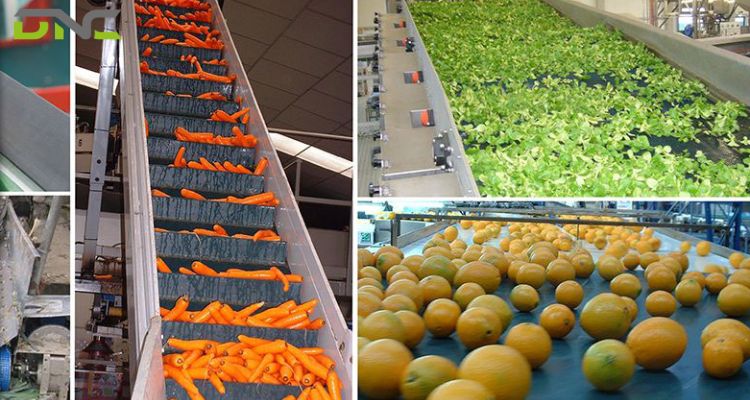
In today’s food manufacturing operations, hygiene, efficiency, and product consistency are non-negotiable requirements. Food conveyor belt systems are essential automation solutions that enable safe, controlled movement of food products across processing, handling, and packaging stages. Designed with food-grade materials and hygienic structures, these systems help minimize contamination risks while maintaining continuous production flow. By reducing manual handling and supporting seamless integration with automated equipment, food conveyor belts play a critical role in improving operational efficiency, meeting food safety standards, and ensuring reliable performance in demanding production environments.
What Is a Food Conveyor Belt?
A food conveyor belt is a specialized material handling system designed to transport food products safely and efficiently through processing, preparation, and packaging stages. Unlike standard industrial conveyors, food conveyor belts are engineered using food-grade materials, hygienic designs, and easy-to-clean structures to prevent contamination. These systems support continuous production flow, reduce manual handling, and ensure consistent product movement.
Food conveyor belts are commonly integrated with automated equipment such as sorters, checkweighers, metal detectors, and packaging machines to create streamlined, compliant food processing lines.
Why Food Conveyor Belts Are Essential in Food Automation
Food production environments require precision, cleanliness, and reliability. Conveyor systems form the backbone of automated food handling by ensuring smooth and controlled product movement.
Food conveyor belts help manufacturers meet operational and safety requirements while improving productivity.
- Improved hygiene control: Food conveyor belts are designed with minimal crevices, smooth surfaces, and open-frame structures. This design reduces the accumulation of debris and moisture, making cleaning faster and more effective. Proper hygiene control lowers contamination risks and supports food safety audits.
- Consistent production flow: Automated conveying eliminates bottlenecks and manual handling errors. Products move at controlled speeds between processing stages, ensuring stable throughput and reducing product damage or loss.
- Reduced labor dependency: By automating material transport, food conveyor belts minimize manual lifting and handling. This not only improves efficiency but also enhances workplace safety and reduces labor-related variability.
Common Types of Food Conveyor Belt Systems
Food processing operations vary widely, requiring different conveyor designs based on product type, layout, and hygiene level. Selecting the right conveyor type ensures optimal performance and compliance.
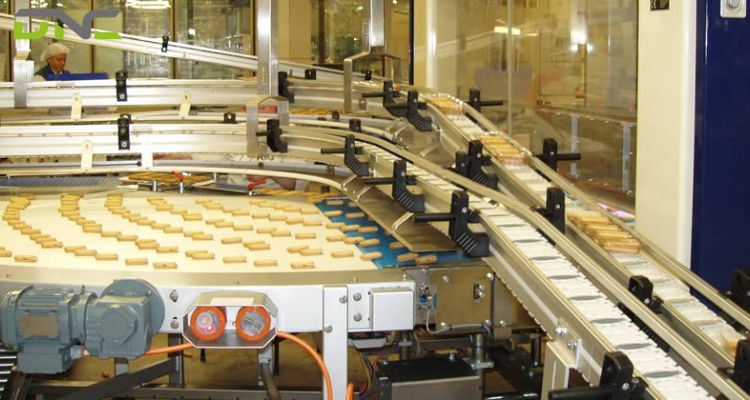
- Flat belt food conveyors: Flat belt conveyors are ideal for transporting packaged goods, baked products, and lightweight food items. Their smooth surface supports gentle handling and stable product movement across long distances.
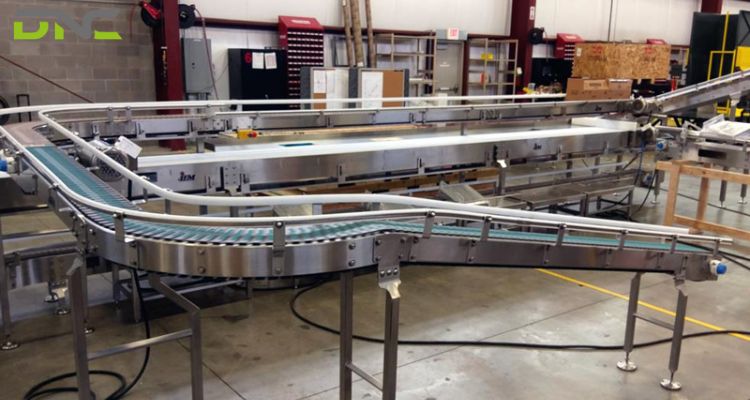
- Modular plastic belt conveyors: Modular belts are constructed from interlocking plastic segments. They offer excellent durability, easy replacement, and resistance to moisture and chemicals. These systems are widely used in washdown environments.
- Wire mesh conveyor belts: Wire mesh belts are suitable for applications involving heat, cooling, or drainage. They allow airflow and liquid drainage, making them ideal for baking, frying, or freezing processes.
- Incline and decline food conveyors: These conveyors enable vertical product movement between different processing levels. Cleated or textured belts prevent slippage while maintaining product orientation.
Food Conveyor Belt Materials and Hygienic Design
Material selection and hygienic design directly impact food safety, system lifespan, and maintenance efficiency. Understanding these elements is critical when specifying a food conveyor belt.
- Food-grade belt materials: Common materials include PU, PVC, and FDA-approved plastics. These materials resist oils, fats, moisture, and cleaning chemicals while maintaining flexibility and durability.
- Stainless steel conveyor frames: Stainless steel, especially grades 304 and 316, is widely used for food conveyor structures. It offers corrosion resistance, strength, and easy cleaning in wet or high-hygiene environments.
- Open-frame and hygienic design principles: Open-frame construction improves visibility and access for cleaning. Sloped surfaces, rounded edges, and minimal fasteners prevent debris buildup and bacterial growth.
Applications of Food Conveyor Belts Across Industries
Food conveyor belts are used across a wide range of processing and packaging operations. Each application requires specific design considerations to ensure efficiency and hygiene.
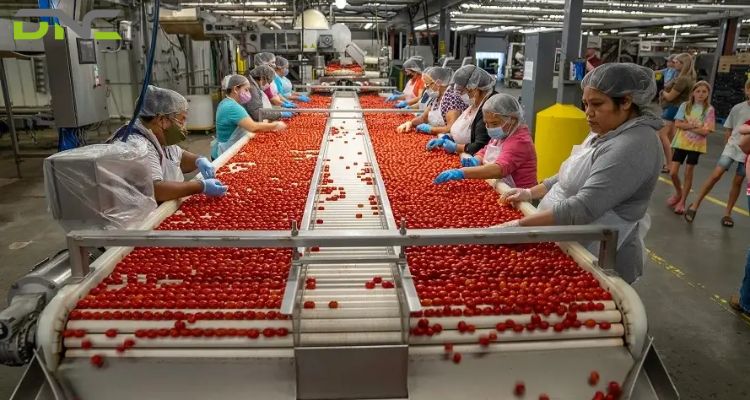
- Food processing lines: Conveyors transport raw ingredients, semi-processed items, and finished products between processing stages. Consistent movement supports accurate processing and reduces handling time.
- Packaging and labeling systems: Food conveyor belts feed products into packaging machines, labeling units, and sealing equipment. Precise speed control ensures accurate packaging and reduced waste.
- Cooling, freezing, and drying processes: Conveyor systems allow products to pass through controlled temperature zones while maintaining uniform exposure and spacing.
Food Conveyor Belt vs Other Industrial Conveyor Systems
Not all conveyor systems are suitable for food environments. Understanding the differences helps avoid compliance and performance issues. The table below highlights key distinctions.
| Comparison Criteria | Food Conveyor Belt | Standard Industrial Conveyor |
|---|---|---|
| Belt Material | Food-grade, FDA-approved | General-purpose materials |
| Frame Design | Hygienic, open-frame | Enclosed or heavy-duty frames |
| Cleaning | Easy washdown | Limited cleaning access |
| Safety Compliance | HACCP-focused | Industrial safety only |
| Application | Food handling & processing | General material transport |
Key Factors to Consider When Choosing a Food Conveyor Belt
Choosing the right conveyor system requires careful evaluation of operational needs and compliance requirements. These factors help ensure long-term performance and reliability.
- Product characteristics: Consider product size, weight, temperature, and moisture level. Fragile or sticky products require gentle handling and specialized belt surfaces.
- Hygiene and cleaning requirements: High-risk food products demand conveyors that support frequent washdowns and strict sanitation protocols.
- System integration: The conveyor must integrate seamlessly with existing automation systems, sensors, and control platforms to maintain production efficiency.
- Maintenance and lifecycle cost: Easy belt replacement, minimal downtime, and durable materials reduce total cost of ownership over time.
Automation and Control Integration in Food Conveyor Systems
Modern food conveyor belts are no longer standalone systems. Automation integration enhances control, monitoring, and scalability.
- Speed and flow control: Variable speed drives allow precise adjustment based on product type and process requirements.
- Sensor and inspection integration: Conveyors can integrate with metal detectors, vision systems, and checkweighers to ensure quality control.
- Centralized control systems: PLC and HMI integration enables real-time monitoring, fault detection, and system optimization across the entire production line.
Why Is DNC Automation a Trusted Partner for Food Conveyor Belt Solutions?
Choosing the right partner is just as important as selecting the right equipment. A trusted automation provider ensures that the food conveyor belt system aligns with hygiene standards, production goals, and long-term automation strategies. DNC Automation delivers food conveyor belt solutions through:
- Automation-focused system design: Each food conveyor belt is engineered to integrate seamlessly with automated production lines, control systems, and inspection equipment.
- Customized hygienic solutions: Conveyor designs are tailored to specific food products, cleaning requirements, and operational layouts rather than using generic configurations.
- End-to-end project support: From system design and fabrication to installation, testing, and after-sales support, DNC Automation ensures consistent performance throughout the system lifecycle.
Contact DNC Automation now to discuss a customized food conveyor belt solution designed to meet your production requirements, hygiene standards, and automation goals.
- 58 views
- 0 Comment
Recent Comments