


Conveyor Chain Types: Roller, Engineering, Plastic Modular, and Drag Chain Selection Guide
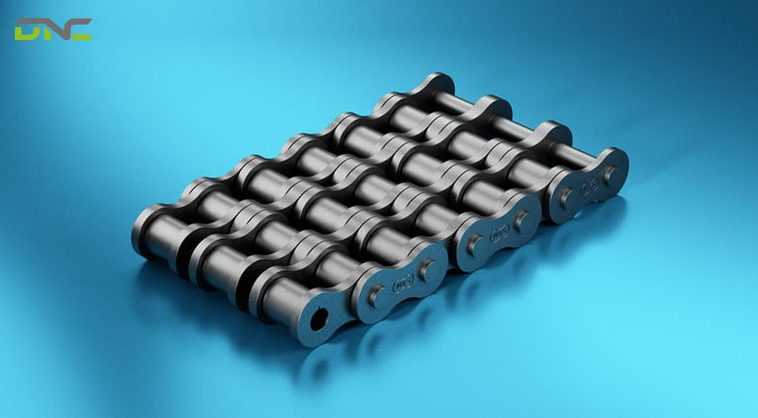
Conveyor chain is the mechanical element that transmits drive force and carries product or material through a conveyor system. Selecting the wrong chain type — undersized breaking load, incorrect pitch, wrong material for the environment — causes premature failure, unplanned downtime, and in worst cases, product loss or safety incidents. Selecting the right chain from the start determines whether a conveyor runs reliably for 5–15 years or requires replacement in 18 months.
Malaysian manufacturers across automotive, food processing, palm oil, electronics, and pharmaceutical sectors use different chain types depending on load, speed, environment, and product sensitivity. This guide covers all major conveyor chain types, their specifications, ANSI/ISO standards, load ratings, and selection criteria.
Roller Chain (Standard Drive and Conveyor Chain)
Standard roller chain is the most widely used chain in industrial conveying. It consists of alternating inner links (with roller, bushing, and inner plates) and outer links (with outer plates and connecting pins). The roller reduces friction at the sprocket tooth contact point, enabling smooth engagement and long service life.
ANSI standard pitches (most common in Malaysia):
- ANSI #40: 12.7 mm pitch — light conveying, small equipment
- ANSI #50: 15.875 mm pitch — medium-duty automation
- ANSI #60: 19.05 mm pitch — standard industrial conveyor
- ANSI #80: 25.4 mm pitch — heavy-duty conveyor
- ANSI #100: 31.75 mm pitch — high-load industrial
- ANSI #120: 38.1 mm pitch — heavy industrial
Breaking load (single strand ANSI #60): 31.8 kN (3,240 kgf). Working load limit (WLL) at 6:1 safety factor: 5.3 kN.
Best for: General industrial conveyor drives, assembly line transfer, packaging machine chain drives, light to medium product conveying.
Limitations: Maximum load capacity 1,500 lbs (680 kg) per strand for standard conveyor applications; not suitable for very heavy loads, high temperatures (>200°C), or highly corrosive environments without special treatment.
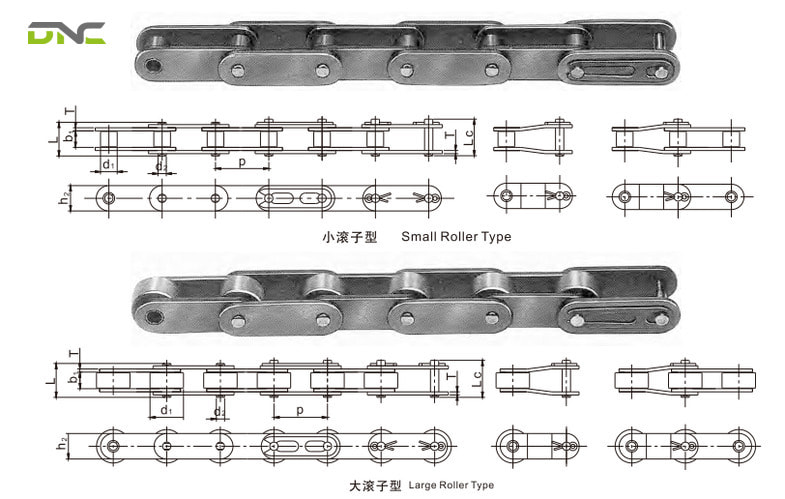
Roller Chain (Standard Drive and Conveyor Chain)
Double-Pitch Roller Chain
Double-pitch chain has the same roller and pin diameter as standard roller chain, but the pitch (link length) is exactly twice the ANSI equivalent — giving a longer, lighter chain for the same roller size.
Key advantage: Lower chain weight per metre = lower chain pull force for long horizontal conveyors. For a 30-metre conveyor, double-pitch chain may weigh 40–50% less than standard pitch, reducing motor power requirement and drive component stress.
ANSI double-pitch designations: C2040 (corresponding to #40), C2050 (#50), C2060 (#60), C2080 (#80).
Application constraint: Double-pitch requires larger diameter sprockets than standard chain for the same number of teeth — or the use of double-pitch sprockets. Maximum conveyor speed is lower than standard pitch for the same RPM (longer pitch × same RPM = lower speed at a given shaft diameter).
Best for: Long-distance low-speed horizontal conveying of light products — carton transfer, bottle handling, assembly line product carriers.
Malaysian application: Electronics assembly conveyor lines in Penang use C2060 double-pitch chain for PCB pallet transfer between stations — where low weight reduces servo motor load during indexing.
Engineering Class (Heavy-Duty) Conveyor Chain
Engineering class chains use larger cross-sections, heavier side plates, and forged or cast components — compared to the pressed-steel components of standard roller chain. They begin where standard roller chain ends: minimum 5,000 lbs (2,270 kg) working load, up to 50,000+ lbs for large forged chains.
Key design differences from standard roller chain:
- Side plates: 10–25 mm thick (vs. 1.5–3 mm for standard)
- Pins: Large diameter solid steel (vs. hollow pressed pins)
- Bushings: Thick-walled, heat-treated — designed for abrasive material contact
- Rollers: Heavy-duty, side flanged for track guidance in some designs
Types within engineering class:
Welded Steel Chain: Fabricated from bar stock by welding. High customisation for attachment positions. Used in agricultural equipment (planting, harvesting) and industrial drag conveyors.
Cast Iron Chain: Moulded iron links — excellent wear resistance in abrasive, hot, or contaminated environments. Common in cement and aggregate handling.
Forged Chain (Redler/Palmier type): Used in en-masse drag conveyors and bucket elevators. Maximum strength-to-weight ratio; tolerates shock loads.
Best for: Drag conveyors (EFB, coal, clinker), bucket elevators (high-temperature), overhead P&F conveyor trolleys, agricultural harvesting equipment.
Malaysian application: Palm oil mills use forged engineering chain in EFB drag conveyors (loads up to 10,000 kg tension per strand) and in FFB steriliser chain systems.
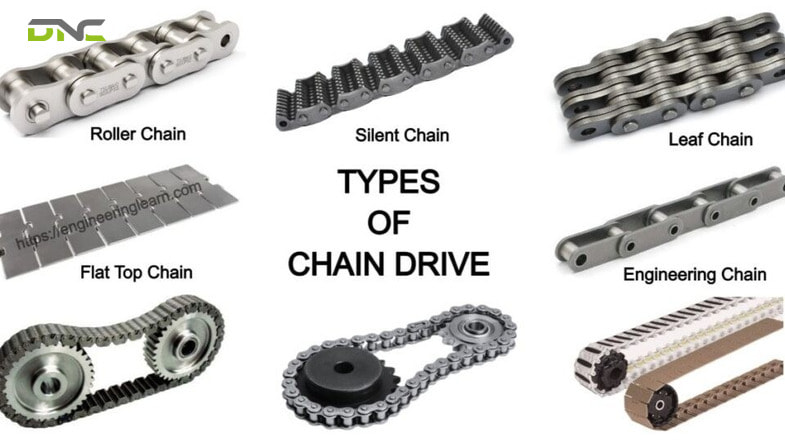
Conveyor Chain types
Stainless Steel Conveyor Chain
Stainless steel chains use the same geometry as standard roller chain but with 304 or 316 stainless steel components throughout — providing corrosion resistance for food processing, pharmaceutical, chemical, and marine environments.
Grade comparison:
- SS304: Standard food-grade stainless steel. Resists organic acids, cleaning chemicals, mild chloride environments.
- SS316: Higher molybdenum content — superior resistance to chlorides (seafood brine, pharmaceutical wash-down with NaCl solutions), required for marine environments.
Properties vs. carbon steel chain:
- Corrosion resistance: Superior
- Tensile strength: 70–80% of equivalent carbon steel chain (lower carbon = lower hardenability)
- Cost: 3–5× higher than standard carbon steel chain
- Lubrication: Reduced requirement (stainless is inherently lower friction); use NSF H1-approved food-grade lubricants
Best for: Food conveyor chains (HACCP-compliant), pharmaceutical tablet handling, beverage line conveying, seafood and poultry processing, chemical handling.
Malaysian application: F&N Dairies’ beverage production lines use SS316 conveyor chain on all product-contact conveyors — resistant to the citric acid and chloride cleaning agents used in production.
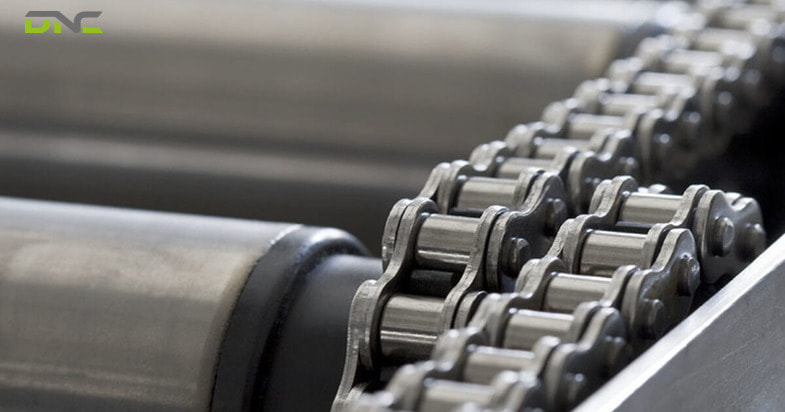
Stainless Steel Conveyor Chain
Plastic Modular Chain (Thermoplastic Conveyor Chain)
Plastic modular chains replace steel in applications requiring hygiene, corrosion resistance, self-lubrication, or reduced noise. Individual plastic modules (typically polypropylene, acetal, or UHMWPE) interlock with stainless steel or acetal hinge rods.
Material properties by polymer:
| Material | Temp Range | Friction | Best Use |
| Polypropylene (PP) | -10°C to +90°C | Medium | Food, packaging, ambient |
| Acetal (POM) | -40°C to +90°C | Low (self-lubricating) | Electronics, pharma, precision conveying |
| UHMWPE | -50°C to +80°C | Very low | Abrasion-heavy, freezer applications |
| Nylon (PA) | -20°C to +140°C | Low | High-temp food (hot-fill), industrial |
Advantages over steel chain:
- No rust, no metal contamination risk
- Module-by-module repair (replace individual modules, not full belt)
- Quieter operation (55–65 dB vs. 65–75 dB for steel chain)
- Flat, roller-top, open-grid, or cleated surface configurations
- Full IP69K wash-down capability
Best for: Food processing lines requiring CIP wash-down, pharmaceutical cleanroom conveying, electronics (ESD-safe grades), horizontal curve conveying (side-flexing chain).
Malaysian application: Poultry processing facilities in Selangor use PP open-grid modular chain (IP69K, SS316 frame) for product transfer through water chilling and wash-down zones — full wash-down 3× daily.
Drag Chain (Scraper/Paddle Chain)
Drag chains for bulk material conveying differ fundamentally from conveyor chains for product transport: they operate within the conveyed material, dragging or pushing bulk solids through an enclosed trough.
Types within drag chain:
Single-strand with flights: One chain strand running centrally, flights bolted at intervals. Simple and low cost for light bulk conveying.
Double-strand with flights: Two parallel chains on either side of a wide trough, connected by flight bars. Higher load capacity and better engagement for heavy or fibrous materials.
En-masse chain: Single chain with skeletal (open) flights in a rectangular housing — material fills 80–90% of the housing cross-section. Most efficient for free-flowing granular materials.
Key specifications:
- Chain pitch: 75–300 mm (larger pitch for heavier loads)
- Breaking load: 20–200 kN depending on chain size and material
- Speed: 0.1–0.5 m/s (much slower than conveyor chains for product transport)
Malaysian application: EFB drag conveyors at Felda palm oil mills use double-strand engineering drag chain with 150 mm pitch and 80 kN breaking load — handling wet EFB fibres at 50–100 tonnes/hour.
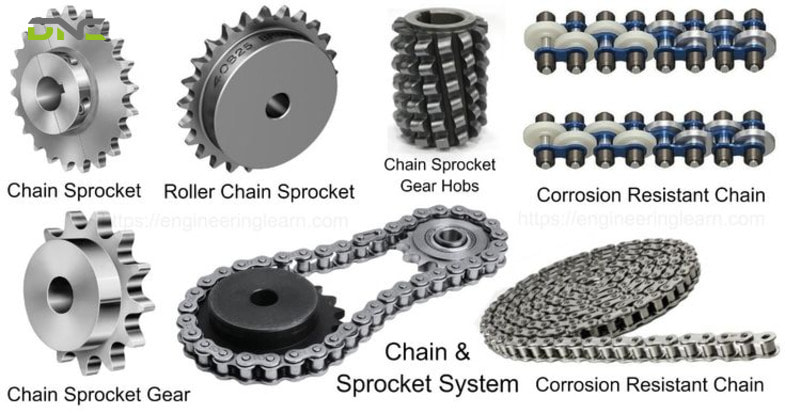
How to select the right Conveyor Chain type for your specific application?
Hollow Pin Chain (Attachment Chain)
Hollow pin chain has a hollow transverse pin through each outer link — allowing attachments (brackets, dogs, flights, lug bolts) to be inserted through the hollow pin and secured. This enables precise, repeatable attachment positioning without welding.
ANSI designation: 40H, 50H, 60H, 80H (H = hollow pin version of standard chain).
Applications: Pallet stop-and-go systems (pusher dogs inserted through hollow pins), attachment conveyors for product hanging, double-pitch attachment chains for PCB panel transport.
Malaysian application: Automotive overhead conveyors at Toyota Shah Alam use hollow-pin double-pitch chain with pusher dog attachments to engage and disengage vehicle body carriers in the P&F system.
Leaf Chain
Leaf chains consist of only link plates and pins — no rollers or bushings. They are designed purely for tension and lifting loads, not conveying. Used in forklift mast mechanisms, counterbalance systems, and tension take-ups for conveyor systems.
Not a conveyor chain in the material-transport sense — included here to distinguish from conveyor applications.
Conveyor Chain Comparison Table
| Chain Type | Pitch Range | Max WLL | Speed | Environment | Typical Cost Index |
| Standard roller (ANSI) | 12.7–38.1 mm | 680 kg/strand | 0.1–3.0 m/s | General | 1× |
| Double-pitch | 25.4–76.2 mm | 450 kg/strand | 0.05–1.5 m/s | General (light) | 0.8× |
| Engineering class | 50–300+ mm | 2,000–25,000 kg | 0.1–1.0 m/s | Heavy/abrasive | 3–8× |
| Stainless steel (SS316) | 12.7–38.1 mm | 500 kg/strand | 0.1–2.0 m/s | Food, pharma, marine | 4–5× |
| Plastic modular | 25–100 mm | 200 kg/m width | 0.1–2.0 m/s | Food, clean, washdown | 2–3× |
| Drag chain | 75–300 mm | Up to 200 kN/strand | 0.1–0.5 m/s | Bulk material | 3–6× |
Chain Selection Guide: 5 Questions
- What is the load per strand?
If >680 kg per chain strand → move to engineering class. If <680 kg → standard ANSI roller chain covers the requirement.
- What is the operating environment?
- Wet, food, or pharma → stainless steel or plastic modular
- Abrasive bulk material → engineering class or drag chain
- High temperature (>200°C) → forged engineering class or high-temp SS
- General industrial → standard carbon steel
- What is the conveyor speed?
- High speed (>1.5 m/s) → short-pitch standard roller chain
- Low speed, long runs → double-pitch (lighter weight)
- Very slow bulk dragging → drag chain
- Is horizontal curve required?
Only plastic modular side-flex chain and special flexible engineering chains can navigate horizontal curves. Standard roller and engineering chains require separate conveyors for direction changes.
- What is the hygiene requirement?
- Direct food contact → stainless steel 316 or FDA-compliant plastic modular
- Incidental contact or enclosed product → stainless steel 304
- No food contact → standard carbon steel with appropriate lubrication
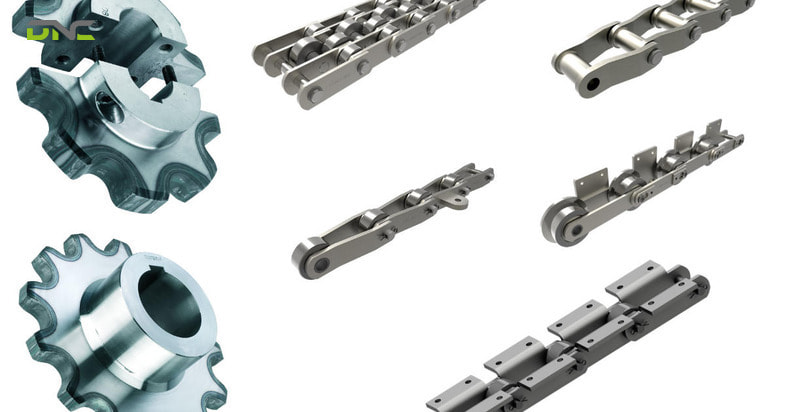
Chain Selection Guide: 5 Questions
Chain Maintenance Principles
Lubrication: Carbon steel chain requires lubrication at pins and bushings to prevent accelerated wear. Manual oiling (daily/weekly), drip lubrication (continuous), or automatic chain oiler (preferred for production lines). Use NSF H1 lubricant for food applications.
Elongation monitoring: All chain types elongate as pins and bushings wear. Measure chain length over a defined number of links (typically 10 links) monthly. Replace at 2–3% elongation — beyond this, chain pitch no longer matches sprocket tooth pitch, causing accelerated tooth wear and jump risk.
Sprocket inspection: Worn sprocket teeth (hooked or thinned tooth profile) accelerate chain wear and cause chain jump. Replace sprockets when tooth wear reaches 25% reduction in thickness. Always replace sprockets when replacing chain — a new chain on worn sprockets will wear rapidly.
Tension: Chain must run with correct sag (typically 1–3% of span length between supports). Excessive tension causes premature pin/bushing wear and bearing overload. Insufficient tension causes chain slap and jump at high speeds.
DNC Automation’s Conveyor Chain Expertise
DNC Automation selects, supplies, and integrates conveyor chain systems for Malaysian manufacturers — matching chain type, pitch, material, and lubrication system to each application’s exact load, speed, environment, and regulatory requirements.
Supply range: ANSI standard roller chain (all pitches), double-pitch attachment chain, SS304 and SS316 stainless chain, plastic modular chain (Intralox, Ammeraal Beltech, Rexnord), engineering class forged chain, and drag conveyor chain.
Integration: Every conveyor chain system includes matched sprockets, take-up unit, chain tension calculation, and automatic lubrication system recommendation — not just chain supply.
MIDA SAG: Conveyor chain system upgrades as part of automated production line investments qualify for MIDA’s Strategic Automation Grant (up to RM 1 million, 50% of qualifying capex).
Contact DNC Automation’s engineering team for chain selection consultation and conveyor system integration.
DNC Automation’s Conveyor Chain Expertise
Summary
Conveyor chain selection depends on five key factors: load per strand, operating environment (temperature, corrosion, hygiene), speed, directional change requirements, and maintenance access. Standard ANSI roller chain covers the majority of light-to-medium industrial conveying; engineering class handles heavy and abrasive bulk handling; stainless steel and plastic modular chains serve food, pharmaceutical, and washdown environments. Correct chain selection at the design stage — combined with proper lubrication and elongation monitoring — determines whether a conveyor system achieves its 5–15 year design life or fails prematurely.
- 119 views
- 0 Comment
Recent Comments