


Rubber Conveyor Rollers: Belt Tracking & Grip Guide Malaysia
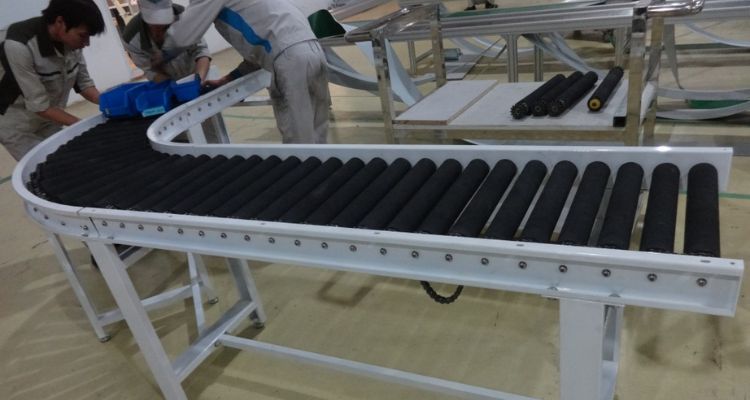
Rubber conveyor rollers and rubber-lagged pulleys represent the single highest-impact maintenance decision in any conveyor belt system — yet they are also among the most frequently misunderstood and under-specified components in Malaysian factory operations. A rubber-lagged drive pulley with worn lagging increases belt slip by 15–35%, raising power consumption by the same margin while simultaneously destroying the belt’s inner surface through frictional heat generation. A worn impact roller in the loading zone transmits shock loads directly to the belt structure and supporting steel frame — the difference between a 6-month belt life and a 24-month belt life at a single high-impact loading point. Port Klang and Tanjung Pelepas — two of Asia’s busiest bulk mineral handling terminals and key components of Malaysia’s export infrastructure — run thousands of conveyor rollers per facility, and their maintenance teams measure roller replacement intervals in weeks for high-wear positions. DNC Automation, Malaysia’s Top #1 Factory Automation Company since 2005, specifies, supplies, and installs rubber conveyor roller solutions for clients including Toyota, Sony, F&N, Hartalega, and Unilever — across automotive, food processing, electronics, and bulk material handling environments. This article provides the complete technical reference for rubber conveyor rollers: types, hardness specifications, maintenance intervals, and selection criteria for every Malaysian application.
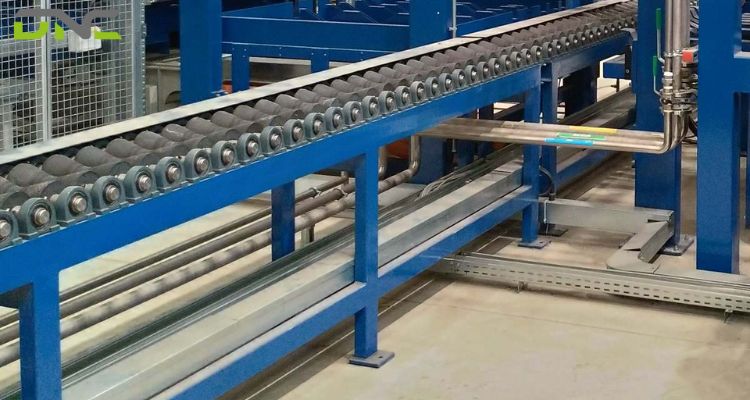
What Are Rubber Conveyor Rollers?
Rubber conveyor rollers are cylindrical components in a belt conveyor system whose outer surface is constructed from, or coated with, vulcanized rubber compound — used to provide grip between the drive pulley and belt, absorb impact at loading zones, reduce return-side belt noise and wear, or prevent material buildup on roller surfaces that would cause belt misalignment.
Rubber conveyor rollers cover six distinct function categories: drive pulley lagging (grip transmission), return-side carrying rollers (noise and belt surface protection), impact/garland rollers (loading zone shock absorption), self-cleaning return disc rollers (material shedding), spiral-wrapped anti-buildup rollers (continuous material shed), and wing/self-cleaning pulleys (tail pulley, sticky material prevention). Each category uses different rubber compound specifications — hardness, thickness, surface profile, and chemical resistance grade — matched to its specific functional requirement.
Rubber conveyor roller specification is governed by two primary parameters: Shore A hardness (25A–80A across the range) and rubber compound grade (natural rubber, SBR, EPDM, neoprene, nitrile/NBR). Getting both right for the application determines whether the rubber component meets its expected service life or fails prematurely.
How Do Rubber Conveyor Rollers Work?
Rubber conveyor rollers perform their functions through three distinct physical mechanisms: friction (drive lagging), deformation energy absorption (impact), and surface geometry (material shedding). Understanding each mechanism explains why rubber specification matters so much.
Step 1 — Friction Mechanism (Drive Pulley Lagging)
The rubber-lagged drive pulley transmits motor torque to the conveyor belt through friction at the pulley-belt interface. The coefficient of friction (COF) between vulcanized rubber and a rubber conveyor belt inner surface ranges from 0.4 (smooth rubber, wet conditions) to 0.65 (diamond or herringbone groove pattern rubber, dry conditions). The effective belt tension (the tension difference between tight-side and slack-side that determines how much torque is available) is directly proportional to this COF. A bare steel drive pulley has COF 0.15–0.25 — three to four times lower than rubber lagging. This means a bare steel pulley of the same diameter and wrap angle generates only 25–40% of the drive force of a rubber-lagged pulley — the remaining 60–75% of motor torque is wasted as heat and belt wear from slippage.
Step 2 — Deformation Energy Absorption (Impact Rollers)
Impact conveyor rollers absorb the kinetic energy of material falling onto the belt at loading zones through elastic deformation of the rubber element. Rubber hardness of 40–50 Shore A (softer than standard lagging) allows the rubber to deform under impact load, dissipating kinetic energy as heat within the rubber matrix rather than transmitting it as shock force to the belt structure and steel frame. A properly specified impact roller extends belt life at the loading zone by 3–5× compared to a standard steel idler roller in the same position.
Step 3 — Surface Geometry for Material Shedding
Return-side rubber rollers and self-cleaning disc rollers use surface geometry — discrete rubber discs, raised spiral strips, or wing profiles — to prevent material from accumulating on the roller surface. Material that adheres to a conventional steel return roller builds up asymmetrically, creating an eccentric load that causes belt to track sideways (belt wander) and generates vibration. Rubber disc rollers space the roller surface contact to discrete rings; material falls between the disc gaps. Spiral-wrapped rubber rollers use angled rubber strips that actively push material toward belt edges as the roller rotates.
Step 4 — Tensioner and Tracking Function (Wing Pulleys)
Wing pulleys (self-cleaning tail pulleys) use radially projecting steel wings — each wing covered with rubber — to provide periodic belt contact at the tail pulley rather than continuous contact. Material that would otherwise be crushed between belt and pulley falls through the gaps between wings. Each wing contact provides a brief high-force contact followed by a release — preventing the continuous mud-packing that causes fixed diameter pulleys to build up sticky material layers (which then act as eccentric drums and cause severe belt tracking problems).
Types of Rubber Conveyor Rollers
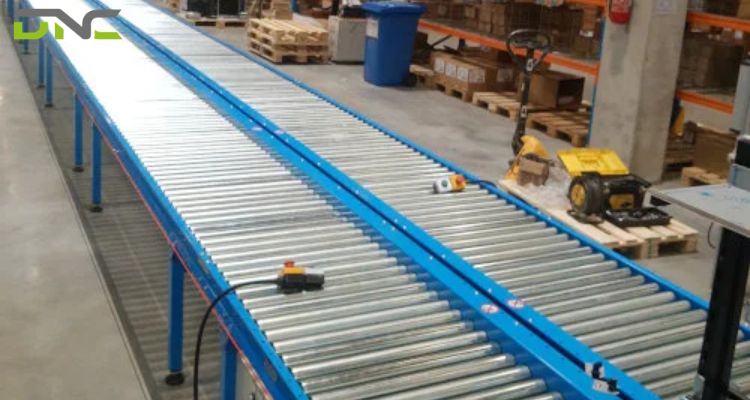
Six rubber conveyor roller types serve the distinct functional positions in a complete conveyor belt system.
1. Plain Rubber Return Rollers
Plain rubber return rollers replace standard steel shell return idlers on the belt’s return (lower) run. The rubber shell (typically 6–12mm wall thickness, 55–65 Shore A hardness) reduces the noise generated as the belt’s dirty return surface contacts the roller, protects the belt inner surface from the impact of hard steel, and provides some self-cleaning action from the elastic rubber surface.
Malaysian food processing factories (F&N, Ramly Burger, Guan Chong Berhad) specify rubber return rollers throughout their conveyor systems to meet hygiene and noise control requirements. The rubber surface is smoother to clean than corroded steel rollers and less likely to harbor bacteria in surface pits.
2. Rubber-Lagged Drive Pulleys
Rubber-lagged drive pulleys are the highest-performance rubber conveyor component category — the friction surface that determines how efficiently the motor’s torque reaches the belt. Lagging thickness ranges from 6mm to 25mm; thicker lagging provides a larger deformation zone under tension, maintaining contact even with belt surface irregularities. Hardness ranges from 55–70 Shore A; harder rubber (65–70 Shore A) resists wear in abrasive environments; softer rubber (55–60 Shore A) provides higher COF in wet or oily conditions.
Surface profiles are the key variable in rubber-lagged drive pulley specification:
| Profile | Groove Pattern | Best Application | Wet COF |
| Plain/Smooth | None | Light duty, dry, clean | 0.45 |
| Diamond groove | 6×6mm diamond | General purpose | 0.55 |
| Herringbone groove | V-groove 8×8mm | High traction, outdoor | 0.60 |
| Ceramic embedded | Aluminium oxide tiles | High wear, wet abrasive | 0.62 |
| Rough top | Textured, no grooves | Inclined conveyors | 0.58 |
Diamond and herringbone groove patterns channel water away from the nip area (the belt contact surface) — the same principle as tire tread on wet roads. DNC Automation specifies herringbone-pattern rubber lagging as standard for all Malaysian outdoor and humid-environment drive pulleys, and ceramic-embedded rubber lagging for highly abrasive or perpetually wet applications (palm oil, mineral handling at ports).
3. Impact and Garland Rubber Rollers
Impact rubber rollers, installed in the loading zone where material falls from a chute or hopper onto the belt, absorb drop energy and prevent belt gouging and structural damage. Standard impact roller rubber ring hardness is 40–50 Shore A — the low end of the conveyor rubber hardness range.
Garland rollers (a variant of the impact roller set) suspend three or more rollers in a hinged arrangement that swings under impact, further distributing the impact energy. Garland impact sets at loading zones with drop heights above 1.5m (typical of truck dump chutes or mine/quarry loading points) reduce belt loading zone damage dramatically — the combination of soft rubber rings and hinged swing action absorbs peak impact loads that would otherwise fracture belt carcass plies.
Malaysian quarrying operations in Selangor’s limestone hills (supplying aggregate to Klang Valley construction) and bulk mineral terminals at Port Klang use garland impact roller sets at primary loading chutes. Replacement interval for impact rollers at high-load positions is 6–12 months in abrasive environments.
4. Rubber Disc Return Rollers
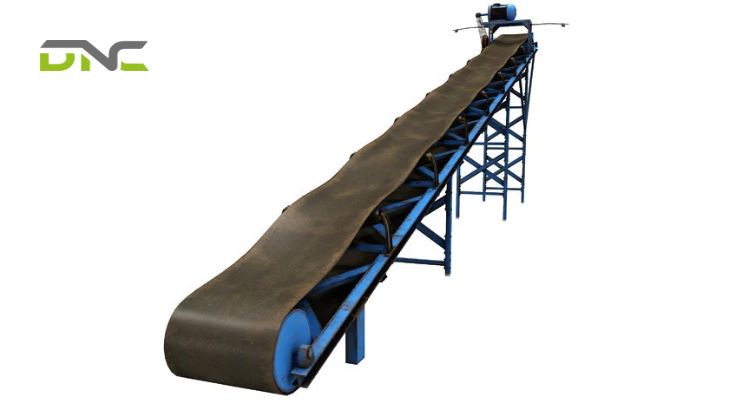
Rubber disc return rollers use a series of rubber discs (each disc 80–120mm diameter, 30–50mm wide, with 30–50mm gaps between discs) mounted on a steel shaft. The disc array creates a self-cleaning roller: material adhering to the disc surface is knocked off as adjacent discs push and release the material at the inter-disc gaps. The intermittent rather than continuous surface contact also reduces the buildup of sticky materials that adhere to full-face cylindrical return rollers.
Rubber disc return rollers are standard specification for return-side rollers in palm oil mill conveyors throughout Malaysia’s Sabah and Sarawak plantation regions. Palm oil fibrous material — a particularly adhesive mixture of oil, fiber, and water — builds up on standard steel return rollers within hours, creating eccentric drums that cause severe belt misalignment. Rubber disc rollers in the same positions run for weeks between maintenance attention.
5. Spiral-Wrapped Rubber Rollers
Spiral-wrapped rubber rollers feature a continuous rubber strip wound helically around a steel shell at a 45–60° helix angle. As the roller rotates, the angled rubber strip acts as a continuous screw thread — pushing accumulated material laterally toward the belt edges where it falls off. Spiral-wrapped rollers provide active material ejection, not just passive gap-drop shedding.
Spiral-wrapped rubber rollers are used on return-side locations where belt carry-back material is particularly fine and clingy — cement powder, flour dust, fine coal — that falls between disc roller gaps rather than being shed. The active lateral pushing action of the spiral profile removes fine material that disc rollers cannot dislodge. Malaysian cement operations and fine powder transfer conveyors in F&B plants use spiral rollers at return-side locations after grinding or milling stages.
6. Wing Rubber Pulleys
Wing rubber pulleys (self-cleaning tail pulleys) use a welded steel frame of radially projecting wings (typically 4–6 wings) each covered with a rubber insert of 40–50 Shore A hardness. The rubber-covered wings make brief intermittent belt contact, preventing continuous mud-packing while maintaining belt tension and tracking at the tail end.
Wing rubber pulleys are mandatory in wet, sticky, or muddy material applications — construction aggregate conveyors, plantation palm oil fresh fruit bunch handling, port bulk mineral conveyors, and wet mineral processing circuits. DNC Automation specifies wing pulleys as standard for tail pulley selection on all outdoor or wet material conveyors, regardless of whether the customer’s initial specification requests them.
Key Components of a Rubber Conveyor Roller System
Rubber Compound Grade. Natural rubber (NR) provides the highest elasticity and impact absorption but degrades in UV, ozone, and oil exposure. SBR (Styrene-Butadiene Rubber) — the most common industrial lagging compound — offers good abrasion resistance and weatherability at lower cost. EPDM resists weathering, UV, and steam but has poor oil resistance. Nitrile (NBR) provides excellent oil and chemical resistance — mandatory for palm oil, lubricant-contaminated belts, and chemical plant applications. Neoprene (CR) offers balanced oil and weather resistance for general outdoor use. DNC Automation selects rubber compound grade based on the specific chemical exposure profile of each installation.
Hardness (Shore A). Shore A hardness governs the rubber’s behavior under load:
- 40–50 Shore A: maximum impact absorption, highest COF, fastest wear — impact rollers
- 55–60 Shore A: high grip, moderate wear resistance — drive pulley lagging (wet applications)
- 65–70 Shore A: high wear resistance, good grip — drive pulley lagging (abrasive, dry)
- 70–80 Shore A: maximum wear resistance — disc rollers in abrasive applications
Lagging Attachment. Cold bonding (adhesive application to prepared steel shell) is standard for site re-lagging and new small pulleys. Hot vulcanizing (bonding under heat and pressure in a hydraulic press) provides superior bond strength — 10–15 MPa versus 3–6 MPa for cold bond — and is mandatory for pulleys above 1,000mm diameter or in high-tension/high-temperature applications. DNC Automation’s workshop performs hot vulcanized lagging on drive pulleys supplied to clients, and provides site re-lagging service using cold bond for pulleys that cannot be removed.
Shell and Shaft. The steel shell (typically 8–12mm wall thickness) must have adequate structural stiffness to prevent deflection under load — shell deflection changes the contact pressure distribution across the rubber lagging, causing uneven wear and eventual delamination. The shaft must carry both the bending load (from belt tension and product weight) and torsional load (drive pulleys only) within allowable stress limits. DNC Automation performs shaft and shell calculations for all custom-manufactured rubber conveyor rollers.
Bearing Selection. Deep groove ball bearings (light duty) or spherical roller bearings (heavy duty, misalignment tolerance) are used in conveyor roller applications. Sealed-for-life bearings (ZZ or 2RS seals) are standard for tropical Malaysian humidity — open bearings exposed to palm oil mist, cement dust, or high-humidity air develop corrosion pitting and premature race fatigue at rates 5–10× faster than sealed bearings in the same environment.
Applications: Where Rubber Conveyor Rollers Are Used in Malaysian Manufacturing
Palm Oil Mills — Self-Cleaning Priority
Sabah and Sarawak palm oil mills — the highest concentration of conveyor rubber roller applications in East Malaysia — require self-cleaning rubber roller variants throughout FFB receiving, threshing, and kernel recovery conveyors. Rubber disc return rollers and wing tail pulleys are specified on every wet conveyor section. Herringbone or diamond-groove rubber lagging on drive pulleys provides grip through palm oil contamination that would cause bare steel pulleys to slip completely in rain events. DNC Automation recommends NBR (nitrile) rubber compound for all palm oil contact rollers — oil resistance prevents swelling and surface degradation from continuous palm oil film exposure.
Port and Bulk Mineral Handling
Port Klang — Malaysia’s primary bulk commodity port — and Tanjung Pelepas in Johor (gateway to Singapore’s industrial supply chain) handle millions of tonnes of coal, iron ore, mineral sand, and grain annually. Rubber-lagged drive pulleys at these facilities handle belt tensions of 200–500 kN and belt speeds of 3–5 m/s — far above the range of standard industrial conveyor rollers. Heavy-duty ceramic-embedded rubber lagging (ceramic tiles vulcanized into the rubber matrix) provides the wear resistance needed at these belt tensions and speeds while maintaining high COF in wet marine conditions.
F&B and Food Processing
DNC Automation clients F&N, Ramly Burger, and Unilever operate conveyor systems in food processing environments requiring FDA-grade or food-contact-safe rubber compounds on all rollers that contact the conveyor belt carrying food products. White food-grade nitrile or EPDM rubber compounds (free from plasticizers, aromatic oils, and zinc oxide accelerators that could migrate to food contact surfaces) are DNC’s standard specification for food belt return rollers. Stainless steel (SS304) roller shells replace carbon steel in all washdown zones, as carbon steel rollers corrode within days in food factory high-pressure washdown environments.
Automotive and Electronics Manufacturing
Toyota, Sony, and other DNC Automation clients in automotive and electronics manufacturing use rubber conveyor rollers primarily for return-side noise reduction and belt tracking purposes. High-speed precision assembly lines are sensitive to belt vibration caused by worn or eccentrically loaded return rollers — a 0.5mm eccentricity on a return roller at 1 m/s belt speed generates perceptible vibration at the belt surface. DNC Automation’s preventive maintenance programs for automotive and electronics clients include quarterly roller roundness checks and immediate replacement of any roller exceeding 0.3mm TIR (Total Indicated Runout).
General Manufacturing
DNC Automation clients across Selangor and Penang manufacturing parks use rubber conveyor rollers in standard industrial applications: material handling between production stations, packaging line conveying, and finished goods transfer. Standard SBR rubber lagging at 60–65 Shore A on drive pulleys and SBR rubber return rollers represent the base specification for general manufacturing environments where no special chemical, temperature, or hygiene requirements apply.
Benefits of Rubber Conveyor Rollers for Factory Operations
Drive Efficiency Recovery. Worn rubber lagging (lagging thickness below 50% of original; Shore A hardness reduced by wear or aging to below 45A) causes belt slip that wastes up to 35% of motor electrical input as heat. Replacing worn drive pulley lagging on a typical 15 kW Malaysian factory conveyor drive recovers 3–5 kW of effective power output — reducing electricity consumption proportionally. At Malaysian industrial electricity tariffs of RM 0.35–0.45/kWh, a 4 kW recovery running 16 hours/day saves RM 8,000–10,000/year — typically recovering lagging replacement cost within 3–6 months.
Belt Life Extension. Impact rollers at loading zones reduce peak dynamic load on belt carcass plies by 50–70%. Belt replacement cost on a 1,000mm-wide 30m conveyor in a Malaysian factory typically runs RM 15,000–40,000 per replacement. Extending belt replacement interval from 12 months (without impact rollers) to 30 months (with properly specified impact rollers) saves RM 25,000–70,000 in belt cost over a 5-year period — far exceeding the cost of impact roller installation.
Reduced Human Error in Maintenance. Properly specified rubber conveyor rollers with defined replacement intervals reduce emergency maintenance events by 80% — consistent with DNC Automation’s documented 80% human error reduction across automation and maintenance optimization projects. Predictable rubber roller replacement intervals (every 12–18 months for standard industrial; every 6–12 months for abrasive/wet) allow scheduled maintenance during planned downtime, eliminating emergency conveyor stoppages.
Productivity Improvement. Reducing unplanned conveyor stops from rubber roller failure — a documented cause of 15–25% of all Malaysian factory conveyor downtime — delivers the 50% productivity improvement DNC Automation documents across conveyor maintenance optimization projects.
How to Choose the Right Rubber Conveyor Rollers for Your Factory
- Identify the Functional Position. Drive pulley lagging, impact/loading zone, return-side noise/protection, self-cleaning return, or tail pulley self-cleaning each requires a different rubber roller type. Mapping each roller position to its function before specifying rubber type is the first step in correct selection.
- Match Compound Grade to Chemical Exposure. Palm oil, lubricants, or fuels: specify NBR (nitrile). Steam or high-humidity outdoor: specify EPDM. General indoor factory: specify SBR. Food contact return rollers: specify food-grade nitrile or EPDM (white, non-toxic). Highly UV-exposed outdoor: avoid NR; specify SBR or EPDM.
- Select Hardness Based on Function. Impact positions: 40–50 Shore A. Drive lagging in wet/oily conditions: 55–60 Shore A for grip. Drive lagging in abrasive dry conditions: 65–70 Shore A for wear resistance. Return-side noise rollers: 55–65 Shore A.
- Determine Replacement Interval for Your Conditions. DNC Automation’s maintenance interval guidelines: food processing (clean, indoor): 18–24 months for return rollers, 12–18 months for drive lagging. Outdoor wet/abrasive (palm oil, port bulk): 6–12 months for drive lagging, 3–6 months for impact rollers at high-load positions. Automotive/electronics (clean, ambient): 24–36 months for return rollers.
- Consider Tropical Malaysian Conditions. Malaysia’s 30–35°C ambient temperature accelerates rubber aging (oxidation and hardening) by approximately 2× compared to European-climate assumptions. Natural rubber lagging specified at 36-month replacement intervals in European specifications should be reassigned to 18-month intervals in Malaysian tropical operating conditions. This is a frequently overlooked specification adjustment that explains premature lagging failure in Malaysian factories using unmodified international maintenance schedules.
Frequently Asked Questions About Rubber Conveyor Rollers
Q: What is rubber lagging on a conveyor pulley and why is it needed?
Rubber lagging is a vulcanized rubber layer bonded to the outer surface of a conveyor drive pulley. Rubber lagging is needed because a bare steel pulley has insufficient friction to drive a conveyor belt at operating tension without belt slip. Rubber provides a coefficient of friction of 0.45–0.65 versus 0.15–0.25 for bare steel — a 2–4× increase that determines how much useful drive torque the motor delivers to the belt. Without rubber lagging, a conveyor requiring 15 kW of actual belt drive power would need a 30–60 kW motor to overcome slip losses — DNC Automation documents up to 35% power loss from worn lagging in regularly maintained Malaysian factory conveyors.
Q: How often should rubber conveyor rollers be replaced in a Malaysian factory?
Replacement interval depends on application: clean indoor factory with dry, non-abrasive materials — drive lagging every 18–24 months, return rollers every 24–36 months. Palm oil or wet mineral handling — drive lagging every 6–12 months, impact rollers every 3–6 months at loading zones. High-speed, high-tension bulk conveyors (port facilities) — ceramic-embedded lagging every 12–18 months; standard rubber would fail in 3–6 months at these belt tensions. Tropical Malaysian ambient temperature accelerates aging by approximately 2× versus temperate-climate schedules.
Q: What Shore A hardness should drive pulley lagging be?
Drive pulley lagging hardness selection depends on the specific operating conditions. Wet or oily conditions: 55–60 Shore A maximizes friction coefficient in lubricated contact. Dry abrasive conditions: 65–70 Shore A prioritizes wear resistance. General Malaysian factory (mixed dry/humid conditions): 60–65 Shore A as a compromise specification. Below 50 Shore A, rubber deforms excessively under high belt tension — compression set occurs, and the rubber does not recover to full thickness, reducing effective contact area and friction.
Q: Can rubber conveyor rollers be refurbished instead of replaced?
Drive pulleys can be re-lagged (new rubber bonded to refurbished steel shell) at significantly lower cost than replacing the complete pulley assembly. Re-lagging cost is typically 30–50% of new pulley cost for large pulleys (above 400mm diameter) where the steel shell represents the majority of original purchase price. DNC Automation’s workshop performs both hot vulcanized re-lagging (preferred, superior bond) and cold bonded re-lagging (for large pulleys that cannot be transported). Roller shells showing corrosion depth above 20% of original wall thickness, out-of-round distortion above 1mm TIR, or bearing housing wear should be replaced rather than refurbished.
Q: Are rubber conveyor rollers suitable for food-safe applications?
Food-safe rubber conveyor rollers require specific compound specifications that exclude toxic ingredients common in standard industrial rubber. Food-safe rubber must be free from: aromatic plasticizers (DEHP, DBP), zinc oxide in direct food contact (zinc is a contaminant), certain antioxidants and accelerators that can migrate to food surfaces. DNC Automation specifies FDA 21 CFR 177.2600-compliant or EU Regulation 10/2011-compliant rubber compounds for all food-contact return rollers in Malaysian F&B and pharmaceutical installations. White or light-colored rubber compounds in food zones also serve as a contamination visibility aid — embedded debris in white rubber is visually detectable during hygiene inspections.
Q: What causes rubber lagging to delaminate from the pulley shell?
Rubber lagging delamination (separation of the rubber from the steel shell) has four primary causes: (1) Poor surface preparation before bonding — steel oxide layer not removed by shot blasting or grinding before adhesive application; (2) Incorrect adhesive application — wrong adhesive type, insufficient cure time, or moisture on the surface during bonding; (3) Overloading — excessive belt tension compresses the bond layer beyond its shear strength in fatigue; (4) Chemical contamination — oil, solvents, or cleaning chemicals penetrating the bond line from belt carry-back or ambient vapor. DNC Automation’s warranty on all rubber lagging work covers delamination caused by defective bonding for 12 months — providing assurance that installation quality, not material quality, is not the failure cause.
Q: Where can I get rubber conveyor rollers re-lagged in Malaysia?
DNC Automation provides rubber conveyor roller lagging services from its 25,000 sq ft facility, serving clients throughout Peninsular Malaysia and East Malaysia. Services include: on-site pulley assessment, steel shell refurbishment (machining and surface preparation), vulcanized rubber lagging application (hot bond and cold bond), dynamic balancing, and installation. DNC Automation maintains rubber lagging stock in standard compound grades (SBR, NBR, EPDM, food-grade) and standard thicknesses (6mm, 10mm, 12mm, 15mm, 20mm, 25mm) for rapid turnaround on urgent re-lagging requirements. Emergency re-lagging turnaround of 48–72 hours is available for DNC maintenance contract clients.
Conclusion
Rubber conveyor rollers are the maintenance component that most directly determines conveyor drive efficiency, belt service life, and operational reliability in Malaysian manufacturing. Worn drive pulley lagging costs 35% of motor power. Failed impact rollers cut belt life in half. Buildup on return rollers causes belt tracking failures that shut down entire production lines. Getting rubber conveyor roller specification and replacement intervals right is a maintenance investment that consistently delivers 3–5× return in reduced energy cost, extended belt life, and reduced unplanned downtime.
DNC Automation — Malaysia’s Top #1 Factory Automation Company since 2005 — brings 35 engineers, ISO 9001:2015 quality certification, and hands-on experience across Toyota, Hartalega, F&N, Sony, and dozens of Malaysian manufacturers to every rubber conveyor roller project. Whether you need a complete conveyor audit, emergency lagging replacement, or a full preventive maintenance program, DNC Automation delivers the expertise and materials to keep your conveyors running at full efficiency.
- 170 views
- 0 Comment
Recent Comments