



AMR in Warehouse: How Mobile Robots Transform Logistics
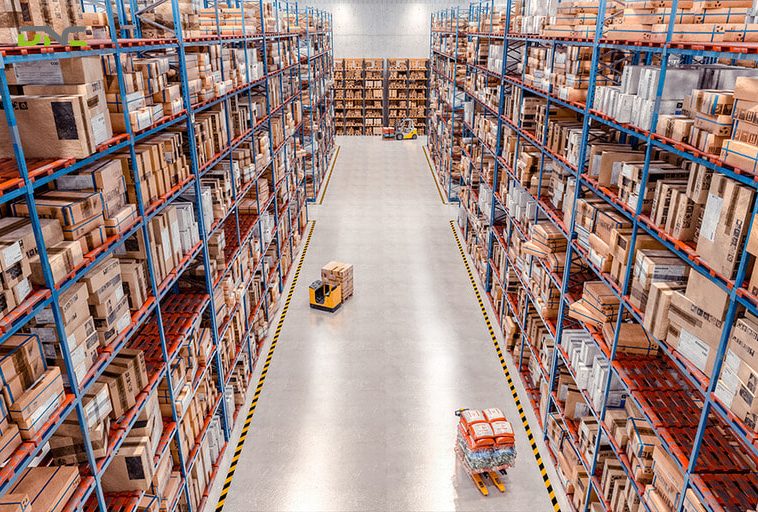
AMR robots in warehouse environments have redefined what operational throughput looks like — replacing the walk-heavy, labor-intensive workflows of traditional warehousing with intelligent, autonomous material movement that scales on demand. Autonomous mobile robots navigate warehouse aisles without fixed paths or embedded infrastructure, transporting goods between storage zones, picking stations, packing areas, and shipping docks using SLAM navigation and dynamic path planning. Logistics operators and manufacturers running warehouse operations in Malaysia face mounting pressure from e-commerce order volumes, SKU proliferation, and structural labor shortages — conditions that make AMR warehouse solutions one of the highest-ROI automation investments available. This guide covers the types of warehouse robots, how AMR technology integrates into logistics workflows, real-world performance metrics, and the implementation path for Malaysian warehouse operations.
What Is an AMR in Warehouse Operations?
An AMR in warehouse context is an autonomous mobile robot deployed to automate material movement within a warehouse, distribution center, or fulfillment facility. Warehouse AMRs use LiDAR sensors and SLAM algorithms to navigate dynamically through storage aisles, cross-docking zones, and staging areas without magnetic tape, embedded wires, or laser reflectors.
Warehouse AMR systems differ from traditional AGV-based warehouse automation in three critical ways. Navigation flexibility — AMRs calculate routes in real time and reroute around obstacles (people, forklifts, stacked pallets) instead of stopping. Deployment speed — AMR systems map the facility in 1–2 days and begin productive operation within 1–3 weeks, compared to 4–16 weeks for AGV infrastructure installation. Scalability — adding AMR capacity means deploying additional robots and updating fleet software, with zero infrastructure expansion required.
The global warehouse AMR market represents approximately 55% of all AMR deployments, making warehousing and logistics the single largest application segment for autonomous mobile robots.
Types of Warehouse Robots
Warehouse operations span multiple material handling functions — picking, transport, sorting, palletizing, and storage — each served by a distinct warehouse robot type.
Goods-to-Person (G2P) AMR
Goods-to-person AMRs represent the most transformative warehouse robot type. These platforms navigate to storage locations, lift mobile shelving units or bins, and transport them to fixed human picking stations. The operator picks items from the delivered shelf without walking — the robot carries the inventory to the person rather than the person walking to the inventory.
G2P AMRs carry 50–600 kg per shelf unit and travel at 1.0–2.0 m/s between storage zones and picking stations. A single picking station served by a fleet of G2P robots processes orders 200–300% faster than manual pick-and-walk methods. Amazon Robotics’ Kiva system — the platform that pioneered G2P AMR at scale — reportedly reduced Amazon’s order processing time from over 60 minutes to approximately 15 minutes.
For Malaysian e-commerce fulfillment operations and multi-SKU warehouses, G2P AMRs deliver the highest productivity gains per robot deployed because they eliminate walking — the activity that consumes 50–60% of a manual picker’s time.
Collaborative Picking AMR (Follow-Me / Zone Picking)
Collaborative picking AMRs work alongside human pickers in the aisles. The robot carries picked items in bins or totes while the human worker walks to storage locations, picks items, and places them on the robot. When the robot’s bins are full or the pick list is complete, the AMR autonomously transports the picked items to packing stations while the picker continues with a new robot.
These AMR warehouse solutions reduce picker walking distance by 40–60% compared to push-cart-based manual picking — the robot navigates optimized routes between pick locations rather than following the sequential aisle-by-aisle pattern that manual pickers typically use. Collaborative picking AMRs suit warehouses that are not yet ready for the full G2P infrastructure reconfiguration but want immediate productivity improvement with minimal workflow disruption.
Autonomous Forklift AMR
Autonomous forklift AMRs handle palletized goods in warehouse operations — put-away from receiving docks to storage locations, retrieval from storage to staging areas, and dock-to-stock transport. These robots use SLAM navigation with 3D perception to locate pallets, position forks accurately, lift and transport loads up to 3,000 kg, and stack at heights reaching 8–10 meters.
Autonomous forklifts replace manual forklift operators in repetitive, high-volume pallet handling workflows. A single autonomous forklift operating 20 hours per day replaces 2–3 manual operators across shifts while eliminating the forklift accidents that account for a significant portion of warehouse workplace injuries — a critical concern under DOSH Malaysia workplace safety regulations.
Sorting AMR
Sorting AMRs — lightweight, high-speed platforms carrying 5–30 kg — automate parcel and item sorting in logistics and e-commerce operations. Each robot receives a package at an induction station, reads the destination barcode or RFID tag, navigates to the correct output chute or container, and tilts or drops the item into position.
Fleets of 50–500+ sorting AMRs replace fixed conveyor-based sortation systems. The advantage: sorting capacity scales linearly by adding robots, and output destinations can be reconfigured through software rather than physical conveyor rearrangement. Parcel logistics operations, 3PL hubs, and e-commerce returns processing centers deploy sorting AMRs for their flexibility and scalability.
Inventory Scanning Robot
Inventory scanning robots — wheeled or aerial platforms equipped with barcode readers, RFID scanners, or computer vision cameras — autonomously audit warehouse inventory by traversing aisles and reading location labels and product identifiers. These robots perform cycle counts 10–50x faster than manual counting with 99%+ accuracy, enabling daily or even continuous inventory auditing that replaces periodic manual counts.
| Warehouse Robot Type | Primary Function | Payload | Productivity Gain | Best For |
| Goods-to-Person | Shelf delivery to picker | 50–600 kg | 200–300% pick rate | High-SKU fulfillment |
| Collaborative Picking | Walk-with picker assistance | 30–150 kg | 40–60% less walking | Retrofit, zone picking |
| Autonomous Forklift | Pallet put-away/retrieval | 1,000–3,000 kg | 2–3 operators replaced | Pallet-heavy warehouse |
| Sorting | Parcel/item sorting | 5–30 kg | Linear scalability | Parcel hubs, 3PL |
| Inventory Scanner | Cycle counting | N/A | 10–50x faster counts | Inventory accuracy |
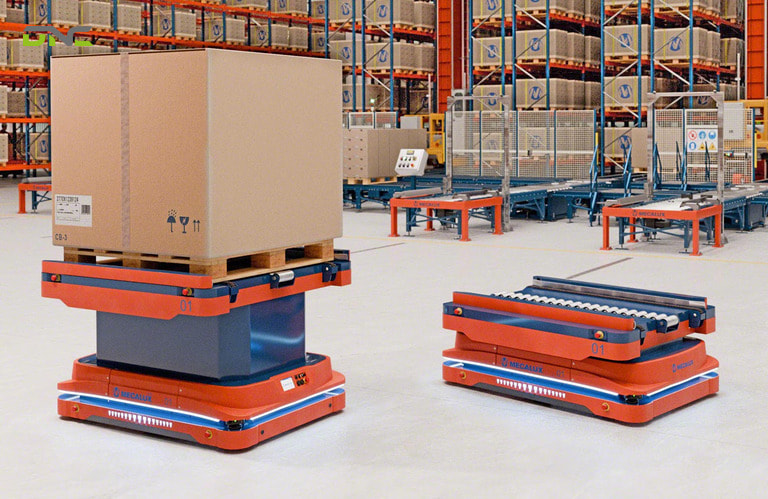
AMR Warehouse Solutions for Malaysian Logistics
WMS Integration
AMR warehouse solutions connect to your warehouse management system through API-based integration. The WMS assigns tasks — pick orders, put-away commands, replenishment requests — to the AMR fleet manager. The fleet manager dispatches robots, tracks task completion, and reports back to the WMS. This bidirectional integration ensures that AMR operations synchronize with inventory records, order priorities, and shipping schedules.
Modern AMR fleet management platforms support standard WMS integration protocols and provide pre-built connectors for popular warehouse management systems. Custom API integration accommodates proprietary WMS platforms used by larger Malaysian logistics operators.
Workflow Design
AMR deployment success depends on warehouse workflow design — how robot-served tasks integrate with human-performed tasks. G2P systems require redesigned picking stations where operators remain stationary while robots deliver inventory. Collaborative AMRs integrate into existing pick-and-walk workflows with minimal process change. Autonomous forklifts replace manual forklift operations on specific routes while human operators continue handling tasks that require judgment or flexibility.
The workflow design phase identifies which warehouse tasks deliver the highest ROI from AMR automation — typically the highest-volume, most repetitive, most walking-intensive tasks. A systematic material flow analysis maps every movement, measures frequency and distance, and prioritizes automation targets.
Facility Layout Optimization
AMR warehouse solutions often enable facility layout optimization beyond task automation alone. G2P AMR systems can increase storage density by 25–40% because the shelving units are mobile — they can be packed tighter since humans do not need to walk between them. Only the robot aisles need clearance, and those aisles can be narrower than human-walk aisles.
AMR-optimized warehouse layouts place the highest-velocity SKUs closest to picking stations, position charging stations at traffic-efficient locations, and design traffic flow patterns that minimize robot congestion at intersections and narrow corridors.
AMR Performance Metrics in Warehouse Operations
Picking Productivity
G2P AMR deployments consistently report 200–300% picking productivity improvements measured in lines picked per hour per operator. A manual picker walking warehouse aisles picks 60–100 lines per hour. The same operator at a G2P station served by AMR robots picks 200–350 lines per hour — the elimination of walking time directly converts to picking throughput.
Collaborative picking AMRs deliver more modest but still significant gains: 40–60% reduction in picker walking distance translates to 30–50% improvement in lines picked per hour per operator.
Order Cycle Time
AMR warehouse solutions reduce order-to-ship cycle time by compressing the time between order receipt and packed shipment. G2P systems reduce picking time from 60+ minutes to 15–20 minutes for typical multi-item orders. Sorting AMRs compress sortation time by processing items in parallel across the fleet rather than sequentially through fixed conveyor branches.
For Malaysian e-commerce fulfillment operations competing on delivery speed — same-day and next-day delivery expectations now standard in major urban markets — AMR-compressed cycle times enable competitive service levels without proportional labor force expansion.
Labor Efficiency
AMR warehouse solutions do not eliminate warehouse workers — they amplify worker productivity. A 100-picker manual warehouse implementing G2P AMRs can maintain the same throughput with 30–40 pickers, redeploying the remaining staff to value-adding tasks: quality inspection, returns processing, customer service, and continuous improvement activities.
In Malaysia’s tight manufacturing labor market, this efficiency gain addresses the labor availability constraint without requiring workforce expansion that the labor pool cannot supply. Warehouse operators who cannot hire enough pickers to meet demand volumes find that AMR technology enables their existing workforce to handle significantly higher throughput.
Accuracy and Error Rates
AMR-directed picking reduces error rates by 50–70% compared to paper-based or RF-directed manual picking. Pick-to-light systems at G2P stations confirm the correct item and quantity; the AMR delivers only the relevant shelf, reducing the opportunity for location errors. Sorting AMR systems achieve 99.9%+ sort accuracy through barcode/RFID verification at induction and automated destination confirmation.
AMR Warehouse Solutions for Malaysian Logistics
E-Commerce Fulfillment
Malaysia’s e-commerce sector — growing at 15–20% annually — drives demand for warehouse automation that scales with order volume. G2P AMR systems enable fulfillment centers in Shah Alam, Subang, and Johor Bahru to process rising order volumes without proportional headcount increases. Shopee, Lazada, and 3PL operators serving these platforms need warehouse throughput that matches peak-season demand (11.11, 12.12 sales events) while maintaining same-day and next-day delivery commitments.
AMR solutions provide the scalability to handle peak demand — deploy additional robots during sales events, return to base fleet during normal periods — without hiring and training temporary labor that may not be available in Malaysia’s tight labor market.
Manufacturing Warehouse Operations
Malaysian manufacturers operating in-house warehousing for raw materials, work-in-progress, and finished goods deploy AMR systems to automate the transport between warehouse storage and production lines. Automotive parts warehouses serving assembly plants, electronics component stores feeding SMT lines, and F&B finished goods warehouses linked to production output all benefit from AMR-automated material flow.
DNC Automation integrates AMR warehouse solutions with manufacturing execution systems (MES) and production PLCs — connecting warehouse material movement directly to production scheduling and consumption signals. This integration eliminates the manual handoffs and communication delays that create material shortages and line stoppages in non-automated environments.
Cold Chain Logistics
Cold storage warehouses — essential for Malaysia’s growing cold chain infrastructure serving F&B, pharmaceutical, and agricultural products — present unique challenges for warehouse automation. AMR platforms rated for cold storage operation (down to -25°C with specialized batteries, heated enclosures, and condensation-resistant sensors) automate pallet movement in environments where human exposure time must be minimized for safety reasons.
AMR deployment in cold storage delivers dual benefits: improved material handling efficiency and reduced worker exposure to hazardous temperature conditions — addressing both productivity and workplace safety requirements.
Third-Party Logistics (3PL)
3PL operators managing multi-client warehouse operations need automation that adapts to changing client requirements, seasonal demand patterns, and variable SKU profiles. AMR warehouse solutions — with software-based reconfiguration, scalable fleet sizing, and no fixed infrastructure — match the flexibility requirements of 3PL operations where client portfolios and service requirements change quarterly.
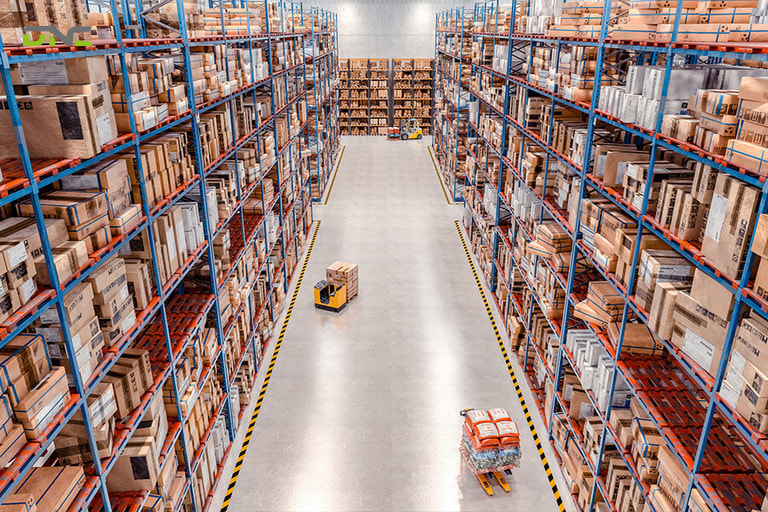
AMR Warehouse Solutions for Malaysian Logistics
Cost and ROI of AMR Warehouse Solutions
Investment Breakdown
AMR warehouse project costs for Malaysian facilities depend on fleet size, robot type, and integration scope:
| Component | Cost Range (USD) | Notes |
| G2P AMR (per unit) | 30,000–80,000 | Shelf-carrying platform |
| Collaborative AMR (per unit) | 25,000–60,000 | Follow-me picker assistant |
| Autonomous forklift (per unit) | 80,000–200,000 | Pallet handling, high-reach |
| Sorting AMR (per unit) | 15,000–40,000 | Lightweight, high-speed |
| Fleet management software | 10,000–80,000 | Per-site license |
| WMS integration | 15,000–50,000 | API development, testing |
| Mobile shelving (G2P) | 500–2,000 per unit | If redesigning storage layout |
| Installation + commissioning | 10,000–30,000 | Mapping, config, training |
For a representative Malaysian warehouse deployment — 10 G2P AMRs with fleet software, WMS integration, and mobile shelving — total project investment ranges from RM 1.5M to RM 4M.
ROI Timeline
AMR warehouse deployments typically achieve full ROI in 12 to 24 months for high-utilization operations. Key ROI drivers:
- Labor cost savings: 2–3 picker positions consolidated per G2P station (RM 2,500–4,000/month per position including wages, EPF, SOCSO)
- Throughput increase: 200–300% picking productivity enables same or higher output with smaller team
- Error reduction: 50–70% fewer picking errors reduces returns, rework, and customer complaints
- Space optimization: 25–40% storage density increase defers or eliminates warehouse expansion capital
MIDA automation incentives — Pioneer Status tax exemptions, investment tax allowances, and automation equipment grants — can reduce the effective investment cost by 15–30% for qualifying Malaysian companies.
How to Implement AMR in Your Warehouse
Step 1: Material Flow Analysis
Map every material movement in your warehouse: origin, destination, distance, frequency, payload, and current handling method. Identify the highest-volume, most repetitive movements — these deliver the fastest AMR ROI.
Step 2: Task Prioritization
Rank warehouse tasks by AMR automation suitability: repetitive point-to-point transport, high-walking-distance picking workflows, and high-frequency pallet handling top the list. Tasks requiring human judgment (quality inspection, exception handling) remain human-performed.
Step 3: System Design
Select AMR types, fleet size, layout modifications (if needed), and integration scope based on the material flow analysis and task prioritization. Design the fleet to handle average daily volume with capacity headroom for peak periods.
Step 4: Pilot Deployment
Deploy a small fleet (3–5 AMRs) on the highest-ROI workflow. Measure performance against baseline manual operation: throughput, cycle time, accuracy, and labor hours. Use pilot data to validate ROI projections before full fleet investment.
Step 5: Full Deployment and Optimization
Scale the fleet to target capacity based on pilot results. Optimize warehouse layout, traffic patterns, and fleet scheduling through data-driven adjustments using fleet management analytics.
DNC Automation guides Malaysian warehouse operators through every implementation step — from initial material flow analysis through pilot deployment and full-scale fleet optimization. Our engineering team combines warehouse automation expertise with Siemens-certified control system integration capability.
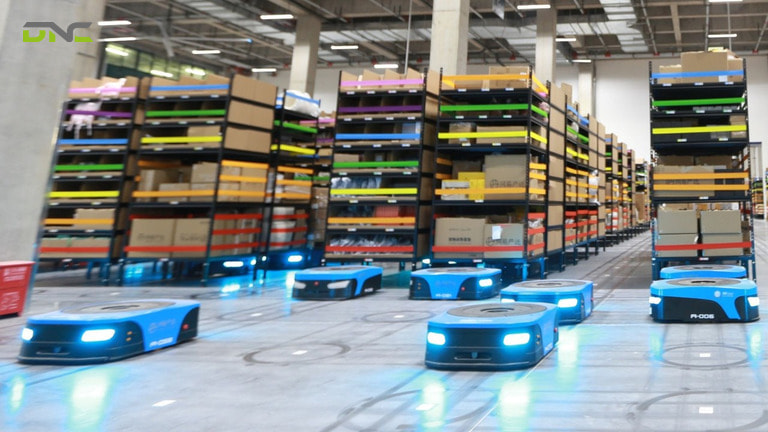
How to Implement AMR in Your Warehouse
Frequently Asked Questions About AMR in Warehouse
How Many AMRs Does a Warehouse Need?
Fleet size depends on daily order volume, transport distance, and throughput requirements. A typical calculation: determine the number of transport tasks per hour, divide by the tasks per hour per AMR (considering travel distance, load/unload time, and charging), and add 10–20% buffer for peak demand and charging rotation. A 10,000 sq ft warehouse processing 500 order lines per day might require 5–8 collaborative AMRs or 8–12 G2P AMRs.
Can AMRs Work in Existing Warehouses Without Renovation?
Yes — AMR systems deploy in existing warehouses without structural modification. SLAM-based AMRs map the current facility layout and navigate within existing aisle configurations. Collaborative picking AMRs integrate into current pick-and-walk workflows immediately. G2P systems may benefit from layout optimization (replacing static shelving with mobile units), but this is an incremental improvement rather than a renovation requirement.
What Warehouse Size Makes AMR Investment Worthwhile?
AMR investment becomes cost-justified when the labor savings and throughput gains offset the system cost within 18–24 months. Warehouses processing 300+ order lines per day with 5+ pickers typically cross this threshold. Smaller operations with highly repetitive workflows (single-SKU palletizing, standardized kit assembly) can also justify AMR investment due to high per-task automation impact.
How Do AMRs Handle Peak Season Demand?
AMR scalability directly addresses peak-season challenges. Deploy additional rental or leased AMRs during peak periods (11.11, CNY, year-end), registered to the existing fleet management system within hours. When the peak passes, return the additional units. This flexibility eliminates the need to hire, train, and manage temporary warehouse staff for demand spikes — a significant advantage in Malaysia’s tight labor market.
Are AMR Warehouse Solutions Safe for Mixed Human-Robot Environments?
AMR warehouse robots comply with ISO 3691-4 for driverless industrial vehicles. Safety-rated LiDAR creates configurable protective zones; speed adjusts automatically based on proximity to humans. In G2P operations, robots and pickers occupy separate zones — robots handle storage areas while pickers work at fixed stations. Collaborative AMRs maintain safe following distances and stop immediately if a human enters the safety zone. All AMR systems meet DOSH Malaysia workplace safety requirements.
How Do I Get Started with Warehouse AMR?
Start with a material flow audit: document transport routes, frequencies, payloads, and labor hours for every warehouse movement. Engage a system integrator experienced in warehouse AMR deployment and WMS integration. DNC Automation offers free warehouse assessments that include material flow analysis, AMR system design, ROI modeling, and phased implementation planning for Malaysian logistics operations.
Conclusion
AMR warehouse solutions deliver measurable, scalable productivity gains for logistics operations facing labor constraints, rising demand volumes, and same-day delivery expectations. Goods-to-person AMRs increase picking productivity by 200–300%; collaborative robots reduce walking by 40–60%; autonomous forklifts replace manual operators on repetitive pallet routes. Malaysian warehouse operators — from e-commerce fulfillment centers to manufacturing warehouses to 3PL hubs — can deploy AMR technology rapidly, scale incrementally, and achieve ROI within 12–24 months.
DNC Automation designs, integrates, and supports AMR warehouse solutions for Malaysian logistics operations. Our 35+ engineers deliver complete systems — from material flow analysis and AMR selection through WMS integration and ongoing 24/7 support.
- 23 views
- 0 Comment
Recent Comments