



Auger Conveyor Explained: System Design, Applications, and Performance Considerations
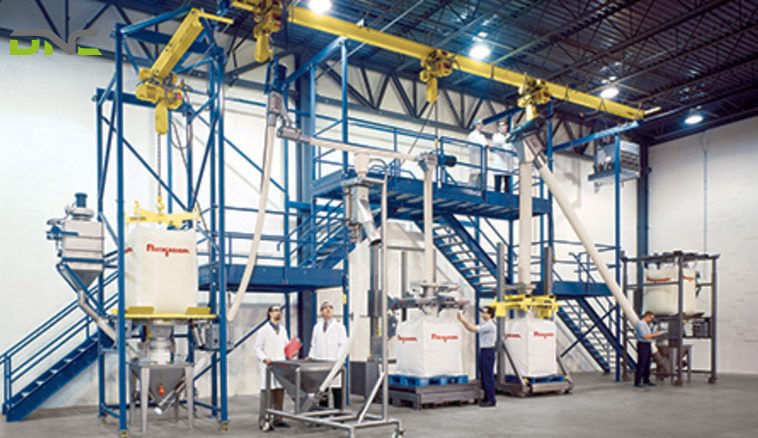
Auger conveyors play a critical role in modern material handling by providing controlled, enclosed transfer of powders, granules, and semi-fluid materials. While often grouped together with screw conveyors, auger conveyors have distinct design characteristics and application strengths that make them especially suitable for short to medium-distance conveying, feeding, and dosing processes.
What Is an Auger Conveyor and How Does It Work?
An auger conveyor is a mechanical material-handling system designed to move bulk materials using a rotating helical screw (auger) housed inside a tube or trough. It is commonly used to convey powders, granules, and semi-solid materials over short to medium distances.
When the auger rotates, material resting in the trough is pushed forward along the axis of the screw. The friction between the material and the rotating flights creates forward motion, allowing controlled and enclosed transport with minimal spillage.
Is an Auger Conveyor Different from a Screw Conveyor?
Although the two terms are often used interchangeably, auger conveyors and screw conveyors differ in engineering depth, performance control, and industrial application. The table below highlights these distinctions in greater detail.
| Criteria | Auger Conveyor | Screw Conveyor |
| Terminology Usage | Commonly used in agriculture, food processing, and portable conveying solutions | Standard technical term in industrial engineering and material handling |
| Design Philosophy | Simple, functional design focused on basic material transfer | Engineered system optimized for throughput, reliability, and continuous operation |
| Typical Structure | Fully enclosed round tube, usually lightweight | Tube or U-trough with removable covers for maintenance |
| Conveying Length | Short to medium distances (typically < 15 m) | Medium to long distances (can exceed 30 m with proper design) |
| Installation Type | Portable or semi-fixed | Permanently installed in production lines |
| Material Type | Grain, powders, semi-liquid or free-flowing materials | Powders, bulk solids, abrasive, heavy, or high-density materials |
| Material Sensitivity | Better suited for materials that are not highly abrasive | Designed to handle abrasive and high-wear materials |
An auger conveyor is best viewed as a simplified form of a screw conveyor, suitable for light-duty or portable applications, while a screw conveyor is an engineered industrial system designed for precision, durability, and high-volume operation.
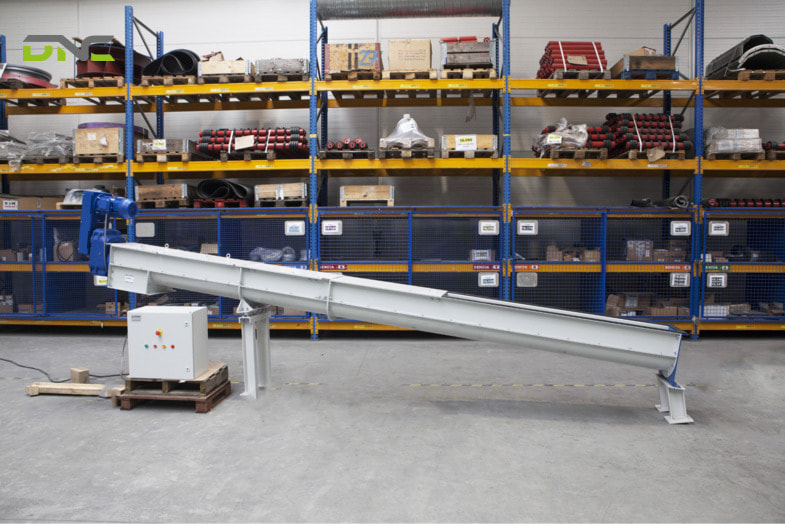
Auger conveyors and screw conveyors differ in engineering depth, performance control, and industrial application.
What Are the Main Components of an Auger Conveyor?
A standard auger conveyor consists of five core components, each contributing directly to material flow stability, system reliability, and equipment lifespan. Understanding these components helps users evaluate performance limits and maintenance requirements.
Auger (Helical Screw Flight)
This is the primary conveying element responsible for moving material along the conveyor path.
- The screw’s diameter, pitch, and thickness determine capacity and flow consistency.
- A constant pitch is common for uniform transfer, while variable pitch may be used to regulate feed rate or prevent clogging.
- Material selection (carbon steel, stainless steel, hardened steel) impacts wear resistance and suitability for food or abrasive materials.
Trough or Tube Housing
The housing contains the material and supports the auger during operation.
- Fully enclosed tubes minimize dust and contamination.
- Open or U-trough designs allow easier inspection and cleaning.
- Housing rigidity affects alignment accuracy and vibration control.
Drive Unit (Motor & Gearbox)
The drive unit supplies rotational torque to move material under load.
- Motor power must match material weight, friction, and conveyor length.
- Gear reduction ensures proper RPM to avoid material degradation or excessive wear.
- Incorrect sizing can lead to overheating, stalling, or shortened motor life.
Inlet & Discharge Ports
These control how material enters and exits the conveyor.
- Poor inlet design can cause flooding, buildup, or uneven loading.
- Discharge configuration influences flow direction, accuracy, and downstream integration.
- Slide gates or valves may be added for flow control.
Support Bearings & Seals
Bearings maintain shaft alignment while seals protect against material ingress.
- End bearings handle thrust loads from material movement.
- Seals are critical in dusty, abrasive, or sanitary environments.
- Proper bearing placement directly affects service life and vibration levels.
Optional components such as wear liners, inspection ports, covers, or safety guards are often added based on operating environment and maintenance strategy.
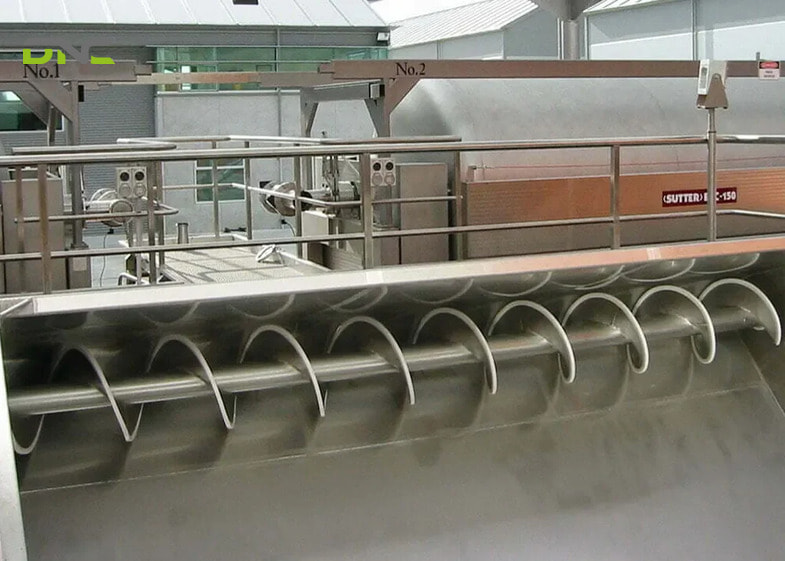
A standard auger conveyor consists of five core components
What Types of Auger Conveyors Are Commonly Used?
Auger conveyors are commonly classified into four main types, based on configuration and material handling requirements. Each type offers different trade-offs between capacity, footprint, and flexibility.
Horizontal Auger Conveyor: The most widely used configuration due to its simplicity and efficiency.
- Delivers consistent throughput with minimal power loss.
- Best suited for free-flowing materials over short to medium distances.
- Limited ability to handle elevation changes.
Inclined Auger Conveyor: Designed to move material both horizontally and vertically.
- Requires increased motor power as inclination angle increases.
- Throughput decreases at steeper angles due to material fallback.
- Common in applications where space constraints prevent vertical conveyors.
Vertical Auger Conveyor: Used when floor space is limited and vertical lifting is required.
- Compact footprint compared to bucket elevators.
- Lower capacity due to gravity resistance.
- Often applied for powders and fine-grain materials.
Flexible Auger Conveyor: Features a flexible screw inside a plastic or steel tube.
- Ideal for tight layouts, mobile systems, or frequent reconfiguration.
- Lower precision and durability compared to rigid augers.
- Common in agriculture and small-scale food handling.
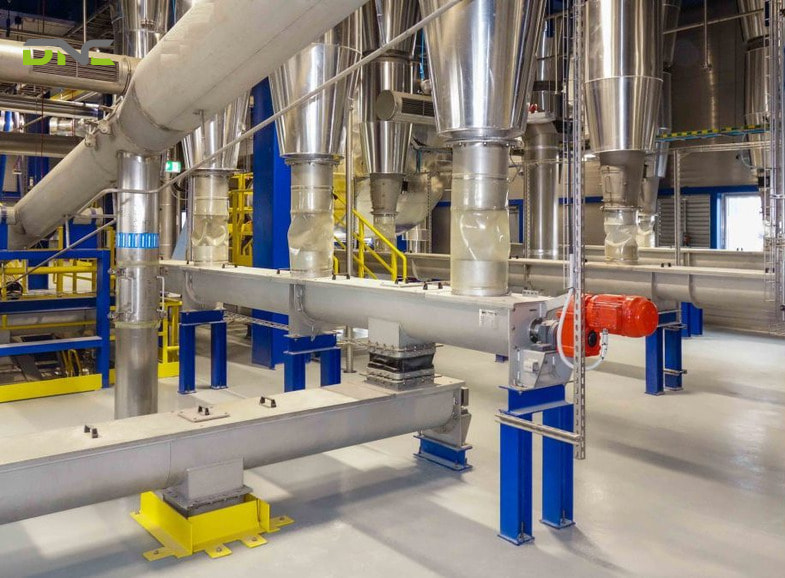
Each type offers different trade-offs between capacity, footprint, and flexibility.
What Are the Advantages and Limitations of Auger Conveyors?
Auger conveyors are widely used because of their simple construction and controlled material handling, but they also come with inherent mechanical limitations. Understanding both sides helps ensure proper application.
Advantages
The main advantages of auger conveyors come from their simple mechanical design and enclosed conveying principle, which make them reliable for specific material handling needs.
- Compact and enclosed design: Auger conveyors require minimal floor space and can be fully enclosed, making them ideal for installations with limited layout flexibility. Enclosure also enhances safety and environmental control.
- Excellent for powders and fine materials: Their continuous screw motion provides steady flow, especially for powders, grains, and fine bulk materials that do not require gentle handling.
- Minimal material spillage: Because material is contained within a tube or trough, spillage and product loss are significantly reduced compared to open conveying systems.
- Lower upfront cost compared to complex systems: With fewer moving parts and simpler controls, auger conveyors typically have a lower initial investment than pneumatic or fully automated belt systems.
Limitations
Despite their benefits, auger conveyors have mechanical and operational constraints that limit their suitability for certain applications.
- Limited conveying distance: Mechanical friction and torque limits restrict auger conveyors to short or medium distances. Long runs require higher power and increase wear.
- Not ideal for fragile or sticky materials: Fragile products may break due to shear forces, while sticky materials can adhere to the screw and housing, causing buildup or blockage.
- Increased wear with abrasive products: Abrasive materials accelerate wear on screw flights, liners, and bearings, leading to higher maintenance frequency.
- Efficiency drops at steep inclines: As incline angle increases, material rollback occurs, reducing effective throughput and increasing energy consumption.
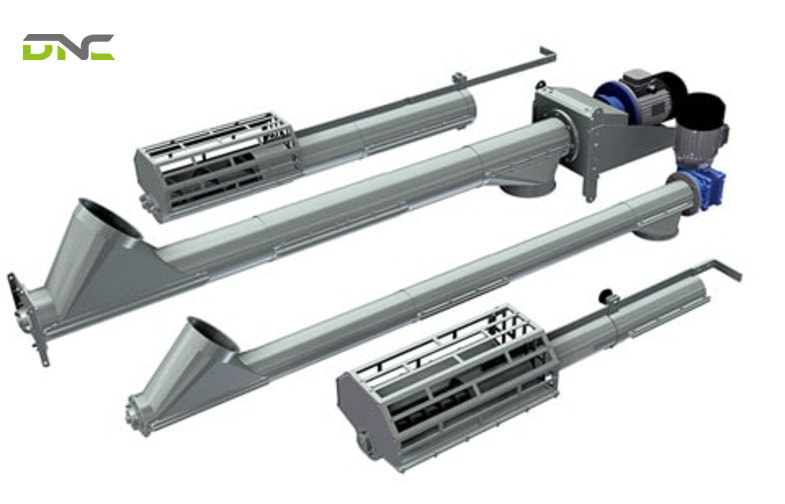
What Are the Advantages and Limitations of Auger Conveyors?
When Is an Auger Conveyor the Right Choice for Material Handling?
An auger conveyor is most effective when controlled transfer and enclosure are more important than speed or long-distance transport. It is the right choice when:
- Material is powdery, granular, or semi-fluid, such as flour, cement, pellets, or sludge
- Conveying distance is short to medium, typically within a single processing zone
- Space is limited, requiring compact and linear equipment layout
- Dust control and cleanliness are critical, especially in food or chemical environments
- Throughput requirements are moderate, with emphasis on consistency rather than high volume
For these reasons, auger conveyors are commonly used for feeding hoppers, dosing systems, batching processes, and controlled material transfer, rather than high-speed or long-distance conveying.
Why Choose an Automation-Focused Partner for Auger Conveyor Systems?
An automation-focused partner delivers more than a mechanical conveyor — they design a fully integrated material handling system that performs reliably within an automated production line.
- Accurate load and torque calculation: Proper engineering prevents motor overload, shaft deflection, and premature mechanical failure under peak operating conditions.
- PLC and sensor integration: Automation enables precise control of feeding rates, batching accuracy, and real-time system feedback, improving process consistency.
- Scalable system design: Well-designed auger systems can be expanded or upgraded as production capacity increases, avoiding costly redesigns.
- Reduced downtime through intelligent monitoring: Condition monitoring, alarms, and data integration help detect wear or abnormal operation early, minimizing unplanned shutdowns.
- 13 views
- 0 Comment
Recent Comments