



Automated Forklift Robot: Guide for Malaysian Warehouses
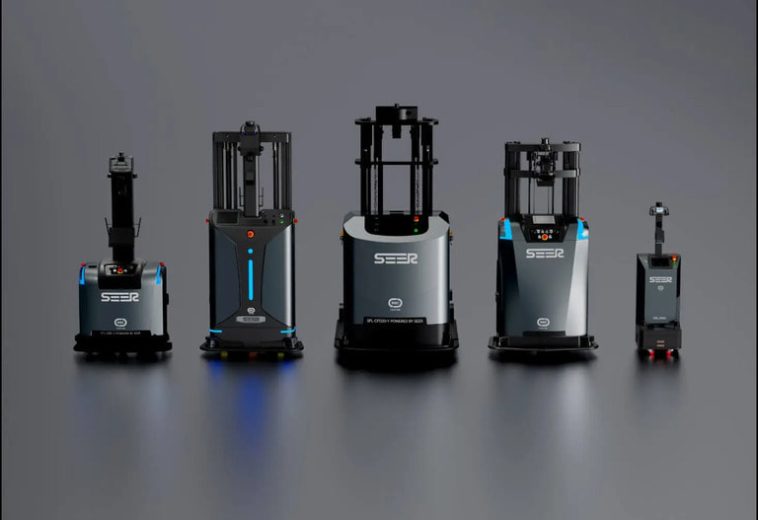
Automated forklift robots perform the lifting, transporting, and stacking operations of manual forklifts — without a human operator. These self-guided vehicles navigate warehouses and manufacturing floors autonomously, handling palletized loads from receiving docks to storage racks, between production zones, and through shipping staging areas. Malaysian manufacturers and warehouse operators losing an estimated 3,000+ working days annually to forklift-related workplace injuries have a compelling safety and financial case for replacing manual forklift operations with unmanned forklift technology. This guide covers how automated forklift robots work, the technology options available, cost and ROI analysis, and implementation considerations for Malaysian facilities.
What Is an Automated Forklift Robot?
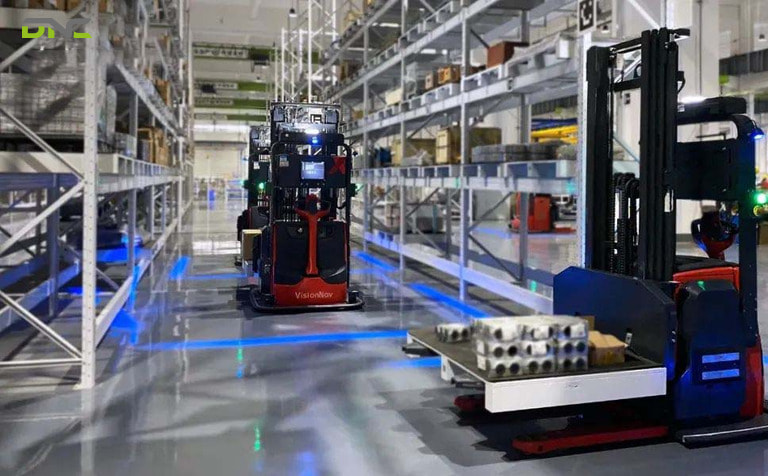
An automated forklift robot is a driverless industrial vehicle equipped with fork mechanisms for lifting, lowering, and transporting palletized loads. The term encompasses two distinct technology approaches:
AGV forklift (guided path): A forklift-format automatic guided vehicle that follows predetermined paths using magnetic tape, embedded wire, or laser reflectors. The PLC-based automatic guided vehicle forklift executes programmed routes with high positional accuracy (±1–5 mm), handling pallet put-away, retrieval, and transport along fixed corridors.
AMR forklift (autonomous): A forklift-format autonomous mobile robot that navigates dynamically using SLAM, LiDAR, and 3D cameras. The self-guided vehicle calculates its own routes, avoids obstacles, detects and localizes pallets using 3D vision, and adapts to changing facility layouts without physical infrastructure.
Both types serve the same core function — unmanned pallet handling — but differ in navigation flexibility, infrastructure requirements, cost, and deployment characteristics. The umbrella term “unmanned forklift” applies to both.
An autonomous mobile vehicle with forklift capability represents a higher level of automation sophistication than standard AGV or AMR transport platforms because it must perform three-dimensional operations: navigate to a pallet (2D), detect its precise position and orientation (3D), insert forks accurately, lift the load, transport it, navigate to the destination rack position, and place the load at the correct height and depth — all without human guidance.
What Is an Automated Forklift Robot?
How Automated Forklifts Work
Navigation and Localization
Automated forklift robots use the same navigation technologies as other AGVs and AMRs — magnetic guidance, laser triangulation, or SLAM — plus additional 3D perception for pallet detection and rack positioning.
SLAM-based autonomous forklifts mount 2D LiDAR scanners for horizontal navigation and 3D cameras or 3D LiDAR for vertical perception. The 2D system navigates the vehicle to the approximate rack location; the 3D system detects the exact pallet position, fork pocket locations, and rack beam positions for precise fork insertion and load placement.
PLC-based automatic guided vehicle forklifts rely on their guidance infrastructure for horizontal navigation and use structured light sensors or proximity sensors for vertical positioning. The deterministic path guidance provides high repeatability — the forklift arrives at the same position within ±1–5 mm every cycle.
Pallet Detection and Handling
Pallet detection is the critical capability that separates automated forklifts from standard AGV/AMR transport platforms. The forklift must:
- Detect pallet presence — confirm a pallet exists at the expected location
- Determine pallet position — measure horizontal offset, angular skew, and height
- Identify fork pockets — locate the openings for fork insertion
- Execute fork insertion — drive forks into pockets with ±10–20 mm accuracy
- Lift and secure — raise the load, verify stability, and engage tilt (if equipped)
- Navigate with load — transport while maintaining stability and safety
- Place at destination — position and lower the load at the designated rack level
3D cameras (stereo vision, structured light, or time-of-flight) provide the depth perception required for steps 1–5. Machine learning algorithms trained on pallet geometries improve detection accuracy across pallet types (EUR, CHEP, custom) and conditions (wrapped, unwrapped, damaged).
Safety Architecture
Automated forklift safety follows ISO 3691-4 with additional considerations for elevated loads:
- 360° safety LiDAR with configurable warning and protective zones
- Load presence sensors confirming pallet is secured before transport
- Mast height sensors preventing travel with load above safe transport height
- Aisle-entry detection reducing speed in narrow aisles
- Blue safety spotlights projecting visible warning patterns
- Emergency stop accessible from all sides
- Acoustic warnings for approach and lifting operations
Malaysian facilities must comply with DOSH workplace safety requirements for automated industrial vehicles — including risk assessments for unmanned forklift operation in mixed-traffic environments.
Types of Automated Forklift Robots
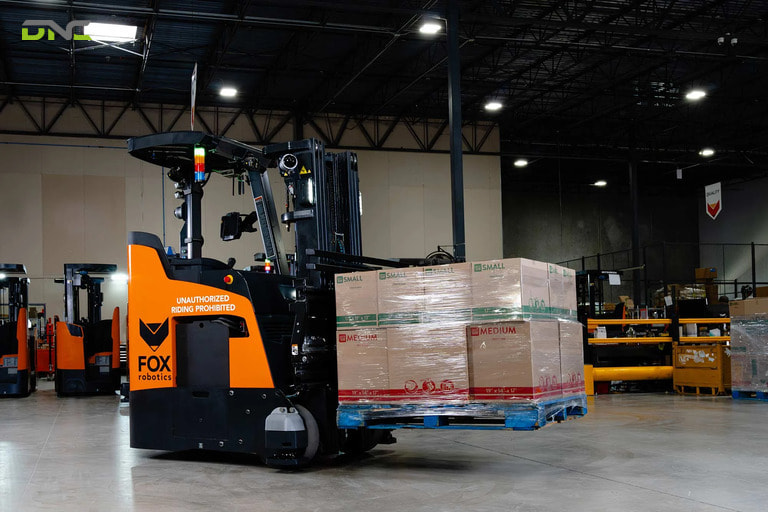
Counterbalance Automated Forklift
The counterbalance type replicates the most common manual forklift configuration — forks extending from the front, counterweight at the rear. Payloads range from 1,000 to 3,000 kg; lift heights reach 6–8 meters. Counterbalance automated forklifts handle standard pallet handling in open warehouse environments with moderate aisle widths (3.5–4.0 m minimum).
Reach Truck Automated Forklift
Automated reach trucks extend their forks forward on a telescoping mast, reaching into deep racking positions. Designed for narrow-aisle, high-bay warehousing — operating in aisles as narrow as 2.7 m with lift heights up to 10–12 meters. Payload capacity: 1,000–2,500 kg. Reach truck automation delivers the highest ROI in high-density storage environments where narrow-aisle operation maximizes storage capacity.
Stacker Automated Forklift
Automated stackers — compact, walkie-stacker-format vehicles — handle lighter pallet loads (500–1,500 kg) at moderate heights (up to 5–6 meters). Their smaller footprint suits facilities with limited space and lower pallet weights. Stacker automation is the most accessible automated forklift entry point.
Pallet Jack / Pallet Mover
Automated pallet jacks transport pallets at floor level without stacking capability. Payload: 1,000–3,000 kg. These are the most straightforward and cost-effective automated forklift variant — handling horizontal pallet transport between receiving, staging, and shipping areas without vertical lift operations.
| Type | Payload | Lift Height | Min Aisle Width | Price Range (USD) |
| Counterbalance | 1,000–3,000 kg | 6–8 m | 3.5–4.0 m | 80,000–200,000 |
| Reach Truck | 1,000–2,500 kg | 10–12 m | 2.7–3.0 m | 120,000–300,000 |
| Stacker | 500–1,500 kg | 5–6 m | 2.5–3.0 m | 60,000–150,000 |
| Pallet Jack | 1,000–3,000 kg | Floor level | 2.0–2.5 m | 40,000–80,000 |
Types of Automated Forklift Robots
Self-Guided Vehicle vs Manual Forklift: Performance Comparison
| Factor | Automated Forklift | Manual Forklift |
| Availability | 20–22 hrs/day (with charging) | 8–16 hrs/day (shift-dependent) |
| Accuracy | ±5–20 mm, repeatable | Operator-dependent, variable |
| Speed | Conservative, consistent | Variable, often faster bursts |
| Safety | Sensor-based, predictable | Human judgment, fatigue risk |
| Operating cost/hr | ~USD 3–6 | ~USD 15–25 (with labor) |
| Accident rate | Near zero | 10–30 incidents/year (typical) |
| Flexibility | High (AMR) or Low (AGV) | Highest (human adaptability) |
| Night shift capable | Yes, unmanned | Requires additional operators |
| Capital cost | USD 60K–300K per unit | USD 15K–50K per unit |
The operating cost advantage compounds over time: an automated forklift operating 20 hours/day at USD 4/hour costs approximately USD 29,200/year in energy and maintenance. A manual forklift operating 16 hours/day across two shifts at USD 20/hour (including operator wages, benefits, and training) costs approximately USD 116,800/year. Annual savings per automated forklift: ~USD 87,600 (approximately RM 394,200).
Applications in Malaysian Manufacturing and Warehousing
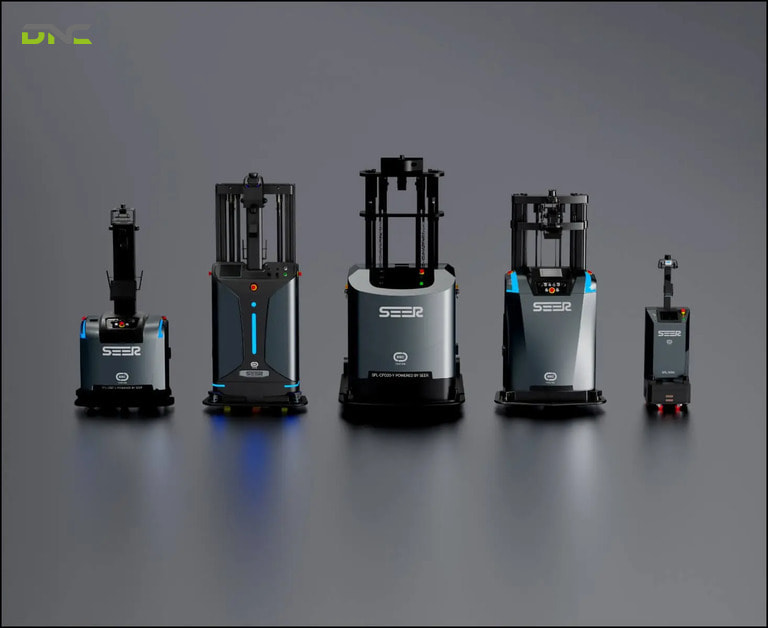
Pallet-Intensive Warehouse Operations
Malaysian 3PL operators, distribution centers, and manufacturing warehouses with high pallet movement volumes (200+ pallet moves per day) represent the primary market for automated forklift robots. Self-guided vehicles handle repetitive put-away and retrieval routes that consume manual forklift operator hours without adding value beyond physical movement.
Cold Chain and Hazardous Environments
Cold storage warehouses (down to -25°C) and hazardous material handling areas benefit doubly from automated forklifts: productivity improvement plus reduced human exposure to dangerous conditions. Malaysian cold chain infrastructure — serving F&B, pharmaceutical, and agricultural sectors — faces chronic difficulty staffing cold storage positions due to the harsh working conditions. Unmanned forklifts eliminate this staffing challenge entirely.
Automotive and Heavy Manufacturing
Automotive assembly plants and heavy manufacturing facilities across Selangor and Johor use automated forklifts for heavy-pallet transport between receiving, storage, production cells, and shipping. The repetitive, high-weight nature of automotive pallet handling (engine blocks, body panels, assembled modules) makes it ideal for unmanned forklift automation.
E-Commerce Fulfillment
E-commerce fulfillment centers processing high volumes of inbound receiving and outbound shipping deploy automated pallet jacks and stackers for dock-to-rack and rack-to-dock pallet movement — freeing human operators for higher-value picking and packing tasks.
Applications in Malaysian Manufacturing and Warehousing
Cost and ROI of Automated Forklift Robots
Investment Breakdown
| Component | Cost Range (USD) |
| Automated forklift (per unit) | 60,000–300,000 |
| Fleet management software | 15,000–60,000 |
| Navigation infrastructure (AGV only) | 5,000–30,000 |
| WMS integration | 15,000–40,000 |
| Charging stations | 5,000–20,000 |
| Installation + commissioning | 15,000–40,000 |
| Training | 3,000–8,000 |
ROI Example: 3-Unit Deployment
A Malaysian warehouse deploying 3 automated counterbalance forklifts to replace 8 manual forklift operators across 3 shifts:
Annual labor cost replaced:
- 8 operators × RM 3,500/month (total cost) × 12 months = RM 336,000/year
System cost:
- 3 units × USD 150,000 + software + integration = ~USD 550,000 (~RM 2,475,000)
Annual operating cost:
- Energy, maintenance, software licensing: ~RM 120,000/year
Net annual savings: RM 336,000 – RM 120,000 = RM 216,000/year
Payback period: RM 2,475,000 ÷ RM 216,000 = ~11.5 years
This example shows that automated forklifts require higher utilization or higher labor cost replacement to achieve acceptable ROI. Payback improves dramatically when:
- Operating 24/7 (replacing more operators)
- Handling hazardous/cold storage (premium labor costs)
- Combined with productivity gains (increased throughput)
- MIDA incentives applied (15–30% cost reduction)
At 24/7 operation replacing 12 operators (4 per shift × 3 shifts), annual savings increase to ~RM 384,000, compressing payback to ~5.5 years with MIDA incentives.
How to Evaluate Automated Forklift Investment
Quantify pallet movement volume. Count daily pallet moves by route (receiving→storage, storage→production, production→shipping). Routes exceeding 100 pallet moves per day per corridor are strong automation candidates.
Assess manual forklift utilization. Track actual manual forklift utilization — time actively moving pallets vs. idle, waiting, or transit. Low utilization (under 50%) indicates that fewer automated forklifts can handle the workload at higher utilization rates.
Evaluate environment suitability. Flat, well-maintained floors with adequate aisle widths are prerequisites. Evaluate floor quality, racking compatibility (fork pocket access, beam heights), and traffic patterns. Automated forklifts perform best in structured environments with standardized pallet positions.
Plan mixed-fleet transition. Most facilities transition gradually — automating the highest-volume, most repetitive routes first while retaining manual forklifts for irregular tasks. Plan the phased transition to maintain operational continuity.
Verify safety and compliance. Malaysian facilities must complete DOSH-compliant risk assessments for automated forklift operation. Evaluate pedestrian traffic density, aisle crossing patterns, and mixed-traffic zones. Implement proper segregation, warning systems, and safety procedures before deployment.
How to Evaluate Automated Forklift Investment
Frequently Asked Questions About Automated Forklifts
What Is an Unmanned Forklift?
An unmanned forklift — also called an automated forklift robot, self-guided vehicle, or autonomous forklift — is a driverless industrial vehicle that performs forklift operations (lifting, transporting, stacking pallets) without a human operator. Navigation uses either guided paths (AGV technology) or autonomous SLAM-based intelligence (AMR technology). Safety sensors, 3D pallet detection, and fleet management software enable 20+ hours of daily operation.
How Much Does an Automated Forklift Cost?
Automated forklift prices range from USD 40,000 for automated pallet jacks to USD 300,000 for SLAM-navigating reach trucks with 3D pallet detection. The most common counterbalance format costs USD 80,000–200,000 per unit. Total project costs including fleet software, integration, and commissioning add 30–50% above per-unit hardware cost.
Can Automated Forklifts Work in Existing Warehouses?
AMR-based autonomous forklifts deploy in existing warehouses without structural modification — SLAM navigation maps the current layout and operates within existing aisle configurations. AGV-based automated forklifts require navigation infrastructure installation (tape, reflectors) but no structural changes. Both types require adequate aisle widths, reasonably flat floors, and compatible racking systems.
Are Automated Forklifts Safe?
Automated forklifts comply with ISO 3691-4 and incorporate multiple safety layers: 360° safety LiDAR, load presence sensors, height sensors, acoustic warnings, blue spotlights, and emergency stops. Their accident rate is near zero compared to manual forklifts, which account for a significant percentage of warehouse workplace injuries. DOSH Malaysia workplace safety requirements apply to automated forklift installations.
What Is a Self-Guided Vehicle?
A self-guided vehicle is any industrial vehicle that navigates and operates without direct human control — a general term encompassing AGVs, AMRs, automated forklifts, and other unmanned industrial transport machines. In practice, “self-guided vehicle” most commonly refers to automated forklifts and transport platforms that use onboard intelligence or infrastructure guides for autonomous navigation.
What Is a PLC-Based Automatic Guided Vehicle?
A PLC-based automatic guided vehicle uses a programmable logic controller as its onboard brain — processing navigation data, managing motor control, handling safety logic, and communicating with fleet management software. PLC-based AGVs (using Siemens, Mitsubishi, or Allen-Bradley controllers) are standard in industrial forklift AGV applications where deterministic, real-time control and integration with factory PLC networks are required.
How Do I Get Started with Automated Forklift Implementation?
Start with a pallet flow analysis: document every forklift route, pallet movement frequency, payload, and current operator hours. Identify the highest-volume, most repetitive routes for initial automation. Engage a system integrator experienced in automated forklift deployment and WMS integration. DNC Automation provides free site assessments that include pallet flow analysis, automated forklift system design, ROI projection, and MIDA incentive guidance for Malaysian facilities.
Conclusion
Automated forklift robots and self-guided vehicles replace manual pallet handling with autonomous, consistent, and safer operation — eliminating the operator-dependent variability and safety risks of manual forklifts. Malaysian warehouse operators and manufacturers handling 200+ daily pallet moves on repetitive routes stand to gain the strongest ROI, with accelerated payback in cold storage, hazardous environments, and 24/7 operations. The technology ranges from automated pallet jacks to sophisticated SLAM-navigating reach trucks — matching diverse facility requirements and investment levels.
DNC Automation designs and integrates automated forklift systems for Malaysian warehouses and manufacturing facilities. Our 35+ engineers deliver complete solutions — from pallet flow analysis and system design through WMS integration and 24/7 local support.
- 8 views
- 0 Comment
Recent Comments