



Conveyor Belt in a Factory: Complete Malaysia Guide | DNC Automation
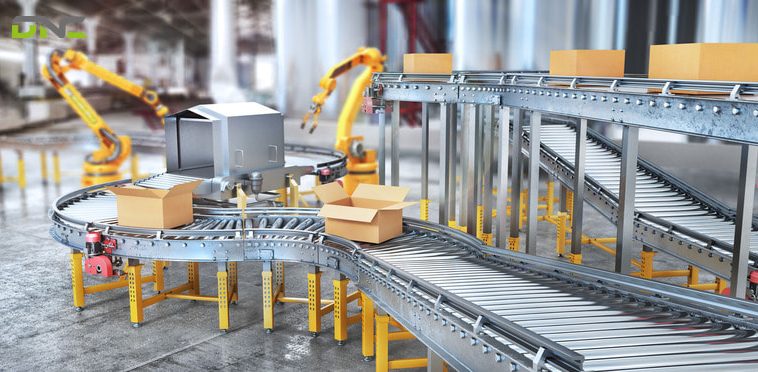
Conveyor Belt in a Factory — The Complete Guide for Malaysian Manufacturers
Conveyor belts in a factory are the circulatory system of modern manufacturing — moving materials, components, and finished goods continuously through every production stage so that machines, robots, and workers can focus on value-adding tasks rather than manual transport. In Malaysian factories, conveyor belt systems handle everything from palm oil fresh fruit bunches in Pahang to semiconductor wafers in Penang, from halal food packaging in Selangor to automotive body panels in Shah Alam.
Malaysia’s manufacturing sector contributes RM 382 billion to GDP — 22.5% of the national economy — and grew 4.2% in 2024. Behind that growth is a profound shift: Malaysian manufacturers are investing in conveyor belt automation at an accelerating pace, driven by the NIMP 2030 mandate to transform 3,000 factories into smart factories by 2030 and by the Smart Automation Grant (SAG) making up to RM 1,000,000 in automation investment available on a 70:30 matching basis.
This guide covers every type of conveyor belt used in Malaysian factories, how each works, which industries rely on each type, and how modern smart factory integration is transforming conveyor belt systems from passive transport into active production intelligence platforms.
What Is a Conveyor Belt in a Factory?
A conveyor belt in a factory is a continuous loop of flexible material — rubber, PVC, polyurethane, plastic modular, metal, or fabric — driven around two or more pulleys by an electric motor, that transports materials, components, or products along a defined path through a manufacturing facility.
The factory conveyor belt system is one of the oldest continuous material handling technologies in manufacturing — dating to the late 1800s in mining operations — but modern factory conveyor belts have evolved far beyond simple belt-on-pulley designs. Today’s conveyor belt systems integrate PLC control, IoT sensors, weighing systems, barcode tracking, robotic interfaces, and SCADA connectivity into unified intelligent material flow platforms.
Factory conveyor belts solve a fundamental manufacturing challenge: how to move the right material to the right place at the right time, consistently and without manual labor, across hundreds of meters of production floor. Without conveyor belts, factories revert to forklifts, trolleys, and manual carrying — all of which introduce variability, labor cost, safety risk, and throughput limitation.
How Does a Conveyor Belt in a Factory Work?
Factory conveyor belt systems operate through interconnected mechanical, electrical, and control system elements working in concert to achieve controlled, continuous material transport.
Step 1: Drive System — Motor and Pulley
Factory conveyor belt operation begins at the drive pulley (also called the head pulley), which is connected to an electric motor via a gearbox. The motor — typically an AC induction motor from 0.37 kW to 75 kW depending on belt length and load — turns the drive pulley. The drive pulley’s friction against the belt surface pulls the belt forward. A VFD (Variable Frequency Drive) adjusts motor speed to control belt velocity from 0.1 m/s to 3 m/s depending on production requirements.
Step 2: Belt Tensioning — Take-Up System
Belt tension is maintained by the take-up pulley (tail pulley) at the opposite end of the conveyor from the drive. Proper tension — neither too loose (belt slips) nor too tight (excess bearing load) — is maintained by screw take-up adjustment (short conveyors) or gravity take-up (long conveyors). Belt tension is one of the most common maintenance adjustments on factory conveyor systems.
Step 3: Load Carrying — Idler Rollers and Belt Surface
Between the drive and tail pulleys, a series of idler rollers support the loaded belt and its cargo. Carrying idlers support the loaded top run; return idlers support the empty bottom run. Impact idlers at the loading zone absorb the shock of material dropping onto the belt. The belt surface material — rubber, PVC, modular plastic, metal — determines the friction, hygiene, temperature resistance, and product handling characteristics appropriate for each application.
Step 4: Material Loading and Transport
Material loads onto the conveyor belt at the loading zone — either from a hopper, a preceding conveyor, a robot, or manually by an operator. The belt carries the material at controlled speed from the loading point to the discharge point. Along the route, sensors, scanners, checkweighers, and cameras may interact with the material in transit — weighing, identifying, inspecting, or sorting without stopping the belt.
Step 5: Control System — PLC and HMI
Modern factory conveyor belt systems are controlled by a PLC (Programmable Logic Controller) — typically a Siemens SIMATIC S7 in DNC Automation’s Malaysian installations. The PLC monitors all sensors (product presence, belt speed, motor current, weight), executes control logic (start/stop, speed ramp, emergency stop, jam detection), and communicates with upstream SCADA, MES, or WMS systems. An HMI touchscreen provides operators with real-time status, alarms, and production data.
Step 6: Smart Factory Integration — IoT and SCADA
Industry 4.0 factory conveyor belt systems go beyond basic PLC control. IoT sensors on the motor (vibration, temperature), belt (tension, speed), and idler rollers (vibration signature indicating bearing wear) feed continuous data to a Siemens WinCC SCADA system. Predictive maintenance algorithms identify bearing failure 2–4 weeks before it occurs, allowing scheduled replacement during planned maintenance windows — eliminating unplanned downtime entirely.
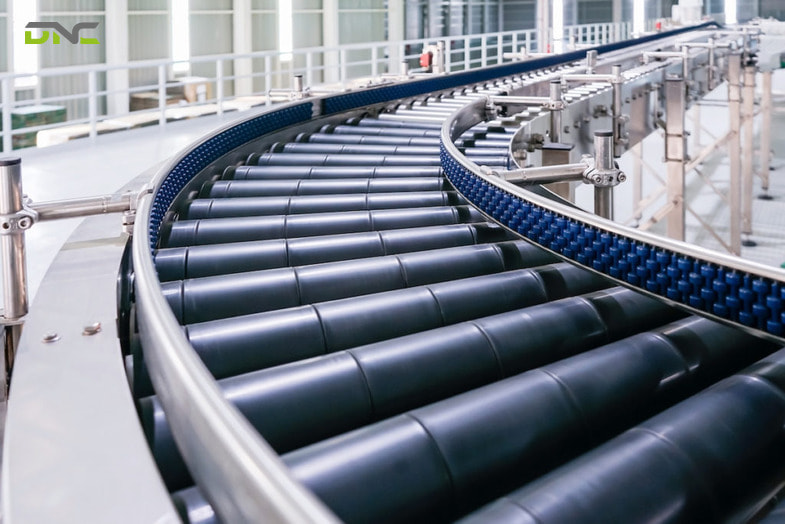
Investing in an automated conveyor system is a strategic move that delivers high Return on Investment (ROI)
Types of Conveyor Belts in a Factory
Malaysian factories use at least eight distinct types of conveyor belt systems, each optimized for specific materials, environments, and production requirements.
1. Flat Belt Conveyor
Flat belt conveyors are the most common type in Malaysian manufacturing — a flat, continuous loop of rubber, PVC, PU, or fabric belt driven around two pulleys. Flat belts suit a vast range of applications: assembly line transport, packaging line feeding, inter-process transfer.
Standard flat belt conveyors carry items weighing grams (biscuits) to hundreds of kilograms (automotive parts). Belt material selection determines food-grade compliance, chemical resistance, temperature range, and surface friction.
2. Modular Plastic Belt Conveyor
Modular plastic belt conveyors use interlocking plastic tiles (PP, POM, or PE) instead of a continuous belt. Individual tiles snap together in any width configuration; individual damaged tiles are replaced without replacing the entire belt — reducing maintenance cost by 40–60% versus conventional rubber belts.
Modular plastic belts are standard in Malaysian F&B factories for HACCP compliance: they are fully washdown-compatible, FDA food-grade certified, and designed with open-frame construction to eliminate hygiene dead zones.
3. Roller Conveyor
Roller conveyors transport unit loads — cartons, trays, pallets, totes — on a series of rollers instead of a belt. Gravity roller conveyors use a slight downward slope for product movement with zero energy cost. Powered roller conveyors (including motorized drive rollers with 24V DC motors) provide controlled, bidirectional transport for heavier loads and precise positioning.
Malaysian warehouse and logistics operations — including Pos Malaysia (a DNC Automation client) — use powered roller conveyors for parcel handling and pallet transport.
4. Chain and Slat Conveyor
Chain conveyors use steel chain — either roller chain or flat-link chain — as the driving element, with products resting on the chain links or on flat steel plates (slats) mounted to the chain. Chain conveyors handle the heavy loads, high temperatures, and abrasive materials that exceed rubber or plastic belt capabilities.
Malaysian automotive manufacturers (Toyota, Inokom — both DNC Automation clients) use slat chain conveyors on body assembly lines where painted panels and heavy body sections are transported at precisely controlled speeds.
5. Incline and Decline Belt Conveyor
Incline belt conveyors transport materials upward between different floor levels or processing heights. Cleated belts — belts with transverse rubber or plastic ribs — prevent products from sliding back on steep inclines up to 45°. Decline belts control the speed of downward material flow.
In Malaysian palm oil mills, steep incline scraper conveyors lift FFB 8–12 metres from the reception level to the sterilizer loading platform — a critical elevation change that enables the mill’s entire processing sequence.
6. Overhead Conveyor
Overhead conveyors carry products suspended from trolleys running on an elevated track, freeing the factory floor for other operations. Power-and-free overhead conveyor systems — where individual trolleys can be accumulated, diverted, and routed independently — are standard in Malaysian automotive paint shops.
Toyota’s and Inokom’s Selangor paint plants use overhead power-and-free conveyors to carry vehicle bodies through pretreatment, primer, basecoat, and clearcoat zones, then through curing ovens, without any floor-level handling.
7. Spiral Conveyor
Spiral conveyors provide continuous vertical elevation in a compact footprint — a helix that fits within the smallest floor space of any elevation conveyor. Products travel up (or down) on an inclined belt that wraps around a central drum.
Spiral conveyors in Malaysian F&B factories connect ground-floor processing to elevated packaging areas — moving packaged biscuits, canned goods, or bottled beverages upward to second-floor palletizing and despatch zones without inclined belt conveyors that require long horizontal run-in and run-out distances.
8. Magnetic Conveyor
Magnetic conveyor belts contain permanent magnets that hold ferrous metal parts to the belt surface regardless of angle — enabling vertical transport or inverted conveying of ferrous components without product falling. Magnetic conveyors are used in automotive and precision engineering factories for stamped metal parts, fasteners, and machined components.
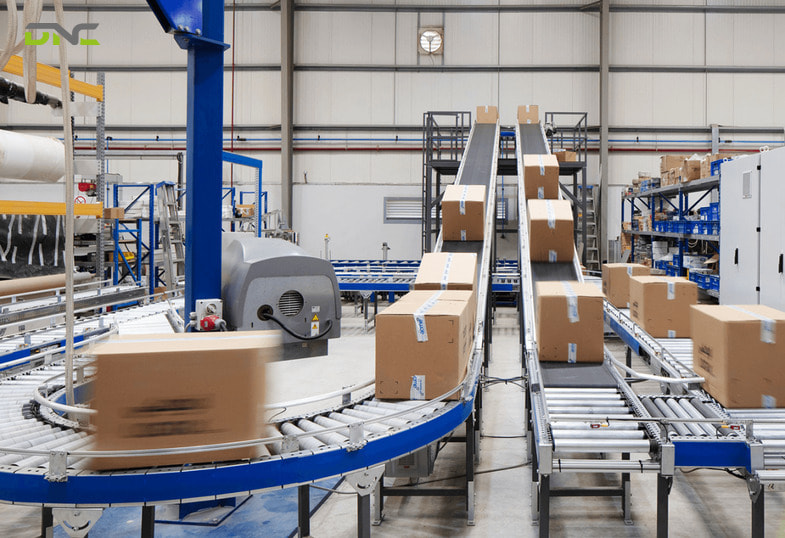
How Does DNC Automation Redefine “Smart” Conveyor Solutions?
Key Components of a Factory Conveyor Belt System
Drive pulley (head pulley): The motorized pulley at the discharge end that drives the belt. Rubber lagging on the drive pulley surface provides friction grip. Lagging wear is the most common drive system maintenance item.
Tail pulley (take-up pulley): At the loading end, the tail pulley maintains belt tension. Gravity take-up systems (a weighted pulley assembly) automatically maintain correct tension as the belt stretches over time.
Idler rollers: The series of rollers that support the belt and load between the pulleys. Carrying idlers (top run), return idlers (bottom run), and impact idlers (loading zone) are the three primary types. Roller bearing quality directly determines conveyor reliability and service life.
Belt: The continuous loop of rubber, PVC, PU, modular plastic, or metal that carries the load. Belt selection — material, surface texture, width, strength class — is the single most impactful decision in conveyor design for a specific application.
Electric motor and gearbox: The power source. AC induction motors with gearbox speed reduction are standard. Motor size ranges from 0.37 kW (light conveyor) to 75 kW (heavy-duty long conveyor). VFD (Variable Frequency Drive) provides adjustable speed and soft-start — reducing belt wear and mechanical stress at startup.
PLC and HMI: Siemens SIMATIC S7 PLC controls the entire conveyor system — start/stop sequences, speed ramps, sensor monitoring, emergency stop circuits, and integration with upstream systems. The Siemens HMI panel provides operator interface for real-time monitoring and alarm management.
Safety systems: Emergency stop ropes along belt length, belt misalignment switches, speed sensors (zero-speed detection for jam), and pull-cord switches are standard safety components in Malaysian factory conveyor belt installations, meeting DOSH and CEMA safety standards.
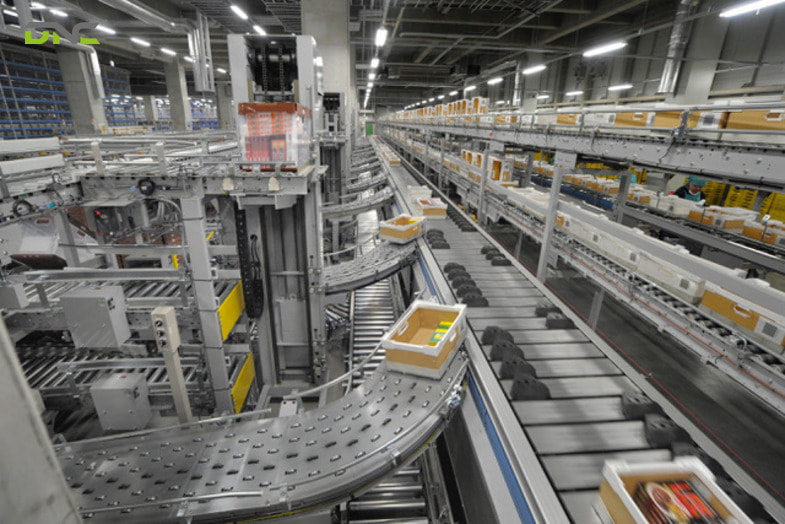
Our solutions are tailored to the unique regulatory and operational requirements of various sectors
Applications: Conveyor Belts Across Malaysian Industry
Automotive Manufacturing — Selangor
Selangor’s automotive cluster — Toyota (Shah Alam), Inokom (Kedah), and the vast Proton/Perodua supply chain — represents Malaysia’s most conveyor-intensive manufacturing sector. Body shop slat chain conveyors carry vehicle body-in-white through welding and assembly stations. Overhead power-and-free conveyors transport bodies through paint shop zones. Assembly line flat belt and roller conveyors deliver components to operator workstations along trim and final assembly lines.
DNC Automation designs and builds complete turnkey conveyor systems for automotive clients, integrating Comau robots at conveyor pick-and-place stations with Siemens PLC line control.
Electronics and EMS — Penang
Penang’s electronics manufacturing cluster generates 58% of Malaysia’s electrical and electronics exports — a sector worth hundreds of billions of ringgit annually. Intel, AMD, HP, Flex, and dozens of EMS factories operate SMT lines where PCB conveyor systems (ESD-safe edge belt conveyors with SMEMA interface) link every process stage from board loader to final unloader.
DNC Automation’s Penang engineering team installs and commissions aluminium profile conveyor systems, SMT line conveyors, and post-SMT inspection conveyors for Penang’s EMS cluster.
Food and Beverage — Nationwide
Malaysian F&B factories — from F&N’s beverage lines to Ramly Burger’s processing facilities to Guan Chong Berhad’s cocoa processing — all rely on food-grade conveyor belt systems. Green PVC and modular plastic belts on food-contact lines meet HACCP MS 1480 requirements. Teflon (PTFE) belt conveyors handle baking and heat tunnel applications. Stainless steel frame construction and washdown-compatible design serve facilities where daily CIP (clean-in-place) washing is standard.
Palm Oil Processing — East Malaysia and Peninsular
Palm oil mills across Pahang, Johor, Perak, Sabah, and Sarawak operate the most demanding conveyor belt applications in Malaysian manufacturing — FFB scraper conveyors handling 60–150 TPH of abrasive, thorny fresh fruit bunches, OPEFB belt conveyors managing biomass streams, and fiber/shell conveyors feeding boiler systems.
Logistics and E-Commerce — Johor and Selangor
Malaysia’s e-commerce logistics boom — driven by Shopee and Lazada’s growing fulfilment networks — is creating demand for automated conveyor belt sortation systems. Pos Malaysia (a DNC Automation client) operates parcel sorting conveyors with diverter systems routing parcels to 200+ delivery routes daily. 3PL warehouses in Johor (gateway to Singapore) and Shah Alam use powered roller and belt conveyors for inbound and outbound freight handling.
Benefits of Conveyor Belts in Malaysian Factories
Labor cost elimination: A factory conveyor belt replaces 3–8 manual material handlers per production line — at Malaysian manufacturing labor rates, this represents RM 150,000–400,000 in annual wage savings per line, compounding year after year as minimum wage increases continue.
Throughput consistency: Factory conveyor belt systems deliver materials at precisely controlled rates — 24 hours a day, 365 days a year — without the throughput variability of manual handling. DNC Automation clients report 50% productivity improvements after conveyor system implementation.
Quality improvement: Consistent, controlled material movement eliminates manual handling damage. DNC Automation’s conveyor systems reduce product defect rates related to handling damage by up to 60% for fragile products.
Human error elimination: Automated conveyor belt routing guided by barcode or RFID scanning eliminates manual routing errors. DNC systems reduce human routing errors by up to 80% — a figure confirmed across automotive, electronics, and logistics implementations.
NIMP 2030 compliance: Conveyor belt automation is the foundational step in Malaysia’s NIMP 2030 smart factory transformation roadmap. The Smart Automation Grant (SAG) from MIDA — up to RM 1,000,000 at 70:30 matching — is specifically designed to fund factory conveyor belt system investments by Malaysian SMEs and mid-tier manufacturers.
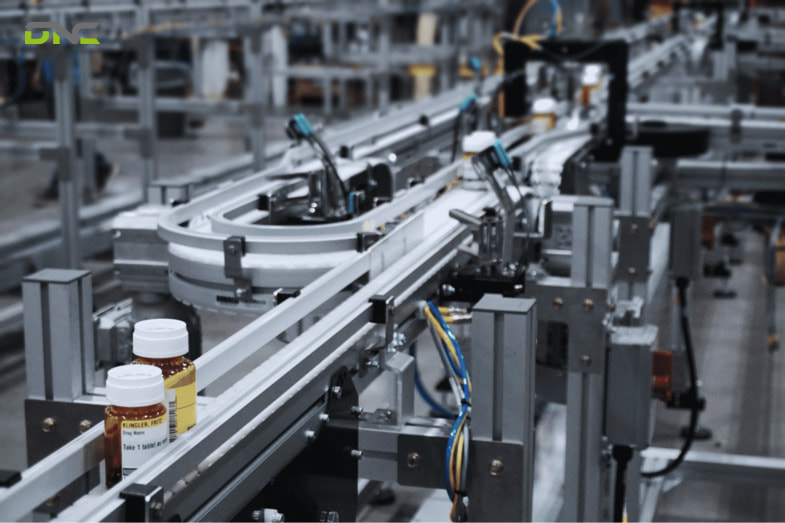
At DNC Automation, we follow a rigorous, data-driven workflow
How to Choose the Right Conveyor Belt System for Your Factory
Define the material: Product size, weight, shape, fragility, temperature, and hygiene requirements determine belt type. Food contact → FDA-grade modular or green PVC belt. High temperature → PTFE or steel mesh. Heavy/abrasive → steel chain or slat. Fragile → flat belt with gentle guide rails.
Map the production flow: Understanding where material originates, where it needs to go, and what happens at intermediate points determines conveyor layout, speed, accumulation requirements, and branching needs.
Specify the integration level: Basic conveyor (start/stop only) vs. PLC-controlled conveyor (speed, accumulation, diverting) vs. smart factory conveyor (IoT monitoring, SCADA integration, predictive maintenance, MES connection) — the right integration level depends on production complexity and NIMP 2030 objectives.
Evaluate SAG grant eligibility: Malaysian manufacturers with eligible automation projects can access RM 1M in matching funding. DNC Automation assists clients with SAG application preparation and project scoping aligned with MIDA requirements.
Engage DNC Automation for a free pre-sales consultation: DNC’s 35+ engineers assess your specific production environment, recommend the optimal conveyor belt system, and provide a complete turnkey proposal covering design, fabrication, PLC programming, installation, commissioning, and ongoing support.
Frequently Asked Questions About Conveyor Belts in a Factory
What types of conveyor belts are used in Malaysian factories?
Malaysian factories use flat belt, modular plastic belt, roller conveyor, chain and slat conveyor, incline belt, overhead (power-and-free), spiral, and magnetic conveyor belt systems — each matched to specific material types, industries, and production requirements. DNC Automation supplies and integrates all types as part of complete turnkey factory conveyor systems.
How much does a factory conveyor belt system cost in Malaysia?
Factory conveyor belt system cost in Malaysia ranges from RM 20,000 for a basic standalone flat belt conveyor to RM 500,000+ for a full PLC-controlled production line conveyor system with sensors, diverters, and SCADA integration. The SAG Grant (70:30 MIDA matching, up to RM 1M) reduces the effective investment for eligible SMEs by 70%.
How long does a factory conveyor belt last?
Factory conveyor belt service life depends on belt material, load, speed, and maintenance quality. Rubber belts in standard applications typically last 3–7 years. Modular plastic belts (individual module replacement) last 5–10 years as a system. Steel chain conveyors last 10–20 years with proper lubrication and chain replacement at defined elongation intervals. DNC Automation’s maintenance contracts include regular belt and chain inspection, tension adjustment, and component replacement scheduling.
What is the maintenance requirement for a factory conveyor belt?
Key maintenance items for factory conveyor belt systems: belt tension adjustment (weekly check), idler roller bearing inspection (monthly), drive pulley lagging wear check (monthly), belt surface wear inspection (monthly), emergency stop testing (weekly), and belt/chain replacement at defined wear thresholds (annually or by condition). DNC Automation offers full-service maintenance contracts for Malaysian clients.
How does a factory conveyor belt connect to a smart factory system?
Smart factory conveyor belt integration works through: (1) Siemens PLC controlling all conveyor operations, (2) IoT sensors on motors, bearings, and belt feeding data to SCADA, (3) barcode/RFID readers at conveyor stations feeding traceability data to MES, (4) checkweigher scales on conveyor verifying product weight against production targets, and (5) OPC-UA or Modbus TCP linking SCADA to ERP for production reporting. DNC Automation delivers complete smart factory conveyor integration as a single-source turnkey solution.
Does DNC Automation supply and install factory conveyor belt systems in Malaysia?
Yes. DNC Automation designs, fabricates, installs, and commissions factory conveyor belt systems across all Malaysian manufacturing sectors — automotive, electronics, F&B, palm oil, pharmaceuticals, and logistics. With 35+ engineers, a 25,000 sq ft Selangor fabrication facility, ISO 9001:2015 certification, and Siemens/Comau/Laumas partnerships, DNC delivers complete turnkey solutions with 24/7 local support.
Conclusion
Conveyor belts in a factory are the foundation of productive, efficient, and competitive Malaysian manufacturing. From the green PVC belt on a halal F&B packaging line in Selangor to the modular SMT conveyor in a Penang EMS factory to the heavy-duty slat chain on a Shah Alam automotive assembly line — conveyor belt systems define the throughput, quality, and operating cost of modern Malaysian production facilities.
DNC Automation has delivered factory conveyor belt systems to Malaysian manufacturers across every industry sector since 2005. Our 35+ engineers bring together in-house fabrication, Siemens-authorized control system expertise, Comau robot integration capability, and 24/7 local support to deliver conveyor belt systems that protect production uptime and drive the NIMP 2030 smart factory transformation your facility requires.
Get a Free Consultation — contact DNC Automation to discuss your factory conveyor belt requirements. Our engineers will assess your production environment and deliver a complete turnkey solution proposal.
Explore related: [PLC Conveyor Control](#), [Modular Conveyor Systems](#), [Conveyor Belt Scales](#)
- 7 views
- 0 Comment
Recent Comments