


Pharmaceutical Warehouse Automation – GMP Systems Malaysia

Pharmaceutical warehouse automation in Malaysia satisfies GMP compliance requirements first – efficiency is the outcome, not the objective. Under NPRA (National Pharmaceutical Regulatory Agency) guidelines aligned with PIC/S standards, any automated system handling registered pharmaceutical products must maintain temperature segregation, contamination prevention, validated software change procedures, and complete product traceability from receiving to dispatch. Standard factory automation – conveyors, ASRS, AGV – requires re-specification for pharma: stainless steel contact surfaces, validated control logic, HEPA-rated clean zones, and serialization-ready WMS integration. A facility that installs general-purpose warehouse automation and calls it GMP-compliant creates a regulatory liability, not an operational asset.
This guide covers five engineering layers of GMP-compliant pharmaceutical warehouse automation – regulated storage environments, material handling for temperature-sensitive and sterile products, pharma palletizing requirements, clean room integration, and WMS/SCADA traceability – with the specifications Malaysian pharmaceutical manufacturers and licensed distributors need before commissioning an automated facility.
GMP Requirements That Determine Pharmaceutical Warehouse Automation Specifications
Pharmaceutical warehouse automation specifications start with compliance requirements, not equipment catalogues. In Malaysia, warehouse operations handling pharmaceutical products must conform to NPRA guidelines, which align with PIC/S (Pharmaceutical Inspection Co-operation Scheme) GMP and GDP standards. PIC/S membership places Malaysian pharmaceutical facilities under the same documentation and validation obligations as facilities in the EU, Australia, and Singapore – meaning the compliance bar is not local but international.
Six GMP requirements directly shape your automation architecture, and each one constrains which automation technologies are eligible:
- Documented environmental control – Temperature and humidity must be continuously monitored and logged via calibrated sensors positioned at defined intervals throughout each storage zone.
- Segregated storage zones – Ambient (15–25°C / 59–77°F), cold chain (2–8°C / 36–46°F), and scheduled substance storage must be physically separated, with access control enforced by zone classification.
- Product traceability – Every product movement – receive, putaway, transfer, pick, pack, dispatch – must carry a system-generated, time-stamped record linked to the batch identifier.
- Contamination prevention – Cross-contamination between sterile and non-sterile products, or between scheduled substances and general medicines, requires physical and procedural barriers that the automation architecture must respect.
- Validated systems – Automated systems that affect product quality must be validated under GAMP 5 principles: Design Qualification (DQ), Installation Qualification (IQ), Operational Qualification (OQ), and Performance Qualification (PQ).
- Audit readiness – Records must be retrievable for regulatory inspection without manual reconstruction. System-generated records, not paper logs, are the compliance standard.
For Malaysian pharmaceutical manufacturers, NIMP 2030 automation incentives apply to GMP-compliant facility upgrades – but only where the facility maintains current NPRA licensing status. Automation investment that constitutes a major change to licensed operations requires a NPRA variation filing; DNC’s engineers coordinate this process as part of the commissioning scope.
The six requirements above are not a checklist to satisfy after automation is designed. They are the design inputs that determine which storage systems, material handling technologies, palletizing configurations, and software platforms are eligible before any equipment is selected.

ASRS and Temperature-Segregated Storage for Pharmaceutical Inventory
Pharmaceutical warehouse automation at the storage layer centers on ASRS configured for temperature-segregated environments where inventory management is driven by batch identity and expiry date, not location convenience. Unlike general-purpose ASRS, a pharma-grade installation manages inventory across multiple climate zones within a single facility, moves products between zones without temperature excursion, and executes FEFO (First Expired, First Out) rotation automatically – without relying on picker compliance.
The critical design parameter is zone boundary integrity. Ambient and cold-chain zones cannot share retrieval cranes or conveyor segments without thermal break design. Each zone operates its own stacker crane or shuttle system, with inter-zone transfers handled through insulated buffer conveyors. When a product transfers from ambient receiving to cold-chain storage, the transfer path must maintain cold-chain temperature throughout – not merely deliver the product to the cold zone and wait for re-equilibration after the fact.
ASRS for pharmaceutical storage resolves three operational challenges that manual systems consistently leave open, and each one carries a direct GDP compliance consequence.
- FEFO enforcement – Manual warehouses depend on picker discipline to select nearest-expiry stock first. ASRS enforces FEFO algorithmically: the WMS assigns every tote or case a location, and retrieval sequences respect expiry dates without picker intervention.
- Batch-level recall accuracy – When a recall occurs, the system produces a complete location map for every unit of the affected batch within minutes. Manual systems require physical verification across the entire storage area.
- Contamination control at the storage level – Enclosed ASRS prevents unauthorized human access to storage locations during normal operations, eliminating the contamination risk that open shelving creates in GDP environments.
For Malaysian pharmaceutical manufacturers evaluating warehouse automation options, the ASRS specification conversation starts with your current GDP zone classification – not with system throughput. Zone architecture determines everything downstream: conveyor routing, sensor placement, WMS configuration, and qualification scope.
DNC’s engineers have specified and commissioned ASRS for cold-chain and pharmaceutical-adjacent applications across Malaysian manufacturing facilities, including configurations where ambient, cold-chain, and restricted-access zones operate within a single footprint under segregated access control. Once storage retrieval delivers product to the outbound staging area, the next compliance-critical operation is palletizing – where GDP documentation requirements and product fragility constraints determine the automation specification.
Pharmaceutical Palletizing: Compliance at the End of the Production Line
Pharma palletizing requirements exceed standard industrial palletizing in three compliance-critical dimensions: pallet certification, product-specific stacking configuration, and GMP documentation at the point of palletization.
Pallet certification. Pharmaceutical pallets for export must meet ISPM 15 (International Standards for Phytosanitary Measures) – heat-treated (HT) or dielectric heat treatment, fumigation-free, with the IPPC mark present on the pallet. For internal GDP distribution within Malaysia, plastic pallets are increasingly specified over timber because plastic is non-absorbent, resists contamination, and meets the hygienic design requirements pharmaceutical GDP guidelines demand. The pallet material used must be documented in the warehouse SOP and applied consistently – mixing pallet types across product classes without documented justification is an audit finding.
Product-specific stacking. Pharmaceutical products span glass vials, blister packs, cold-chain injectables, and bulk tablet cartons – each with distinct fragility, weight, and stacking stability characteristics. The palletizing specification must include these stacking rules:
- Heavier carton layers at the base, lighter cartons at the apex – critical for glass vials where bottom-layer crush pressure triggers batch rejection
- Temperature-sensitive products stacked to minimize thermal mass variation between inner and outer pallet positions during cold-chain transport
- Single-batch pallets only for scheduled substances under GDP requirements – mixed-batch pallets are prohibited
GMP documentation at palletization. Each completed pallet requires a GMP-compliant label carrying product name, batch number, quantity, manufacture date, expiry date, and any special storage or handling instruction. In automated palletizing cells, the system receives this data directly from the WMS and applies labels via print-and-apply units integrated into the cell – eliminating manual transcription and the batch-mixing errors that manual labeling creates.
Automated pharma palletizing cells deliver a compliance advantage manual systems cannot provide: every palletization event is logged with a time stamp, system ID, product count, and pallet identifier. This log is the GMP audit record for the outbound operation. For Malaysian pharmaceutical distributors operating under GDP guidelines, this documentation trail is mandatory. DNC integrates palletizing cells with WMS and ERP so that the pallet record is created automatically as the robotic cell builds the pallet – not as a separate data entry step after the pallet leaves the cell.
DNC’s robotic palletizing solutions are commissioned with WMS integration and print-and-apply label application included – the cell delivers both the physical pallet and the GDP audit record simultaneously. The product environments where palletizing occurs vary by classification – and facilities handling sterile injectables or aseptic products require palletizing cell design that accounts for ISO 14644 clean room requirements at the end-of-line.

Clean Room Warehouse Automation and ISO 14644 Classification
Clean room warehouse automation applies where pharmaceutical products require storage or handling in a controlled-particle environment – sterile injectables, aseptic fill-and-finish staging, and certain API (Active Pharmaceutical Ingredient) handling areas. The governing standard is ISO 14644, which classifies clean rooms from ISO Class 1 (near-zero particles per cubic meter) to ISO Class 9.
For pharmaceutical warehouse environments, the relevant classifications are:
| ISO Class | Typical Pharma Application | Max Particles (≥0.5μm / m³) |
| ISO 5 | Aseptic fill-and-finish, open container handling | 3,520 |
| ISO 7 | Sterile product secondary packaging, gowning areas | 352,000 |
| ISO 8 | Controlled non-classified pharmaceutical warehouse | 3,520,000 |
Table: ISO 14644 clean room classification for pharmaceutical warehouse environments. Most Malaysian pharmaceutical manufacturer warehouses operate at ISO 8; sterile operations require ISO 7 or ISO 5.
Automation systems operating inside or adjacent to classified clean rooms must meet engineering specifications that standard warehouse equipment does not satisfy:
Surface materials. Stainless steel 316L grade for all product-contact and near-product conveyor surfaces. Powder-coated mild steel – standard in general warehouse conveyors – is not acceptable in ISO 7 and above due to particle shedding and corrosion risk in cleaning chemical environments.
Drive and motor enclosures. Motors and servo drives operating in ISO 7 and above require IP65 or higher enclosures with external heat dissipation to prevent particle generation inside the classified zone.
SAS (Security Airlock System) integration. Conveyors transporting product into or out of classified zones pass through SAS chambers – two sequentially operated high-speed doors that maintain pressure differentials and prevent unfiltered air ingress. The conveyor control system must interlock with the SAS door controller so product transport halts when the pressure differential is outside the validated specification range.
HEPA filter specification and airflow compatibility. Clean room HVAC systems use HEPA filters (H14 grade for ISO 5) delivering positive pressure and controlled air changes. Equipment layout must account for airflow patterns – automation placed in a way that creates turbulence in unidirectional flow zones invalidates the ISO classification and triggers re-qualification.
DNC engineers the clean room automation integration from layout through commissioning, coordinating with the facility’s HVAC and clean room design team to ensure automation equipment positioning does not compromise air classification or airflow validation. Storage architecture, palletizing compliance, and clean room engineering each address one layer of the pharmaceutical warehouse – the four-layer summary below shows how they interlock into a complete GMP-compliant specification.
Summary: 4 System Layers That Determine GMP Compliance in Pharmaceutical Warehouse Automation
Four system layers determine whether a pharmaceutical warehouse automation project satisfies NPRA and PIC/S requirements – or creates a compliance liability after commissioning.
Storage architecture must segregate temperature zones – ambient 15–25°C (59–77°F), cold chain 2–8°C (36–46°F) – with independent environmental control and qualification per zone. ASRS enforces FEFO and logs every batch movement automatically.
Clean room classification determines which equipment is eligible. ISO 8 permits standard automation with surface modifications. ISO 7 and ISO 5 require 316L stainless steel surfaces, IP65 motors, SAS airlock integration, and HEPA H14 filtration retaining particles ≥0.3 microns (≥300 nanometers / 0.000012 inches) at all zone entry points.
End-of-line palletizing must produce GMP-compliant pallet labels with batch and expiry data drawn from WMS – not manual label printing – and log every palletization event for the outbound GDP audit record.
Software integration between WMS, SCADA, and ERP must be bidirectional and real-time. Temperature excursion alerts from SCADA must trigger automatic WMS quarantine flags without requiring a manual step between detection and inventory hold. The material handling systems that move product between these layers – AMR, conveyors, and sterile-environment transfer systems – must be specified for the same traceability and contamination-prevention requirements that govern storage and palletizing.
Pharmaceutical Material Handling for Temperature-Sensitive and Sterile Products
Pharmaceutical material handling in the warehouse automation context covers three movement categories: ambient product transport, cold-chain inter-zone transfers, and sterile-environment internal movement. Each requires a different system specification – combining them under a single architecture is an engineering error with regulatory consequences.
Ambient pharmaceutical transport. In pharmaceutical environments, DNC’s AMR and AGV systems log every movement with payload identification, route taken, and timestamp – not merely the fact of movement, but the specific product, from which location, to which destination. This movement log forms part of the batch record under GDP requirements. In Malaysian pharmaceutical facilities operating under PIC/S GDP, AMR/AGV systems must also enforce contamination prevention: scheduled substances and general medicines cannot share transport carriers in an unvalidated system. Route segregation or carrier decontamination between product classes is a validation requirement, not a preference.
Cold-chain inter-zone transfers. Moving pharmaceutical products from cold-chain ASRS to ambient picking stations – or from ambient receiving to cold-chain storage – requires insulated conveyor segments with thermal monitoring. The maximum allowable temperature excursion and transfer time must be defined in the facility’s validation protocol. Automated systems log every inter-zone transfer with start temperature, end temperature, and elapsed time, creating the cold chain documentation that GDP auditors expect.
Sterile-environment vacuum conveying. For API handling and sterile powder transfer, enclosed vacuum conveying systems move pharmaceutical powders and granules between processing stages, storage vessels, and packaging lines. These systems prevent the contamination and cross-contamination risks that open powder transfer generates and eliminate the dust generation that creates housekeeping and occupational health problems in manual handling operations. The conveyor system is calibrated for the specific API density and particle characteristics – not a generic configuration applied across all powder materials. Connecting these physical handling systems to a validated WMS and SCADA layer is what converts equipment movement into the audit-ready batch records that PIC/S GDP inspection requires.
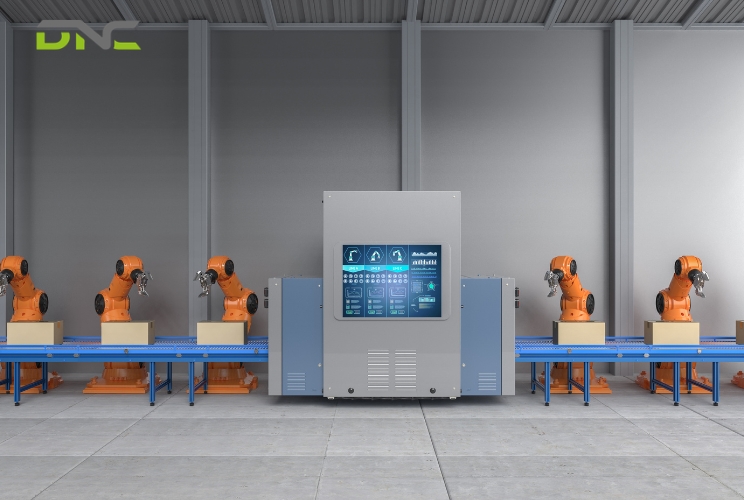
WMS, SCADA Integration, and Pharmaceutical Traceability
The three software layers of a GMP-compliant pharmaceutical warehouse – WMS, SCADA, and ERP – operate as an integrated system in a validated installation, not as independent applications sharing periodic data exports. Gaps between these layers are where GDP audit findings originate.
WMS for pharmaceutical operations manages inventory at the batch level, not the SKU level. Functions specific to pharmaceutical environments include:
- FEFO batch-level location assignment enforced at every pick
- Quarantine management – automated location flagging for recalled or suspect batches with restricted access
- Serial number tracking at unit level for serialization compliance under export market requirements
- Temperature excursion quarantine triggers – when SCADA alerts a deviation, WMS automatically moves affected inventory to quarantine status pending QA disposition, without waiting for manual intervention
- Approaching-expiry reporting for priority stock movement before write-off
SCADA for pharmaceutical environments provides continuous environmental monitoring with calibrated sensor data logged at defined intervals. The system monitors temperature and humidity at multiple points per zone, generates calibration certificate records for each sensor, and triggers escalating alerts as readings approach specification limits. In fully automated facilities, SCADA can instruct the ASRS to redistribute product away from compromised zones – responding to environmental deviation before the product temperature is affected.
PLC and HMI infrastructure at the equipment level ensures validated control of automated systems. For pharmaceutical applications, the PLC program is a validated document – changes to control logic require change control procedures, impact assessments, and re-qualification of affected qualification protocols. DNC specifies Siemens PLC and SCADA infrastructure for pharmaceutical applications, delivering the GAMP 5 validation documentation package – DQ/IQ/OQ protocols, FAT/SAT procedures, and validation summary report – as part of the commissioning deliverable.
The smart manufacturing integration connecting WMS, SCADA, and ERP creates the complete pharmaceutical batch record: from goods receipt through storage, picking, palletization, and dispatch, every system-generated record links to the batch identifier and is retrievable for GDP audit without manual reconstruction. Translating these software and infrastructure requirements into a buildable project starts with five engineering decisions that define what the system must do before any equipment is selected.
5 Engineering Decisions That Define a GMP-Compliant Automated Pharmaceutical Warehouse
Before specifying equipment, Malaysian pharmaceutical manufacturers face five engineering decisions that determine both regulatory compliance and long-term operational performance. These decisions are not sequential – each one constrains the options available for the others.
- Temperature zone architecture. How many distinct temperature zones does your product portfolio require? Each zone needs dedicated environmental control equipment, segregated automation hardware, and its own qualification protocol. Adding a zone after commissioning is a major change – it triggers re-validation, not reconfiguration.
- ASRS or goods-to-person? ASRS provides maximum storage density for high-SKU pharmaceutical inventories with stringent FEFO requirements. Goods-to-person (GTP) systems deliver ergonomic, accuracy-focused picking for high-volume small-order fulfillment operations. The correct choice depends on order profile, SKU count, and whether the facility is a manufacturer’s warehouse or a licensed distributor operating a distribution center.
- Palletizing automation scope. Full robotic palletizing is justified for volumes above approximately 150 cases per hour on consistent pack configurations. Below that threshold, semi-automated palletizing with stretch-wrap integration may deliver the GMP documentation compliance benefit at lower capital expenditure. The documentation output is equivalent – the volume threshold determines the labor-saving case for full automation.
- Clean room classification requirement. ISO 8 controlled environments are achievable with standard automation equipment and surface treatment modifications. ISO 7 and above require re-specification of all equipment within the classification zone and validated integration with the HVAC system. Misidentifying the required classification at the design stage creates a project cost overrun at commissioning – when equipment fails qualification testing.
- Validation package scope. A full GAMP 5 validation package (DQ/IQ/OQ/PQ) for a pharmaceutical ASRS installation adds approximately 15–25% to project cost. It is non-negotiable for NPRA-licensed operations. Engineering the validation scope into the project budget from the beginning is less costly than retrofitting documentation to a commissioned system that was not designed for pharmaceutical validation.
DNC Automation’s Engineering Approach for Malaysian Pharmaceutical Facilities
Pharmaceutical warehouse automation for GMP-compliant Malaysian facilities requires an integrator with both the automation engineering depth and the regulatory knowledge to specify systems that satisfy NPRA requirements without over-engineering for the wrong ISO classification.
DNC Automation has delivered warehouse automation projects for Malaysian manufacturers across pharmaceutical-adjacent regulated industries – food and beverage cold chain, chemical handling, and medical device manufacturing – where GMP, GDP, and HACCP documentation requirements apply. Our 35-engineer team includes specialists in Siemens PLC and SCADA validation documentation, cold-chain ASRS specification, and end-of-line palletizing integration for compliant outbound operations.
For pharmaceutical manufacturers evaluating automation options: the first engineering conversation is not about which ASRS vendor or which AMR platform. It is about your NPRA licensing status, your current PIC/S GDP classification, and which operations the automation system will directly affect – because these factors determine which qualification protocols are required and what the validation scope costs before equipment selection begins. Starting from the equipment catalogue and working backward to compliance is the pattern that creates expensive retrofits.
DNC’s warehouse automation audit covers zone architecture, storage system specification, WMS integration requirements, and traceability data flows as Step 1 – before any equipment is configured. If your facility is evaluating pharmaceutical warehouse automation and needs engineering guidance on GMP-compliant system design, talk to our engineers about your specific NPRA-regulated environment – get a free consultation from DNC Automation.
FAQ: Pharmaceutical Warehouse Automation in Malaysia
What is pharmaceutical warehouse automation?
Pharmaceutical warehouse automation is the integration of automated storage systems (ASRS), material handling equipment (AMR, AGV, conveyors), palletizing systems, and control software (WMS, SCADA, PLC) into a warehouse environment handling pharmaceutical products under GMP or GDP regulatory requirements. In Malaysia, this means systems that comply with NPRA guidelines and PIC/S standards, with validated software and full audit trail capability – not general warehouse automation with compliance features added as an afterthought.
What GMP requirements apply to automated pharmaceutical warehouses in Malaysia?
Malaysian pharmaceutical warehouse operations must conform to PIC/S GDP guidelines (for distribution) and PIC/S GMP (for manufacturers’ warehouses). Core requirements include documented environmental monitoring, physical segregation of product classes and temperature zones, validated automated systems under GAMP 5, complete product traceability at batch level, and records retrievable for NPRA inspection without manual reconstruction.
What is the difference between a GMP warehouse and a standard warehouse?
A GMP warehouse is a controlled environment where every storage, pick, pack, and dispatch operation is documented, validated, and traceable to a specific product batch. Standard warehouses optimize for throughput and cost; GMP warehouses optimize for compliance and traceability first. Automation makes it possible to achieve both simultaneously – but only when the system is specified for pharmaceutical requirements from the start.
What pharma palletizing requirements apply in Malaysia?
Pharmaceutical pallets for export must use ISPM 15-certified pallets (heat-treated, fumigation-free, IPPC-marked). Each pallet requires a GMP-compliant label with product name, batch number, quantity, and expiry date. Stacking must respect product fragility and weight distribution – heavier cartons at the base. Palletization events must be logged in the WMS with timestamp and product identification. Mixed-batch pallets are prohibited for scheduled substances under GDP guidelines.
What ISO clean room standard applies to pharmaceutical warehouse automation?
ISO 14644 governs clean room classification for pharmaceutical environments. Most pharmaceutical manufacturer warehouse operations require ISO Class 8 (controlled non-classified). Sterile product handling and aseptic operations require ISO Class 7 or ISO Class 5. Equipment in classified zones must use stainless steel 316L surfaces, IP65-rated motor enclosures, and integrate with SAS airlocks and HEPA-filtered HVAC systems. Equipment layout must not disrupt validated airflow patterns.
How does ASRS improve compliance in pharmaceutical warehouses?
ASRS enforces FEFO (First Expired, First Out) rotation algorithmically, eliminating picker-driven expiry compliance failures. Every product movement is logged with timestamp, location, and batch identification, creating the GDP audit trail automatically. When batch recalls occur, the system locates all units of the affected batch within minutes – a task that requires physical verification across the entire warehouse in manual systems. Contamination risk from unauthorized access to storage locations is eliminated because ASRS positions are physically inaccessible during normal operations.
Can DNC Automation deliver validated pharmaceutical warehouse projects in Malaysia?
Yes. DNC delivers turnkey pharmaceutical warehouse automation projects including system design, equipment supply, Siemens PLC and SCADA commissioning, and GAMP 5 validation documentation packages – DQ/IQ/OQ protocols, FAT/SAT procedures, and validation summary reports. DNC’s engineers are experienced in NPRA-regulated pharmaceutical and pharmaceutical-adjacent environments and coordinate validation filing coordination as part of the commissioning scope. Contact DNC to talk to our engineers about your facility’s requirements.
- 53 views
- 0 Comment
Recent Comments