


Cold Storage Warehouse Racking: Types, Materials, and Selection Guide

In the context of temperature-controlled storage facilities operating below 10°C, cold storage warehouse racking is a purpose-engineered pallet storage system built to maintain structural integrity through freeze-thaw cycles, condensation exposure, and forklift impact in sub-zero conditions.
Standard warehouse racking is manufactured from roll-formed steel and assembled with friction-fit clip connectors designed for ambient environments. Cold storage environments introduce two failure mechanisms absent from ambient warehouses.
First, metal contraction at −18°C and below reduces steel toughness – racks retain their rated load capacity, but impact resistance drops significantly, increasing the probability of catastrophic failure when struck by a forklift or reach truck. Second, temperature cycling between loading and unloading operations creates condensation on metal surfaces, accelerating corrosion unless the coating system is specified for cold and humid conditions.
Cold storage pallet racking addresses both failure mechanisms through material selection (structural steel or appropriately coated roll-formed steel), connection type (bolted vs. clip), and surface treatment (galvanizing, epoxy powder coat, or food-grade coating). The system type – selective, drive-in, push-back, pallet flow, mobile, or automated shuttle – is then chosen based on inventory rotation requirements and throughput targets.
Choosing the right system begins with the structural demands of the steel itself.
Why Standard Racking Fails in Cold Environments
Standard roll-formed rack fails in cold storage environments because of ductile-brittle transition. Per the Rack Manufacturers Institute standard, steel racking reaches this transition point at approximately 0°F (−18°C): below this threshold, the steel becomes brittle rather than ductile, meaning it fractures rather than deforms under impact. Load capacity and beam deflection ratings are unaffected – but a forklift impact that would bend ambient racking instead shatters cold storage racking not built for the temperature. In facilities operating at −25°C to −30°C (deep-freeze IQF or pharmaceutical cold rooms), this risk is active on every shift.
The solution is not to prohibit forklifts – it is to specify structural steel racking where vehicle access occurs, and to install upright column guards rated for the operating temperature.
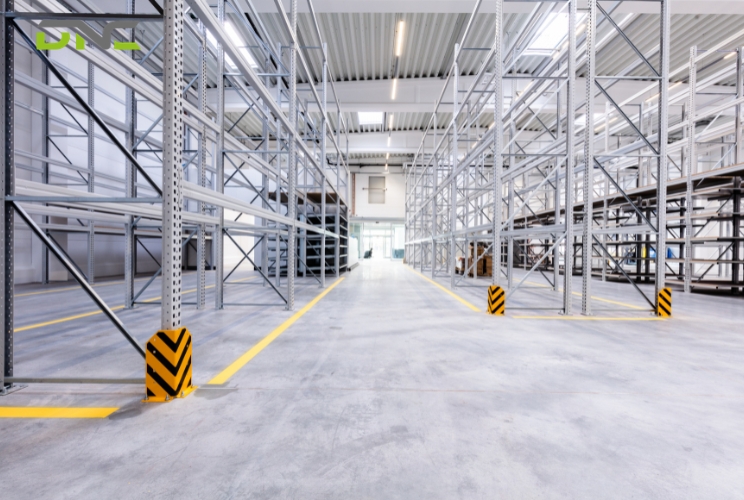
Temperature Thresholds That Define Cold Storage Racking Requirements
Three temperature zones define the structural requirements for pallet racking for cold rooms. The table below maps each zone to its material specification.
| Temperature Zone | Range | Racking Requirement | Typical Application |
| Chiller | 0°C to 10°C (32°F to 50°F) | Coated roll-formed steel acceptable | Dairy, fresh produce, pharmaceuticals (2–8°C / 36–46°F) |
| Freezer | −18°C to −25°C (0°F to −13°F) | Structural steel preferred; upright guards mandatory | Frozen food, IQF seafood, ice cream |
| Deep Freeze | Below −25°C (−13°F) | Structural steel mandatory; hot-dip galvanized + epoxy coat | Pharmaceutical bulk, IQF prawns, specialty frozen |
The decision is not only about safety – structural steel in a chiller wastes capital. Matching the rack specification to the actual operating temperature is the first cost-control decision.
Structural Steel vs. Roll-Formed Steel for Cold Storage Environments
Within the context of freezer warehouse racking design, the steel type determines impact resilience and reconfigurability – two properties that point in opposite directions.
Structural steel racking is manufactured from hot-rolled steel sections; frames are welded and beams are bolted directly to uprights. The bolted connection carries significantly more shear force than a clip connector under forklift impact, which is why structural steel performs better when vehicles enter the rack system. Roll-formed steel is manufactured from cold-rolled coil, shaped into uprights and beams, then assembled with clip or tab connectors that interlock without bolts. This makes roll-formed rack easier to adjust, expand, and reconfigure – and meaningfully less expensive per upright frame.
Both steel types are available across all racking configurations – selective, drive-in, push-back, pallet flow, mobile, and shuttle systems can all be built in either material. The choice is a separate decision from the rack type.
| Property | Structural Steel | Roll-Formed Steel |
| Impact resistance (cold) | High – bolted connection absorbs shear | Lower – clip connector fractures at impact in brittle-temp range |
| Load capacity | Higher per frame size | Adequate for most pallet weights |
| Reconfigurability | Limited – bolted frames resist adjustment | High – clip connectors adjust per beam level |
| Capital cost | Higher | 15–30% lower per bay |
| Recommended use | Vehicle-access environments; −18°C and below | Hand-pick operations; chiller (0–10°C) |
When Structural Steel Is the Right Call
Structural steel cold storage racking is the correct specification when three conditions are present:
- Forklifts or reach trucks enter the rack lane – counterbalance forklifts in selective rack aisles, or any vehicle-entry configuration in drive-in or drive-through racking
- Operating temperature at or below −18°C – the ductile-brittle transition zone
- High load capacity required – pallets exceeding 1,000 kg per position, or beam levels exceeding 2,500 kg UDL
In deep-freeze facilities (below −25°C), structural steel is not optional – it is the only material combination that survives the combined thermal and impact environment on a multi-year service life.
When Roll-Formed Steel Works
Roll-formed cold storage racking is adequate for chiller operations (0°C to 10°C) where staff hand-pick from rack faces without vehicle entry. Pharmaceutical cold rooms storing cartons, fresh produce pick faces, and dairy secondary storage commonly use roll-formed systems at chiller temperatures. The lower capital cost and easier reconfiguration make roll-formed the better choice here – provided no forklift operates inside the racking lanes.
Both steel types can be ordered with hot-dip galvanized coating for corrosion resistance – the coating decision applies regardless of steel type.
Both types are available across all rack configurations. The next decision is which configuration matches your product flow.
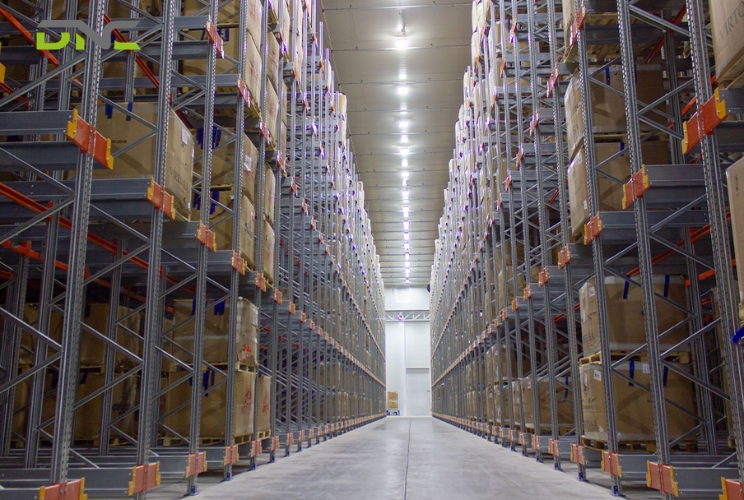
Types of Cold Storage Pallet Racking Systems
Six racking system types cover the full range of refrigerated warehouse racking requirements. Each type carries a distinct mechanism, cold storage advantage, and an equally important case where it is the wrong choice.
Selective Pallet Racking – Universal Baseline for Cold Rooms
Selective pallet racking provides direct forklift access to every pallet position in the system – no other pallet is moved to retrieve a target pallet. Uprights are anchored in rows, beams span between them at configurable heights, and pallets sit one position deep per lane.
In cold storage applications, selective rack installs in any temperature zone, accommodates any pallet weight within beam level ratings (500–10,000 kg per beam level), and scales incrementally by adding bays. SKU variety is unlimited. For cold chain compliance, FIFO rotation is achieved by slotting – new receipts go to the rear lane, picks come from the front. FIFO is discipline-dependent, not mechanically enforced.
Ideal for: High-SKU cold storage warehouses, operations requiring immediate access to every product line, facilities expecting product range changes.
Wrong choice when: SKU count is low and storage density is the primary objective – drive-in racking reduces aisle space and stores more pallets per square metre for homogeneous product.
Internal links to warehouse automation solutions apply here when selective rack is integrated with ASRS conveyors.
Drive-In and Drive-Through Racking – Maximum Density for Homogeneous SKUs
Drive-in racking eliminates picking aisles by allowing forklifts to drive into the rack lanes to load and retrieve pallets from a single entry point. Drive-through racking uses the same principle with dual entry/exit points on opposite ends of the lane.
The cold storage advantage is direct: fewer aisles mean more product per square metre of refrigerated floor space, and refrigerated floor space is one of the highest operating cost line items in a cold storage facility. Drive-in uses LIFO rotation (last pallet in is first out – the forklift backs into the same lane it loaded). Drive-through uses FIFO rotation (product loaded at the rear exits from the front). Structural steel is strongly preferred – forklifts enter the rack structure on every cycle.
Ideal for: Frozen goods with long shelf life and low SKU variety (IQF seafood, frozen vegetables, beverage), operations that can group product by SKU per lane.
Wrong choice when: SKU count exceeds 3–4 per lane group. Rotation discipline breaks down with multiple products per lane, and FIFO compliance becomes impossible to audit.
Push-Back Racking – High Throughput LIFO for Frozen Product
Push-back racking stores pallets 2–6 positions deep on inclined rails, using a gravity-cart system: loading a new pallet pushes the previous one back along the rail, and removing the front pallet lets the next one roll forward automatically.
No forklift enters the rack lane. Loading and retrieval happen entirely at the aisle face. The aisle-face loading gives push-back rack two cold storage advantages: it achieves moderate density (2–6 deep per lane) without the vehicle-entry impact risk of drive-in, and multiple SKUs can occupy different depth positions within the same lane. LIFO rotation is mechanical and automatic.
Ideal for: Frozen product with moderate shelf life, operations handling 2–5 SKU groups per zone, facilities that need higher density than selective without committing to full drive-in.
Wrong choice when: FIFO rotation is required for regulatory compliance – push-back is mechanically LIFO and cannot be reversed.
Pallet Flow Racking – FIFO Compliance for Perishable Cold Chain
Pallet flow racking uses inclined rollers or wheels set into the rack beams to gravity-feed pallets from the loading aisle at the rear to the picking face at the front – strict FIFO without manual intervention.
Cold chain compliance for perishable products – fresh dairy, pharmaceuticals (2–8°C), fresh produce, and any product with a printed expiry date – requires first-in, first-out rotation as a regulatory requirement, not a preference. Pallet flow racking makes FIFO mechanical: a new pallet loaded at the rear of the lane physically cannot reach the pick face before older pallets have been removed. Storage depth ranges from 2 to 12+ pallets depending on lane length.
Ideal for: Pharmaceutical cold rooms, fresh produce distribution, dairy and beverage cold storage where expiry date management is critical.
Wrong choice when: Pallet quality is inconsistent – warped or damaged pallets jam on the roller wheel system, stopping the lane. High-cycle, high-volume frozen goods with LIFO-acceptable rotation are better served by push-back or drive-in.
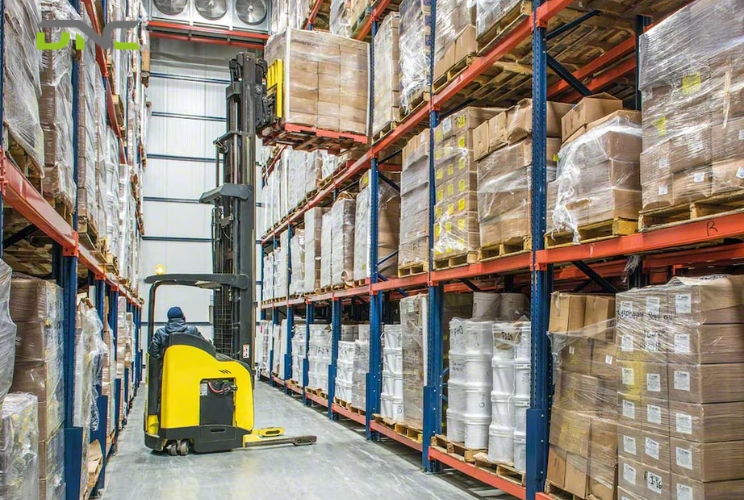
Mobile Pallet Racking – Space-to-Energy Optimization
Mobile pallet racking mounts standard rack bays onto motorized bases that move laterally along embedded floor rails, creating one active aisle that opens between any two bay groups on demand – all other aisles are closed.
The cold storage advantage is measurable: eliminating static aisles reduces the refrigerated footprint required for the same number of pallet positions by 40–50% compared to selective racking. A smaller refrigerated envelope consumes less energy to maintain temperature – the operating cost saving compounds over the life of the facility. Mobile racking is compatible with FIFO or LIFO depending on how lanes are organised.
Ideal for: Cold storage operations where real estate or refrigeration energy cost is the primary constraint, facilities with moderate throughput and high storage density targets.
Wrong choice when: Throughput is high and simultaneous access to multiple rack zones is required – a single open aisle becomes a bottleneck when multiple forklifts need concurrent access.
Pallet Shuttle and AS/RS – Semi-Automated Dense Cold Storage
A pallet shuttle system uses a battery-powered carrier running on rails inside the rack lanes to load, store, and retrieve pallets automatically – the forklift never enters the rack structure. Automated Storage and Retrieval Systems (AS/RS) extend this principle to full computer-controlled retrieval across an entire cold storage warehouse.
The cold storage advantages are significant. No personnel enter freezer lanes during normal operations – removing the health and safety risk of prolonged cold exposure for operators. Storage density is maximised at 6–20 pallets deep per lane. The shuttle carrier is programmable for FIFO or LIFO by lane. And critically for future operations: pallet shuttle and AS/RS systems are directly compatible with conveyor interfaces, WMS location addressing, and SCADA temperature zone monitoring – they are the racking configuration that bridges directly into warehouse automation.
Ideal for: High-density frozen goods warehouses, cold chain facilities targeting automation within a 3–5 year horizon, pharmaceutical cold rooms where personnel exposure must be minimised.
Wrong choice when: SKU variety is very high (>50 active SKUs) and individual pallet access must be near-instantaneous – shuttle systems have a retrieval cycle time that makes them less suited to high-variety, rapid-access picking.
| Type | FIFO/LIFO | Density | Selectivity | Best For |
| Selective | FIFO (discipline) | Low | High | High-SKU, multi-product cold rooms |
| Drive-in | LIFO | High | Low | Homogeneous frozen bulk |
| Drive-through | FIFO | High | Low | Bulk FIFO frozen product |
| Push-back | LIFO | Medium-High | Medium | Multi-SKU mid-depth frozen |
| Pallet flow | FIFO (mechanical) | Medium-High | Medium | Perishable, pharmaceutical, dairy |
| Mobile | Either | Very High | Medium | Energy-cost-constrained cold stores |
| Pallet shuttle / AS/RS | Either (programmable) | Very High | High | Automation-ready dense cold storage |
Choosing the right type requires matching four selection factors – rotation, material, load, and automation readiness.
Summary: Material and Type Selection So Far
Cold storage warehouse racking operates across three temperature zones – chiller (0°C to 10°C / 32°F to 50°F), freezer (−18°C to −25°C / 0°F to −13°F), and deep freeze (below −25°C / −13°F). Structural steel handles vehicle-access freezer environments; roll-formed steel suits hand-pick chiller operations. Six racking types – selective, drive-in, drive-through, push-back, pallet flow, mobile, and pallet shuttle – each match a specific combination of SKU variety, rotation requirement, and density target. The type selection and material selection are separate engineering decisions, but both affect automation readiness – a point the next section covers in detail.
Cold Storage Racking System Selection: Four Decision Factors
Cold storage racking specification ties three variables together – rack type, material, and coating – and the correct approach treats them as a single engineering decision, not a sequential checklist. A pallet flow system specified in roll-formed steel for a −22°C facility creates a structural mismatch. A drive-in system without adequate aisle width for the planned forklift type makes every subsequent rack installation unsafe. Getting the specification right upfront avoids expensive retrofits and, more importantly, keeps the door open for warehouse automation integration.
Here’s how the four key decision factors interact.
Inventory Rotation: FIFO vs. LIFO in Freezer Warehouses
The rotation requirement drives the racking type selection more than any other factor. FIFO is mandatory by regulatory or operational necessity for certain product categories:
| Product Category | Required Rotation | Recommended Rack |
| Pharmaceuticals (vaccine, biologics) | FIFO (GMP mandatory) | Pallet flow or pallet shuttle (FIFO mode) |
| Fresh produce, dairy | FIFO (expiry date) | Pallet flow or drive-through |
| Frozen food with expiry date | FIFO preferred | Pallet flow or push-back with lane discipline |
| IQF seafood, long-life frozen | LIFO acceptable | Drive-in or push-back |
| Industrial frozen ingredients | LIFO acceptable | Drive-in for high-density |
| Pharmaceutical bulk storage | FIFO (GMP) | Pallet shuttle (programmable FIFO) |
Where GMP pharmaceutical guidelines apply, FIFO must be mechanically enforced – slotting discipline is not sufficient for regulatory audit purposes. Pallet flow or programmable shuttle systems satisfy this requirement.
Material and Coating: Corrosion Resistance in Humid Cold Environments
Cold storage environments create condensation cycles every time a loading dock door opens – warm, humid ambient air meets cold racking surfaces, depositing moisture. Without the correct coating system, corrosion begins within months.
Three coating options are in common use for cold storage pallet racking:
| Coating Type | Temp Range | Application |
| Hot-dip galvanized (HDG) | Down to −30°C | Standard cold storage and deep-freeze |
| Epoxy powder coat over HDG | Down to −30°C | Standard cold storage – enhanced appearance + corrosion layer |
| Food-grade stainless steel | Down to −30°C | GMP pharmaceutical, food-contact hygiene zones |
Hot-dip galvanizing is preferred over electro-galvanizing for cold storage – the HDG zinc layer is 5–10x thicker and physically bonds to the steel substrate rather than being electrodeposited on the surface, giving materially better corrosion resistance through condensation cycles.
Stainless steel racking is specified for pharmaceutical GMP cold rooms and food-contact hygiene zones where paint flake contamination must be eliminated from the risk register.
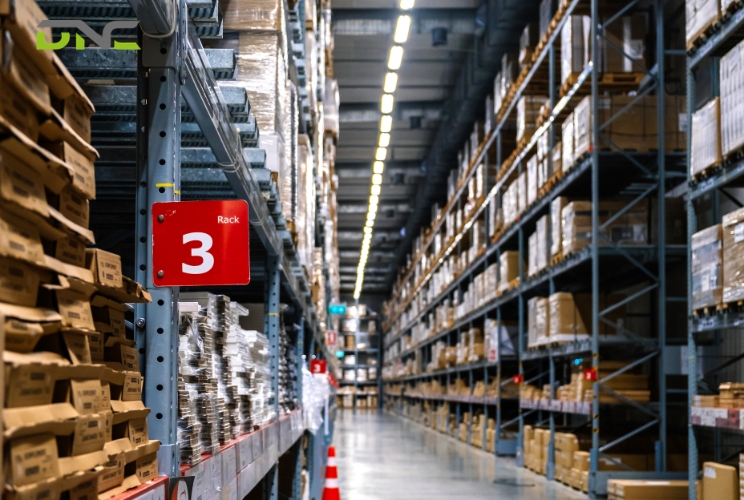
Load Capacity, Aisle Width, and Forklift Clearance
In refrigerated warehouse racking design, aisle width and forklift type are a linked decision – not two separate choices.
| Forklift Type | Minimum Aisle Width | Rack Compatibility | Cold Storage Trade-off |
| Counterbalance | 3,500 mm+ | All types, all positions | Wide aisles = more refrigerated volume = higher energy cost |
| Reach truck | 2,700–2,800 mm | Selective, pallet flow, mobile | Narrower aisles, higher reach, lower throughput vs. counterbalance |
| VNA turret truck | 1,600–1,800 mm | VNA selective only | Narrowest aisle = smallest refrigerated footprint; specialised vehicle capex |
| AGV / AMR | 1,800–2,200 mm (system-dependent) | Selective, pallet shuttle, mobile | See automation section |
Narrower aisles reduce the refrigerated volume that must be cooled and maintained – a direct energy cost saving that compounds over the facility life. The trade-off is the capital cost of the narrower-aisle forklift type and, for VNA, the training and maintenance overhead of turret trucks.
Beam level load ratings must match pallet gross weight with a safety factor. For standard 800 kg–1,200 kg pallets, beam levels rated at 3,000 kg UDL (Uniformly Distributed Load) provide adequate margin. Heavy industrial pallets (1,500 kg+) require beam levels specified at 4,000–6,000 kg UDL.
Rack-Supported Cooler and Freezer Structures
For new-build (greenfield) cold storage projects, a rack-supported structure – also called a clad-rack warehouse – integrates the pallet racking system as the building’s primary structural frame. The rack uprights carry the roof and wall cladding; there are no internal columns.
This approach delivers two advantages for cold storage operators. First, storage density increases because there are no columns interrupting the useable floor area. Second, the cooler or freezer structure and the racking system are built simultaneously, shortening the project timeline and reducing total capital cost – one structural package replaces two separate procurement contracts. Rack-supported cold stores are not cost-effective for retrofit projects, but for greenfield development they represent the most space-efficient and capital-efficient cold storage infrastructure available.
Once the racking type is confirmed, the next design question is automation readiness.
Cold Storage Racking and Automation Integration
Pallet racking is the foundational infrastructure layer of any warehouse automation strategy – and the racking specification determines whether ASRS, AGV, and WMS integration are possible at all. DNC Automation’s engineers see two failure modes in cold storage projects: facilities that buy racking with no automation intent and then spend as much on retrofit modifications as the original racking cost, and facilities that over-specify automation before their throughput volume justifies it. The correct approach is to specify automation-ready racking from day one, at a modest cost premium, even if the automation systems follow 2–3 years later.
For Malaysian manufacturers, this matters because the window for NIMP 2030 automation grant funding is time-limited – facilities that have already installed automation-incompatible racking cannot access grants designed for integrated cold storage automation projects.
Designing Racking for AGV and AMR Compatibility
AGV and AMR integration into cold storage racking requires four structural parameters to be specified before the racking is installed:
Aisle width: Standard AGV systems (counter-balanced load carriers) require a minimum clear aisle width of 1,800 mm plus pallet width plus clearance on both sides – typically 2,200–2,800 mm depending on the AGV model. Specifying a selective rack with 2,500 mm aisles at installation costs nothing extra; retrofitting wider aisles means moving or replacing rack bays.
Floor flatness: AGV and AMR navigation systems require floor flatness within ≤5 mm per 3 m for reliable LiDAR or magnetic tape guidance. Cold storage floor slabs should be specified to FM2 flatness standard (or higher) at the build stage – post-install grinding of an occupied cold store floor is expensive and disruptive.
Upright column guards: Cold storage aisles narrow by definition. Column guards rated for the operating temperature and for the forklift/AGV impact load must be installed on every exposed upright. Standard ambient column guards lose their impact absorption properties below −18°C – cold-rated guards are a separate specification.
Pallet overhang tolerance: AGVs pick and place pallets within tight positional tolerances – typically ±25 mm. Beam levels must be specified with consistent pallet overhang margins and clear stop positions to allow accurate AGV placement.
DNC Automation supplies AGV and AMR systems engineered for Malaysian factory conditions – specifying racking and AGV together from the first design review eliminates the clearance and tolerance mismatches that cause integration delays.
WMS and SCADA: From Rack Layout to Smart Warehouse
A rack layout without WMS integration is a static storage system. A rack layout specified for WMS integration is a dynamic inventory platform.
WMS integration requires three rack-level specifications built into the physical racking design before installation.
Location addressing assigns every bay, beam level, and depth position a unique address (row-bay-level system) marked with a barcode or RFID label. Without physical labels on every position, WMS putaway and retrieval commands have no addressable target.
Conveyor interface points connect inbound and outbound conveyor lanes to the rack system at designated handoff points – these require floor penetrations, frame modifications, or elevated conveyor spans designed into the original racking layout.
Temperature zone segmentation maps inventory to temperature zones in multi-zone cold stores (chiller + freezer + deep freeze). Rack zones and building temperature zones must be physically aligned and consistently addressed for the WMS to enforce zone compliance automatically.
SCADA integration extends this to real-time temperature monitoring per rack zone – critical for pharmaceutical GMP cold rooms where temperature excursions must be logged and auditable.
DNC Automation engineers smart manufacturing and SCADA systems for Malaysian manufacturers. Integrating warehouse racking into a WMS/SCADA architecture is a standard project scope for new cold storage builds and major cold storage upgrades.
Why Malaysian F&B and Pharmaceutical Manufacturers Need Automation-Ready Cold Storage
For Malaysian manufacturers, cold storage demand is growing faster than ambient warehousing across three industry verticals.
F&B and cold chain logistics: Malaysia’s processed food export sector – IQF seafood, dairy products, frozen meals – requires certified cold chain storage from production to export. As export volumes grow and cold chain audit requirements tighten, the operational cost of labour-intensive manual cold storage (cold allowances, higher staff turnover, health and safety liability) increases. Cold storage automation – shuttle systems, conveyor integration, WMS – reduces both direct labour cost and cold chain compliance risk.
Pharmaceutical GMP cold rooms: Vaccine manufacturing, biologics storage, and pharmaceutical distribution cold rooms operate under strict GMP guidelines requiring FIFO compliance, temperature logging, and access control. Manual pallet handling in GMP cold rooms is an audit liability. Automated cold storage with WMS and SCADA removes human error from the controlled environment.
NIMP 2030 automation grants: Under Malaysia’s National Investment Master Plan (NIMP 2030), qualifying automation projects – including cold storage ASRS, WMS integration, and AGV implementation – may access Industry 4.0 grant funding through MIDA. Facilities that install automation-compatible racking now are positioned to access grant funding for the automation layer as volume justifies it. Facilities that install automation-incompatible racking now face a retrofit cost that makes the economics of grant-funded automation far less attractive.
DNC Automation has completed 1,000+ industrial automation projects over 20 years with a team of 35+ engineers. Cold storage automation is a defined service scope – from racking specification through ASRS commissioning and WMS integration.
Summary: Automation Integration Requirements
Automation-ready cold storage pallet racking requires four specifications at installation: aisle width ≥2,200 mm (2.2 m) for AGV clearance, floor flatness to FM2 standard (≤5 mm per 3 m / 0.2 in per 10 ft), cold-rated upright column guards, and WMS location addressing (row-bay-level barcodes or RFID at every beam level). Retrofitting these requirements into existing racking costs significantly more than building them in from the start. Malaysian F&B, pharmaceutical, and cold chain logistics operators targeting NIMP 2030 grant funding need automation-compatible racking in place before the automation grant application – the racking is a prerequisite, not a separate project.
Regulations and Standards for Cold Storage Racking in Malaysia
Within the context of commercial cold storage operations in Malaysia, racking systems are subject to structural, food safety, and occupational safety requirements that are enforced through DOSH inspection and food safety audit programmes.
Food Safety, OH&S, and Load Rating Requirements
Cold storage racking in food and pharmaceutical facilities is governed by three regulatory frameworks, each with direct implications for material, coating, and inspection requirements.
HACCP (Hazard Analysis Critical Control Point) requires racking materials and coatings to be food-safe – no corrosion, no paint flake risk, no material that can contaminate product below. This eliminates bare steel and standard ambient racking coatings from food-contact cold storage environments.
GMP (Good Manufacturing Practice) for pharmaceuticals requires racking in cold rooms to be cleanable, auditable, and contamination-free. Stainless steel or food-grade coated racking with documented load ratings is the minimum GMP standard.
DOSH (Department of Occupational Safety and Health, Malaysia) inspections of warehouses include racking load rating compliance. Every rack bay must carry a visible load rating placard showing maximum load per beam level and maximum bay load. Racks must be inspected on a documented schedule – typically annually – and inspection records retained.
Compliance checklist for cold storage racking in Malaysia:
- Load rating placard on every bay (DOSH requirement)
- Annual racking inspection by a competent person with written report
- Corrosion-free coating system appropriate to the temperature zone and product type
- Column guards on all exposed uprights, rated for the operating temperature
- Aisles clear of obstructions and marked with floor safety signage
FAQ – Cold Storage Warehouse Racking
Six questions cover the most common decision points for cold storage warehouse racking – from rack type selection and temperature ratings to WMS integration and Malaysia’s NIMP 2030 grant eligibility.
What type of racking is best for a cold storage warehouse?
The best cold storage warehouse racking type depends on two variables: SKU variety and rotation requirement. For high SKU variety with FIFO compliance, selective pallet racking gives direct access to every product. For low SKU variety and maximum density, drive-in or drive-through racking stores more pallets per square metre. For strict mechanical FIFO on perishable goods (pharmaceutical, fresh produce), pallet flow racking enforces rotation automatically. For facilities planning AGV or ASRS integration, pallet shuttle systems are the most direct path to cold storage automation.
What temperature range can cold storage racking handle?
Specialist cold storage racking systems are rated to −30°C for deep-freeze operations. Standard cold storage pallet racking operates reliably down to −18°C. At or below −18°C, structural steel racking is recommended – roll-formed steel enters the ductile-brittle transition zone and becomes vulnerable to fracture under forklift impact. Below −25°C, structural steel with hot-dip galvanized coating is the mandatory specification.
What is the difference between drive-in and drive-through racking?
Drive-in racking has a single entry and exit point per lane – the forklift loads and retrieves pallets from the same end, making the system LIFO (last in, first out). Drive-through racking has entry on one end and exit on the other, making the system FIFO (first in, first out). Both configurations maximise storage density by eliminating picking aisles. Drive-in suits frozen bulk storage with long shelf life; drive-through suits products where expiry date rotation is important but a fully automated pallet flow system is not required.
Can cold storage racking be integrated with WMS and AGV systems?
Yes – but only when specified correctly before the racking is installed. AGV integration requires confirmed aisle width clearances (typically 2,200–2,800 mm depending on the vehicle), FM2-spec floor flatness, cold-rated upright column guards, and consistent pallet overhang tolerances. WMS integration requires physical rack location addressing (barcode or RFID at every bay and beam level) and designed conveyor interface points. Retrofitting these requirements into existing racking is possible but adds significant cost – specifying automation-ready cold storage pallet racking at the initial installation stage is the engineering-grade approach.
What coating is best for cold storage racking?
Hot-dip galvanized (HDG) coating is the standard specification for cold storage and deep-freeze racking – the zinc layer bonded by the hot-dip process is 5–10x thicker than electro-galvanized alternatives and performs through condensation cycles down to −30°C. For pharmaceutical GMP cold rooms and food-contact hygiene zones, food-grade stainless steel racking eliminates the contamination risk associated with any coated carbon steel system. Epoxy powder coat applied over hot-dip galvanizing adds an additional corrosion barrier and is common in standard cold storage facilities handling food products.
Is cold storage racking eligible for Malaysia’s NIMP 2030 automation grants?
Cold storage automation projects – including ASRS installation, WMS integration, AGV implementation, and racking specified as part of an integrated automation scope – are among the qualifying expenditure categories for MIDA Industry 4.0 grant funding under NIMP 2030. Grant eligibility depends on the scope of automation, the qualifying expenditure categories, and the applicant’s manufacturing status. Talk to our engineers at DNC Automation for a project scope assessment against current MIDA grant criteria – we have supported 20 years of automation projects in Malaysian manufacturing facilities.
- 64 views
- 0 Comment
Recent Comments