



Airport Conveyor Belt Systems for Efficient Airports

Baggage delays, system congestion, and manual handling errors are common challenges in busy airports. When an airport conveyor belt system is poorly designed or outdated, it can disrupt baggage flow, increase operational costs, and negatively impact passenger experience. Modern airports require reliable, automated conveyor solutions to ensure smooth, continuous, and accurate baggage handling across all terminal operations.
What Is an Airport Conveyor Belt System?
An airport conveyor belt system is a specialized automated material handling solution designed to transport baggage efficiently through airport facilities. It connects critical areas such as check-in counters, security screening zones, sorting halls, and baggage claim areas. Unlike general industrial conveyors, airport conveyor belts are engineered for high reliability, continuous operation, and precise control.
These systems are often integrated with scanners, sensors, and control software to ensure accurate routing, minimize manual handling, and support high passenger and baggage volumes while maintaining safety and operational efficiency.
How Airport Conveyor Belt Systems Work
Airport conveyor belt systems operate as an integrated network that moves baggage through multiple processing stages with minimal human intervention. Each component is synchronized to maintain accuracy, speed, and system reliability.
- Baggage intake and transportation: Once baggage is placed on the conveyor at check-in, the system automatically transports it along predefined routes. Belt speed and alignment are controlled to prevent damage while maintaining consistent flow during peak hours.
- Security screening integration: Conveyor belts interface directly with screening and inspection equipment. If a bag requires additional checks, the system automatically diverts it without interrupting the main flow.
- Sorting and routing processes: Using sensors and control logic, the system identifies baggage destinations and directs items to the correct loading or transfer zones, reducing sorting errors and delays.
- Centralized monitoring and control: Operators monitor system performance in real time, allowing quick response to faults and ensuring continuous operation across airport facilities.
Types of Airport Conveyor Belt Systems
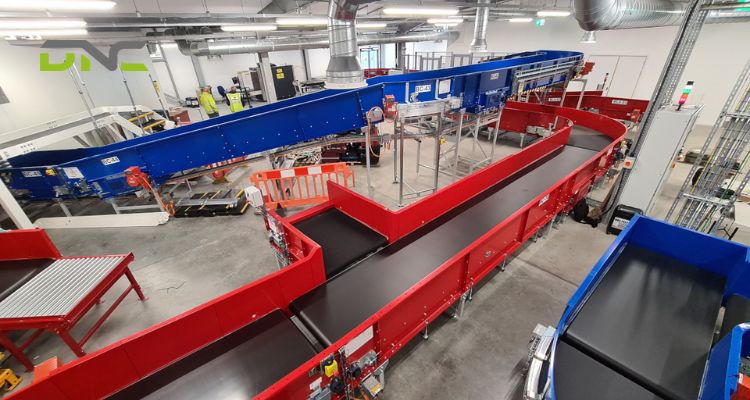
Different airport operations require different conveyor belt configurations. Selecting the correct type ensures optimal performance, reliability, and scalability. Each conveyor type is designed to address specific layout, load, and operational requirements within airport infrastructure.
- Belt conveyors: Belt conveyors are widely used for long-distance baggage transport. They provide smooth movement, reduce impact on luggage, and support continuous, high-capacity operation across terminals.
- Roller conveyors: Roller conveyors are commonly used in accumulation and sorting areas. They allow controlled buffering of baggage and are ideal where temporary storage or controlled movement is required.
- Incline and decline conveyors: These conveyors move baggage between different elevation levels while maintaining stability. They are essential for multi-level terminals and compact layouts.
- Curved conveyors: Curved conveyor belts enable flexible routing around structural constraints, allowing airports to optimize space without disrupting baggage flow.
Key Applications of Airport Conveyor Belts
Airport conveyor belt systems support a wide range of operational processes that directly affect efficiency and passenger satisfaction. Understanding these applications highlights why conveyor systems are a core component of airport automation.
- Check-in and departure areas: Conveyor belts transport baggage from counters to screening zones efficiently, reducing manual handling and speeding up passenger processing.
- Security screening zones: Automated conveyors ensure consistent baggage flow through inspection systems while maintaining safety and regulatory compliance.
- Baggage sorting facilities: Conveyor systems accurately route baggage to specific flights, minimizing misrouting and improving transfer efficiency for connecting passengers.
- Arrival and baggage claim areas: Conveyor belts deliver baggage to carousels in a timely and organized manner, improving the overall arrival experience.
Benefits of Airport Conveyor Belt Systems
A well-designed airport conveyor belt system delivers both operational and long-term strategic advantages. These benefits extend beyond basic transportation, supporting safety, scalability, and cost efficiency.
- Improved operational efficiency: Automation reduces manual handling, shortens processing time, and allows airports to handle higher passenger volumes without proportional labor increases.
- Reduced baggage handling errors: Integrated tracking and routing systems significantly reduce the risk of lost or misdirected baggage.
- Enhanced safety and reliability: Controlled movement and automated processes lower the risk of workplace injuries and system disruptions.
- Scalable infrastructure: Modular conveyor designs allow airports to expand or reconfigure systems as demand grows or terminal layouts change.

Key Design Considerations for Airport Conveyor Systems
Designing an effective airport conveyor belt system requires careful planning and technical expertise. Each design consideration plays a critical role in ensuring long-term system performance and reliability.
- System layout and space optimization: Conveyor routing must align with terminal architecture while allowing easy access for maintenance and future upgrades.
- Load capacity and throughput requirements: The system must handle varying baggage sizes and weights without compromising speed or stability.
- Automation and system integration: Seamless integration with screening equipment and control software ensures synchronized and accurate operation.
- Maintenance and uptime planning: Designs should prioritize durability and ease of maintenance to minimize downtime in critical airport environments.
How Airport Conveyor Belts Support Smart Airport Automation
Airport conveyor belt systems form the backbone of smart airport infrastructure. When integrated with digital technologies, they enable data-driven operations and continuous improvement.
- Real-time system monitoring: Sensors and control systems provide live performance data, allowing proactive maintenance and rapid fault detection.
- Data integration with airport operations platforms: Conveyor systems can share data with broader airport management systems to improve planning and resource allocation.
- Energy efficiency optimization: Intelligent controls adjust system operation based on demand, reducing energy consumption during low-traffic periods.
- Future-ready automation capabilities: Conveyor systems support advanced technologies such as predictive maintenance and AI-driven optimization.
Why Is DNC Automation a Trusted Partner for Airport Conveyor Belt Systems?
Choosing the right partner is essential for successful airport conveyor belt implementation. A trusted automation partner delivers not only equipment, but also system expertise and long-term support.
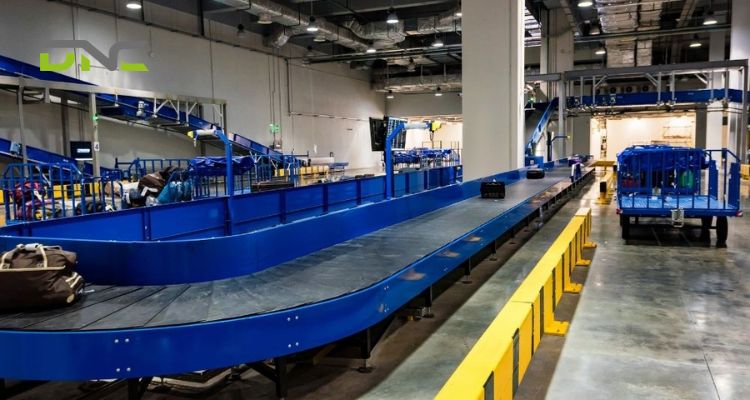
- Specialized automation expertise: DNC Automation designs and delivers conveyor systems tailored to the complex demands of airport operations.
- Customized system solutions: Each airport conveyor belt system is engineered to match specific operational needs, layouts, and automation goals.
- End-to-end project support: From design and integration to commissioning and ongoing support, DNC Automation ensures smooth project execution.
- Long-term performance focus: Solutions are built with scalability, reliability, and maintainability in mind to support sustainable airport operations.
By partnering with DNC Automation, airport operators and system integrators gain access to proven expertise in airport conveyor belt systems designed for reliability, scalability, and long-term performance. Whether upgrading existing infrastructure or planning a new automated baggage handling system, working with an experienced automation partner ensures smoother operations, reduced risk, and future-ready airport environments.
- 4 views
- 0 Comment
Recent Comments