


Cleated Conveyor Belt Explained: Types, Materials, Applications, and Design Considerations
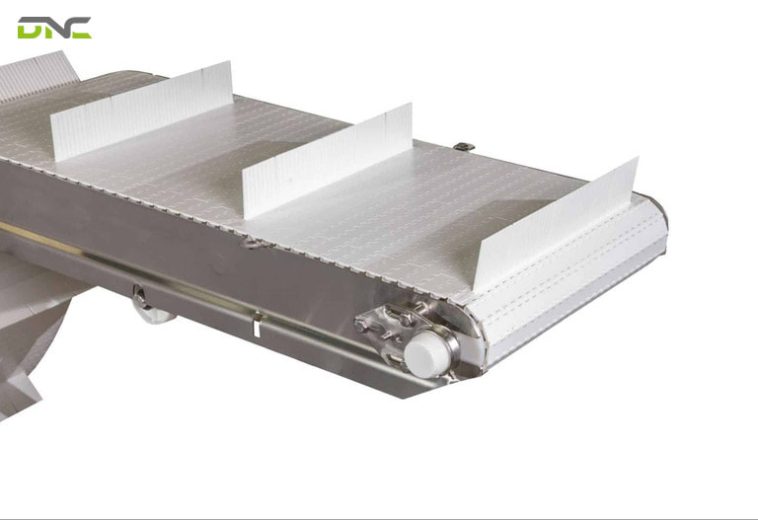
Cleated Conveyor Belt: Types, Cleat Profiles, Incline Angles, and Applications
A cleated conveyor belt has transverse protrusions — cleats — moulded or bonded to the belt surface at regular intervals. Cleats prevent product or material from sliding back down the belt when conveying on inclines steeper than a flat belt can handle. A flat smooth belt allows product to slide above 12–15° incline; a cleated belt with appropriate cleat height extends conveying capability to 30–45° incline — and with sidewall belts, up to 60° or near-vertical.
In Malaysian food processing (palm oil FFB, produce, seafood), agriculture (paddy, grain, seed), and industrial applications (aggregate, minerals, wood chips), cleated belts transport materials up steep elevations where belt conveyors would otherwise slip and bucket elevators would be the only alternative.
How Cleated Belts Work
Cleats create transverse barriers across the belt surface that catch material and prevent it from sliding backward under gravity on steep inclines. The effective incline angle depends on:
- Cleat height: Taller cleats retain more material per pitch, allowing steeper angles without spilling over the cleat.
- Cleat pitch (spacing between cleats): Shorter pitch = more cleats = finer material retention; longer pitch = higher capacity per cleat.
- Material characteristics: Angle of repose of the material determines the maximum practical incline — material naturally slumps at its angle of repose regardless of cleat height.
- Belt speed: Higher speed increases material kinetic energy at the cleat face — too high a speed causes material to tumble over cleats.
Cleat Profiles
L-Profile Cleat
A vertical face cleat with a flat top — the simplest and most common cleat profile. The vertical face presents a flat barrier to material; the flat top provides some support. Easy to clean (no internal corners), economical to manufacture.
Best for: Free-flowing granular materials (grain, aggregate, pellets), dry industrial materials.
Cleat height: 6–40 mm for L-profile.
Incline capability: Up to 30° depending on material.
V-Profile (Chevron) Cleat
A V-shaped or chevron pattern cleat — multiple V grooves across the belt width. Provides self-cleaning capability (material does not accumulate in cleat base) and good grip for root vegetables, irregular shaped items, and wet produce.
Best for: Agricultural produce (potatoes, onions, root vegetables), wet materials where buildup in cleat base would cause hygiene issues.
Standard for: Potato and vegetable conveying in food processing globally — common in Malaysian produce sorting facilities.
T-Profile Cleat
A T-shaped cleat with a wider flat top overhanging the vertical stem. The overhang provides extra material-holding capacity per unit of cleat height — more material retained per cleat than L-profile at the same height.
Best for: Bulky materials where cleat height is limited by clearance but retention capacity must be maximised.
Corrugated Sidewall Cleat (Sandwich Belt)
Corrugated rubber sidewalls are bonded to the belt edges (perpendicular to the belt surface), combined with transverse cleats. The sidewalls contain material between cleats — preventing lateral spillage on inclines and enabling near-vertical (60–90°) conveying.
This is the enabling technology for high-angle conveying: Without sidewalls, material tumbles off the belt sides above 30–35°. Sidewalls contain the material pocket between cleats for 90° vertical conveying.
Applications: Aggregate and quarrying (rock, sand, gravel conveyed vertically at quarry face), coal, potash, fertiliser, seed.
Cost: 3–5× higher than standard cleated belt — justified only when vertical conveying eliminates bucket elevators or steeper-structure costs.
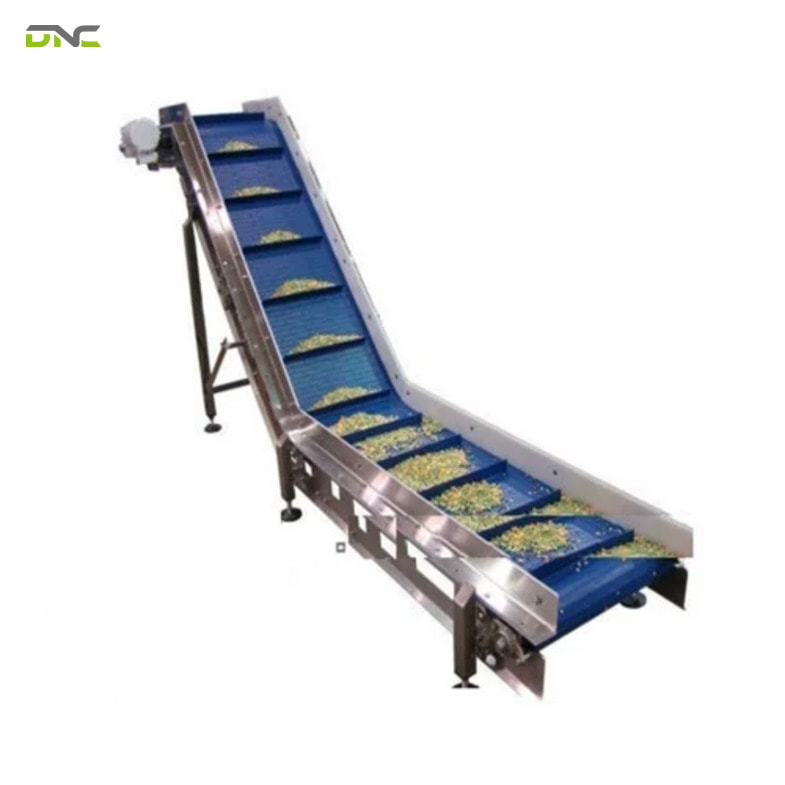
Cleated conveyor belts are not simply optional accessories; they are often a functional requirement in automated material handling.
Cleat Heights and Corresponding Incline Angles
| Cleat Height | Material Type | Maximum Incline |
| 6–15 mm (low profile) | Fine granules, seeds, tablets | 15–20° |
| 20–30 mm | Grain, pellets, food ingredients | 20–30° |
| 40–60 mm | Aggregate, coal, wood chips | 25–35° |
| 80–100 mm | Coarse aggregate, EFB, bulky biomass | 30–40° |
| 100–150 mm | Very bulky, irregular bulk | 35–45° |
| Sidewall belt (any cleat height) | Any bulk material | 45–90° |
Rule: Cleat height must exceed the material’s tendency to slide back at the design incline angle. For material with angle of repose θ, design incline angle should not exceed θ × 0.8 (80% of repose angle) to maintain reliable retention without excessive turbulence.

Cleats are the functional elements that distinguish cleated conveyor belts from flat belts.
Belt Materials for Cleated Conveyors
Rubber (SBR, NBR)
Standard for industrial applications. Temperature range: -20°C to +80°C. Cleats vulcanised (integrally moulded) to the belt carcass — strongest bond, longest cleat life.
Variants: Heat-resistant rubber (HR) for post-oven conveying up to 120°C; oil-resistant (NBR) for fatty products, petroleum, and food oils.
PVC
Food-grade PVC with moulded PVC cleats. Temperature range: -10°C to +70°C. Common for ambient-temperature food processing. Lower cost than PU for moderate food applications.
Polyurethane (PU)
FDA/EU-compliant food-grade PU — the standard for direct food contact in export-market food plants. Temperature range: -30°C to +80°C. High abrasion resistance. PU cleats bonded (not vulcanised) — somewhat lower bond strength than rubber-vulcanised, but adequate for food-weight products.
Use for: Frozen food (lower temperature limit), meat and seafood, bakery products.
Silicone
Temperature range: -60°C to +200°C. FDA compliant. Used for high-temperature food conveying (post-oven, baking) and cryogenic applications. Expensive — specified only when temperature exceeds PU capability.
Food Safety Design for Cleated Belt Conveyors
Cleat geometry for hygienic design: Cleats with internal corners (T-profile base) accumulate product residue and bacteria. Food-grade cleated conveyors specify smooth-radius base transition (no sharp corners) and open cleat geometry that allows belt washers to clean between cleats.
Belt washers: Spray nozzle systems under the return strand clean belt and cleats between production runs. Fixed nozzles positioned to direct water between cleat faces; water and residue falls into drip tray below.
CIP compatibility: Belt must tolerate CIP cleaning chemicals (alkaline and acid cycles). PU and food-grade rubber are chemically compatible; verify with belt data sheet for specific CIP chemical concentrations.
Colour: Blue cleated belts (food blue = blue is not found in natural food = makes foreign body detection easier). White for maximum contamination visibility.
Cleated Belt Conveyor vs. Other Incline Systems
| System | Max Incline | Max Throughput | Product Type | Cost |
| Flat belt | 12–15° | High | Stable flat-base | Low |
| Cleated belt (no sidewall) | 15–45° | Medium-high | Bulk, granular | Medium |
| Sidewall cleated belt | Up to 90° | Medium | Bulk material | High |
| Bucket elevator | Vertical | Medium-high | Granular, coarse | High |
| Screw conveyor (inclined) | Up to 45° | Low-medium | Free-flowing | Medium |
| Tubular drag conveyor | Any angle | Low-medium | Fine, fragile | High |
Choose cleated belt over bucket elevator when: Material is lumpy or irregular (doesn’t load cleanly into buckets), single belt system preferred for simple maintenance, or incline angle is moderate (25–45°) where cleated belt is sufficient without the structure required by a bucket elevator.
Choose sidewall cleated belt over bucket elevator when: Space for bucket elevator structure is unavailable; very high throughput on a steep incline where multiple cleated belt widths can run in parallel.
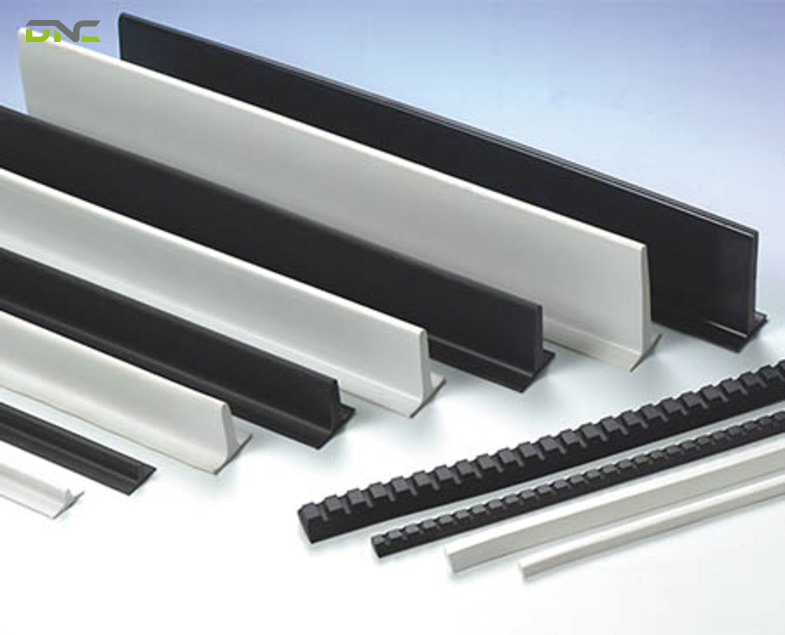
Material selection directly affects cleat adhesion strength, belt flexibility, wear resistance, hygiene compliance, and long-term system reliability.
Applications in Malaysia
Palm Oil and FFB Handling
Palm oil fresh fruit bunches (FFB) have a wet, thorny exterior — making them difficult to handle on flat belts (slide back) and damaging in bucket elevators (thorns catch on bucket lips). Cleated belts with 80–100 mm rubber L-cleats at 25–35° inclines handle FFB from ground receiving to steriliser infeed at palm oil mills across Sabah, Sarawak, and Peninsular Malaysia.
Agriculture and Grain
Rice paddy, maize, and soybean are elevated by cleated belt conveyors at grain terminals (25–35° incline, 20–40 mm L-profile grain cleats) from floor-level receiving hoppers to bucket elevator infeed boots — reducing the floor footprint of the receiving system.
Seafood and Produce Sorting
Seafood sorting lines in Penang and Sabah use V-profile (chevron) food-grade cleated belts on incline sorting conveyors — where the V-profile allows wash water to drain between cleats rather than pooling at the cleat base.
Aggregate and Construction Material
Quarries and precast concrete manufacturers in Malaysia elevate aggregate (limestone, granite, river sand) on cleated belts at 30–40° inclines — rubber L-profile cleats on multi-ply rubber conveyor belts rated for abrasive materials.
Wood Chip and Biomass
Biomass power plants (EFB, PKS, wood chips) use cleated belt conveyors to incline-feed fuel from ground-level storage to elevated boiler feed conveyors — 100 mm cleats, AR-grade rubber belt for abrasion resistance.
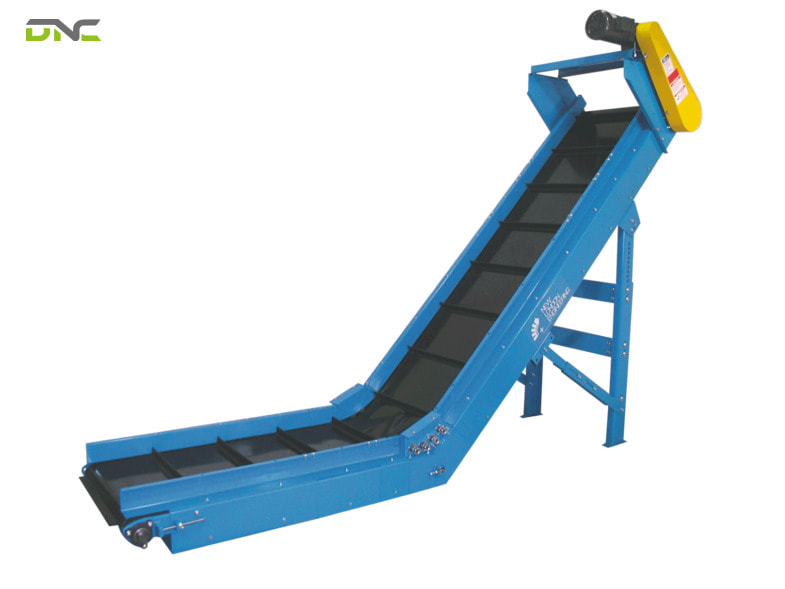
Cleated conveyor belts are commonly used in industries that require stable material transport
Maintenance
Daily: Inspect cleats for cracking or detachment (particularly at the base where flex stress concentrates); check for material buildup between cleats that indicates belt speed too high or incline too steep for current material.
Weekly: Belt alignment check — cleated belts are more likely to track off-centre on inclines due to gravity forces; verify tracking on empty and loaded belt; adjust tail pulley alignment if needed.
Monthly: Measure cleat height wear — replace belt when cleats wear to 60% of original height; inspect cleat base bonds (PU bonded cleats) for delamination.
Annual: Belt elongation measurement; pulley lagging condition; drive and tail shaft bearing condition; belt take-up position vs. baseline (indicates belt elongation trend).
DNC Automation’s Cleated Belt Conveyor Solutions
DNC Automation designs and fabricates cleated belt conveyor systems for Malaysian food, agriculture, and industrial applications — including incline angle analysis, cleat profile and height selection, food-grade material specification, and PLC speed control integration.
Contact DNC Automation for cleated conveyor belt specification, incline analysis, and turnkey system proposals.
Cleated conveyor belts extend conveying capability from flat belt’s 12–15° limit to 45° (open cleats) or 90° (sidewall belts) — enabling steep incline material handling without the cost and structural complexity of bucket elevators. Cleat profile, height, and material are selected based on material characteristics, incline angle, hygiene requirements, and environmental conditions. In Malaysian palm oil, agriculture, and food processing applications, cleated belts handle the difficult combination of wet, irregular, and abrasive materials on significant inclines that flat belts and screw conveyors cannot manage reliably.
- 400 views
- 0 Comment
Recent Comments