



Conveyors and Conveying Systems: The Master Guide to Smart Material Handling
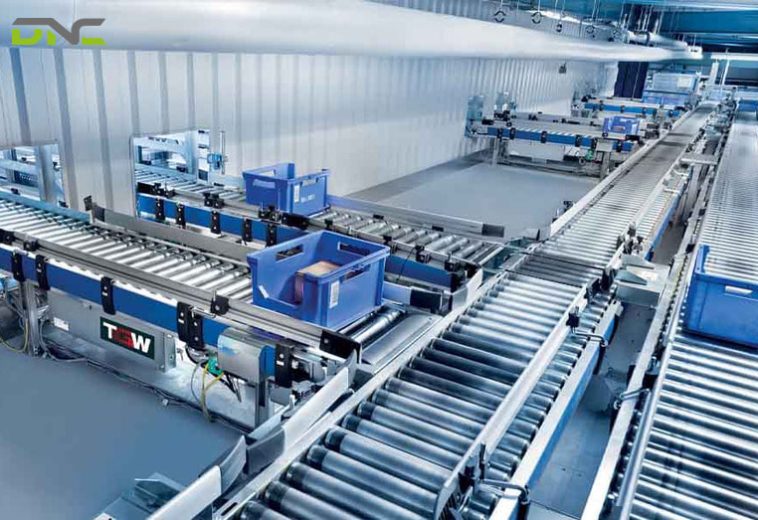
At DNC Automation, we understand that moving a product from Point A to Point B is no longer just a mechanical task—it is a data-driven strategy. In the era of Industry 4.0, a conveying system is the “pulse” of your productivity, synchronizing robotic arms, vision systems, and packaging lines into one unified engine. Whether you are dealing with bulk material handling or high-precision electronics assembly, mastering the architecture of your conveying system is the first step toward true operational excellence.
What are conveyors and conveying systems in the context of modern industrial automation?
In the era of Industry 4.0, conveyors and conveying systems are no longer viewed as mere mechanical transport tools; they are the circulatory system of the smart factory. While a single machine performs a specific task, the conveying system is what breathes life into the entire production line by ensuring a seamless, synchronized flow of materials.
In modern automation, these systems act as a bridge between isolated “islands of automation.” At DNC Automation, we define a conveying system as an intelligent network that uses sensors, motors, and software to move, sort, and track products. Whether it is raw materials entering the facility or finished goods heading to shipping, the conveying system dictates the Takt Time (production pulse) of the entire operation. Without a sophisticated conveying system, even the most advanced robotic arms would sit idle, waiting for materials to arrive.
How do conveyors and conveying systems differ from standard conveyor belts?
Understanding the distinction between these two terms is critical for facility managers when planning an upgrade or a new installation. The difference lies primarily in complexity, scope, and intelligence.
Individual Component vs. Integrated Network:
- A conveyor belt refers to a single piece of hardware—a medium (like PVC or rubber) rotating over pulleys to move an item from Point A to Point B.
- A conveying system is a holistic architecture. It includes multiple conveyors (belts, rollers, or chains), diverters, merges, elevators, and the control logic that governs them all as a single entity.
Mechanical Movement vs. Logic-Driven Flow:
- A standard conveyor belt often operates at a constant speed with a simple manual start/stop function.
- A conveying system utilizes PLC (Programmable Logic Controller) integration. It “thinks” and reacts. If a downstream packaging machine stops, the system automatically triggers “accumulation mode” upstream to prevent a pile-up.
Simple Transport vs. Complex Processing:
- Conveyor belts are for transport.
- Conveying systems are for processing. They perform high-level tasks such as sorting (sending products to different lanes based on barcodes), orienting (turning a box for labeling), and sequencing (ensuring parts arrive at a robot in a specific order).
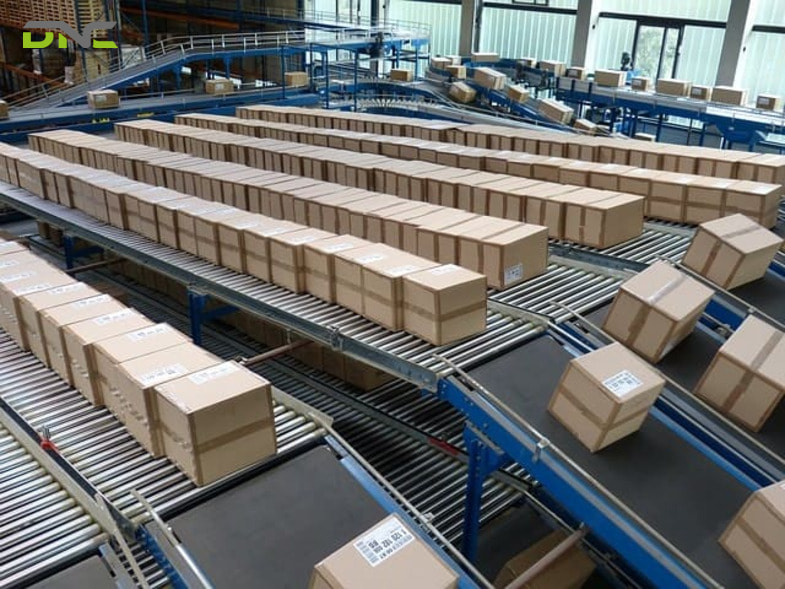
How do conveyors and conveying systems differ from standard conveyor belts?
What are the primary types of conveying systems used in smart manufacturing?
In smart manufacturing, the choice of system architecture is driven by the physical characteristics of the product and the required “logic” of the flow. Here are the primary systems we implement at DNC Automation:
Belt Conveying Systems
- Mechanism: Uses a continuous loop of flexible material (PVC, PU, or Rubber) supported by a metal slider bed.
- Application: Best for high-speed transport of lightweight to medium items, especially in assembly lines or inspection stations where stability is key.
Roller Conveying Systems (Powered & Accumulation)
- Mechanism: Products move on top of a series of metal rollers driven by internal motors or chains.
- Application: Ideal for heavy rigid items like pallets or crates. These systems are famous for Zero-Pressure Accumulation (ZPA), where items stop on the line without touching each other, preventing product damage.
Chain Conveying Systems
- Mechanism: Employs a powered continuous chain loop with attachments or “flights.”
- Application: Used for extremely heavy loads (automotive chassis, large pallets) or in high-temperature environments where a fabric belt would melt.
Pneumatic Conveying Systems
- Mechanism: Uses air pressure (positive or vacuum) to move materials through enclosed pipes.
- Application: Specifically for bulk materials like powders, grains, or plastic pellets. It is the go-to solution for the food, chemical, and pharmaceutical industries to prevent contamination.
Overhead Conveying Systems
- Mechanism: Utilizes a track mounted to the ceiling with trolleys or hooks that carry products above the floor.
- Application: Perfect for paint lines (automotive) or garment assembly. It maximizes floor space by utilizing the 3D volume of the factory.
Modular Plastic Systems
- Mechanism: Built from interlocking plastic links that resemble “Lego” bricks.
- Application: High-flexibility lines that require curves, inclines, and declines in a tight space. They are incredibly easy to repair since you only replace individual links rather than the whole belt.
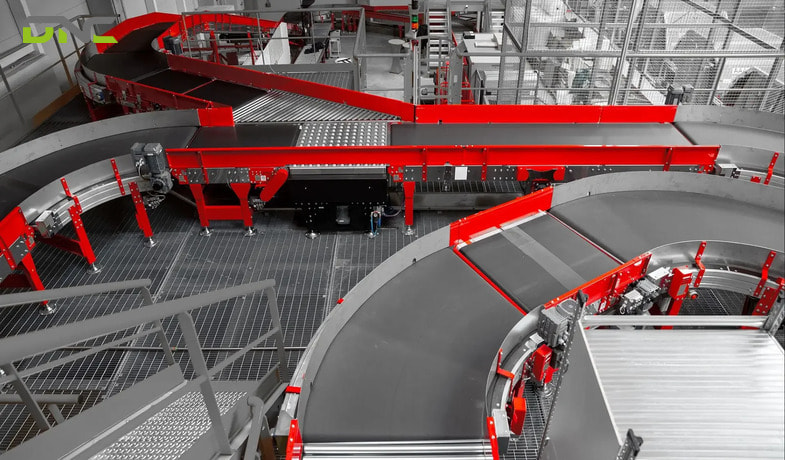
Here are 6 primary systems we implement at DNC Automation
What critical components transform individual conveyors into a synchronized conveying system?
A conveying system is only as strong as its ability to communicate. To transform standalone mechanical hardware into a synchronized ecosystem, several key “integration layers” are required:
- PLC (Programmable Logic Controller): The central brain that coordinates the speed and timing of every motor in the system to prevent collisions.
- Diverters and Sorters: Mechanical “gates” that direct products to different lanes based on weight, barcode data, or destination.
- Merging Units: Sections that allow multiple lines to flow into a single stream without jamming, crucial for high-speed e-commerce fulfillment.
- Vision & Sensor Arrays: Photoelectric and laser sensors that provide real-time feedback on product location, orientation, and quality.
- Variable Frequency Drives (VFDs): Power electronics that allow each conveyor to ramp speed up or down smoothly, reducing mechanical stress.
Why is choosing the right conveying system architecture vital for factory ROI?
The architecture of a conveying system determines how materials, products, and information move through a factory. Beyond basic transportation, a well-designed conveying architecture directly influences production efficiency, labor utilization, scalability, and data visibility. When aligned with operational goals, it becomes a strategic asset that improves return on investment (ROI) across the entire facility.
- Optimized Flow & Throughput: A properly engineered conveying system ensures smooth and balanced material flow across all process stages. By eliminating bottlenecks and synchronizing conveyor speeds with production equipment, the system prevents idle time and congestion.
- Reduced Labor Costs: Modern conveying architectures are designed to minimize manual handling by automating product movement from receiving through processing and ultimately to shipping.
- Scalability: A modular conveying architecture allows factories to scale operations without major system redesigns. Additional conveyor sections, transfer points, or processing nodes can be integrated as production volume increases or layouts evolve.
- Data Accuracy: Integrated systems provide 100% traceability. Every box moved is a data point in your ERP, reducing lost inventory and shipping errors.

Why is choosing the right conveying system architecture vital for factory ROI?
How do you design a conveying system for maximum efficiency and future scalability?
Designing an efficient conveying system requires a balance between current production needs and long-term flexibility. A well-engineered design considers load behavior, operating environment, space utilization, and synchronization with production equipment.
- Load Dynamics: Both static and dynamic loads must be calculated to ensure the conveyor structure and drive system can withstand peak operating conditions. Ignoring start-up forces or sudden load changes can lead to motor overload and premature mechanical failure.
- Environmental Resilience: Conveying systems must be designed for the environments in which they operate. Exposure to chemicals, dust, or high temperatures affects material selection, sealing, and component durability, directly impacting uptime and maintenance costs.
- System Footprint Optimization: Designing in three dimensions—using inclines, declines, or vertical conveyors—helps maximize floor-space efficiency. This approach allows higher throughput without expanding the factory footprint.
- Speed Synchronization: Conveyor speeds must align with the cycle times of connected equipment such as robots, CNC machines, or packaging lines. Proper synchronization ensures smooth flow, prevents bottlenecks, and supports overall system efficiency.
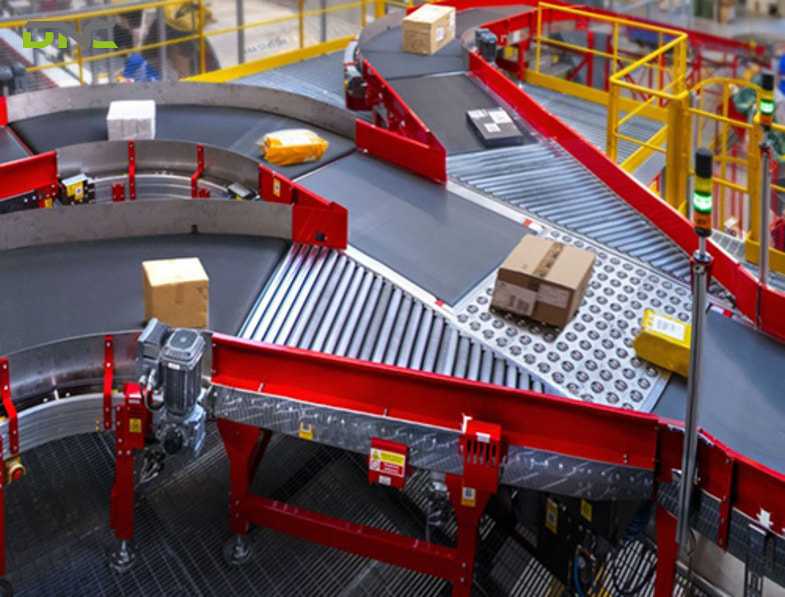
Designing an efficient conveying system requires a balance between current production needs and long-term flexibility
Why partner with DNC Automation for your conveying system engineering?
DNC Automation specializes in the end-to-end engineering of conveyors and integrated conveying systems designed to support modern, automated factories. Rather than focusing on individual components, DNC approaches conveying as the “pulse” of the production floor—ensuring that materials, products, and data move reliably and efficiently across the entire operation.
- Custom Design: Every conveying system is engineered around the specific characteristics of the product, process requirements, and facility layout.
- High-Tier Integration: DNC combines mechanical design with advanced automation expertise. Conveying systems are integrated with PLCs, sensors, and control platforms to enable real-time monitoring, synchronization with production equipment, and readiness for Industry 4.0 environments.
- Proven Reliability: By using world-class components and applying rigorous engineering standards, DNC delivers conveying systems designed for continuous operation.
By partnering with DNC Automation, manufacturers gain a conveying system engineered not only for today’s operational demands, but also for long-term performance and scalability within an automated production ecosystem.
- 5 views
- 0 Comment
Recent Comments