



High Density Pallet Racking System: Maximise Warehouse Storage
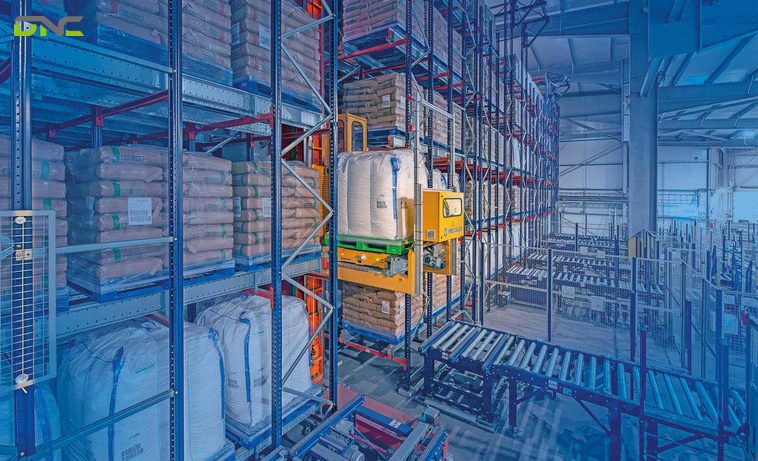
High density pallet racking systems achieve 75–90% floor utilisation by minimising or eliminating fixed aisles — storing 40–100% more pallets than standard selective racking within the same warehouse footprint. For Malaysian manufacturers and warehouse operators facing rising rental costs (RM 2.50–4.50/sq ft in Selangor industrial zones), cold room construction premiums (RM 3,000–5,000/m²), and space constraints that make facility expansion impractical, high density racking converts existing floor area into maximum storage capacity. This guide compares five high density racking technologies — drive-in, pallet flow, push back, mobile, and shuttle — with specifications, cost data, and selection criteria specific to Malaysian warehouse operations. DNC Automation designs high density storage solutions that maximise your existing footprint before you invest in new facilities.
What Is a High Density Pallet Racking System?
High density pallet racking refers to any racking configuration that achieves floor utilisation above 65% — significantly exceeding the 45–50% utilisation of standard selective racking. The density increase comes from reducing aisle space: fewer aisles, narrower aisles, or no fixed aisles at all.
The five primary high density technologies each use a different approach to aisle elimination:
| System | Density Mechanism | Floor Utilisation |
| Drive-In | Forklifts enter the rack; no internal aisles | 75–85% |
| Pallet Flow | Gravity roller lanes; only 2 aisles (load + pick) | 75–85% |
| Push Back | Nested carts on rails; single aisle face | 60–70% |
| Mobile | Motorised bases eliminate all but 1 aisle | 80–90% |
| Shuttle | Automated carts in channels; minimal aisles | 80–85% |
High density systems trade selectivity (the ability to access any individual pallet) for storage capacity. Selective racking provides 100% selectivity; high density systems range from 100% (mobile, when aisle is open) to near-zero (drive-in, where only the front pallet in each lane is accessible). This trade-off is the fundamental decision criterion: operations with few SKUs and high volume per SKU benefit from density; operations with many SKUs need selectivity.
Malaysian warehouses adopt high density racking for three primary reasons: cold room space optimisation (avoiding RM 3,000–5,000/m² in new cold room construction), ambient warehouse rental reduction (saving RM 100,000–500,000/year in floor space costs), and facility capacity extension (deferring new warehouse construction by 3–5 years).
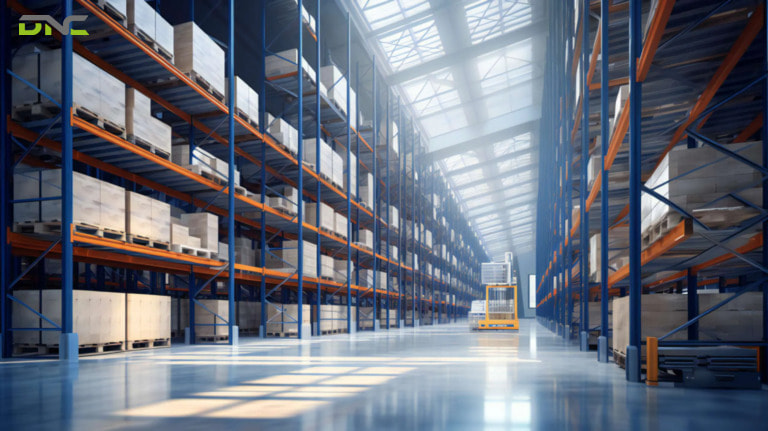
What Is a High Density Pallet Racking System?
How High Density Systems Compare to Standard Racking
Space Utilisation Mathematics
A standard selective racking warehouse with 3.5 m aisles dedicates approximately 50% of floor area to aisles and 50% to storage. For a 10,000 m² warehouse, this means 5,000 m² of actual storage area holding approximately 4,000 pallet positions.
High density alternatives in the same 10,000 m² warehouse:
| System | Storage Area | Pallet Positions | Increase vs. Selective |
| Selective (baseline) | 5,000 m² | 4,000 | — |
| Drive-In | 7,500 m² | 6,800 | +70% |
| Pallet Flow | 7,500 m² | 6,500 | +63% |
| Push Back | 6,500 m² | 5,200 | +30% |
| Mobile | 8,500 m² | 7,200 | +80% |
| Shuttle | 8,000 m² | 7,000 | +75% |
These position counts assume standard 1,200 × 1,000 mm Malaysian pallets with 6 m frame heights. Actual positions vary with pallet height, beam levels, and specific layout geometry — DNC Automation models every project in 3D to provide exact position counts.
Cost per Pallet Position
| System | Cost/Position (RM) | Positions in 10,000 m² | Total System Cost (RM) | Cost per Position Stored (RM) |
| Selective | 350–600 | 4,000 | 1,800,000 | 450 |
| Drive-In | 300–500 | 6,800 | 2,720,000 | 400 |
| Pallet Flow | 800–1,500 | 6,500 | 7,150,000 | 1,100 |
| Push Back | 600–1,000 | 5,200 | 4,160,000 | 800 |
| Mobile | 1,200–2,500 | 7,200 | 13,320,000 | 1,850 |
| Shuttle | 1,000–2,000 | 7,000 | 10,500,000 | 1,500 |
Key insight: Drive-in racking delivers the lowest cost per stored pallet in absolute terms. Mobile racking delivers the highest density but at the highest total cost. The optimal choice depends on whether floor space cost (rent or construction) or racking cost dominates the total cost equation.
Total Cost of Ownership (10-Year)
The true comparison includes floor space cost over the racking’s operational life:
Ambient warehouse at RM 3.50/sq ft monthly:
- Selective: RM 1,800,000 racking + RM 4,520,000 rent (10,000 m²) = RM 6,320,000
- Mobile: RM 13,320,000 racking + RM 2,260,000 rent (5,000 m²) = RM 15,580,000
In ambient warehouses, selective racking wins on 10-year TCO despite lower density.
Cold room at RM 4,000/m² construction + RM 200/m²/year energy:
- Selective: RM 1,800,000 racking + RM 40,000,000 construction + RM 20,000,000 energy = RM 61,800,000
- Mobile: RM 13,320,000 racking + RM 20,000,000 construction + RM 10,000,000 energy = RM 43,320,000
In cold rooms, mobile racking saves RM 18,480,000 over 10 years despite costing 7× more per position in racking alone.
This is why mobile racking dominates Malaysian cold room installations.
Drive-In Racking: Maximum Density at Minimum Cost
Drive-in racking stores pallets 6–12 deep within the rack structure, accessible by forklifts driving along floor-level rails. LIFO operation (single entry) or FIFO operation (drive-through with dual entry).
Density: 75–85% floor utilisation
Cost: RM 300–500 per position
Selectivity: Low (one SKU per lane)
Best application: Low-SKU, high-volume bulk storage: beverages, building materials, frozen food
Malaysian context: Drive-in racking is the most cost-effective high density solution for non-perishable goods with fewer than 20 SKUs. Beverage distributors, cement manufacturers, and frozen food cold rooms use drive-in for maximum density at minimum capital cost.
Limitation: Forklift operation within the structure causes frame damage — column guards and driver training are essential. Lane blockages from misplaced pallets reduce effective throughput.
Pallet Flow Racking: High Density with Guaranteed FIFO
Gravity-fed roller lanes move pallets from the loading face to the picking face automatically. FIFO rotation guaranteed mechanically — no WMS override or manual management required.
Density: 75–85% floor utilisation
Cost: RM 800–1,500 per position
Selectivity: 100% at picking face
Best application: Date-coded products: food, pharmaceuticals, chemicals
Malaysian context: Essential for F&B manufacturers operating under MeSTI, HACCP, and halal certification with strict FIFO requirements. Palm oil refineries, dairy processors, and pharmaceutical distributors rely on pallet flow for regulatory-compliant stock rotation.
Limitation: Highest cost per position among passive high density systems. Requires consistent pallet quality — damaged pallets jam roller lanes.
Push Back Racking: Medium Density, Fast Access
Nested carts on inclined rails store 2–6 pallets deep. New pallets push existing stock deeper; removal of the front pallet allows gravity to bring the next pallet forward. LIFO operation.
Density: 60–70% floor utilisation
Cost: RM 600–1,000 per position
Selectivity: Front pallet only
Best application: Medium-SKU operations needing density above selective but below drive-in
Malaysian context: Electronics component warehouses, FMCG distribution centres, and general manufacturing buffer storage. Push back provides a practical step up from selective racking for operations with 20–100 SKUs.
Limitation: Maximum 6 pallets deep; LIFO only. Not suitable for date-coded products requiring FIFO rotation.
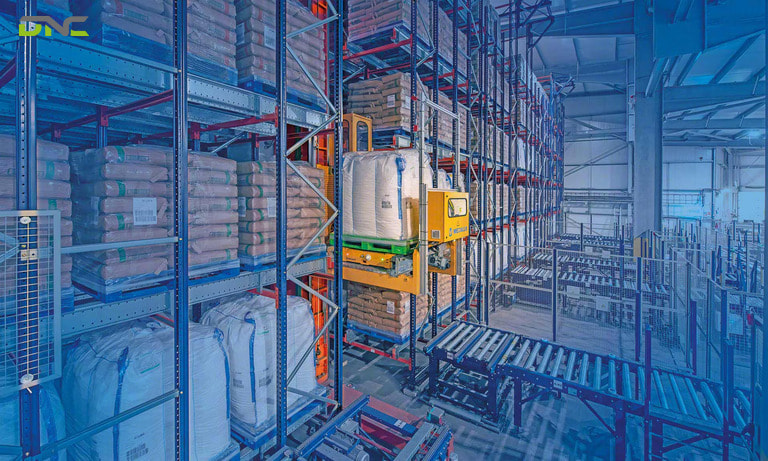
Pallet Flow Racking: High Density with Guaranteed FIFO
Mobile Racking: Maximum Density with Full Selectivity
Motorised bases eliminate all fixed aisles — one aisle opens on demand while all other rows compress together. 100% selectivity retained when the aisle is open.
Density: 80–90% floor utilisation
Cost: RM 1,200–2,500 per position
Selectivity: 100% (when aisle open)
Best application: Cold rooms, pharmaceutical storage, high-value goods
Malaysian context: Mobile racking dominates cold room installations where floor space costs RM 3,000–5,000/m² to build. The density premium saves millions in construction costs — ROI within 6–12 months for cold room applications.
Limitation: Highest upfront cost. Access to one aisle at a time limits throughput for high-pick-frequency operations.
Shuttle Racking: High Density with Automation Path
Battery-powered shuttle carts transport pallets within rack channels. Semi-automated operation eliminates forklift entry into the structure. FIFO or LIFO configurable.
Density: 80–85% floor utilisation
Cost: RM 1,000–2,000 per position
Selectivity: Channel-based
Best application: Operations transitioning to automation; high-throughput dense storage
Malaysian context: The preferred entry point for manufacturers adopting warehouse automation under NIMP 2030. Shuttle racking provides immediate density gains with a built-in upgrade path to full AS/RS. DNC Automation designs shuttle installations with AS/RS compatibility as standard.
Limitation: Shuttle cart maintenance and battery management add operational complexity versus passive systems.
How to Choose the Right High Density System
Decision Framework
Step 1 — FIFO requirement?
- Yes → Pallet flow, mobile, or shuttle (FIFO-configured)
- No → All systems viable
Step 2 — SKU count?
- < 20 SKUs → Drive-in (lowest cost, maximum density)
- 20–100 SKUs → Push back, mobile, or shuttle
- > 100 SKUs → Mobile (retains 100% selectivity)
Step 3 — Floor space value?
- Standard warehouse (RM 2–4/sq ft rent) → Drive-in or push back (low racking cost offsets moderate density)
- Cold room (RM 3,000–5,000/m² build) → Mobile or shuttle (density savings outweigh racking premium)
- Cannot expand (no adjacent land) → Highest feasible density — mobile or shuttle
Step 4 — Automation roadmap?
- No automation planned → Drive-in or pallet flow
- Automation within 5 years → Shuttle (direct upgrade path to AS/RS)
- Full automation now → AS/RS (see automated racking guide)
Step 5 — Throughput?
- < 100 pallets/hour → Any system
- 100–300 pallets/hour → Mobile (if selectivity needed) or shuttle (if density priority)
- > 300 pallets/hour → Shuttle or AS/RS only
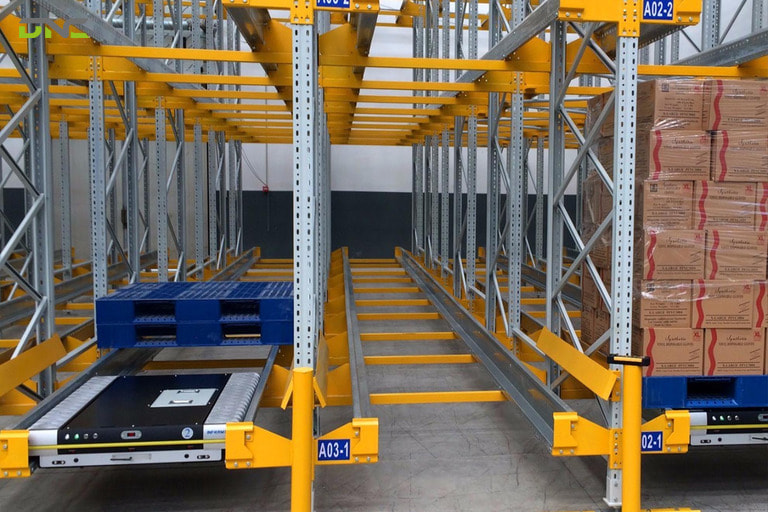
How to Choose the Right High Density System
FAQ — High Density Pallet Racking System
What is a high density pallet racking system?
A high density pallet racking system achieves 65–90% floor utilisation by reducing or eliminating fixed aisles — storing 30–100% more pallets than standard selective racking in the same floor area. The five main high density technologies are drive-in, pallet flow, push back, mobile, and shuttle racking. Each uses a different mechanism to minimise aisle space: deep storage lanes, gravity flow, movable bases, or automated carts.
Which high density racking is cheapest?
Drive-in racking is the lowest cost high density option at RM 300–500 per pallet position — comparable to standard selective racking. It achieves 75–85% floor utilisation by storing pallets 6–12 deep within the rack structure. The trade-off: low selectivity (LIFO only, one SKU per lane) and higher frame damage risk from forklift operation within the structure.
Is high density racking worth it for cold rooms?
High density racking is essential for cold rooms. Cold room floor space costs RM 3,000–5,000/m² to build plus RM 150–300/m²/year in energy. Mobile racking reduces cold room footprint by 40–50% — saving RM 6,000,000–10,000,000 in construction costs for a 3,000-position facility. The racking premium of RM 2,000,000–3,000,000 over selective is recovered before the facility opens.
Can high density racking support FIFO?
Three high density systems support FIFO: pallet flow (guaranteed mechanical FIFO via gravity rollers), mobile (100% selectivity allows any access sequence), and shuttle (FIFO-configurable with dual-entry channels). Drive-in and push back are LIFO only. Choose pallet flow for automatic FIFO guarantee; mobile for FIFO with full selectivity; shuttle for FIFO with automation capability.
How much space does high density racking save vs. selective?
High density racking stores 30–100% more pallets than selective racking in the same floor area. Specific gains: push back +30%, drive-in +70%, pallet flow +63%, shuttle +75%, mobile +80%. For a 10,000 m² warehouse with 4,000 selective positions, switching to mobile racking adds 3,200 positions — equivalent to building a separate 4,000 m² warehouse.
What is the best high density racking for Malaysian warehouses?
The optimal choice depends on your specific constraints. For cold rooms: mobile racking (maximum ROI on expensive floor space). For bulk non-perishable goods: drive-in (lowest cost, high density). For date-coded products: pallet flow (guaranteed FIFO). For operations moving toward automation: shuttle (upgrade path to AS/RS). DNC Automation evaluates your SKU profile, throughput, floor space value, and automation roadmap to recommend the optimal high density solution.
Conclusion
High density pallet racking systems transform Malaysian warehouse economics by extracting 40–100% more storage capacity from existing floor area. The choice between drive-in, pallet flow, push back, mobile, and shuttle depends on the interaction of four factors: stock rotation requirement, SKU count, floor space value, and automation roadmap.
DNC Automation engineers high density storage solutions that match each client’s specific constraint profile — from RM 300/position drive-in systems for bulk storage to RM 2,500/position mobile racking for cold rooms. Our 20+ years of warehouse engineering, ISO 9001:2015 processes, and Siemens integration capability ensure every high density installation delivers the density, throughput, and safety performance the investment demands.
- 7 views
- 0 Comment
Recent Comments