


Weighing Conveyor: Inline Accuracy for Malaysian Factories | DNC Automation
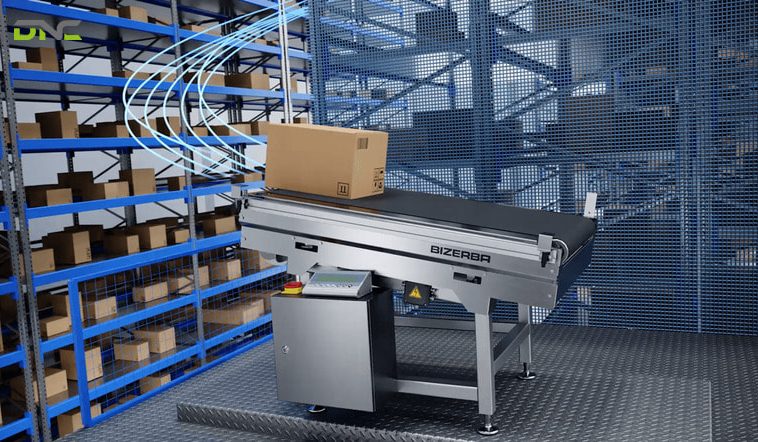
Weighing Conveyor — Automated Weight Verification for Malaysian Quality Control and Revenue Protection
Weighing conveyors protect Malaysian manufacturers from two simultaneous financial exposures that add up to millions of ringgit annually: regulatory penalties for short-weight products, and revenue loss from overweight products given away without charge. A palm oil mill operating at 100 tonnes per hour with a 0.5% scale error loses RM 175,000 per year in over-dispensed product at current fresh fruit bunch (FFB) prices of RM 700–900 per metric tonne. A pharmaceutical company shipping blister packs with an incorrect tablet count faces NPRA recall costs that dwarf the cost of any weighing system. Hartalega, one of Malaysia’s largest glove manufacturers and a DNC Automation client, uses carton-weight checkweighers on every outbound packing line to verify that glove count per carton matches the certified product specification — a prerequisite for its multinational healthcare supply chain customers. DNC Automation, Malaysia’s Top #1 Factory Automation Company since 2005, partners with Laumas Italy — an internationally certified industrial weighing systems manufacturer — to deliver weighing conveyor systems calibrated to the accuracy, legal compliance, and environmental demands of Malaysian manufacturing. This article explains what weighing conveyors are, how they work, what types exist, and how Malaysian plant managers can calculate the revenue impact and select the correct weighing conveyor for their operation.
What Is a Weighing Conveyor?
A weighing conveyor is an automated system that measures the weight of products or bulk materials while those items move along a conveyor belt, without stopping the production line. The weighing conveyor integrates load cells, a belt conveyor section, and a signal processing controller to capture weight data — and in most configurations, a rejection mechanism that removes out-of-specification items — all at line production speed.
Weighing conveyors cover an accuracy range from ±0.1g (pharmaceutical dynamic checkweighers) to ±0.5% of full scale (bulk belt scales for palm oil or cement), and throughput rates from 1 item per minute (static scale conveyor for heavy items) to 330 items per minute (high-speed pharmaceutical checkweigher). The weighing conveyor is the final quality gate before product leaves the factory — and for export-oriented Malaysian manufacturers, it is also a legal requirement under the Weights and Measures Act 1972.
How Does a Weighing Conveyor Work?
Weighing conveyor operation follows a measurement sequence in which each subsystem contributes to final weight accuracy and response time.
Step 1 — Product Separation and Infeed
Products enter the weighing conveyor infeed section via a separation conveyor (also called the feed conveyor) that spaces items to ensure only one product sits on the weighing platform at any given moment. The infeed conveyor runs slightly faster than the upstream production conveyor — typically 10–20% faster — to create a gap between successive items. For bulk materials (palm oil CPO, cement, grain), no separation is needed; material flows continuously over the belt scale.
Step 2 — Weight Measurement on the Weigh Section
The weigh section conveyor — a short, independently suspended belt section (typically 300–600mm long) — is mounted on one or more precision load cells. As the product traverses the weigh section, the load cell signal ramps up, peaks, and ramps down as the product enters, passes over, and exits the weigh belt. The controller applies digital signal processing (DSP) algorithms — typically digital filtering and statistical averaging — to extract the stable weight reading from the dynamic load cell signal. This is the technically challenging core of dynamic checkweighing: extracting an accurate weight from a product that is moving, not stationary.
Step 3 — Weight Classification and Comparison
The controller compares the measured weight against the programmed target weight and tolerance limits (under-limit, lower-accept limit, target, upper-accept limit, over-limit). Classification occurs in milliseconds — the controller assigns a pass/fail status to each item while the item is still on the weigh section. Products are classified as: reject-under, accept (within tolerance), or reject-over. Multiple classification zones (e.g., 5-zone classification) allow statistical production monitoring — tracking not just pass/fail but the distribution of weights across the accept zone.
Step 4 — Rejection and Diversion
Reject items (under- or over-weight) trigger an output signal from the controller that activates a rejection device — typically an air blast (pneumatic jet), pusher paddle, or diverter belt — timed to intercept the item at the rejection station immediately downstream of the weigh section. Rejection timing is calculated from the measured conveyor speed and the distance from weigh section to rejection station. Rejected items fall into a dedicated reject bin; accepted items continue on the production conveyor to packaging or dispatch.
Step 5 — Data Logging and Integration
Every weight measurement — accepted and rejected — is logged by the controller with timestamp, weight value, and classification code. This data exports via Modbus TCP, Ethernet/IP, or OPC-UA to factory MES (Manufacturing Execution System) or ERP systems. Production managers access real-time and historical weight distribution data, reject rate trends, and calibration records through the controller HMI or remote monitoring software. DNC Automation integrates weighing conveyor data with Siemens S7-1500 PLC systems for clients requiring integrated production monitoring.
Calibration Reference
Legal accuracy of weighing conveyors used for trade (export billing, product weight claim verification) requires annual calibration with traceable test weights under Malaysia’s Weights and Measures Act 1972. DNC Automation, through its Laumas Italy partnership, provides calibration certificates traceable to national standards recognized by SIRIM (Standards and Industrial Research Institute of Malaysia) — the statutory body for Malaysian weight and measure standardization.
Types of Weighing Conveyor
Five weighing conveyor types cover the full spectrum of Malaysian manufacturing weight measurement requirements from pharmaceutical precision to palm oil bulk flow.
1. Dynamic Checkweigher Conveyor
Dynamic checkweigher conveyors measure individual packaged items at full line speed, classifying each item as accept or reject without slowing the production line. Accuracy ranges from ±0.1g (pharmaceutical solid dosage) to ±5g (heavy consumer goods). Throughput up to 330 items per minute (±3g accuracy at 330 items/min is the industry benchmark for high-speed checkweighers).
Dynamic checkweighers are the most common weighing conveyor type in Malaysian F&B, pharmaceutical, and glove manufacturing. Every carton of Hartalega’s nitrile gloves passes through a dynamic checkweigher before palletizing — verifying carton weight against the 100-glove-pair target count specification. F&N beverage production lines (DNC Automation client) use dynamic checkweighers after filling to detect underfill before labeling.
| Parameter | Specification |
| Throughput | Up to 330 items/min |
| Accuracy | ±0.1g to ±5g |
| Product Weight Range | 5g to 30 kg |
| Belt Speed | 20–100 m/min |
| IP Rating | IP65 standard |
2. Static Conveyor Scale
Static conveyor scales stop each item on the weigh platform, hold it stationary for the measurement period (1–3 seconds), then release it. The stop-and-weigh sequence enables higher accuracy — ±0.01g to ±0.1g — than is achievable dynamically at equivalent cost. Throughput is limited by the hold time: typically 10–40 items/minute.
Static conveyor scales suit low-to-medium throughput lines where high accuracy is more important than speed — laboratory sampling, high-value pharmaceutical batch release, and specialty food portions. Malaysian halal-certified meat portioning lines use static conveyor scales to verify individual portion weight against regulatory maximum/minimum limits for halal-labeled retail packs.
3. Continuous Belt Scale (Bulk Flow)
Continuous belt scales measure the total flow rate of bulk material on a moving conveyor belt — expressed as tonnes per hour (TPH). A section of the main conveyor belt is suspended on weigh idlers (idler rollers mounted on load cells) integrated with a belt speed sensor. The controller multiplies the measured weight per meter of belt by belt speed to calculate instantaneous TPH. Integrated totalizer accumulates total tonnes conveyed over a shift or day.
Continuous belt scales are the dominant weighing technology in Malaysian palm oil mills, cement plants, feed mills, and grain terminals. Palm oil processing — fresh fruit bunches (FFB) arriving at mills priced at RM 700–900/MT — requires accurate TPH measurement for FFB purchase billing. A 0.5% scale error on a 100 TPH mill translates directly to RM 175,000 per year of billing error at mid-range FFB prices.
4. Loss-in-Weight Feeder Conveyor
Loss-in-weight feeder conveyors measure the weight of the material storage hopper plus feeder mechanism continuously, controlling the feed rate to a target setpoint (kg/min or kg/hr) by adjusting conveyor speed. As material is conveyed out of the hopper, the hopper weight decreases; the rate of weight decrease equals the feed rate. This closed-loop control delivers the highest achievable feeding accuracy: ±0.2–0.5% of setpoint under steady-state conditions.
Loss-in-weight feeders serve pharmaceutical manufacturing (active pharmaceutical ingredient dosing to blending), specialty food (flavor, color, or vitamin premix dosing to bulk product), and chemical production (catalyst or additive dosing). Malaysian pharmaceutical plants in Penang’s medical device and pharma cluster require loss-in-weight accuracy for compliance with NPRA GMP documentation requirements.
5. Multi-Lane Checkweigher
Multi-lane checkweighers run two to six parallel conveyor lanes through a single controller and frame, each lane independently weighing products. Multi-lane configurations multiply throughput without multiplying control system complexity — one HMI, one data connection, and one maintenance point manages the full multi-lane system.
Multi-lane checkweighers serve high-volume Malaysian F&B and consumer goods lines where single-lane checkweigher throughput (330 items/min maximum) is insufficient. Beverage cans, instant noodle sachets, and snack food bags in high-speed production environments use multi-lane systems.
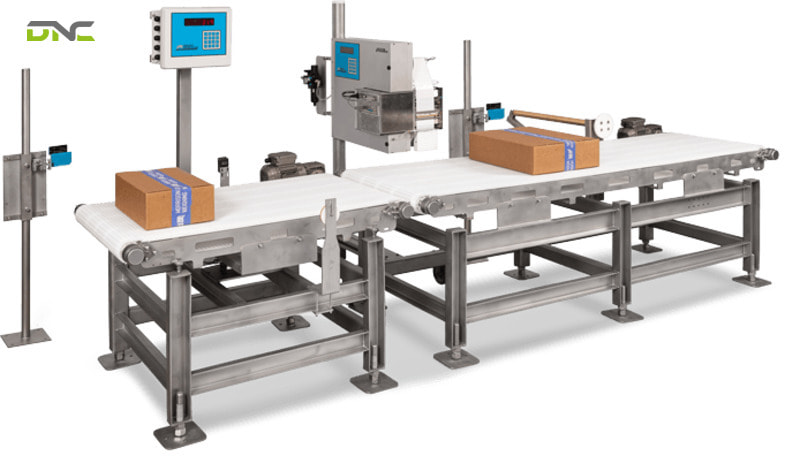
Types of Weighing Conveyor
Key Components of a Weighing Conveyor System
Every weighing conveyor system comprises six major component groups, each contributing to overall system accuracy and reliability.
Load Cells. The load cell is the accuracy-determining component of any weighing conveyor. DNC Automation specifies Laumas Italy load cells — internationally certified to OIML R60 (Organisation Internationale de Métrologie Légale) Class C3 accuracy grade, the requirement for legal-for-trade industrial weighing in Malaysia. Laumas load cells in DNC weighing conveyors are rated IP67 (submersible), temperature-compensated from 0°C to +50°C, and constructed in stainless steel for food and chemical environments. Load cell overload protection (typically rated to 150% of nominal capacity) prevents damage from shock loading during product placement.
Weighing Controller. The weighing controller (indicator/transmitter) processes load cell millivolt signals into weight units, applies digital filters, compares against target/tolerance, triggers rejection, and logs data. DNC Automation integrates Laumas Italy controllers with Modbus TCP, Ethernet/IP, and PROFINET communication interfaces for seamless PLC/SCADA integration. Controller accuracy is expressed as resolution — quality checkweigher controllers achieve 1:30,000 to 1:100,000 resolution (1 count in 30,000 to 100,000 of full scale reading).
Conveyor Belt Section. The weigh section belt must be lightweight, low-friction, and dimensionally stable to minimize tare weight variation — variation in weigh-section belt weight as it circulates is a direct source of weighing error. PVC flat belts with stainless steel frame are standard for food applications. Belt edge guides prevent belt wander that would shift the belt weight distribution on load cells.
Rejection System. Air blast rejectors (pneumatic) suit light items (up to 500g) at high speeds. Pusher paddle rejectors handle items up to 5 kg at moderate speeds. Diverter belt or pivot-table rejectors handle heavy items (5–30 kg). Rejection timing accuracy — delivering the rejection actuation within ±1–2mm of the item’s leading edge — requires precise belt speed measurement via encoder feedback.
Upstream/Downstream Conveyors. The infeed separation conveyor and outfeed accept/reject conveyors must be vibration-isolated from the weigh section to prevent mechanical disturbance of the load cells during measurement. DNC Automation uses vibration-isolating anti-vibration mounts at the weigh section frame connections for all weighing conveyor installations in environments with high-vibration machinery nearby.
Stainless Steel Enclosure. Malaysian food processing and pharmaceutical environments require IP65/IP67 rated enclosures for all control electronics, preventing water ingress during washdown cleaning. SS304 or SS316L is specified for all product-contact and washdown-exposed surfaces.
Applications: Where Weighing Conveyor Is Used in Malaysian Manufacturing
Food and Beverage — Underfill Detection and Compliance
Malaysian F&B manufacturers — including DNC clients F&N and Ramly Burger — operate under both Weights and Measures Act 1972 (minimum weight compliance for retail products) and export customer specifications. F&N beverage filling lines use dynamic checkweighers post-filling to catch underfill before labeling, avoiding both regulatory non-compliance and customer complaints. Ramly Burger patty lines use static conveyor scales to verify individual patty weight at ±1g accuracy — a prerequisite for retail SKU weight labeling compliance and export halal certification.
Pharmaceutical — Blister Pack and Bottle Verification
NPRA GMP requirements for pharmaceutical manufacturers in Malaysia specify 100% checkweighing of finished packaged products as a standard batch release requirement. Dynamic checkweighers verify blister pack weight (detecting missing tablets), bottled solid dosage weight (detecting under-count), and carton weight (verifying secondary packaging completeness). Accuracy requirements in pharma checkweighing are the most demanding in Malaysian manufacturing: ±0.1g for standard tablets, ±0.02g for high-potency drugs.
Glove Manufacturing — Carton Count Verification
Hartalega, Malaysia’s largest nitrile glove manufacturer and a DNC Automation client, uses carton weight as the proxy for glove count verification — weighing each outbound carton against the target weight for a certified count of 100 pairs. A carton that is 50g underweight contains approximately 3–4 missing gloves, a specification failure in medical and cleanroom applications. High-speed dynamic checkweighers at Hartalega’s packing lines process outbound cartons at the production line rate without becoming a throughput bottleneck.
Palm Oil — FFB Purchase and CPO Fill Verification
Palm oil is Malaysia’s largest agricultural export sector. Palm oil mills use continuous belt scales to measure fresh fruit bunch (FFB) weight at intake — the measurement that determines how much the mill pays FFB suppliers. CPO (crude palm oil) filling operations use dynamic checkweighers or static conveyor scales to verify drum fill weight against the 180 kg or 200 kg target. NIMP 2030’s push to digitize palm oil supply chain traceability includes mandatory electronic weighing data at each transfer point — a regulatory driver for new weighing conveyor investment in Malaysian palm oil operations.
E-Commerce Pre-Shipment Weight Verification
Malaysian e-commerce fulfillment operators — including those serving Lazada, Shopee, and cross-border logistics to Singapore and Indonesia through Johor — use pre-shipment weighing conveyors for dimensional weight calculation (chargeable weight in air freight is the greater of actual weight or dimensional weight). Accurate pre-shipment weighing prevents overbilling disputes and carrier surcharges.
Benefits of Weighing Conveyor for Factory Operations
Revenue Protection at Scale. A 0.5% weighing error on a high-volume production line generates compounding revenue loss. At 100 TPH palm oil throughput, a 0.5% overweight error means 0.5 tonnes per hour given away free — RM 350–450/hr at current CPO prices. Over a two-shift operating day (16 hours), this is RM 5,600–7,200 per day, or RM 1.6–2.0M per year. A Laumas-certified weighing conveyor from DNC Automation, properly calibrated and maintained, pays back its capital cost in less than 6 months in high-throughput applications.
Regulatory Compliance. Malaysia’s Weights and Measures Act 1972 mandates minimum weight compliance for pre-packaged products sold by weight. Export shipments face buyer-specified accuracy requirements and potential rejection of entire containers for weight non-compliance. DNC Automation’s weighing conveyors provide legally traceable weight records for every production batch, eliminating compliance risk.
Productivity Without Inspection Labor. Manual weight sampling — a common practice in Malaysian factories that have not automated checkweighing — inspects 0.5–2% of production. Dynamic checkweighers inspect 100% of production at line speed, increasing detection probability from near-zero (manual sampling) to effectively 100%, while simultaneously eliminating the labor cost of manual inspection. DNC Automation data shows 50% productivity increase on lines that replace manual sampling with automated inline checkweighing.
DNC + Laumas Advantage. DNC Automation is the authorized Malaysian partner for Laumas Italy industrial weighing systems — a partnership that delivers factory-calibrated accuracy, local technical support, and certified calibration traceable to international standards. No other Malaysian automation company offers this combination of Laumas weighing system expertise and full production line integration capability.
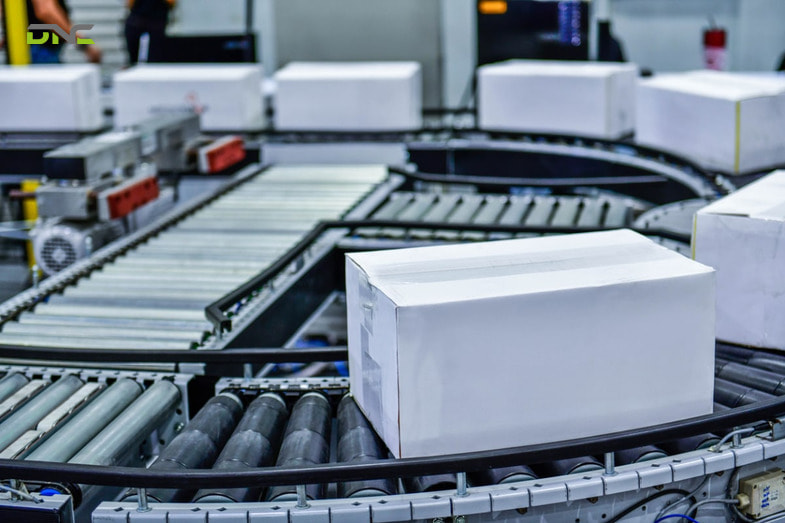
Benefits of Weighing Conveyor for Factory Operations
How to Choose the Right Weighing Conveyor for Your Factory
- Define Required Accuracy vs. Throughput Trade-off. Accuracy and throughput are the fundamental trade-off in dynamic weighing. Higher throughput requires faster belt speed, which reduces the time each item spends on the weigh section, which reduces available signal averaging time, which reduces accuracy. DNC Automation’s weighing conveyor specification begins by mapping the client’s throughput requirement against their accuracy requirement to identify the feasible operating zone before selecting specific equipment.
- Product Characteristics. Shape, size, and surface characteristics of the product determine infeed separation settings, weigh section length, and rejection mechanism type. Unstable products (tall, narrow, round) may require stabilizing side guides or top-hold-down conveyor to prevent tipping on the weigh section.
- Environment and Hygiene. Food processing and pharmaceutical environments require SS304/316L construction, IP65/67 rating, and CIP/washdown compatibility. Dusty or outdoor environments (palm oil, cement) require IP65/67 minimum with additional dust protection for load cell connections.
- Legal vs. Non-Legal Trade. Weighing conveyors used for trade (export billing, purchase billing) require OIML-certified load cells and annual calibration to Malaysian Weights and Measures Act 1972. Weighing conveyors used only for internal process control (recipe dosing, batch monitoring) do not require legal-for-trade certification — but DNC Automation recommends OIML-certified cells in all applications to maintain upgrade flexibility.
- Integration Requirements. Define data output requirements (Modbus, Ethernet/IP, OPC-UA, serial) and reject tracking requirements (downstream divert track, barcode linking) before specifying the controller. DNC Automation’s Siemens + Laumas integration platform supports all major industrial communication protocols in use at Malaysian manufacturing sites.
Frequently Asked Questions About Weighing Conveyor
Q: What is the difference between a weighing conveyor and a checkweigher?
A weighing conveyor is the broader category — any conveyor that incorporates weight measurement capability. A checkweigher is a specific type of weighing conveyor designed for high-speed, high-accuracy individual item weight verification with automatic rejection. All checkweighers are weighing conveyors; not all weighing conveyors are checkweighers. Continuous belt scales and loss-in-weight feeders are weighing conveyors that do not perform individual item checkweighing.
Q: What accuracy can a weighing conveyor achieve in Malaysian factory conditions?
Dynamic checkweigher accuracy in Malaysian factory environments — with proper vibration isolation and temperature stability — reaches ±0.5g at 120 items/min on well-designed systems. Pharmaceutical systems achieve ±0.1g at 60 items/min. Continuous belt scales achieve ±0.25% of instantaneous rate under steady flow conditions. DNC Automation conducts on-site vibration and environmental assessment before specifying weighing conveyor accuracy claims — because factory floor vibration from nearby machinery is the most common accuracy-degrading factor in real installations.
Q: What legal requirements apply to weighing conveyors in Malaysia?
Weighing conveyors used for legal trade (including export billing, purchase billing for raw materials, and retail product weight claims) must comply with the Weights and Measures Act 1972 and Weights and Measures Regulations 1981, administered by the Domestic Trade and Consumer Affairs Ministry (KPDNHEP). Requirements include: load cells calibrated to OIML Class III minimum (OIML Class C3 preferred for high accuracy), annual calibration by an accredited service provider, and calibration records retained for 3 years. SIRIM provides type approval for weighing equipment in Malaysia; DNC Automation’s Laumas-based weighing conveyors carry SIRIM type approval documentation.
Q: How does a continuous belt scale work in a palm oil mill?
A continuous belt scale in a palm oil mill FFB receiving station uses weigh idlers — standard conveyor idler frames with load cells replacing the conventional bearing supports — mounted under a 3–5m section of the main FFB receiving conveyor. The load cells measure the total weight of belt plus material on the weigh section. A belt speed sensor (tachometer on a tail pulley or a separate speed wheel) measures belt velocity in real time. The controller multiplies belt load (kg/m) by belt speed (m/min) to compute instantaneous tonnes per minute (TPM), which it converts to tonnes per hour (TPH) and integrates to total tonnes for shift production reporting. Calibration is performed using hanging test weights (simulated load) or direct comparison to truck weigh bridge data.
Q: Can a weighing conveyor integrate with our ERP system?
Weighing conveyor data integration with ERP systems (SAP, Oracle, Microsoft Dynamics) is standard for DNC Automation weighing conveyor installations. The Laumas controller outputs data via Ethernet/IP or Modbus TCP to a DNC-supplied data gateway, which translates weight events (item ID, weight, timestamp, accept/reject) into the ERP’s expected data format. Integration with SAP Production Order confirmations — automatically booking actual batch weight against planned batch weight — is operational at several DNC client sites. DNC Automation’s software team handles the ERP integration layer as part of the project scope.
Q: What is the typical ROI period for a weighing conveyor investment in Malaysia?
ROI period depends on the application. For palm oil TPH billing correction (0.5% error correction), payback is typically 3–6 months. For F&B underfill reduction (reducing give-away from ±3% to ±0.5% of product weight), payback is 6–18 months depending on product value. For replacing manual sampling with 100% inline inspection, the labor cost saving alone often delivers 12–24 month payback. DNC Automation prepares detailed ROI calculations for each client before investment — including consideration of SAG Grant (70:30 matching, up to RM 1M), which can reduce the client’s capital contribution to 30% of the total system cost.
Q: What is the minimum production speed that justifies a dynamic checkweigher?
Dynamic checkweighers are economically justified at production speeds above 20–30 items per minute where manual sampling cannot maintain statistically adequate coverage. Below 20 items/minute, a static conveyor scale (stop-and-weigh) achieves higher accuracy at lower cost. Above 30 items/minute, the dynamic checkweigher’s 100% inspection capability versus manual sampling’s 1–2% coverage provides both superior quality control and labor cost reduction that typically justifies the investment. DNC Automation presents both static and dynamic options to clients in the 20–40 items/minute zone, with total lifecycle cost comparison guiding the final recommendation.
Conclusion
Weighing conveyors are the revenue protection and quality compliance infrastructure that Malaysian manufacturers operating in F&B, pharmaceuticals, palm oil, glove manufacturing, and e-commerce cannot afford to operate without. From the RM 175,000 annual scale error loss in a palm oil mill to the NPRA compliance risk of pharmaceutical blister packs with missing tablets, the financial and regulatory case for weighing conveyor investment is quantifiable and compelling.
DNC Automation — Malaysia’s Top #1 Factory Automation Company since 2005 — delivers weighing conveyor systems through its exclusive Malaysian partnership with Laumas Italy, backed by 35 engineers, ISO 9001:2015 certification, and a 25,000 sq ft engineering facility capable of designing, fabricating, and commissioning complete inline weighing systems for any production environment.
Get a Free Consultation — Talk to Our Engineers at dnc-automation.com. Let DNC Automation calculate your factory’s weighing error cost and specify the weighing conveyor system that eliminates it.
- 153 views
- 0 Comment
Recent Comments