


Shaftless Screw Conveyor: Design, Applications, and Comparison with Shafted Screw Conveyors
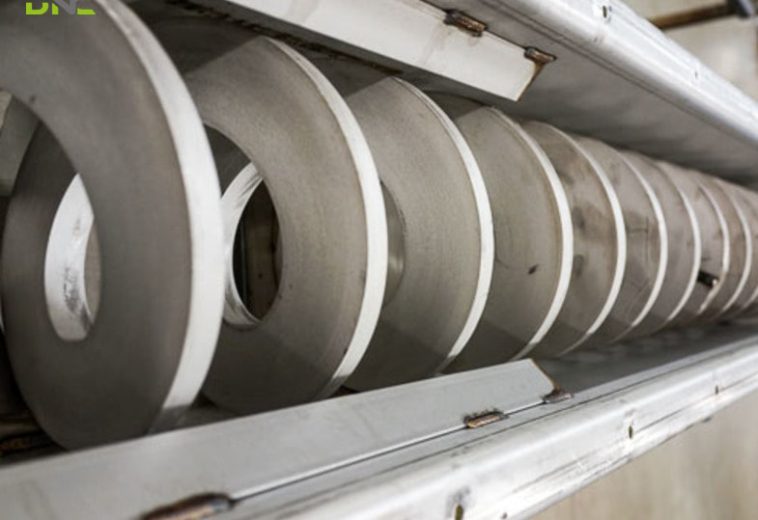
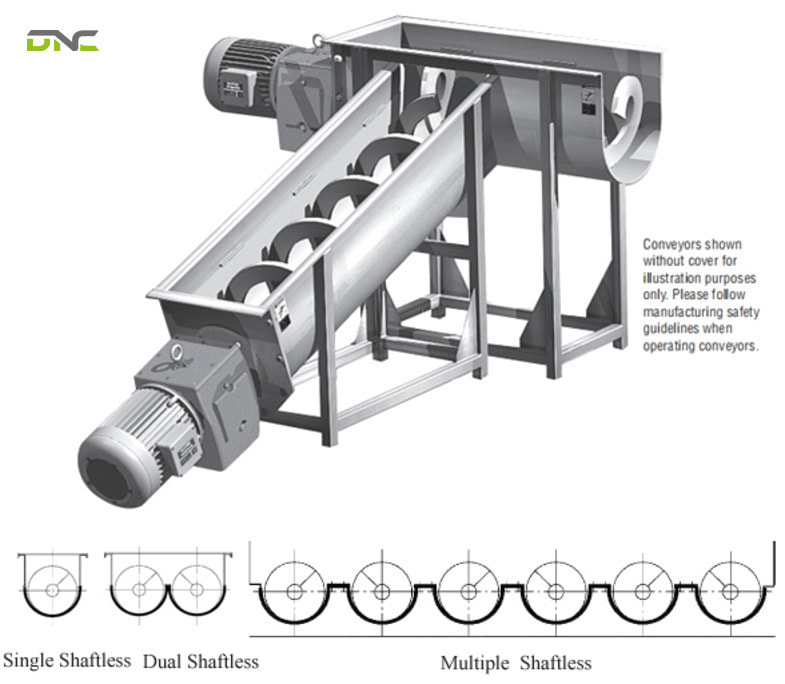
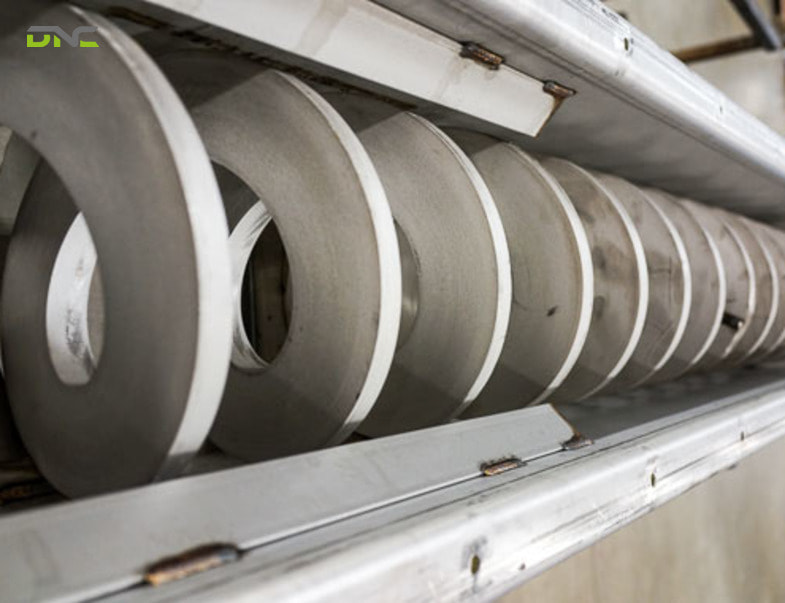
A shaftless screw conveyor (also called shaftless spiral conveyor) moves bulk materials through a trough using a rotating spiral — a continuous helix with no central pipe or shaft. Unlike conventional shafted screw conveyors, where the helix is welded to a central pipe running on intermediate hanger bearings, the shaftless spiral is a self-supporting structure that contacts only the trough liner. The elimination of the center shaft removes the primary cause of clogging and jamming in screw conveyors handling sticky, stringy, wet, or fibrous materials.
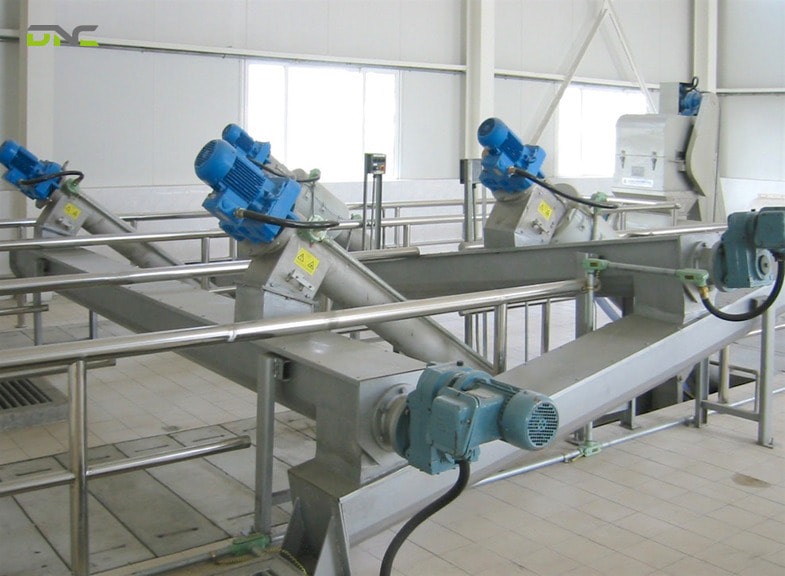
In Malaysian industry, shaftless screw conveyors handle materials that would quickly jam a shafted screw conveyor: dewatered sludge at wastewater treatment plants (IWK, Indah Water Konsortium), wet EFB fibre at palm oil mills, food waste and by-products at food processing facilities, and wet biomass at biogas plants.
Shaftless vs. Shafted Screw Conveyor: The Critical Difference
The center shaft in a conventional screw conveyor creates two problems with difficult materials:
Problem 1 — Material bridging: Sticky, cohesive materials (wet sludge, food waste, dough) adhere to the center shaft. As the helix rotates, material builds up on the shaft between flights, reducing the effective conveying cross-section and eventually jamming the conveyor.
Problem 2 — Intermediate hanger bearing failure: Long shafted screw conveyors require intermediate hanger bearings every 3–3.5 m to support the shaft. These bearings are exposed to the conveyed material — abrasive, wet, and potentially corrosive. Bearing failure is the number-one maintenance issue with shafted screw conveyors handling wet or contaminated materials.
Shaftless design eliminates both problems: With no center shaft, there is no surface for material to adhere to. The spiral simply rotates freely inside the trough liner, with the outer helix edge in contact with the UHMWPE liner. No intermediate bearings. The spiral is driven at one end only — the drive end — through a sealed gearbox. The far end of the spiral runs free (no bearing required).
This single design change transforms a problematic conveying application into a reliable one.
Shaftless Screw Conveyor Design
Shaftless Screw Conveyor Design
The Spiral
The spiral is a flat steel bar (30–80 mm wide, 8–20 mm thick) rolled into a continuous helix. The bar is joined at each end by welding to a torque transfer hub at the drive end and a wear-resistant end plate at the discharge end.
Material: Carbon steel (standard); SS304 or SS316 (food, pharma, and corrosive applications); hardened alloy steel (highly abrasive materials).
Pitch: The axial distance between one full helix turn. Standard pitch = approximately 0.8× spiral diameter. Longer pitch increases throughput at the same RPM; shorter pitch reduces speed and increases torque for sticky materials.
Spiral diameter: The key size parameter. Determines capacity, torque, and material compatibility:
- 125 mm (5″): Light duty, small volumes (0.1–5 m³/h)
- 200 mm (8″): Medium duty (5–30 m³/h)
- 315 mm (12″): Standard (20–100 m³/h)
- 400 mm (16″): High capacity (50–200 m³/h)
- 500 mm (20″): Maximum standard (100–300 m³/h)
The Trough
The U-shaped or tube trough contains the spiral. The interior is lined with UHMWPE (ultra-high molecular weight polyethylene) wear strips — providing low friction between the spiral outer edge and the trough, and replacing the sacrificial wear liner as the primary wear element.
UHMWPE liner advantages: Very low coefficient of friction (μ = 0.1–0.15 vs. 0.3+ for steel-on-steel); self-lubricating; replaceable (slide out and replace, no welding); food-grade compliant.
Trough material: Carbon steel (painted or galvanised) for general industrial; SS304 for food and pharma; SS316 for chloride or chemical environments.
Drive System
A helical bevel gearmotor drives the spiral through a sealed, direct-coupled drive. Because there is no center shaft to align, drive coupling is simpler than shafted screw conveyors.
Drive power: Higher than equivalent shafted screw conveyors for the same capacity — the spiral’s rolling contact with the trough liner creates more friction than the shaft-bearing arrangement in shafted conveyors. Expect 20–40% higher motor power for shaftless vs. shafted for the same throughput.
Speed: Typically 20–80 RPM. Lower speed = higher torque = better handling of sticky or fibrous materials. Higher speed = higher throughput but shorter UHMWPE liner life.
Capacity Calculation
Volumetric capacity:
Q (m³/h) = (π/4) × D² × p × n × η × 60
Where:
- D = spiral diameter (m)
- p = pitch (m) — typically 0.8× D
- n = rotation speed (RPM)
- η = volumetric fill factor (0.25–0.45 for shaftless, higher than shafted because no center shaft occupies space)
Example: 315 mm spiral, 250 mm pitch, 40 RPM, η = 0.35:
Q = (π/4) × 0.315² × 0.25 × 40 × 0.35 × 60 = 32.6 m³/h
Maximum conveyor length: Shaftless screw conveyors are limited by the spiral’s torque capacity (not the shaft’s bending strength, as in shafted conveyors). Maximum practical length: 15–25 m for standard diameters; up to 40 m for large diameter spirals with high-torque drives.
For longer distances, use multiple short conveyors in series with intermediate hoppers.
Shaftless vs. Shafted Screw Conveyor: The Critical Difference
Material Suitability
Highly Suitable (Shaftless Excels)
- Dewatered municipal sludge (25–35% dry solids): The classic shaftless application. Sticky, cohesive, stringy with rag content — would jam a shafted conveyor within hours.
- Wet food waste: Restaurant waste, food processing residuals, fruit pomace, spent grain. Fibrous and wet.
- EFB fibre (palm oil processing): After pressing, EFB fibre is wet (>60% moisture), fibrous, and tangled — shafted conveyors clog.
- Dough and wet bakery waste: Too cohesive for shafted conveyors.
- Screenings and rags (from wastewater screens): The most difficult screw conveyor application — shaftless is the only viable option.
Suitable (Shaftless Works, Shafted Also Works)
- Moist grain, feed ingredients, animal manure, compost, wood chips.
Not Suitable (Use Shafted Screw Conveyor)
- Dry, free-flowing granular materials (grain, pellets, powder) — shafted conveyors are more efficient and lower cost for these applications.
- Very hot materials (>250°C) — UHMWPE liner degrades above 80–100°C continuous; shafted conveyors handle higher temperatures with metal trough liners.
- Very abrasive dry materials (silica sand, mineral aggregate) — rapid UHMWPE liner wear; shafted with AR steel trough is more cost-effective.
Shaftless vs. Shafted Screw Conveyor Comparison
| Parameter | Shaftless | Shafted |
| Center shaft/pipe | No | Yes |
| Intermediate bearings | None | Every 3–3.5 m |
| Material suitability | Sticky, stringy, fibrous, wet | Free-flowing, granular, dry |
| Maximum length | 15–25 m | 30–50 m |
| Maximum temperature | 120°C (UHMWPE liner limit) | 400°C+ (metal liner) |
| Capacity (same diameter) | Higher (no shaft taking space) | Lower |
| Drive power | 20–40% higher | Lower |
| Cost | 2–3× higher | Lower |
| Maintenance (wet materials) | Very low (no hanger bearings) | High (hanger bearing failures) |
| Liner replacement | Easy (UHMWPE slide-out) | Requires welding or machining |
Decision rule: If material is sticky, wet, fibrous, or contains stringy contaminants → shaftless. If material is dry and free-flowing → shafted (lower cost, simpler).
Applications in Malaysia
Wastewater Treatment (IWK, Indah Water Konsortium)
Malaysia’s 120+ sewage treatment plants and thousands of industrial effluent treatment plants generate dewatered sludge that must be conveyed from centrifuge or belt press discharge to transport containers or biogas digesters. Shaftless screw conveyors are the standard specification for sludge handling — handling sludge at 25–35% dry solids without clogging.
IWK’s privatised sewage treatment network across Peninsular Malaysia specifies shaftless screw conveyors for sludge transfer at plants from 1 MLD (small) to 100+ MLD (regional plants in Klang Valley).
Palm Oil Processing
EFB after pressing contains 60–70% moisture and tangled fibre strands — a material that jams shafted screw conveyors rapidly. Shaftless screw conveyors at palm oil mills transfer wet EFB from press discharge to EFB biogas digesters, composting pads, or pelletising infeed.
Malaysian palm oil mills (Felda, Sime Darby, IOI, Kuala Lumpur Kepong) increasingly specify shaftless screw conveyors for EFB handling as mills add biogas and EFB utilisation systems under Malaysia’s Renewable Energy policy.
Food Processing Waste
Food processing by-products — fruit pomace, vegetable trimmings, spent grain from breweries (Carlsberg, Heineken), press cake from palm kernel processing — are wet and fibrous. Shaftless screw conveyors at food factories convey these by-products from process equipment discharge to waste collection or biogas plant infeed.
Municipal Solid Waste (MSW)
MSW processing facilities (landfill diversion, composting, RDF preparation) use shaftless screw conveyors for wet organics, compost, and digestate handling — all sticky, fibrous materials unsuitable for shafted conveyors.
Wastewater Treatment (IWK, Indah Water Konsortium)
Maintenance Schedule
Shaftless screw conveyors have substantially lower maintenance requirements than shafted conveyors for wet material handling:
Weekly: Check drive gearbox oil temperature (over-temperature indicates overload); inspect spiral outer edge for wear (look for flat spots or missing metal on helix edge).
Monthly: Inspect UHMWPE trough liner for wear grooves — replace individual liner sections when wear depth exceeds 50% of liner thickness (typically 12–20 mm original thickness; replace at 6–10 mm remaining). Check drive coupling for play.
Quarterly: Gearbox oil sample analysis for metal content (indicates gear wear); check end seal for leakage; inspect discharge end plate for wear.
Annual: Full gearbox oil change; drive motor bearing inspection; trough body inspection for corrosion (critical in wastewater and food environments).
DNC Automation’s Shaftless Screw Conveyor Solutions
DNC Automation supplies and integrates shaftless screw conveyor systems for Malaysian wastewater treatment, palm oil processing, and food industry applications.
Engineering scope: Capacity sizing, material assessment, spiral diameter and speed selection, drive power calculation, SS304/SS316 frame fabrication, UHMWPE liner supply, gearmotor integration with Siemens PLC control and overload protection.
Compliance documentation: DOSH machinery registration for large systems; material certificates for stainless steel and food-grade components; IWK/DOE compliance documentation for wastewater treatment plant equipment.
Contact DNC Automation for shaftless screw conveyor proposals and material suitability assessment.
Summary
Shaftless screw conveyors solve the clogging and hanger bearing failure problems that make shafted screw conveyors unreliable for sticky, fibrous, and wet bulk materials. By eliminating the center shaft and intermediate bearings, shaftless conveyors handle dewatered sludge, EFB fibre, food waste, and wet biomass that would stop a shafted conveyor within hours. The trade-off is higher cost (2–3×), higher drive power, and shorter maximum length — acceptable when the alternative is constant maintenance downtime. For Malaysian wastewater treatment, palm oil, and food processing facilities, shaftless screw conveyors are the correct tool for the specific materials they encounter.
- 192 views
- 0 Comment
Recent Comments