


Carton Sealing Machine | DNC Automation Malaysia
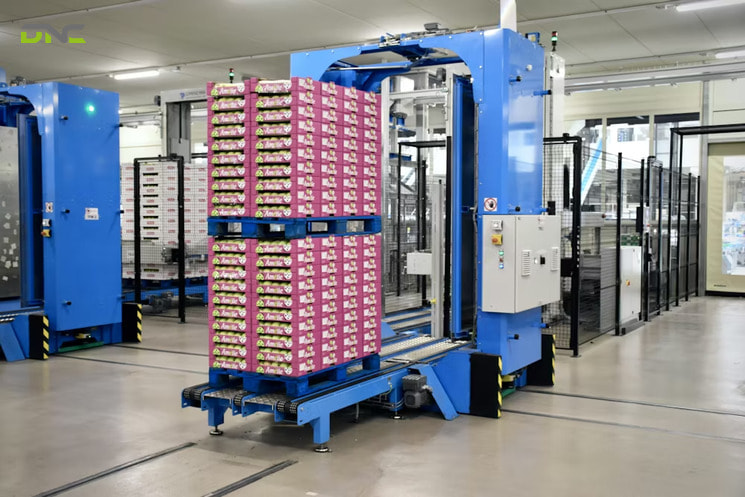
Carton sealing machines secure finished product boxes at the final stage of every production line — and the wrong choice costs Malaysian manufacturers far more than the machine itself. Mismatched sealing speed creates upstream bottlenecks. Incorrect tape width causes field rejections. A semi-automatic unit on a high-volume line means six additional workers per shift. The decision matters.
This guide covers every carton sealer type available in Malaysia, the technical criteria that separate adequate machines from optimal ones, and the operational context Malaysian manufacturers must factor in before specifying any box sealing machine.
What Is a Carton Sealing Machine?
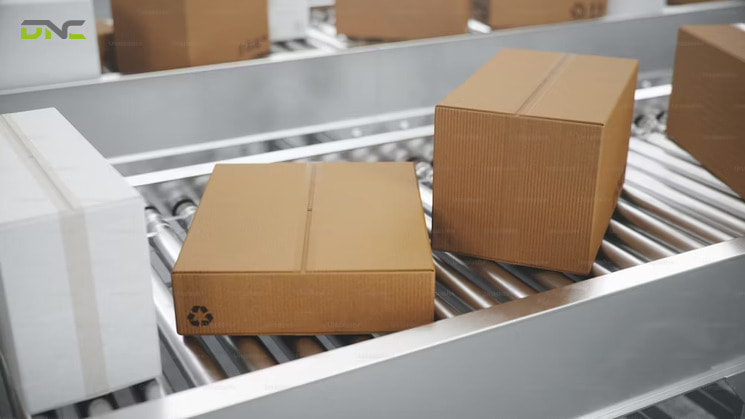
A carton sealing machine — also called a carton sealer, box sealing machine, or case sealing machine — applies adhesive tape or hot melt glue to the top and bottom flaps of a corrugated cardboard box after product loading. The sealed carton then moves downstream to palletizing, labelling, or direct shipment.
Carton sealers sit at the intersection of packaging and logistics. Every corrugated box that leaves a Malaysian factory — from glove manufacturing in Meru to food processing in Shah Alam — passes through one. Their throughput directly determines your end-of-line capacity.
Three variables define every carton sealing machine: sealing method, adjustment mode, and automation level. Getting these three right means the machine integrates cleanly into your existing production line. Getting them wrong means retrofitting, downtime, and accelerated component wear.
Types of Carton Sealing Machines
Semi-Automatic Uniform Carton Sealer
Semi-automatic uniform carton sealers handle boxes of a fixed, predetermined size. An operator places each carton manually into the machine infeed; the machine then folds the top flaps and applies tape via a top-and-bottom taping head. The “uniform” designation means box dimensions are preset — the sealing head does not self-adjust.
Application fit: Low-to-medium volume lines producing a single SKU in consistent carton sizes. Common in Malaysian pharmaceutical secondary packaging and small-batch F&B operations where carton size rarely changes.
Throughput range: 8–20 cartons per minute depending on operator placement speed and box dimensions.
Key specification to verify: Tape head compatibility. Most semi-automatic uniform sealers accept standard 2-inch or 3-inch pressure-sensitive tape. Confirm the taping head brand before committing — tape sourcing costs compound over machine lifetime.
Labour implication: One operator per machine. At Malaysia’s current minimum wage structure and with ongoing wage increase trajectories, a single operator position on a two-shift operation represents approximately RM 80,000–120,000 in annual labour cost including EPF and SOCSO contributions.
Semi-Automatic Random Carton Sealer
Semi-automatic random carton sealers add self-adjustment capability. The machine senses each incoming carton’s height and width, then automatically repositions the taping head to match. Operators still load cartons manually, but the machine accommodates multiple carton sizes without mechanical changeover.
Application fit: Operations with 3–8 carton size variants processed on the same line within a shift. E-commerce fulfilment operations in Selangor and distribution centres handling mixed SKU shipments benefit most from this configuration.
Throughput range: 6–15 cartons per minute (slightly lower than uniform due to the self-adjustment cycle time).
Maintenance consideration: The self-adjustment mechanism — typically a servo-driven or pneumatic width adjustment system — adds mechanical complexity. Factor in quarterly calibration checks and annual belt drive inspection into your total cost of ownership.
Fully Automatic Uniform Carton Sealing Machine
Fully automatic uniform carton sealers operate without operator intervention at the sealing station. Cartons travel via conveyor infeed, are folded, sealed, and discharged — continuously. The machine integrates directly with upstream case packing equipment and downstream palletizers.
Application fit: High-volume single-SKU production lines running 20+ cartons per minute. Malaysian glove manufacturers, edible oil producers, and FMCG companies with dedicated production lines for flagship SKUs operate this configuration.
Throughput range: 20–60 cartons per minute depending on box dimensions and tape application speed.
Integration requirement: Fully automatic uniform sealers require upstream carton erectors or case packers with matched discharge conveyor height and speed. Mismatched conveyor speeds cause carton misalignment at the infeed — the most common commissioning issue DNC Automation engineers encounter on new installations.
DNC implementation note: DNC Automation’s 35+ engineering team handles conveyor speed synchronisation, infeed guide adjustment, and PLC integration between the carton sealer and upstream equipment as part of every turnkey installation. Manufacturers who source the sealer separately from the line integration typically spend 2–4 additional weeks resolving synchronisation issues post-installation.
Fully Automatic Random Carton Sealing Machine
Fully automatic random carton sealers combine high-speed operation with multi-size adaptability. Carton height and width are detected via sensor — mechanical or laser — and the sealing head adjusts automatically mid-line without stopping production. This is the highest-specification carton sealer type and commands a correspondingly higher capital cost.
Application fit: High-volume mixed-SKU operations. Supermarkets and retail chains’ distribution centres, large e-commerce fulfilment hubs, and contract packaging facilities handling multiple client SKUs simultaneously.
Throughput range: 15–40 cartons per minute across mixed sizes.
ROI trigger point: The fully automatic random sealer justifies its capital premium when mixed-SKU production volume exceeds 800 cartons per shift. Below that threshold, the semi-automatic random sealer typically delivers better payback period.
Hot Melt Glue Carton Sealing Machine
Hot melt glue carton sealers replace pressure-sensitive tape entirely with adhesive glue applied via heated nozzles. The glue bonds carton flaps in under 2 seconds and sets as the carton moves downstream. This sealing method is irreversible — the bond cannot be reopened without destroying the carton — which makes it appropriate for tamper-evident packaging requirements.
Application fit: Food packaging where tape residue contamination is a concern, pharmaceutical cartons requiring tamper evidence, and high-humidity environments where tape adhesion degrades. Malaysian food manufacturers exporting to halal-certified markets increasingly specify hot melt sealing to avoid tape-related contamination queries.
Technical requirement: Hot melt glue systems require consistent glue temperature (typically 160–180°C), clean nozzle maintenance, and appropriate glue formulation for the corrugated board grade. DNC Automation specifies and commissions hot melt systems including glue tank sizing, temperature control integration, and preventive maintenance schedules.
Energy consideration: Hot melt systems consume additional energy for glue heating — typically 2–4 kW per glue unit. Factor this into facility power load calculations, particularly for Selangor and Penang facilities where industrial electricity tariffs apply.
Hot Melt Glue Carton Sealing Machine
Key Selection Criteria for Malaysian Manufacturers
1. Production Volume and Throughput Requirement
Calculate your required cartons-per-minute rate before specifying any sealer:
Formula: (Daily carton output ÷ Production hours per day ÷ 60) × 1.25 safety factor = minimum required CPM
Example: 4,800 cartons/day ÷ 8 hours ÷ 60 minutes × 1.25 = 12.5 CPM minimum
Malaysian manufacturers frequently underspecify throughput, purchasing machines rated at exact production requirements with no headroom. Any upstream line speed increase — a common outcome of workforce reduction through automation — immediately creates a sealer bottleneck.
2. Carton Size Range and Variability
Document every carton size currently in production. Measure:
- Minimum and maximum length, width, height
- Frequency of size changeover per shift
If you run more than two carton sizes per shift, a uniform machine requires manual adjustment between sizes — typically 10–15 minutes of downtime per changeover. On a three-shift operation running five SKUs, that accumulates to 2.5+ hours of lost sealing capacity daily.
3. Sealing Method vs. End-Market Requirements
| Export Market | Preferred Sealing | Reason |
| Middle East (Halal) | Hot melt glue | No tape residue risk |
| Japan / South Korea | Pressure-sensitive tape | Preference for clean carton aesthetics |
| Domestic retail | Either | No specific requirement |
| Cold chain | Hot melt or water-activated tape | Standard tape fails in condensing humidity |
Malaysian manufacturers exporting to multiple markets often run separate sealing configurations for domestic vs. export lines.
4. Integration with Existing Production Line
A carton sealing machine does not operate in isolation. Verify:
- Conveyor height compatibility — standard discharge height is 750–900 mm. Mismatches require custom conveyor risers.
- Upstream equipment discharge speed — the sealer infeed must match the case packer or packing table output rate.
- Downstream equipment infeed — if feeding a palletizer or labelling machine, the sealer’s discharge speed and carton orientation must match.
- Control system integration — does the sealer communicate with your line PLC? Emergency stop circuits must be wired into the facility safety network.
5. Maintenance Infrastructure
Carton sealing machines in Malaysian manufacturing environments face specific maintenance challenges:
- Humidity: High ambient humidity in coastal Selangor and Penang facilities accelerates belt drive wear and taping head corrosion.
- Dust: Corrugated cardboard generates paper dust that accumulates in taping head guides and sensor optics.
- Shift pattern: Three-shift operations running 20+ hours/day require machines rated for continuous duty cycles, not 8-hour rated equipment.
Verify spare parts availability in Malaysia before purchasing. A taping head that requires 6-week lead time from the OEM creates unacceptable downtime risk on a production-critical line.
Carton Sealer Specifications: What to Verify Before Purchase
| Specification | What to Ask | Why It Matters |
| Max carton speed | Cartons per minute (CPM) at your carton dimensions | Throughput headroom |
| Box size range | Min/max L × W × H | Compatibility with your SKU range |
| Tape width | 2-inch or 3-inch | Tape sourcing and bond strength |
| Adjustment type | Manual, semi-auto, auto | Changeover time |
| Drive type | Belt, roller, chain | Maintenance frequency |
| Power supply | Single phase vs. 3-phase | Malaysian facility electrical compatibility |
| Sealing head brand | Which OEM? | Spare parts availability |
| Control interface | Manual, PLC, HMI touchscreen | Integration capability |
| Frame construction | Carbon steel vs. stainless | Hygiene requirements for food/pharma |
Industry Applications in Malaysian Manufacturing
Food and Beverage
Malaysian F&B manufacturers — from palm oil producers in Johor to beverage fillers in Selangor — seal cartons at rates between 15 and 45 CPM on high-volume lines. Key requirements: food-grade frame construction (stainless steel contact surfaces), hot melt compatibility for halal export lines, and IP54 or higher rating for wash-down areas.
DNC Automation has integrated carton sealing systems into F&B production lines where sealer uptime directly determines daily output. On a line producing 30,000 cartons per day, every hour of sealer downtime costs approximately RM 8,000–15,000 in lost throughput depending on product margin.
Pharmaceutical
Pharmaceutical secondary packaging lines in Malaysia — producing export cartons for OTC products, supplements, and medical devices — require carton sealers with tamper-evident sealing, GMP-compliant frame construction, and integration with upstream vision inspection systems. Hot melt glue sealing is increasingly specified for pharmaceutical applications where tape contamination poses product integrity risk.
Warehouse and Distribution
Distribution centres in Selangor’s logistics corridors (Shah Alam, Puchong, Klang) handle mixed-SKU carton sealing for retail and e-commerce order fulfilment. Fully automatic random carton sealers handle the size variability inherent in order fulfilment; their self-adjustment capability eliminates the manual changeover downtime that makes uniform sealers impractical in this environment.
E-Commerce and Retail
Malaysian e-commerce fulfilment — growing at double-digit rates driven by Shopee and Lazada volume — demands carton sealers that handle small parcel sizes (as small as 150 mm × 150 mm × 100 mm) reliably. Standard industrial carton sealers are often oversized for small parcel operations; the correct specification depends on the specific parcel size distribution in your operation.
ROI Framework: Calculating Payback Period on a Carton Sealer Upgrade
A Malaysian manufacturer upgrading from manual taping to a semi-automatic carton sealer at RM 25,000–45,000 investment typically achieves payback within 8–18 months through labour cost reduction alone.
Sample calculation (single-shift operation, one product line):
| Cost Item | Manual Taping | Semi-Auto Sealer |
| Operators required | 2 | 1 |
| Annual labour cost | RM 84,000 | RM 42,000 |
| Labour saving/year | — | RM 42,000 |
| Machine investment | — | RM 35,000 |
| Simple payback | — | 10 months |
This calculation excludes secondary benefits: reduced rework from inconsistent manual taping, lower worker injury risk (repetitive strain from manual taping is a documented Malaysian workplace safety concern), and the ability to redeploy operators to higher-value tasks.
For fully automatic carton sealers at RM 80,000–200,000 investment, the payback calculation must include throughput increase value — the additional production capacity unlocked by removing the sealing bottleneck from the line.
Malaysia’s NIMP 2030 industrial automation agenda includes grant programmes for manufacturers investing in packaging automation. DNC Automation assists clients in identifying applicable MIDA and SME Corp incentives during the project scoping phase.
Industry Applications in Malaysian Manufacturing
Carton Sealer vs Case Sealer: Terminology in Malaysian Manufacturing
Malaysian procurement teams and plant managers use “carton sealer” and “case sealer” interchangeably — and in most practical contexts, the terms describe the same machine category. Both refer to equipment that closes and seals the top and bottom flaps of a corrugated box using tape or hot melt adhesive.
The distinction that does exist is contextual rather than technical: “carton” typically implies lighter-weight secondary packaging (printed cartons used for consumer retail products), while “case” implies heavier corrugated transit cases (brown board, unprinted, used for distribution). In practice, most carton sealing machines and case sealers use identical mechanical principles — the same taping head, the same belt drive conveyor, the same flap folder guides. A machine sold as a “carton sealer” in a pharmaceutical context is mechanically identical to one sold as a “case sealer” in a logistics context if their specifications match.
DNC Automation engineers the correct machine specification based on your actual carton dimensions, throughput requirement, and integration context — not based on which label the product category carries.
Corrugated Board Grades and Their Impact on Carton Sealer Selection
The corrugated board grade of your cartons directly affects which carton sealing machine settings work correctly on your line. Malaysian manufacturers often purchase the cheapest corrugated board available without understanding how board grade variation affects sealing machine performance.
Single-wall C-flute (the Malaysian standard): The most common corrugated board in Malaysian manufacturing. C-flute provides the right balance of cushioning and stiffness for most ambient-temperature product shipment. Standard carton sealers are calibrated for C-flute as the baseline.
Single-wall B-flute: Smaller flute profile, thinner board. Used for lightweight products or where carton height must be minimised. B-flute cartons require tighter flap folder guide spacing than C-flute — a carton sealer set for C-flute will leave a visible gap at the flap fold point on B-flute board.
Double-wall BC-flute: Heavy products requiring additional crush resistance use double-wall board. BC-flute cartons are significantly stiffer than single-wall, requiring higher force at the flap folding guides. Not all carton sealing machines are rated for double-wall board — verify the machine’s maximum board thickness specification before purchasing for double-wall applications.
Board gram weight: Malaysian corrugated board is specified in grams per square meter (GSM) for the facing papers. Low-GSM facing (under 100 GSM) tears more easily under taping head pressure and has lower peel adhesion for tape. Premium export cartons use 125–150 GSM facing for reliable tape adhesion and better printing quality.
Impact on tape selection: Tape adhesion depends on the carton surface — smooth-faced, well-calendered board adheres better to acrylic tape than rough or recycled-content board. If your tape consistently lifts at the edges within 24 hours of application, the problem is usually board surface quality, not the tape itself.
Malaysian Carton Sealing Market: Competitive Landscape and DNC Positioning
The Malaysian market for carton sealing machines includes local distributors representing Chinese and Taiwanese machine brands, regional distributors for European and Japanese OEMs, and local machine builders producing semi-automatic equipment for SME manufacturers.
Local distributors (operating in Selangor’s Puchong, Shah Alam, and Balakong areas) offer semi-automatic carton sealers at RM 5,000–25,000 from Chinese manufacturers. These machines are adequate for low-volume, single-shift operations — but they typically lack the mechanical robustness, spare parts availability, and integration capability required for high-volume Malaysian manufacturing environments.
DNC Automation’s carton sealing positioning differs from local distributors in three ways: engineering integration scope (DNC engineers the complete line interface, not just the machine sale), industrial application experience (15+ years integrating carton sealing into F&B, pharmaceutical, and glove manufacturing environments), and after-sales capability (35+ engineers providing preventive maintenance and breakdown response from the Selangor facility).
For Malaysian manufacturers whose carton sealing machine is a production-critical component — not a standalone standalone purchase — DNC’s integration-first approach eliminates the risk of purchasing a machine that works in isolation but fails in the context of the actual production line.
Common Installation Mistakes and How to Avoid Them
- Purchasing without a conveyor height survey
The single most common integration failure DNC Automation encounters. A carton sealer at 850 mm discharge height connected to a downstream conveyor at 750 mm height creates a 100 mm carton drop — causing orientation failures and damaged product.
- Underestimating tape consumption cost
A fully automatic carton sealer running at 30 CPM on a 3-shift operation consumes approximately 180 tape rolls per month. At RM 8–15 per roll, annual tape cost runs RM 17,000–32,000. Specifying the correct tape width and adhesive grade upfront prevents this from becoming a recurring budget surprise.
- Ignoring corrugated board grade variation
Malaysian corrugated board quality varies significantly between suppliers. A carton sealer calibrated for B-flute board may misalign on C-flute board from a different supplier. Specify your corrugated board grade to the machine supplier and verify the taping head setting accommodates your actual board thickness range.
- Skipping operator training
Semi-automatic carton sealers require operators to understand belt tension adjustment, tape head replacement, and basic troubleshooting. Manufacturers who skip structured handover training experience 3–5× higher call-out frequency in the first 90 days post-installation.
Common Installation Mistakes and How to Avoid Them
Frequently Asked Questions
What is the difference between a carton sealer and a case sealer?
The terms are used interchangeably in Malaysian manufacturing contexts. A carton sealer and a case sealer both refer to machines that close and seal corrugated cardboard boxes. “Carton” typically implies lighter-weight packaging; “case” often implies heavier corrugated transit cases — but in practice, both terms describe the same category of equipment.
How fast does a carton sealing machine work?
Semi-automatic carton sealers process 6–20 cartons per minute depending on operator placement speed and box dimensions. Fully automatic carton sealers achieve 20–60 CPM on continuous production lines. The actual throughput on your line depends on box size, tape application length, and infeed conveyor speed.
Can one carton sealing machine handle multiple box sizes?
Yes — random-style carton sealers (semi-automatic random or fully automatic random) automatically adjust to different box heights and widths. Uniform-style sealers require manual adjustment between sizes, which typically takes 10–15 minutes per changeover.
What maintenance does a carton sealing machine require?
Daily: clean tape head, check belt tension, wipe sensors. Weekly: lubricate conveyor chain/belt, inspect flap fold guides. Monthly: check taping head knife, calibrate box sensors, inspect drive motor. Annually: replace worn belts, full electrical inspection. DNC Automation provides documented preventive maintenance schedules with every installation.
Is a carton sealing machine suitable for high-humidity Malaysian environments?
Yes, with correct specification. For facilities in coastal areas or with high ambient humidity (>80% RH), specify stainless steel frame construction, sealed bearings, and corrosion-resistant taping head components. Standard carbon steel machines in high-humidity environments require more frequent maintenance intervals.
What is the price of a carton sealing machine in Malaysia?
Semi-automatic uniform carton sealers: RM 8,000–25,000. Semi-automatic random: RM 20,000–50,000. Fully automatic uniform: RM 45,000–120,000. Fully automatic random: RM 80,000–250,000. Hot melt glue systems add RM 15,000–40,000 to the base machine cost. Price varies with throughput speed, frame material, and control system sophistication.
How does DNC Automation support carton sealing machine integration?
DNC Automation provides end-to-end integration — from line survey and machine specification through mechanical installation, electrical commissioning, PLC programming, and operator training. With 35+ engineers and a 25,000 sq ft production facility, DNC engineers the conveyor interface, upstream/downstream synchronisation, and control system integration as a single turnkey package rather than leaving integration responsibility to the client.
Working With DNC Automation on Carton Sealing Integration
Selecting the right carton sealing machine requires more than comparing datasheets. The machine must fit into your specific production line, integrate with your upstream packaging equipment, match your carton size range, and operate reliably at your required throughput — across every shift, in your facility’s specific environmental conditions.
DNC Automation’s engineering team has integrated carton sealing systems into production lines across Malaysia’s manufacturing base — food and beverage facilities in Selangor, pharmaceutical operations in the Klang Valley, and export-oriented manufacturers in Johor and Penang.
Every DNC project starts with a line survey: we measure conveyor heights, document carton size ranges, review production schedules, and identify integration requirements before specifying any equipment. This eliminates the post-installation rework that manufacturers experience when purchasing machines without engineering support.
Talk to Our Engineers — describe your carton sealing requirement and we’ll scope the right solution for your line within 3 working days.
Request a Quote — for turnkey carton sealing line integration including conveyor interface, electrical commissioning, and operator training.
Carton Sealing Machine Lifecycle: Planning Beyond the Purchase
Malaysian manufacturers focus heavily on machine acquisition cost — but the carton sealing machine lifecycle extends 8–15 years in well-maintained production environments. Planning for the full lifecycle changes the cost-benefit analysis significantly.
Expected Component Lifespans
| Component | Expected Lifespan | Replacement Indicator |
| Conveyor belts | 2–4 years | Surface wear, elongation |
| Taping head knife | 6–18 months | Rough tape cut, tape tails |
| Taping head rollers | 3–5 years | Uneven tape application |
| Drive chain/belt | 3–5 years | Noise, elongation beyond tensioner range |
| Servo motor (if applicable) | 8–12 years | Rising thermal readings, bearing noise |
| Control panel (PLC) | 10–15 years | Component obsolescence |
| Frame and structure | 15–25 years | Corrosion (accelerated in high-humidity) |
Total Cost of Ownership vs. Purchase Price
A RM 60,000 semi-automatic carton sealer with 12% annual operating cost (RM 7,200/year) costs RM 132,000 over a 10-year lifecycle. A RM 120,000 fully automatic sealer with 10% annual operating cost (RM 12,000/year) costs RM 240,000 over 10 years — but delivers the labour saving that funds the difference and more. Total cost of ownership analysis, not purchase price comparison, is the correct decision framework.
Spare Parts Planning
Before committing to any carton sealing machine, verify spare parts availability in Malaysia for the following critical components: taping head assembly, drive motor, tension control board, and conveyor belt material. If any of these require 6+ week lead time from the OEM, factor that supply risk into your machine selection — or negotiate a local spare parts buffer stock with the supplier at commissioning.
DNC Automation maintains a spare parts inventory for integrated systems at our Selangor warehouse — providing Malaysian clients with next-day supply for common wear items on DNC-commissioned carton sealing lines. This eliminates the lead time risk that manufacturers face when sourcing machines from suppliers without local support infrastructure.
*DNC Automation | Malaysia Top #1 Factory Automation Solution Company | ISO 9001:2015 Certified | 35+ Engineers | 1,000+ Projects Delivered*
- 48 views
- 0 Comment
Recent Comments