


Robotic Case Packer | DNC Automation Malaysia
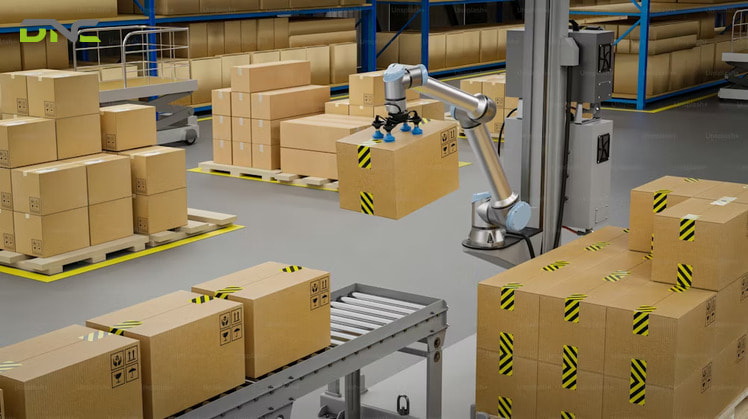
Robotic case packers replace fixed mechanical product handling with programmable robot arms — eliminating the mechanical changeover that makes conventional case packers expensive to run on mixed-SKU production lines. A robotic case packer loads products into corrugated shipping cases using one or more industrial robots executing a software-defined packing pattern; changing the pattern requires updating the program, not rebuilding the machine.
For Malaysian manufacturers navigating the intersection of rising labour costs, growing SKU diversity, and NIMP 2030 smart manufacturing requirements, robotic case packing represents a strategic investment in flexible, scalable end-of-line automation.
This guide covers robotic case packer technology, robot type selection, wraparound and top-load configurations, and the integration engineering required to deploy a robotic case packing system on a Malaysian production line.
What Is a Robotic Case Packer?
A robotic case packer is an automated case packing machine where one or more industrial robots perform the product picking and case loading function. Products arrive via conveyor; a vision system identifies each product’s position and orientation; the robot picks products and places them into an open corrugated case according to the programmed packing pattern; the filled case moves downstream to the case sealer.
The robotic case packer executes the same function as a conventional mechanical case packer — grouping products and loading them into cases — but replaces the fixed mechanical product handling mechanisms (pushers, pick-and-place heads, lane guides) with robot arms. This substitution delivers three capabilities mechanical case packers cannot match:
Programmable packing patterns: Change the product arrangement in the case by loading a new robot program — no mechanical guide adjustment, no tooling change, no downtime for physical reconfiguration.
Multi-product handling on one machine: A robotic case packer can handle products of different shapes, sizes, and orientations using the same robot arm with interchangeable end-of-arm tooling (EOAT).
Delicate handling: Robot servo control allows precise, low-impact product placement — essential for fragile products like glass bottles, pharmaceutical cartons, and food products where impact damage creates significant waste.
Robot Types Used in Case Packing
Delta Robot (Parallel Robot)
Delta robots use three arms connected to a central platform. The lightweight structure enables extremely high acceleration and deceleration — making delta robots the fastest pick-and-place option in case packing applications.
Specifications:
- Payload: 1–8 kg per robot
- Pick rate: 60–150 picks per minute per robot
- Reach: 800–1,600 mm diameter working envelope
Case packing application: High-speed picking of lightweight products — small bottles, pouches, sachets, wrapped confectionery — into cases. F&B and FMCG case packing lines where throughput (not flexibility) is the primary requirement use delta robot arrays.
Malaysian application context: Beverage and snack food manufacturers in Selangor running high-volume SKU lines where robotic flexibility is needed for promotion pack variations.
SCARA Robot
SCARA (Selective Compliance Articulated Robot Arm) robots have a planar work envelope with fast horizontal motion and moderate vertical range. They offer higher payload than delta robots with good speed characteristics.
Specifications:
- Payload: 2–20 kg per robot
- Pick rate: 30–80 picks per minute
- Reach: 350–1,200 mm arm radius
Case packing application: Medium-speed case packing where product weight or orientation requirements exceed delta robot capability. Carton-into-case packing (pharmaceutical shipper cases, boxed food products) where products must be placed upright or in specific orientations.
Six-Axis Articulated Robot
Six-axis robots provide the greatest flexibility — the robot arm can approach the product and case from any angle, achieving orientations impossible for delta or SCARA configurations.
Specifications:
- Payload: 3–500+ kg per robot (case packing typically uses 6–80 kg payload models)
- Pick rate: 10–40 picks per minute (slower than delta due to greater motion complexity)
- Reach: 600–3,500 mm radius
Case packing application: Heavy products requiring precise placement, products requiring 180° orientation changes between infeed and case (e.g., bottles arriving upright, placed sideways in the case), and complex packing patterns with multiple product orientations in the same case.
DNC Automation context: DNC integrates Comau six-axis robots — including the Comau AURA collaborative robot and the Comau NJ family — into case packing applications requiring high payload, complex orientation, or collaborative operation near personnel.
Collaborative Robot (Cobot) Case Packer
Collaborative robots are designed to operate in shared workspace with human workers — operating at reduced speed without safety guarding when humans are present, returning to full speed when the workspace is clear. Cobots are increasingly specified for case packing in Malaysian manufacturing environments where flexible production areas and workforce safety are prioritised.
Payload: 3–20 kg (suitable for most consumer product case packing)
Safety: ISO/TS 15066 certified force and speed limiting
Programming: Simplified teach programming, recipe management via HMI
Application fit: Small-to-medium volume operations, flexible production cells, and manufacturers entering robotic automation for the first time where operator confidence and safety reassurance are important deployment factors.
Robotic Case Packer Configurations
Robotic Top Load Case Packer
Robotic top load case packers use robot arms to place products through the open top of RSC or half-slotted corrugated cases. The case arrives from a magazine or case erector with the top flaps open; the robot picks products from the infeed conveyor and places them into the case according to the programmed packing layer.
Advantages:
- Maximum product handling flexibility — the robot can pick from any infeed orientation and place in any case orientation
- Handles multi-layer packing patterns with intermediate layer pads
- Suitable for irregular and fragile products
- Recipe change via HMI with no mechanical adjustment
Throughput: 5–30 CPM per robot head (influenced by packing pattern complexity, product weight, and robot model)
Application fit: Pharmaceutical secondary packaging, premium food products, home appliance accessory kitting, and any application where product placement precision or gentleness is the primary requirement.
Robotic Wraparound Case Packer (Robotic Case Wrapping Machine)
Robotic wraparound case packers combine the material efficiency of wraparound case format with the flexibility of robotic product handling. The robot positions the product group on a corrugated flat blank; the blank-wrapping mechanism folds and glues the case around the product group.
Advantages:
- Corrugated board efficiency of wraparound format (15–25% less board vs. RSC)
- No separate case sealer required
- Robot flexibility for product handling before wrapping
- Clean, tight-fit case for retail-ready packaging
Application fit: FMCG retail-ready packaging, premium beverage multi-packs, and branded consumer goods where the case is the shelf-display unit and appearance matters alongside transit protection.
Robotic Case Packer with Vision System
Vision-guided robotic case packers use cameras — 2D or 3D — mounted above the product infeed conveyor to detect each product’s position and orientation before the robot picks it. The vision system communicates coordinates to the robot controller; the robot adjusts its pick path accordingly.
Why vision matters: Products on a conveyor are never in perfect position. Label-forward presentation, slight angular deviation, and minor spacing irregularities all require dynamic pick path adjustment. A vision-guided robotic case packer accommodates this natural infeed variation; a fixed-path robot without vision either requires rigidly controlled product positioning (defeating the flexibility advantage) or generates picking errors.
DNC Automation commissions vision-guided robotic case packing systems including camera calibration, lighting design (critical in Malaysian factory environments with variable overhead illumination), and vision software integration with the robot controller.
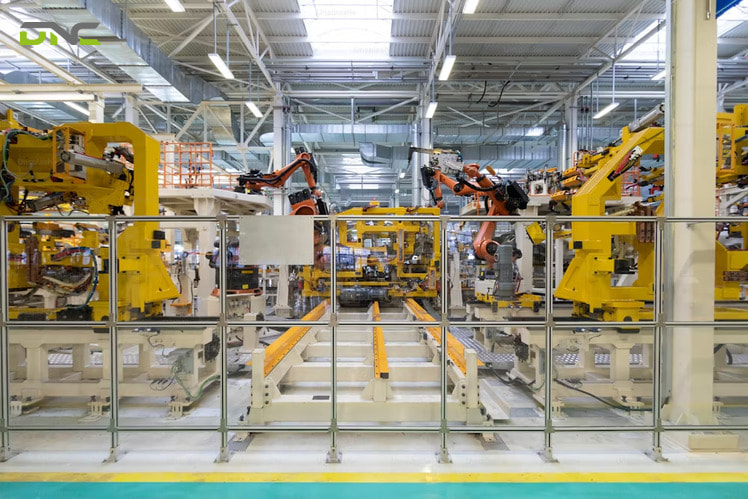
Wraparound Case Packer Machine: Mechanical Alternative to Robotic
Wraparound case packing is also available in mechanical (non-robotic) configuration for high-volume uniform product lines. Understanding the difference between robotic wraparound and mechanical wraparound helps clarify the technology selection:
| Feature | Mechanical Wraparound | Robotic Wraparound |
| Product handling | Fixed mechanical collating | Robot pick-and-place |
| Throughput | 20–60 CPM | 10–30 CPM |
| SKU flexibility | Low (mechanical changeover) | High (recipe change) |
| Capital cost | Lower | Higher |
| Best for | High-volume single SKU | Mixed SKU, fragile products |
For Malaysian manufacturers running dedicated high-speed lines — edible oil, bottled water, carbonated beverage — mechanical wraparound case packers deliver the required throughput at lower capital cost. For manufacturers with frequent SKU changes or fragile product requirements, robotic wraparound is the appropriate specification.
Wraparound Case Packer Machine
End-of-Arm Tooling: The Critical Interface
The end-of-arm tooling (EOAT) — the gripper or suction tool attached to the robot — determines whether the robotic case packer handles your specific product reliably. EOAT design is not a secondary consideration; it is the primary engineering variable in robotic case packer performance.
Vacuum suction cups: Standard for smooth-surface rigid products — glass bottles, plastic bottles, cans, sealed pouches, cartons. Multiple cup configurations handle different product face areas. Limitation: products with porous surfaces (raw food, open-mesh packaging) do not seal reliably against suction cups.
Mechanical grippers: Finger-style or parallel grippers for products with defined grip surfaces. Used for cartons, boxes, and products where suction cup placement is geometrically constrained. More complex to size than suction cups but reliable on textured surfaces.
Magnetic grippers: For metal cans — faster and simpler than suction on metallic products.
Custom EOAT: Irregularly shaped products require custom-designed tooling. DNC Automation designs and fabricates custom EOAT at our Selangor facility, then commissions it with the robot system to verify pick reliability before production acceptance.
Multi-tool systems: Robotic case packers handling multiple product types in a single production environment use automatic tool changers (ATCs) — the robot changes its EOAT between product types under program control, without manual intervention.
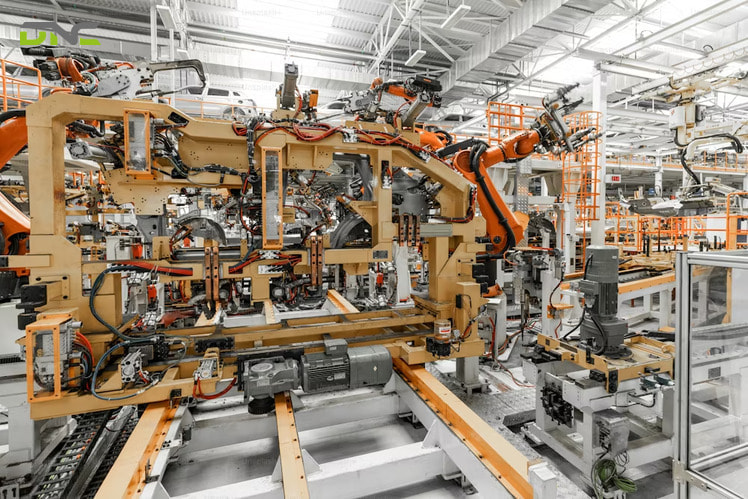
Integration Engineering for Robotic Case Packers
Safety System Design
Robotic case packers operating at full speed require physical guarding (interlocked safety fencing) to prevent personnel access during operation. The safety circuit design must meet Malaysian Department of Occupational Safety and Health (DOSH) requirements and, for export-market equipment, meet the applicable machine safety standards (ISO 13849, IEC 62061).
DNC Automation designs the complete safety system including:
- Perimeter guarding layout and interlocking
- Safety PLC programming (Safety Integrity Level specification)
- Emergency stop circuit integration with the production line
- Robot safe speed and zone monitoring (for collaborative robot applications)
Conveyor and Infeed Design
Robotic case packers require stable, repeatable product presentation at the pick zone. This requires:
- Metering conveyor: Controls product spacing and prevents bunching at the pick zone
- Laning system: Separates products into the correct lane arrangement for the packing pattern
- Vision system lighting: Consistent, shadow-free illumination of the pick zone for vision guidance accuracy — particularly important in Malaysian factories with high ambient lighting variation
DNC Automation designs the complete infeed system — metering, laning, and vision lighting — as part of the robotic case packer integration scope.
Production Data Integration
Robotic case packing machines generate valuable production data: pick rate, pick success rate, fault events, recipe change history, and case count per production order. DNC Automation integrates this data with facility SCADA or MES systems:
- OEE dashboard contribution
- Production order reconciliation (cases packed vs. target)
- Robot health monitoring (servo load trends, pick success rate tracking)
For Malaysian manufacturers on the NIMP 2030 smart manufacturing pathway, this data integration is a requirement of qualifying for Industry 4.0 status — and DNC Automation delivers it as part of every robotic system integration project.
Integration Engineering for Robotic Case Packers
Malaysian Industry Applications
Food Manufacturing
Malaysian food manufacturers — producing sauces, cooking oils, snacks, and ready meals for domestic and export markets — use robotic case packers where product variety exceeds what mechanical case packers handle efficiently. A sauce manufacturer running 12 SKUs through one robotic cell achieves greater flexibility than running 12 separate mechanical lines.
Pharmaceutical
Malaysian pharmaceutical secondary packaging — placing medicine cartons into export shipper cases — specifies robotic top load case packers for the precision placement and serialisation integration they enable. Vision-guided robotic systems reject misaligned or unscanned cartons before case loading, ensuring every export case meets content accuracy requirements.
Glove Manufacturing
Malaysian glove producers — the world’s largest production base — are increasingly automating case packing of boxed glove products. Robotic top load systems handle the placement of counted glove boxes into shipper cases; the robot’s servo-controlled placement prevents box crushing damage that occurs with mechanical pusher systems.
Home Appliances and Electronics
Malaysian electronics manufacturers in the Klang Valley and Penang use robotic case packers for kitting operations — assembling accessories, manuals, and main units into configured shipper cases. The multi-product, mixed-orientation nature of electronics kitting makes robotic systems the only practical automation approach.
Frequently Asked Questions
What is the difference between a robotic case packer and a mechanical case packer?
A mechanical case packer uses fixed cam-driven or pneumatic mechanisms to collate and load products — it performs one packing pattern reliably and at high speed, but requires physical mechanical adjustment for different product or case sizes. A robotic case packer uses programmable robot arms — changing the packing pattern requires loading a new program, with minimal or no physical reconfiguration. Robotic systems offer greater flexibility; mechanical systems offer higher throughput at lower capital cost for uniform, high-volume applications.
How fast is a robotic case packer?
Robotic case packer throughput ranges from 5–30 CPM for top load applications (influenced by packing pattern complexity and product weight) to 60–150 picks per minute for high-speed delta robot arrays on lightweight products. Multiple robot heads operating in parallel achieve higher effective case throughput.
What products can a robotic case packer handle?
Robotic case packers handle bottles (glass and plastic), cans, cartons, pouches, bags, trays, and most rigid or semi-rigid primary packages. Product weight must fall within the robot’s payload specification. The end-of-arm tooling is designed to match the specific product surface and geometry. DNC Automation designs custom EOAT for unusual product geometries.
Is a robotic case packer suitable for Malaysian manufacturing conditions?
Yes. DNC Automation has deployed robotic case packing systems at Malaysian manufacturing facilities in Selangor, Johor, and Penang. Key considerations for Malaysian environments: electrical enclosure rating for humid conditions, DOSH-compliant safety guarding, and service support from a locally-based team. DNC Automation’s Selangor facility provides the engineering, commissioning, and ongoing support capabilities for deployed robotic systems.
What is the ROI timeline for a robotic case packer in Malaysia?
Robotic case packer ROI in Malaysia is driven primarily by labour elimination and SKU changeover efficiency. A robotic system replacing 4–6 manual case packing workers achieves 18–36 month payback at current Malaysian labour costs — longer than equivalent mechanical systems due to higher robotic capital cost, but delivering flexibility value that mechanical systems cannot provide. MIDA automation grants reduce effective payback by 20–40% for qualifying manufacturers.
Plan Your Robotic Case Packing Integration
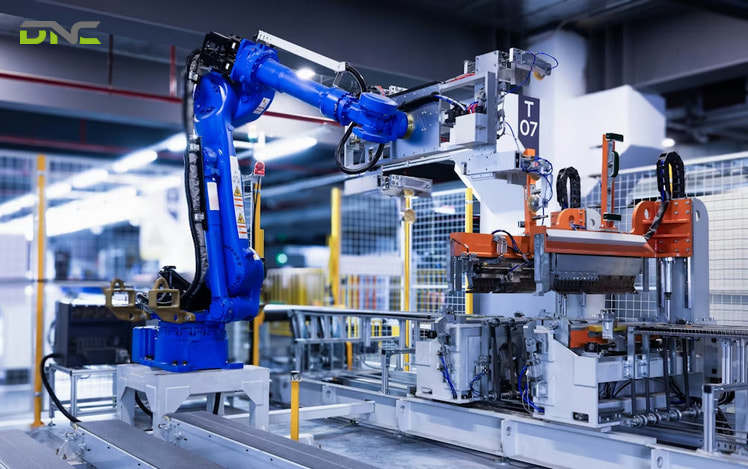
Robotic case packer integration requires upfront engineering — robot type selection, EOAT design, safety system layout, and control architecture — before any equipment is specified or ordered. DNC Automation’s engineering team conducts this upfront work as a free pre-project consultation for Malaysian manufacturers evaluating robotic case packing.
Plan Your Robotic Case Packing Integration
Cost Comparison: Robotic vs. Mechanical Case Packers
The capital cost premium of robotic case packers over mechanical alternatives is real — but the total cost picture changes significantly when changeover efficiency, labour, and flexibility value are included.
Capital Cost Comparison
| Configuration | Capital Cost (RM) | Throughput |
| Mechanical side load (high speed) | 100,000–250,000 | 30–60 CPM |
| Mechanical top load (servo) | 80,000–180,000 | 10–25 CPM |
| Robotic (delta, single head) | 180,000–320,000 | 20–40 CPM* |
| Robotic (six-axis, single arm) | 250,000–450,000 | 8–20 CPM |
| Robotic (multi-head system) | 350,000–700,000 | 40–100 CPM* |
*Effective case throughput depends on products per case and packing pattern complexity.
When the Robotic Premium Pays Back
The robotic case packer cost premium pays back through:
Changeover elimination: A mechanical side load case packer requires 25–45 minutes of mechanical adjustment per SKU change. At 3 SKU changes per shift on a 3-shift operation, that’s 2.25–3.75 hours of daily downtime. At 20 CPM, this represents 2,700–4,500 lost cases per day. A robotic system changes recipes in under 3 minutes — recovering the mechanical changeover time as production output.
Labour flexibility: Mechanical case packers require technically competent operators for changeover; incorrect adjustment causes machine damage. Robotic recipe changes via HMI touchscreen are operator-executable without technical training — reducing the skill requirement (and associated wage premium) for case packing line operators.
Future-proofing: A mechanical case packer is optimised for today’s product range. A robotic case packer accommodates tomorrow’s new SKUs via programming — without capital investment. For Malaysian manufacturers launching new products at the rate NIMP 2030 manufacturing diversification targets imply, robotic flexibility has significant strategic value.
Robot Programming and Recipe Management for Case Packing
One of the most frequently underestimated aspects of robotic case packer deployment is robot programming and recipe management. The robot’s flexibility is only as good as its recipe library — and building, validating, and managing recipes requires structured process discipline.
Recipe Elements in a Case Packing Robot Program
Each robot recipe for a new product-case combination specifies:
- Pick zone position and depth (where to pick each product from the infeed conveyor)
- Pick approach vector (angle of approach to avoid product tipping or surface contact)
- EOAT activation parameters (suction cup vacuum level, gripper force — adjusted to product weight and surface)
- Place position in case (XYZ coordinates for each product placement in the packing pattern)
- Layer sequence (if multi-layer — coordinates for each layer, with tier sheet placement if applicable)
- Conveyor synchronisation parameters (how the robot coordinates with infeed and case conveyor speeds)
Recipe Development Time
For a new product of similar geometry to an existing recipe: 2–4 hours to adapt and validate the existing recipe. For a completely new product type or case format: 1–3 days for programming, testing, and production acceptance.
Malaysian manufacturers who plan to use robotic case packers should factor recipe development time into their new product launch schedule — new packaging specifications should be communicated to DNC Automation’s engineering team at least 2–3 weeks before the first production run on a new recipe.
Vision System Calibration for Recipe Changes
Vision-guided robotic case packers require vision system recalibration when switching between products with significantly different surface appearance. Products with high-contrast labels calibrate quickly (under 30 minutes). Products with low-contrast surfaces or reflective packaging (foil wrappers, clear plastic) may require 2–4 hours of vision calibration and lighting adjustment for reliable pick success rates.
DNC Automation documents the vision calibration procedure for each product recipe as part of the commissioning handover — enabling in-house recalibration by trained operators without DNC field support.
Vision System Calibration for Recipe Changes
Robotic Case Packer Safety: DOSH Compliance in Malaysian Manufacturing
Robotic case packing systems operating at full speed create hazards — robot arm collision, entrapment between robot and case conveyor, crushing at the case infeed — that require formal safety system design. Malaysian Department of Occupational Safety and Health (DOSH) requires that machinery safety be designed according to OSHA 1994 and the relevant ISO/IEC machine safety standards.
Safety System Requirements
Perimeter guarding: Physical barriers (interlocked safety fencing) around the robot work envelope. Interlocks cut robot power immediately when any gate is opened. Fence height minimum 1,800 mm; gate interlocks with key-switch reset to prevent inadvertent restart.
Safety PLC: Separate safety-rated PLC (Siemens Safety or equivalent) manages the robot safety circuit, emergency stop chain, and safe speed/zone monitoring. Safety PLC programming is documented and validated to IEC 62061 SIL 2 or ISO 13849 PLd as a minimum for robotic case packing applications.
Emergency stop network: E-stop buttons at minimum 3 locations around the cell perimeter. E-stop chain integrates with the production line master E-stop — pressing any E-stop on the robotic cell also stops the upstream case packer infeed and downstream case sealer.
Collaborative robot alternative: If operational requirements demand human access to the robot work zone during production (e.g., manual product loading alongside the robot), collaborative robot (cobot) configurations with force-limited operation eliminate the need for physical perimeter guarding — but require ISO/TS 15066 risk assessment to define the allowable human-robot collaboration zone.
DNC Automation designs, builds, and validates the complete safety system as part of every robotic case packing integration — including DOSH machinery registration documentation for systems above the registration threshold.
Robotic Case Packer Lifecycle Planning: 10-Year Cost Perspective
Robotic case packers have a longer productive lifespan than mechanical alternatives because the robot arm’s primary wear components — servo motors, reduction gears, joint seals — are replaceable and well-supported by the robot OEM’s spare parts network. A well-maintained industrial robot arm has a mechanical lifespan of 15–20 years; the case packing integration (conveyors, case handling, EOAT) typically requires major refresh every 8–12 years.
Robot Component Lifespan Benchmarks
| Robot Component | Expected Lifespan | Maintenance Action |
| Servo motors | 15,000–25,000 hours | Monitor thermal trend; replace bearings at hour threshold |
| Reduction gears (joints) | 20,000 hours | Grease replacement every 2,000 hours; replace at hour threshold |
| Joint seals | 5–8 years | Replace during annual overhaul |
| Controller hardware | 10–15 years | Firmware updates; hardware refresh at obsolescence |
| End-of-arm tooling | 2–5 years | Depends on material and cycle frequency |
| Safety light curtains | 8–12 years | Functional test monthly; replace at end-of-life |
Programming Asset Value
The robot program library — all packing recipes developed and validated over the machine’s operational life — is a significant intangible asset. Manufacturers who document their robot programs properly can transfer them to a replacement robot (same model family) with minimal re-commissioning. Manufacturers who lose their program library face full re-teaching of all recipes on a replacement system.
DNC Automation maintains program backups for all commissioned robotic case packing systems — stored at the DNC Selangor facility as an offsite backup. In the event of controller failure or program corruption, DNC can restore the program library within 24 hours, minimising production downtime.
Technology Refresh Considerations
Robotic case packing technology evolves — faster robot speeds, better vision systems, improved EOAT materials — but the core mechanical and electrical infrastructure (conveyors, safety guarding, case handling) remains relevant for 10–15 years. Malaysian manufacturers planning major site upgrades or production line reconfigurations should assess their robotic case packing integration at the 8–10 year mark: the robot arm may be fully serviceable, but the surrounding integration may benefit from refresh to take advantage of improved conveyor technology or advanced vision capabilities.
We assess your production line, document your product and case specifications, evaluate your SKU changeover requirements, and recommend the appropriate robotic configuration — then deliver a turnkey integration proposal covering robot arm, EOAT, safety guarding, conveyor interfaces, vision system, and PLC/SCADA integration.
Talk to Our Engineers — describe your case packing requirement and product range. We respond with a robotic configuration recommendation within 3 working days.
Request a Quote — for complete robotic case packing line integration from product infeed through palletizer discharge.
*DNC Automation | Malaysia Top #1 Factory Automation Solution Company | ISO 9001:2015 Certified | 35+ Engineers | Comau Authorized System Integrator*
- 51 views
- 0 Comment
Recent Comments