


High Bay Warehouse | DNC Automation Malaysia
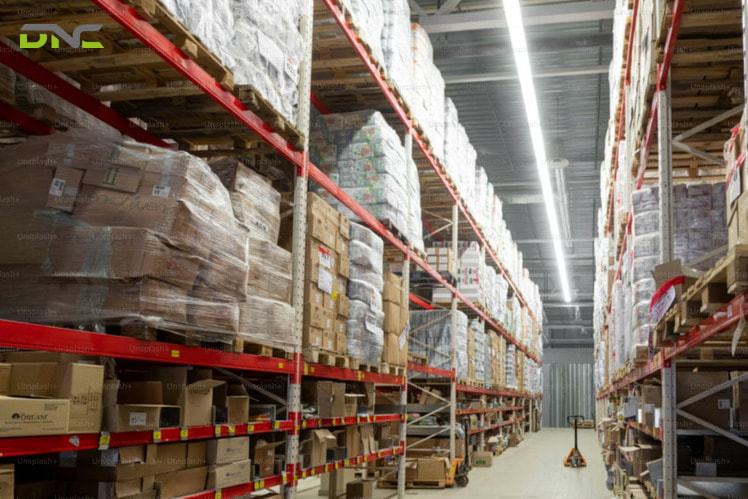
A high bay warehouse is a storage facility with rack heights typically between 12 and 45 metres, designed to maximise vertical storage capacity within a defined footprint. When integrated with automated storage retrieval systems (ASRS), a high bay warehouse transforms from a logistical necessity into a competitive advantage — storing more inventory per square metre, operating with fewer personnel, and achieving inventory accuracy levels that manual operations cannot match.
In Malaysia, where industrial land in Selangor, Johor, and Penang commands prices of RM 25–80 per square foot, high bay warehouse automation is an increasingly logical capital investment for manufacturers and distributors managing large inventory volumes.
What Defines a High Bay Warehouse?
The term “high bay” describes the vertical storage dimension, not a specific structural type. Warehouses are typically categorised by racking height:
- Low bay: below 8 metres — standard reach truck or counterbalance forklift operation
- Medium bay: 8–12 metres — very narrow aisle (VNA) forklifts with guidance systems
- High bay: 12–25 metres — requires ASRS stacker cranes or high-reach equipment
- Very high bay: 25–45 metres — always ASRS, typically clad-rack construction
The key transition point at 12 metres is where conventional fork trucks reach their operational limits. Beyond this height, stacker crane ASRS is the practical — and in most cases only — economical option for automated operation.
High Bay Warehouse Structural Types
Conventional Building with Internal Racking
In this approach, an existing industrial building is equipped with free-standing racking structures and ASRS cranes. The racking does not support the building roof or walls — it stands independently within the building envelope.
Advantages:
- Flexibility to reconfigure racking in the future
- Building can serve alternative purposes if ASRS is removed
- Generally lower civil construction cost per pallet position at moderate heights (12–18 metres)
Constraints:
- Building ceiling height must exceed racking height by 1.5–2 metres for crane clearance
- Floor loading must be sufficient for racking base loads (typically 10–20 tonne/m² concentrated)
- Existing buildings rarely have both adequate height and floor load capacity
Clad-Rack Warehouse (Rack-Supported Building)
In a clad-rack construction, the racking structure itself forms the primary building frame. Roof panels and cladding are attached directly to the rack, and the entire structure is engineered as an integrated unit.
Advantages:
- Heights of 30–45 metres are achievable within normal building permit parameters
- Significantly lower construction cost per pallet position at heights above 20 metres
- Faster construction timeline than conventional steel-frame buildings at equivalent heights
- Optimised column grid — rack column spacing matches ASRS crane aisle layout precisely
Constraints:
- Not reconfigurable — if the ASRS layout changes, the building structure must also change
- Requires detailed structural engineering and building plan approval from local authorities (MBPJ, MBJB, MBSP, etc.)
- Site must accommodate the tall, narrow building profile
Clad-rack warehouses are the dominant construction method for new high bay ASRS facilities in Malaysia, particularly for operations requiring 20,000+ pallet positions.
High Bay Mezzanine Integration
For operations that need both high-bay ASRS storage and manual pick areas within the same footprint, DNC designs multi-level integrated facilities. ASRS cranes operate in the racking aisles, while mezzanine decks at 4–6 metre intervals provide operator workstations, conveyor takeaway systems, and pick-to-light stations.
This configuration is common in pharmaceutical and electronics distribution, where automated storage feeds manual picking into cartons and boxes.
ASRS Crane Systems for High Bay Warehouses
Single-Mast Stacker Crane
The single-mast stacker crane is the standard configuration for unit load (pallet) ASRS in high bay applications. One crane serves one aisle, with mast heights up to 45 metres and travel speeds of 120–200 metres per minute in the X-axis (aisle direction) and 30–60 metres per minute in the Z-axis (vertical lift).
Throughput: 50–100 pallet moves per crane per hour (combined inbound and outbound).
Double-Mast Stacker Crane
Double-mast designs use two masts to support the load carrier, providing greater lateral stability at very high bay heights (above 30 metres) and when handling heavier loads (up to 2,500 kg per pallet position).
Mini-Load Crane
For carton and tote storage in high bay applications, mini-load cranes handle smaller loads (typically 15–100 kg per container) at speeds of 150–250 metres per minute horizontal, with storage heights up to 20 metres.
Mini-load throughput: 200–600 tote moves per crane per hour.
Multi-Level Shuttle with Lifts
High-throughput high bay applications use racking systems with multiple shuttle levels connected by lifts at the aisle ends. Shuttles carry pallets or totes within their level, deposit loads onto conveyors connected to the lift, and lifts transport loads vertically between levels and to outbound conveyor takeaway systems.
This architecture achieves throughput rates of 200–600 pallet moves per hour per aisle — far exceeding single-crane performance — and provides excellent redundancy.
High Bay Warehouse Design: Key Parameters
Designing a high bay warehouse requires precise definition of the following parameters before any structural or equipment selection can proceed:
Storage Capacity
The number of pallet positions (or tote positions, for mini-load) determines the number of aisles and the aisle depth. A typical unit load ASRS double-deep rack stores 600–1,200 pallet positions per crane aisle per 30-metre height building. A 10,000-pallet warehouse requires approximately 8–12 aisles depending on depth and height optimisation.
Throughput Requirements
The peak throughput requirement — measured in pallet moves per hour during the busiest inbound or outbound period — determines the number of cranes. If the operation must handle 200 pallet outbound per hour at peak, and each crane delivers 80 moves per hour, a minimum of 3 cranes is required (with one additional crane recommended for redundancy).
SKU Profile and Velocity
A warehouse storing 200 SKUs in full pallet quantities has very different ASRS configuration requirements than one storing 5,000 SKUs in mixed quantities. High SKU count, low-velocity items are better suited to mini-load; high-velocity, pallet-level items suit unit load cranes.
Temperature Conditions
Standard ASRS operates at ambient temperature. Cold storage ASRS (chilled: 2–8°C, frozen: -20 to -25°C) requires:
- Cold-rated motors, gearboxes, and sensors
- Heated electrical enclosures and crane cabins
- Anti-condensation design for camera and barcode scanner systems
- Hydraulic or pneumatic systems with cold-grade fluids
DNC Automation has experience designing cold storage high bay ASRS for Malaysian F&B and pharmaceutical customers.
Fire Protection
High bay warehouses above 12 metres require in-rack sprinkler systems approved under Malaysian Fire and Rescue Department (Bomba) regulations. ASRS rack design must accommodate sprinkler pipework within each rack bay, with proper pipe supports and valve access provisions.
High Bay Warehouse Performance Benchmarks
Manufacturers and distributors evaluating high bay ASRS investment should benchmark against the following key performance indicators:
| KPI | Manual High Bay | ASRS High Bay |
| Storage density (pallets/m²) | 1.0–1.5 | 2.5–4.5 |
| Putaway accuracy | 98.5–99.2% | 99.95–99.99% |
| Order picking accuracy | 98.0–99.0% | 99.95–99.99% |
| Forklift operators required | 3–6 per shift | 0 (ASRS zone) |
| Annual inventory accuracy (cycle count) | ±1.5–3% variance | ±0.05–0.1% variance |
| Energy per pallet move (kWh) | 0.8–1.5 | 0.3–0.6 |
The storage density and labour savings are the primary ROI drivers for most Malaysian customers. The accuracy improvement has additional value in industries with traceability requirements (pharmaceutical, food safety, automotive recall management).
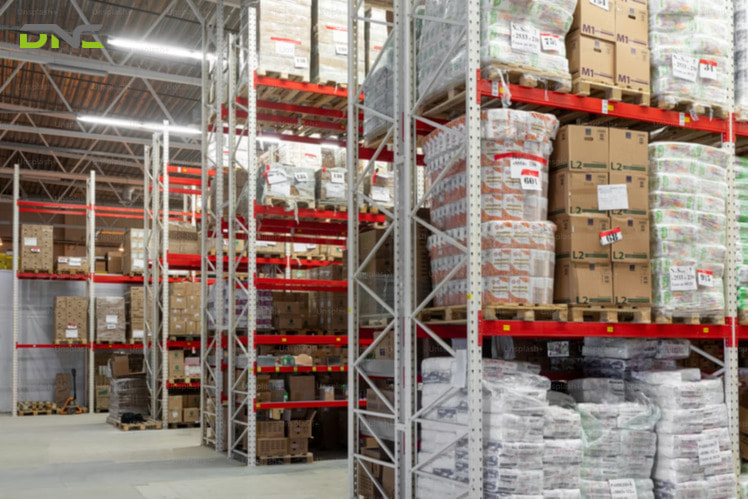
High Bay Warehouse Performance Benchmarks
Planning a High Bay Warehouse in Malaysia
Site Selection
High bay warehouses impose specific site requirements:
- Building height: Local authority zoning approval for buildings above 15 metres may require additional consultation in some Selangor and Johor industrial zones
- Floor bearing capacity: Minimum 5 tonne/m² distributed load for standard ASRS racking; higher for clad-rack designs
- Ground settlement: ASRS stacker cranes require floor flatness (F-number) typically of F100 or better — significantly above standard industrial slab specification
- Access roads: Piling rigs, crane erection equipment, and racking delivery trailers require clear site access
Permitting
Clad-rack high bay warehouses in Malaysia require:
- Building plan approval from local authority (PBT)
- Structural engineer’s certification (PE-stamped drawings)
- Bomba plan approval for fire protection systems
- DOSH notification for automated machinery under the Factories and Machinery Act or Occupational Safety and Health Act
DNC Automation provides full permitting support, including preparation of DOSH machinery registration documentation for all ASRS cranes and lifts.
Timeline
A complete high bay ASRS project — from site preparation through full production operation — typically requires:
| Phase | Duration |
| Design and engineering | 3–5 months |
| Permitting | 2–4 months (parallel with design) |
| Civil construction (clad-rack) | 8–14 months |
| ASRS mechanical installation | 3–5 months |
| Software commissioning and FAT/SAT | 2–3 months |
| **Total (greenfield)** | **18–30 months** |
Retrofit into existing buildings with adequate height and floor capacity can compress the timeline to 12–18 months.
High Bay Warehouse ROI Calculation
A representative ROI analysis for a Malaysian manufacturer building a 10,000-pallet high bay ASRS warehouse:
Avoided costs (annual):
- Warehouse rental avoided (conventional warehouse at 3× footprint): RM 2.4M/year
- Labour savings (6 forklift operators eliminated per 2-shift operation): RM 432,000/year
- Inventory accuracy improvement (reduced write-offs, returns, expediting): RM 180,000/year
- Total annual benefit: RM 3.01M/year
Capital investment:
- ASRS mechanical and software: RM 8.5M
- Civil construction (clad-rack): RM 5.5M
- WMS and integration: RM 1.2M
- Total CapEx: RM 15.2M
Simple payback: 5.0 years
IRR (15-year horizon): 18–22%
MIDA capital allowances and green technology investment tax allowances can improve the effective CapEx by 20–40%, improving payback to 3.5–4 years in qualifying cases.
DNC Automation’s High Bay ASRS Capabilities
DNC Automation Malaysia delivers high bay warehouse projects from concept through commissioning:
Feasibility studies: DNC provides no-obligation feasibility studies that model storage capacity, throughput, and financial returns for proposed high bay configurations, using your actual inventory and order profile data.
Full project management: DNC manages the entire project — structural engineering, ASRS procurement, civil contractor coordination, permitting, installation, and commissioning — under a single point of responsibility.
WMS integration: DNC’s software team integrates ASRS control systems with existing ERP and WMS platforms including SAP, Oracle, and Dynamics 365.
Maintenance support: Post-commissioning, DNC offers preventive maintenance contracts with guaranteed response times and remote monitoring via secure IoT connectivity.
Frequently Asked Questions
What is the minimum building height for a high bay ASRS?
Practical high bay ASRS starts at 12 metres clear internal height. Below this level, VNA forklifts or mini-load ASRS for cartons are more cost-effective alternatives.
Can an existing warehouse be converted to high bay ASRS?
Yes, if the building has adequate ceiling height and floor load capacity. DNC conducts structural surveys to assess suitability and designs ASRS to fit within the existing building constraints.
How many pallets can a 10,000 m² high bay ASRS store?
At 30-metre rack height and efficient double-deep racking, a 10,000 m² ASRS footprint stores approximately 30,000–45,000 pallet positions — equivalent to a conventional warehouse of 30,000–40,000 m².
What happens to inventory if the ASRS breaks down?
Modern ASRS systems include manual bypass provisions that allow forklift access to the base level of racking in emergency situations. DNC designs degraded-mode operating procedures for every system, ensuring business continuity during planned and unplanned downtime.
Conclusion
High bay warehouse automation — combining stacker crane ASRS, clad-rack construction, and WMS integration — delivers a step-change improvement in storage density, labour efficiency, and inventory accuracy for Malaysian manufacturers and distributors.
As land costs rise and operational complexity increases, the case for high bay ASRS investment strengthens. DNC Automation Malaysia designs complete high bay solutions that maximise return on capital, comply with Malaysian regulatory requirements, and integrate seamlessly with existing business systems.
Contact DNC Automation Malaysia to initiate a high bay warehouse feasibility study for your operation.
High Bay Warehouse Operations: Staffing and Organisational Impact
Transitioning from a manual or semi-automated warehouse to a high bay ASRS fundamentally changes the workforce profile required:
From Forklift Operators to System Operators
Manual high bay operations (VNA forklifts, man-up order pickers) require skilled forklift operators — a role that is becoming increasingly difficult to staff reliably in Malaysia. ASRS eliminates forklift operation in the automated zone entirely.
The new roles created by high bay ASRS are:
- System operators: Monitor ASRS performance dashboards, respond to minor faults, manage replenishment exceptions. Require computer literacy rather than forklift certification. Typically requires 1–2 operators per shift for a mid-size system.
- Maintenance technicians: Perform preventive and corrective maintenance on crane mechanical and electrical systems. Requires technical training (electrical, mechanical, PLC) and crane-specific certification from DNC Automation.
- WMS administrators: Manage inventory master data, wave planning parameters, and reporting. One per facility is typical.
The headcount impact of a typical Malaysian high bay ASRS (10,000 pallets, 3 cranes): forklift operators decrease from 8–12 per shift to 0; system operators and maintenance staff total 4–6 per shift — a net reduction of 4–8 operator positions per shift.
DOSH Compliance for High Bay ASRS
All ASRS equipment in Malaysia requires registration and approval from the Department of Occupational Safety and Health (DOSH) under the Factories and Machinery Act:
- Stacker cranes are classified as machinery and require a Certificate of Fitness (CF)
- Crane operators (maintenance technicians performing certain tasks) may require DOSH-competency certification
- Structural changes (new building or significant racking) require local authority building approval
DNC Automation manages all DOSH documentation — machinery technical files, risk assessments, CE or equivalent declarations — as part of the project delivery.
Operator Training for High Bay ASRS
DNC Automation provides structured operator training at go-live:
- System operator training (3 days): WCS dashboard navigation, normal operation procedures, fault recognition and escalation, emergency stop procedures
- Maintenance technician training (5 days): Mechanical inspection procedures, lubrication, crane alignment basics, electrical troubleshooting, PLC fault reading, spare parts management
- WMS user training (2 days): Inventory management, putaway and retrieval verification, cycle count procedures, reporting
Training is conducted in Bahasa Malaysia and English. Reference manuals are provided in both languages.
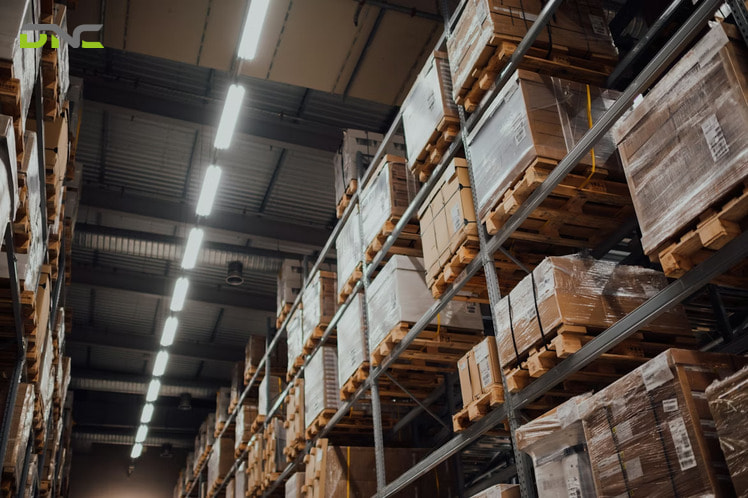
From Forklift Operators to System Operators
High Bay Warehouse Financial Modelling: What to Include
A complete high bay ASRS financial model for a Malaysian manufacturer must include:
Capital Cost Components
- ASRS mechanical equipment (cranes, racking, conveyor)
- WCS and WMS software licences and implementation
- Civil works (floor preparation, clad-rack structure or building modification)
- Electrical installation (MCC panels, cable, UPS)
- Fire protection (in-rack sprinklers)
- Project management and commissioning
- MIDA application cost (minor, but include)
Operating Cost Changes (Annual)
- Labour reduction (forklift operators eliminated × annual wage + EPF + SOCSO)
- Energy change (ASRS energy vs. VNA forklift energy — typically a saving)
- Maintenance contract cost (add: ASRS PM contract, approximately 2–3% of ASRS CapEx/year)
- Insurance change (ASRS reduces accident risk; check with insurer for premium adjustment)
- Floor space saving if existing warehouse is vacated or rental contract renegotiated
Revenue Impact (if applicable)
- Improved on-time fulfilment rate → customer satisfaction → contract retention value
- Ability to handle higher order volume without headcount — revenue capacity expansion
MIDA Capital Allowance
Malaysia’s 200% capital allowance on qualifying automation equipment means:
- Year 1: Full CapEx claimed at 200% = effective 40% tax rate × 200% × CapEx = 80% tax relief on the investment cost (for a company at 24% corporate tax rate, the tax saving is 24% × 200% × CapEx = 48% of CapEx returned as tax reduction, often over 1–3 years)
- This effectively reduces the after-tax payback period by 1–3 years depending on company tax position
DNC Automation works with customers’ tax advisors to correctly structure the MIDA claim and maximise the allowance benefit.
High Bay Warehouse Case Studies: Malaysian Context
Case 1 — F&B Manufacturer, Selangor
A Malaysian processed food manufacturer with 180 SKUs and 15,000 pallets of finished goods built a new clad-rack high bay ASRS warehouse adjacent to their production facility.
System: 4-aisle unit load ASRS, 35-metre height, 3 cranes per aisle, 18,000 pallet positions. Conveyor system connecting production end-of-line palletiser to ASRS inbound conveyor. Outbound conveyor to 6 truck docks.
Results (18 months post-go-live):
- Forklift fleet in finished goods area: 8 forklifts → 0
- Forklift operators: 16 operators across 3 shifts → 0
- System operators and maintenance: 9 total
- Annual throughput handled: 220,000 pallet moves/year at 99.99% accuracy
- ROI: RM 1.8M/year savings; CapEx RM 12M; payback 6.7 years (4.2 years with MIDA allowance)
Case 2 — Pharmaceutical Distributor, Petaling Jaya
A pharmaceutical distributor required a GDP-compliant ambient temperature ASRS for carton-level storage and retrieval, with full lot traceability.
System: Mini-load ASRS, 12-metre height, 2 cranes, 18,000 carton positions. WMS integration with SAP EWM for lot management, FEFO retrieval, and NPRA documentation export.
Results:
- Picking accuracy: 98.7% → 99.98%
- Inventory cycle count effort: 120 man-hours/month → 8 man-hours/month (system count)
- GDP audit preparation time reduced from 3 days to 4 hours (full inventory log available on demand from WMS)
Conclusion (Extended)
High bay warehouse automation represents one of the highest-ROI capital investments available to Malaysian manufacturers and distributors operating at scale. The combination of land savings, labour reduction, accuracy improvement, and MIDA incentive support makes high bay ASRS investment compelling for any operation with 5,000+ pallet positions and a planning horizon of 10+ years.
DNC Automation Malaysia delivers high bay ASRS projects with full engineering, procurement, installation, and commissioning under a single contract — giving customers a single accountable partner for system performance throughout the project lifecycle and beyond.
Contact DNC Automation Malaysia to begin your high bay warehouse feasibility study.
Contact DNC Automation Malaysia to begin your high bay warehouse feasibility study.
High Bay Warehouse Operations: Staff Roles and Responsibilities
Automated high bay warehouses require different staff profiles than conventional warehouses. Understanding this shift helps Malaysian operations plan their workforce transition.
Operations Team
ASRS Operators (WMS Console): Monitor system status, release inbound and outbound orders, manage exceptions, and coordinate with production or dispatch. Typically 2–4 operators per shift in a 10,000-position high bay — versus 15–25 in an equivalent manual warehouse.
Key skills required:
- WMS order management
- Exception identification and escalation
- Forklift certification (for pallet marshalling at ASRS infeed/outfeed)
- Systematic attention to system alerts
Warehouse Supervisors: Manage daily operations, KPI tracking, and team performance. In an automated high bay, the supervisor role shifts from directing manual labour to optimising system configuration and exception management.
Maintenance Team
ASRS Maintenance Technicians: Perform preventive maintenance, diagnose faults, and execute corrective maintenance. In a 15,000-position high bay with 3 crane aisles, a team of 2 full-time maintenance technicians plus DNC Automation’s remote monitoring and emergency support maintains required availability.
Core competencies:
- PLC fault diagnosis (Siemens S7, Allen-Bradley CompactLogix)
- Electromechanical maintenance (crane wheels, gearboxes, hoisting systems)
- WCS diagnostic interface operation
- Working at height (crane maintenance platforms, typically 30+ metres)
- DOSH confined space and working-at-height permit procedures
DNC Automation provides maintenance technician training and certification as part of commissioning, with annual refresher training included in the maintenance contract.
Workforce Transition Planning
Malaysian high bay ASRS projects often involve reducing warehouse headcount from 30–60 manual workers to 6–12 automated system operators and maintenance staff. Managing this transition requires:
Redeployment planning: Identify which manual workers have the aptitude and interest to transition to system operator or maintenance roles. Technical aptitude tests and structured interview processes help identify candidates.
Retraining investment: ASRS operators and maintenance technicians require 2–4 weeks of structured training before go-live. DNC Automation provides training as part of project delivery.
Communication: Workers must understand the business reasons for automation and what it means for their roles — early communication reduces resistance and improves cooperation during commissioning.
Timeline: Plan the workforce transition 3–6 months before go-live, not at the last minute. Workers who know their future role early cooperate better with the implementation process.
High Bay Warehouse Fire Protection: Malaysian DOSH and Bomba Requirements
High bay storage — particularly above 7 metres — requires specific fire protection design that differs from conventional warehouse fire protection.
In-Rack Sprinkler Systems
For high bay warehouses above 7 metres, Bomba typically requires in-rack sprinkler systems in addition to ceiling-level sprinklers. In-rack sprinklers:
- Are mounted on the ASRS racking structure at specified vertical intervals
- Detect and suppress fire at the source within the racking, before it spreads to ceiling level
- Must be compatible with the ASRS structure — sprinkler heads must not obstruct crane travel or shuttle operation
DNC Automation designs in-rack sprinkler layouts in conjunction with the sprinkler design engineer, ensuring sprinkler head positions are compatible with ASRS crane movements and storage lane configurations.
Sprinkler Head Selection
For cold store high bay warehouses, standard sprinkler heads cannot be used — they require:
- Cold-rated sprinkler heads (rated to -25°C for frozen stores)
- Dry pipe or pre-action systems (wet pipe systems cannot be used in frozen zones — water in pipes freezes)
- Anti-condensation design on sprinkler heads (condensation can prevent operation)
DOSH ASRS Registration
All ASRS installations in Malaysia require DOSH (Department of Occupational Safety and Health) registration under the Factories and Machinery Act:
- Stacker cranes are classified as lifting equipment requiring annual DOSH inspection and certification
- The DOSH registration process requires technical documentation: engineering drawings, load calculations, safety device certificates
- DOSH-registered inspectors conduct physical inspection after installation and before first operation
DNC Automation prepares all DOSH registration documentation and manages the inspection process as part of project delivery — customers do not need to navigate this process independently.
- 140 views
- 0 Comment
Recent Comments