


ASRS vs Traditional Racking: Which Warehouse System Fits Your Operation
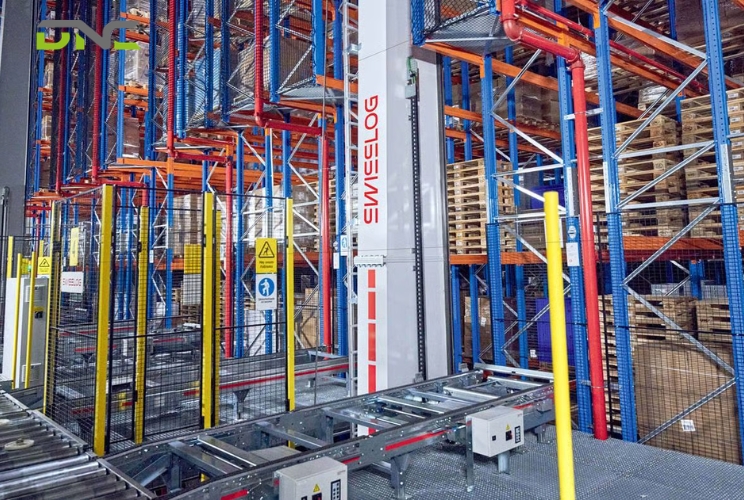
Automated Storage and Retrieval Systems (ASRS) and traditional pallet racking represent two fundamentally different approaches to warehouse storage – one built around human access, the other engineered to eliminate it. ASRS uses computer-controlled cranes, shuttles, or robots to store and retrieve inventory automatically within high-density rack structures, while conventional racking relies on forklifts and manual labor to move goods through wide open aisles. The operational gap between these two systems spans storage density (40–60% utilization for traditional racking vs. 80–90% for ASRS), throughput capacity, inventory accuracy, and long-term labor cost. Malaysian manufacturers evaluating warehouse investment face a structured decision: ASRS delivers measurably better performance per square meter, but carries a capital requirement that only justifies itself above certain operational thresholds. This article compares both systems across 8 performance dimensions, identifies which ASRS type matches which operational profile, and provides a clear decision framework – including where traditional racking remains the smarter choice.
The Real Limitations of Traditional Racking in Modern Warehouses
Traditional pallet racking systems – selective racking, drive-in, push-back, gravity flow – were engineered for forklift access. That single design constraint drives every limitation they carry in high-volume environments.
Space Utilization: Why Conventional Racks Leave 40–60% of Your Warehouse Unused
Traditional racking uses 40–60% of available vertical height because forklifts require operating clearance between the top load and the building ceiling. Standard counterbalance forklifts work within 6–8 meter lift heights. A warehouse with 12-meter ceiling height loses the upper 4–6 meters entirely.
Aisle width compounds the problem. Selective pallet racking requires 3–4 meter aisles so forklifts can maneuver. In a 10,000 m² warehouse, aisle space alone consumes 30–40% of the total floor area – space that holds zero inventory.
Drive-in and push-back racking improve density at the cost of selectivity: LIFO access means you can only retrieve the last pallet stored, which creates inventory management complexity for operations with mixed SKUs or expiry-critical goods.
The result is a space efficiency ceiling. Even a well-designed conventional warehouse cannot exceed 65% space utilization without switching to very narrow aisle (VNA) systems – which introduce a different set of equipment and throughput constraints.
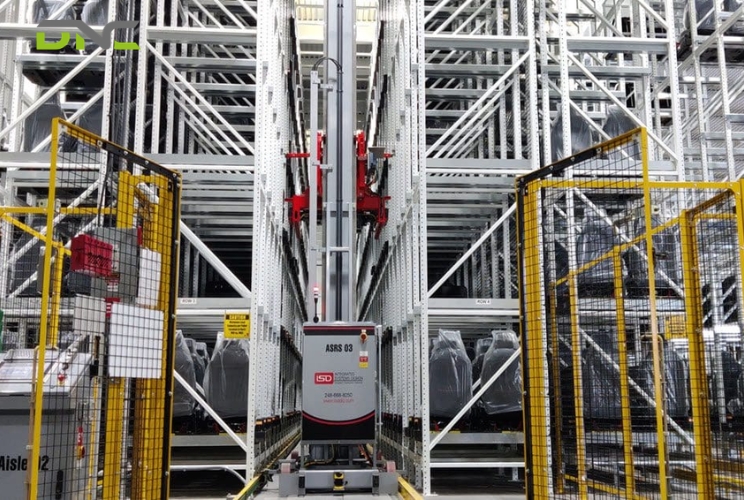
Labor Dependency, Human Error, and the Hidden Costs of Manual Operations
Every pallet movement in a conventional warehouse requires a human decision – identify the location, navigate the forklift, execute the pick, record the transaction. Each step introduces error probability. Industry-observed accuracy rates in manually operated warehouses range from 95–98%, which sounds acceptable until measured against order volume: a 2% error rate across 5,000 daily picks generates 100 discrepancies per day, each requiring resolution time and potentially triggering customer complaints or stock write-offs.
Labor dependency creates a second structural problem: throughput is linear with headcount. Adding 20% more orders means 20% more operators, more equipment, more aisle congestion. During peak seasons – critical for F&B, retail, and e-commerce operations – manual systems either strain under demand or require costly temporary labor that takes weeks to onboard productively.
In Malaysia specifically, structural labor shortages in manufacturing and warehousing have tightened significantly since 2022. Minimum wage increases under the government’s labor reform agenda – now at RM 1,700/month – have raised the ongoing cost of manual warehouse operations faster than most capex budgets anticipated.
Throughput Ceilings: Where Traditional Systems Break Under Modern Demand
Manual picking operations typically achieve 50–100 order lines per hour per operator. A 10-operator warehouse team running two shifts can process roughly 800–1,600 lines per hour ceiling – a hard constraint that cannot be exceeded without fundamental system changes.
The bottleneck is not effort. It is the physical time required to travel between storage locations, retrieve goods, and transport them to staging. In large warehouses, travel time accounts for 60–70% of an operator’s working shift. Productivity gains from lean practices and routing optimization are real but bounded – they reduce waste within the same constraint, they do not eliminate it.
This throughput ceiling becomes commercially critical when customers expect same-day or next-day fulfillment. The gap between what a manual warehouse can sustain and what modern supply chains demand is where ASRS becomes structurally necessary rather than optionally attractive.
ASRS Definition and Core Components: How Automated Storage Systems Work
An Automated Storage and Retrieval System is a computer-controlled warehouse technology that automatically stores and retrieves goods from defined locations using mechanical equipment – stacker cranes, shuttle robots, or vertical lifts – guided by integrated warehouse management software. The system removes the human operator from the storage-retrieval loop entirely, replacing travel time and manual handling with precision-engineered machine cycles.
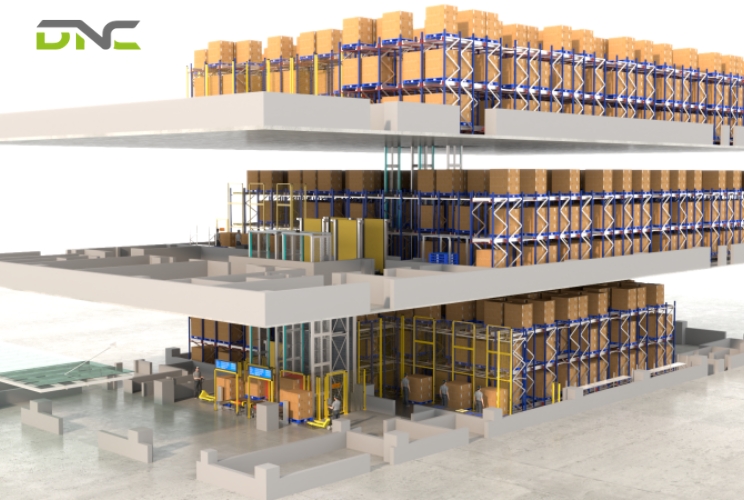
Core Components: Racks, Cranes, Shuttles, and the Control Software Layer
An ASRS installation integrates five functional layers that operate as a single coordinated system:
- High-density storage racks – engineered for machine access, not forklift clearance. Aisles shrink to 1.5–2.5 meters; rack heights extend to 30–50 meters depending on system type
- Automated handling equipment – stacker cranes for unit-load systems, shuttle robots for high-throughput shuttle ASRS, vertical lifts for compact installations
- Conveyor and transfer systems – connect storage zones to inbound/outbound staging areas
- Warehouse Control System (WCS) – directs equipment movements in real time, coordinates multiple cranes or shuttles simultaneously
- Warehouse Management System (WMS) – manages inventory records, order allocation, slotting logic, and replenishment cycles
The software layer is where most operational advantage is generated. A well-configured WMS assigns storage locations dynamically – placing fast-moving SKUs in positions that minimize crane travel time, redistributing slow-movers to deep storage, and managing FIFO or LIFO rotation automatically. The physical hardware executes; the software optimizes. DNC Automation’s Warehouse Automation – ASRS & WMS Integration service covers full system design, WCS/WMS integration, and commissioning for Malaysian manufacturers.
How ASRS Processes an Order – From Inbound to Retrieval
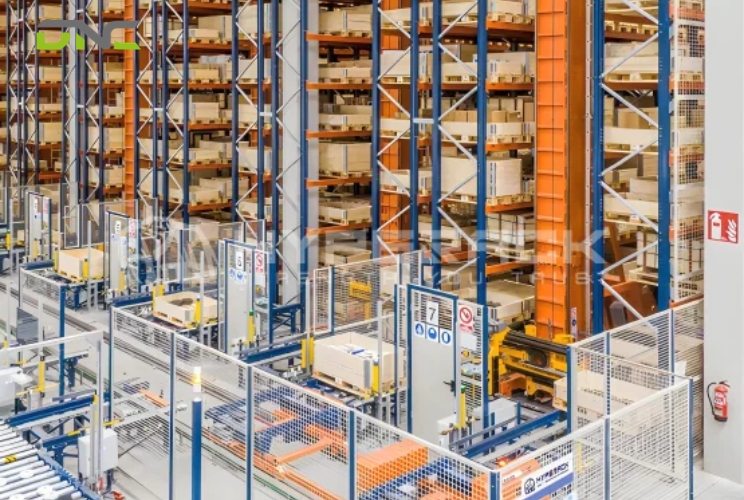
Inbound goods arrive at a receiving station where barcode or RFID scanning identifies each pallet or bin. The WCS assigns a storage location based on SKU velocity, weight, and available space. Conveyors transport the load to the rack entry point; the stacker crane or shuttle retrieves the assigned location and deposits the goods precisely.
The WMS sends a retrieval command to the WCS the moment an outbound order is confirmed. The crane or shuttle locates the relevant pallet or bin – across multiple levels if needed – and delivers it to the pick station or outbound conveyor. Cycle times for a single retrieval range from 30 seconds to 3 minutes depending on system type and rack dimensions. An operator waiting at a pick station processes goods-to-person rather than walking to the goods – eliminating travel time completely on the retrieval side. Understanding how that cycle time translates into measurable operational differences – across storage density, throughput, accuracy, and cost – is the subject of the next section.
ASRS vs Traditional Racking: Head-to-Head Comparison
The performance differences between ASRS and traditional racking are consistent across all deployment contexts, though the magnitude varies by system type and operational configuration.
| Dimension | Traditional Racking | ASRS | Advantage |
| Space utilization | 40–60% vertical height | 80–90% vertical height | ASRS – up to 2× density |
| Aisle width | 3–4 meters (forklift) | 1.5–2.5 meters (machine) | ASRS – 30–40% more storage per floor area |
| Throughput | 50–100 lines/hour/operator | 200–800 lines/hour | ASRS – 3–8× capacity |
| Inventory accuracy | 95–98% | 99%+ | ASRS – 3–5× fewer errors |
| Labor requirement | High – scales with volume | Low – fixed operator count | ASRS – structural cost reduction |
| 24/7 operation | Requires shift labor | Standard capability | ASRS – lights-out possible |
| Capital cost | Low (RM 50k–500k typical) | High (RM 1.5M–30M+) | Traditional – lower entry cost |
| Implementation time | 2–8 weeks | 6–18 months | Traditional – faster deployment |
Storage Density: From 50% Utilization to 85–90%
ASRS recaptures floor area and vertical height simultaneously. A conventional warehouse storing 20,000 pallet positions on a 10,000 m² footprint stores the equivalent of 35,000–40,000 positions within the same boundary after converting to ASRS – without expanding the building. For Malaysian manufacturers paying RM 3–8 per square foot per month in industrial zones, the space savings alone carry significant financial weight over a 10–15 year facility commitment.
The mechanism is straightforward: narrower machine aisles replace wide forklift aisles, and rack height extends to the building structure limit rather than stopping at forklift reach. A 15-meter ceiling – standard in newer Malaysian industrial buildings – becomes fully productive under ASRS rather than wasted above 8 meters.
Throughput and Order Fulfillment Speed
ASRS achieves 200–800 order lines per hour depending on system type, versus 50–100 lines per operator-hour in manual operations. The difference is mechanical cycle time versus human travel time. A shuttle-based ASRS running 10 shuttles simultaneously processes retrieval cycles in parallel; a 10-operator manual warehouse processes them sequentially.
For distribution operations fulfilling e-commerce or retail replenishment orders, this throughput gap determines whether same-day dispatch is operationally feasible. Research by McKinsey & Company found that companies implementing ASRS automation improved order fulfillment speed by 66% while reducing picking errors by 75%. Both outcomes trace to the same root cause: removing human travel and human decision-making from the storage-retrieval loop.
Inventory Accuracy: 95–98% vs 99%+
Traditional warehouses operating at 97% accuracy generate 3 mispicks per 100 transactions. At 1,000 daily transactions, that is 30 errors per day – each one requiring investigation, reprocessing, and potentially a customer-facing correction. ASRS inventory accuracy exceeds 99% because the WMS tracks every location in real time and the mechanical system executes to millimeter precision. Barcode or RFID confirmation at every storage and retrieval event closes the data loop entirely.
Higher accuracy reduces shrinkage, write-offs, and safety stock requirements – the last of which has compounding financial impact. Operations carrying 15–20% buffer stock to absorb mispick losses can reduce that buffer significantly once accuracy exceeds 99%, releasing working capital and reducing storage space requirements simultaneously.
Safety and Ergonomics
Conventional warehouses run forklifts and pedestrians in shared spaces – a hazard profile that generates a disproportionate share of serious workplace injuries in manufacturing and logistics environments. ASRS eliminates this conflict: the storage zone becomes a machine-only area, with human access restricted to maintenance windows with formal lockout-tagout procedures.
The ergonomic benefit extends to pick stations. Goods-to-person delivery means operators work at fixed ergonomic heights rather than bending, reaching, or climbing. For Malaysian manufacturers managing high worker turnover in warehouse roles, the reduction in physical strain lowers injury rates and improves retention.
Key Takeaways: ASRS vs Traditional Racking Performance
ASRS outperforms traditional racking across every operational dimension measured – storage density (80–90% vs 40–60%), throughput (200–800 vs 50–100 lines/hour), and inventory accuracy (99%+ vs 95–98%). The trade-off is capital cost and implementation time. Traditional racking costs RM 50k–500k and installs in weeks; ASRS starts at RM 1.5M and requires 6–18 months. The performance gap is consistent; the question is whether your operational volume justifies the investment. The next section identifies which ASRS technology matches which operational profile – because selecting the wrong system type negates much of the efficiency advantage.
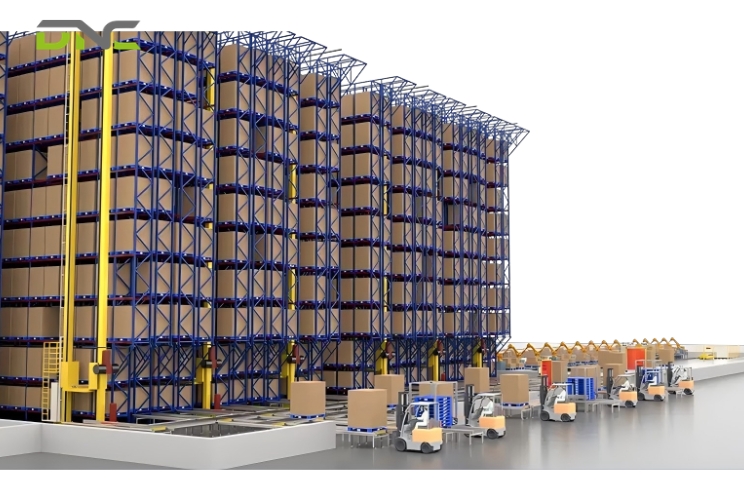
Types of ASRS Systems – Matching Technology to Your Operation
ASRS is not a single technology. Four primary system types address different operational profiles, load characteristics, and facility constraints. Selecting the wrong type is the most common implementation error.
Unit-Load ASRS – For Heavy Pallet Handling
Unit-load ASRS handles full pallets and large loads up to 2,500 kg using stacker cranes that travel along fixed aisle rails. Rack heights reach 30 meters or more; this system type is standard in high-bay automated warehouses for automotive parts, bulk food ingredients, and industrial goods.
Unit-load ASRS suits operations where pallet-level storage and retrieval is the dominant workflow – finished goods warehouses, bulk raw material stores, or distribution centers shipping full-pallet quantities. It is less suited to high-SKU, each-level or carton-level picking.
Mini-Load ASRS – For Small Parts and Carton Storage
Mini-load ASRS manages items under 50 kg in totes, cartons, or bins using miniature stacker cranes operating within 8–12 meter rack structures. This system type serves pharmaceutical storage, electronics component warehouses, and spare parts operations where inventory has high SKU count, low individual weight, and frequent picking demand.
Mini-load systems excel at goods-to-person picking workflows – the crane delivers the bin to the operator’s workstation, the operator picks the required items, and the bin returns to storage automatically. Throughput scales by adding crane-aisle pairs without increasing floor footprint.
Shuttle-Based ASRS – High Throughput, Flexible Layouts
Shuttle-based ASRS deploys autonomous shuttle robots that travel along rack levels to store and retrieve loads, supported by vertical lifts that move shuttles between levels. This system type offers the highest throughput flexibility – throughput scales by deploying additional shuttles without structural changes to the racking.
Shuttle ASRS supports both FIFO (First In, First Out) and LIFO (Last In, First Out) inventory flows, making it suitable for both date-sensitive goods (F&B, pharma) and non-date-critical storage (industrial components, finished goods). The absence of fixed crane aisles allows more flexible warehouse layouts and easier phased expansion.
Vertical Lift Modules – Maximum Density in Compact Facilities
Vertical Lift Modules (VLMs) store goods on trays within a two-column vertical structure reaching 10–15 meters in height, with an automated extractor delivering the requested tray to an operator-height access window. VLMs occupy a small floor footprint – typically 3–5 m² per unit – making them the preferred choice when floor space is critically constrained.
VLMs suit tool rooms, spare parts cribs, and document archives where item count is high, unit size is variable, and floor space is expensive. They are not designed for pallet-level throughput but deliver significant density and accuracy improvements for small-item storage. Each of these four system types carries a distinct advantage profile – and a distinct set of limitations that the next section addresses directly.
ASRS Advantages and Disadvantages: The Full Picture
Every competitor in this SERP presents ASRS as unambiguously superior to traditional racking. That framing serves vendors. A complete assessment requires acknowledging both where ASRS delivers and where it does not.
Where ASRS Clearly Wins
Storage density is the most defensible advantage. Doubling usable storage within an existing building footprint produces a one-time space dividend that compounds over the facility’s operating life – eliminating the need for warehouse expansion or relocation as operations grow.
Labor cost structure is the second durable advantage. ASRS replaces variable labor cost (which scales with volume and rises with minimum wage increases) with fixed equipment cost (which does not change as transaction volumes grow or wages rise). For Malaysian manufacturers facing structural labor scarcity and successive minimum wage adjustments, this cost structure shift is strategically significant.
Accuracy and data quality benefit the entire supply chain beyond the warehouse. Inventory data accurate to 99%+ enables better production planning, tighter supplier coordination, and lower safety stock – advantages that extend upstream to procurement and downstream to customer service.
Where ASRS Falls Short – And When It Should Not Be Your First Choice
Capital cost is a genuine barrier for most operations below a certain volume threshold. A mini-load ASRS installation starts at approximately RM 1.5–4 million; a shuttle-based system runs RM 2–12 million depending on capacity. A unit-load high-bay system for a large distribution center can exceed RM 30 million. These are not numbers a 50-person manufacturing operation with 200 daily shipments can justify.
Maintenance dependency introduces risk that traditional racking does not carry. When a stacker crane or shuttle robot fails, that aisle or level goes offline until maintenance resolves the fault. Traditional racking with forklift failures has multiple redundant vehicles; ASRS requires either spare equipment or service-level agreements that guarantee fast response. Malaysian manufacturers operating ASRS should budget for local technical support contracts – remote monitoring and offshore vendor support is insufficient for production-critical storage.
SKU profile limitations affect system selection significantly. ASRS designed for standard pallet dimensions handles non-standard loads poorly. Operations with highly irregular product shapes, oversized items, or extremely variable dimensions require hybrid approaches – ASRS for standard goods, conventional racking for exceptions.
Implementation time favors traditional racking for businesses needing rapid capacity addition. A selective racking installation completes in weeks; ASRS commissioning takes 6–18 months including civil works, equipment installation, WMS configuration, and operator training. If your operation needs 5,000 additional pallet positions within 3 months, ASRS is not the answer.
Key Takeaways: ASRS Advantages and Limitations
ASRS advantages are real and measurable – but so are the limitations. The honest assessment: ASRS is the right answer for operations with high volume, space pressure, and labor cost exposure. It is the wrong answer for small operations, irregular loads, tight timelines, or facilities with insufficient ceiling height. The decision framework in the next section translates these criteria into specific operational thresholds for Malaysian manufacturers, including how NIMP 2030 grants shift the payback calculation.
ASRS vs Traditional Racking: The Decision Framework for Malaysian Manufacturers
The ASRS vs traditional racking decision reduces to a question of operational scale, growth trajectory, and Malaysia’s specific labor market conditions – not a universal answer.
Signs Your Operation Is Ready for ASRS
ASRS becomes the economically justified choice when three or more of the following conditions are true:
- Daily order volume exceeds 500 lines and throughput ceiling is already limiting dispatch windows
- Warehouse space is at or near capacity and building expansion is not feasible or prohibitively expensive
- Labor turnover in warehouse roles exceeds 30% and recruitment is restricting operational reliability
- Inventory accuracy errors exceed 1% and the downstream cost of mispicks is measurable and material
- Operations require 24/7 or extended-hour capability without proportional labor cost increase
- SKU count exceeds 2,000 with significant velocity variation across the range – high-velocity items need rapid access, slow-movers need dense storage
- NIMP 2030 automation grant eligibility applies to your facility – government incentives materially change the payback calculation
When four or more conditions apply simultaneously, the ASRS payback period in Malaysian manufacturing conditions typically falls within 2–4 years, driven by labor cost reduction, space efficiency, and error elimination operating simultaneously.
When to Stick with Traditional Racking (or Upgrade Incrementally)
Traditional racking remains the right answer for operations that include the following operational characteristics:
- Daily order volume under 300 lines with predictable, non-seasonal demand
- Facility ceiling height under 8 meters – insufficient for ASRS to deliver density advantage
- SKU count under 500 with uniform product dimensions and slow inventory turnover
- Capital budget under RM 1 million – insufficient for ASRS minimum viable installation
- Operation is early-stage or undergoing structural changes that make long-term volume uncertain
For operations in the 300–600 daily line range with growth ambition, a phased approach works: implement VNA (Very Narrow Aisle) racking with reach trucks to increase density and reduce aisle count, then add ASRS layers as volume justifies the investment. This preserves optionality without committing to full ASRS before operational scale confirms the need. DNC Automation’s engineering team designs phased warehouse automation roadmaps – from conventional racking through Automated Guided Vehicles & Autonomous Mobile Robots to full ASRS integration – matched to your facility’s growth trajectory.
Malaysia Context: NIMP 2030, Labor Costs, and the Automation Tipping Point
Malaysia’s National Investment Master Plan (NIMP 2030) has created structural incentives that change the ASRS payback calculation specifically for local manufacturers. MIDA automation grants, Pioneer Status for qualifying manufacturers, and accelerated depreciation for Industry 4.0 equipment reduce effective capex by 20–40% depending on facility and investment size.
Simultaneously, Malaysia’s minimum wage trajectory – now at RM 1,700/month with further increases expected – means that the labor cost displaced by ASRS is rising every year. An ASRS investment that calculates a 5-year payback at 2024 labor costs may achieve a 3.5-year payback at 2027 labor costs without any change to operational performance, simply because the cost it replaces has grown.
Malaysian manufacturers who delay automation investment past the NIMP 2030 grant window lose access to incentives that are currently available and will not recur in the same form. Early adopters lock in lower effective capex, earlier payback, and a structural cost advantage over competitors who automate later at higher cost without subsidy support. Translating that decision into a capital plan requires understanding where ASRS investment actually sits – by system type, capacity, and the ROI levers that determine payback in Malaysian conditions.
ASRS System Cost and ROI: What Malaysian Manufacturers Should Budget
ASRS investment is not a single number – it spans an order of magnitude depending on system type and capacity. The figures below cover the full installed cost including civil works, WCS/WMS software, and commissioning, alongside the three ROI drivers that determine payback speed in Malaysian manufacturing operations.
Investment Ranges by System Type
ASRS capital cost varies significantly by system type, storage capacity, and throughput requirement. Typical investment ranges for Southeast Asian market conditions are listed below:
| ASRS Type | Capacity Range | Typical Investment (RM) |
| Vertical Lift Modules | 500–5,000 tray positions | RM 200k–800k per unit |
| Mini-Load ASRS | 5,000–50,000 bin positions | RM 1.5M–5M |
| Shuttle-Based ASRS | 10,000–100,000 pallet positions | RM 3M–15M |
| Unit-Load High-Bay ASRS | 20,000–100,000+ pallet positions | RM 8M–35M+ |
These figures cover equipment supply, installation, civil works, WCS/WMS software, and commissioning. Ongoing costs include annual maintenance contracts (typically 2–4% of capital cost per year), spare parts, and software licensing.
ROI Drivers – Labor Savings, Space Efficiency, Error Reduction
Labor cost reduction is the primary ROI driver in most Malaysian ASRS deployments. An operation replacing 15 warehouse operators across two shifts – at RM 1,700/month base plus EPF, SOCSO, and indirect costs – eliminates RM 500,000–600,000 in annual labor expenditure. ASRS requires 2–4 operators for system monitoring and exception handling rather than full manual staffing.
Space efficiency contributes a second ROI stream. If ASRS enables a manufacturer to postpone a warehouse expansion or avoid renting additional space – common in Selangor, Johor, and Penang industrial zones – the avoided cost directly reduces payback period. Warehouse rental in prime Selangor industrial zones currently runs RM 4–7 per square foot per month.
Error reduction contributes a third ROI stream, often underestimated. Operations processing 2,000 daily orders at 97% accuracy generate 60 errors per day. Each error costs time for investigation, reprocessing, and potentially customer credit. At RM 50–200 per error resolution cost, a 2,000 error-per-month warehouse carries RM 100,000–400,000 annual error cost that ASRS eliminates.
Typical Payback Period: 2–4 Years for Malaysian Operations
The 2–4 year payback range reflects combined labor savings, space savings, and error reduction operating simultaneously in Malaysian manufacturing conditions – not any single benefit in isolation. Operations that qualify for NIMP 2030 automation grants see effective payback fall toward the lower end of this range as grant proceeds reduce the capital base.
Payback period sensitivity is highest to labor cost assumptions. If minimum wage increases continue at the current pace – or if the operation requires significant overtime or contractor labor during peak periods – the payback accelerates. If the operation is highly automated already and ASRS delivers primarily throughput and accuracy benefits, payback extends toward 4–5 years. The industries where Malaysian manufacturers have already validated these payback assumptions – and where ASRS deployment is now well-established – are covered in the next section.
Industries in Malaysia Already Using ASRS Successfully
ASRS adoption in Malaysia is concentrated in industries where storage density, accuracy, and throughput directly affect customer-facing performance:
Food & Beverage and Cold Chain: F&B manufacturers and cold storage operators were among the earliest Malaysian ASRS adopters. Automated storage in temperature-controlled environments reduces personnel exposure to cold zones, improves FIFO compliance for perishable goods, and handles the high-throughput pallet movements that characterize FMCG distribution.
Automotive Parts: Automotive manufacturers and Tier-1 suppliers use ASRS for just-in-time component delivery to production lines. Mini-load systems supply small components to assembly stations on-demand; unit-load ASRS manages inbound raw materials and finished goods. Inventory accuracy at 99%+ is non-negotiable in JIT environments where a single missing part stops a production line.
Pharmaceutical: Pharmaceutical warehouses operate under strict regulatory traceability requirements. ASRS WMS systems provide complete audit trails for every storage and retrieval event – critical for controlled substance management, expiry tracking, and regulatory inspection readiness.
E-Commerce and 3PL: Third-party logistics operators serving e-commerce clients have the highest throughput demands and the least tolerance for fulfillment errors. Shuttle-based ASRS systems in 3PL warehouses serve multiple client inventories within a single structure, with WMS partitioning handling stock segregation.
Glove Manufacturing: Malaysia’s glove industry – among the world’s largest – uses ASRS for finished goods warehousing before export. High-volume uniform product dimensions and export-container-fill optimization make unit-load ASRS a natural fit for large-scale glove manufacturers.
Frequently Asked Questions
Is ASRS only suitable for large enterprises?
ASRS entry-level systems – particularly Vertical Lift Modules – are accessible to mid-size manufacturers with RM 200,000–800,000 capital budgets. Full shuttle-based or unit-load ASRS installations are more appropriate for operations processing 500+ daily order lines. The correct question is not company size but operational volume and the cost of current inefficiencies relative to ASRS capital investment.
How long does ASRS implementation take in Malaysia?
ASRS commissioning typically requires 6–18 months from contract signing to full operational status. The timeline covers civil works preparation, equipment manufacturing and shipping, mechanical installation, WCS/WMS configuration, integration testing, and operator training. Simple VLM installations commission in 3–4 months; high-bay crane systems with 50,000+ pallet positions require 12–18 months.
Can ASRS integrate with an existing WMS?
Most modern ASRS suppliers provide WCS middleware that integrates with major WMS platforms (SAP EWM, Oracle WMS, Manhattan Associates) via standard APIs. Older or custom WMS systems may require interface development. Integration complexity and cost should be assessed during the vendor selection phase – not assumed.
What maintenance does ASRS require in Malaysia?
ASRS maintenance covers preventive servicing of cranes/shuttles (quarterly), conveyor system checks (monthly), software updates (ongoing), and emergency repair response. Malaysian operations should negotiate service-level agreements with local technical support – the ability to dispatch an engineer within 4 hours for a system failure is critical for production-continuity. Budget annual maintenance at 2–4% of capital cost.
Does ASRS work for temperature-controlled storage?
Yes. ASRS installations for cold chain and frozen storage are well-established. Automated storage in cold environments eliminates the need for workers to spend extended periods in sub-zero or low-temperature zones, reducing occupational health risk and PPE cost. Equipment is specified for the relevant temperature range at the design stage – this adds cost but is a standard engineering scope for food and pharmaceutical applications.
- 88 views
- 0 Comment
Recent Comments