



Timing Belt Conveyors: The Engineering Guide to Precision Indexing and Synchronous Flow
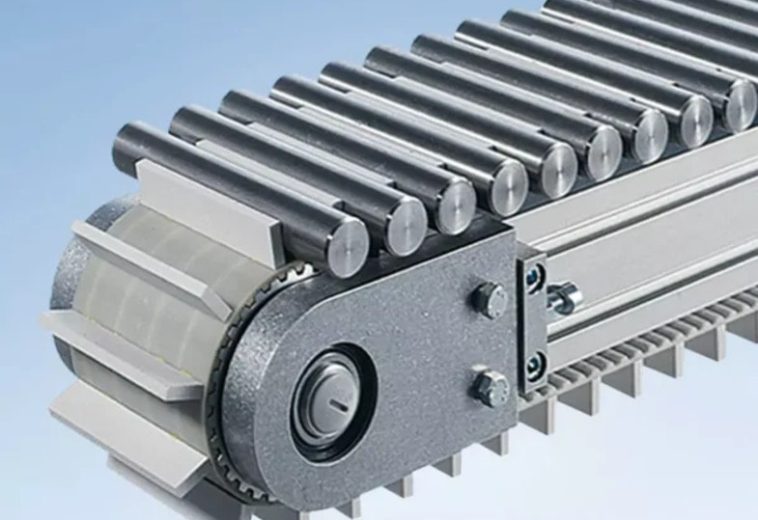
Timing belt conveyors are precision-driven material handling systems used in applications where position accuracy, synchronization, and repeatability are critical. Unlike friction-based conveyors, timing belt conveyors operate using a positive drive mechanism, eliminating belt slippage and allowing products to be positioned and indexed with repeatable accuracy typically within ±0.05–0.1 mm.
What is a Timing Belt Conveyor and how does it differ from standard belt systems?
A timing belt conveyoralso known as a synchronous belt conveyor-represents a significant step up in precision compared to flat belt systems. While flat belts rely on friction between the belt and pulley, timing belt conveyors use belts with molded teeth that mesh directly with matching pulley grooves.
This positive drive principle ensures that belt movement is mechanically locked to pulley rotation. As a result, even under high acceleration or frequent start–stop cycles, the belt does not slip.
In real-world automation applications, this allows consistent positioning across thousands of cycles without cumulative error-something friction-based belts struggle to achieve, especially at speeds above 40 m/min or during rapid indexing.
What Is a Timing Belt Used For?
A timing belt is used when precise motion control is more important than simple material transport. Instead of relying on friction, the belt’s teeth ensure exact synchronization between the drive pulley and the belt.
Common uses of timing belts in conveyor systems include 5 main application:
- Precise product positioning: Timing belts allow products to stop, start, or index at exact positions, which is critical for pick-and-place, labeling, and inspection processes.
- Synchronized movement with machines: In automated lines, timing belt conveyors often operate in sync with robots, sensors, or other equipment to ensure coordinated operation.
- Consistent speed without slippage: Because there is no belt slip, timing belts maintain consistent speed even under load changes.
- Indexing and step-by-step conveying: Timing belts are ideal for applications where products must move in fixed increments rather than continuous flow.
Clean and low-maintenance operation: Many timing belts are made from polyurethane or reinforced materials that are suitable for clean environments.
What Are the Three Types of Conveyor Belts?
In industrial conveyor systems, conveyor belts are commonly categorized into three main types based on how they transmit motion and handle loads. This classification is widely used across Southeast Asian and Malaysian industrial SEO content.
1. Flat Belt Conveyors
Flat belt conveyors are one of the most common conveyor types used in industrial material handling thanks to their simple design and broad usability. By relying on friction between a smooth belt and pulleys, they provide an economical and easy-to-maintain solution for standard conveying tasks where high precision is not required.
Key characteristics:
- Simple and cost-effective design
- Suitable for light to medium loads
- Widely used for general material handling
Typical applications:
- Warehousing and logistics
- Packaging and sorting lines
- General manufacturing transport
Flat belt conveyors are popular because of their simplicity and versatility, but they may experience belt slippage under high load or precise positioning requirements.
2. Timing Belt Conveyors
Timing belt conveyors use toothed belts that mesh directly with pulleys, providing slip-free, synchronized motion for applications requiring accurate positioning and consistent speed.
Key characteristics:
- Positive drive with no slippage
- High positional accuracy
- Ideal for automation and indexing
Typical applications:
- Assembly lines
- Automated production systems
- Pick-and-place and robotic integration
Timing belt conveyors are chosen when precision and synchronization are required rather than just material transport.
3. Modular Belt Conveyors
Modular belt conveyors use interlocking plastic or metal modules, offering a durable conveying surface that is easy to maintain and adapt to different industrial conditions.
Key characteristics:
- Durable and flexible belt structure
- Easy to repair and modify
- Resistant to moisture and chemicals
Typical applications:
- Food and beverage processing
- Packaging and bottling lines
- Applications requiring frequent cleaning
Modular belt conveyors are well suited for environments that demand hygiene, durability, and flexibility.
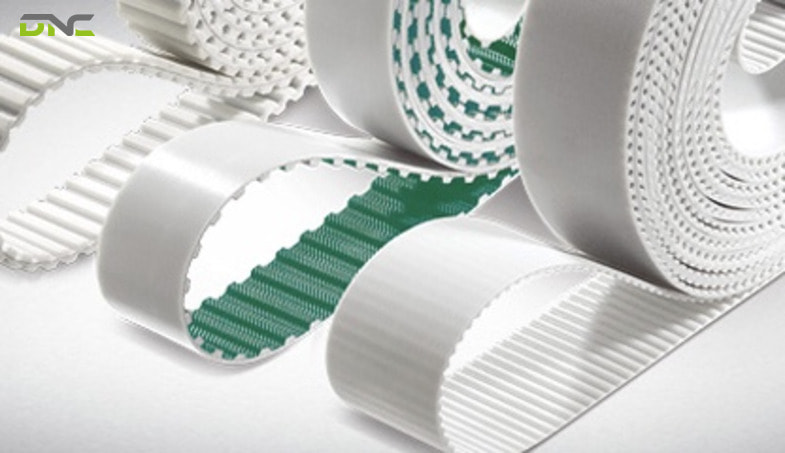
Conveyor belts are commonly categorized into three main types based on how they transmit motion and handle loads.
What are the benefits of Timing Belt Conveyors?
Business choose belt drive systems when errors are near zero because of the following 4 benefits:
- Absolute Positional Accuracy: Because the belt cannot slip, you can track the exact location of a product based on motor encoder counts. This is essential for applications involving vision inspection or laser marking.
- High Acceleration and Deceleration: The positive tooth engagement allows the system to ramp up to high speeds and stop instantly without the belt sliding forward due to inertia.
- Synchronous Multi-Lane Operation: You can connect two separate conveyor lanes to a single drive shaft. Because both lanes are driven by toothed pulleys, they will stay perfectly “in-sync” with each other, which is a common requirement for moving wide pallets or large automotive parts.
Cleanliness and Low Maintenance: PU belts do not “shed” black rubber dust like traditional friction belts. This makes them ideal for cleanrooms, pharmaceutical packaging, and electronics assembly.
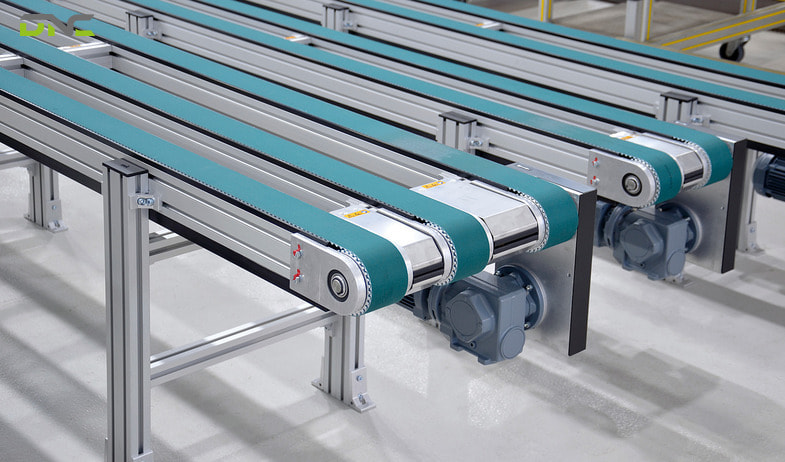
Timing belt conveyors are the “special forces” of material handling, used in high-complexity environments
In which industrial applications are Timing Belt Conveyors indispensable?
Timing belt conveyors are designed for high-precision and high-complexity material handling environments, where conventional belt conveyors are no longer sufficient. They are typically used in 4 core application:
- Electronic Assembly (PCB Lines): Moving delicate circuit boards through pick-and-place machines where the stopping position must be accurate to within ±0.05mm.
- Packaging and Labeling: Ensuring that a bottle or box arrives at the labeling head at the exact millisecond required for perfect label alignment.
- Robotic Integration: Serving as the transport layer for Delta or SCARA robots, where the conveyor and robot move in “electronic gearing” synchronization.
Automotive Component Indexing: Moving heavy engine parts or battery modules between automated machining or testing stations.
How to properly maintain and troubleshoot Timing Belt Conveyors?
While timing belt systems are low-maintenance, they are not “no-maintenance.” To ensure long-term accuracy, follow these protocols:
- Visual Tooth Inspection: Check for “hooking” or uneven wear on the teeth. This is often a sign of a pitch mismatch or an improperly aligned pulley.
- Sonic Tension Testing: Precision belts should be tensioned using a Sonic Tension Meter, which measures the frequency of the belt’s vibration (like a guitar string) to ensure it meets the exact Newton-meter specifications of the design.
- Pulley Alignment (Parallels and Squaring): If the drive and tail pulleys are not perfectly parallel, the belt will exert force against the side guides, leading to “edge fraying” and increased friction.
- Debris Removal: Because the system relies on teeth meshing with grooves, any debris (like a stray screw or hardened glue) that gets stuck in a pulley groove can cause the belt to “jump” a tooth, instantly ruining the system’s synchronization.
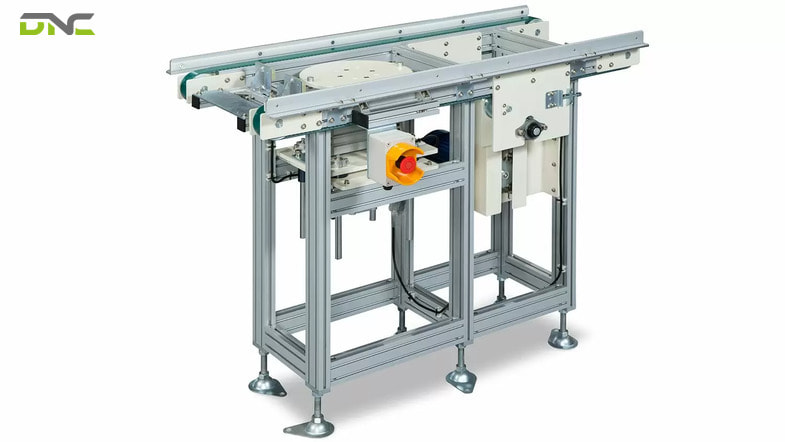
While timing belt systems are low-maintenance, they are not “no-maintenance.” To ensure long-term accuracy, follow these protocols
Why is DNC Automation the expert partner for your Timing Belt Conveyor solutions?
If you are uncertain about where to purchase a Timing Belt Conveyor, DNC Automation is an excellent option for you. Many customers have trusted DNC to provide automation solutions in the production process and have had positive experiences because:
- DNC is a leading technology, automation, and engineering company in Malaysia with over 15 years of experience in the field of automation
- System integration machinery, Internet of Things (IoT), Industry 4.0, and WinCC Scada System
- Diverse designs and sizes are suitable for many domestic and foreign houses. The equipment is 100% genuine and imported from Malaysia.
Please contact us via the hotline below if you have any questions about the product, we are happy to answer you!
- 8 views
- 0 Comment
Recent Comments