


Motorized Conveyor: Types, Drive Systems, PLC Integration, and Selection Guide
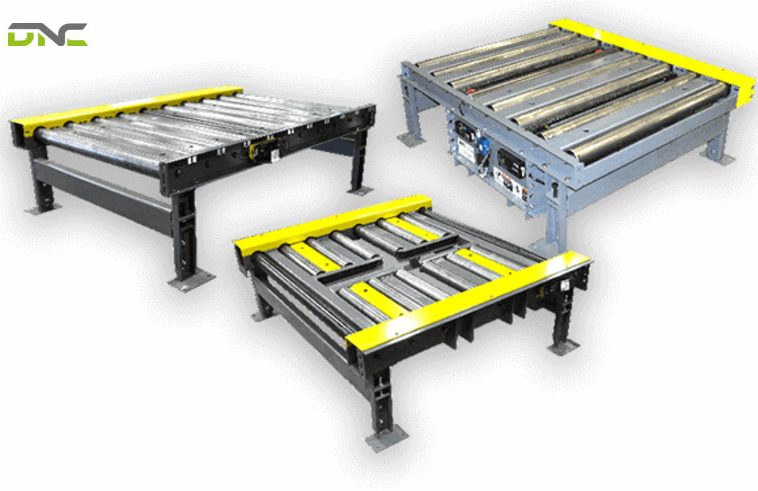
Motorized Conveyor: Types, Drive Systems, PLC Integration, and Selection Guide
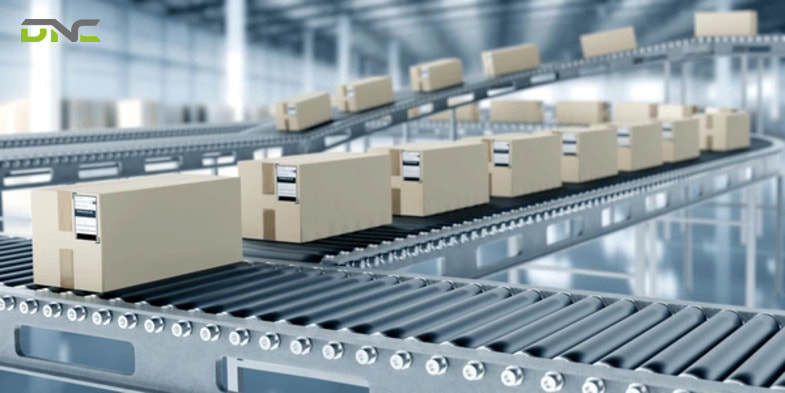
A motorized conveyor uses an electric motor — directly coupled, belt-driven, or via gearbox — to power product or material movement along a defined path. Unlike gravity conveyors (which rely on slope and product weight) or manual push conveyors, motorized conveyors provide controlled, consistent speed independent of incline, load, or operator force — enabling timed production processes, automated throughput control, and PLC-integrated material flow.
The term “motorized conveyor” encompasses every electrically powered conveyor type: belt, roller, chain, screw, vibrating, and pneumatic. In Malaysian manufacturing and logistics, motorized conveyors are the backbone of production lines, packaging operations, distribution centre flow, and automated material handling — driven by everything from simple fixed-speed gearmotors to servo-controlled indexing systems integrated with Siemens S7-1500 PLC and Industry 4.0 SCADA.
Motorized Conveyor Types
Motorized Belt Conveyor
A continuous belt driven by an electric motor through a head pulley. The most universal motorized conveyor — suitable for any product that can rest stably on a flat surface.
Drive types: Direct-coupled gearmotor (most common); V-belt drive from a remote motor to head shaft; chain drive for higher torque applications.
Speed control: Fixed speed (fixed-ratio gearbox + direct online motor) for simple applications; VFD (variable frequency drive) for adjustable speed — enabling the conveyor to match upstream or downstream process rates.
Power range: 0.09 kW (small table-top) to 22 kW+ (heavy-duty long-distance industrial).
Applications in Malaysia: Packaging line infeed, carton transfer, food product conveying (F&N, Nestlé, Ramly), electronics PCB transport, airport baggage handling (KLIA, klia2, Penang International).
Motorized Roller Conveyor (MDR)
24VDC or 48VDC brushless motors inside roller tubes — each zone independently controlled. See the Motorised Roller Conveyor guide for full MDR specifications.
Key differentiator vs. motorized belt: MDR zones can start/stop individually (zero pressure accumulation); motor belt conveyors run continuously or stop as a full unit.
Motorized Chain Conveyor
An electric motor drives a chain system — roller chain, engineering chain, slat chain, or drag chain — to transport heavy products or bulk materials.
Types:
- Slat chain conveyor: Steel or plastic slats form the conveying surface — for heavy, hot, or abrasive products (engine blocks, castings, glass bottles).
- Chain-on-edge conveyor: Products hang or rest on vertical chain edges — used for painting, coating, and surface treatment lines (automotive and furniture).
- Overhead chain conveyor: P&F or monorail overhead system — see Conveyor Trolley guide.
Applications in Malaysia: Automotive assembly (Toyota, Proton, Perodua engine and body lines), glass bottle conveying (ACI Pacific, Malaya Glass), foundry casting handling.
Motorized Screw Conveyor
An Archimedes screw (helical flight on a central pipe or shaft) driven by a gearmotor — transports bulk materials axially through a trough. Motorized screw conveyors handle granular, powder, and semi-solid materials that belt conveyors cannot contain (flour, cement, chemical powders, wet sludge).
Speed control: Standard gearmotors at fixed speed; VFD for variable feed rate control (e.g., matching screw feeder output to downstream batch mixer demand).
Applications: Grain feed mills (adjustable-speed screw feeder into mixer), cement batching plants, chemical dosing, wastewater sludge transfer.
Vibrating (Vibratory) Conveyor
An electric motor (or electromagnetic driver) vibrates a trough at 15–60 Hz — material moves forward by micro-hop under controlled vibration parameters (frequency, amplitude, trough angle). Used for controlled feeding of granular materials at precise rates to downstream equipment.
Advantage over belt/screw: Hygienic (no belt or moving parts in contact with material), easy cleaning, no lubrication required in the material contact zone.
Applications: Pharmaceutical tablet feeding to packaging machines, food ingredient dosing (spices, nuts, seeds), mining aggregate sizing infeed.
Pneumatic Conveyor
Compressed air (pressure or vacuum) transports material through enclosed tubes. Classified as motorized because the blower or compressor is electric-powered.
Types: Dilute phase (material suspended in air stream, 15–30 m/s); dense phase (material plugs pushed at 5–15 m/s, lower material degradation).
Applications: Flour and starch handling in food plants, cement plant raw material transfer, pharmaceutical powder transfer between process steps.
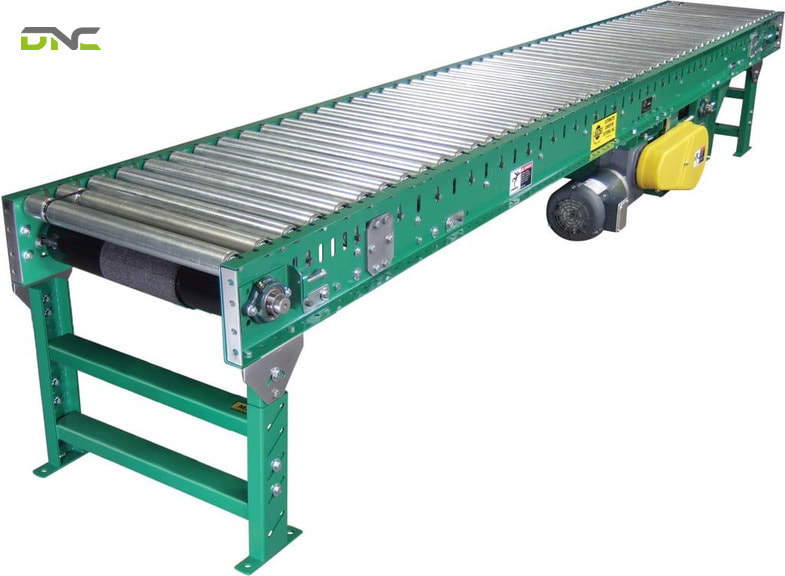
Motorized conveyors are widely adopted because they provide control, consistency, and scalability, which are essential for automation.
Motor and Drive Selection for Motorized Conveyors
Fixed Speed Gearmotor
The simplest drive — motor + integral helical bevel or worm gearbox in a single unit. Fixed output speed. Low cost, minimal maintenance.
When to specify: Fixed conveyor speed is acceptable; no need for speed adjustment during operation; simple start/stop control (contactor or soft starter).
Common suppliers for Malaysian market: SEW-Eurodrive, Siemens (SIMOGEAR), Bonfiglioli, Nord Drivesystems — all with local Malaysia service centres.
VFD (Variable Frequency Drive) Controlled Motor
A VFD adjusts motor frequency (and therefore speed) — typically 5–100% of base speed. Enables:
- Speed matching between conveyor sections
- Acceleration and deceleration ramp control (reduces product sliding on start/stop)
- Remote speed adjustment from PLC (4–20 mA or digital fieldbus)
- Soft start (eliminates current surge at motor start)
Energy saving: VFD reduces motor speed proportionally to actual throughput demand — potential 30–50% energy saving versus fixed-speed motors running at partial load.
Siemens SINAMICS G120: Standard VFD for motorized conveyors in DNC Automation projects — with PROFINET connectivity to Siemens S7-1500 PLC for remote speed control and fault monitoring.
Servo Motor Drive
Servo drives provide precise speed and position control with encoder feedback — used where belt position or timing accuracy is critical (indexing conveyors, precision positioning, synchronized multi-zone systems).
Cost vs. gearmotor: 3–8× higher. Specify only where positioning accuracy (±0.5 mm) or synchronization with robots/vision systems justifies the premium.
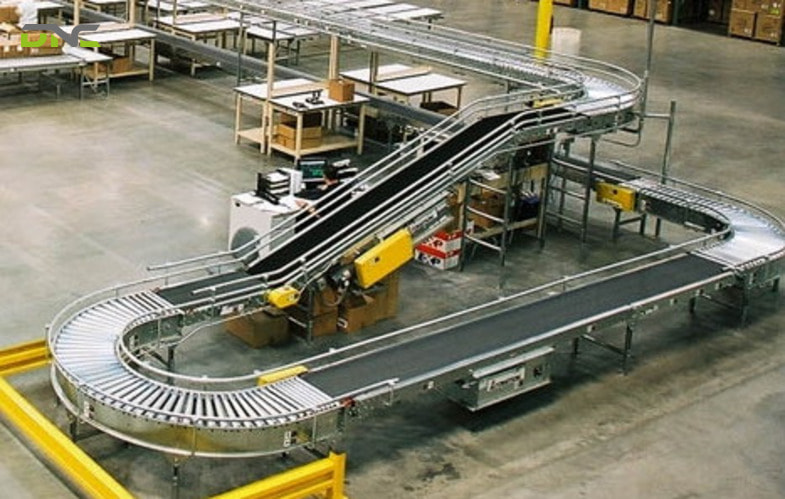
Motorized conveyors come in several configurations, each optimized for specific material characteristics and operational needs.
PLC Integration for Motorized Conveyors
A Siemens S7-1500 PLC integrates with motorized conveyors to provide:
Speed control: PLC sends analog 4–20 mA or PROFINET speed setpoint to VFD — conveyor speed adjusts automatically to match production rate.
Start/stop sequencing: PLC starts and stops individual conveyors in sequence (downstream first, upstream last) to prevent product accumulation during shutdown.
Fault monitoring: VFD fault status (overcurrent, overheat, communication fault) reported to PLC → alarm generated → production line safely halted.
Throughput counting: Photoelectric sensors at conveyor infeed and outfeed count products passing → PLC calculates actual throughput → SCADA displays vs. target rate.
Motor current monitoring: VFD reports motor current to PLC — current above baseline indicates belt tension, chain wear, or mechanical obstruction — enabling predictive maintenance before failure.
SCADA and MES integration: OPC-UA from Siemens S7-1500 connects conveyor speed, throughput, and fault data to factory SCADA (WinCC) and MES — providing real-time production monitoring and historical production data for OEE analysis.
Energy Efficiency Considerations
Fixed-speed conveyor at partial load: Motor runs at full power regardless of throughput — a conveyor transporting 50% of rated capacity at fixed speed still draws 80–90% of rated motor power.
VFD-controlled conveyor at 70% speed: Motor power scales approximately as speed³ for fan/pump loads, and speed¹ for conveyor loads (constant torque). For conveyor: P ∝ speed. Running at 70% speed saves approximately 30% energy.
MDR zone control: Zones stop when empty — dramatic energy saving for conveyors that are idle for significant portions of shift time.
For a medium Malaysian factory with 20 motorized conveyor sections averaging 1.5 kW each, running 2 shifts (16 hours/day): monthly energy cost at RM 0.40/kWh = RM 3,840/month. VFD retrofits at 30% saving = RM 1,150/month = RM 13,800/year saving — typically paying back VFD hardware cost in 12–24 months.
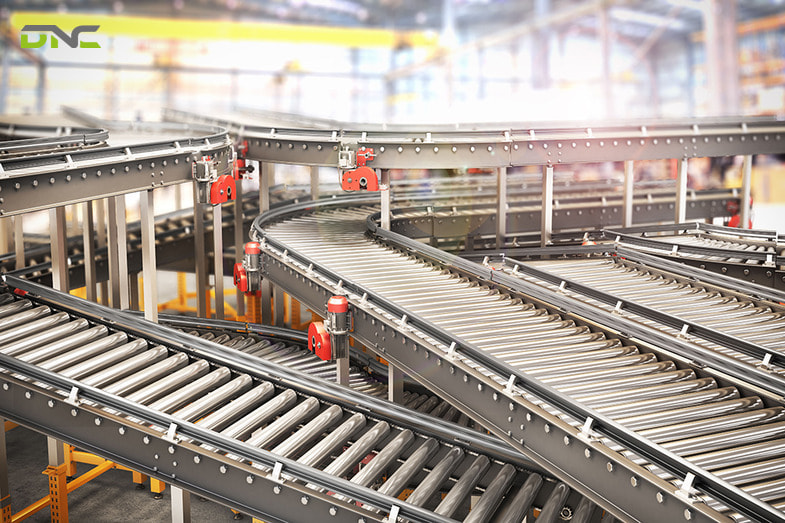
Motorized conveyors can also be classified by how power is transmitted to the conveying surface.
Malaysian Industry Applications
Electronics Assembly (Penang, Selangor)
Motorized belt and MDR roller conveyors transport PCBs between SMT machines, link multiple production lines, and provide buffer accumulation between process stages — all with VFD speed control matched to SMT machine cycle times.
Food and Beverage (Nationwide)
Motorized conveyors at F&N, Nestlé, Ramly, and hundreds of Malaysian food manufacturers carry products through filling, weighing, metal detection, sealing, labelling, and palletising — connected by VFD-controlled belt and roller conveyors matched to filling machine output rates.
Automotive (Shah Alam, Johor)
Motorized slat chain and overhead conveyors transport vehicle bodies and sub-assemblies through paint, assembly, and test operations. Toyota Shah Alam’s production conveyors operate 24/5 with production rates controlled by VFD to exactly match takt time.
Logistics and E-Commerce (Klang Valley)
Distribution centres run extensive motorized belt and MDR roller conveyor networks — sorters, merge, divert, scan tunnels, and zone accumulation — all PLC-controlled with real-time throughput monitoring.
Selection Guide
| Application | Recommended Type | Drive | Control |
| Product transport, general | Motorized belt | Fixed gearmotor | Contactor |
| Variable-speed line | Motorized belt | VFD + gearmotor | PLC analog |
| Accumulation required | MDR roller | 24VDC per zone | Zone controller |
| Heavy product | Slat chain | Fixed gearmotor | Contactor |
| Precision position | Timing belt + servo | Servo drive | PLC servo axis |
| Bulk material | Screw/drag chain | VFD for rate control | PLC |
| Fragile granules | Vibratory | EM or motor | Amplitude controller |
What Are Common Problems and Limitations of Motorized Conveyors?
DNC Automation’s Motorized Conveyor Solutions
DNC Automation designs, fabricates, and commissions motorized conveyor systems for Malaysian manufacturers — from single motorized belt conveyors to complete multi-zone production line systems.
Standard scope: Motor and VFD selection, Siemens S7-1500 PLC integration, PROFINET network, WinCC SCADA throughput monitoring, and full electrical panel fabrication in DNC’s in-house panel shop.
MIDA SAG: Motorized conveyor systems as part of production automation investments qualify for MIDA’s Strategic Automation Grant (up to RM 1 million, 50% of qualifying capex). DNC provides full grant application support.
Contact DNC Automation for motorized conveyor specification, drive selection, and PLC integration proposals.
Summary
Motorized conveyors — belt, roller (MDR), chain, screw, vibrating, and pneumatic types — provide the controlled, consistent material flow that manual and gravity conveyors cannot deliver. Drive selection (fixed gearmotor, VFD, or servo) determines speed control capability and energy efficiency; PLC integration adds throughput monitoring, fault management, and MES connectivity. For Malaysian manufacturers targeting Industry 4.0 under NIMP 2030, motorized conveyors with VFD control and Siemens PLC integration are the foundation layer of smart factory infrastructure.
- 141 views
- 0 Comment
Recent Comments