


Teflon Conveyor Belt: The Complete Guide for Malaysian Manufacturers
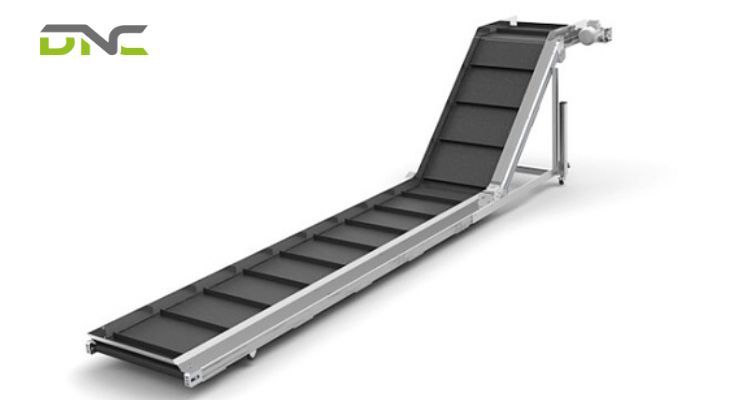
Malaysian biscuit factories running continuous 200°C tunnel ovens, chocolate enrobing lines at Guan Chong Berhad, and semiconductor wafer processing facilities in Penang all share one critical requirement: a conveyor belt that refuses to melt, stick, or contaminate product at extreme temperatures. Teflon conveyor belts — constructed from PTFE (polytetrafluoroethylene) coatings on woven fiberglass substrates — deliver operating performance from -200°C to +260°C, making them the only commercially viable belt solution for continuous high-temperature conveying. Standard UHMW-PE belts fail above 82°C. Silicone belts degrade above 220°C in continuous duty. Stainless steel mesh corrodes in acidic food environments and leaves grid marks on delicate products. PTFE conveyor belts solve all three failure modes simultaneously, which is why DNC Automation — Malaysia’s Top #1 Factory Automation Company — specifies them for every high-temperature conveyor installation at facilities from Johor biscuit manufacturers to Penang cleanroom fabs. This guide covers every type, specification, application, and selection criterion a Malaysian manufacturing engineer needs to specify and install a teflon conveyor belt correctly.
What Is a Teflon Conveyor Belt?
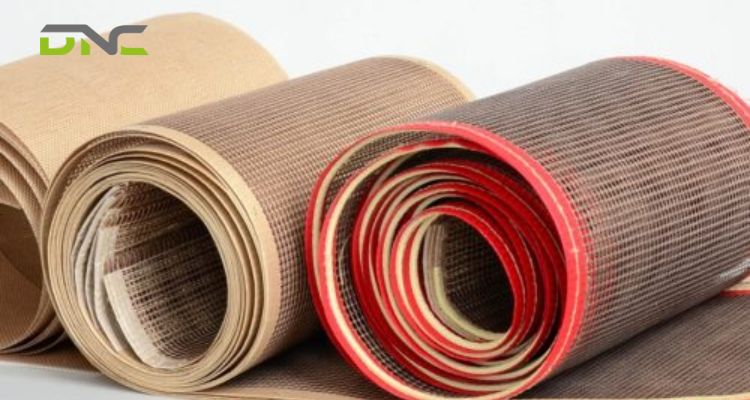
A teflon conveyor belt is a continuous loop conveyor belt constructed from PTFE (polytetrafluoroethylene) — the same fluoropolymer branded as Teflon by Chemours — applied as a coating or laminate to a woven fiberglass or E-glass substrate. PTFE coating thickness typically ranges from 0.13 mm to 1.5 mm depending on application, while the total belt thickness ranges from 0.1 mm (PTFE film belts) to 4.5 mm (heavy-duty coated mesh). The fiberglass base provides dimensional stability and tensile strength, while the PTFE coating delivers the material’s defining properties: chemical inertness, non-stick surface, wide temperature tolerance, and FDA/EU food-contact compliance.
PTFE is a fluoropolymer with a carbon-fluorine backbone — the C-F bond being the strongest bond in organic chemistry. This molecular architecture explains why PTFE is resistant to virtually every industrial chemical, maintains flexibility at cryogenic temperatures, and sustains mechanical integrity at continuous 260°C exposure. Contact angle on PTFE surfaces reaches 108°, meaning food products, adhesives, resin, and most industrial materials simply cannot bond to the surface under normal process conditions. The FDA classifies PTFE as an approved food-contact material under 21 CFR 177.1550; EU Regulation 10/2011 equally approves PTFE for food contact.
How Does a Teflon Conveyor Belt Work?
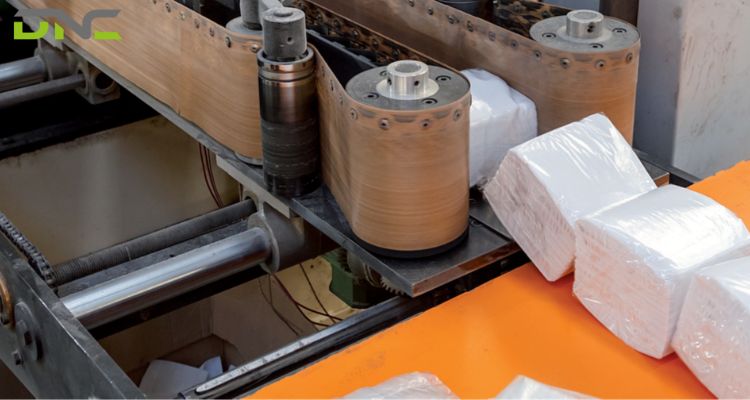
Teflon conveyor belts operate on the same mechanical principle as any flat belt conveyor: a continuous loop belt is driven by a powered head pulley and returns via a tail pulley, with the carrying strand supported by either a flat platen, roller supports, or a wire mesh support deck. The PTFE material properties, however, introduce specific operational considerations that differ fundamentally from rubber or PVC conveyor belts.
Step 1 — Belt Tensioning and Tracking
PTFE-coated fiberglass belts have very low elongation under tension (typically 0.1–0.5%), meaning they require precise initial tensioning and minimal re-tensioning over service life. Belt tracking is achieved through crowned pulleys (typically 0.5–1% crown) or through adjustable tracking rollers. DNC Automation engineers tension PTFE belts to manufacturer-specified values using calibrated tensiometers — over-tensioning a PTFE belt stresses the fiberglass weave and causes premature belt cracking at the edges.
Step 2 — Drive Pulley Engagement
PTFE’s low coefficient of friction (0.05–0.20 kinetic, depending on load and speed) requires higher drive pulley surface grip than rubber belts. Drive pulleys for PTFE belts are typically lagged with rubber or polyurethane to achieve adequate traction. Alternatively, positive-drive systems using sprocket-driven PTFE mesh belts eliminate slip entirely by engaging the mesh structure mechanically. Drive motor sizing must account for PTFE’s low starting resistance — acceleration torque is the critical design load, not steady-state running torque.
Step 3 — Product Loading and Release
Product loaded onto a teflon conveyor belt at the infeed end experiences PTFE’s non-stick release properties immediately. For baked goods coming out of tunnel ovens at 180–220°C, residual sugars and fats that would fuse to steel or polyester belts release cleanly from PTFE surfaces. Cleaning between product runs requires only a wipe-down or rinse; no scraping or solvent cleaning is required. For chocolate enrobing applications, chocolate that drips through open mesh PTFE belts falls away cleanly without accumulating.
Step 4 — Return Strand Management
Return strand management for PTFE belts is simpler than for modular plastic or stainless belts because PTFE’s flexibility allows tight return pulley radii. Minimum pulley diameters for PTFE belts range from 25 mm (thin film belts) to 200 mm (heavy-duty coated mesh). Return path scrapers are rarely needed due to PTFE’s self-releasing surface — a significant maintenance reduction compared to rubber belts that require continuous scraper contact.
Step 5 — Temperature Zone Management
Teflon conveyor belts operating inside tunnel ovens must accommodate thermal expansion of both the belt and the conveyor frame. PTFE’s coefficient of thermal expansion is 112–125 × 10⁻⁶/°C — significantly higher than steel (12 × 10⁻⁶/°C). DNC Automation designs conveyor frames with expansion joints and floating pulley bearing mounts to prevent belt tension spikes as operating temperature rises from ambient to 260°C.
Step 6 — Belt Cleaning and Sanitization
PTFE conveyor belts in food applications can be sanitized with steam (up to 260°C), hot water, dilute caustic solutions, or most food-grade sanitizers. Abrasive cleaning tools must never be used — they damage the PTFE coating surface and create microscopic crevices that harbor bacteria. DNC Automation specifies CIP (Clean-In-Place) spray nozzle systems for automated belt washing on food production lines, reducing sanitation time from 45 minutes (manual) to under 10 minutes.
Types of Teflon Conveyor Belt
Malaysian manufacturers encounter five distinct PTFE belt constructions, each optimized for specific temperature ranges, product types, and process environments. Selecting the wrong type results in premature belt failure, product contamination, or inadequate airflow — all costly outcomes in high-throughput production lines.
1. Solid PTFE Belt (Full-Coating, No Mesh Openings)
Solid PTFE belts feature a continuous PTFE-coated surface with no openings in the carrying surface. The woven fiberglass base is fully encapsulated on both sides with PTFE, creating a smooth, impermeable belt surface. Solid PTFE belts are specified for applications where fine particulate product (powders, granules, pharmaceutical tablets) must not fall through the belt, where absolute hygiene is required (medical devices, pharma), or where a smooth product contact surface prevents marking. Maximum operating temperature reaches 260°C continuously. Belt thickness is typically 0.5–3.0 mm for solid constructions.
2. Open Mesh PTFE Belt (Woven Fiberglass Mesh + PTFE Coating)
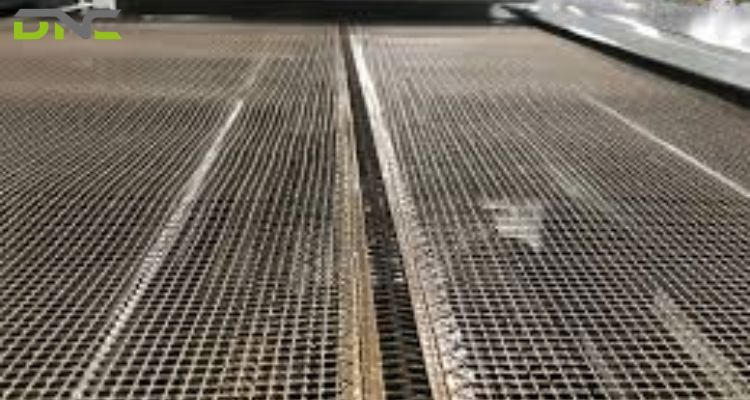
Open mesh PTFE belts are the most widely deployed belt type in Malaysian food processing. Woven fiberglass yarns create a regular mesh pattern — typical mesh openings range from 2×2 mm to 10×10 mm — and PTFE coating is applied to all fiberglass strands while preserving the open mesh structure. Airflow through the belt allows hot oven air to contact the underside of products directly, reducing baking and drying time by 15–25% compared to solid belts in tunnel ovens. Chocolate, oil, and batter drip cleanly through the mesh without accumulation. Open mesh PTFE belts are used in biscuit tunnel ovens, pizza ovens, snack dryers, and chip fryers.
3. PTFE-Coated Glass Fiber Belt (Standard Laminate Construction)
PTFE-coated glass fiber belts represent the broadest production volume category globally. E-glass woven fabric is coated with multiple PTFE layers (typically 3–7 impregnation passes) to achieve coating thickness of 0.13–0.30 mm per side. Belt thickness ranges from 0.13 mm to 1.5 mm total. These belts exhibit high flexibility (bend radius down to 10 mm), excellent tensile strength (up to 2,000 N/cm warp direction), and operating temperatures from -70°C to +260°C. PTFE-coated glass fiber belts dominate shrink wrap tunnels, heat sealing machines, and pharmaceutical drying applications in Malaysia.
4. PTFE Film Belt (Ultra-Thin Precision Applications)
PTFE film belts are manufactured without a fiberglass substrate — they consist entirely of sintered or skived PTFE sheet formed into a continuous belt loop. Belt thickness ranges from 0.1 mm to 0.5 mm. The absence of fiberglass eliminates any risk of glass fiber contamination — critical in semiconductor cleanroom applications where any particulate is unacceptable. PTFE film belts are used in wafer processing equipment, precision laminating presses, and Class 100 cleanroom conveyors in Penang’s semiconductor backend facilities.
5. Seamed vs. Seamless PTFE Belt
PTFE belts with mechanical joints (seamed belts) use stainless steel wire loops, clipper lacing, or PTFE finger joints to connect belt ends. Seamed belts are field-repairable and cost-effective for large conveyor installations. Seamless (endless) PTFE belts are welded or molded without any joint — critical for applications where joint marks on products are unacceptable (chocolate slab casting, pharmaceutical tablet coating, wafer processing). DNC Automation supplies both configurations, with seamless belts custom-manufactured to specified loop lengths.
Comparison Table: PTFE vs. Alternative Belt Materials
| Property | PTFE (Teflon) | Silicone | Stainless Steel Mesh | UHMW-PE |
| Max Continuous Temp | 260°C | 220°C | 500°C+ | 82°C |
| Min Operating Temp | -200°C | -60°C | -200°C | -100°C |
| Non-stick Rating | Excellent (108° contact) | Good | Poor | Good |
| FDA Food Grade | Yes (21 CFR 177.1550) | Yes (food-grade grades) | Yes (316SS) | Yes |
| Chemical Resistance | Excellent | Good | Good (316SS) | Good |
| Belt Flexibility | High | Very High | Low | Medium |
| Product Marking Risk | None | None | Grid marks | None |
| Relative Cost | Medium-High | Medium | High | Low |
| Typical Replacement Interval | 18–36 months | 12–24 months | 5–10 years | 6–18 months |
UHMW-PE fails completely above 82°C — any Malaysian factory running products through ovens above 180°F (82°C) has no viable choice except PTFE or silicone. For continuous duty above 220°C, PTFE is the sole commercial option.
Key Components of a Teflon Conveyor Belt System
A complete teflon conveyor belt installation comprises more than the belt itself. DNC Automation engineers specify and supply every mechanical component as an integrated system.
Drive Assembly. The drive assembly consists of a head pulley (rubber-lagged for PTFE belt grip), gear motor (typically 0.37–7.5 kW depending on belt width and load), and drive shaft. For oven conveyor applications inside high-temperature zones, the drive motor is mounted outside the oven housing with a stainless steel shaft extension through a ceramic fiber insulated bearing block.
Conveyor Frame. PTFE belt conveyors for food and pharma applications are fabricated from 304 stainless steel (minimum) or 316 stainless steel for acidic environments. Frame profiles use round or oval tubing to prevent product debris accumulation — flat horizontal surfaces are eliminated from hygienically designed conveyors per EHEDG guidelines.
Support Deck or Rollers. The carrying strand of a PTFE belt is supported either by a flat PTFE-coated stainless steel platen (for fragile products) or by PTFE-coated support rollers (for heavier loads or high-speed applications). Support spacing is determined by maximum allowable belt sag — typically 3–5 mm maximum sag between supports.
Tracking System. PTFE belts use crowned pulleys (0.5–1.0% crown) as the primary tracking mechanism. Secondary tracking adjustment is provided by laterally adjustable idler rollers on the return strand. Automatic belt tracking systems (pneumatic or electric actuator) are available for wide PTFE belts (>1,500 mm) where manual adjustment is impractical.
Tensioning System. Gravity take-up (weighted) or screw take-up tensioning maintains consistent belt tension as PTFE belt elongation changes with temperature. DNC Automation designs gravity take-up systems for oven conveyors where thermal cycling would otherwise require constant manual re-tensioning.
Applications: Where Teflon Conveyor Belt Is Used in Malaysian Manufacturing
Food Processing — Biscuit, Cookie, and Bread Tunnel Ovens
Malaysian biscuit manufacturers — including Munchy’s and Hwa Tai, concentrated in Johor and Selangor — run direct gas-fired or electric tunnel ovens at 180–220°C with belt speeds of 1–5 m/min. Open mesh PTFE belts are the universal specification for tunnel oven carrying belts in this sector. Belt widths range from 800 mm to 1,500 mm, with belt lengths of 15–40 m per oven. PTFE’s open mesh structure allows direct hot air impingement on product undersides, achieving uniform browning without belt contact marks. DNC Automation has supplied PTFE tunnel oven belts to multiple Selangor and Johor biscuit facilities, integrating belt drive PLC control with Siemens SIMATIC systems for precise speed regulation within ±0.1% of setpoint.
Cocoa and Chocolate Processing
Guan Chong Berhad — one of the world’s largest cocoa processors and a confirmed DNC Automation client — operates chocolate enrobing lines where warm liquid chocolate is applied to product centers at 30–45°C. PTFE open mesh belts carry product through the enrober and into the cooling tunnel. The non-stick release property of PTFE prevents chocolate from bonding to the belt surface, eliminating the belt cleaning cycle that rubber and polyester belts require. Chocolate drips fall cleanly through the mesh openings. DNC Automation’s PTFE belt installations at chocolate facilities have reduced belt cleaning time by 40 minutes per shift compared to previous polyester belt installations.
Shrink Wrap Tunnels
Shrink wrap packaging tunnels operate at 120–150°C (polyethylene shrink film) to 180°C (PVC shrink film). PTFE-coated glass fiber belts are the standard carrying belt for shrink tunnel installations — PTFE’s non-stick surface prevents plastic film drips from bonding to the belt, and its temperature tolerance far exceeds the process requirement. Malaysia’s FMCG packaging sector — Unilever and F&N are confirmed DNC clients — relies on shrink wrap tunnels for bottled water, carbonated drinks, and household product bundling.
Pharmaceutical Tablet Drying
Selangor’s pharmaceutical corridor houses API manufacturers and tablet coating facilities operating fluid bed dryers and tunnel dryers at 40–80°C (standard) and up to 200°C (specialized processes). Solid PTFE belts provide the contamination-free, non-porous surface required by GMP guidelines. PTFE’s chemical inertness means pharmaceutical cleaning solvents (IPA, acetone) do not degrade the belt material. DNC Automation supplies PTFE belt conveyors for pharma tablet transport with full traceability documentation for DOSH and MQA regulatory submissions.
Semiconductor Wafer and Component Processing
Penang — Malaysia’s “Silicon Valley of the East,” contributing 58% of national E&E exports and 5% of global semiconductor sales — hosts Intel, AMD, HP, and Flex facilities processing semiconductor wafers and packages. PTFE film belts operate in die attach, wire bonding, and final inspection equipment at temperatures up to 250°C. Cleanroom compatibility (no outgassing, no particulate shedding) makes PTFE the exclusive choice for wafer-level conveying. DNC Automation’s Penang branch works directly with EMS and semiconductor backend facilities requiring PTFE belt integration into existing process equipment.
Benefits of Teflon Conveyor Belt for Factory Operations
Temperature Versatility Eliminates Belt Changeouts. A single PTFE belt specification covers processes from frozen food handling (-70°C) to high-temperature baking (260°C), eliminating the inventory and changeover cost of maintaining multiple belt types for different temperature zones. Malaysian manufacturers report 30–40% reduction in belt inventory SKUs after standardizing on PTFE belt systems.
Non-Stick Release Reduces Cleaning Time by 40–60%. PTFE’s 108° water contact angle prevents product adhesion, meaning post-production cleaning requires only a water rinse or wipe rather than scraping or solvent treatment. Factories operating two shifts report reclaiming 1.5–2 hours per day of production time previously lost to belt cleaning.
80% Reduction in Human Error from Contamination Events. DNC Automation’s PTFE belt installations, combined with automated CIP cleaning systems, reduce human-caused cleaning inadequacies. FDA-compliant PTFE eliminates belt material as a source of chemical contamination in food and pharma audits.
50% Operational Cost Savings Over 5-Year Lifecycle. Despite higher initial purchase cost versus rubber or polyester belts, PTFE belts deliver lower total cost of ownership through longer service life (18–36 months vs. 6–12 months for polyester in oven applications), reduced cleaning labor, and elimination of product rejects caused by belt contamination or marking.
ISO 9001:2015 Quality Assurance. DNC Automation, certified ISO 9001:2015, documents all PTFE belt installations with material certificates, operating specifications, and maintenance schedules — supporting clients’ own ISO, HACCP, and GMP compliance documentation.
How to Choose the Right Teflon Conveyor Belt for Your Factory
Define Maximum Process Temperature. Maximum continuous operating temperature determines whether PTFE is required or whether a lower-cost alternative suffices. Below 80°C, UHMW-PE or polyester is adequate. Between 80°C and 220°C, silicone is an option. Above 220°C or in continuous high-temperature duty, PTFE is the only compliant choice.
Determine Airflow Requirement. Open mesh PTFE belts are specified wherever hot air must circulate through the belt (tunnel ovens, dryers, fryers). Solid PTFE belts are specified for product containment, hygiene-critical surfaces, or applications where product must not fall through the belt.
Assess Chemical and Contamination Environment. Acidic food products (citrus, vinegar-based), cleaning solvents (caustic CIP), and sanitizing agents (chlorine, hydrogen peroxide) all require PTFE’s chemical inertness. PTFE’s near-universal chemical resistance eliminates the need for chemical compatibility analysis that alternative belt materials require.
Select Seam Type Based on Product Sensitivity. Products that cannot tolerate surface marks — chocolate slabs, pharmaceutical tablets, semiconductor wafers — require seamless PTFE belt construction. Seamed belts are acceptable for biscuits, bread, and packaged products where belt joint marks are non-critical.
Match Belt Width to Conveyor Frame. Standard PTFE belt widths range from 100 mm to 2,500 mm. Custom widths are available from DNC Automation’s supplier network. Belt width should provide minimum 25 mm clearance inside the conveyor frame rail on each side to allow for thermal expansion and tracking adjustment.
Consider Malaysia’s NIMP 2030 and SAG Grant Eligibility. Under Malaysia’s National Investment Master Plan 2030, smart factory upgrades — including automated conveyor systems with Siemens PLC control and SCADA monitoring — qualify for MIDA’s Smart Automation Grant (SAG): up to RM 1 million per facility, 70:30 matching basis. DNC Automation assists clients with SAG grant documentation for PTFE conveyor system investments.
Frequently Asked Questions About Teflon Conveyor Belt
Q: What is the difference between a teflon conveyor belt and a PTFE conveyor belt?
Teflon and PTFE refer to the same material — PTFE is the chemical name (polytetrafluoroethylene) and Teflon is the brand name registered by Chemours (formerly DuPont). All teflon conveyor belts are PTFE belts. “Teflon belt” is the colloquial trade term used in Malaysia and globally; “PTFE belt” is the engineering specification term. Both refer to the same fluoropolymer coating applied to fiberglass substrate conveyor belts.
Q: How long does a teflon conveyor belt last in a biscuit tunnel oven?
PTFE conveyor belt service life in a biscuit tunnel oven operating at 200°C continuously ranges from 18 to 36 months, depending on belt quality, tracking adjustment frequency, and cleaning practices. Misaligned tracking is the primary cause of premature belt failure — edge fraying from contact with frame components reduces belt life to 6–9 months. DNC Automation’s installation protocol includes automatic tracking adjustment systems that extend belt life to the full 36-month range.
Q: Can teflon conveyor belts be repaired if damaged?
Seamed PTFE belts can be repaired in the field by replacing the mechanical clip joint (clipper lacing) or by splicing in a new belt section. PTFE coating surface damage (cuts, abrasions) can be partially repaired using PTFE repair tape for non-critical applications, though belt performance is reduced at repair locations. Seamless PTFE belts cannot be field-repaired — they must be replaced as complete units. DNC Automation stocks common belt widths and lengths for rapid replacement to minimize production downtime.
Q: Are teflon conveyor belts safe for direct food contact?
PTFE conveyor belts meet FDA 21 CFR 177.1550 and EU Regulation 10/2011 requirements for direct food contact. PTFE is non-toxic, odorless, tasteless, and chemically inert — PTFE does not leach into food products even at 260°C continuous exposure. PTFE has been used in food processing equipment globally for over 40 years with an unblemished food safety record.
Q: What is the maximum width available for teflon conveyor belts?
Standard PTFE belt manufacturing widths reach 2,500 mm (2.5 m) without seaming. Wider belts are constructed using welded or seamed sections. For Malaysian industrial bakery applications (continuous band ovens), belt widths of 800 mm to 1,500 mm are standard. DNC Automation sources PTFE belts from certified European manufacturers with full traceability documentation.
Q: How does humidity affect teflon conveyor belt performance in Malaysia?
Malaysia’s tropical climate (24–35°C, 70–95% RH) has zero adverse effect on PTFE belt performance. PTFE absorbs essentially no moisture (water absorption < 0.01%) and its mechanical properties are unaffected by humidity. This is a significant advantage over nylon (polyamide) belts that absorb 2–8% moisture by weight, causing dimensional changes in humid Malaysian factory environments.
Q: What maintenance does a teflon conveyor belt require?
Teflon conveyor belt maintenance consists of: (1) weekly visual inspection of belt edges for fraying or delamination; (2) monthly belt tracking alignment check and adjustment; (3) quarterly tension measurement using a calibrated tensiometer; and (4) post-production cleaning as specified for the product type. DNC Automation provides documented maintenance schedules with all PTFE belt conveyor installations, supporting clients’ ISO 9001 and HACCP maintenance record requirements.
Q: Does DNC Automation supply teflon conveyor belts for retrofit onto existing conveyors?
DNC Automation supplies PTFE belts as standalone replacement parts for existing conveyor installations from any original manufacturer. Belt width, thickness, mesh opening size, and seam type are matched to the existing conveyor specification. DNC’s engineers verify head and tail pulley diameter, drive lagging condition, and tracking mechanism before supplying replacement PTFE belts — preventing the installation errors that cause premature belt failure.
Teflon Conveyor Belt Procurement Checklist for Malaysian Factories
Purchasing a teflon conveyor belt without a complete specification results in receiving the wrong belt — causing installation failure, performance shortfall, or regulatory non-compliance. Malaysian factory engineers should confirm eight parameters before placing any PTFE belt order:
Operating temperature (continuous and peak). Specify both the continuous operating temperature and the maximum peak temperature. A biscuit tunnel oven may operate continuously at 200°C but spike to 230°C during warm-up or after a production pause. Belt specification must cover the peak, not just the continuous temperature.
Belt width and length. Width tolerance for PTFE belt installation is typically ±3 mm — a belt 5 mm wider than the conveyor clearance causes edge damage on the first operating cycle. Measure conveyor frame internal clearance directly, not from drawings. Belt loop length (seamless) or belt length (seamed with joint hardware) must account for the take-up travel range in the tension system.
Mesh opening size (open mesh) or surface type (solid). Open mesh PTFE belts are available in 2×2 mm, 4×4 mm, 6×6 mm, 8×8 mm, and 10×10 mm mesh openings (nominal). Smaller openings reduce airflow through the belt but prevent fine product particles from falling through. Solid belts have no mesh — specify for powders, fine granules, or hygienic applications.
Certification requirements. Malaysian food factories require FDA 21 CFR 177.1550 and HACCP compliance documentation. Pharmaceutical factories require GMP material certification with batch traceability numbers. Semiconductor and cleanroom facilities require outgassing test certification and particle shedding data. Specify required certifications explicitly — not all PTFE belt suppliers provide them.
Seam type. Seamless PTFE belts require manufacturing as a closed loop to the exact specified length — lead times are 4–8 weeks and the belt cannot be cut shorter after manufacture. Seamed PTFE belts are available in standard roll lengths and can be cut to size in the field. For applications where seamless is not required, seamed belts offer faster supply and field repairability.
Drive system compatibility. Positive drive (sprocket-engaged mesh) PTFE belts require matching sprocket pitch on the conveyor head pulley. Friction drive PTFE belts require rubber or polyurethane lagging on the head pulley — minimum lagging thickness 10 mm, Shore A hardness 60–80. Confirm drive system type before ordering belt.
SAG Grant documentation requirements. If the PTFE belt conveyor system is being funded under Malaysia’s Smart Automation Grant (SAG), DNC Automation provides full project documentation including technical specification sheets, installation qualification records, and total project cost breakdown in the format required by MIDA’s SAG application process. SAG grant coverage of up to RM 1 million at 70:30 matching applies to complete conveyor system projects — not individual belt purchases — making full DNC Automation turnkey project scope the optimal approach for SAG-funded installations.
Conclusion
Teflon conveyor belts deliver capabilities no alternative belt material matches above 180°C: FDA-compliant non-stick surface, -200°C to +260°C operating range, chemical resistance to cleaning solvents and food acids, and zero moisture absorption in Malaysia’s tropical factory environments. From Guan Chong Berhad’s chocolate enrobing lines to Penang’s semiconductor cleanrooms, PTFE belt conveyors are the engineering specification that separates reliable high-temperature production from costly belt failures and product contamination events.
DNC Automation — Malaysia’s Top #1 Factory Automation Company since 2005, ISO 9001:2015 certified, with 35 engineers across a 25,000 sq ft facility — designs, supplies, and installs complete teflon conveyor belt systems integrated with Siemens PLC control and SCADA monitoring. Get a Free Consultation with DNC Automation’s conveyor engineers at dnc-automation.com to specify the correct PTFE belt for your process temperature, product, and production rate.
- 97 views
- 0 Comment
Recent Comments