


Mini Conveyor Belt: The Complete Guide for Precision Manufacturing Lines in Malaysia
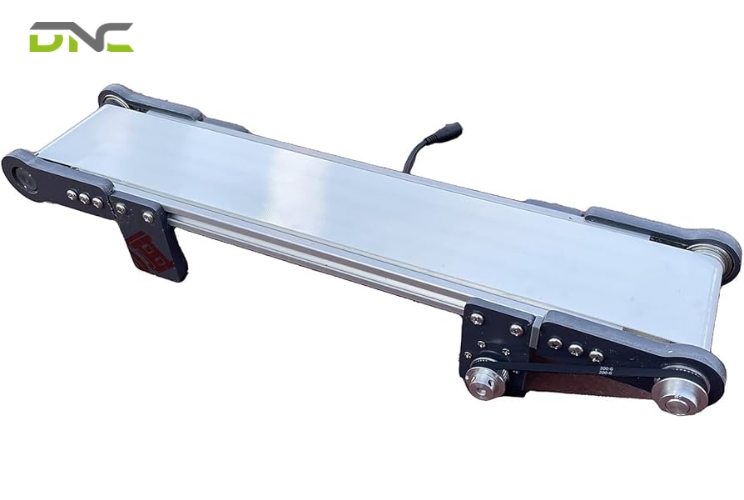
Mini conveyor belt systems solve a specific, non-negotiable problem in modern manufacturing: moving small, light, or delicate products through tight production spaces where standard conveyors cannot fit and manual handling introduces unacceptable error rates. In Malaysia’s electronics assembly plants in Penang, pharmaceutical production facilities in Selangor, and food packaging lines across the country, mini conveyor belt systems handle the micro-scale transport that determines production line accuracy and throughput at the component level.
This guide covers how mini conveyor belts work, the configurations used in Malaysian manufacturing, the materials and specifications that define performance, and the selection criteria that determine which system fits your production requirements.
What Is a Mini Conveyor Belt?
A mini conveyor belt is a compact, low-profile conveyor system designed to transport small, lightweight, or precision products within space-constrained production environments. Mini conveyor belts are defined primarily by their reduced physical dimensions — belt widths typically ranging from 50 mm to 400 mm, conveyor heights as low as 30–50 mm from floor to belt surface, and overall lengths from 300 mm to 3,000 mm per unit.
Unlike full-scale industrial conveyor belts designed for pallets, cartons, or bulk materials, a mini conveyor belt is engineered for:
- Products weighing from a few grams to 20 kg
- Applications where conveyor height above the work surface must be minimized
- Integration into automated assembly or inspection cells with confined footprints
- Precision positioning, indexing, and synchronized motion with robotic systems
Mini conveyor belts are not smaller versions of standard conveyors. They require different engineering considerations — tighter dimensional tolerances, gentler handling characteristics, and often specialized belt materials (ESD-safe, food-grade, or high-temperature) suited to their product and environment.
How a Mini Conveyor Belt Works
Drive Configuration
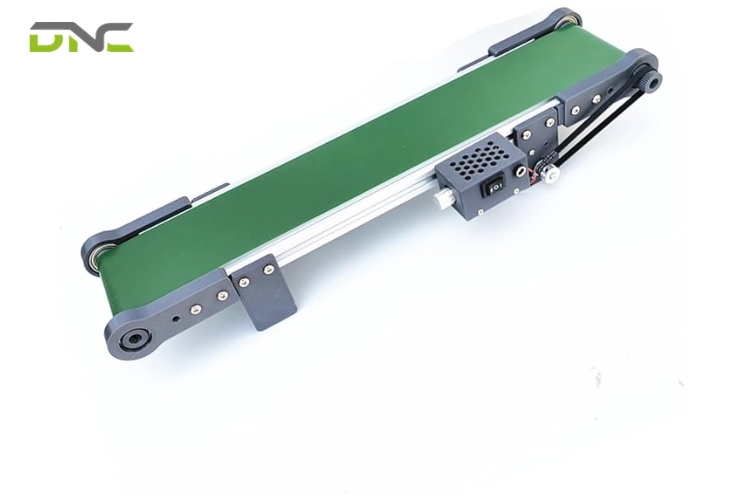
Mini conveyor belt systems use one of three primary drive configurations, each suited to different installation constraints:
End Drive (Head Drive)
The motor and drive unit are located at one end of the conveyor — the most common configuration. End-drive mini conveyors are straightforward to maintain, with the motor accessible from the side or bottom. Suitable for conveyors where infeed space is not constrained.
Center Drive
The drive unit is positioned at the center of the conveyor length, with belt running outward in both directions. Center-drive mini conveyor belts allow the infeed and outfeed ends to be fully open — useful when product feeds from both ends, or when the conveyor must fit flush against a wall at both ends.
Bottom Drive (Under-Belt Drive)
The motor and drive mechanism sit below the belt surface — minimizing the conveyor’s overall height profile. Bottom-drive configurations are used when overhead clearance above the belt must be maximized for product or tooling access, and when the mini conveyor belt must fit under existing equipment.
Belt Tensioning and Tracking
Mini conveyor belt systems use precision tensioning mechanisms — typically a sliding tail pulley with adjustment screws — to maintain correct belt tension across the full operating speed range. Belt tracking (keeping the belt centered on the pulley) is managed through crowned pulleys or adjustable tracking rollers. Even small tracking errors on a mini conveyor belt cause edge wear and product misalignment — critical in electronics or pharmaceutical applications where positioning accuracy is required.
Speed Control
Mini conveyor belt speed is controlled via DC motor with variable voltage control (low-cost option) or AC motor with Variable Frequency Drive (VFD — preferred for precision applications). VFD-controlled mini conveyor belts deliver:
- Speed range: 1–100 m/min (continuously adjustable)
- Smooth acceleration and deceleration (no product sliding or tipping)
- Energy savings at partial load
- Integration with PLC for synchronized speed control across multiple conveyor zones
Types of Mini Conveyor Belt Systems
1. Standard PVC Mini Conveyor Belt
The most widely deployed mini conveyor belt type — a flat PVC belt surface on an aluminium profile frame. PVC mini conveyor belts handle general-purpose transport of packaged goods, small components, and non-hazardous materials.
Specifications:
- Belt width: 50–400 mm
- Belt speed: 2–60 m/min
- Load capacity: up to 15 kg/m distributed load
- Belt material: PVC (smooth, rough-top, or cleated surface options)
- Frame: anodized aluminium profile
- Drive: DC brushless motor or AC motor with VFD
- Working temperature: -10°C to +60°C
Applications: General assembly lines, packaging, parts feeding, inspection stations
2. ESD-Safe Mini Conveyor Belt (Electronics Grade)
ESD-safe mini conveyor belt systems are engineered specifically for electronics manufacturing environments where electrostatic discharge can damage components. The belt surface is constructed from carbon-loaded or conductive polymer material, grounding static charge before it can build up to damaging levels.
ESD performance specifications:
- Belt surface resistance: 10⁵–10⁹ Ohms (dissipative range per ANSI/ESD S20.20)
- Frame: anodized aluminium (grounded via earth bonding strap)
- Drive components: grounded bearing housings
- Compliance: ANSI ESD S20.20-2021
Applications: PCB handling, semiconductor component transport, SMT assembly line linking, IC tray conveying, electronic sub-assembly
In Penang’s Electronics and Electrical (E&E) manufacturing cluster — which contributes 58% of Malaysia’s total E&E exports — ESD-safe mini conveyor belt systems are standard in virtually every SMT and electronics assembly line. DNC Automation designs and integrates ESD-safe conveyor systems using SolidWorks-engineered aluminium profile frameworks.
3. Food-Grade Mini Conveyor Belt
Food-grade mini conveyor belts are constructed from FDA-compliant materials throughout — belt surface, frame, fasteners, and drive components. The design prioritizes cleanability: open-frame construction for washdown access, sloped surfaces that do not collect debris, and belt materials resistant to food acids and cleaning chemicals.
Food-grade specifications:
- Belt material: white food-grade PVC, polyurethane (PU), or modular PP
- Frame: AISI 304 stainless steel or white powder-coated aluminium
- IP rating: IP65 minimum (dust and water jet resistant)
- Belt compliance: FDA 21 CFR food-contact compliant
- Temperature range: -20°C to +80°C (standard PU); up to +120°C (specialty belts)
- Drive: IP65-rated motor; stainless steel external components
Applications: Small food item packaging (biscuits, candy, snack packs), pharmaceutical tablet/capsule handling, laboratory sample transport, beverage line component transport
Malaysia’s food and beverage sector — including DNC Automation clients F&N, Ramly Burger, and Guan Chong Berhad — requires food-grade mini conveyor belt systems wherever small product handling occurs on production lines.
4. High-Temperature Mini Conveyor Belt (PTFE / Teflon)
High-temperature mini conveyor belt systems use PTFE (Teflon) mesh or solid belts to transport products through ovens, drying tunnels, and heat treatment zones where standard PVC or rubber belts would melt or deform.
Temperature specifications:
- PTFE belt temperature range: -200°C to +260°C continuous
- Non-stick surface: prevents product adhesion during heating
- Mesh belt option: allows hot air circulation directly through the belt
- Belt construction: woven fiberglass substrate with PTFE coating
Applications: PCB reflow oven linking (SMT lines), biscuit and snack food baking tunnels, pharmaceutical drying lines, shrink-wrap tunnel integration
5. Aluminium Profile Mini Conveyor Belt
Aluminium profile mini conveyor belt systems use T-slot extrusion frames that allow modular configuration changes — adding sensors, guides, stops, or robot interfaces without welding or drilling. This reconfigurability makes aluminium profile mini conveyors the preferred choice for electronics assembly operations running multiple product families.
Key advantages:
- >1,500 compatible accessories (brackets, sensors, guards, adjustable supports)
- Line reconfiguration within hours — no new equipment purchase
- ESD-safe when properly grounded
- DNC Automation designs using SolidWorks for custom aluminium profile layouts
Key Components of a Mini Conveyor Belt System
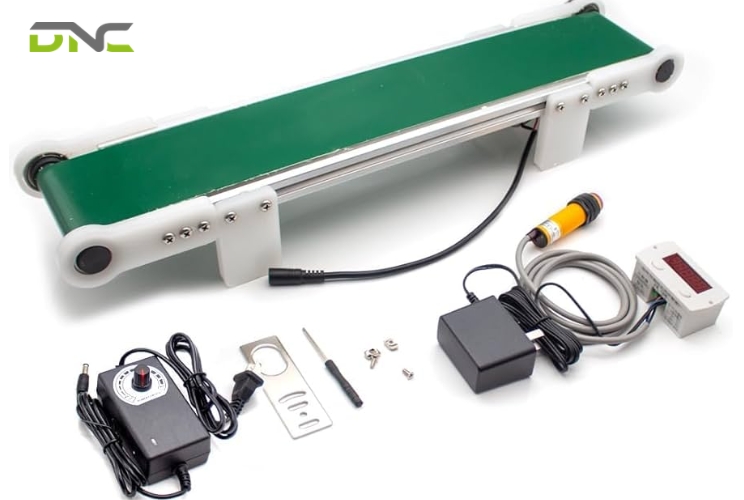
- Belt Surface
The belt is the direct product contact point — material selection determines product compatibility, cleanability, and service life. PVC belts last 2–4 years under normal use. Polyurethane belts last 3–6 years with better chemical and oil resistance. PTFE belts exceed 5+ years even in demanding thermal environments.
- Drive Pulley and Tail Pulley
Drive pulley diameter for mini conveyor belts is typically 20–50 mm — significantly smaller than standard conveyors. Smaller diameter means higher belt wrap angle is needed to maintain grip without excessive belt tension. Crowned pulleys (slightly larger diameter at center than edges) provide passive belt tracking without adjustment.
- Motor and Gearbox
Mini conveyor belt motors are compact — typically 6–120W — using inline planetary gearboxes for precise speed reduction. DC brushless motors provide the smoothest speed control at low speeds, critical for inspection or robot-synchronised applications. Stepper motors are used when precise incremental positioning (indexing) is required.
- Frame and Support Structure
Anodized aluminium extrusion profiles (standard: 40×40 mm or 30×30 mm) provide rigidity at low weight. Leg height is adjustable via slot-fit feet — aligning the mini conveyor belt surface to the exact working height of adjacent equipment.
- Sensors and Stops
Photoelectric sensors detect product presence and trigger start/stop commands to the PLC. Pneumatic stop cylinders (pop-up pins) hold products at defined stations for assembly, inspection, or robot pick operations. These components transform a passive transport mini conveyor belt into an active production tool.
- Side Guides
Adjustable plastic side guides keep products centered on the belt during transport. For small components or bags that can tilt, V-guides or channel guides maintain correct orientation. Guide width is adjustable for rapid changeover between product sizes.
Applications: Mini Conveyor Belt in Malaysian Manufacturing
Electronics and EMS Manufacturing — Penang and Selangor
Malaysia’s electronics sector — contributing approximately 40% of total exports — relies on mini conveyor belt systems at every stage of printed circuit board assembly. Between each machine in an SMT line (screen printer, SPI, pick-and-place, reflow oven, AOI), an ESD-safe mini conveyor belt transfers PCBs while maintaining the 20–24°C, 40–60% relative humidity environment required for solder paste stability.
In Penang’s Bayan Lepas Free Industrial Zone — home to Intel, AMD, HP, Flex, and hundreds of EMS contractors — mini conveyor belt systems are among the highest-density automation components in any factory. DNC Automation serves electronics clients including Sony and Panasonic, with in-house ESD-safe conveyor design capability from its Penang branch office.
Pharmaceutical Manufacturing
Malaysia’s pharmaceutical sector, growing under NIMP 2030’s healthcare manufacturing push, uses mini conveyor belt systems for tablet counting, blister pack conveying, cartoning line linking, and final packaging transport. Pharmaceutical mini conveyors must meet GMP (Good Manufacturing Practice) cleanliness standards — requiring stainless steel construction, smooth internal radii (no crevices), and CIP (clean-in-place) compatibility.
Key requirement: zero product contamination between batch runs. Mini conveyor belt systems in pharma lines use quick-release belt mechanisms allowing full belt removal and sterilization between production orders.
Food Packaging Lines
In Malaysia’s food manufacturing sector — biscuits, snacks, confectionery, and ready meals — mini conveyor belt systems handle the final packaging stages where individual product units are the transport unit. A biscuit packaging line, for example, uses multiple mini conveyor belt sections to: feed biscuit stacks to flow-wrap machines, transfer wrapped packs to checkweighers, and convey checked packs to carton-erecting stations.
Guan Chong Berhad — a DNC Automation client and Malaysia’s largest cocoa processor — represents the type of F&B operation where food-grade mini conveyor belt systems play a critical role in high-speed packaging lines.
Laboratory and R&D Automation
Research laboratories and quality control departments use miniature conveyor belt systems for sample transport between analysis stations — moving vials, test tubes, sample trays, or small containers through automated testing sequences without manual handling. Laboratory mini conveyor belts require ultra-smooth speed control (no vibration), chemical-resistant belt surfaces, and compact footprints that fit within laboratory bench configurations.
Inspection and Vision System Integration
Mini conveyor belt systems serve as the transport platform for automated optical inspection (AOI), dimensional measurement, and weight verification. At inspection stations, the mini conveyor belt delivers products at precisely controlled speed to the camera or sensor field of view — then either continues transport (pass) or triggers a divert mechanism (fail). DNC Automation integrates vision systems with conveyor automation for complete quality control solutions.
Benefits of Mini Conveyor Belt Systems in Manufacturing
- Space Efficiency — Fit Into Any Production Cell
Mini conveyor belt systems occupy a fraction of the floor space of standard conveyors, enabling automation in production cells where space was previously a barrier. A 100 mm wide, 50 mm tall mini conveyor belt fits between machines with clearances that no human hand or standard conveyor could access. For Malaysian factories operating in Penang or Selangor industrial parks where floor space costs RM 15–30/sq ft/month, this matters directly.
- Precision Handling — Reduce Product Damage by Up to 80%
Manual transfer of small components between workstations introduces inconsistent handling force, orientation errors, and drop damage. Mini conveyor belt systems eliminate this variability — delivering consistent, controlled transport that reduces product damage by up to 80% and eliminates orientation errors at robot pick stations.
- Throughput Increase — Up to 50% Productivity Gain
Manual operator transport between workstations creates pacing bottlenecks — workers move at human speed, creating intermittent starvation of downstream machines. Mini conveyor belt systems run continuously, eliminating inter-station buffer dependency and enabling up to 50% increase in line throughput when properly integrated.
- Labor Reduction — Automate the Material Handling Gap
Malaysia’s manufacturing labor shortage — a structural challenge exacerbated by NIMP 2030’s push to reduce labor intensity — makes every automated transfer valuable. Mini conveyor belt systems eliminate the material handler role between workstations, freeing personnel for value-adding tasks rather than parts shuttling.
- Integration with Robotic Systems
Mini conveyor belt systems serve as the infeed and outfeed interfaces for SCARA, delta, and collaborative robots in assembly and packaging cells. Synchronized speed control between the mini conveyor belt and robot pick cycle — managed via PLC handshake — enables high-speed robotic picking at rates of 60–120 picks/minute. DNC Automation integrates Comau and Doosan robots with custom conveyor systems for complete cell automation.
- Cleanroom and Hygienic Compatibility
Stainless steel and aluminium profile mini conveyor belt systems meet cleanroom Class 100–10,000 requirements when specified with appropriate materials and drive components. For Malaysian pharmaceutical and medical device manufacturers targeting export markets, cleanroom conveyor compliance is a product registration prerequisite.
How to Choose the Right Mini Conveyor Belt
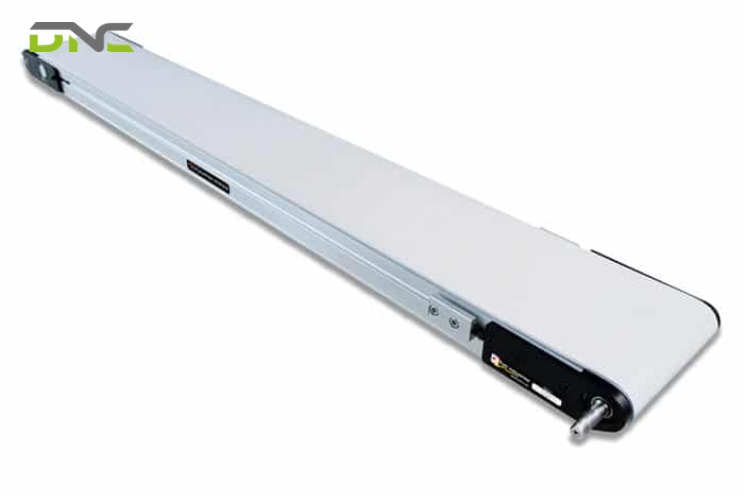
- Define Product Dimensions and Weight
Measure your smallest and largest product. Belt width should be at least 1.5× the product width for stable transport. Weight per meter of belt determines required drive power — even small miscalculation on a compact drive causes motor overload.
- Identify Environmental Requirements
Food production or pharma? → Stainless steel frame, food-grade belt, IP65 minimum.
Electronics assembly? → ESD-safe belt, aluminium frame, grounded components.
High-temperature zone? → PTFE belt, stainless frame, high-temperature motor insulation.
General assembly? → Standard anodized aluminium, PVC belt.
- Determine Speed and Positioning Requirements
If the mini conveyor belt simply transports product from A to B, standard DC motor control is sufficient. If it must stop products at precise positions (for robot pick, vision inspection, or assembly), specify indexing control — either via sensor-triggered stop cylinders or PLC-controlled servo drive.
- Consider Integration Points
List every upstream and downstream machine the mini conveyor belt must interface with. Match belt surface height precisely to adjacent equipment infeed heights. Specify SMEMA-compatible control (for SMT line integration) or custom PLC handshake protocols for non-standard equipment.
- Plan for Maintenance Access
Mini conveyor belt belt changes should take under 15 minutes — specify quick-release belt tension systems. Drive units should be accessible without disassembling adjacent equipment. For 24/7 production environments, specify IP65 or better on all electrical components to withstand daily cleaning.
- Choose a Turnkey Integrator for Complex Cells
A mini conveyor belt is rarely a standalone purchase — it is a cell integration challenge. DNC Automation’s 35+ engineers provide complete mini conveyor belt system design, fabrication, PLC programming, robot integration, and commissioning under one roof. ISO 9001:2015-certified production from our 25,000 sq ft facility ensures consistent build quality across multi-unit deployments.
FAQ — Mini Conveyor Belt
What is the minimum belt width available for a mini conveyor belt?
Mini conveyor belt systems are available with belt widths starting from 50 mm — suitable for transporting small components such as electronic connectors, pharmaceutical tablets in blister packs, or small food items. Custom widths down to 30 mm are available for specialized applications. DNC Automation engineers custom mini conveyor belt configurations to exact product dimensions.
Can a mini conveyor belt handle PCBs and electronic components?
Yes, with the correct specification. ESD-safe mini conveyor belt systems use carbon-loaded belt materials with surface resistance in the 10⁵–10⁹ Ohm dissipative range (per ANSI/ESD S20.20). Aluminium profile frames must be grounded via earth bonding. DNC Automation designs ESD-safe conveyor systems for electronics clients in Penang and Selangor.
What is the maximum temperature a mini conveyor belt can operate at?
Standard PVC mini conveyor belts operate up to +60°C. Polyurethane (PU) belts extend this to +80°C. PTFE (Teflon) mini conveyor belt systems handle continuous temperatures up to +260°C — suitable for reflow oven linking and baking tunnel applications.
How fast does a mini conveyor belt run?
Mini conveyor belt speed ranges from as low as 1 m/min (for inspection or precision positioning applications) to 60–100 m/min for high-speed linking between automated machines. Variable frequency drive (VFD) control enables smooth adjustment across the full speed range without changing mechanical components.
Can a mini conveyor belt be used in a cleanroom?
Yes. Mini conveyor belt systems specified with stainless steel frames, sealed bearings, IP65 motors, and non-shedding belt materials (polyurethane or PTFE) are suitable for cleanroom environments up to Class 1,000 (ISO 6). For Class 100 (ISO 5) cleanrooms, additional particle control measures are required — DNC Automation’s engineers can specify appropriate configurations.
How do I integrate a mini conveyor belt with a robot?
Robot-conveyor integration uses a PLC handshake protocol — the conveyor PLC signals the robot when a product arrives at the pick position (via photoelectric sensor), the robot acknowledges, picks the product, and signals the conveyor to advance to the next product. DNC Automation programs both the conveyor PLC and robot controller as part of a complete cell integration, ensuring synchronized operation without manual timing adjustments.
What maintenance does a mini conveyor belt require?
Weekly: check belt tracking (belt should run centered without drifting), clean belt surface, inspect side guides for wear.
Monthly: check drive motor current draw (elevated current indicates belt over-tension or bearing wear), lubricate bearings, verify sensor operation.
Annually: replace belt if surface shows cracks, hardening, or tracking instability; inspect drive pulley rubber lagging; verify frame squareness.
Conclusion
Mini conveyor belt systems address the automation gap between workstations — the space too small for standard conveyors and too critical for manual handling. In Malaysia’s precision manufacturing landscape, from Penang’s semiconductor lines to Selangor’s pharmaceutical facilities, mini conveyor belts are the enabling technology that allows high-speed automated lines to operate continuously without the bottlenecks and errors that manual inter-station transfer creates.
DNC Automation engineers mini conveyor belt systems from concept to commissioning — with in-house SolidWorks design, fabrication at our 25,000 sq ft Selangor facility, and integration expertise across electronics, food, pharma, and general manufacturing. Our 35+ engineers have delivered automation solutions for clients including Sony, Panasonic, F&N, and Hartalega — bringing the same engineering depth to every mini conveyor belt project regardless of scale.
Ready to automate your production line’s material handling? Get a Free Consultation from DNC Automation’s engineering team today.
- 120 views
- 0 Comment
Recent Comments