


Automatic Guided Vehicles (AGV): Guide for Manufacturers
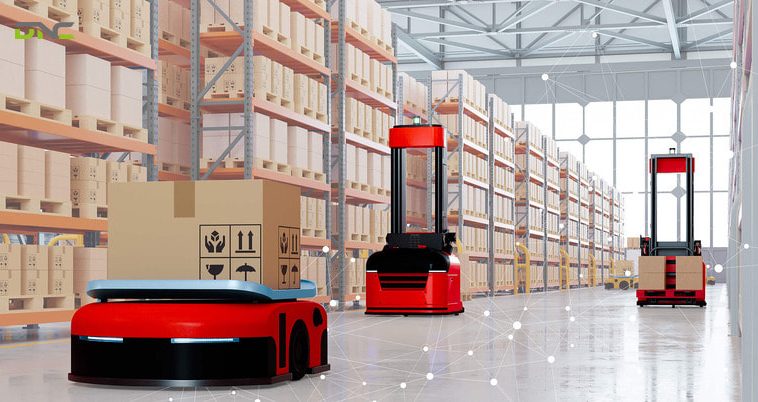
Automatic guided vehicles have transformed how Malaysian factories move materials across production floors, warehouses, and shipping docks. These driverless transport machines — commonly called AGV robots — follow predefined paths to carry raw materials, work-in-progress goods, and finished products without a single human operator behind the wheel. Manufacturers in Selangor, Johor, and Penang now deploy AGV systems to handle repetitive material transport tasks that once required fleets of manually driven forklifts and tuggers. The result: operating costs drop by up to 60% over a five-year lifecycle, throughput increases by 30–50%, and workplace injuries from material handling decrease significantly. This guide covers every aspect of AGV technology — from navigation systems and vehicle types to real-world applications in Malaysian manufacturing and the selection criteria your engineering team needs to evaluate before investing.
What Is an Automatic Guided Vehicle?
An automatic guided vehicle is a self-driving industrial robot that transports materials along fixed, predetermined routes within a facility. AGV robots use guidance technologies — magnetic tape, embedded wires, laser reflectors, or vision systems — to navigate between pickup and drop-off points without human intervention. Each automated guided vehicle robot operates under the supervision of a central fleet management system that assigns tasks, manages traffic, and coordinates charging schedules.
The concept traces back to 1953, when the first AGV — a modified towing tractor guided by a wire embedded in the floor — entered service at a grocery warehouse in the United States. Seven decades later, automatic guided vehicles have evolved into sophisticated industrial platforms carrying payloads from 50 kg to over 100,000 kg across automotive plants, food processing facilities, electronics factories, and logistics hubs worldwide.
AGV systems differ from conveyors in one critical way: they provide flexible point-to-point transport across a facility without permanent fixed infrastructure spanning the entire route. They differ from autonomous mobile robots (AMRs) in their navigation approach — AGVs follow predefined paths while AMRs calculate routes dynamically using onboard sensors and artificial intelligence.
How Does an AGV Robot Work?
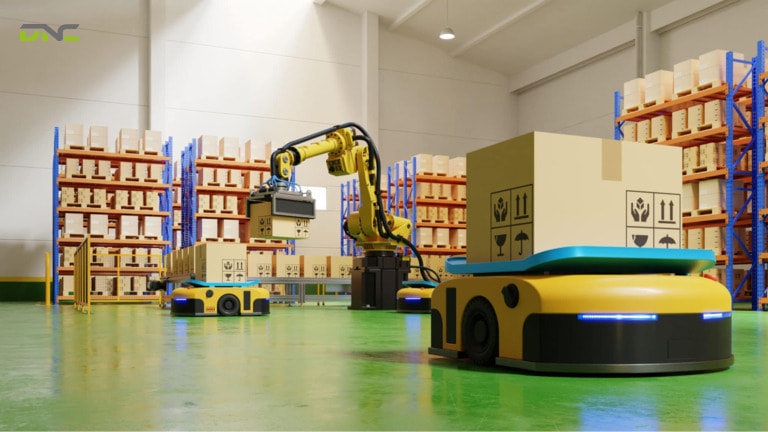
Automatic guided vehicles operate through a coordinated system of navigation hardware, onboard controllers, safety sensors, and fleet management software. Understanding each layer helps your engineering team evaluate which AGV configuration suits your facility.
Navigation and Guidance
AGV navigation is the core technology that determines how the vehicle follows its path. The guidance system continuously reads environmental markers — physical or digital — and adjusts the vehicle’s steering and speed to stay on course.
Wire-guided AGVs detect a low-frequency signal emitted by a wire embedded 10–20 mm below the floor surface. An antenna mounted on the vehicle’s underside senses the electromagnetic field and keeps the AGV centered above the wire with ±1 mm accuracy. This method delivers the highest precision but requires cutting channels into the factory floor — a significant installation commitment.
Magnetic tape guidance uses ferrite strips adhered to the floor surface. Magnetic sensors on the AGV detect the tape and follow it. Installation takes hours instead of days, and rerouting simply means laying new tape. Accuracy reaches ±5 mm — sufficient for most manufacturing applications.
Laser-guided vehicles (LGVs) mount a rotating laser scanner on top of the vehicle. The scanner reads reflective targets installed on walls, columns, or racking throughout the facility. By triangulating distances to multiple reflectors, the AGV calculates its exact position and heading. Laser guidance offers ±1–5 mm accuracy without any floor modifications, making it the preferred choice for facilities that reconfigure layouts frequently.
Vision-guided AGVs use cameras to recognize floor markers, painted lines, or natural visual features. Machine learning algorithms process camera feeds in real time to maintain course. This technology suits clean, well-lit environments — common in electronics and pharmaceutical manufacturing.
Onboard Control System
Every AGV robot carries a PLC-based control unit that processes navigation data, manages drive motors, monitors battery levels, and communicates with the fleet management system. Industrial-grade controllers from manufacturers like Siemens handle the real-time decision loop: receive task assignment, navigate to pickup, engage load handling mechanism, transport to destination, release load, return or proceed to next task.
The PLC interfaces with variable frequency drives (VFDs) that regulate wheel motor speed and torque. Encoders on drive wheels provide odometry data — distance traveled, wheel rotation counts — as a secondary navigation input that supplements the primary guidance system.
Safety Systems
AGV safety architecture follows international standards (ISO 3691-4 for driverless industrial trucks). Industrial AGV robots mount safety-rated LiDAR scanners that project protective fields around the vehicle. When a person or obstacle enters the warning zone, the AGV decelerates; if the intrusion reaches the protective zone, the vehicle stops immediately.
Additional safety layers include mechanical bumpers with contact switches, blue safety spotlights that project a visible warning pattern on the floor, audible alarms, and emergency stop buttons accessible from all sides of the vehicle. These redundant systems ensure that automated guided vehicles operate safely in mixed-traffic environments where human workers share the same floor space.
Fleet Management Software
A central fleet manager coordinates every AGV in the system. This software layer assigns transport tasks (often received from the facility’s WMS or MES), calculates optimal routes, manages traffic at intersections, prioritizes tasks based on production schedules, and dispatches vehicles to charging stations before battery levels reach critical thresholds.
Fleet management communicates with each AGV via Wi-Fi or 5G. The software provides a real-time dashboard showing vehicle positions, task status, battery levels, and system alerts — giving operations managers full visibility over the entire automated transport network.
How Does an AGV Robot Work?
Types of Automatic Guided Vehicles
AGV technology spans a wide range of vehicle configurations, each engineered for specific material handling tasks. Selecting the right type depends on your payload, environment, and transport workflow.
Towing AGV (Tugger)
Towing AGVs pull one or more non-powered carts or trailers behind them, functioning as automated train systems. Payload capacity through towed carts ranges from 1,000 to 10,000 kg per train. Automotive assembly plants use tugger AGVs extensively to deliver parts from warehouse staging areas to line-side stations across distances that would require multiple forklift trips. The towing configuration makes these AGVs exceptionally cost-effective for high-volume, long-distance material delivery routes.
Unit Load AGV
Unit load carriers transport discrete loads — pallets, containers, or racks — on their own platform. Onboard conveyors, lift mechanisms, or roller tops handle automatic load transfer at pickup and drop-off stations. Payload capacity typically ranges from 500 to 5,000 kg. Unit load AGVs dominate warehouse-to-production and end-of-line transport applications where pallets move between fixed stations along predictable routes.
Forklift AGV
Forklift AGVs replicate the functions of a manually driven forklift — lifting, stacking, and transporting palletized loads to and from racking, production machines, and shipping docks. These vehicles handle 1,000 to 3,000 kg loads and reach heights up to 10 meters in high-bay warehouse configurations. Laser or natural navigation guides these AGVs through narrow aisles. Forklift AGVs deliver the strongest ROI in facilities running two or three shifts where the same forklift routes repeat continuously.
Assembly Line AGV
Assembly line AGVs serve as moving workstations. The vehicle carries a product chassis — an automobile body, an appliance housing, or a heavy machine frame — at a controlled speed through sequential assembly stations. Workers or robots perform operations on the product as it passes each station. Payload capacity ranges from 500 kg to over 20,000 kg for automotive body-in-white applications. Assembly AGVs replace fixed conveyors in plants that need flexibility to change line speed, sequence, or station spacing.
Underride (Turtle) AGV
Underride AGVs — sometimes called turtle bots — are low-profile platforms that slide beneath carts, racks, or shelving units. A lifting mechanism raises the cart a few centimeters off the floor, and the AGV transports it to the destination before lowering and driving away. These compact AGV robots handle 500 to 2,000 kg loads and excel in environments with standardized cart systems — food and beverage warehouses, hospital logistics, and pharmaceutical distribution centers.
Heavy Burden Carrier
Heavy burden AGVs transport oversized, ultra-heavy loads — steel coils, ship sections, aircraft components, transformer units — weighing 10,000 to over 100,000 kg. Custom-engineered chassis, multi-wheel drive systems, and specialized load handling fixtures make these the largest and most powerful automatic guided vehicles in service. Steel mills, shipyards, and heavy equipment manufacturers deploy these vehicles for loads that no standard forklift or crane can transport horizontally across a facility floor.
| AGV Type | Payload Range | Navigation | Primary Application |
| Towing/Tugger | 1,000–10,000 kg (towed) | Magnetic tape, wire | Long-distance parts delivery |
| Unit Load | 500–5,000 kg | Laser, magnetic | Pallet transport, warehouse |
| Forklift | 1,000–3,000 kg | Laser, natural nav | Stacking, high-bay storage |
| Assembly Line | 500–20,000 kg | Wire, magnetic | Automotive assembly, heavy mfg |
| Underride/Turtle | 500–2,000 kg | Magnetic, QR code | Cart transport, F&B, pharma |
| Heavy Burden | 10,000–100,000+ kg | Wire, laser | Steel, shipyard, aerospace |
Key Components of an AGV System
Every industrial AGV robot — regardless of type — shares a common set of hardware and software components that determine its performance, reliability, and integration capability.
Vehicle chassis and drive system. The structural frame carries all onboard systems and the payload. Drive configurations include differential drive (two independently powered wheels for steering by speed difference), tricycle drive (one steered drive wheel plus two passive casters), and omnidirectional drive (Mecanum or Swedish wheels for lateral movement). Differential drive is the most common in manufacturing AGVs due to its balance of maneuverability and cost.
PLC controller and electronics. The onboard programmable logic controller runs the navigation algorithm, motor control, safety logic, and communication stack. Industrial AGV systems frequently use Siemens S7 or Mitsubishi controllers — both widely supported by system integrators across Malaysia. I/O modules connect to sensors, encoders, actuators, and the load handling mechanism.
Battery and charging system. Modern AGV robots run on lithium-ion battery packs that offer higher energy density, longer cycle life, and faster charging compared to legacy lead-acid batteries. Opportunity charging stations — where the AGV receives a quick charge during idle moments between tasks — extend operating time to near-continuous 24/7 duty cycles. Wireless inductive charging eliminates physical connectors, reducing maintenance and wear.
Safety sensor suite. Safety-rated LiDAR scanners (typically two — front and rear), mechanical bumpers, emergency stop circuits, and warning indicators form the safety system. All components must comply with ISO 3691-4 and local DOSH (Department of Occupational Safety and Health Malaysia) requirements for automated industrial vehicles.
Fleet management and communication. The server-side software coordinates all vehicles, manages traffic, assigns tasks, and provides analytics. Communication relies on industrial Wi-Fi networks with redundancy to prevent dropouts in RF-noisy factory environments. Integration APIs connect the fleet manager to your facility’s WMS, MES, ERP, and SCADA systems.
Applications: Where AGVs Are Used in Malaysian Manufacturing
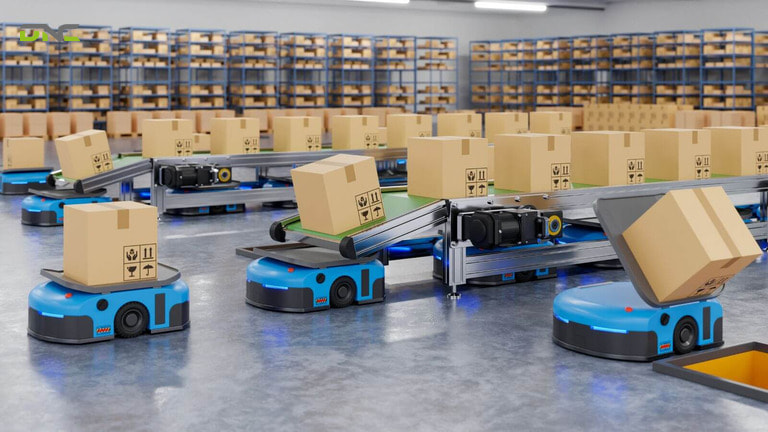
Malaysia’s manufacturing sector — the second largest contributor to GDP — faces persistent labor shortages and rising wage costs that make AGV adoption increasingly attractive. The National Industrial Master Plan 2030 (NIMP 2030) explicitly targets Industry 4.0 automation as a pillar of manufacturing competitiveness, and MIDA offers tax incentives and grants for companies investing in automated material handling systems.
Automotive Manufacturing
Automotive plants in Shah Alam, Rawang, and Gurun deploy towing and assembly line AGVs to move components from warehousing areas to assembly stations. AGV trains deliver just-in-time parts kits to line-side — eliminating the forklift traffic congestion that bottlenecks production during peak output periods. Assembly AGVs carry vehicle bodies through welding, painting, and final assembly sequences at controlled speeds synchronized with station cycle times. Manufacturers like Toyota, UMW, and Inokom have integrated AGV systems into their Malaysian operations to maintain production cadence while reducing manual handling labor.
Food and Beverage
F&B manufacturers — including F&N and Ramly — use unit load and underride AGVs to transport palletized finished goods from production lines to cold storage and shipping docks. AGV robots in food facilities must comply with hygiene standards: stainless steel surfaces, IP65-rated enclosures, and washdown-compatible construction. Automated transport eliminates the contamination risk associated with manual forklift operators entering clean production zones.
Electronics and Electrical
Electronics plants in Penang’s Free Industrial Zone and Johor’s Kulai industrial corridor deploy AGVs to transport semiconductor wafers, PCB panels, and assembled products between cleanroom stations. Precision navigation (±1–2 mm) prevents vibration and shock damage to sensitive components. Sony, Panasonic, and other multinational electronics manufacturers operating in Malaysia use AGV systems as part of their Industry 4.0 production architecture.
Glove Manufacturing
Malaysia produces over 65% of the world’s rubber gloves. High-volume glove manufacturers like Hartalega run continuous production lines where AGVs transport raw latex compound from storage to dipping lines, move formed gloves through curing ovens, and deliver finished cartons to palletizing stations. AGV automation addresses the industry’s acute labor dependency — a vulnerability exposed during the pandemic when worker shortages disrupted global glove supply chains.
Warehouse and Logistics
Logistics operators and third-party warehouses across Selangor’s logistics corridor use forklift AGVs and unit load carriers for pallet put-away, retrieval, and dock-to-stock transport. Pos Malaysia and POS Aviation have explored automated guided vehicles for parcel and cargo sorting operations where consistent throughput and accuracy are critical during peak processing windows.
Applications: Where AGVs Are Used in Malaysian Manufacturing
Benefits of AGV Robots for Factory Operations
Automatic guided vehicles deliver measurable operational improvements that justify their capital investment — typically within 12 to 24 months for high-utilization deployments.
Operating cost reduction of 60–80%. Over a five-year lifecycle, AGV systems cost 60–80% less than equivalent manual material handling. A single AGV operating 20 hours per day replaces two to three forklift operators across shifts — eliminating salary, benefits, training, and turnover costs. Energy consumption per transport cycle is a fraction of diesel or LPG forklift operating costs.
Workplace safety improvement. DOSH Malaysia records thousands of workplace accidents in manufacturing annually, with material handling incidents among the leading categories. AGV robots equipped with safety LiDAR, bumpers, and emergency stops reduce collision risk to near zero. Eliminating manual forklift operation removes the human error factor responsible for the majority of material handling injuries.
24/7 continuous operation. AGV systems operate around the clock with opportunity charging maintaining battery levels above operating thresholds. Unlike human operators, AGVs do not fatigue, take breaks, or lose concentration during night shifts. Throughput remains consistent at 3:00 AM and 3:00 PM — a critical advantage for facilities running continuous production.
Consistent accuracy and throughput. Every AGV follows its programmed route at the specified speed, delivers loads to the exact designated point, and repeats the cycle without variation. This consistency eliminates the variability inherent in human-operated transport — missed deliveries, wrong destinations, damaged goods from rough handling — that cascade into production delays and quality issues.
Scalability. Adding capacity to an AGV system means deploying additional vehicles and updating the fleet management software — not hiring, training, and managing additional operators. Scaling down during low-demand periods is equally straightforward: park excess vehicles and resume when demand returns.
How to Choose the Right AGV for Your Factory
Selecting the right automatic guided vehicle requires a systematic evaluation of your facility’s material handling requirements, physical environment, and integration landscape.
Payload and load type. Define what the AGV will carry — pallets, containers, carts, raw materials, or products — and the maximum weight per transport cycle. Match the payload specification to AGV type: towing AGVs for multi-cart trains, unit load carriers for pallets, forklift AGVs for stacking operations.
Route complexity and distance. Map every transport route in your facility — pickup points, drop-off stations, intersections, elevators, doorways, and charging locations. Long-distance, straight-line routes favor towing AGVs; complex multi-stop routes with frequent direction changes suit omnidirectional or differential-drive unit load AGVs.
Navigation technology. Your facility’s floor condition, layout change frequency, and accuracy requirements determine the optimal guidance method. Magnetic tape suits stable layouts with infrequent changes; laser guidance fits dynamic environments; wire guidance delivers maximum precision for heavy-load, narrow-tolerance applications.
System integration. Identify the interfaces your AGV fleet must connect to — WMS for task dispatching, MES for production synchronization, PLC networks for station handshakes, and ERP for inventory updates. Your system integrator must demonstrate proven integration with your existing control architecture. DNC Automation’s engineering team holds certifications in Siemens PLC/SCADA platforms — the most widely deployed industrial control ecosystem in Malaysian manufacturing.
Total cost of ownership. Evaluate the full lifecycle cost: vehicle hardware, navigation infrastructure (tape, wire, reflectors), fleet management software, integration engineering, installation, commissioning, operator training, spare parts, and annual maintenance. A PLC-based automatic guided vehicle with magnetic tape guidance costs significantly less upfront than a laser-guided system — but the laser system may deliver lower TCO over five years in a facility that reconfigures layouts annually.
Local support and service. AGV uptime depends on responsive local technical support. Malaysian manufacturers should prioritize system integrators with in-country engineering teams, spare parts inventory, and 24/7 service capability. Downtime waiting for an overseas technician or imported replacement part costs more than the premium for a locally supported solution.
How to Choose the Right AGV for Your Factory
Frequently Asked Questions About Automatic Guided Vehicles
What Is an AGV Robot and How Does It Differ from a Forklift?
An AGV robot is a self-driving industrial vehicle that transports materials along predetermined paths without a human operator. Unlike a manually driven forklift — which requires a licensed operator for every shift — an AGV navigates autonomously using guidance systems (magnetic tape, laser, wire, or vision), follows assigned routes managed by fleet software, and operates continuously with only charging breaks. The key operational difference: one AGV replaces two to three forklift operators across a three-shift operation while eliminating human-error-related incidents.
How Much Does an AGV System Cost?
AGV system costs vary significantly based on vehicle type, navigation technology, fleet size, and integration complexity. A single magnetic-tape-guided tugger AGV starts around USD 25,000–60,000. Laser-guided forklift AGVs range from USD 60,000–150,000 per unit. Fleet management software adds USD 15,000–100,000 depending on fleet size. Total project costs for a five-vehicle system in a Malaysian manufacturing facility typically range from RM 500,000 to RM 2,000,000 — including vehicles, infrastructure, software, integration, and commissioning. Most high-utilization deployments achieve full ROI within 12 to 24 months.
What Navigation Technology Is Best for Manufacturing?
The optimal navigation technology depends on your facility’s specific conditions. Magnetic tape guidance suits facilities with stable layouts, moderate accuracy needs, and cost constraints. Laser guidance is the most versatile — it delivers ±1–5 mm accuracy without floor modifications and adapts to layout changes through software reconfiguration. Wire guidance provides the highest precision (±1 mm) for applications demanding exact positioning. Natural navigation (SLAM) eliminates all infrastructure requirements but trades some accuracy for flexibility. For most Malaysian manufacturing plants, laser guidance offers the best balance of accuracy, flexibility, and total cost.
Can AGVs Operate in Mixed-Traffic Environments with Human Workers?
Yes — modern industrial AGV robots are specifically designed for mixed-traffic operation. Safety-rated LiDAR scanners create protective zones around the vehicle. When a person enters the warning zone, the AGV decelerates; protective zone intrusion triggers an immediate stop. Mechanical bumpers, audible alarms, and blue safety spotlights provide additional layers of protection. These systems comply with ISO 3691-4 and meet DOSH Malaysia workplace safety requirements for automated industrial vehicles operating alongside human workers.
What Is the Difference Between an AGV and an AMR?
AGVs follow fixed, predefined paths using physical or environmental guides (magnetic tape, wires, laser reflectors). AMRs (autonomous mobile robots) navigate dynamically using SLAM-based onboard intelligence — they calculate their own routes, avoid obstacles in real time, and adapt to environment changes without physical infrastructure. AGVs cost less per unit and excel on high-volume, fixed routes. AMRs offer greater flexibility and faster deployment but carry higher per-unit costs. Many facilities deploy both: AGVs for stable, high-throughput corridors and AMRs for dynamic, variable-route transport.
How Long Does It Take to Deploy an AGV System?
AGV deployment timelines depend on fleet size, infrastructure requirements, and integration complexity. A small system (2–5 vehicles with magnetic tape guidance and standard fleet management) can be installed, integrated, and commissioned in 4 to 8 weeks. Larger systems (10+ vehicles with laser guidance, full WMS/MES integration, and custom load handling) require 3 to 6 months from project kickoff to full production operation. Site assessment, route design, infrastructure installation, software configuration, integration testing, and operator training each contribute to the timeline.
Are AGVs Suitable for Small and Medium Manufacturers?
AGVs are no longer exclusive to large automotive plants and high-volume warehouses. SME manufacturers with repetitive material transport needs — even a single route between two points — can deploy one or two AGV units and expand as operations grow. The key viability factor is route utilization: if a transport route runs frequently enough that a dedicated vehicle stays productive for 12+ hours per day, the AGV investment makes financial sense regardless of company size. Government incentives under NIMP 2030 and MIDA automation grants further reduce the investment barrier for Malaysian SMEs.
How Do I Get Started with AGV Implementation?
Start with a material flow analysis: map every material transport route in your facility, measure distance, frequency, payload, and current handling method. Identify the highest-volume, most repetitive routes — these deliver the fastest ROI from AGV automation. Engage a qualified system integrator with in-house engineering capability, proven AGV deployment experience, and local service infrastructure. DNC Automation’s engineering team provides free pre-sales consultations that include site assessment, route analysis, AGV system design, ROI modeling, and a phased implementation roadmap tailored to your facility’s specific requirements.
Conclusion
Automatic guided vehicles represent a proven, mature technology for automating material transport in manufacturing and warehouse environments. Malaysian manufacturers facing labor shortages, rising costs, and competitive pressure from regional markets can deploy AGV systems to reduce operating expenses by up to 60%, improve workplace safety, and maintain consistent 24/7 throughput. The technology spans every scale — from single-vehicle installations in SME workshops to hundred-vehicle fleets in automotive assembly plants.
DNC Automation designs, integrates, and commissions AGV systems for Malaysian manufacturers across automotive, F&B, electronics, glove manufacturing, and logistics. Our 35+ engineers deliver turnkey solutions — from site assessment and system design through installation, integration, and ongoing 24/7 support.
- 154 views
- 0 Comment
Recent Comments