

Top AGV and AMR Manufacturers: Complete Guide
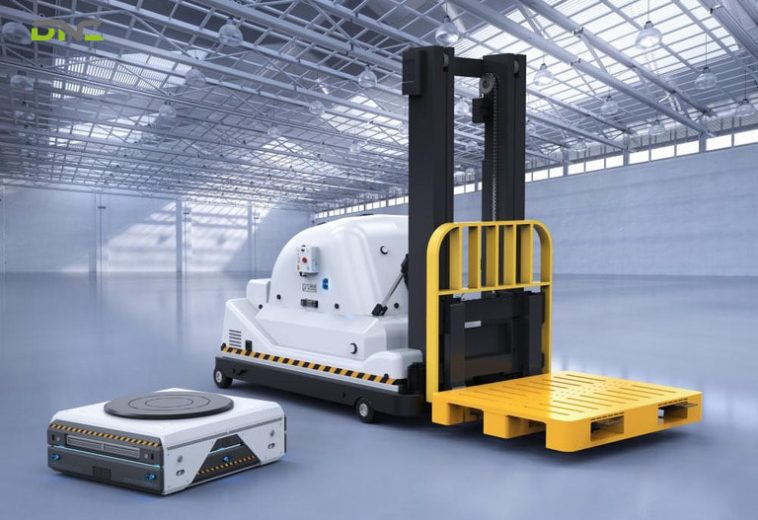
Automatic guided vehicle manufacturers and AMR robot companies have multiplied rapidly as global demand for automated material handling accelerates — the combined AGV and AMR market exceeded USD 6 billion in 2024 and is projected to reach USD 20 billion by 2030. Malaysian manufacturers evaluating mobile robot investments need to navigate a complex vendor landscape: established European AGV manufacturers, Japanese precision robotics firms, Chinese volume producers, American software-first AMR companies, and Southeast Asian specialists. This guide profiles the leading AGV robot manufacturers and autonomous mobile robot companies, their product specializations, and the evaluation criteria that matter when selecting a vendor for your facility.
How the AGV/AMR Manufacturer Landscape Is Structured
The mobile robotics industry divides into four tiers based on company size, product range, and market approach:
Tier 1: Global robotics conglomerates — KUKA, ABB, Omron, Siemens-affiliated platforms. These companies integrate mobile robots into broader industrial automation ecosystems (robot arms, PLCs, vision systems, IoT platforms). They offer complete factory automation architectures where AGVs and AMRs are components within a larger system.
Tier 2: Dedicated mobile robot manufacturers — MiR (Mobile Industrial Robots), Locus Robotics, Fetch (now Zebra), 6 River Systems (now Ocado), Quicktron. Companies focused exclusively on mobile robot platforms and fleet management software. They typically offer the most advanced navigation and fleet coordination technology.
Tier 3: Regional specialists — Sesto Robotics (Singapore), DF Automation (Malaysia), Geek+ (China), Mushiny (China). Companies with strong regional presence and competitive pricing, often focusing on specific application segments.
Tier 4: Custom AGV builders — Engineering firms that build bespoke AGV systems for specialized applications (heavy-burden carriers, cleanroom transport, hazardous environment vehicles). These manufacturers design to specification rather than offering catalog products.
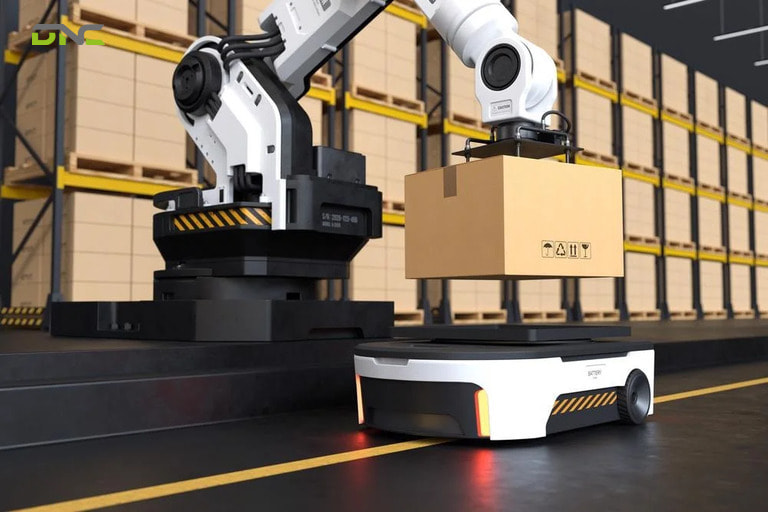
How the AGV/AMR Manufacturer Landscape Is Structured
How to Choose an AGV/AMR Manufacturer
Match Product to Application
Start with your material handling task — not the manufacturer’s brand. Define payload, environment, route pattern, and integration requirements first. Then shortlist manufacturers whose product lines cover your specifications. A warehouse picking operation should evaluate Locus and Geek+; a CNC machine tending application should evaluate KUKA, Omron, or platforms integrated with Comau/Doosan arms.
Evaluate the Ecosystem
AGV/AMR manufacturers increasingly compete on ecosystem — not just the vehicle. Evaluate the complete stack: fleet management software quality, WMS/MES integration depth, top module and accessory availability, API documentation, and compatibility with your existing automation infrastructure. A manufacturer whose mobile robots integrate natively with your PLC platform reduces integration cost and risk.
Verify Local Support
For Malaysian manufacturers, local support availability is a critical — and frequently underweighted — selection criterion. A mobile robot fleet operating 20 hours daily cannot wait for an overseas technician. Evaluate each manufacturer’s Malaysian support capability: authorized distributors, local engineering resources, spare parts inventory in-country, and service response time commitments.
Consider the System Integrator
Most AGV/AMR deployments in Malaysia are delivered through system integrators — engineering companies that design, integrate, and commission mobile robot systems using manufacturer hardware. The system integrator’s capability often matters more than the vehicle manufacturer: integration quality, PLC programming expertise, fleet management customization, and ongoing support depend on the integrator’s engineering team.
DNC Automation serves as a technology-agnostic system integrator for AGV and AMR projects — selecting the optimal manufacturer platform based on your specific application requirements rather than vendor allegiance. Our 35+ engineers integrate mobile robot systems with Siemens, Comau, and Doosan platforms across Malaysian manufacturing facilities.
Assess Total Cost of Ownership
Compare manufacturers on total cost — not list price. Include software licensing (perpetual vs. annual), infrastructure requirements, integration complexity, maintenance costs, and spare parts availability. A lower-priced vehicle from a manufacturer without local spare parts costs more over 5 years than a premium vehicle with same-day parts availability from a local distributor.
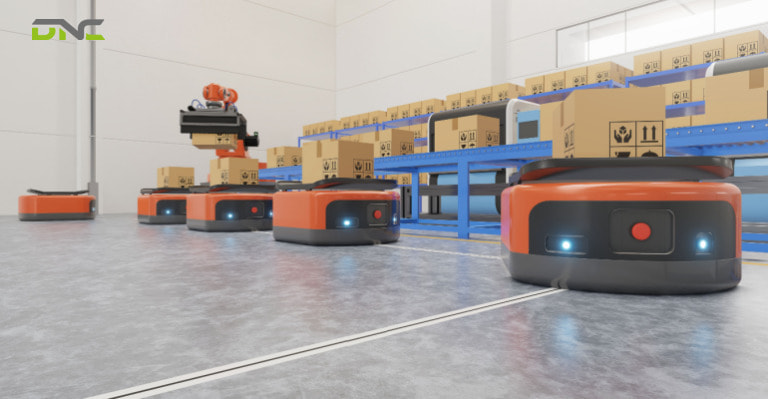
How to Choose an AGV/AMR Manufacturer
The Role of System Integrators in Malaysia
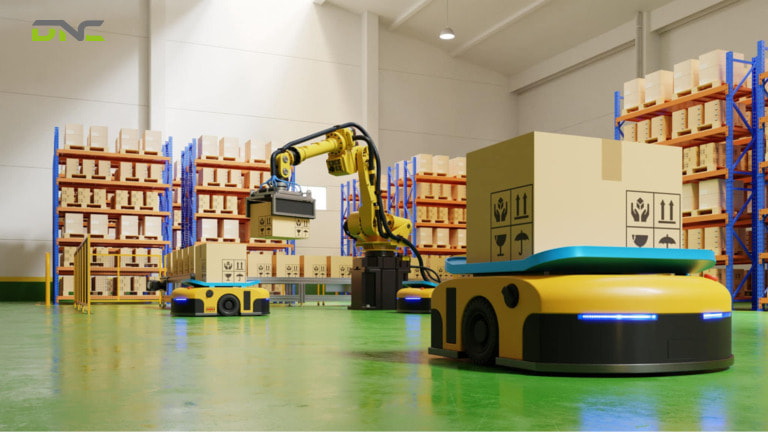
Malaysian manufacturers rarely purchase AGVs or AMRs directly from global manufacturers. The standard procurement path runs through system integrators who provide:
Application engineering — analyzing material flow, designing the AGV/AMR system, selecting vehicle types and fleet sizes, and specifying integration requirements.
Integration — connecting the mobile robot fleet to WMS, MES, PLC networks, conveyors, machine tools, and other automation systems within your facility.
Installation and commissioning — physical deployment, route programming, fleet software configuration, testing, and validation.
Ongoing support — preventive maintenance, troubleshooting, software updates, and fleet optimization.
The system integrator effectively owns the project outcome. Selecting an integrator with proven AGV/AMR deployment experience, in-house engineering depth, and manufacturer-certified capability is the single most impactful decision in the procurement process.
The Role of System Integrators in Malaysia
Frequently Asked Questions About AGV/AMR Manufacturers
Who Is the Largest AGV Manufacturer?
By revenue, KUKA (Midea Group), ABB (through ASTI acquisition), and Dematic (KION Group) represent the largest AGV/AMR manufacturers globally. By fleet deployment volume, Geek+ and Amazon Robotics (internal use) have the largest installed base of autonomous mobile robots. The “largest” depends on the metric — revenue, units deployed, or geographic coverage.
Which AMR Companies Operate in Southeast Asia?
Sesto Robotics (Singapore), DF Automation (Malaysia), Omron (Japan, with Malaysia office), MiR (Denmark, via ASEAN distributors), Geek+ (China, expanding ASEAN), and Quicktron (China, expanding ASEAN) all have presence or distribution in Southeast Asian markets. ABB operates directly through ABB Malaysia. System integrators like DNC Automation provide access to multiple manufacturer platforms through integration partnerships.
Should I Buy from the Manufacturer or a System Integrator?
For most Malaysian manufacturers, buying through a system integrator delivers better outcomes than direct manufacturer purchase. The integrator provides application engineering, custom integration, installation, and local support — capabilities that manufacturer direct-sales channels typically do not cover for end users. Exception: very large enterprises with in-house automation engineering teams may purchase directly and self-integrate.
What Is RaaS (Robot-as-a-Service)?
RaaS is a subscription pricing model where manufacturers or operators lease mobile robots on a monthly or per-task basis rather than purchasing outright. Locus Robotics pioneered RaaS for warehouse AMRs; Geek+ and others offer similar models. RaaS eliminates upfront capital expenditure, converting automation cost to operating expense — attractive for 3PL operators and companies with variable demand patterns. Typical RaaS pricing: USD 1,000–3,000 per robot per month.
Are Chinese AMR Manufacturers Reliable?
Chinese AMR manufacturers — Quicktron, Geek+, Mushiny, Hai Robotics — have proven reliability at scale in demanding e-commerce fulfillment environments processing millions of items daily. Quality, software maturity, and support infrastructure vary by company. Evaluate on the same criteria as any manufacturer: reference sites, uptime data, software capability, local support, and warranty terms. Price advantages of 20–40% over European/Japanese alternatives can be significant, especially for large-fleet deployments.
How Do I Evaluate AGV/AMR Manufacturers for My Factory?
Start with your application requirements (payload, environment, routes, integration), then shortlist manufacturers whose products match. Request reference sites in similar industries. Evaluate fleet management software through demos or pilot deployments. Confirm local support availability in Malaysia. Compare total cost of ownership — not just unit price. DNC Automation provides manufacturer-agnostic assessments that evaluate multiple AGV/AMR platforms against your specific requirements, ensuring the optimal technology selection for your facility.
Conclusion
The AGV and AMR manufacturer landscape offers platforms for every application — from lightweight warehouse picking robots to heavy-burden carriers for steel mills. Malaysian manufacturers should evaluate manufacturers based on product-application fit, ecosystem integration, local support availability, and total cost of ownership rather than brand recognition alone. Working through an experienced local system integrator ensures that the selected platform is properly engineered, integrated, and supported for your specific manufacturing environment.
DNC Automation provides manufacturer-agnostic AGV and AMR system integration for Malaysian manufacturers. Our engineering team evaluates your requirements, recommends the optimal platform, and delivers complete solutions — from system design through commissioning and ongoing support.
- 555 views
- 0 Comment
Recent Comments