

AGV and AMR Robot Cost Guide: Pricing and ROI
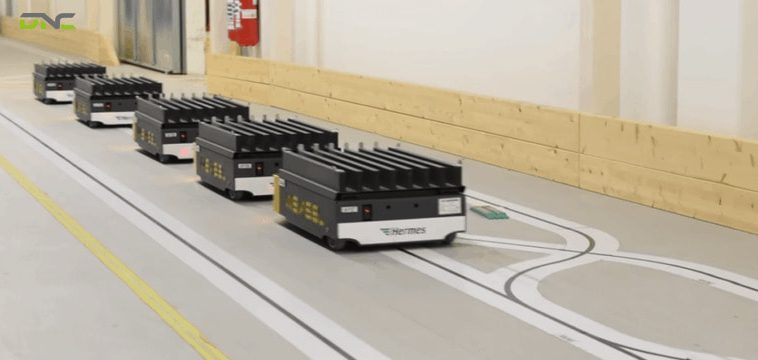
AGV robot prices and AMR robot costs represent one of the most searched — and least transparently answered — topics in industrial automation. Manufacturers researching automatic guided vehicle costs or autonomous mobile robot pricing encounter vague ranges, “contact us for pricing” pages, and incomplete cost pictures that omit infrastructure, software, integration, and ongoing expenses. This guide provides the complete cost breakdown for AGV and AMR systems — from per-unit hardware pricing to total project cost, hidden expenses, ROI calculation methods, and Malaysia-specific pricing factors. Every number in this article reflects current market data as of 2026 for systems available through Malaysian distributors and system integrators.
AGV Robot Price: Complete Breakdown by Type
Automatic guided vehicle costs vary dramatically based on vehicle type, navigation technology, payload capacity, and customization level. The following price ranges reflect per-unit hardware costs — the vehicle itself, excluding infrastructure, software, and integration.
Tugger/Towing AGV
Towing AGVs — the simplest and most cost-effective AGV type — pull carts or trailers along guided paths. Per-unit AGV robot price: USD 25,000–60,000.
Magnetic-tape-guided tuggers occupy the low end; laser-guided models with autonomous cart coupling reach the high end. A standard magnetic-tape tugger serving a single fixed route can enter service for under USD 30,000 per unit — making it the most accessible entry point into AGV automation.
Unit Load Carrier AGV
Unit load AGVs transport pallets, bins, or containers on built-in platforms with automatic load transfer (conveyors or lift mechanisms). Per-unit price: USD 40,000–100,000.
The wide range reflects navigation technology (magnetic tape at the low end, laser guidance at the high end) and load handling complexity (flat platform vs. integrated roller conveyor vs. lift/tilt mechanism).
Forklift AGV
Automated forklift AGVs replicate manual forklift operations — lifting, stacking, and transporting palletized loads to and from racking. Per-unit price: USD 60,000–150,000.
Forklift AGVs cost more than other types because they incorporate lift mast mechanisms, pallet detection sensors, high-bay positioning accuracy, and the structural engineering to handle loads at height. Natural navigation (SLAM-capable) forklift AGVs command premiums over laser-guided models.
Assembly Line AGV
Assembly line AGVs carry products through sequential workstations at controlled speeds. Per-unit price: USD 50,000–200,000.
Cost depends heavily on payload capacity (500 kg base platforms at the low end; 20,000+ kg automotive body carriers at the high end) and the precision of speed and position control required for synchronized assembly operations.
Heavy Burden Carrier AGV
Custom-engineered AGVs for extreme loads — steel coils, ship sections, aerospace components — weighing 10,000 to 100,000+ kg. Per-unit price: USD 100,000–500,000+.
These are bespoke engineering projects; every vehicle is custom-designed for the specific load, environment, and transport route. Pricing depends entirely on specifications.
| AGV Type | Price Range (USD/unit) | Navigation | Payload |
| Tugger/Towing | 25,000–60,000 | Tape, wire, laser | 1,000–10,000 kg towed |
| Unit Load Carrier | 40,000–100,000 | Tape, laser | 500–5,000 kg |
| Forklift | 60,000–150,000 | Laser, SLAM | 1,000–3,000 kg |
| Assembly Line | 50,000–200,000 | Wire, tape, laser | 500–20,000 kg |
| Heavy Burden | 100,000–500,000+ | Wire, laser | 10,000–100,000+ kg |
AMR Robot Price: Complete Breakdown by Type
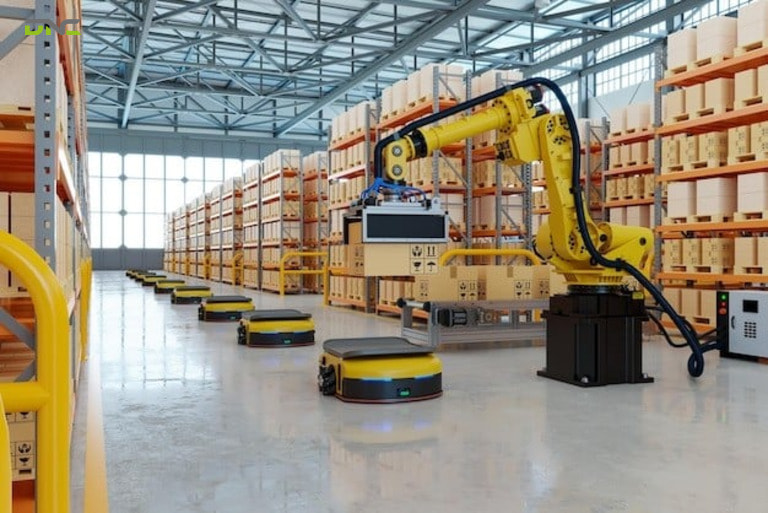
Autonomous mobile robot costs reflect the more advanced onboard computing, sensor suites, and software algorithms compared to traditional AGVs. The per-unit AMR robot price covers the vehicle with onboard sensors, controllers, and standard software license.
Small Collaborative AMR
Lightweight platforms for collaborative material transport alongside human workers. Per-unit price: USD 30,000–60,000.
Examples in this class include 100 kg payload platforms designed for tote transport, small-parts delivery, and collaborative picking assistance. These represent the most accessible entry point into AMR technology.
Mid-Range Transport AMR
The most commonly deployed AMR class — 200–500 kg payload platforms for pallet, cart, and bin transport. Per-unit price: USD 50,000–120,000.
This category covers the mainstream AMR workhorses used in manufacturing and warehouse material handling. Models from major manufacturers serving Malaysian markets fall within this range.
Heavy-Duty AMR
Large-payload platforms (500–5,000 kg) for automotive, heavy manufacturing, and industrial logistics. Per-unit price: USD 80,000–200,000.
Heavy-duty AMRs carry the structural engineering, high-torque drive systems, and reinforced sensor protection required for harsh industrial environments and heavy loads.
Autonomous Forklift AMR
SLAM-navigating automated forklifts for pallet handling without fixed-path infrastructure. Per-unit price: USD 100,000–300,000.
Autonomous forklifts represent the premium end of AMR pricing because they combine SLAM navigation with complex lift mechanisms, 3D pallet detection, and high-bay positioning capability.
Mobile Manipulator (AMR + Arm)
AMR platform with mounted collaborative or industrial robot arm. Per-unit price: USD 100,000–250,000.
The cost combines platform (USD 40,000–100,000), cobot arm (USD 25,000–60,000), end-of-arm tooling (USD 3,000–20,000), vision system (USD 5,000–25,000), and precision docking (USD 5,000–20,000).
| AMR Type | Price Range (USD/unit) | Payload | Navigation |
| Small Collaborative | 30,000–60,000 | 50–150 kg | SLAM |
| Mid-Range Transport | 50,000–120,000 | 200–500 kg | SLAM |
| Heavy-Duty | 80,000–200,000 | 500–5,000 kg | SLAM |
| Autonomous Forklift | 100,000–300,000 | 1,000–3,000 kg | SLAM + 3D |
| Mobile Manipulator | 100,000–250,000 | Platform + arm | SLAM + docking |
AMR Robot Price: Complete Breakdown by Type
Beyond Unit Price: Total System Cost
The per-unit robot price represents only 40–60% of the total project cost. A complete AGV or AMR system includes multiple cost components that buyers must account for to avoid project overruns.
Fleet Management Software
Every multi-vehicle deployment requires fleet management software for task assignment, traffic management, and analytics. Cost: USD 10,000–100,000 depending on fleet size, feature requirements, and licensing model (perpetual vs. annual subscription).
Single-vehicle deployments may use onboard scheduling; fleets of 3+ vehicles require dedicated fleet management with traffic optimization and WMS/MES integration.
Navigation Infrastructure (AGV Only)
AGV systems require physical navigation infrastructure that AMRs do not:
| Infrastructure Type | Cost Range | Notes |
| Magnetic tape installation | USD 5,000–15,000 | Per route network; includes tape + labor |
| Wire embedding | USD 10,000–50,000 | Floor cutting + wire + resurfacing |
| Laser reflectors | USD 5,000–20,000 | Reflector hardware + mounting + calibration |
| QR code grid | USD 3,000–10,000 | Printing + floor application |
| Charging stations | USD 5,000–25,000 per unit | Opportunity or full-charge stations |
System Integration
Connecting the AGV/AMR fleet to your facility’s WMS, MES, ERP, and PLC networks. Cost: USD 15,000–80,000 depending on integration complexity, number of systems, and protocol requirements.
Integration is the cost most frequently underestimated by buyers. A “straightforward” WMS integration involves API development, data mapping, testing, and validation that requires engineering hours. Complex integrations with multiple machine PLCs, conveyor handshakes, and door controls multiply the effort.
Installation and Commissioning
Physical installation of charging stations, navigation infrastructure, and safety systems, plus vehicle commissioning, route programming, fleet software configuration, and system testing. Cost: USD 10,000–40,000 for small fleets; proportionally more for larger installations.
Training
Operator and maintenance staff training on fleet management software, vehicle operation, troubleshooting, and safety procedures. Cost: USD 3,000–10,000 — often included in the system integrator’s project scope.
Spare Parts and Maintenance
Annual maintenance contracts typically cost 5–10% of the equipment value per year. Plan for batteries (replacement every 3–5 years for lithium-ion), LiDAR scanner maintenance, wheel replacement, and software updates.
Total Project Cost Examples
Example 1: Small AGV System (3 Tuggers + Magnetic Tape)
| Component | Cost (USD) |
| 3x Tugger AGVs @ USD 35,000 | 105,000 |
| Magnetic tape installation | 8,000 |
| Fleet management software | 15,000 |
| 2x Charging stations | 12,000 |
| WMS integration | 20,000 |
| Installation + commissioning | 15,000 |
| Training | 5,000 |
| **Total** | **180,000** |
| **RM equivalent (~4.5 rate)** | **~RM 810,000** |
Example 2: Mid-Range AMR Fleet (5 Collaborative AMRs)
| Component | Cost (USD) |
| 5x Collaborative AMRs @ USD 70,000 | 350,000 |
| Fleet management software | 35,000 |
| 3x Charging stations | 18,000 |
| WMS + MES integration | 40,000 |
| Installation + commissioning | 20,000 |
| Training | 5,000 |
| **Total** | **468,000** |
| **RM equivalent** | **~RM 2,106,000** |
Example 3: Autonomous Forklift Fleet (3 Units)
| Component | Cost (USD) |
| 3x Autonomous forklifts @ USD 150,000 | 450,000 |
| Fleet management software | 40,000 |
| 2x Charging stations | 15,000 |
| WMS integration | 30,000 |
| Installation + commissioning | 25,000 |
| Training | 5,000 |
| **Total** | **565,000** |
| **RM equivalent** | **~RM 2,543,000** |
Beyond Unit Price: Total System Cost
Hidden Costs to Watch
Network infrastructure. AGV/AMR fleets require reliable industrial Wi-Fi coverage across the entire operating area. If your facility’s Wi-Fi network has dead zones, interference from metallic structures, or insufficient bandwidth, network upgrades (access points, cabling, network management) can add USD 10,000–50,000 to the project.
Floor preparation. AGVs with embedded wire guidance require floor cutting and resurfacing. Even AMRs benefit from smooth, level floors — significant cracks, slopes, or surface irregularities can degrade navigation performance and increase maintenance. Floor repair or coating costs USD 5,000–30,000 depending on the area and condition.
Power supply upgrades. Multiple high-speed charging stations draw significant electrical current. Verify that your electrical panel capacity supports the additional load; if not, electrical upgrades add USD 3,000–15,000.
Change management. Training, workflow redesign, safety procedure updates, and the organizational effort to transition from manual to automated material handling. Not a line-item cost, but a real resource investment that affects project success.
Downtime during deployment. AGV infrastructure installation may require partial production shutdown for floor work. AMR deployment minimizes this — mapping can occur during production hours — but integration testing and commissioning still require some operational disruption.
Malaysia-Specific Pricing Factors
Import duties. Industrial robots and AGV/AMR systems imported into Malaysia carry 0–10% import duty under ATIGA (ASEAN Trade in Goods Agreement) and CPTPP tariff schedules. Duty rates depend on HS code classification and country of origin. Most AGV/AMR systems from ASEAN, Japan, EU, and CPTPP member countries qualify for reduced or zero-duty treatment.
MIDA incentives. The Malaysian Investment Development Authority offers automation-specific incentives that can significantly reduce effective project costs:
- Pioneer Status: Tax exemption on statutory income for up to 10 years
- Investment Tax Allowance (ITA): 60–100% allowance on qualifying capital expenditure
- Automation Capital Allowance (ACA): Accelerated depreciation on automation equipment
- Reinvestment Allowance: For manufacturers expanding or modernizing existing facilities
These incentives effectively reduce the cost of AGV/AMR investment by 15–30% for qualifying Malaysian manufacturers — a material factor in ROI calculations.
Local support premium vs. import-direct pricing. Purchasing AGV/AMR systems through local system integrators adds 15–30% markup over direct-from-manufacturer pricing. This premium pays for local engineering, installation, integration, training, spare parts inventory, and ongoing service. For industrial automation equipment operating 20+ hours per day, local support responsiveness directly impacts system uptime and ROI — the “savings” from direct import evaporate quickly when a breakdown requires an overseas service call.
ROI Calculation Framework
Step 1: Calculate Annual Labor Cost Replaced
For each operator position eliminated by AGV/AMR automation:
Monthly labor cost per operator (Malaysia):
- Gross salary: RM 2,000–4,000
- EPF (employer 12–13%): RM 240–520
- SOCSO: RM 30–70
- EIS: RM 4–8
- Medical, insurance, uniforms: RM 100–300
- Overtime (typical): RM 300–800
- Total per operator per month: RM 2,674–5,698
- Annual per operator: RM 32,088–68,376
For a 3-shift operation replacing 2 operators per shift (6 positions total):
Annual labor savings: RM 192,528–410,256
Step 2: Calculate Productivity Gains
Quantify the value of increased throughput, reduced errors, and extended operating hours:
- Additional production output during unmanned hours: value varies by facility
- Error reduction (material damage, delivery delays): typically 2–5% of material handling cost
- Reduced WIP inventory from faster, more predictable transport: working capital savings
Step 3: Calculate Total System Cost
Sum all components: vehicles, infrastructure, software, integration, installation, training, and Year 1 maintenance.
Step 4: Compute ROI Timeline
Payback period = Total System Cost ÷ Annual Net Savings
Typical AGV/AMR payback periods:
- High-utilization (20+ hours/day, 3 shifts): 12–18 months
- Moderate utilization (12–16 hours/day, 2 shifts): 18–30 months
- Lower utilization (8–12 hours/day, 1 shift): 30–48 months
Apply MIDA incentive savings to reduce total system cost and compress the payback period.
ROI Calculation Framework
Frequently Asked Questions About AGV and AMR Costs
Why Do AGV/AMR Prices Vary So Much?
Price variation reflects differences in payload capacity (50 kg vs. 5,000 kg), navigation technology (magnetic tape vs. laser vs. SLAM), load handling complexity (flat platform vs. forklift mechanism), safety certification level, and the degree of customization. A tape-guided tugger and a SLAM-navigating autonomous forklift serve fundamentally different applications at fundamentally different price points.
Is an AGV or AMR Cheaper Overall?
AGV per-unit costs are typically 20–40% lower than equivalent AMR platforms. However, AGV total project costs include navigation infrastructure (USD 5,000–50,000) that AMR systems eliminate entirely. For facilities with stable layouts and minimal route changes, AGVs deliver lower total cost. For dynamic environments with frequent layout changes, AMRs deliver lower 5-year total cost of ownership because infrastructure rework costs accumulate for AGVs.
What Is the ROI of an AGV/AMR System?
ROI depends on utilization, labor costs replaced, and total system cost. High-utilization deployments (3-shift manufacturing) in Malaysia typically achieve full payback in 12–18 months. The primary ROI driver is labor replacement: one AGV/AMR operating 20 hours daily replaces 2–3 operators across shifts. Secondary ROI comes from throughput improvement, error reduction, and extended production hours.
Can Small Manufacturers Afford AGV/AMR Systems?
Yes — entry-level AGV systems start under USD 50,000 total project cost for a single magnetic-tape tugger with standard fleet control. Single-unit AMR deployments begin around USD 60,000–90,000 including software and commissioning. MIDA automation incentives further reduce the barrier. The key feasibility factor is route utilization: if the robot operates productively for 12+ hours daily, the investment pays back within 24–30 months regardless of company size.
Do AGV/AMR Costs Include Software?
Fleet management software is typically a separate line item — not included in the per-unit vehicle price. Standard fleet control (single-vehicle scheduling, status monitoring) may be bundled with the vehicle. Advanced fleet management (multi-vehicle traffic optimization, WMS integration, analytics) is licensed separately at USD 10,000–100,000. Clarify software licensing scope during vendor evaluation.
How Do I Plan the Investment for an AGV/AMR Project?
Plan the total project cost — not just the robots. A practical estimation formula: multiply per-unit vehicle cost by 1.8–2.2x to estimate total project cost including software, infrastructure (AGV), integration, installation, and training. For a 5-vehicle AMR fleet with mid-range units at USD 70,000 each (USD 350,000 hardware), estimate USD 630,000–770,000 total project cost. DNC Automation provides detailed project cost estimates during free pre-sales consultations.
Conclusion
AGV and AMR costs span a wide range — from USD 25,000 for entry-level tugger AGVs to USD 300,000+ for autonomous forklifts — but per-unit price tells only part of the story. Infrastructure, software, integration, installation, and ongoing maintenance collectively equal 40–60% of total project investment. Malaysian manufacturers must evaluate total cost of ownership, apply MIDA incentive offsets, and calculate ROI based on actual labor costs and utilization patterns to make informed investment decisions.
DNC Automation provides transparent, detailed project costing for AGV and AMR systems — covering every component from vehicle hardware to integration engineering. Our free pre-sales consultations include site assessment, system design, complete cost breakdown, ROI projection, and MIDA incentive guidance.
- 559 views
- 0 Comment
Recent Comments