


Load Cell IP Rating and Ingress Protection Explained
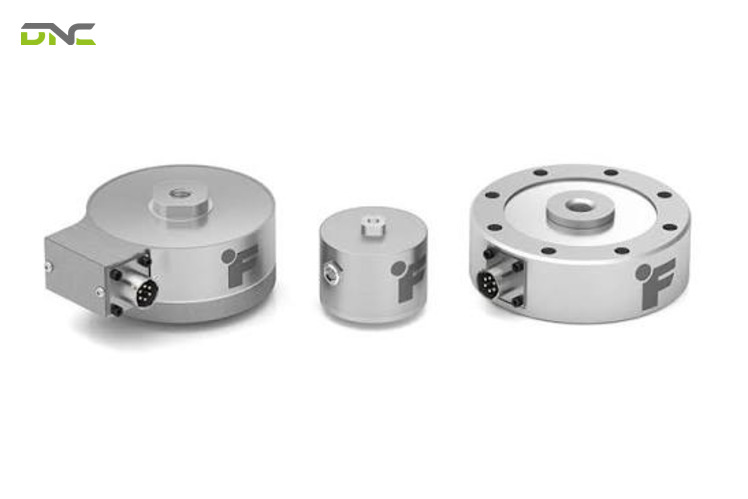
A load cell IP rating states, under IEC 60529, how completely the sensor is sealed against two separate intrusion paths – solids on the first digit, liquids on the second. IP67 and IP68 carry most industrial weighing installations, while IP69K covers high-temperature washdown and takes its value from the German standard DIN 40050-9 rather than the IEC liquid scale. The code qualifies the sensor body and nothing else. Cable glands, junction boxes and indicator enclosures each hold a rating of their own, and the assembly performs at the level of its weakest sealed joint. This guide decodes both digits and the optional letters, matches the ingress protection level to Malaysian plant conditions from glove washdown lines to monsoon-exposed tank farms, and sets out how a whole weighing system gets specified.
What Does the IP Rating on a Load Cell Actually Specify?
From a procurement standpoint, a load cell IP rating specifies under IEC 60529 how completely the sensor enclosure resists the ingress of solid objects and of liquids. The letters stand for International Protection, read across most of industry as Ingress Protection. The International Electrotechnical Commission developed the scheme, and it now appears as a standard marking on electrical devices of every class.
IEC Technical Committee 70 prepared the standard, and its first edition appeared in 1976 to consolidate enclosure requirements that had until then been split between motor standards and low-voltage switchgear standards. Its scope covers electrical equipment enclosures rated to a maximum of 72,5 kV, which places every industrial load cell comfortably inside it.
The code carries a fixed shape. Two mandatory digits follow the `IP` prefix, optional letters follow the digits, and an `X` replaces either digit where no level of protection has been established or tested for that factor.
One clause of the standard governs everything that follows. IEC 60529 defines the tests to be performed to verify that an enclosure meets its stated requirements, which makes a marking a record of a laboratory result rather than a promise about service life.
A trailing `K` signals extra ruggedness toward high-pressure, high-temperature washdown. That character deserves a note of origin. The IEC liquid scale stops at 8; the value 9K comes from the German standard DIN 40050-9 and has been adopted internationally since.
Two digits, therefore, answer two unrelated engineering questions. The first asks what particulate the enclosure keeps out. The second asks what water exposure it survives. A cell that excels at one can be indifferent at the other, which is why the digits are read separately rather than as a single quality score.
What Does Each Digit in a Load Cell IP Code Mean?
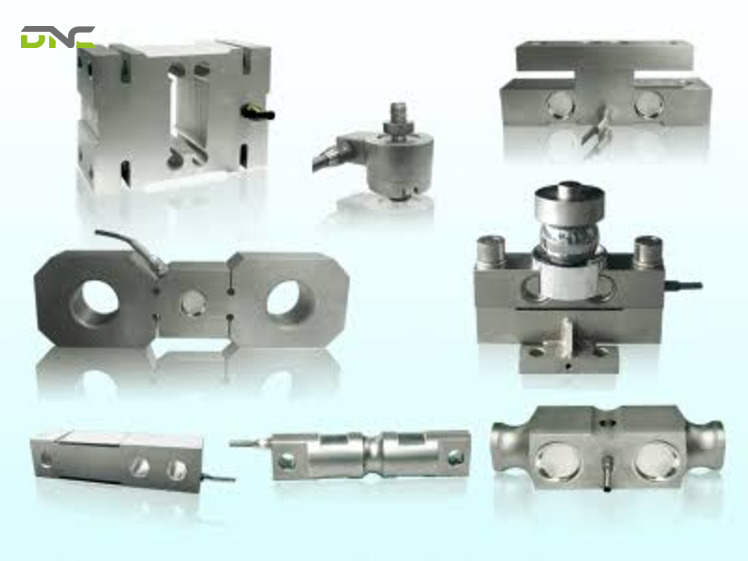
Each digit in a load cell IP code rates one intrusion path on its own scale, and neither digit describes the other. The first runs 0 to 6 for solids. The second runs 0 to 8 under the IEC, extended by the DIN-derived 9K.
The seven values of the first digit are listed below, running from an open-frame component through to a full dust seal:
| First digit | Blocks | Practical reading |
| 0 | Nothing | Open-frame component, no guarantee |
| 1 | Solids larger than 50 mm (5 cm / 1.97 in) | Stops a hand, admits everything finer |
| 2 | Solids larger than 12.5 mm (1.25 cm / 0.49 in) | Stops a finger, admits tools |
| 3 | Solids larger than 2.5 mm (0.25 cm / 0.098 in) | Stops screws, wires, hand tools |
| 4 | Solids larger than 1 mm (0.1 cm / 0.039 in) | Stops thin wires and small shards, not fine dust |
| 5 | Limited dust ingress | Dust enters, function is unimpaired |
| 6 | Dust-tight | No ingress at all |
A cell rated 6 on the first digit is dust-immune under correct installation. Dust matters to a weighing sensor in two distinct ways: abrasive particles wear components mechanically, and conductive metallic dust shorts circuit boards outright. Fine powder packed around the spring element also stops it flexing cleanly, and a sensor that cannot flex cannot weigh.
The ten values of the second digit are listed below, escalating from condensation through to steam cleaning:
| Second digit | Withstands | Typical plant equivalent |
| 0 | Nothing | Any moisture contact risks failure |
| 1 | Vertically falling droplets | Condensation from above |
| 2 | Droplets with the enclosure tilted up to ±15° | Slight-angle drip exposure |
| 3 | Spray up to 60° from vertical | Rain, overhead spray |
| 4 | Splashing from any direction | Random splash |
| 5 | Low-pressure jets from any direction | Cleaning with a standard hose |
| 6 | Powerful jets | Pressure washer |
| 7 | Immersion to 1 m (100 cm / 3.28 ft), typically 30 minutes (0.5 h) | Short shallow submersion |
| 8 | Prolonged immersion under specified conditions | Continuous submerged service |
| 9K | High-pressure, high-temperature jets | Sanitary washdown, steam cleaning |
What Does Each Digit in a Load Cell IP Code Mean?
Digit 8 carries a qualification the other values do not. The depth and duration behind IP68 are set by the manufacturer rather than fixed by the standard, so an IP68 marking without a stated depth states very little.
Readers reasonably ask what a breach actually does to the measurement. Moisture inside the body creates unintended electrical bridges across the strain gauge circuit, and the short pushes the weight reading into drift or erratic jumps rather than a clean failure. The scale keeps producing numbers. The numbers stop being true, and that ambiguity is what makes the rating a process-integrity specification rather than a durability one. Which pair of digits a given installation needs is decided by the environment the sensor sits in.
Which IP Rating Does Your Plant Environment Require?
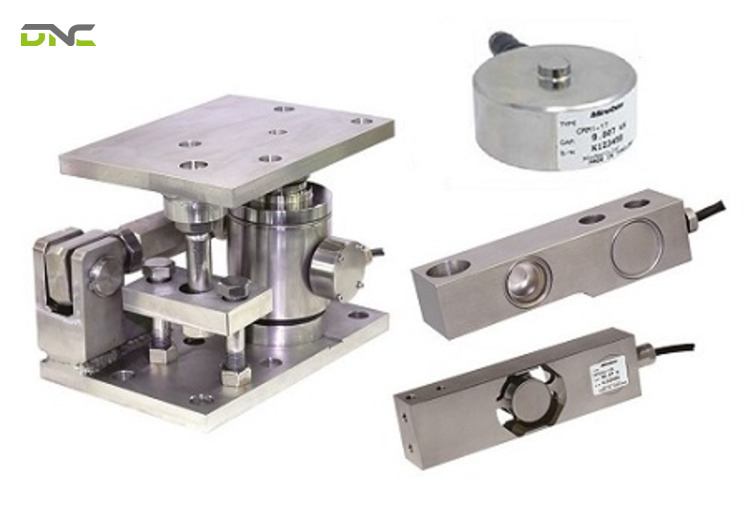
The IP rating a load cell requires is set by the worst routine event in its installed environment, not by the average condition on a normal day. Environment eliminates options faster than any other specification input, which places this decision ahead of geometry, capacity and output type.
The plant environments that drive load cell selection, and the ingress protection rating each one demands, are listed below:
| Installed environment | Common contaminants | Minimum rating |
| Clean, dry indoor | Airborne dust, accidental splash | IP54–IP65 |
| Dusty indoor | Flour, grain, cement, sawdust, palm kernel meal | IP65 / IP66 |
| Outdoor or exposed | Rain, humidity, dirt, monsoon runoff | IP67 |
| Tank and hopper weighing | Condensation, occasional submersion | IP67 / IP68 |
| Fully immersed positions | Flooded pits, submerged hoppers | IP68 |
| Food, beverage and pharmaceutical washdown | High-pressure water, cleaning agents | IP68 / IP69K |
| Chemical processing | Corrosive liquids and vapours | IP68 plus a material check |
The dusty-indoor row shows why the digits are read separately. The 6 for solids is not negotiable in a flour mill or a cement plant, while the liquid digit only needs to cover hose cleanup – a specification of IP65 rather than IP67, at a lower cost, with no compromise on the risk that actually threatens the installation.
Chemical processing exposes the boundary of the code itself. IP68 describes a seal tested against water. Corrosive media attack the housing material, so the specification carries a second clause on steel grade, typically 316L stainless, that no IP number covers.
Four questions resolve most selections. The dustiest day of the year defines the first digit. Splash versus hose versus submersion defines the second. Cleaning chemistry and water pressure separate IP67 from IP69K. The worst-case event – a burst pipe, a tank overflow, a flooded pit – sets the floor, because the code is a promise about incidents, not about ordinary Tuesdays.
Cost balancing has an established shape here. Scale and laboratory equipment builders routinely combine an IP65-rated enclosure with internal load cells rated IP67, placing the higher protection where water actually reaches. That same layered logic governs how a weighing channel enters a control system, where the sensor sits inside a cabinet whose own rating protects the conditioner and the PLC input – the architecture DNC engineers apply when building Smart Manufacturing & Industry 4.0 Solutions around a measurement point.
For Malaysian manufacturers, three environments dominate. Glove manufacturing and edible oils lines run wet and hot. Food and beverage plants wash down daily. Outdoor tank farms and weighbridges take monsoon rain for months, and each of the three pushes the specification to a different digit pair.
Explosive dust changes the calculation entirely. A dust-tight IP6X body is non-negotiable in grain silos, sugar plants and chemical powder facilities, where a single internal spark in a poorly sealed sensor is a plant-level event – the reason ATEX certification sits alongside ingress protection rather than inside it. Certification marks are not the only characters that travel with an IP code, because the code itself admits optional letters after the two digits.
Which IP Rating Does Your Plant Environment Require?
What Do the Letters After an IP Code Mean?
Load cell IP code letters carry two separate meanings: contact protection and test condition. IEC 60529 defines both classes, and neither is mandatory on a marking. The contact class exists because the standard rates more than dust and water – it also rates how easily a person reaches the potentially hazardous parts inside an enclosure.
Supplementary letters describe how well an enclosure protects a person from touching live or moving parts inside it. Additional letters describe the condition under which the enclosure was tested, or an environmental property it claims. Both classes are listed below:
| Class | Letter | Meaning |
| Supplementary | A | Protected against the back of a hand |
| Supplementary | B | Protected against a finger |
| Supplementary | C | Protected against tools and wires of 2.5 mm (0.25 cm / 0.098 in) and above |
| Supplementary | D | Protected against fine wires of 1 mm (0.1 cm / 0.039 in) and above |
| Additional | F | Oil-resistant |
| Additional | H | High-voltage apparatus |
| Additional | M | Tested for water ingress while in motion |
| Additional | S | Tested for water ingress while stationary |
| Additional | W | Weather-resistant |
A marking that carries one reads as a single string – IP67M and IP66C are the shapes an engineer actually meets on a datasheet, with the trailing character qualifying the two digits in front of it.
Supplementary letters rarely appear on a load cell datasheet, and the reason is structural: the sensor is sealed with no exposed live or moving parts to touch. Those letters surface instead on instrument housings, indicator cabinets and junction boxes, which do have accessible terminals.
Two additional letters do earn their place on weighing hardware. An S marking states the enclosure was tested stationary, matching a static load cell in a tank leg or a platform scale. An M marking states it was tested in motion, which is the relevant condition for a checkweigher or an in-motion conveyor weighing station. Reading the letter tells an engineer whether the test resembled the installation.
Recap – Has the IP Code Told You Everything You Need So Far?
The load cell IP code has told you four things so far, and it has left a fifth unanswered. IEC 60529 defines the scheme, the first digit rates solids from an open frame to a dust-tight seal, the second rates liquids from condensation to high-temperature jets, and the optional letters record contact protection and test conditions. Environment sets the target pair, with the worst routine event rather than the daily norm defining both digits. What the code has not addressed is durability. Every value so far describes a sensor as tested in a laboratory, on the day it was tested, in its as-manufactured condition.
Why Do IP68-Rated Load Cells Still Fail in Service?
Why Do IP68-Rated Load Cells Still Fail in Service?
An IP68 load cell fails in service when the rating describes the sensor body while the breach occurs elsewhere in the sealed assembly, or after the seal has aged past its tested condition. The rating is a test result, not a guarantee that survives every year of plant life.
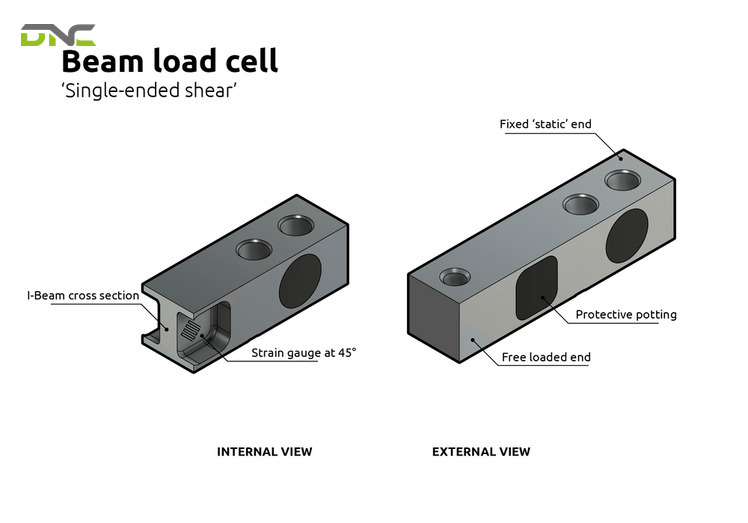
One number hides two constructions. Potting fills the internal cavity with epoxy or resin and shields the circuit from humidity; hermetic sealing welds the enclosure airtight. An IP67 potted cell and an IP67 fully welded cell carry an identical label on the datasheet and diverge sharply after two years of daily caustic washdown. That distinction sits alongside accuracy class and output type among the qualification layers covered in Load Cell Types Explained, and it is invisible in the IP number itself.
Six mechanisms are listed below, and they account for most sealing failures in installed weighing systems:
- Cable entry and gland seals that were never rated to the cell’s own level
- Gaskets, o-rings and mating surfaces compressed past their elastic recovery
- Potting or encapsulation quality that varies batch to batch
- Ageing, ultraviolet exposure and daily temperature cycling
- Chemicals and solvents that degrade elastomer seals the water test never applied
- Mechanical stress from overload or impact that cracks the housing
The fifth mechanism deserves emphasis, because it marks the outer limit of the standard. IEC 60529 liquid tests apply water. A clean-in-place cycle applies caustic soda, acid rinse and steam at temperature, and none of that chemistry appears anywhere in the digit the datasheet quotes. A cell can pass IP69K and still be attacked by the cleaning agent, which is why chemical service specifies steel grade and elastomer compatibility as separate clauses.
Permanently submerged service sits outside the scale altogether. Marine weighing, underwater platforms, flooded pits and dry docks call for hydrostatically compensated cells in all-stainless construction, a category no IP number reaches.
Sealing degrades quietly, and it is detected by measurement rather than inspection. A cell taking on moisture drifts at zero before it fails outright, which makes zero-balance history the earliest warning a plant gets. That warning arrives too late to be useful when only the cell was rated, because the breach is rarely in the part the datasheet describes.
How Do You Specify Ingress Protection Across a Whole Weighing System?
Load cell ingress protection is specified across the whole weighing assembly, because the system performs at the rating of its weakest sealed joint. An IP69K cell behind a leaking cable gland is an IP69K cell that has water inside it.
Every component in the measurement chain carries its own rating, and the five that a specification has to name are listed below:
| Component | What it protects | Specification rule |
| Load cell body | Spring element, strain gauges, bridge circuit | Set by direct exposure at the mounting point |
| Cable and gland | Signal wiring at the entry point | Rate at or above the cell – the most common weak link |
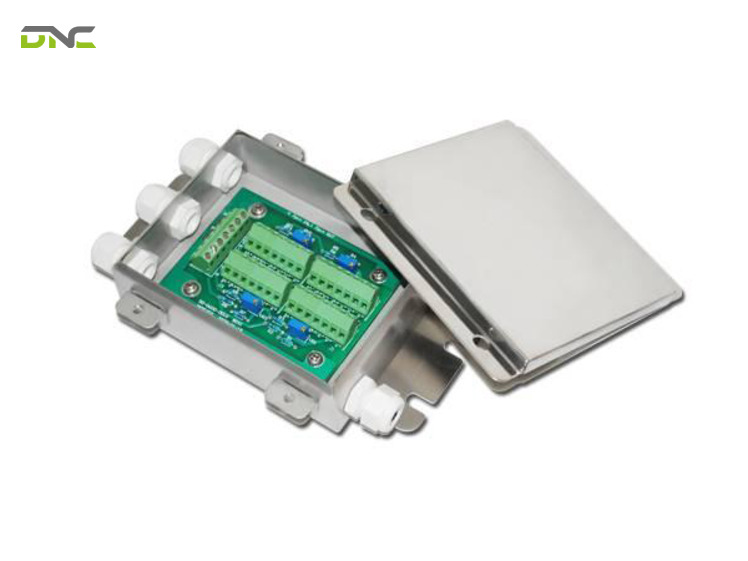
| Junction / summing box | Trim resistors, terminal blocks | Rate for washdown even when mounted away from the line |
| Indicator or transmitter enclosure | Conditioner, display, controller interface | Rate for the cabinet environment, not the sensor environment |
| Mounting hardware and covers | Drainage path around the load path | Use drip edges and slopes so water sheds rather than pools |
Procurement language decides whether that chain is enforceable. A purchase specification reading “load cell rated ≥ IP67, cable gland rated ≥ IP68, all housing surfaces welded or weld-sealed” binds a supplier in a way that a bare “IP67” does not, and requesting the IP test report converts the claim into evidence.
Margin belongs in the specification as well. Going one level above the calculated requirement absorbs seal degradation over the installed life, and it costs a fraction of one unplanned line stop on a running packaging line.
Maintenance closes the loop. Validating the zero reading on a schedule, watching for drift or anomalous behaviour, and opening junction boxes to check for moisture will catch a compromised seal while it is still a calibration issue rather than a scrap batch. The same discipline applies wherever sensors sit in a wet material flow, including the weighing stations built into Conveyor System Solutions for Factory Automation.
DNC Automation has engineered weighing and checkweigher integration in Malaysian plants since 2005, across food and beverage, glove manufacturing, edible oils and automotive facilities, with ISO 9001:2015 governing the qualified chain of cell, conditioner and indicator as one assembly. For manufacturers moving on NIMP 2030 automation targets, that assembly-level view is what separates a weighing point that holds calibration through a wet season from one that does not.
How Do You Specify Ingress Protection Across a Whole Weighing System?
What Do Engineers Most Often Ask About Load Cell IP Ratings?
Six questions recur whenever a load cell IP rating reaches a procurement review, and each one turns on a distinction the two-digit code leaves implicit.
What Is the Difference Between IP67 and IP68 on a Load Cell?
IP67 covers temporary immersion to 1 m (100 cm / 3.28 ft) for roughly 30 minutes (0.5 h), while IP68 covers prolonged immersion at a depth the manufacturer specifies. Both share a dust-tight first digit. The difference is duration and stated depth, which makes IP68 the specification for permanently submerged positions such as flooded pits and submerged hoppers.
Is a Higher IP Rating Always the Better Choice?
A higher rating exceeds the protection of a lower one and costs more, so the correct specification is the one that matches the installed environment plus a margin. Paying for IP69K in a dry indoor assembly area buys protection nothing in that room will ever test. Specifying IP65 for a daily washdown line buys a replacement cycle.
What Does the K in an IP69K Load Cell Rating Mean?
The K in an IP69K load cell rating means protection against high-pressure, high-temperature water jets, and the value originates in the German standard DIN 40050-9 rather than the IEC liquid scale. IEC 60529 stops at 8. The 9K level was adopted internationally for washdown equipment and appears throughout food, beverage and pharmaceutical weighing.
Does an IP Rating Cover Cleaning Chemicals?
No IP rating covers cleaning chemicals, because IEC 60529 liquid tests apply water and no digit certifies resistance to caustic detergents, acid rinses or solvents. Chemical service is specified separately through housing material, typically 316L stainless, and through elastomer compatibility on gaskets and cable seals.
What IP Rating Does a Washdown Food Line Need?
A washdown food line needs an IP rating of IP68 or IP69K, with IP69K required wherever cleaning uses hot, high-pressure jets at close range. The cable gland and junction box need the same level. A sanitary line also constrains housing material and surface finish, neither of which the IP code addresses.
How Do You Tell When a Load Cell Seal Has Failed?
A load cell seal has failed when zero-balance drift appears, and the drift shows up before the cell stops working. Moisture inside the body forms electrical bridges that push readings into drift or erratic jumps rather than a clean failure, so a scheduled zero check plus a moisture inspection inside the junction box detects the breach while the process is still recoverable.
Which Ingress Protection Rating Should Your Weighing Assembly Carry?
Load cell ingress protection resolves into four readings, and the weighing assembly carries the lowest of them. IEC 60529 defines the scheme, the first digit rates solids to a dust-tight seal, the second rates liquids to high-temperature washdown, and the optional letters record contact protection and the condition under which the enclosure was tested. Environment sets the target pair from the worst routine event rather than the daily norm. Construction beneath the label – potted or hermetically welded – decides how long that pair survives, and the chemistry of a clean-in-place cycle sits outside what the water test ever measured. The rating of a weighing system, in the end, equals the rating of its weakest sealed joint.
If your facility is specifying load cells for washdown, outdoor or tank-weighing service, DNC’s 35 engineers match the ingress protection of the cell, the gland, the junction box and the indicator to one enforceable specification – Get a Free Consultation before the weighing hardware is ordered.
- 18 views
- 0 Comment
Recent Comments