


Warehouse Automation Cost in Malaysia: CAPEX, ROI & Payback by System Type
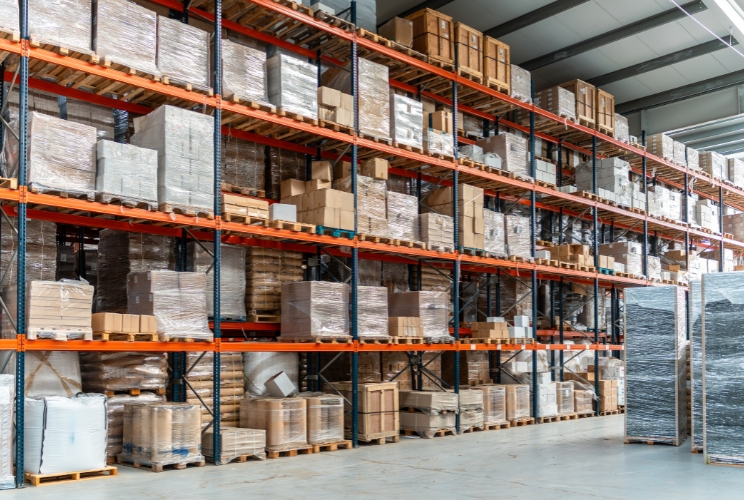
Warehouse automation cost in Malaysia runs from US$15,000 for scanning and an entry warehouse management system to US$15 million or more for AS/RS, sortation and robotics, with published payback periods from 6 months to 5 years across those tiers. Every range on the subject comes from a US or UK source and prices a different scope: hardware is 40–60% of project spend, yet only 28% of one five-year total cost of ownership model. Installation adds 10–25%, maintenance 5–15% a year, and a US$340,000 quote can reach US$520,000. Payback is two to three years in a 2025 industry study of automated warehouses, and 2–4 years for warehouse automation in mid-volume Malaysian manufacturing, where USD-priced equipment offsets ringgit wages under NIMP 2030 labour pressure. For a manufacturer, the conveyor, AGV and AS/RS specification follows the pallet rate leaving the end-of-line, not the order count used in e-commerce benchmarks.
How Much Does Warehouse Automation Cost at Each Automation Level?
Warehouse automation cost at each automation level climbs from US$15,000–US$120,000 for scanning and an entry warehouse management system (WMS) to US$1 million–US$15 million+ for advanced robotics, according to a tiered cost breakdown published in 2026. Each step up the ladder automates a different kind of work: the lower tiers automate data capture and decisions, while the upper tiers automate the physical movement of goods. The four tiers and their published payback periods are summarised in the table below.
| Automation level | What the tier automates | Published cost (USD) | Typical payback |
| Scanning tier | Barcode labels, RF scanners, mobile computers, entry WMS | 15,000–120,000 | 6–15 months |
| System tier | Full WMS, directed picking, pick-to-light, short conveyor runs | 75,000–400,000 | 12–24 months (1–2 years) |
| Mechanized tier | Conveyors, sortation, AS/RS, goods-to-person, warehouse control system (WCS) | 500,000–5 million | 24–48 months (2–4 years) |
| Advanced robotics | AMRs, autonomous forklifts, robotic picking, fleet management | 1 million–15 million+ | 30–60 months (2.5–5 years) |
Other warehouse automation sources draw the tier lines in different places. A compact goods-to-person vendor puts its entry level at US$10,000–US$50,000 for short conveyor runs and barcode scanners, and its mid level at US$70,000–US$1,000,000+ for AS/RS, robotic assistance and goods-to-person. An AMR controller maker describes a pilot of a few lifting AMRs at around US$50,000, with warehouse-wide projects at US$1 million to US$5 million or more. Materials handling professionals surveyed by an industry body in 2025 planned an average automation and equipment spend of US$1.5 million.
Most warehouses still sit at the bottom of this ladder. The same 2025 survey found that 52% of warehouses run mostly or entirely manual fulfilment, and only 5% run storage fully automated. DNC’s warehouse automation in Malaysia covers conveyors, lifter conveyors, AS/RS, robotics and IoT platforms, which places a manufacturer’s project in the mechanized and advanced tiers of this table. The tier sets the order of magnitude, while the system type decides where inside that range a quotation lands.
What Does Each Automated Warehouse System Type Cost?
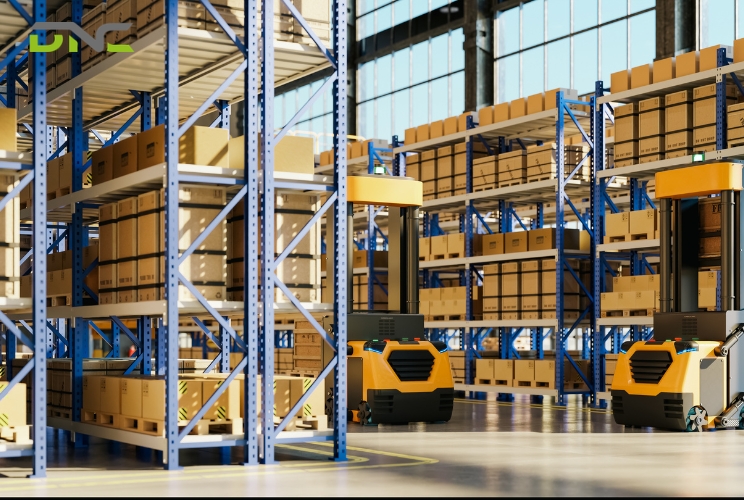
Automated warehouse system cost by type ranges from about US$5,000 for a standalone conveyor to US$10 million or more for pallet-handling AS/RS, and each system type is priced on a different unit: per linear foot, per position, per vehicle or per complete system. The published ranges for the main system types are compared in the table below, with the pricing unit each source quotes.
| System type | Pricing unit | Published range (USD) |
| Conveyor | Per linear foot / per project | 150–500 per linear foot (≈ 490–1,640 per metre); projects 5,000 to 1,000,000 across three sources |
| AS/RS — vertical carousel | Per module | From ~70,000 |
| AS/RS — mini-load, cube storage, multi-shuttle | Per system | 1 million to 1.5 million+ |
| AS/RS — case handling | Per system | 1 million–5 million |
| AS/RS — pallet handling | Per system | 2 million–10 million+ |
| Autonomous forklift | Per vehicle / starting fleet | 60,000–150,000 each; 300,000–600,000 per starting deployment |
| Robotic picking | Per system | 100,000 to 1 million+ |
| Automated sortation | Per system | 400,000–2 million |
| Pick-to-light | Per pick position | 150–400 each; 40,000–200,000 per deployment |
| WMS / WCS software | Licence or subscription | 25,000 to 500,000+ licensed; SaaS WMS 500–2,000 per month plus 10,000–75,000 implementation |
| Fleet and control software | Per year | 10,000–80,000 |
The conveyor row shows why a single number misleads. One digital-twin software vendor quotes US$5,000 to US$500,000+ for conveyors, an AS/RS manufacturer quotes US$200,000–US$1,000,000, and a software-layer guide starts deployments at US$100,000–US$800,000. A conveyor system that runs one straight section and a networked system with merges, diverts and controls are both called “conveyor” in these tables. Storage follows the same pattern: an ASRS warehouse built on a vertical carousel and one built on pallet cranes sit more than 25 times apart at the bottom of their ranges. Per-vehicle pricing for guided and autonomous vehicles is broken down separately in DNC’s AGV and AMR robot cost guide.
Warehouse automation vendor list prices show the same gap between equipment and total spend. One compact goods-to-person vendor lists its entry system from US$146,700 plus a robots-as-a-service subscription from US$4,996 per month with three robots, at a 4.3 m (14 ft / 169 in) building height, rated for up to 170 order lines per hour and about 650 bins in roughly 45 sqm (484 sqft / 0.0045 ha). That list price excludes the service-level agreement, local permits, shipping, mobilisation and taxes, which leads directly to the question of why every source’s range is different.
What Does Each Automated Warehouse System Type Cost?
Why Do Published Warehouse Automation Cost Ranges Disagree?
Published warehouse automation cost ranges disagree because each source prices a different scope boundary, meaning the set of cost layers its own product or service covers, rather than the same system at different prices. A warehouse automation cost figure is a statement about scope before it is a statement about price. A software-layer guide breaks a typical quotation into seven cost layers, listed below in the order buyers usually discover them.
- Hardware: robots, conveyors, cranes, scanners and storage structures, the visible part of the quote.
- Software: WMS for tasks, with WCS and warehouse execution systems (WES) coordinating equipment.
- Systems integration: connections to ERP, e-commerce channels, carriers and accounting.
- Facility modifications: level floors, wireless coverage, extra power and safety zones.
- Data readiness: correct SKU dimensions, weights and location records before go-live.
- Training and change management: new workflows, exception handling and safety procedures.
- Ongoing operations: maintenance, spare parts, subscriptions, energy and expansion.
Hardware typically accounts for 40–60% of warehouse automation project spend in that breakdown, and in a five-year total cost of ownership (TCO) model for a mid-market e-commerce warehouse handling 3,000 orders a day across 12,000 SKUs, hardware falls to only 28% of a US$1.11 million total. Software, integration and ongoing operations make up roughly 65% of that five-year figure. The same guide notes that two vendors can quote the same project 40% apart purely because their scopes differ.
The published sources follow the same pattern. An AMR vendor prices robots, an AS/RS manufacturer prices storage and structures, and a digital-twin vendor prices planning software, so each source’s “warehouse automation cost” is its own slice of the seven layers. One UK warehouse integrator declines to publish figures at all, stating that the cost depends on location, industry and scale. Reading any range correctly means asking which of the seven layers it contains, and the layers most often missing are the ones outside the equipment quote.
Which Costs Sit Outside the Equipment Quote?
The costs outside a warehouse automation equipment quote are installation, systems integration, facility preparation, data preparation, cutover and the recurring operating expenditure (OPEX) of maintenance, licences and energy. These one-off and recurring costs are listed below with the published figure for each.
- Installation and commissioning add 10–25% of the total project cost, covering assembly, controls integration, electrical work, testing and cutover.
- ERP integration runs US$25,000–US$100,000 over 6–14 weeks, and robot fleet API integration US$15,000–US$70,000 over 4–12 weeks.
- Floor resurfacing for robot traffic costs US$3–US$10 per square foot (≈ US$32–US$108 per m²).
- Wireless access-point upgrades for a medium facility cost US$5,000–US$30,000, since storage structures create dead zones.
- Parallel cutover, with old and new processes running together for 2–8 weeks, can temporarily double operating costs.
- Annual maintenance runs 5–10% of the initial warehouse automation cost in one source and 8–15% of hardware value in another.
- Integration upkeep adds roughly 10–20% of the original integration cost every year as ERP, API and firmware versions change.
A US$340,000 warehouse automation project can become a US$520,000 project once these lines are added, according to the same software-layer guide. An AMR controller maker draws the line as CAPEX for the robot fleet, charging stations, safety equipment and sensors, and OPEX for software licences, mapping, integration, commissioning, support, preventive maintenance and upgrades. It also warns that buying from several vendors whose control systems do not share standards multiplies licences, maintenance procedures and middleware.
A turnkey integrator’s quotation, which is how DNC Automation scopes warehouse links, carries installation, controls integration and commissioning as named lines rather than exclusions. The comparison that matters is between quotes that contain the same layers, which is also the basis for any honest payback calculation.
Summary of Warehouse Automation Cost So Far
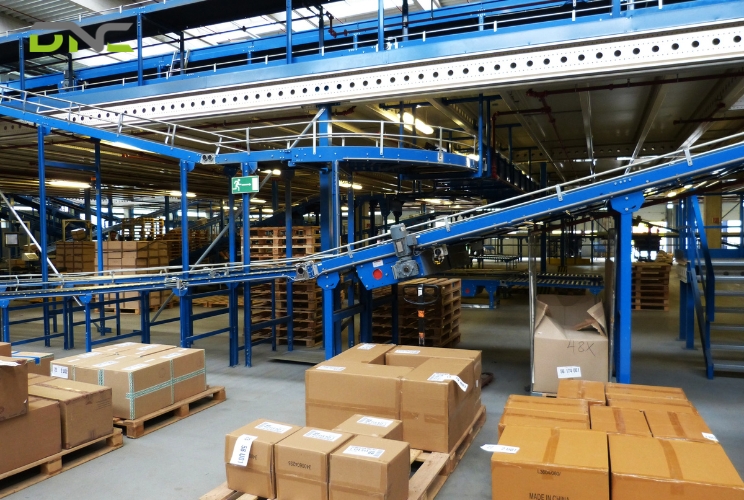
Warehouse automation cost so far spans US$15,000 for scanning to US$15 million+ for advanced robotics, and each system type is priced on its own unit: conveyors per linear foot, AS/RS per system, autonomous forklifts per vehicle and software per licence or month. Ranges disagree because every source prices a different scope boundary: hardware is 40–60% of project spend and only 28% of one five-year TCO model. Installation adds 10–25%, maintenance 5–15% a year, and integration upkeep 10–20% a year, so a US$340,000 quote can reach US$520,000. The next sections turn those costs into ROI and payback.
Summary of Warehouse Automation Cost So Far
How Are Warehouse Automation ROI and Payback Calculated?
Warehouse automation ROI and payback are calculated from one annual net benefit figure, which equals labour savings plus error savings plus avoided space cost, minus maintenance and licensing, with payback equal to the upfront investment divided by that annual net benefit. A worked example in a 2026 cost guide divides a US$600,000 investment by a US$215,000 annual net benefit to reach 2.79 years (33 months / about 146 weeks), inside the 24–48-month range typical of mechanized automation. The published values for each benefit input are listed below.
- Labour: an autonomous forklift replaces 2–3 operator roles, valued at roughly US$93,000–US$139,000 a year in a US setting.
- Picking errors: a 2012 industry study of 250 supply-chain managers put the average mis-pick at about US$22, or roughly US$389,000 a year for one distribution centre.
- Error cost at current prices: a single mis-pick costs US$30 to more than US$75, and a typical warehouse loses US$400,000–US$600,000 a year to picking errors, according to a 2024 warehouse-software analysis.
- Space: recovering 30–50% of storage capacity delays or removes the need for a larger building.
- Throughput: assisted picking robots raised items picked per hour by 180%, as reported by a global logistics operator.
Soft savings such as lower product damage and fewer workplace claims add another 15–25% of value in the same guide, and they belong in a separate line so the core payback stays auditable. Labour savings also do not always mean fewer people: the 2025 industry study of automated warehouses found that over half of warehouses adopting automation expanded their workforce rather than cutting it.
Warehouses adopting automation report a typical payback period of two to three years, not the four to five years the industry once budgeted, according to that 2025 study. AS/RS pays back in three to five years against an average lifespan of 25 to 30 years, per one AS/RS manufacturer. An AMR controller maker sets a 12–24-month target for some fleet projects, and a UK fulfilment operator places meaningful warehouse automation at two to five years. The same payback arithmetic governs the end-of-line, set out in DNC’s article on ROI of packaging automation, and in both places the labour input is where Malaysian figures depart from the published ones.
What Changes the Payback Period for a Malaysian Facility?
Warehouse automation payback for a Malaysian facility changes mainly through the labour side of the formula, because the equipment is priced in US dollars while the wages it offsets are paid in ringgit. Every published payback range for warehouse automation cost comes from a US or UK source, so each one embeds a US or UK wage level.
The US labour figure is explicit in one source: 2–3 operator roles worth US$93,000–US$139,000 a year works out to about US$46,000 per role. DNC’s working range for a Malaysian palletizing role is RM 4,500–6,500 per worker per month including EPF and SOCSO contributions, which is RM 54,000–78,000 per year. Converting that ringgit figure at the day’s exchange rate and entering it in the labour line of the formula gives a Malaysian payback, and a copied US payback period is a US wage claim, not a Malaysian one. DNC Automation’s working range for warehouse automation in mid-volume Malaysian manufacturing at current labour costs is 2–4 years, which sits inside the mechanized tier’s published 24–48 months.
Three other inputs that move the Malaysian warehouse automation payback figure in either direction are listed below.
- Operating hours: a facility running two or three shifts spreads the same capex over more utilised hours than a single-shift warehouse.
- Labour availability: structural labour shortage, together with the multi-tiered levy on low-skilled labour set out in the New Industrial Master Plan (NIMP) 2030, raises the value of each automated role over the equipment’s life.
- Incentives: the Automation Capital Allowance gives a 200% capital allowance on the first RM10 million of qualifying expenditure for years of assessment 2023–2027, subject to SIRIM technical verification, and the Industry4WRD Intervention Fund matches SME projects 70:30 up to a RM500,000 grant. Both reward added connectivity and integration, and neither pays for a like-for-like machine swap.
An AMR controller maker makes the same point from the supplier side: actual ROI depends on labour costs, fleet utilisation, operating hours, layout, integration requirements and deployment scale, so it has to be calculated from each facility’s own conditions. For a manufacturer, one of those conditions is not in any published formula at all, and that is the rate at which the factory itself feeds the warehouse.
What Changes the Payback Period for a Malaysian Facility?
How Does End-of-Line Output Size Factory Warehouse Automation Spend?
End-of-line output sizes factory warehouse automation spend because a manufacturer’s finished-goods warehouse receives pallets at the rate the palletizer and stretch wrapper release them, not at the rate customers place orders. Every published readiness threshold is an order-count metric: robotics make less financial sense below 1,500–2,000 orders per day in one source, and full automation economics often fail below 5,000 orders per day in another. Those thresholds describe e-commerce and third-party logistics (3PL) warehouses, and the worked examples behind them use order lines, SKUs and pick rates.
Only one of the published guides lists manufacturing separately, putting a manufacturing and raw-materials warehouse’s first automation phase at US$250,000–US$900,000 and naming line integration and sequencing as the main cost driver. That driver is the end-of-line. The pallets per hour leaving a robotic palletizing cell set the conveyor length and accumulation needed before storage, the number of AGVs or AMRs on the transfer route, and the number of input stations an AS/RS needs to absorb a full shift without stopping the line.
When DNC engineers scope the link between an end-of-line and storage, the first figure fixed is the pallet discharge rate at the wrapper exit, and the conveyor, vehicle and storage specification is built back from it. Sizing the same warehouse from orders per day either under-specifies the inbound side, so finished pallets queue at the end of the production line, or over-specifies the picking side, so capex goes into order-picking capacity the factory does not use. A factory warehouse therefore has two rates to satisfy, inbound from production and outbound to customers, and the published readiness gates only test the second, which is why they need translating before a manufacturer applies them.
When Does Warehouse Automation Cost More Than It Returns?
Warehouse automation costs more than it returns when a facility fails one of five readiness gates that the published sources agree on: volume, inventory accuracy, peak ratio, lease term and product-mix stability. Two of the five are stated independently by two different sources, which makes them the strongest signals in the data set. The five gates are listed below with their thresholds.
- Volume: robotics underperform below 1,500–2,000 orders per day, and full automation below 5,000 orders per day. For a factory, the equivalent test is pallets per hour and shifts per day at the end-of-line.
- Inventory accuracy: stock records below 98% accuracy send automated equipment to empty or wrong locations, a threshold both a software-layer guide and a UK fulfilment operator state.
- Peak-to-average ratio: when peak volume reaches three times the average, fixed automation sits idle most of the year, a ratio both sources also give.
- Lease term: with less than three years left on a building lease, conveyors, sortation and AS/RS are difficult and expensive to move.
- Product-mix stability: product size, weight and packaging that change every quarter force repeated reconfiguration and delay the return.
Failing two or more gates points the first investment at software, data and process rather than equipment, because those layers are cheaper and portable. A UK warehouse integrator adds a limit that applies at every tier: the fully automated warehouse does not exist, and even the most heavily automated grocery and e-commerce operators run a blend of people and machines working side by side. Passing the gates settles whether to automate, and the remaining decision is how to pay for it.
How Do Phasing and Financing Spread the Upfront Cost?
Phasing and financing spread the upfront warehouse automation cost by moving part of the capital expenditure (CAPEX) later in time or converting it into OPEX. A three-phase model from a 2026 cost guide stages the spend over 36 months (3 years), as shown in the table below.
| Phase | Timeline | What is deployed | Published cost (USD) |
| 1. Data foundation | 0–6 months | Barcode, RF scanning, core WMS, inventory accuracy | 60,000–180,000 |
| 2. Directed operations | 6–18 months | Directed picking, wave or batch logic, integrations, light mechanization | 120,000–400,000 |
| 3. Physical automation | 18–36 months | AMRs or goods-to-person, fleet management, WCS | 300,000–1.5 million |
Phases 1 and 2 of a warehouse automation programme together run about US$180,000–US$580,000, and each phase is funded only after the previous one proves its return. Implementation time scales with scope: a narrow system goes live in a few months, while a broad integration of multiple robots with WMS, WES, WCS and robot control software takes 6–18 months, according to a pallet-shuttle manufacturer. For a manufacturer, phase 3 often starts with the conveyor or AGV link from the end-of-line, because that link carries every pallet the plant produces.
The financing models available for warehouse automation are listed below, each shifting who carries the capex and the maintenance risk.
- Outright purchase suits stable operations with capital available and costs less over the full lifecycle than a subscription.
- An equipment lease trades ownership for predictable monthly payments on predictable volume.
- Robots-as-a-service replaces the upfront price with one annual fee that, in one AMR vendor’s model, covers the software subscription, deployment, training, 24/7/365 remote support and maintenance.
- Vendor financing spreads the purchase price while ownership passes to the buyer at the end of the term.
- A hybrid model keeps the software owned and subscribes the hardware, so equipment can be upgraded without losing control of the data.
Warehouse automation subscriptions can cost more over the full asset life, but they preserve cash for inventory, hiring or expansion, which is the trade the questions below return to.
How Do Phasing and Financing Spread the Upfront Cost?
Which Questions Do Buyers Ask Most About Automated Warehouse Cost?
Buyers asking about automated warehouse cost most often raise five questions, covering the full-facility figure, implementation time, the hardware share of spend, subscription pricing and the payback range for a Malaysian facility.
How Much Does a Fully Automated Warehouse Cost?
A fully automated warehouse that combines AS/RS, sortation, robotics and full software integration costs around US$5 million to US$15 million+, according to a 2026 cost breakdown. An AS/RS manufacturer puts a full automation system at US$500,000–US$5 million. No operation runs without people, so “fully automated” describes the storage and movement layers rather than the whole building.
How Long Does Warehouse Automation Take to Implement?
Warehouse automation takes from a few months for a narrow system to 6–18 months for a broad integration of robots with WMS, WES and WCS software. A phased programme stretches the full sequence to about 36 months.
What Share of Warehouse Automation Spend Is Hardware?
Hardware is typically 40–60% of warehouse automation project spend. Across five years of ownership its share falls further, to 28% in one TCO model, because software, integration and operations accumulate every year.
Does Robots-as-a-Service Lower Automated Warehouse Cost?
Robots-as-a-service lowers the upfront automated warehouse cost to little or nothing, because the vendor owns the equipment and charges an annual or monthly fee. Over the full asset life a subscription can cost more than a purchase, so it lowers the entry barrier rather than the lifetime total.
What Is the Payback Period for Warehouse Automation in Malaysia?
The payback period for warehouse automation in mid-volume Malaysian manufacturing is 2–4 years at current labour costs, in DNC Automation’s working range. That sits inside the 2–3 years reported by the 2025 industry study and the 24–48 months published for mechanized systems, with the exact figure set by RM wage levels, shift pattern and end-of-line throughput.
- 3 views
- 0 Comment
Recent Comments