


Teflon Conveyor Belt: The Complete Guide for Malaysian Manufacturers
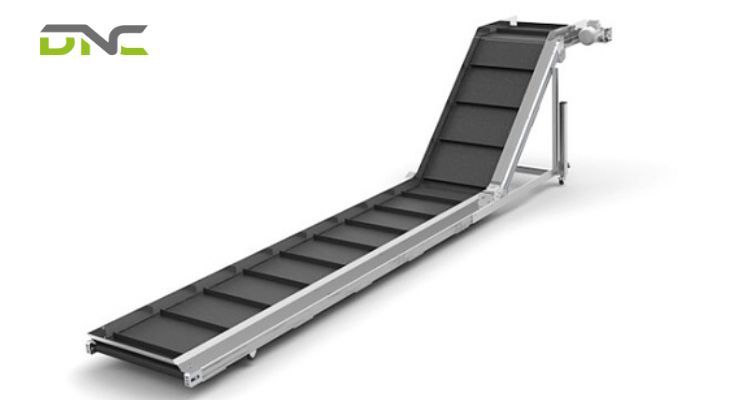
Malaysian biscuit factories running continuous 200°C tunnel ovens, chocolate enrobing lines at Guan Chong Berhad, and semiconductor wafer processing facilities in Penang all share one critical requirement: a conveyor belt that refuses to melt, stick, or contaminate product at extreme temperatures. Teflon conveyor belts — constructed from PTFE (polytetrafluoroethylene) coatings on woven fiberglass substrates —..
Read more- 80 views
- 0 Comment
Conveyor Stops: Precision Product Positioning Guide
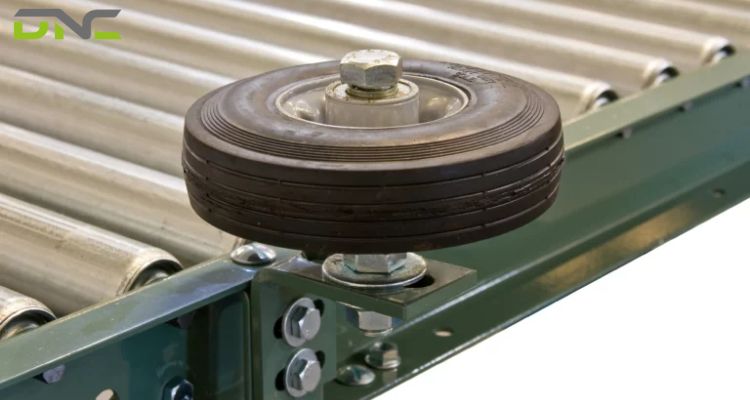
Every automated manufacturing line in Malaysia — from Toyota’s body welding cells in Shah Alam to PCB ICT test stations in Penang — depends on one fundamental mechanism that most factory managers take for granted until it fails: the conveyor stop. A conveyor stop is the precision positioning device that halts a product, pallet, or..
Read more- 199 views
- 0 Comment
Tubular Chain Conveyor: Dust-Free Bulk Handling Malaysia | DNC Automation
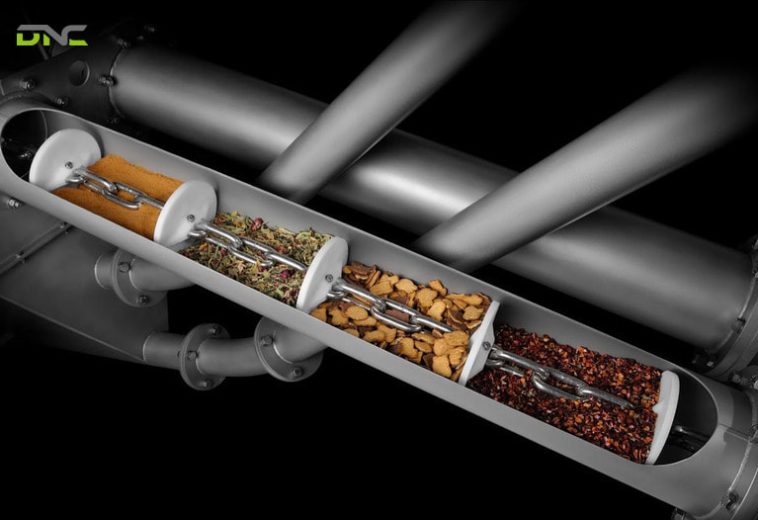
Tubular Chain Conveyor — Enclosed, Dust-Free Bulk Conveying for Malaysian Factories Tubular chain conveyors solve a conveying problem that no other technology addresses as completely: moving fragile, hygroscopic, or hazardous bulk powders and granules through complex three-dimensional routing — horizontal, vertical, and directional changes — within a single fully enclosed circuit that generates zero dust..
Read more- 135 views
- 0 Comment
Scraper Chain Conveyor: Types, Specs & Palm Oil Use | DNC Automation Malaysia
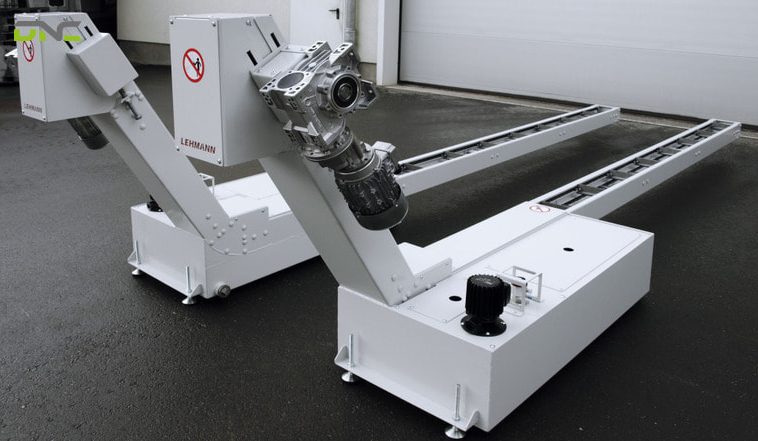
Scraper Chain Conveyor — The Complete Guide for Malaysian Palm Oil and Industrial Bulk Handling Scraper chain conveyors are the backbone of Malaysia’s palm oil industry — every one of the 450+ palm oil mills operating across Sabah, Sarawak, Pahang, Perak, and Johor relies on at least one scraper conveyor to move Fresh Fruit Bunches..
Read more- 241 views
- 0 Comment
Air Conveyor: Pneumatic & Non-Contact Conveying for Malaysian Factories | DNC Automation
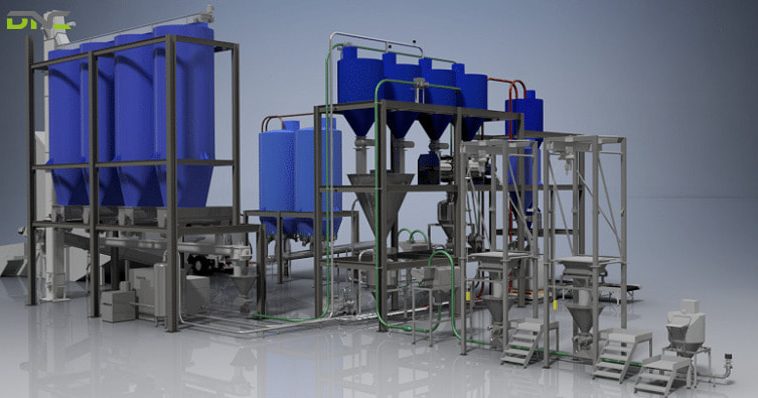
Air Conveyor — Non-Contact Material Transport for Malaysia’s Most Demanding Production Lines Air conveyors move materials without touching them — a capability that sounds simple but solves some of the most difficult conveying problems in Malaysian manufacturing. Scratched PET bottle surfaces fail packaging QC inspections. Pharmaceutical tablets damaged by belt friction fail dissolution tests. Semiconductor..
Read more- 69 views
- 0 Comment
SMT Conveyor: Complete Guide for PCB Assembly Lines in Malaysia
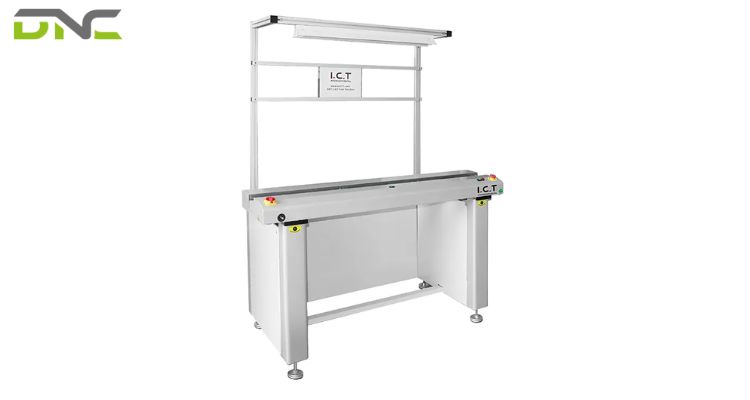
A printed circuit board worth RM 800 in components can be destroyed in 0.003 seconds by an electrostatic discharge event caused by a non-ESD-safe conveyor belt surface. Penang’s electronics manufacturing cluster — contributing 58% of Malaysia’s total E&E exports, 13% of global semiconductor assembly and test volume, and hosting Intel, AMD, HP, and Flex —..
Read more- 162 views
- 0 Comment
Linear Conveyor: From Standard to Smart Factory | DNC Automation Malaysia
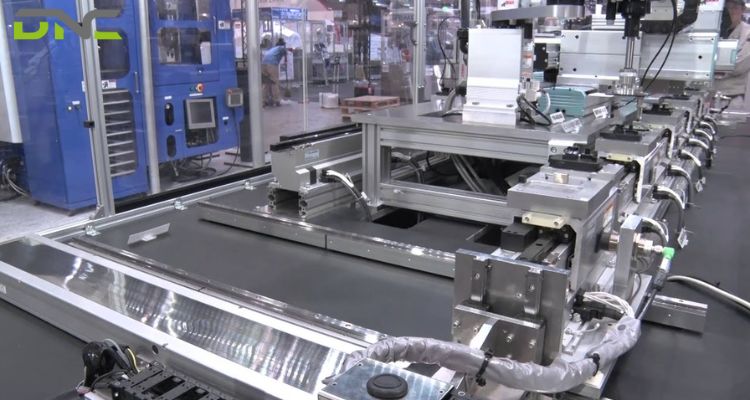
Linear conveyors account for more than 90% of all conveyor installations in Malaysian factories — and yet the term covers two fundamentally different technologies that serve very different manufacturing needs. The first meaning: a straight-path belt or roller conveyor, the most common material transport system in every Malaysian factory from Selangor automotive plants to Johor..
Read more- 118 views
- 0 Comment
Shuttle Conveyor: Complete Guide for Malaysian Warehouses and Factories
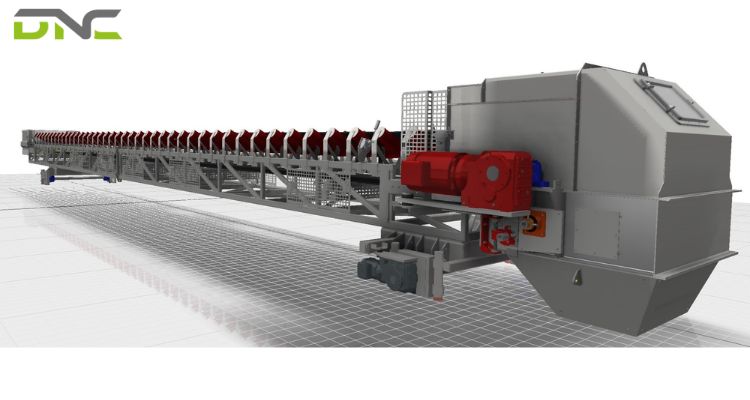
Pos Malaysia processes over 1 million parcels per day through its distribution network — a confirmed DNC Automation client operation where each parcel must be routed from a central sort conveyor to one of 200+ delivery routes without manual handling. E-commerce growth driven by Shopee and Lazada’s boom in Shah Alam, Bukit Raja, and Johor..
Read more- 89 views
- 0 Comment
V Belt Conveyor: Drive Transmission & Product Centering Guide Malaysia
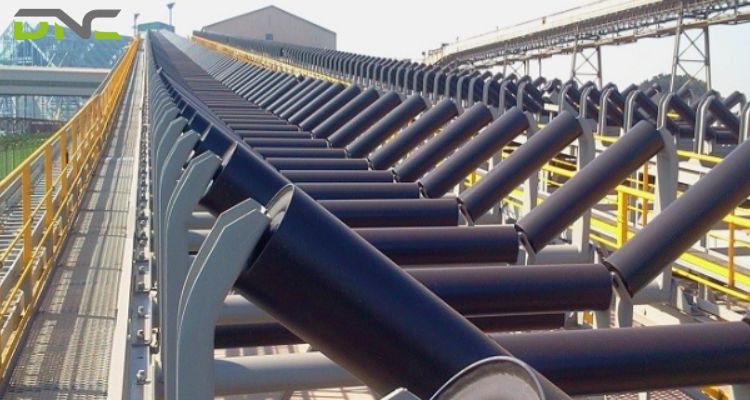
V belt conveyor technology covers two fundamentally different engineering applications that share only the “V” in their names but serve completely different purposes in Malaysian factory automation. The first — V-belt power transmission — refers to the trapezoidal rubber belts (A, B, C, D, or SPZ/SPA/SPB/SPC cross-section) that transmit motor torque to a conveyor’s drive..
Read more- 170 views
- 0 Comment
Weighing Conveyor: Inline Accuracy for Malaysian Factories | DNC Automation
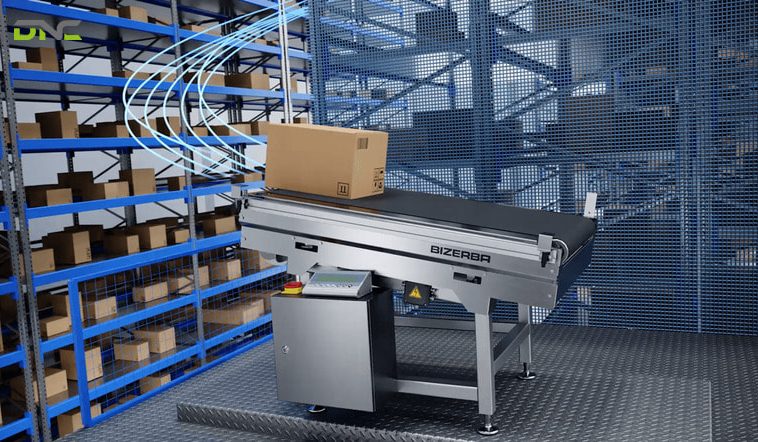
Weighing Conveyor — Automated Weight Verification for Malaysian Quality Control and Revenue Protection Weighing conveyors protect Malaysian manufacturers from two simultaneous financial exposures that add up to millions of ringgit annually: regulatory penalties for short-weight products, and revenue loss from overweight products given away without charge. A palm oil mill operating at 100 tonnes per..
Read more- 128 views
- 0 Comment
Recent Comments