


Conveyor Motors: Types, Selection & Integration Guide for Malaysian Factories
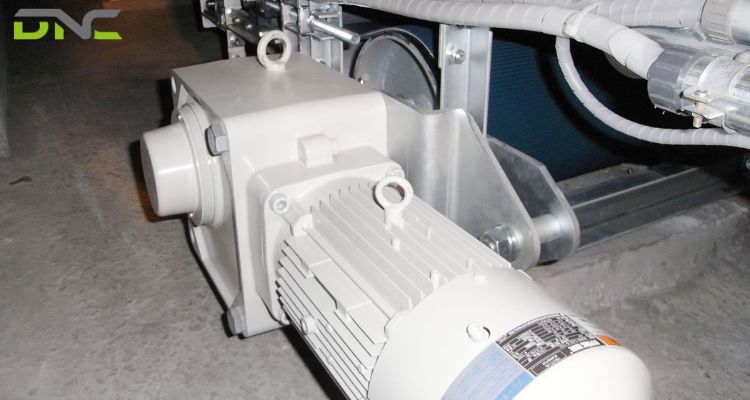
Conveyor motors are the power source of every production line — the wrong motor type, incorrect sizing, or missing VFD integration creates energy waste, premature motor failure, conveyor belt slippage, and unplanned production stoppages across Malaysian manufacturing facilities. A conveyor motor converts electrical energy into the rotational torque that drives the conveyor belt — but motor selection involves far more than matching horsepower to belt width. Operating environment, load profile, speed requirement, duty cycle, and control integration determine whether a conveyor motor delivers 10+ years of reliable service or requires replacement within 18 months.
Malaysian manufacturers face specific conveyor motor challenges: high ambient temperatures in factory environments (30–38°C typical), high humidity in F&B and palm oil processing facilities, the need for VFD-compatible motors to meet NIMP 2030 energy efficiency targets, and 24/7 continuous operation cycles that stress motors designed for intermittent duty. Correct motor type selection, sizing methodology, and VFD integration resolve all of these challenges — and qualify the system for Malaysia’s MIDA Smart Automation Grant (up to RM 1,000,000).
This guide covers all major conveyor motor types used in Malaysian manufacturing — AC induction, DC, servo, gearmotor, drum motor — with technical specifications, sizing methodology, common failure modes, and integration requirements for Siemens, Mitsubishi, Omron, and Xinje PLC-controlled conveyor systems.
What Is a Conveyor Motor?
A conveyor motor is the electromechanical drive unit that converts electrical power into rotational force (torque) to move a conveyor belt at a controlled speed. Conveyor motors operate through three core components: the motor itself (electrical energy to rotation), the gearbox or reducer (rotation speed reduction and torque multiplication), and the drive control system (speed regulation and protection).
The conveyor motor system — motor + gearbox + VFD — defines the belt’s operational performance:
- Torque: the rotational force available to move the belt load
- Speed (RPM): determines belt speed after gear reduction
- Speed control: fixed (direct-on-line) or variable (VFD-controlled)
- Starting torque: the burst of torque required to accelerate the belt from standstill to operating speed
Motor sizing failure — specifying too small a motor — is the most common cause of premature motor burnout in Malaysian conveyor systems. Oversizing wastes energy and capital. Correct sizing requires calculating: belt load (kg), belt speed (m/min), belt width (mm), incline angle (°), friction coefficient, and startup acceleration torque requirement.
Types of Conveyor Motors
1. AC Induction Motor (Three-Phase)
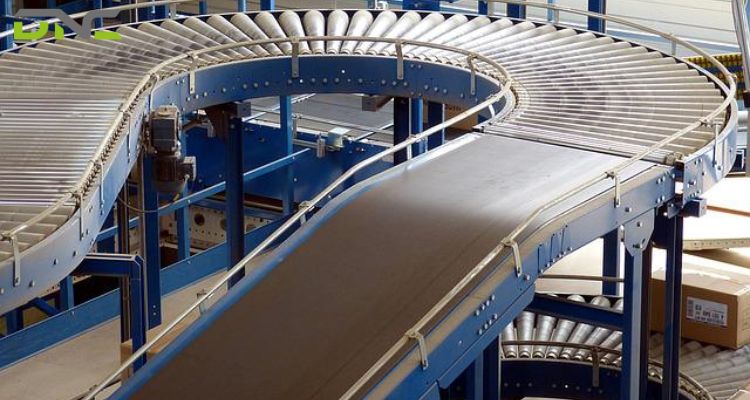
The three-phase AC induction motor is the workhorse of Malaysian conveyor systems — used in the overwhelming majority of industrial conveyor applications from F&B packaging lines to automotive assembly to palm oil FFB handling.
Operating principle: AC current in the stator windings creates a rotating magnetic field that induces current in the rotor — generating torque without any physical electrical connection to the rotor. No brushes, no commutator, minimal maintenance.
Key specifications:
- Power range: 0.1 kW to 315 kW+ (standard IEC frame sizes)
- Speed: 750, 1,000, 1,500, or 3,000 RPM (2, 4, 6, or 8 pole motors at 50 Hz supply — Malaysia’s standard)
- Voltage: 415V three-phase (Malaysian industrial standard)
- Efficiency classes: IE1 (standard), IE2 (high efficiency), IE3 (premium — required for motors above 0.75 kW in many applications under energy regulations)
- Ingress protection: IP55 (standard factory), IP65 (washdown environments), IP67 (submersible for wash tunnels)
Why IE3 matters in Malaysia: Malaysia’s Energy Commission (Suruhanjaya Tenaga) regulates motor efficiency. IE3 premium efficiency motors consume 3–8% less energy than IE1 equivalents — at 24/7 continuous operation, this represents significant annual electricity cost reduction. DNC Automation specifies IE3 motors as standard on all new conveyor installations — aligned with NIMP 2030 energy efficiency targets.
VFD compatibility: Three-phase AC induction motors are fully compatible with Variable Frequency Drives (VFDs). VFD control is mandatory for applications requiring variable belt speed and delivers 20–35% energy savings vs. fixed-speed operation.
Applications: All general industrial conveyor applications — packaging lines, warehouse conveyors, food processing, automotive assembly, palm oil mills
2. Gearmotor (Integrated Motor + Gearbox)
A gearmotor integrates the AC motor and gearbox into a single compact unit — eliminating the coupling, separate gearbox mounting, and alignment requirements of separate motor and reducer installations. Gearmotors are the dominant conveyor drive choice for Malaysian factories where installation space, installation time, and alignment precision are critical.
Gearbox types integrated with conveyor motors:
- Helical gearbox: Most common; 94–98% efficiency; low noise; shaft-mounted or foot-mounted; ratios 3:1 to 200:1
- Bevel-helical gearbox: Right-angle output for space-constrained conveyor end drives; efficiency 93–97%
- Worm gearbox: Compact; high reduction ratios (5:1 to 100:1 in single stage); self-locking capability (prevents backdriving); efficiency 50–85% (lower than helical — not recommended for high-duty cycle applications)
- Shaft-mounted reducer (SMR): Mounts directly onto the conveyor drive shaft — eliminates coupling and base plate; popular for roller conveyors
Output torque: 10 Nm to 50,000 Nm+ depending on motor power and gear ratio
Applications: Virtually all conveyor types — roller conveyors (shaft-mounted gearmotor), belt conveyors (foot or flange-mounted), chain conveyors, modular plastic belt conveyors
DNC Automation standard: DNC specifies helical or bevel-helical gearmotors on all new conveyor installations — worm gearmotors are only specified where self-locking is a specific safety requirement.
3. Variable Frequency Drive (VFD) + AC Motor System
A Variable Frequency Drive (VFD) is not a motor type — it is a drive controller that regulates the frequency (and therefore speed) of the AC supply to the motor. VFD + AC motor is the standard conveyor drive configuration for any application requiring speed control, energy savings, or soft start capability.
VFD benefits for Malaysian conveyor systems:
| Benefit | Performance |
| Energy savings | 20–35% reduction in motor energy consumption vs. fixed-speed |
| Soft start | Eliminates startup current surge (up to 6–8× rated current at DOL start) |
| Speed control | 0.5 m/min to 50 m/min continuously variable |
| Process flexibility | Multiple speed presets per production recipe |
| Motor protection | Overcurrent, overvoltage, overtemperature protection built in |
| SCADA integration | VFDs communicate speed, current, fault status to SCADA via Modbus TCP or Profibus |
Malaysia energy context: Malaysia’s industrial electricity tariff (Tenaga Nasional Berhad) ranges from RM 0.29 to RM 0.55 per kWh for industrial consumers. A 7.5 kW conveyor motor running 24/7 with VFD at 30% energy saving = approximately RM 13,000–16,000 annual electricity cost saving per motor. For a factory with 20 conveyor motors, VFD retrofit payback period is typically 12–18 months.
VFD brands supported by DNC Automation: Siemens SINAMICS (primary), Schneider ATV, ABB ACS, Mitsubishi FR series, Yaskawa — DNC’s electrical engineers program and commission all major VFD brands.
4. Servo Motor Conveyor Drive
Servo motors deliver closed-loop positioning control — an encoder on the motor shaft feeds position data back to the servo drive, which corrects in real time to maintain exact position and speed. Servo drives are specified for conveyor applications requiring positioning accuracy that VFD-driven AC motors cannot deliver.
Positioning accuracy: ±0.01 mm to ±0.1 mm depending on servo resolution and mechanical system
Key parameters:
- Continuous torque: 0.1 Nm to 200+ Nm
- Peak torque: 3× continuous torque for acceleration
- Speed: up to 6,000 RPM (at motor shaft — reduced by gearbox)
- Feedback: incremental or absolute encoder (17–23 bit absolute for highest resolution)
When to specify servo vs. VFD+AC:
- VFD+AC: speed control required, ±5 mm position tolerance acceptable
- Servo: indexing, ±1 mm or better position, synchronized multi-axis coordination required
Applications in Malaysia: SMT PCB indexing conveyors (Penang EMS factories — ±0.5 mm PCB stop position); robot cell infeed/outfeed synchronized with pick-and-place robot; pharmaceutical blister pack indexing; precision assembly line station indexing in automotive parts manufacturing
5. Drum Motor (Motorized Pulley)
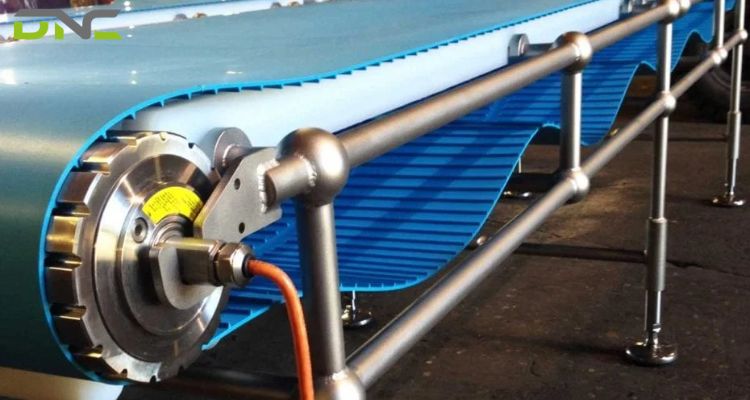
A drum motor integrates the motor, gearbox, and drive components inside a sealed drum — the drum itself becomes the conveyor drive pulley. The external belt runs over the drum surface, driven by friction. No external motor, coupling, or gearbox is visible — everything is sealed inside the drum.
Key advantages:
- Completely sealed IP66–IP69K rating — superior washdown performance for food processing
- Compact — no motor protruding beyond conveyor frame
- Quieter operation than external gearmotor
- Maintenance-reduced — no external coupling alignment, no external gearbox oil changes
- Hygienic design — smooth exterior with no crevices for bacteria accumulation
Power range: 0.05 kW to 22 kW
Drum diameter: 80 mm to 500 mm
Belt speed: 0.01 m/s to 2.5 m/s
Drum width: 200 mm to 3,000 mm
Applications in Malaysia: Food processing conveyors requiring IP69K washdown (F&B manufacturers — meat, poultry, seafood processing); pharmaceutical cleanroom conveyors; checkweigher infeed and outfeed belts; airport baggage handling (KLIA, Penang International)
6. DC Motor Conveyor Drive
DC motors offer simple speed control via voltage variation — reducing voltage reduces speed proportionally. DC motors deliver constant torque across their speed range, making them predictable under variable loads. However, DC motors contain brushes that wear and require regular replacement — increasing maintenance burden vs. AC motors.
Brushless DC (BLDC): Eliminates brush maintenance; electronically commutated; higher efficiency than brushed DC; used in conveyor applications where compact size and low maintenance are priority (small product conveyors, laboratory automation)
Current position in Malaysian manufacturing: DC motors have been largely replaced by VFD + AC motor systems in new conveyor installations — VFD+AC delivers equivalent speed control with lower maintenance and higher reliability. DC motors remain in service on older conveyor systems requiring retrofit or upgrade.
DNC Automation recommendation: Specify VFD + IE3 AC motor for all new conveyor installations. For existing DC motor conveyors, DNC engineers evaluate whether DC drive retrofit or full VFD+AC conversion delivers better TCO.
How to Size a Conveyor Motor
Motor sizing errors — undersizing or oversizing — are the leading cause of premature motor failure and energy waste in Malaysian factory conveyor systems. Correct sizing requires calculating five parameters:
Step 1: Calculate Belt Load (kg)
Belt load = maximum product weight on belt at one time + belt weight + return belt weight.
Example: 10 m conveyor, 0.8 m wide belt, 15 kg/m² product load = 10 × 0.8 × 15 = 120 kg product load. Belt weight: approximately 8 kg/m for flat rubber belt = 10 × 8 = 80 kg. Total load = 200 kg.
Step 2: Calculate Required Torque (Nm)
Torque = (Total Load × Belt Speed × Friction Factor) / Drive Efficiency
For horizontal flat belt conveyors, friction factor ≈ 0.05 (roller bed) to 0.35 (slider bed, high-load).
Add 20–30% startup torque margin to handle cold-start conditions.
Step 3: Calculate Required Power (kW)
Power (kW) = (Torque × Angular Speed) / 9,550
Select the next standard motor frame size above calculated power to provide service factor headroom.
Step 4: Apply Service Factor
Apply service factor of 1.25–1.5 for:
- Frequent starts/stops (more than 10 per hour)
- High ambient temperature (>40°C — common in Malaysian factories)
- High humidity environments (F&B, palm oil)
- 24/7 continuous duty cycle
Step 5: Specify VFD Rating
VFD rated current must equal or exceed motor full-load current. For VFD with constant torque loads (conveyor), specify VFD for “heavy duty” CT mode — not light duty. Include VFD oversize factor of 1.1× for high-start-frequency applications.
DNC Automation standard practice: All conveyor motor sizing is performed using DNC’s engineering calculations in SolidWorks Simulation — no catalog estimates, no rule-of-thumb sizing. Motor and VFD sizing calculations are provided to clients as part of the free pre-sales consultation.
Common Conveyor Motor Failure Modes
Unplanned motor failure costs Malaysian factories an average of USD 260,000 per hour in downtime (Aberdeen Group). These are the five most common failure modes — and how to prevent each:
1. Overheating (Thermal Failure)
Cause: Motor undersized for actual load, ambient temperature exceeding motor rating, blocked cooling air flow, frequent starts exceeding thermal duty rating.
Detection: Motor surface temperature >80°C (Class B insulation limit); thermistor alarm from motor winding sensor; burnt smell; discoloration of motor housing.
Prevention: Correct motor sizing with service factor; install thermistor protection wired to VFD alarm; ensure minimum 100 mm air clearance around motor body; specify IP65 for high-humidity environments where airflow restriction is unavoidable.
2. Bearing Failure
Cause: Misalignment between motor and gearbox or conveyor shaft; contamination (water, dust, product) entering bearing; incorrect lubrication interval; shaft overloading from belt overtension.
Detection: Increased vibration (vibration sensor alarm); audible grinding or growling; increased motor current draw; heat at motor end caps.
Prevention: Laser alignment at installation; sealed bearings (2RS type) for contaminated environments; correct lubricant specification and interval (follow motor manufacturer schedule); install IoT vibration sensors on conveyor motors for predictive maintenance — DNC Automation’s SCADA-integrated systems monitor motor vibration continuously.
3. Insulation Failure
Cause: Moisture ingress in high-humidity environments; voltage spikes from VFD operation (if incorrect cable shielding); overheating cycling.
Prevention: Specify IP65 minimum for food and palm oil processing environments; use VFD-rated motor cables with shielding; install motor surge protection filters on VFD output.
4. VFD-Induced Bearing Current
Cause: PWM (Pulse Width Modulation) switching in VFD creates common-mode voltage that drives bearing currents through motor shaft bearings — causing accelerated bearing pitting.
Prevention: Specify insulated bearings (NDE bearing) on motors above 30 kW driven by VFD; install shaft grounding ring; use VFD output choke (reactor) to reduce dV/dt.
5. Overload from Belt Jam
Cause: Product jam on conveyor causes instantaneous motor overload — current spikes to 6–8× rated current, thermally damaging windings if protection does not trip fast enough.
Prevention: Size motor overload relay correctly (not too loose); configure VFD current limit and jam detection; install photoelectric jam detection sensors at conveyor transfer points — DNC Automation integrates jam detection on all PLC-controlled conveyor systems.
Conveyor Motor Integration with PLC and SCADA
DNC Automation integrates conveyor motors into Siemens SIMATIC S7 or Xinje PLC-based control systems — delivering full automation capability:
PLC integration points:
- Start/stop command from PLC digital output → VFD enable input
- Speed reference from PLC analog output (0–10V or 4–20mA) → VFD speed reference
- Motor run status from VFD digital output → PLC digital input
- Fault signal from VFD → PLC alarm input → SCADA alarm
- Motor current readback from VFD → PLC analog input → SCADA trending
SCADA monitoring parameters per motor:
- Actual belt speed (m/min) — via encoder or VFD output frequency
- Motor current draw (A) — for load monitoring and jam detection
- Motor temperature (°C) — via thermistor wired to VFD or AI module
- Vibration level (mm/s) — via IoT vibration sensor on motor housing
- Running hours — for preventive maintenance scheduling
- Fault history — for root cause analysis
Predictive maintenance capability: DNC Automation’s SCADA-integrated motor monitoring systems use trending of motor current, temperature, and vibration to detect developing faults before failure — reducing unplanned downtime incidents by 70%+ versus reactive maintenance.
Applications: Conveyor Motors in Malaysian Manufacturing
F&B Processing
High-humidity (>85% RH), washdown environments, and 24/7 continuous duty make conveyor motor specification critical in Malaysian food factories. DNC specifies IE3 AC gearmotors with IP65 rating, VFD control, and thermistor protection — plus drum motors for conveyors requiring IP69K washdown. Named clients include F&N and Ramly Burger.
Automotive Manufacturing
Toyota, UMW, and Bridgestone conveyor systems require motors capable of handling heavy pallet loads (500–5,000 kg), frequent start-stop cycles on indexing lines, and high-temperature environments (paint cure ovens at 180–200°C where standard motors cannot operate — DNC specifies high-temperature motors with Class H insulation for these applications).
Electronics — Penang
SMT reflow oven conveyor motors must operate continuously at oven ambient temperatures of 60–80°C. DNC specifies Class H insulation motors with thermistor protection and forced-cooling options for Penang EMS factory conveyor systems.
Palm Oil Processing
Palm oil mill conveyor motors — driving FFB scraper chains and inclined FFB conveyors — face high load, high-humidity steam environments, and variable FFB density that creates significant load fluctuation. DNC specifies oversized motors (1.5× calculated load) with IP55 or IP65 rating, VFD soft-start, and Siemens SCADA monitoring for Malaysia’s palm oil mill clients.
FAQ — Conveyor Motors
Q1: What motor type is most commonly used in Malaysian conveyor systems?
Three-phase AC induction gearmotors — motor integrated with helical or bevel-helical gearbox — are the dominant conveyor motor type in Malaysian manufacturing. They deliver the combination of reliability, low maintenance, VFD compatibility, and energy efficiency that 24/7 Malaysian factory operations require. DNC Automation specifies IE3 premium efficiency gearmotors on all new conveyor installations — compliant with Malaysian energy efficiency regulations and NIMP 2030 energy targets.
Q2: Do I need a VFD for every conveyor motor?
Not necessarily — but VFD investment is justified for most applications above 1.5 kW in Malaysian manufacturing. VFDs are essential when variable belt speed is required for multiple products or recipes, when soft-start is needed to protect belt and product, or when energy savings are a priority (energy payback is typically 12–18 months). Fixed-speed (direct-on-line) motors are only appropriate for constant-load, single-speed conveyor applications with infrequent starts.
Q3: How do I calculate the correct motor size for my conveyor?
Motor sizing requires: (1) calculate total belt load including product weight, belt weight, and return weight; (2) calculate required torque from load, speed, and friction factor; (3) calculate required power in kW; (4) apply service factor of 1.25–1.5 for Malaysian factory conditions (high temperature, high humidity, continuous duty); (5) select the next standard IEC frame size above calculated power. DNC Automation provides motor sizing calculations as part of the free pre-sales consultation — no estimates, no rule-of-thumb selections.
Q4: What is a drum motor and when should I use it?
A drum motor integrates the motor, gearbox, and drive components inside a sealed drum that becomes the conveyor drive pulley. Drum motors are specified for applications requiring IP66–IP69K washdown protection (food processing lines, F&B factories), compact conveyor profiles with no external motor protrusion, and reduced maintenance requirements. Drum motors are quieter than external gearmotors and eliminate coupling alignment requirements. DNC Automation supplies drum motor conveyor systems for Malaysian F&B manufacturers requiring HACCP-compliant washdown capability.
Q5: How does DNC Automation’s motor monitoring system reduce downtime?
DNC Automation integrates IoT vibration sensors, motor thermistors, and current monitoring into the SCADA system for every conveyor motor. The SCADA platform trends current draw, vibration, and temperature continuously — generating alerts when parameters deviate from baseline before failure occurs. This predictive maintenance approach reduces unplanned downtime incidents by 70%+ versus reactive (fix-when-failed) maintenance. Remote monitoring via cloud SCADA enables DNC’s engineering team to view motor status in real time — triggering preventive maintenance visits before factory operators notice any symptom.
Q6: Are conveyor motor VFD systems eligible for Malaysia’s Smart Automation Grant?
Yes. VFD-controlled conveyor motor systems with SCADA or IoT monitoring qualify as automation technology under MIDA’s Smart Automation Grant (SAG). The SAG provides up to RM 1,000,000 matching funding (70:30 government: company ratio). Eligible costs include motor hardware, VFD, PLC, SCADA software, wiring, and commissioning. DNC Automation structures all conveyor proposals with SAG eligibility documentation and supports clients through the MIDA application process.
Q7: What IP rating should I specify for conveyor motors in Malaysian food factories?
Specify IP65 minimum for all conveyor motors in Malaysian food processing environments — this rating protects against water jets from washdown cleaning. For applications requiring high-pressure steam cleaning or immersion cleaning (meat processing, seafood, dairy), specify IP67 (temporary immersion) or IP69K (high-pressure steam jet). DNC Automation specifies IP65 as the baseline for all F&B conveyor installations, with IP69K specified for meat and seafood processing lines where food hygiene regulations require high-pressure washdown.
Q8: How long do conveyor motors typically last in Malaysian factory conditions?
A correctly sized, correctly installed AC induction motor in Malaysian factory conditions delivers 10–15 years of service life. Motor life is reduced by: incorrect sizing (undersized motors run hot continuously), misalignment at installation (bearing failure within 1–2 years), contamination from water or chemicals entering terminal box, and VFD-induced bearing currents without shaft grounding. DNC Automation’s commissioning protocol includes motor alignment verification, insulation resistance test, and thermistor wiring check before handover — establishing the baseline for full service life performance.
Conclusion
Conveyor motors are the precision-engineered heart of every production line in Malaysian manufacturing — and their specification, sizing, and integration determine whether your conveyor system delivers a decade of reliable service or a cycle of premature failures and unplanned downtime. Malaysian factory conditions — high ambient temperature, high humidity, 24/7 continuous operation, and NIMP 2030 energy efficiency targets — demand motor systems engineered to these specific requirements, not catalog selections.
DNC Automation’s 35+ engineers have specified and commissioned conveyor motor systems for Malaysia’s leading manufacturers — Toyota, Sony, Panasonic, F&N, Hartalega, and Ramly Burger — with ISO 9001:2015 quality management, Siemens-integrated SCADA monitoring, and 24/7 local support across Selangor, Johor Bahru, and Penang.
Talk to Our Engineers — bring your conveyor load data, operating environment, and speed requirements. DNC Automation will size your conveyor motor correctly, specify the right VFD and integration, and calculate your ROI.
- 358 views
- 0 Comment
Recent Comments