


Smart Warehouse Solutions | DNC Automation Malaysia
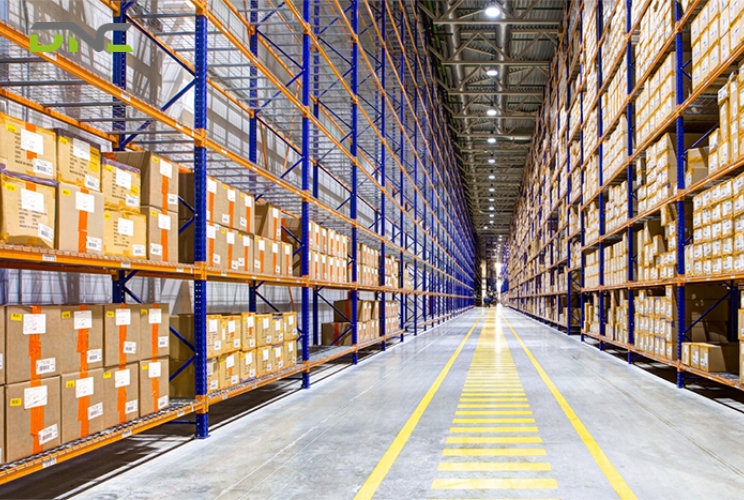
Smart warehouse solutions integrate physical automation — ASRS, conveyors, robotic systems — with digital technologies: IoT sensors, SCADA monitoring, AI-driven analytics, and cloud connectivity. The result is a warehouse that not only executes tasks automatically but continuously monitors its own performance, predicts problems before they occur, and adapts its operations based on real-time data.
In Malaysia’s manufacturing sector, where Industry 4.0 adoption is accelerating under the national Industry 4.0 Policy (DARe) and smart manufacturing incentives from MITI and MIDA, smart warehouse solutions represent the convergence of operational excellence and digital transformation.
DNC Automation Malaysia designs and implements smart warehouse solutions that combine ASRS hardware, WMS software, and Industry 4.0 digital layers for Malaysian manufacturers.
What Makes a Warehouse “Smart”?
A smart warehouse differs from a conventional automated warehouse in its use of data and connectivity:
Conventional automated warehouse: Equipment operates on predefined programs. Operators are alerted to faults when they occur. Performance is reviewed in weekly or monthly reports.
Smart warehouse: Equipment generates continuous data streams. AI algorithms detect anomalies before they become failures. Performance is monitored in real time. The system optimises its own operations based on current conditions.
The five layers of a smart warehouse:
Layer 1: Physical Automation
ASRS cranes, shuttle systems, conveyor systems, robotic picking cells — the physical infrastructure that executes warehouse movements without manual labour.
Layer 2: Control Software (WCS/WMS)
Warehouse Control System and Warehouse Management System — the operational software that directs physical equipment and manages inventory logic.
Layer 3: IoT Connectivity
Sensors embedded in equipment and the warehouse environment — vibration sensors on crane bearings, temperature sensors in storage zones, energy meters on conveyor drives — generating continuous data streams.
Layer 4: Analytics and AI
Machine learning algorithms that analyse IoT data streams to detect patterns, predict failures, and optimise system performance.
Layer 5: Digital Twin and Visualisation
A real-time virtual model of the warehouse — updated from WMS and IoT data — accessible via dashboards on any device, providing management visibility into operational performance from anywhere.
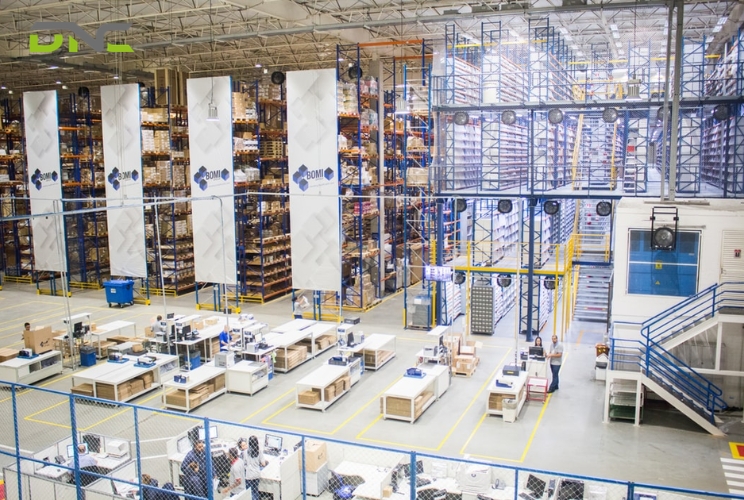
IoT Applications in Warehouse Automation
Equipment Health Monitoring
ASRS stacker cranes, shuttle systems, and conveyor drives are complex electromechanical systems with defined wear profiles. IoT sensors measure:
Vibration: Accelerometers on crane wheel axles, gearboxes, and hoisting motors detect bearing wear, gear damage, and structural resonance. A bearing in the early stage of failure produces a characteristic frequency signature in vibration data — detectable weeks before the bearing fails catastrophically.
Motor current: Abnormal load on crane travel or hoisting motors indicates mechanical resistance — from dirty rails, misalignment, or load imbalance. Current monitoring identifies these issues without physical inspection.
Temperature: Motor and gearbox temperature above normal operating range indicates cooling failure, excessive load, or lubrication breakdown. Temperature trending predicts overheating before it causes motor burnout.
Energy consumption: Increasing energy per pallet move indicates system efficiency degradation — dirty conveyors, misaligned rails, or overloaded drives.
DNC Automation’s IoT monitoring platform collects all these data streams and displays them on a maintenance dashboard, with alert thresholds triggering SMS and email notifications when values exceed normal ranges.
Environmental Monitoring
For temperature-sensitive products — pharmaceutical cold chain, frozen food, chilled dairy — IoT temperature and humidity sensors monitor conditions throughout the warehouse:
- Continuous temperature logging at multiple points within cold storage ASRS
- Alert when temperature deviates from specified range (before product safety is compromised)
- Automated report generation for GMP audit (continuous cold chain record vs. manual spot checks)
- Humidity monitoring to detect condensation risk in high-bay warehouses
This replaces manual temperature logging (twice-daily spot checks) with continuous, tamper-proof digital records — a significant compliance and operational advantage.
Energy Management
Smart warehouses monitor energy consumption by zone and by equipment, enabling:
- Identification of energy-intensive equipment or operating periods
- Optimisation of crane and conveyor speed profiles to reduce peak demand charges
- Scheduling of high-energy operations (defrost cycles in cold storage, intensive picking waves) to avoid peak tariff periods
- Carbon footprint reporting for ESG and sustainability reporting requirements
Malaysian manufacturers subject to MGTC Green Technology Certification or targeting Bursa Malaysia ESG reporting use DNC Automation’s energy monitoring as part of their sustainability data management.
SCADA Integration for Warehouse Automation
SCADA (Supervisory Control and Data Acquisition) systems provide real-time visibility and control of warehouse automation equipment through graphical operator interfaces.
What SCADA Shows
A DNC Automation SCADA display for a warehouse system includes:
Warehouse floor plan view: Real-time position of all ASRS cranes and shuttles, conveyor belt status (running/stopped/fault), and inventory occupancy of each storage location.
Equipment status panel: Health status of each major component — cranes, lifts, conveyors, pick stations — with fault codes and timestamps.
Throughput dashboard: Real-time pallet or tote movements per hour compared to the day’s target, with trend charts showing hourly performance.
Maintenance alerts: Live display of active alerts from IoT sensors, sorted by priority (critical fault, warning, information).
Energy monitor: Real-time power consumption by zone and trend chart for shift and day.
SCADA Architecture
DNC Automation’s SCADA systems use:
- Siemens SIMATIC WinCC or Ignition by Inductive Automation as SCADA platform
- OPC-UA protocol for secure, standardised communication between SCADA and equipment PLCs
- Historian database for long-term storage and analysis of operational data
- Web-based dashboards accessible on tablets and smartphones for management visibility
For Malaysian customers, DNC can connect warehouse SCADA to existing plant-level SCADA systems, providing a unified view of both production and logistics operations.
AI and Machine Learning in Smart Warehouses
Predictive Maintenance
Predictive maintenance algorithms analyse historical IoT data to build a model of normal equipment behaviour. Deviations from the normal model are flagged as anomalies requiring investigation.
The value is in specificity: instead of replacing bearings on a fixed schedule (time-based maintenance), predictive maintenance schedules replacement only when sensor data indicates the bearing is actually deteriorating. This reduces unnecessary maintenance cost and avoids failures that occur between scheduled maintenance intervals.
DNC Automation’s predictive maintenance module is integrated into the IoT platform and connects to the maintenance management system (CMMS) to automatically generate work orders when anomalies are detected.
Warehouse Performance Optimisation
AI-driven optimisation algorithms improve warehouse performance beyond what static rule-based WMS can achieve:
Dynamic storage allocation: Machine learning models analyse order history and velocity to continuously reassign SKU storage locations, placing fast-moving products closer to the outfeed conveyor and reducing average crane travel time.
Adaptive wave planning: AI algorithms adjust pick wave timing and composition based on real-time dock availability, carrier arrival patterns, and equipment performance — improving on-time shipment rates without increasing resource consumption.
Demand forecasting for replenishment: Predictive analytics of sales order patterns and supplier lead times optimise inbound replenishment scheduling, reducing stockout risk and excess inventory.
Anomaly Detection for Inventory Accuracy
AI analysis of transaction patterns can identify inventory discrepancy signals — unusual pick confirmation rates, unexpected location empty readings, abnormal replenishment frequencies — that indicate an inventory accuracy issue before a physical count confirms it. Early detection allows targeted investigation and correction without a full cycle count.
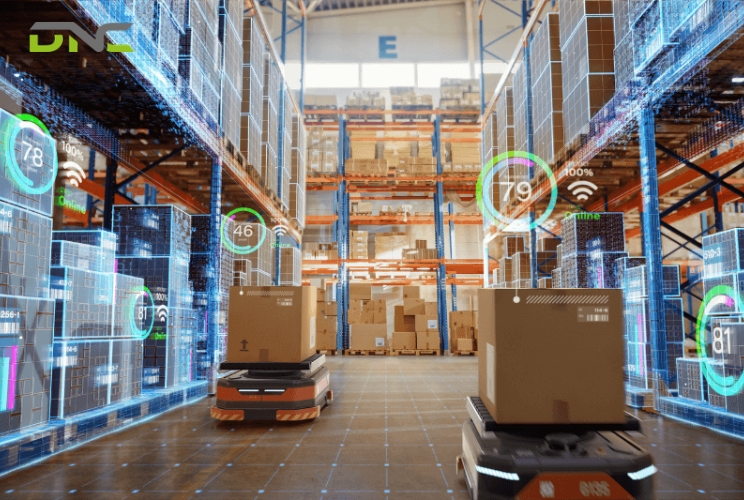
Digital Twin for Warehouse Management
A digital twin is a real-time virtual model of the warehouse that mirrors the physical state of inventory, equipment, and operations. DNC Automation’s digital twin solution:
Inventory visualisation: 3D model of the warehouse showing occupancy of every storage location — updated in real time from WMS. Managers can navigate the virtual warehouse from any device.
Equipment simulation: Before implementing a layout change or introducing a new product profile, the digital twin simulates the impact on throughput, crane utilisation, and storage capacity. This eliminates expensive physical trial-and-error.
Scenario planning: Model the effect of new customer orders, seasonal peaks, or equipment failures on system performance — helping management make informed decisions about capacity and staffing.
Training platform: New operators and maintenance technicians learn system operation in the digital twin before working with live equipment, reducing training time and equipment risk.
Smart Warehouse Solutions and Malaysian Industry 4.0 Policy
Malaysia’s National Industry 4.0 Policy (DARe) and the Smart Manufacturing initiative under MITI support manufacturers adopting digital and automation technologies. Smart warehouse solutions — IoT, SCADA, AI analytics, digital twin — qualify for:
MIDA Automation Capital Allowance: 200% capital allowance on qualifying automation and digital equipment.
Smart Manufacturing Grant (SMG): Grants for manufacturers adopting qualifying Industry 4.0 technologies including IoT and advanced analytics.
Green Technology Financing Scheme (GTFS): Low-cost financing for energy-efficient automation including smart conveyor and ASRS systems with energy optimisation.
DNC Automation assists customers in preparing MIDA and SMG applications as part of the project delivery package.
DNC Automation’s Smart Warehouse Services
DNC Automation Malaysia delivers smart warehouse solutions through an integrated capability:
Automation hardware: ASRS, conveyors, robotic picking, VLMs — the physical foundation.
WMS and WCS: Software that directs automation and manages inventory.
IoT platform: Sensor selection, installation, data collection, and cloud connectivity.
SCADA integration: Real-time monitoring and control dashboards for operations and maintenance.
Predictive analytics: AI-driven maintenance prediction and performance optimisation.
Digital twin: 3D warehouse visualisation and simulation.
MIDA support: Application documentation for capital allowances and smart manufacturing grants.
Frequently Asked Questions
What connectivity infrastructure does a smart warehouse require?
Smart warehouse IoT requires reliable industrial network infrastructure — typically industrial Ethernet (Profinet or EtherNet/IP) within the warehouse and 5G or Wi-Fi 6 for mobile equipment connectivity. DNC Automation designs the network architecture as part of the smart warehouse solution.
Can smart warehouse technologies be added to an existing ASRS installation?
Yes. IoT sensors and SCADA connectivity can be retrofitted to existing ASRS equipment in most cases. DNC conducts an equipment audit to determine sensor compatibility and integration requirements.
How is smart warehouse data secured?
DNC Automation implements defence-in-depth security: network segmentation between OT (operational technology) and IT, encrypted OPC-UA communications, VPN for cloud connectivity, and access controls aligned with IEC 62443 industrial cybersecurity standards.
What ROI can be expected from smart warehouse features?
Predictive maintenance alone typically reduces unplanned downtime by 30–50%, with an average maintenance cost reduction of 15–25%. Energy optimisation delivers 10–20% energy cost reduction. Combined, smart warehouse features add 2–5 percentage points of annual return improvement on top of the base ASRS and WMS ROI.
Conclusion
Smart warehouse solutions — combining physical automation with IoT monitoring, SCADA, AI analytics, and digital twin — represent the Industry 4.0 transformation of warehouse operations. Malaysian manufacturers who invest in smart warehouse infrastructure gain not only the operational efficiency of automation but the continuous intelligence of a self-monitoring, self-optimising system.
DNC Automation Malaysia designs and implements complete smart warehouse solutions, from ASRS hardware through IoT connectivity to AI-driven analytics and digital twin visualisation.
Contact DNC Automation Malaysia to discuss smart warehouse solutions for your facility and explore MIDA incentives for your investment.
- 75 views
- 0 Comment
Recent Comments