


Warehouse Automation Solutions | DNC Automation Malaysia
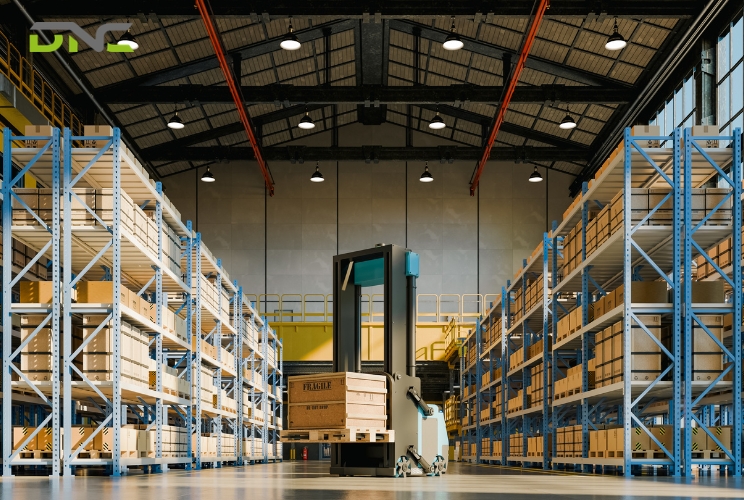
Warehouse automation solutions encompass the full range of technologies — ASRS, WMS software, robotic systems, conveyor and sortation, IoT monitoring — that reduce manual labour dependency, increase operational throughput, and improve inventory accuracy in warehouse and distribution operations. For Malaysian manufacturers and distributors, selecting and implementing the right combination of warehouse automation solutions is a strategic decision that determines operational competitiveness for the next decade.
DNC Automation Malaysia designs, supplies, and integrates warehouse automation solutions across the complete technology spectrum — from first-step automation projects (VLMs, pick-to-light, AMRs) to large-scale integrated systems (ASRS + conveyor + WMS + IoT) for manufacturing plants and distribution centres.
Why Warehouse Automation? The Malaysian Business Case
Rising Labour Cost and Scarcity
Malaysia’s annual minimum wage adjustments and foreign worker policy constraints make warehouse labour progressively more expensive and less reliable. Manufacturing and logistics operations that depend on large warehouse headcounts face growing operational risk.
Warehouse automation solutions directly replace labour in the most repetitive, high-volume tasks — storage and retrieval, picking, palletising, conveyor transport — while retaining human roles for exception handling, system operation, and maintenance.
Land and Space Efficiency
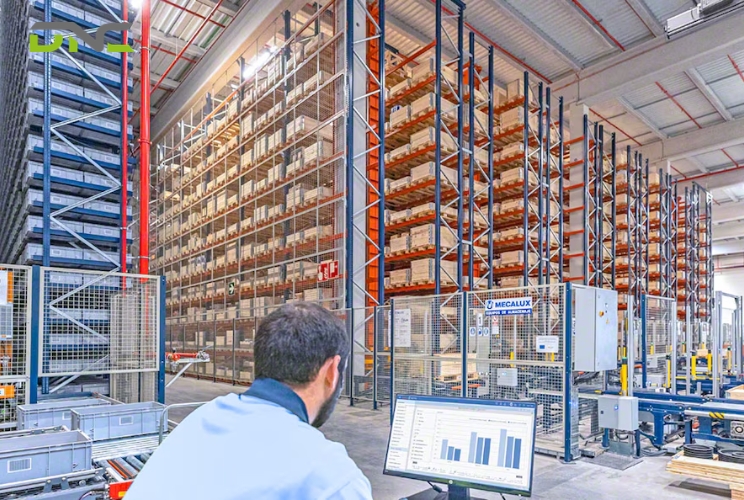
Industrial land cost in Malaysia’s major manufacturing corridors — Selangor, Johor, Penang — has increased significantly over the past decade. High-bay ASRS solutions store 3–5 times more inventory per square metre than conventional forklift warehouses, deferring or eliminating the need for warehouse expansion.
Customer Service and Accuracy Demands
Global customers of Malaysian manufacturers require zero-defect fulfilment, real-time inventory visibility, and full lot traceability. Manual warehouses with 97–99% accuracy cannot consistently meet these standards. Automated warehouses with 99.97%+ accuracy can.
MIDA Capital Allowance Incentives
MIDA’s Automation Capital Allowance allows Malaysian manufacturers to claim 200% capital allowance on qualifying automation equipment, including ASRS, robotic systems, and automated conveyor systems. This incentive reduces the effective capital cost of automation by 20–40%, materially improving investment payback.
Warehouse Automation Solutions: The Technology Landscape
Entry-Level Solutions (RM 200,000 – RM 2M)
Vertical Lift Modules (VLMs): Single VLM units for small-parts storage density improvement and picking accuracy in factory stores and warehouse pick zones. Payback typically 2–4 years.
Pick-to-Light Systems: LED-guided picking in fast-moving product zones. Low capital cost, rapid payback (typically 6–18 months in high-volume operations).
Voice Picking Systems: Hands-free, eyes-free order picking for ambient and cold environments. Per-operator cost is low; payback is fast for operations with 10+ pickers.
AMR Robots (small fleet): 5–20 autonomous mobile robots for goods-to-operator picking. Deployable in existing warehouse without racking changes.
Mid-Scale Solutions (RM 2M – RM 10M)
Mini-Load ASRS: Automated tote and carton storage and retrieval for high-SKU operations. Typical scale: 5,000–20,000 tote positions. Payback: 3–6 years.
Pallet Shuttle System (single aisle): High-density pallet storage for cold store or ambient operations. Typical scale: 2,000–5,000 pallet positions.
Integrated Conveyor and Sortation: Carton or parcel conveyor connecting receiving, storage, picking, and shipping. Sortation to multiple carriers or destinations.
WMS with ASRS Integration: Cloud or on-premises WMS connected to existing or new ASRS, with ERP integration. Operational improvements achievable without full automation capital expenditure.
Large-Scale Solutions (RM 10M – RM 60M+)
Unit Load ASRS (high-bay): Multi-crane or multi-aisle pallet ASRS in high-bay or clad-rack buildings. Typical scale: 10,000–50,000+ pallet positions. Payback: 4–8 years.
Multi-Aisle Shuttle System: High-throughput pallet or tote shuttle ASRS for ambient or cold storage. Throughput: 300–1,000+ pallet moves per hour.
Complete Integrated System: ASRS + conveyor + picking automation + WMS + IoT monitoring as a fully integrated, single-system-accountable solution.
Warehouse Automation Solutions by Industry
Food and Beverage Manufacturing
Malaysia’s F&B manufacturing sector — including palm oil derivatives, processed food, confectionery, and beverage production — uses warehouse automation for:
Raw material management: ASRS storage of packaging materials, ingredients, and additives with automatic feeding to production lines based on production schedules from ERP.
Finished goods buffer: High-speed pallet conveyors move finished goods from end-of-line palletisers to ASRS storage immediately, preventing product congestion on the production floor.
FEFO-managed distribution: WMS with ASRS enforces FEFO for perishable products, reducing expiry write-offs and supporting FSSC 22000 food safety compliance.
Cold chain: Automated cold storage for chilled and frozen products, eliminating manual cold zone exposure and reducing cold chain energy costs.
Electronics and Semiconductor
Component storage (ESD-controlled): Mini-load ASRS or VLMs for ESD-sensitive component storage in anti-static totes, with WMS traceability to production work orders.
WIP buffer management: ASRS stores work-in-progress between production stages, pacing output to downstream process capacity and preventing WIP accumulation on the floor.
Finished goods sortation: Conveyor and sortation systems route finished electronic devices to quality inspection, packaging, and shipping lanes by model and destination.
Pharmaceutical and Medical Device
GMP-compliant storage: WMS-controlled ASRS with full lot traceability, access control, and deviation recording for NPRA GDP compliance.
Cold chain pharmaceutical: Automated chilled storage for vaccines, biologics, and temperature-sensitive drugs with continuous IoT temperature logging.
Controlled drugs: High-security VLMs with biometric access control for scheduled narcotics and controlled substances.
Kitting and dispensing: Robotic dispensing of pharmaceutical kits from ASRS storage, with barcode verification at each step.
Automotive Components
JIT material delivery: ASRS-stored components released to production lines in assembly sequence order, timed to manufacturing schedule.
Returnable container management: AMRs transport empty returnable containers from production lines to a centrally managed returns area, reducing container loss and damage.
Spare parts distribution: High-bay ASRS with mini-load for aftermarket spare parts, with VNA conveyors for small-pick items.
Selecting the Right Warehouse Automation Solution
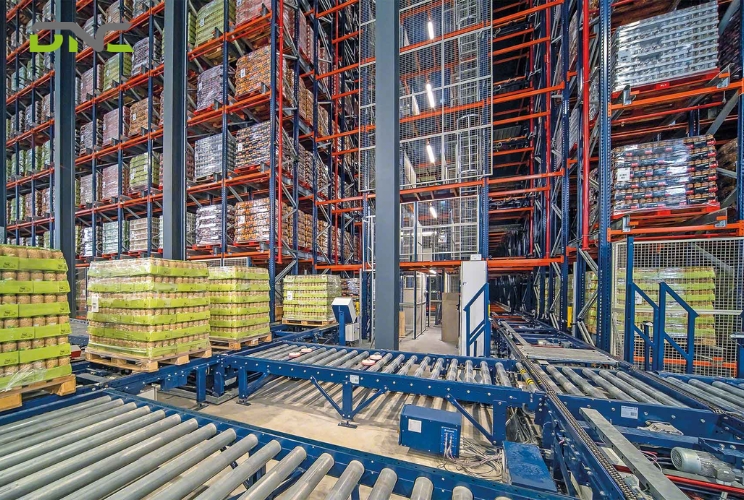
The selection of appropriate warehouse automation solutions depends on a structured assessment:
Step 1: Define the Problem
What operational problem is the automation solving?
- Insufficient storage capacity → density solution (high-bay ASRS, shuttle)
- Labour cost or availability → mechanised picking and transport (AMR, conveyor, picking automation)
- Inventory accuracy → WMS-directed automation (pick confirmation, ASRS confirmation)
- Throughput capacity → conveyor and sortation, multi-crane ASRS
- Compliance → WMS with traceability, cold chain monitoring
Step 2: Quantify the Current State
Collect baseline data:
- Current throughput (inbound receipts/hour, outbound picks or pallets/hour)
- Current inventory: SKU count, velocity profile, storage locations
- Current labour: headcount, wages, turnover rate
- Current accuracy: picking error rate, inventory variance
- Current cost: per pallet stored, per order fulfilled
Step 3: Model Future State Requirements
Project 5-year and 10-year operational requirements:
- Volume growth (product range expansion, market growth)
- Customer service level requirements
- Regulatory changes (food safety, pharmaceutical GDP)
- Labour cost trajectory
Step 4: Evaluate Technology Options
Match the problem and future requirements to technology options. Develop 2–3 alternative solution configurations with preliminary cost estimates and ROI models.
Step 5: Financial Evaluation
Calculate 10-year NPV for each alternative, including:
- Capital investment (CapEx)
- Annual operating savings (labour, space, accuracy improvement)
- Annual maintenance cost
- MIDA capital allowance benefit (Malaysian manufacturers)
- Residual value at year 10
Select the solution with the best risk-adjusted NPV.
Step 6: Vendor Selection
Issue a Request for Proposal (RFP) to qualified automation companies. Evaluate on technical capability, local support, reference sites, and total cost of ownership — not on CapEx alone.
Digital Solutions: Integrating Data Across Warehouse Automation
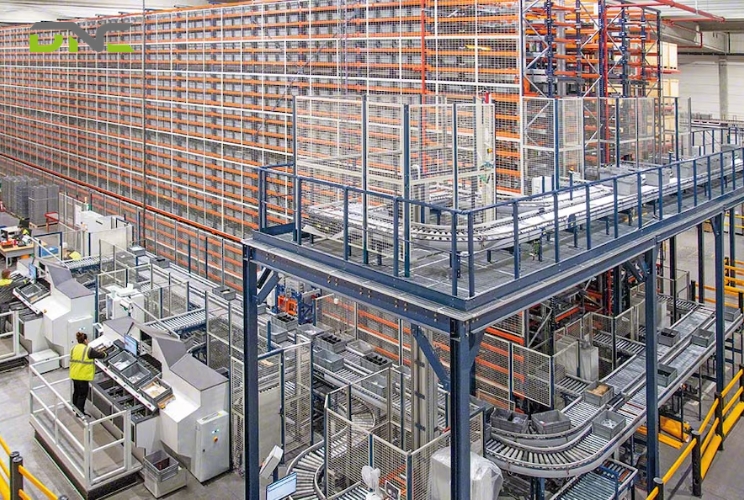
Modern warehouse automation solutions are not just physical — they generate, collect, and use data across all system layers:
WMS data: Inventory locations, order history, picking accuracy, labour productivity — the operational data of the warehouse.
ASRS and equipment data: Throughput per crane or shuttle per hour, fault frequency, energy consumption per pallet move — the performance data of the automation equipment.
IoT sensor data: Temperature, vibration, motor current, humidity — the health data of equipment and environment.
ERP data: Purchase orders, production schedules, sales orders — the business context that drives warehouse operations.
Integrating these data streams into a unified operational dashboard — accessible from any device, updated in real time — gives management the visibility to make faster, better-informed decisions about inventory, fulfilment, and maintenance.
DNC Automation designs the data integration architecture as part of every warehouse automation solution, connecting WMS, SCADA, and ERP into a unified operational data platform.
Implementing Warehouse Automation in Malaysia: Step by Step
DNC Automation follows a structured implementation approach for all warehouse automation projects:
- Feasibility Study (4–6 weeks): Operational analysis, solution concept, preliminary financial model. Deliverable: go/no-go decision with documented rationale.
- Detailed Design (8–16 weeks): Full system specification, layout design, WMS configuration design, integration architecture. Deliverable: engineering drawings, specifications, and project execution plan.
- Procurement (parallel with design): Equipment orders placed with qualified manufacturers; WMS software contracted; electrical contractors engaged.
- Installation (12–24 weeks depending on scale): Civil preparation, mechanical installation, electrical connection, software configuration.
- Commissioning and Testing (4–8 weeks): Factory Acceptance Test (FAT), Site Acceptance Test (SAT), integrated system performance test at target throughput.
- Training and Go-Live (2–4 weeks): Operator training, supervisor training, maintenance technician training, parallel run with existing system, live cutover.
- Post-Live Optimisation (ongoing): Monthly KPI review, WMS parameter refinement, preventive maintenance execution, continuous improvement roadmap.
DNC Automation: Malaysia’s Warehouse Automation Partner
DNC Automation Malaysia provides complete warehouse automation solutions:
ASRS: Stacker cranes, shuttle systems, mini-load, VLMs, horizontal carousels
Robotic solutions: AMR fleets, palletising robots, cobots, robotic picking cells
Material handling: Conveyor systems, sortation, pallet transfer
Smart manufacturing: SCADA, IoT monitoring, predictive maintenance, digital twin
WMS integration: SAP, Oracle, Dynamics 365, standalone WMS platforms
Single-source accountability: DNC manages the complete project — hardware, software, integration, permitting — under one contract with one project manager.
Malaysia-specific expertise: MIDA application support, DOSH machinery registration, Bomba plan coordination, JAKIM halal compliance, local 24/7 maintenance support.
Frequently Asked Questions
How do I know if my warehouse is ready for automation?
The right time to automate is when manual operations cannot meet throughput, accuracy, or cost targets at acceptable labour cost. DNC Automation conducts free preliminary assessments to determine whether automation is justified for your specific operation.
Can I phase warehouse automation investment over multiple years?
Yes. DNC designs modular automation solutions that can be implemented in phases — beginning with the highest-ROI components (VLM, WMS, pick-to-light) and expanding to full ASRS in later phases as the business grows and cash flow allows.
What is the minimum size operation that benefits from warehouse automation?
Single VLM units are cost-effective from 500 m² of storage. WMS software benefits operations from as few as 500 SKUs. Full ASRS investment is justified from approximately 3,000 pallet positions for cold storage and 5,000 for ambient operations.
How does DNC handle MIDA incentive applications?
DNC Automation prepares all required MIDA documentation — project scope, qualifying equipment list, technical specifications — as part of the project delivery package. We have supported multiple successful MIDA Automation Capital Allowance applications for Malaysian manufacturers.
Conclusion
Warehouse automation solutions in Malaysia have moved beyond the domain of large multinationals. Malaysian SMEs and mid-sized manufacturers in food, electronics, pharmaceutical, and automotive sectors are successfully investing in ASRS, WMS, robotic picking, and conveyor systems — achieving measurable payback and sustainable competitive advantage.
DNC Automation Malaysia designs and implements warehouse automation solutions from entry-level first steps through large-scale integrated systems, with local project management, MIDA support, and 24/7 maintenance coverage.
Contact DNC Automation Malaysia to discuss warehouse automation solutions for your operation and receive a preliminary feasibility assessment.
- 57 views
- 0 Comment
Recent Comments