


Cloud vs On-Premise WMS: What Changes When Machines Are Already Running
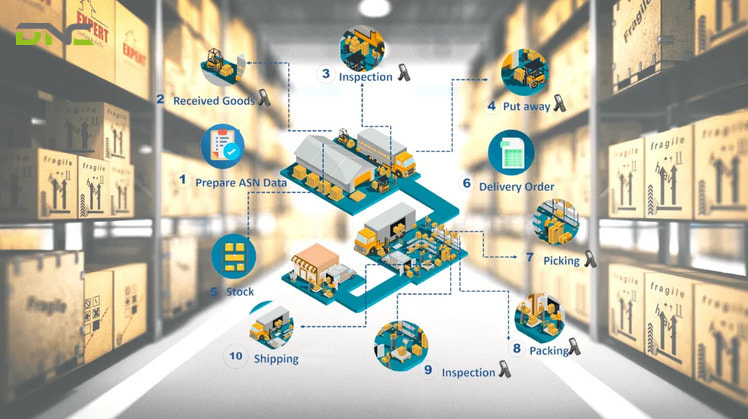
Cloud vs on-premise WMS is usually framed as a software question: hosting location, subscription cost versus upfront licensing, who patches the servers. That framing holds up for a warehouse running on paper pick lists and spreadsheets. It changes once a conveyor, AGV, ASRS, or robotic palletizer is already installed on the line, because those machines run on a local control layer — PLC and SCADA — that sits underneath the WMS, not inside it. The deployment-model decision that matters at that point is not whether staff can check inventory from a phone. It is whether the machines keep moving product when the connection between the WMS and that control layer drops.
What Cloud and On-Premise WMS Actually Change
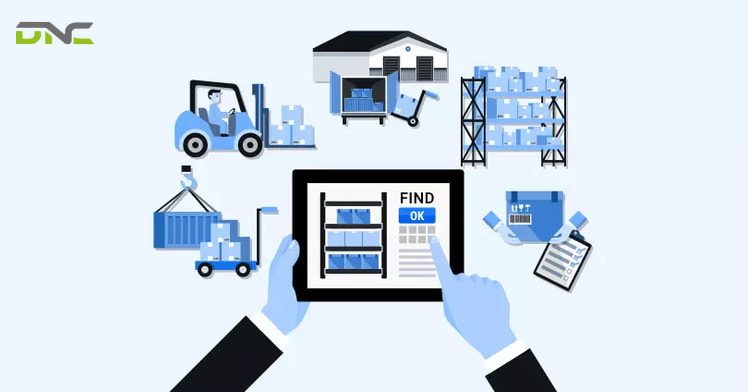
A cloud WMS runs on the vendor’s infrastructure and is reached over the internet, typically on a subscription model with lower upfront cost, vendor-managed updates, and scaling that does not require a hardware purchase. An on-premise WMS is installed on servers inside the facility, owned and maintained by the company’s own IT team, running on the local network without depending on an internet connection to function — at the cost of a larger upfront investment and a slower, hardware-bound scaling path when the operation grows.
Competitor material on this keyword treats the practical difference between the two as an accessibility and cost trade-off: can a manager see inventory levels from outside the building, how quickly can the system scale to a new site, who carries the maintenance burden. One vendor source publishes rough cost and timeline bands for that trade-off — cloud WMS in roughly the $10K-$75K initial range with a 3-5 month rollout, against $100K-$500K+ and 6-12 months for an on-premise build — figures that describe one vendor’s published pricing tiers, not a universal cost either deployment model is bound to. That framing is accurate for what it covers, and it is also where every source reviewed for this comparison stops — at the software layer, before the question of what the WMS is actually connected to on the warehouse floor.
What Cloud and On-Premise WMS Actually Change
The Question Competitor Pages Skip: What Happens to the Machines
None of the eight competitor pages reviewed for “cloud vs on premise WMS” ask what happens to a conveyor, AGV, ASRS, or robotic palletizer if the connection between the WMS and the floor goes down. Every source frames “internet dependency” as a data-visibility problem — can staff reach the dashboard, can a remote manager pull a report — and treats an on-premise system’s ability to “operate fully even if offline” as a software-availability feature, not a machine-continuity one.
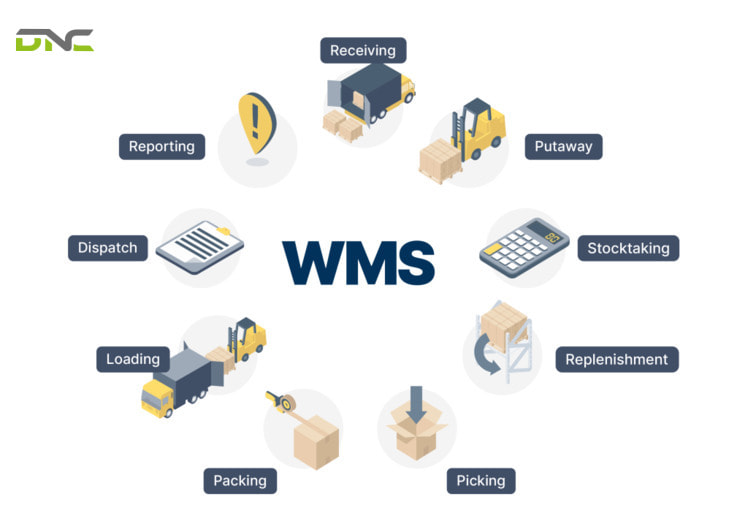
That gap matters for a line that already runs physical automation, because the machines themselves do not take instructions directly from the WMS. A conveyor’s zone motors, an AGV’s routing logic, an ASRS crane’s pick-and-place sequence, and a robotic palletizer’s cycle timing are driven by a local PLC or SCADA control layer sitting between the WMS and the equipment. The WMS tells that control layer what to do — which SKU to route where, which order to release next — but the control layer is what actually executes the physical motion. Whether that control layer can keep running a known sequence when its connection to the WMS is interrupted, cloud-hosted or on-premise, is an engineering question about the automation architecture itself, not a property automatically decided by where the WMS happens to be hosted. The control layer is what matters here.
A cloud WMS losing its internet connection and an on-premise WMS suffering a local server or network fault produce the same practical question at the machine level: does the control layer have enough local logic and buffered instruction to keep material moving safely, or does it stop and wait. Vendor pages on this keyword answer that question for the software — cloud systems queue and resync, on-premise systems keep running locally — without ever extending it to the equipment the WMS is meant to be directing. That gap is the whole point of this comparison.
Summary So Far
The summary so far: cloud and on-premise WMS differ in hosting, cost structure, and who owns maintenance — a distinction competitor material covers thoroughly at the software layer. What that material skips is the layer underneath it on a line that already runs physical automation: the local PLC/SCADA control loop driving the conveyor, AGV, ASRS, or palletizer, and whether that control layer can keep the machines moving when its connection to the WMS is lost, regardless of whether the WMS itself is cloud-hosted or on-site.
The Question Competitor Pages Skip: What Happens to the Machines
Cloud vs On-Premise WMS: Side-by-Side
Cloud vs on-premise WMS, laid out row by row below, carries the software-layer comparison from the two sections above into a direct side-by-side, then adds the control-layer row that competitor material on this keyword leaves out entirely.
| Cloud WMS | On-Premise WMS | |
| Hosting | Vendor’s infrastructure, reached over the internet | Company’s own servers, inside the facility |
| Upfront cost | Lower — subscription pricing | Higher — hardware, licensing, installation |
| Maintenance | Vendor-managed | Internal IT team |
| Scaling | On-demand, no hardware purchase | Hardware and capacity planning cycle |
| Internet dependency (software layer) | Required to reach the hosted system | Not required — runs on the local network |
| Machine control layer | Sits below the WMS either way — PLC/SCADA drives the equipment directly, independent of WMS hosting location | Same |
| Best fit | Growing operations, multiple sites, limited internal IT | Unstable local internet, strict data-residency rules, existing on-site server investment |
Reading the “machine control layer” row is the point of the table: it is the one line item that does not change between the two columns, because the equipment on the floor answers to the PLC/SCADA layer either way — the cloud-versus-on-premise choice only changes what happens above that layer, not what keeps the machines running under it. That row never changes.
Where On-Premise Still Fits
On-premise WMS still fits three situations named consistently across the sources reviewed for this comparison. The first is a facility in an area with unreliable or unstable internet service, where a cloud system’s dependency on that connection for day-to-day access becomes the operational risk rather than the convenience. The second is a regulatory or data-residency requirement that rules out hosting warehouse data outside the company’s own infrastructure — one source frames this as full ownership of servers, backups, and cybersecurity compliance staying inside the organisation rather than shifting to a software provider. The third is a facility that already owns an amortized on-site server investment, where the cost case for migrating to a subscription model is weaker than it would be for a facility starting from zero. None of those three conditions is about the machines on the floor — they are reasons to keep the software layer local, which is a separate decision from how the control layer underneath it is architected. That decision still has to be made.
A facility choosing on-premise for any of those three reasons is, in practice, already committing to the kind of local infrastructure ownership that makes a self-sufficient control layer a natural extension rather than an added cost: the same internal IT team maintaining the on-premise WMS server is well placed to also confirm that the PLC or SCADA controlling the conveyor, AGV, or ASRS does not depend on that server staying reachable every second to keep running a known sequence. A facility choosing cloud for its lower upfront cost and faster rollout does not get that same alignment automatically — the software-layer decision and the control-layer decision have to be confirmed separately, precisely because nothing about hosting the WMS off-site says anything about how the equipment underneath it is wired to behave during a connection gap.
Where On-Premise Still Fits
Deciding for a Line That Already Runs Physical Automation
Deciding starts with an inventory of what is already installed, not a hosting-model comparison. A facility with no conveyor, AGV, ASRS, or robotic palletizer yet is choosing purely on the software-layer factors above: cost, IT resourcing, internet reliability, and data-residency requirements. A facility that already runs any of that equipment has a second question layered on top: whether the PLC/SCADA control logic driving those machines has enough local intelligence to keep running a known sequence — completing a conveyor zone cycle, finishing an AGV route, closing out an ASRS pick — if its connection to the WMS above it is interrupted, independent of whether that WMS is cloud-hosted or on-premise.
Malaysian facilities commissioning warehouse automation for the first time typically do not build the full stack — WMS, conveyor, AGV, and ASRS — in one project. The common phasing starts with a conveyor and WMS integration addressing a single bottleneck, then adds AGVs for pallet transport, then ASRS for high-density storage, as separate phases on a multi-year roadmap. That sequencing matters for the cloud-versus-on-premise decision because it means the control-layer question above gets asked once, early, when the first machine and its WMS integration are specified — not retrofitted after several phases of physical automation are already running on whatever control architecture the first project happened to choose.
For a facility already running material handling equipment or a palletizing cell, the hosting decision for a new or replacement WMS should be made after confirming how the existing control layer is architected, not before — a cloud migration that assumes the machines will simply keep running through a connection interruption is assuming an answer to a question the WMS vendor’s own documentation, cloud or on-premise, does not actually address.

Deciding for a Line That Already Runs Physical Automation
Frequently Asked Questions
The frequently asked questions below cover what comes up most often when a Malaysian facility with physical automation already installed is weighing cloud versus on-premise WMS.
Will the conveyor or AGV stop moving if the cloud WMS loses its internet connection?
That depends on the local PLC/SCADA control layer’s design, not on the WMS being cloud-hosted specifically. The control layer executing the physical motion sits below the WMS on the automation stack; whether it can complete or continue a known sequence during a connection interruption is a property of that control architecture, which needs to be confirmed with whoever engineered the conveyor, AGV, or ASRS integration — it is not guaranteed or ruled out simply by choosing cloud over on-premise.
Is on-premise WMS safer for a facility with automated equipment already installed?
Not automatically. On-premise removes the dependency on an internet connection to reach the WMS software itself, but the same control-layer question applies: an on-premise WMS losing its connection to a local server or network fault raises the identical question about whether the PLC/SCADA layer can keep the machines running. Neither hosting model resolves the control-layer question on its own. Ask the integrator directly.
Does adding a cloud WMS require re-engineering an existing conveyor or ASRS control system?
Not necessarily, but it depends on how the existing control layer is connected. A control architecture with enough local logic to run its own sequences independent of the WMS typically needs only an integration point at the WMS layer. A control architecture that depends on constant, real-time instruction from the WMS may need that dependency re-engineered regardless of whether the new WMS is cloud or on-premise.
How does phasing (conveyor first, then AGVs, then ASRS) affect the cloud-vs-on-premise decision?
It moves the decision earlier. Specifying the WMS-to-control-layer architecture correctly at the first phase — typically a conveyor with WMS integration — sets the pattern the later AGV and ASRS phases build on, rather than leaving each later phase to work around a control-layer design chosen for a single machine.
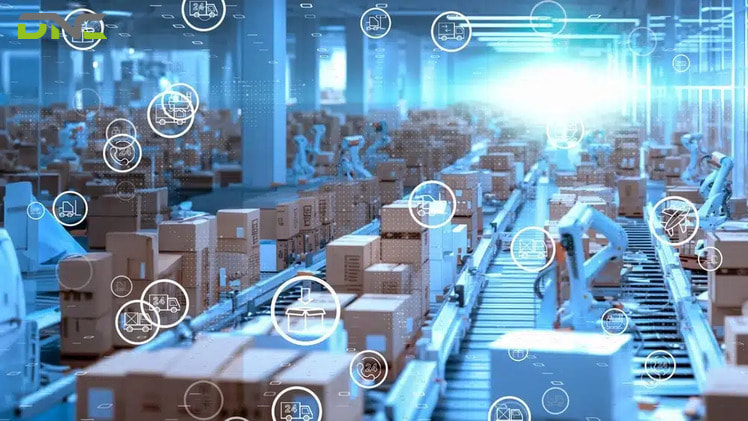
Will the conveyor or AGV stop moving if the cloud WMS loses its internet connection?
Specifying the Control Layer, Not Just the Hosting Model
Specifying how the local control layer behaves when its connection to the WMS is interrupted, not just choosing between cloud and on-premise hosting, is what actually determines whether a warehouse automation line keeps running during a network fault. Cloud and on-premise WMS differ in cost, maintenance ownership, and software-layer internet dependency — a comparison every source reviewed for this keyword covers well. None of them extend that comparison to the PLC/SCADA layer that drives a conveyor, AGV, ASRS, or robotic palletizer directly, which is the layer that actually decides whether product keeps moving through a connection interruption. Hosting location alone never answers that.
A short checklist follows from the sections above: confirm what physical automation, if any, already runs on the line before comparing hosting models; ask whoever engineered that equipment’s control layer whether it can complete a known sequence independent of the WMS connection; and treat cloud-versus-on-premise as a software-layer decision that does not, by itself, answer the machine-continuity question. For a Malaysian facility phasing in warehouse automation or evaluating a WMS alongside existing robotic palletizing systems, the next step is to have DNC map the control-layer architecture for the installed equipment before the hosting model is finalized.
- 15 views
- 0 Comment
Recent Comments