


Case Packing Automation Guide: Selection and Integration
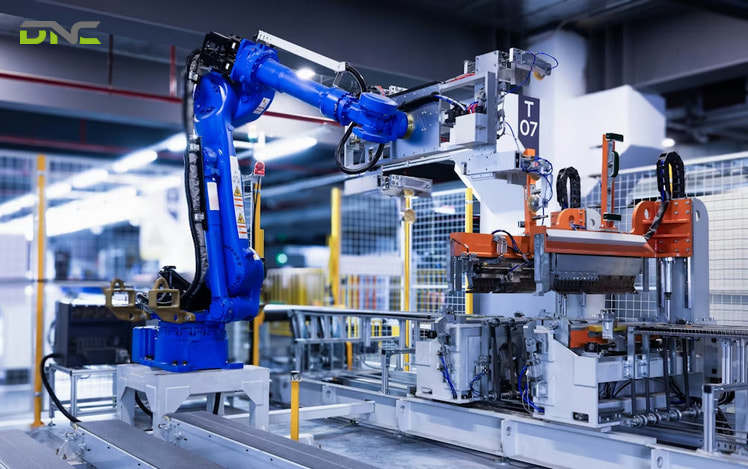
Case packing automation replaces manual box-loading with a machine that erects, loads, and seals cases as one continuous cycle. A case packer sits between the filling or capping station and the palletizer, closing the gap where labor-intensive handling once slowed a production line. Manufacturers across food and beverage, personal care, and industrial goods adopt case packing automation to cut labor dependency, hold consistent seal and fill quality, and raise throughput without adding shifts. Malaysian manufacturers weighing this shift face the same NIMP 2030 push toward Industry 4.0 compliance driving automation decisions across Southeast Asia. The right case packer matches machine type to product handling risk, and the right integration scope matches what a line already owns — a case erector, a checkweigher, a palletizing system already installed downstream of where the new machine goes.
Case Packing Automation Definition and Mechanism
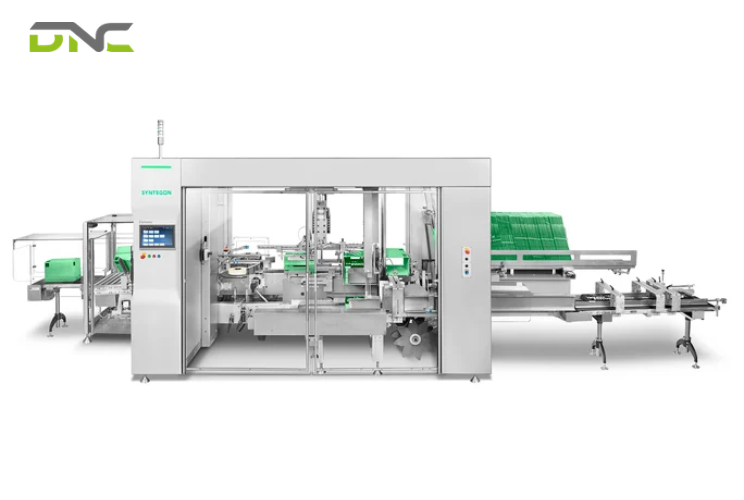
Case packing automation is the use of machinery to erect an empty case, load finished product into it, and seal the case for shipment, without an operator handling the box by hand. A manual case-packing station depends on a person repeating the same lift-and-place motion for an entire shift, which introduces three predictable problems: cycle time varies with fatigue, seal and fold quality varies with attention, and the station becomes the line’s bottleneck the moment upstream output speeds up. An automated case packer removes all three variables by running the same erect-load-seal sequence at a fixed, repeatable cycle time, station after station, shift after shift.
The mechanism itself has three stages regardless of machine architecture. A case blank — flat corrugated board — gets erected into a rectangular shape with its flaps opened. Product enters the erected case, either dropped from above, pushed in from the side, or wrapped around it directly, depending on machine type. The case then advances to a sealing station, where tape or hot-melt adhesive closes the flaps before the case discharges toward inspection, checkweighing, or palletizing. Some case packers bundle all three stages into a single frame; others receive an already-erected case from a standalone erector and discharge an unsealed case to a standalone sealer. That scope decision matters more than the machine’s rated speed. It determines what else the line has to buy.
Case Packing Automation Definition and Mechanism
Why Manufacturers Automate Case Packing
Manufacturers automate case packing to convert an unpredictable manual station into a fixed-rate one, and the return shows up in four measurable places. Throughput improves first: a case packer holds its cycle time across an entire shift, while a manual station slows as operators tire, so the same line produces more cases per hour without adding labor. Product damage drops second, because automated handling positions and releases each item the same way every cycle, eliminating the crushing, misalignment, and drop damage that come from manual variance under time pressure. Labor cost falls third, since one machine covers a station that previously needed one or more operators per shift, and those operators can move to inspection, changeover, or quality roles instead. Material waste falls fourth, because a case packer controls carton dimensioning, film tension, and shrink ratio precisely, where manual packing tends to over-wrap or misjudge dimensions to compensate for handling inconsistency.
These four gains compound on a line already dealing with labor shortages. A station that used to require two or three trained operators across shifts becomes one machine an existing technician can monitor. One machine replaces a shift crew. The freed labor hours move toward roles automation has not reached yet, such as quality assurance and changeover support.
Case Packer Types at a Glance
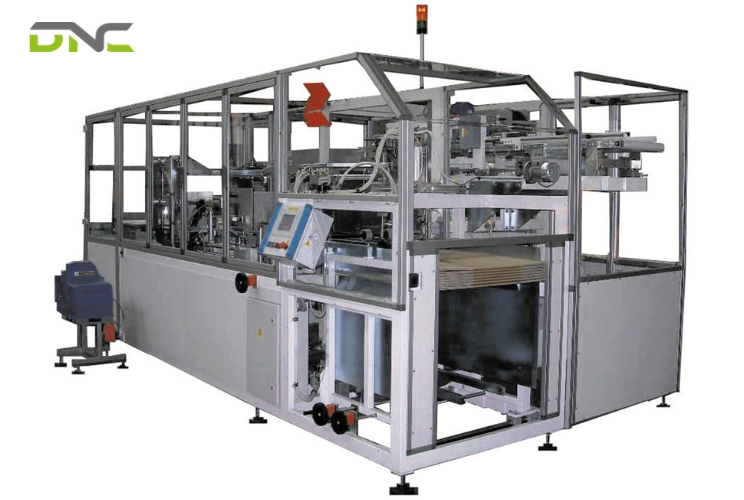
Case packer types split into four broad categories, and each type fits a different combination of product handling risk and case-finish requirement. Top-load machines drop or lower product vertically into an erected case, keeping the product’s incoming orientation intact — a fit for upright items like bottles, jars, and pouches that are awkward to reorient. Side-load and end-load machines push product horizontally into the case instead, avoiding the drop and the impact risk that comes with it, which suits fragile or irregularly shaped product. Wrap-around packers form the case around the product directly from a flat blank, producing a tight, shelf-ready finish common in retail-facing packaging. Combination and tray-and-lid machines handle more than one packing style in a single frame, a fit for manufacturers running multiple SKUs that each need a different pack format.
Matching product to machine type comes first; matching the machine’s erect/seal scope to what the line already owns comes second. A facility that already runs a standalone case erector and a standalone case sealer does not need a packer that duplicates either function, and can select on product-handling grounds alone. A facility with neither station in place needs to specify erect/seal scope explicitly, because that scope is not implied by loading style — it varies by vendor and by model even within the same machine category.
Case Packer Types at a Glance
Selection Criteria for a Case Packer
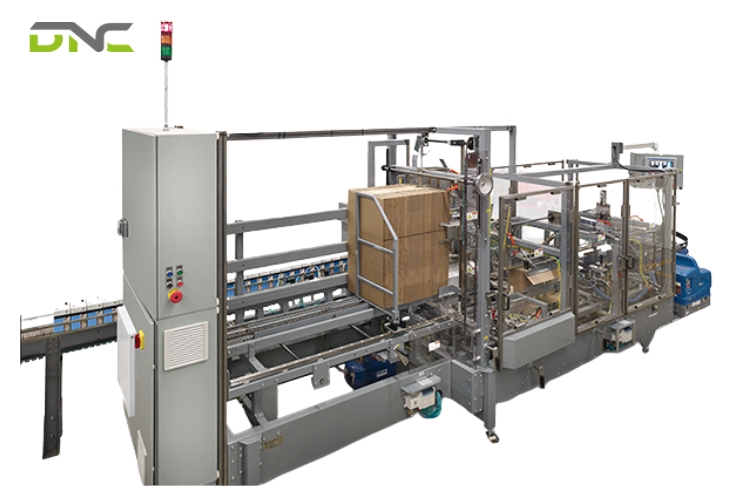
Selecting a case packer starts with four criteria, ranked by how fast each one eliminates options. Product handling risk narrows machine type first. Fragile, irregularly shaped, or easily damaged product rules out a drop-style top-load machine before speed or footprint enter the conversation. Target throughput, measured in cases per minute, sets the machine class second — a line running 20 cases per minute and a line running 80 cases per minute are not shopping in the same category, regardless of loading style. Floor footprint and ceiling clearance narrow the field third, since a top-load frame typically needs overhead clearance a side-load or wrap-around frame does not require, which rules out tall machines in low-ceiling packing halls before any other factor applies. What the line already has installed — an existing case erector, an existing sealer, an existing checkweigher — sets integration scope fourth, and skipping this step is the single most common specification gap: a buyer who assumes a case packer includes erecting and sealing, when the model chosen does not, discovers the gap only after the machine is on the floor.
Material compatibility closes the list. No single machine handles every material well. Case packers are built around specific case and product materials — corrugated board weight, film type for wrap-around machines, product rigidity for top-load handling — and a machine specified for one material rarely performs at rated speed on another without mechanical adjustment.
Selection Criteria for a Case Packer
The Measurement Precondition Vendors Don’t Mention
The measurement precondition a case packer sets for the next station rarely appears in how vendors describe integration. They frame it almost exclusively as a rate-matching problem: the packer’s cycle time has to synchronize with the upstream filler’s output and the downstream palletizing robot’s pick rate, so that no station stalls waiting for another. That framing is accurate, but it stops at timing. What it leaves out is what a case packer’s output — case geometry, seal integrity, and load placement — sets for the two stations most often positioned right after it: a checkweigher and a palletizing system.
A checkweigher reads weight while the case is still moving on the belt, capturing the reading in a fraction of a second. A case that leaves the packing station unsquare, loosely sealed, or with product settled unevenly inside rocks or drags during that exact capture window, which corrupts the reading before the checkweigher gets a stable look at the case — a precondition case-sealer output already sets on DNC’s own end-of-line, independent of case packer type. A palletizing system’s placement software runs a separate assumption: it treats case weight as declared master data from a catalog or order file, not as a value the robotic cell measures, so a case packer that produces inconsistent fill weight without a verification step downstream feeds that assumption a number the physical case does not match. Neither dependency shows up in a spec sheet organized around cycle time. Cycle time alone hides both risks.
None of the case packing vendor sources reviewed for this guide connect machine selection to either dependency. Rate synchronization gets named directly and repeatedly — matching cycle time to an upstream filler, matching output rhythm to a downstream robot’s pick rate — but the geometry and weight preconditions a case packer sets for the stations reading its output afterward go unmentioned. A line specifying a new case packer gains more from asking what happens to its output at the checkweigher and the palletizer than from comparing rated speeds alone, because a machine that hits its cycle-time target can still generate cases the next station cannot read or place correctly.
Summary So Far
The summary so far: case packing automation earns its return through four measurable gains — throughput, damage reduction, labor cost, and material waste — but the type and scope decision depends on product handling risk, target throughput, floor footprint, and what erecting and sealing stations already exist on the line. The integration question vendor pages answer is rate synchronization with upstream and downstream equipment; the one they skip is what a case packer’s output sets for a downstream checkweigher’s read stability and a palletizing system’s declared-weight assumption.
Rolling Out Case Packing Automation
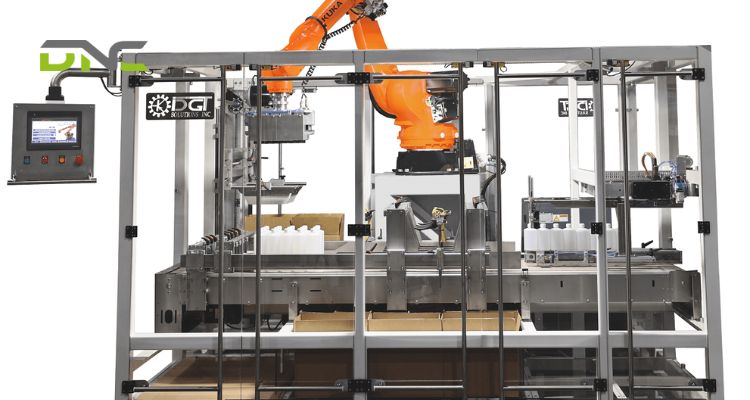
Rolling out case packing automation starts with a product and process assessment, not an equipment catalog. Documenting current case dimensions, product fragility, target throughput, and existing erecting or sealing equipment gives an integrator the specification a machine selection actually depends on, rather than a speed figure alone. From there, equipment selection follows the criteria above — product handling risk, throughput, footprint, and integration scope — before control system integration ties the new case packer into the line’s PLC and SCADA architecture so it reports status alongside every other station rather than running as an isolated island. Commissioning includes dry-run testing without product, calibration against actual case and product dimensions, and validation under real production conditions before the station goes live. An automation partner that engineers the full sequence — not just the case packer in isolation — is positioned to catch the checkweigher and palletizing dependencies a single-machine vendor has no reason to flag.
Rolling Out Case Packing Automation
Maintenance and Troubleshooting Common Issues
Maintenance and troubleshooting on a case packer in continuous operation cover the same handful of recurring issues regardless of manufacturer. Misfeeds and misaligned product at the loading station are the most frequent, usually traced to a collating mechanism or infeed conveyor running out of adjustment rather than the packer itself. Sensor faults — a jammed photo-eye, a misread encoder — show up as false stops or missed cycles, and a maintenance team familiar with the machine’s sensor map resolves these faster than one troubleshooting from a generic manual. Conveyor jams downstream of the packer, particularly at a case erector or sealer feeding into it, compound quickly if left unaddressed, since a single stalled case backs up every station behind it. A scheduled maintenance plan — tracking uptime, catching drift in speed or alignment before it causes a fault, and keeping spare sensors and wear parts on hand — keeps unplanned downtime lower than reactive repair ever does. Reactive repair always costs more.
Case Packing Automation for Malaysian Manufacturers
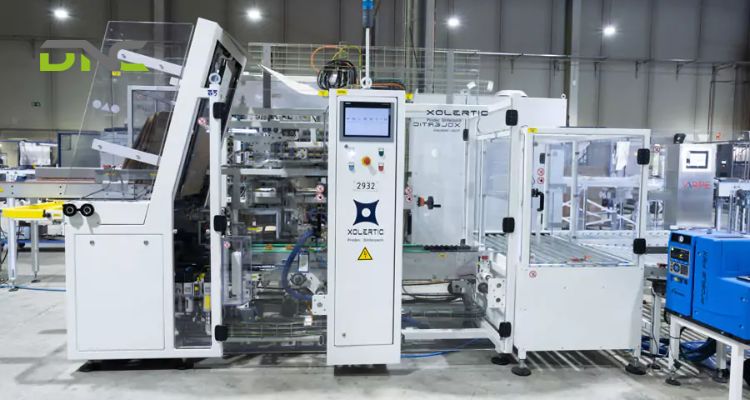
Malaysian manufacturers face two pressures pushing case packing automation onto the investment agenda at the same time: a persistent labor shortage in production roles, and the government’s NIMP 2030 push toward Industry 4.0-compliant smart manufacturing. A case packer addresses both directly — it removes a labor-intensive station from the headcount a plant has to staff and fill every shift, and it plugs into PLC, SCADA, and IoT infrastructure that supports the traceability and connected-factory requirements NIMP 2030 targets. Food and beverage, glove manufacturing, and consumer-goods lines in Malaysia are among the sectors adopting case packing automation fastest, largely because their production volumes make a manual packing bottleneck the most expensive station on the line to leave unautomated.
Case Packing Automation for Malaysian Manufacturers
Frequently Asked Questions
The frequently asked questions below cover what comes up most often when a manufacturing line is planning to automate case packing.
Does automating case packing remove the need for a separate case erector or checkweigher?
Case packing automation does not automatically remove the need for a separate case erector or checkweigher. Some case packers bundle erecting, loading, and sealing into one frame; others are built to receive an already-erected case and discharge an unsealed one, relying on separate erecting or sealing equipment elsewhere on the line. A checkweigher is a separate station regardless of case packer type. It verifies what the case packer, erector, and sealer produced together.
How is ROI calculated for a case packer?
ROI for a case packer weighs the upfront machine and integration cost against measurable gains in throughput, labor cost reduction, and product damage avoided, compared against the current manual or semi-automated baseline. A facility with a well-documented manual bottleneck — known cycle time, known damage rate, known labor cost per shift — can build this comparison directly from its own production data rather than from a vendor’s generic estimate.
What throughput should I plan for when specifying a case packer?
Target throughput should come from the line’s actual upstream output rate, not from a case packer’s maximum rated speed. A packer specified above the line’s real filling or capping rate sits idle waiting for product, while one specified below that rate becomes the new bottleneck; matching the two figures is the starting point before comparing machine options.
Can one case packer handle multiple product SKUs?
Combination case packers are built for this. They handle more than one pack format or product size within a single frame, typically with a documented changeover procedure between SKUs. Single-format machines can sometimes accommodate size variation within a tolerance range, but a line running frequent SKU changes should specify multi-format handling explicitly rather than assume it.
- 26 views
- 0 Comment
Recent Comments