


Best Flex Conveyor: How to Choose for Malaysian Factories
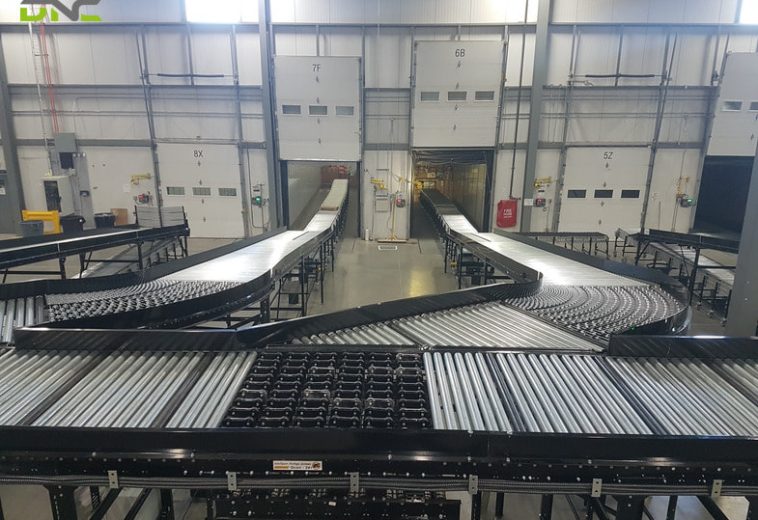
Best Flex Conveyor — How to Choose the Right Flexible Conveyor for Your Malaysian Factory
The best flexible conveyor for your factory is not a single product — it is the specific flex conveyor type matched precisely to your material, layout, throughput, and operational requirements. The question “which flex conveyor is best?” has five different correct answers depending on whether you are handling food products in a Selangor F&B factory, routing PCBs in a Penang EMS plant, loading lorries at a Johor logistics hub, transporting powder in a pharmaceutical facility, or conveying palm kernel shell in a Pahang palm oil mill.
Flexible conveyor systems are the fastest-growing segment of Malaysian factory material handling investment — driven by three converging forces: the NIMP 2030 mandate requiring 3,000 Malaysian factories to become smart, flexible manufacturing operations by 2030; the growing proportion of high-mix, low-volume production in Malaysian EMS, F&B, and consumer goods manufacturing requiring frequent layout reconfiguration; and the Smart Automation Grant (SAG) from MIDA, providing up to RM 1,000,000 at 70:30 matching to fund exactly this type of flexible automation investment.
DNC Automation’s 35+ engineers have designed and installed flexible conveyor systems across all Malaysian manufacturing sectors. This guide provides the comparative framework to identify which flex conveyor system delivers the best ROI for your specific factory application.
What Is a Flex Conveyor?
A flex conveyor — or flexible conveyor system — is any conveyor system designed to offer adaptability in its physical path, configuration, or operation that a fixed, rigid conveyor cannot provide. “Flexibility” in conveyor systems means different things in different contexts: physical routing flexibility (the conveyor bends or extends), operational flexibility (products can be routed to multiple destinations), configuration flexibility (the conveyor layout can be reconfigured rapidly), or handling flexibility (the conveyor accommodates multiple product types without changeover).
The best flexible conveyor system for a given factory application is the one that delivers the required flexibility — physical, operational, or configurational — with the lowest total cost of ownership, the highest reliability in the Malaysian operating environment (high humidity, halal compliance requirements, dust and chemical exposure), and the cleanest integration pathway to the factory’s PLC, SCADA, and MES systems.
Five primary types of flexible conveyor systems serve Malaysian manufacturing — each with distinct strengths, specifications, and optimal application domains.
How Does a Flex Conveyor Work?
Flexible conveyor systems achieve their adaptability through design features that differentiate them from fixed rigid conveyors.
Step 1: Flexible Path Definition
The best flex conveyor for physically flexible routing — the telescoping conveyor and the flexible modular belt — achieves path flexibility through mechanical adaptability. Telescoping conveyors extend and retract on a nested frame structure, like a telescope. Flexible modular belt conveyors achieve curved paths through radius-turn belt modules that allow the belt to navigate 15°, 30°, 45°, 90°, or 180° curves on a single belt without transfer points.
Step 2: Independent Zone Control (Operational Flexibility)
Flex conveyors with motorized drive roller (MDR) zones — typically 24V DC motors inside individual rollers — enable each conveyor zone to operate independently: start, stop, accumulate, or run at different speeds. This zone independence is the foundation of “zero-pressure accumulation” — products accumulate in zones without pressing against each other, protecting fragile items while maintaining maximum throughput.
Step 3: Rapid Frame Reconfiguration (Configurational Flexibility)
Aluminium profile flex conveyors and modular plastic belt conveyors built on T-slot aluminium frames can be physically reconfigured — extended, shortened, rerouted, branched — by unbolting and rebolt modules in new arrangements. A Penang EMS factory that changes PCB product families weekly can reconfigure its post-SMT conveyor layout in hours rather than the days or weeks needed to modify welded steel conveyor frames.
Step 4: Variable Speed Adaptation
VFD (Variable Frequency Drive) speed control on flex conveyor drive motors allows the conveyor to adapt its speed to match upstream and downstream process rates — running faster during peak loading, slower during accumulation, synchronising with robot cycle times. Siemens SINAMICS VFD integration with Siemens S7 PLC provides the speed adaptation capability across DNC Automation’s flex conveyor installations.
Step 5: Integration with Routing Intelligence
The best flex conveyor systems integrate with PLC-controlled diverters, stops, and gates that route products to the correct destination based on barcode scan, weight, or RFID data. A Johor 3PL warehouse flex conveyor might receive 1,000 parcels/hour and route each one to the correct delivery zone — using Siemens PLC logic and barcode identification — with no manual sorting.
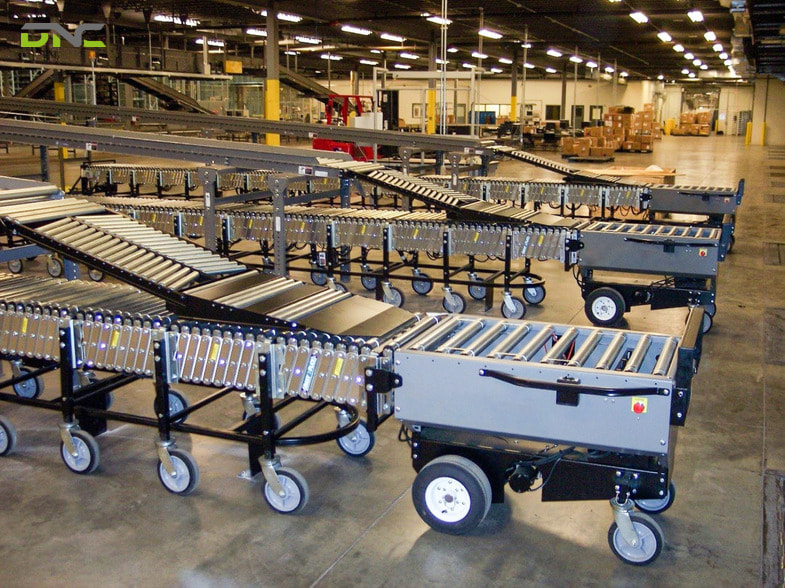
How Does a Flex Conveyor Work?
5 Types of Flex Conveyors: When Each Is Best
Understanding which type of flex conveyor is “best” requires matching each type’s strengths to your specific application requirements.
Type 1: Flexible Modular Belt Conveyor
Best for: High-mix F&B and pharmaceutical production requiring frequent product changeover, hygiene-critical washdown environments, and curved layouts without transfer points.
Flexible modular belt conveyors use interlocking plastic modules (PP/POM/PE) in both straight-run and radius-turn configurations. The modular belt navigates curves of 15°–180° on a single belt loop without transfer points — eliminating the product damage, jamming, and cleaning complications that transfer points introduce in food environments.
Individual modules are replaceable when worn — reducing belt maintenance cost by 40–60% versus conventional rubber belts. The open-frame construction of washdown modular conveyors eliminates hygiene dead zones, meeting HACCP MS 1480 requirements for Malaysian halal food production.
DNC Automation installs modular flex belt conveyors for F&N, Ramly Burger, and Guan Chong Berhad — Malaysian F&B manufacturers requiring HACCP-compliant, layout-flexible conveyor systems for product line changeovers.
| Parameter | Specification |
| Belt pitch | 25.4mm, 38.1mm, 50.8mm |
| Curve radius | 250mm–2,000mm (radius modules) |
| Speed | Up to 0.5 m/s |
| Material | PP, POM, PE (FDA food-grade) |
| Hygiene | IP65/IP67; washdown compatible |
| Best for | F&B, pharma, frequent changeover |
Type 2: Telescoping/Extendable Conveyor
Best for: Loading dock operations, truck loading and unloading, warehouse outbound sorting, and any application requiring variable conveyor reach.
Telescoping flex conveyors extend and retract on a nested multi-section frame — typically from 3.5m (retracted) to 12m (fully extended) — to reach inside lorry or container trailers for loading or unloading. The extending section carries a powered belt that transports packages, cartons, or parcels to or from the trailer interior.
Malaysian logistics operations — Pos Malaysia (a DNC Automation client), e-commerce 3PL warehouses in Johor and Shah Alam, and airport baggage handling at KLIA (where DNC’s POS Aviation client operates) — use telescoping flex conveyors to reduce dock labour by up to 60% versus manual loading/unloading.
During Shopee and Lazada mega-sales events (11.11, 12.12), Malaysian warehouse throughput surges 5–10× above normal. Telescoping flex conveyors deployed at extra dock positions during peak periods — and stored compactly when retracted — provide the throughput capacity without permanent dock infrastructure investment.
| Parameter | Specification |
| Extension range | 3.5m to 12m |
| Belt width | 500mm–800mm |
| Speed | 0.5–2.0 m/s |
| Max load | 500 kg items; 1,500 kg distributed |
| Max incline | 25° |
| Best for | Dock loading/unloading, warehouse |
Type 3: Flexible Curve Belt Conveyor (Radius Belt)
Best for: Space-constrained factory layouts requiring conveyor direction changes without transfer points, and fragile products that must not be disturbed at direction changes.
Flexible curve belt conveyors use specially engineered belts that navigate horizontal curves of 30°, 45°, 90°, or 180° on a single belt — the belt tapers slightly from inner to outer radius, and the conveyor frame follows the curved path. Products travel the curve smoothly on the belt surface without the transfer-point interruption that alternative direction-change methods (turntables, right-angle transfers) introduce.
Flexible curve conveyors are ideal in Malaysian EMS factories where the SMT line must navigate around structural columns or equipment with a curve, rather than an expensive layout redesign. F&B factories with limited floor space between processing and packaging areas benefit from 90° or 180° curve belts that route products around corners in a single belt span.
| Parameter | Specification |
| Curve angles | 30°, 45°, 90°, 180° |
| Belt width | 200mm–1,200mm |
| Speed | Up to 1.5 m/s |
| Load | Up to 50 kg/m |
| Best for | Space-constrained layouts, fragile products |
Type 4: Flexible Screw Conveyor
Best for: Powder and granule routing in facilities with obstacles, existing equipment, or structural constraints that prevent fixed-path rigid conveyors.
Flexible screw conveyors route a rotating auger inside a flexible polymer tube — typically 50–150mm diameter — that can be bent, curved, and re-routed around obstacles that would require expensive civil works to accommodate a rigid screw conveyor.
Malaysian pharmaceutical manufacturers in Selangor’s pharma corridor use flexible screw conveyors to route excipient powders from remote storage silos to tablet press rooms, navigating structural beams, other equipment, and wall penetrations that a rigid screw would require costly modifications to accommodate.
Palm oil mills in Pahang and Sarawak use flexible screw conveyors to route palm kernel shell (PKS) from the cracker/separator to multiple boiler feed points at different elevations, without fixed screw conveyor runs that would require structural steel installation through operating mill floors.
| Parameter | Specification |
| Tube diameter | 50mm–150mm |
| Capacity | 0.1–15 m³/hr |
| Accuracy | ±3–7% volumetric |
| Routing | Curves to 180°; multiple direction changes |
| Best for | Powder/granule in constrained layouts |
Type 5: Flex Chain/Tabletop Chain Conveyor
Best for: Multi-directional product accumulation, gentle handling of diverse product formats on a single line, and variable-speed zone control for balanced production flow.
Flex chain conveyors use a flat-top plastic chain (tabletop chain) that can navigate both horizontal curves and vertical elevation changes on a single circuit — achieved through articulated side flexing links and specially designed guide rails at direction changes.
Tabletop chain conveyors provide an inherently gentle product transport surface — the flat plastic top plate of each chain link presents a stable, low-friction surface that handles products from small pharmaceutical vials to beverage cans to small consumer electronics without damage or marking.
Malaysian beverage bottlers (F&N — a DNC Automation client), cosmetics manufacturers, and consumer goods packagers use flex tabletop chain conveyors for multi-format accumulation lanes that buffer products between filler, capper, labeller, and case packer without stopping the upstream machines.
| Parameter | Specification |
| Chain pitch | 25.4mm, 38.1mm |
| Curve radius | From 300mm horizontal |
| Speed | Up to 1.0 m/s |
| Load | Up to 30 kg/m |
| Best for | Gentle accumulation, beverage/pharma/FMCG |
How to Choose the Best Flex Conveyor for Your Factory
Selecting the best flexible conveyor system requires systematic evaluation across seven decision criteria.
Criterion 1 — Product characteristics: Fragile bottles → flex tabletop chain (gentle). Food contact, washdown → modular belt (FDA, IP67). Powder, cohesive material → flexible screw. Heavy cartons at loading dock → telescoping. Space-constrained curve routing → radius belt.
Criterion 2 — Layout flexibility required: Permanent curved path → radius belt or modular belt. Variable-reach at dock → telescoping. Frequently reconfigured assembly line → aluminium profile modular belt (bolt-together reconfiguration in hours). Complex powder routing around obstacles → flexible screw.
Criterion 3 — Throughput requirements: High throughput (500+ units/hr) → flex chain tabletop or radius belt. Moderate throughput (100–500 units/hr) → modular belt. High mass-flow powder → flexible screw (up to 15 m³/hr). Dock loading speed → telescoping (matched to manual unload rate, typically 500–1,500 cartons/hr).
Criterion 4 — Hygiene requirements: HACCP/halal food contact → washdown modular belt (FDA PP/POM/PE + SS304 frame). Pharma GMP → modular belt or flex tabletop (SS316, CIP-compatible). General industrial → standard flex chain or telescoping (carbon steel).
Criterion 5 — Reconfiguration frequency: Weekly changeover → aluminium profile modular belt (fastest reconfigure). Monthly → any modular system. Rarely → standard fixed-frame flex conveyor (lower cost if reconfiguration is not the primary value).
Criterion 6 — Control integration: PLC control with speed zones → MDR roller or modular belt with zone control. Standalone manual operation → basic telescoping. Full Siemens PLC + SCADA integration → modular belt with Siemens S7 control (DNC standard).
Criterion 7 — Budget and SAG Grant eligibility: All five flex conveyor types are eligible for MIDA SAG Grant funding (RM 1M max, 70:30 matching) when part of a qualified automation project. DNC Automation assists with SAG application documentation to maximise grant recovery.
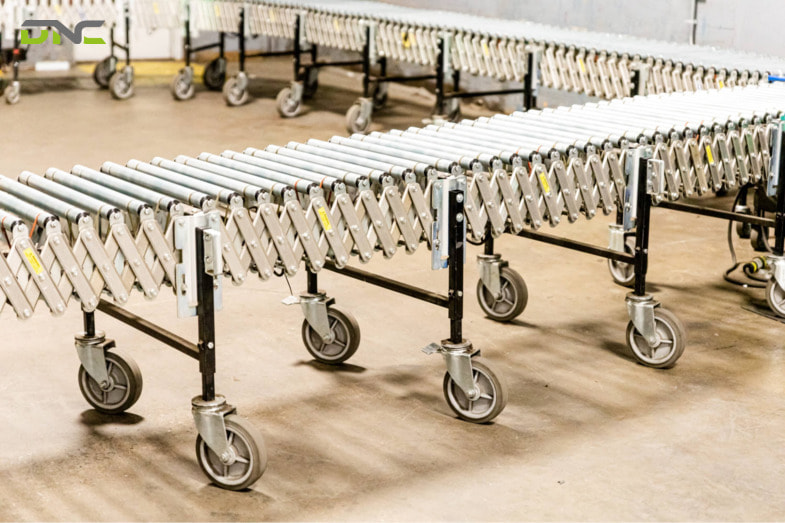
How to Choose the Best Flex Conveyor for Your Factory
Benefits of the Best Flex Conveyor for Malaysian Manufacturers
Production layout agility: The best flex conveyor enables Malaysian factories to respond to new product introductions, customer requirement changes, and production line restructuring in hours — not weeks of conveyor modification or replacement. This agility is the operational foundation of NIMP 2030’s flexible smart manufacturing vision.
Reduced capital lock-in: Modular flex conveyor systems — extensible, reconfigurable, and reusable across product line changes — reduce the capital write-off risk associated with fixed rigid conveyors that become stranded assets when production requirements change.
Labor savings: Telescoping conveyors at loading docks reduce dock labour by up to 60%. Modular belt conveyors in F&B eliminate manual product transfer between line sections. Flex chain accumulation conveyors eliminate operators whose sole job is to manage product flow between machines.
Maintenance cost reduction: Modular belt individual module replacement (RM 5–20 per module) versus full rubber belt replacement (RM 200–2,000 per meter) reduces conveyor belt maintenance cost by 40–60% in Malaysian F&B applications. Flexible screw conveyor maintenance cost is 50% lower than rigid screw conveyor maintenance due to simpler disassembly and cleaning.
NIMP 2030 and SAG Grant alignment: Flexible conveyor systems — especially modular belt and Siemens PLC-controlled flex chain systems — directly support the flexible smart manufacturing model mandated by NIMP 2030. The 70:30 SAG Grant reduces effective investment by 70% for eligible Malaysian manufacturers.
Frequently Asked Questions About Flex Conveyors
Which flex conveyor type is most common in Malaysian factories?
The flexible modular belt conveyor is the most widely deployed flex conveyor type in Malaysian manufacturing — particularly in F&B (for HACCP washdown compliance and layout flexibility) and electronics/EMS (for rapid product changeover on aluminium profile frames). Telescoping conveyors are the most common at Malaysian warehouse and logistics dock operations.
Can a flex conveyor handle heavy loads?
Load capacity varies significantly by type. Telescoping conveyors handle distributed loads to 1,500 kg. Flex tabletop chain handles to 30 kg/m. Modular belt conveyors handle to 50 kg/m (standard) and up to 150 kg/m (heavy-duty). Flexible screw conveyors are mass-flow devices — load is expressed as m³/hr rather than kg/m. DNC Automation sizes all flex conveyor systems to application load requirements.
How quickly can a modular flex conveyor be reconfigured?
An aluminium profile modular belt conveyor can be physically reconfigured — extended, shortened, or rerouted — by a two-person maintenance team in 2–8 hours depending on the extent of the layout change. This compares to 3–10 days for welded steel conveyor modification. For Penang EMS factories with weekly product changeovers, this reconfiguration speed is a primary business value driver.
Is the SAG Grant applicable to flex conveyor purchases?
Yes. Flexible conveyor systems that are part of a qualifying factory automation project are eligible for MIDA’s Smart Automation Grant (SAG) — up to RM 1,000,000 on a 70:30 matching basis. The project must demonstrate measurable productivity improvement through automation. DNC Automation assists Malaysian manufacturers with SAG project qualification and application documentation.
Does DNC Automation supply all five types of flex conveyors?
Yes. DNC Automation designs and installs all five primary flex conveyor types — flexible modular belt, telescoping, radius curve belt, flexible screw, and flex tabletop chain — integrated with Siemens PLC control, Siemens SCADA, and Laumas weighing systems as required. DNC’s 35+ engineers and 25,000 sq ft Selangor fabrication facility support custom flex conveyor configurations across all Malaysian manufacturing sectors.
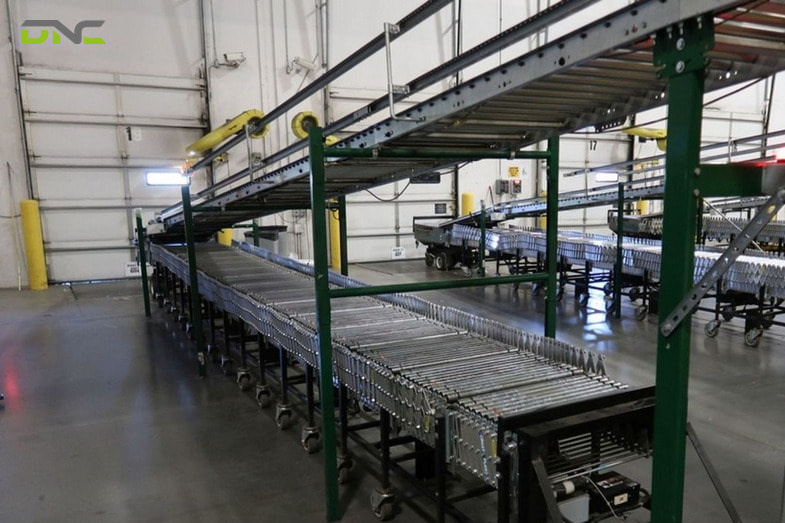
Benefits of the Best Flex Conveyor for Malaysian Manufacturers
Conclusion
The best flex conveyor for your Malaysian factory is the one that precisely matches your material handling challenge — not the one with the most features or the lowest price. Flexible modular belt conveyors are best for HACCP-compliant F&B production and frequent layout changes. Telescoping conveyors are best for dock operations and e-commerce logistics surges. Radius curve belts are best for space-constrained routing. Flexible screw conveyors are best for powder handling in constrained layouts. Flex tabletop chain conveyors are best for gentle multi-format accumulation.
DNC Automation’s team of 35+ engineers provides free factory assessments that evaluate your specific production requirements across all seven selection criteria — material, layout, throughput, hygiene, reconfiguration frequency, control integration, and budget — and deliver a clear recommendation for the flex conveyor system that delivers the best ROI for your Malaysian manufacturing operation.
Get a Free Consultation — contact DNC Automation to begin your flex conveyor assessment. Our engineers serve manufacturers across Selangor, Penang, Johor, and East Malaysia with in-house design, fabrication, and 24/7 local support.
Explore related: [Modular Conveyor Systems](#), [PLC Conveyor Control](#), [Conveyor Belt in a Factory](#)
- 78 views
- 0 Comment
Recent Comments