


Conveyor Supplier Malaysia: Choosing the Right Conveyor Manufacturer | DNC Automation
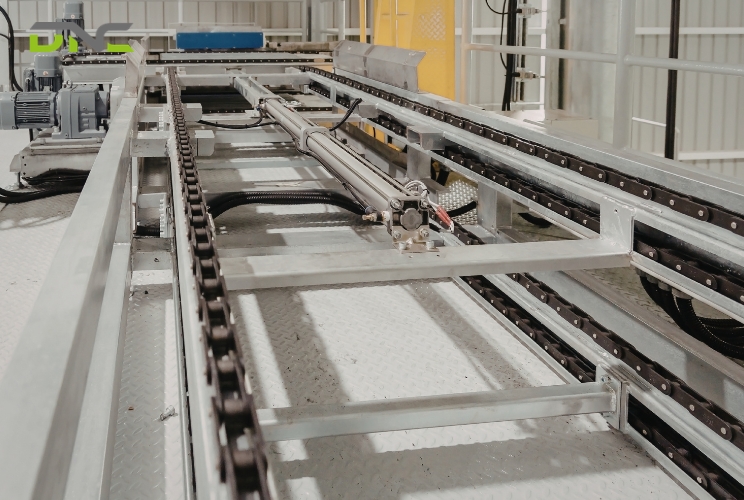
Choosing a conveyor supplier in Malaysia is a decision that affects your factory’s production efficiency, maintenance costs, and downtime risk for the next 15–20 years. The Malaysian market has dozens of conveyor suppliers — from component distributors selling standard belt and roller components, to full-service automation integrators delivering turnkey conveyor systems with PLC control, SCADA integration, and end-to-end project management. Understanding the difference, and selecting the right type of partner for your specific requirement, determines whether your conveyor investment delivers the ROI it should.
This guide covers the conveyor supplier landscape in Malaysia, the categories of suppliers and what each delivers, the criteria that distinguish genuinely capable partners from catalog vendors, and the questions every procurement team should ask before committing to a conveyor project.
The Malaysian Conveyor Supplier Landscape
Malaysia’s conveyor supplier market divides into four distinct categories — each serving different buyer requirements:
Category 1: Component Distributors
Distributors who supply conveyor components — belts, rollers, chains, idlers, pulleys, and bearings — from international manufacturers. They hold stock, provide fast delivery, and offer competitive pricing on standard components, but do not design, fabricate, or install complete conveyor systems.
What they provide: Belt, roller, and chain components; spare parts; standard catalog equipment
What they do not provide: System design, PLC integration, custom fabrication, installation, commissioning
Right for: Spare parts procurement, replacement belt orders, standard component upgrades
Category 2: Equipment Manufacturers (OEM)
Local manufacturers producing standard conveyor equipment — gravity roller conveyors, flat belt conveyors, and modular sections — in standard configurations from their own production lines.
What they provide: Standard catalog conveyor equipment; some customization of length and width
What they do not provide: Full automation integration, PLC programming, SCADA/MES connectivity, complex custom engineering
Right for: Simple, standard conveyor requirements; price-sensitive projects where automation is not required
Category 3: System Integrators (Automation Focus)
Automation companies that design, supply, and integrate complete conveyor systems — custom-engineered to specific facility layouts, product requirements, and production throughput targets — with PLC control, sensor systems, and upstream/downstream machine integration.
What they provide: Complete system design; custom fabrication; PLC/SCADA/MES programming; installation; commissioning; operator training; ongoing support
What they do not provide (some integrators): In-house fabrication — some integrators source fabricated components from third parties and manage integration only
Right for: Factories requiring automated material flow, complex routing, multi-zone control, or integration with existing production systems
Category 4: Turnkey Automation Integrators (Full Capability)
The highest capability tier — integrators with in-house engineering, fabrication, electrical design, software programming, and after-sales support under one roof. Turnkey integrators take full project responsibility from design through commissioning, with a single contract and a single point of accountability.
DNC Automation operates at this tier — 35+ engineers covering mechanical, electrical, controls, and software; a 25,000 sq ft in-house production facility; ISO 9001:2015 certified quality management; and Siemens and Comau authorized partnerships enabling access to premium automation technology.

The Malaysian Conveyor Supplier Landscape
What Separates a Strong Conveyor Supplier from a Weak One
1. Engineering Depth vs. Catalog Capability
A genuine conveyor system supplier designs for your specific requirements — product dimensions, weight, throughput, environment, integration points. A catalog vendor adjusts standard equipment to fit, which works for simple applications but fails for complex ones.
Ask: “Can you show me 3D layout drawings of the proposed system within our actual facility?”
A conveyor supplier with real engineering capability uses CAD (SolidWorks, AutoCAD) to design systems within your facility model — identifying structural conflicts, optimizing flow path, and verifying clearances before fabrication. DNC Automation uses SolidWorks for all custom conveyor system layouts.
2. In-House Fabrication vs. Outsourced Production
A conveyor supplier with in-house fabrication controls dimensional accuracy, quality, and delivery schedule. A supplier who subcontracts fabrication to external workshops loses direct quality control — and when problems arise, accountability is diffused.
DNC Automation’s 25,000 sq ft Selangor production facility fabricates all custom conveyor equipment in-house — welded frames, machined rollers, sheet metal work, panel assembly — under ISO 9001:2015 quality management. Every system is pre-commissioned and factory acceptance tested (FAT) before delivery to site.
3. Control System Capability
A conveyor system that is not PLC-controlled is not a production system — it is a manually operated device. Any conveyor supplier positioning your system as an Industry 4.0-capable investment must demonstrate PLC design and programming capability, VFD integration, sensor selection, SCADA configuration, and MES/WMS interface experience.
DNC Automation is a Siemens-authorized partner — Malaysia’s most widely supported PLC platform — providing certified design and commissioning for Siemens SIMATIC S7 conveyor automation. Our PLC engineers program complete conveyor logic: zone control, routing logic, safety interlocks, IoT sensor monitoring, and integration with existing factory SCADA.
4. Track Record with Named Clients
Any conveyor supplier making performance claims should be able to name the clients those claims apply to. DNC Automation’s named conveyor system clients include Toyota, UMW, Inokom, Hartalega, F&N, Ramly Burger, Guan Chong Berhad, Sony, Panasonic, Pos Malaysia, and POS Aviation — a cross-industry portfolio demonstrating consistent delivery across Malaysia’s most demanding manufacturing environments.
5. After-Sales Support Capability
A conveyor system that breaks down at 2 AM on a Sunday requires a local support team who can be on-site within hours — not a support email to a foreign OEM. DNC Automation provides 24/7 local support across Malaysia, with engineering teams in Selangor (HQ), Johor Bahru, and Penang.
Key Criteria for Evaluating Conveyor Suppliers in Malaysia
Certifications and Quality Management
ISO 9001:2015 — the international quality management standard — is the minimum certification expected from a serious industrial conveyor supplier. ISO 9001:2015 certification means the supplier operates documented procedures for design, fabrication, testing, and delivery — not just a claim of quality, but a third-party verified system.
DNC Automation holds ISO 9001:2015 certification alongside EPLAN, SolidWorks, Siemens, Comau, and multiple other technical certifications — a credential portfolio that distinguishes genuine engineering capability from marketing positioning.
Technology Partnerships
A conveyor supplier’s technology partnerships signal the quality tier of components in their systems. First-tier partnerships — Siemens (automation), Comau (robotics), Laumas (weighing) — indicate access to premium components and the technical training to specify them correctly.
DNC Automation is the only official Comau partner in Southeast Asia — a distinction that reflects the depth of our automation engineering capability, not just component supply access.
Engineering Team Size and Disciplines
A conveyor system requires at minimum: mechanical engineers (conveyor design, structural calculation), electrical engineers (panel wiring, drive sizing), PLC programmers (conveyor logic, SCADA integration), and commissioning engineers (site installation, testing). A supplier with fewer than 10 engineers cannot credibly deliver complex conveyor system projects.
DNC Automation’s 35+ specialist engineers cover all disciplines in-house — eliminating the inter-contractor coordination failures that cause delays and cost overruns on multi-discipline projects.
Production Facility Scale
A conveyor supplier’s own production facility size determines fabrication lead time, quality control capability, and project scalability. A supplier without a production facility depends entirely on third-party workshops — introducing quality variation and delivery risk on every project.
DNC Automation’s 25,000 sq ft Selangor production facility is one of the largest in-house automation fabrication facilities among Malaysian system integrators — enabling parallel fabrication of multiple project components and pre-commissioning testing before site delivery.
Understanding Conveyor Project Scope and Pricing in Malaysia
Conveyor supplier pricing in Malaysia varies enormously based on project scope — from RM 5,000 for a simple gravity roller section to RM 5 million+ for a complex automated warehouse conveyor system with WMS integration. Understanding the cost drivers prevents scope mismatches and budget surprises.
Primary cost drivers:
| Factor | Impact on Price |
| Conveyor type | Gravity roller (lowest) → MDR ZPA (highest) |
| Custom vs. standard | Standard catalog: lower; custom-engineered: higher |
| Belt material | PVC (lowest) → PTFE/stainless steel (highest) |
| PLC control complexity | On/off control (lowest) → Multi-zone ZPA + WMS integration (highest) |
| Installation environment | General industrial (lowest) → Food-grade washdown / cleanroom (highest) |
| After-sales support | None (lowest) → 24/7 local + IoT monitoring (highest) |
What low-price conveyor suppliers often exclude:
- PLC programming and commissioning (billed separately or not offered)
- Factory acceptance testing (FAT) before delivery
- Operator training
- Warranty on wear parts
- After-sales maintenance support
DNC Automation’s project proposals explicitly scope all inclusions — design, fabrication, installation, PLC programming, FAT, commissioning, training, and warranty terms — so clients know exactly what they are buying.
Government Support for Conveyor Investment in Malaysia
Malaysian factories investing in conveyor automation can access significant government financial support:
Smart Automation Grant (SAG) — MIDA
- Up to RM 1,000,000 per company
- 70:30 matching basis (government : company)
- Eligible: SMEs and mid-tier manufacturers
- Eligible costs: conveyor hardware, PLC/software, installation, training
- Apply via: investmalaysia.mida.gov.my
Investment Tax Allowance (ITA) — MIDA
- 60–100% allowance on qualifying capital expenditure (including conveyor automation machinery)
- Duration: 5–10 years from first qualifying expenditure
- Available to existing manufacturers reinvesting in automation
Industry4WRD Intervention Fund — MITI
- Up to RM 500,000 per company (70:30 matching)
- For SMEs adopting Industry 4.0 technologies including PLC-integrated conveyor systems
DNC Automation’s engineering team supports SAG and ITA application technical documentation as part of project delivery — helping clients access the financial support they qualify for.
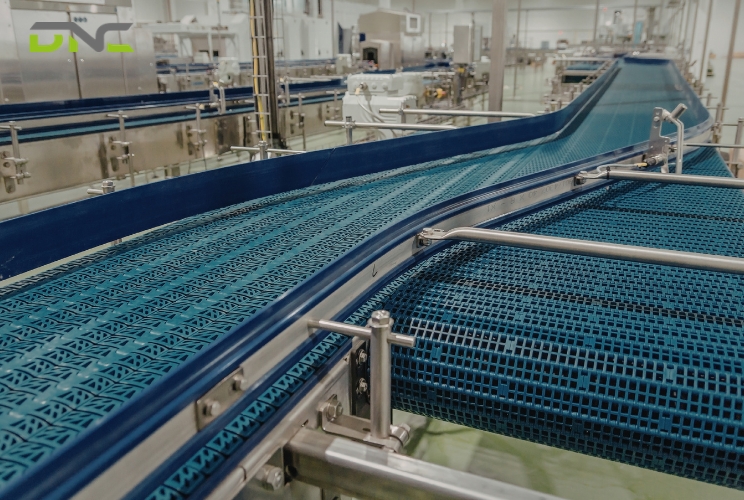
How to Evaluate a Conveyor Supplier’s Technical Proposal
DNC Automation: Malaysia’s Top #1 Conveyor System Integrator
DNC Automation has been delivering industrial conveyor systems in Malaysia since 2005 — over 20 years of proven project delivery across automotive, food and beverage, glove manufacturing, palm oil, electronics, warehouse, and logistics sectors.
Our conveyor system credentials:
- 20+ years of industrial automation experience (est. 2005)
- 35+ engineers — mechanical, electrical, controls, and software disciplines
- 25,000 sq ft in-house Selangor production facility
- ISO 9001:2015 certified quality management
- Siemens authorized partner — certified PLC/SCADA/IoT design
- Comau exclusive SEA partner — the only official Comau partner in Southeast Asia
- Named clients: Toyota, Sony, Panasonic, Hartalega, F&N, Unilever, Pos Malaysia, Bridgestone
- Free pre-sales consultation — no obligation engineering review
- 24/7 local support across Malaysia (Selangor HQ, Johor Bahru, Penang branches)
DNC Automation’s conveyor system portfolio:
- Roller conveyor systems (gravity, powered, MDR/ZPA)
- Belt conveyor systems (flat, modular, cleated, food-grade, ESD-safe)
- Chain conveyor systems (pallet, slat, tabletop)
- Overhead conveyor systems (power-only, power-and-free)
- Screw conveyor systems (horizontal, inclined, vertical)
- Automated conveyor systems with PLC-SCADA-MES integration
- Complete turnkey conveyor lines with robot cell integration
FAQ — Conveyor Supplier Malaysia
What is the difference between a conveyor supplier and a conveyor system integrator in Malaysia?
A conveyor supplier sells conveyor equipment — belts, rollers, standard conveyor sections. A conveyor system integrator designs and builds the complete system — custom-engineered layout, PLC control, sensor systems, machine interfaces, and commissioning. For factories requiring automated material flow, a system integrator delivers a working production asset; a component supplier delivers parts that need further engineering.
How do I compare conveyor supplier quotes in Malaysia?
Ensure all quotes cover the same scope: system design, fabrication, delivery, installation, PLC programming, commissioning, FAT, operator training, warranty, and after-sales support. A lowest-price quote that excludes PLC programming and commissioning can cost more than a comprehensive quote when those services are added separately. DNC Automation’s proposals explicitly scope all deliverables.
Should I choose a local or foreign conveyor supplier?
For conveyor component supply, foreign suppliers (European, Japanese, American) often provide the highest-quality belts and rollers. For complete conveyor system integration, a local Malaysian integrator provides critical advantages: faster project delivery, local site support during installation, 24/7 after-sales response time, and understanding of Malaysian manufacturing environments, regulations, and operating conditions.
What certifications should a conveyor supplier in Malaysia have?
Minimum: ISO 9001:2015 quality management certification. For PLC and automation: Siemens, Rockwell, or equivalent authorized integrator status. For specialized environments: food-grade material certifications (FDA compliance documentation), ESD system certifications (ANSI/ESD S20.20). DNC Automation holds all of these and more.
How long does a conveyor system project take in Malaysia?
Simple standard conveyor systems: 4–8 weeks from order to commissioning. Complex custom automated systems with PLC integration: 12–24 weeks depending on engineering complexity, fabrication load, and site readiness. DNC Automation provides project timelines at proposal stage — with Gantt chart delivery schedules and milestone payment terms.
Can DNC Automation handle conveyor projects outside Selangor?
Yes. DNC Automation has branch offices in Johor Bahru, Penang, Vietnam, and China — with project delivery and after-sales support capabilities across all of Malaysia’s manufacturing regions including Sabah and Sarawak.
Conclusion
The conveyor supplier you choose for your Malaysian factory is not just a component vendor — it is an engineering partner whose decisions affect your production efficiency and maintenance cost for the next 15–20 years. The distinction between a catalog supplier, an equipment manufacturer, and a turnkey automation integrator is the difference between buying conveyor components and buying a production system.
DNC Automation delivers production systems — fully engineered, fabricated in-house, PLC-integrated, and commissioned with 24/7 local support. With 20+ years of experience, ISO 9001:2015 certification, and a named-client track record spanning Toyota to Hartalega, we are the conveyor supplier Malaysia’s manufacturers choose when performance matters.
Ready to discuss your conveyor project? Get a Free Consultation from DNC Automation’s engineering team — no obligation, no generic proposals.
- 218 views
- 0 Comment
Recent Comments