


What Is a Palletizer? Definition, Types, and How It Works
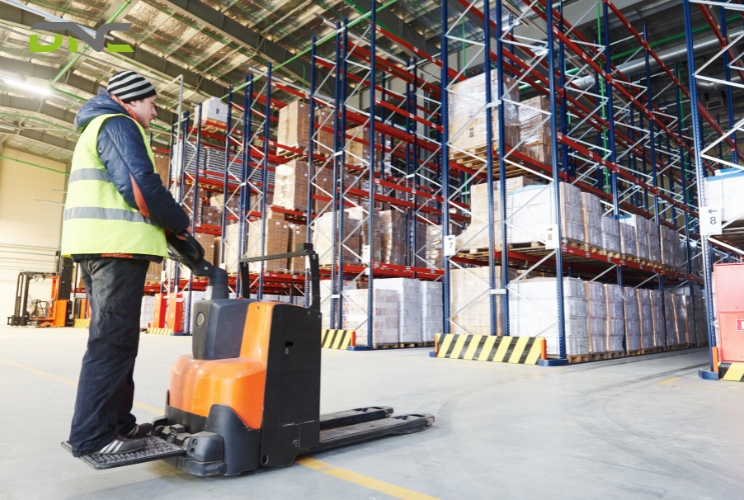
A palletizer is a machine that automatically stacks products – boxes, bags, bottles, or containers – onto pallets in precise, programmed patterns for shipping or storage. In Malaysian manufacturing, where end-of-line operations once required four to six workers per shift, a single palletizer handles that workload continuously and without fatigue. The machine reads incoming products via sensors, selects the correct stacking pattern, picks each unit with a gripper matched to the product type, and builds layer by layer until the pallet is full. Conventional palletizers use mechanical layer-forming tables and deliver high cycle rates for uniform products. Robotic palletizers use a multi-axis arm for flexibility across product shapes and sizes. Collaborative palletizers – cobots – operate within shared human zones and suit mid-volume facilities managing frequent changeovers. The choice between them depends on throughput, product variety, floor space, and how that palletizer integrates with the
Common misconception: Many facilities treat palletizing as a standalone machine purchase. In practice, a palletizer performs at full value only when it is engineered to match conveyor infeed speed, pallet dispenser timing, and downstream stretch wrapping – not selected in isolation.
What Is a Palletizer and What Does It Do?
A palletizer is an industrial machine that does one thing at production scale: stacking finished goods onto pallets in stable, repeatable load patterns. The palletizer definition covers both the hardware – the frame, gripper, and motion system – and the control layer that calculates stacking patterns, monitors sensors, and adjusts for product variation.
The machine sits at the end of a production or packaging line. Products arrive by conveyor after filling, capping, labeling, or cartoning. The palletizer takes over from that point: it groups units into rows, builds rows into layers, and stacks layers onto a pallet until the load reaches the target height or weight.
Three core functions define what a palletizer does:
- Pattern calculation – the controller determines how to arrange each product unit to maximize pallet stability and density
- Gripper actuation – the end-of-arm tool picks individual units or entire rows and places them precisely at target coordinates
- Cycle management – sensors track product flow, pallet position, and layer count; the system pauses, adjusts, or signals an alert when anything deviates
At a Malaysian glove manufacturer running three packaging lines, each line once required two palletizing workers. A single robotic palletizer with a three-way conveyor merge now handles all three lines at combined rates previously requiring six workers per shift. That is the operational logic palletizers are built around.
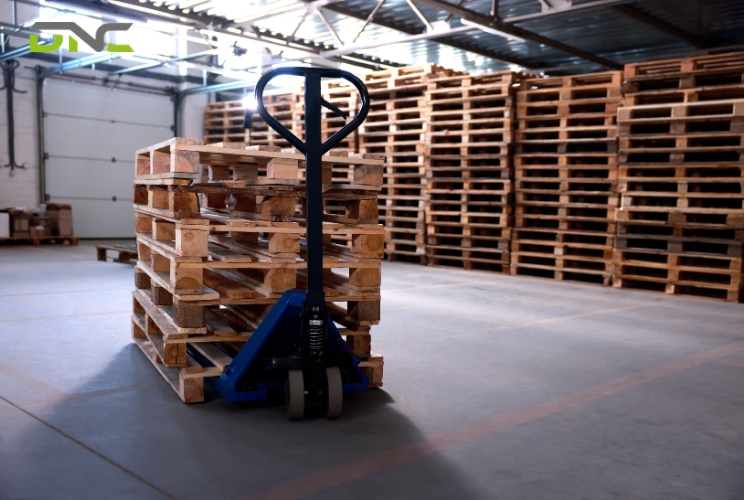
How Does a Palletizer Work? The Working Principle
The palletizer machine working principle follows a five-stage cycle that repeats continuously until a full pallet exits the station.
Stage 1 – Product infeed and alignment
Products arrive on a conveyor in single file. Photocells and position sensors detect each unit, verify its dimensions and orientation, and signal the control system. Any product outside tolerance – wrong size, toppled, or misaligned – triggers a divert or stop before it reaches the palletizing zone.
Stage 2 – Row and layer formation
A sweep arm, pusher bar, or robotic arm groups individual units into a row according to the programmed stacking pattern. For conventional palletizers, a layer table collects full rows until a complete layer is formed. For robotic palletizers, the arm places each unit directly at the correct pallet coordinate, building the layer one pick at a time.
Stage 3 – Gripper pick and place
The gripper – matched to the product type – descends, picks the product, and places it on the pallet. Vacuum grippers handle cartons and cases. Clamp-style grippers secure heavy bags or unstable loads. Mechanical finger grippers manage specialty packaging where suction cannot maintain contact.
Stage 4 – Layer-by-layer stacking
After each layer is placed, the pallet lowers one layer height on the pallet conveyor. The next layer begins immediately. Alternating layer patterns – where each layer rotates 90° relative to the one below – interlocks the load and resists tipping in transit.
Stage 5 – Full pallet exit and empty pallet feed
Once the pallet reaches the programmed height or unit count, the conveyor transfers it out to a stretch wrapping station or staging area. An empty pallet automatically feeds in from the pallet dispenser, and the cycle restarts. Cycle time for industrial palletizers typically ranges from 8 to 15 seconds per layer, depending on product size and gripper type. A finished pallet load in Malaysian factories commonly reaches 1,500 mm (~4.9 ft / 59 in) in stacked height before transfer to stretch wrapping.
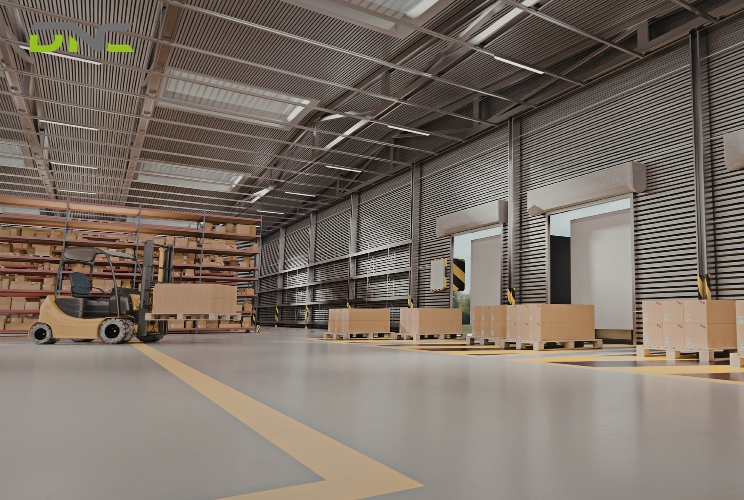
Summary: Palletizer Working Principle at Each Stage
The five stages of the palletizer working principle form a closed loop – each stage feeds directly into the next without pause.
| Stage | Action | Key Component |
| 1. Infeed | Detect, align, verify | Photocells, position sensors |
| 2. Layer formation | Group units into row/layer | Sweep arm, pusher, or robot arm |
| 3. Pick and place | Grip and position each unit | Vacuum, clamp, or finger gripper |
| 4. Stacking | Build alternating layers | Pallet conveyor with lowering function |
| 5. Pallet exit | Transfer full pallet, feed empty | Pallet dispenser, exit conveyor |
What Types of Palletizers Are There?
Palletizers fall into four distinct types, each suited to different production environments across Malaysian manufacturing – from high-volume beverage lines to mixed-SKU glove packaging.
Conventional (Layer) Palletizer
The conventional palletizer – also called a layer palletizer – groups products into full layers before placing them as a single unit onto the pallet. A layer table or compression system holds the layer while the depositing head sweeps it onto the pallet surface.
Conventional palletizers suit facilities with uniform product shapes and consistent high throughput. They run at speeds of 40 to over 100 cycles per hour with minimal variation. Changeover to a new product requires mechanical adjustments to layer formers and guides – a process measured in hours, not minutes. They occupy significant floor space but deliver the lowest cost-per-cycle for dedicated lines.
Typical applications: food and beverage (canned goods, bottles, cartons), petrochemical (pails, drums), and cement/building materials.
Robotic Palletizer
A robotic palletizer uses a multi-axis articulated arm – typically 4-axis or 6-axis – equipped with a programmable end-of-arm tool. The arm places each unit, row, or full layer at precise coordinates according to a stacking program stored in the controller.
The principal advantage over conventional palletizers is flexibility. A robotic palletizer switches between products by loading a different stacking program – a process measured in minutes. The same arm handles multiple product sizes with the correct gripper. Multiple infeed conveyors can feed a single robot cell, enabling one palletizer to serve two or three packaging lines.
DNC Automation’s [robotic solutions](https://www.dnc-automation.com/robotic-solutions/) include Comau-platform palletizing cells engineered to Malaysian facility footprints – an integration context where arm reach, conveyor merge geometry, and pallet dispenser position all factor into cell design before any robot is selected.
Collaborative Palletizer (Cobot)
A collaborative palletizer – commonly called a cobot system – uses a robot arm certified for operation in shared human spaces without full guarding enclosures. They work at reduced speeds when personnel are present and resume full speed when the zone is clear.
Their operational range is narrower than industrial palletizers – cobots typically handle payloads under 30 kg (~66 lbs) per pick – but they suit mid-volume facilities, facilities managing frequent SKU changes, and facilities where floor space precludes a full safety enclosure. Payback periods for cobot palletizing cells documented in industry case studies fall in the 12–18 month range for operations that previously relied entirely on manual stacking.
Gantry Palletizer
A gantry palletizer mounts the pick-and-place mechanism overhead on a linear gantry frame spanning the full pallet area. Motion is along X, Y, and Z axes. The gantry format suits very heavy payloads and layouts where a floor-mounted arm’s reach would be insufficient. Gantry systems are less common in Malaysian SME environments due to installation complexity but appear in heavy industry (steel coils, engine components, bulk bags).
How Does a Palletizer Differ from a Depalletizer?
The palletizer vs depalletizer distinction goes beyond directional flow. The two machines face structurally different challenges.
A palletizer works with products arriving in known condition – filled, labeled, and aligned on a production conveyor. The input is controlled. A depalletizer works with products arriving from outside the facility: inbound raw materials, components, or purchased goods stacked by a supplier onto a pallet that has since been loaded, transported, and potentially jostled in transit.
Five operational differences separate them:
- Unloading challenge vs stacking challenge
A palletizer places products in a programmed position. A depalletizer must locate each product in whatever position it actually occupies – which may differ from the nominal position due to settling, shifting, or damage in transit.
- Product position stability
Products on an outbound pallet maintain the position the palletizer placed them in. Products on an inbound pallet arrive in unknown deviations. Depalletizing systems compensate through wider grip tolerances, force-limited contact, or active search routines.
- Vision system requirement
Palletizing often operates without active vision – products arrive in known orientation from a controlled line. Depalletizing frequently requires a 3D vision system to locate each product before the gripper descends, particularly for mixed-SKU inbound pallets where no two layers are identical.
- Position in the facility
A palletizer sits at the end of a production line, before the shipping dock. A depalletizer sits at goods receiving, before raw material or component storage. Their integration requirements – infeed conveyors, sensors, downstream buffers – differ accordingly.
- Upstream and downstream process context
After palletizing: the pallet goes to stretch wrapping, then warehouse staging or direct loading. After depalletizing: the products go to receiving inspection, unpacking, or direct feeding into a production line. Both machines require different downstream handling, safety zoning, and control integration.
For facilities evaluating both, [warehouse automation](https://www.dnc-automation.com/warehouse-automation/) system design must account for the full flow – inbound depalletizing through storage, production feeding, and outbound palletizing – rather than treating each machine as a standalone installation.
What Is End-of-Line Palletizing?
End-of-line palletizing places the palletizer as the final station in a production sequence – after filling, capping, labeling, cartoning, and case packing – immediately before the finished goods enter storage or shipping.
The distinction matters for integration planning. An end-of-line palletizer receives products at production line speed. Its infeed conveyor must buffer accumulation when the palletizer completes a layer or cycles an empty pallet. Its control system interfaces with the upstream packaging machine’s production count to track load building in real time.
Contrast this with centralized palletizing, where a single high-capacity palletizer receives product from multiple lines via a converging conveyor network. Centralized setups are economical for facilities with four or more lines but introduce a single point of failure: if the palletizer stops, all lines back up simultaneously.
End-of-line configurations distribute that risk. Each line has its own palletizer. A stoppage on one palletizer affects one line, not the whole facility. The trade-off is higher capital cost and more machines to maintain.
For Malaysian manufacturers running two to four product lines with distinct SKU mixes, end-of-line robotic palletizers offer the better match: independent operation, per-line pattern flexibility, and easier integration with [AGV/AMR systems](https://www.dnc-automation.com/agv-amr/) that transport completed pallets to designated warehouse locations without forklift intervention.
How Do You Choose the Right Palletizer?
Choosing the right palletizer requires matching four selection criteria to your production reality.
Throughput and cycle rate
Calculate your required picks per hour. A line producing 1,200 cases per hour needs a palletizer that completes each pick in under 3 seconds at sustained speed – not peak speed. Verify the manufacturer’s stated cycle rate at actual payload and full pallet height, not at empty-arm conditions.
Product mix and changeover frequency
Facilities with a single product in a fixed package size are candidates for conventional palletizers. Facilities managing five or more SKUs with frequent changeovers require robotic or cobot systems with programmable stacking patterns and changeable grippers.
Floor space and layout constraints
A conventional palletizer with layer table requires 40–60 m² of floor area. A robotic palletizer cell requires 15–25 m². Cobot cells operate in as little as 10 m² (~108 sq ft). Standard infeed conveyor height for palletizing cells is typically 900 mm (~3.0 ft / 35 in) to align with production line ergonomics. Map your available floor area, ceiling height, and conveyor approach angles before sizing the machine.
Integration with upstream and downstream systems
A palletizer is not a standalone machine. It must synchronize with the conveyor infeed speed, pallet dispenser cycle time, stretch wrapper trigger, and – in facilities with [AGV/AMR systems](https://www.dnc-automation.com/agv-amr/) – the pallet handoff logic that directs completed pallets to specific warehouse locations. Integration engineering, not machine selection, is where most palletizer projects encounter delays.
DNC Automation engineers turnkey palletizing cells: conveyor design, robot arm selection, gripper fabrication, control integration, and commissioning as a single contracted scope. That integration context – not just the robot – is what determines whether a palletizer delivers its designed cycle rate from day one.
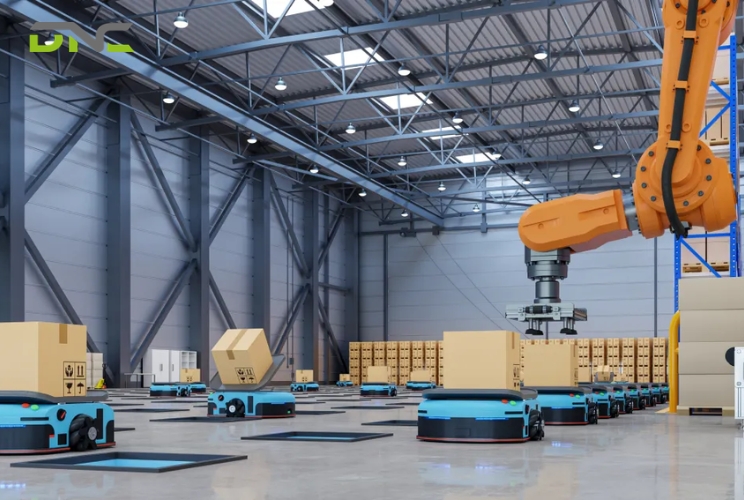
Frequently Asked Questions
What Is the Palletizer Definition in Simple Terms?
A palletizer, by definition, is a machine that takes products coming off a production or packaging line and stacks them onto pallets automatically, following a programmed pattern. It replaces the manual work of workers lifting and arranging boxes or bags at the end of a line.
How Does a Palletizer Work Step by Step?
A palletizer works step by step through a closed cycle: products arrive on a conveyor, sensors verify position and dimensions, a gripper picks each unit and places it at the correct pallet coordinate, layers build up one by one, and the full pallet exits automatically while an empty one feeds in. The cycle repeats continuously at programmed speed.
What Is the Difference Between a Palletizer and a Depalletizer?
The core difference between a palletizer and a depalletizer is directional: a palletizer stacks products onto outbound pallets for shipping. A depalletizer removes products from inbound pallets received from suppliers. Depalletizing is more complex: inbound products may have shifted in transit, requiring vision systems and wider grip tolerances that outbound palletizing does not always need.
What Is End-of-Line Palletizing?
End-of-line palletizing positions the palletizer as the last station in a production sequence, immediately before products enter storage or shipping. Each production line has its own palletizer, which limits the impact of any single machine stoppage to that one line rather than the entire facility.
Conventional vs Robotic Palletizer: Which Should You Choose?
A conventional palletizer forms complete layers mechanically before placing them on the pallet. It delivers high cycle rates for uniform products but requires mechanical adjustment for changeovers. A robotic palletizer uses a programmable arm to place each unit individually, switching between stacking patterns via software and handling varied product shapes with interchangeable grippers. For facilities with one dominant SKU at high volume, conventional wins on cycle rate. For facilities with three or more SKUs, robotic wins on flexibility.
How Long Does It Take to Get ROI on a Palletizer?
Palletizer ROI, based on industry-documented payback periods, typically falls in the 12–24 month range for operations replacing manual stacking. Higher-volume operations with multi-shift production see faster payback because labor savings accrue around the clock, not just during a single shift.
- 36 views
- 0 Comment
Recent Comments