


Introduction to Autonomous Mobile Robotics
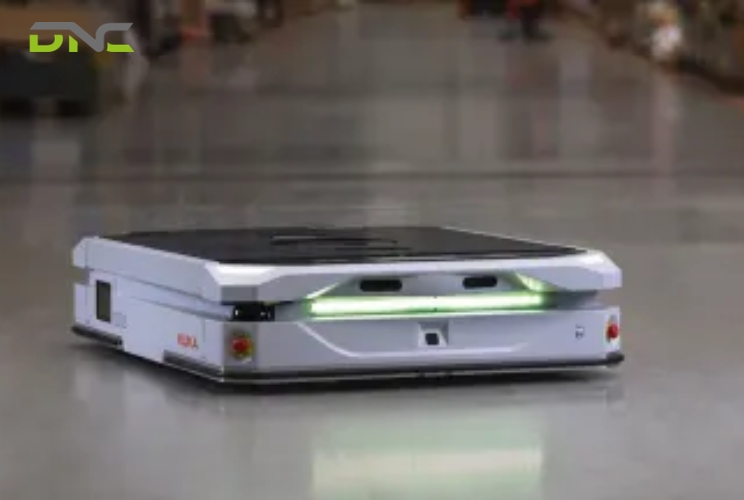
Autonomous mobile robotics — the field of engineering that creates self-navigating machines capable of moving through physical environments without human control — has moved from university research labs into mainstream manufacturing and logistics. Autonomous mobility robots now transport materials across factory floors, navigate warehouse aisles, inspect industrial equipment, and deliver goods in hospitals — performing tasks that were exclusively manual operations a decade ago. Malaysian manufacturers approaching this technology for the first time need a structured introduction that covers the fundamentals without assuming prior robotics knowledge. This guide explains what autonomous mobile robots are, how they perceive and navigate their environment, the main types available for industrial applications, and where they deliver practical value in manufacturing operations.
What Is Autonomous Mobile Robotics?
Autonomous mobile robotics is the branch of robotics focused on machines that move through their environment and perform tasks without continuous human guidance. The key word is “autonomous” — the robot makes its own navigation and task execution decisions based on sensor data, onboard computing, and programmed objectives.
An autonomous moving robot differs from a remote-controlled robot (which requires a human operator giving real-time commands) and from a pre-programmed industrial robot arm (which executes fixed motion sequences at a single workstation). Autonomous mobile robots combine three capabilities that neither remote-controlled nor fixed robots possess simultaneously:
- Self-localization — the robot knows where it is within its environment
- Path planning — the robot calculates how to reach its destination
- Obstacle avoidance — the robot detects and navigates around unexpected obstructions
These three capabilities — localization, planning, and avoidance — form the “autonomy triad” that defines autonomous mobile robotics. Every autonomous moving robot, whether it is a 50 kg warehouse picking bot or a 5,000 kg automated forklift, implements these three functions through hardware and software layers built on common engineering principles.
The commercial autonomous mobile robot industry reached approximately USD 6 billion in 2024, with projections exceeding USD 20 billion by 2030. Growth is driven by manufacturing labor shortages, rising wages, e-commerce fulfillment demands, and government Industry 4.0 initiatives — including Malaysia’s NIMP 2030 national plan.
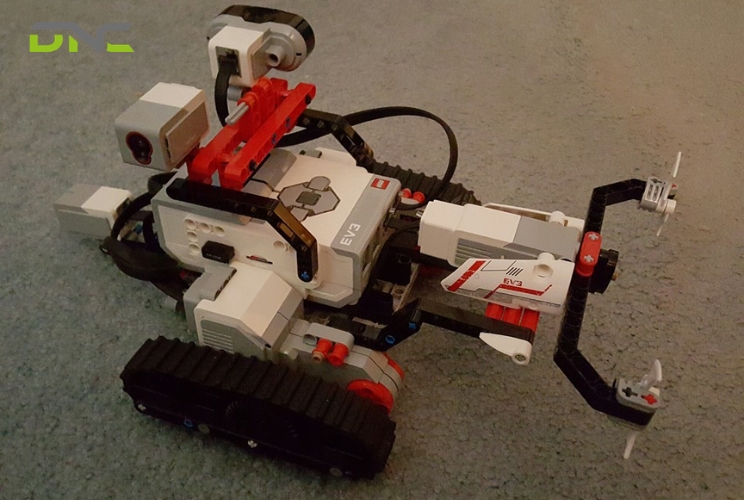
Core Concepts in Autonomous Mobile Robotics
Perception: How Robots See
Autonomous mobility robots perceive their environment through sensors that convert physical phenomena into digital data. The primary perception sensors in industrial mobile robots:
LiDAR (Light Detection and Ranging) — the dominant sensor in industrial AMRs. A LiDAR scanner emits thousands of laser pulses per second and measures the time each pulse takes to reflect back from surfaces. The result: a precise distance map of everything within 10–30 meters. 2D LiDAR produces a flat scan at a single height; 3D LiDAR produces a volumetric point cloud capturing the full three-dimensional environment.
Depth cameras — cameras that capture both color images and distance-to-surface measurements. RGB-D (color + depth) cameras like Intel RealSense or Orbbec Astra provide rich, close-range 3D perception for object recognition, pallet detection, and human identification at 0.3–10 meter range.
Ultrasonic sensors — sound-based distance sensors that detect obstacles at close range (0.02–5 meters). Ultrasonic sensors detect transparent and highly reflective surfaces that LiDAR may miss — glass walls, chrome fixtures, and water surfaces.
IMU (Inertial Measurement Unit) — a sensor package containing accelerometers and gyroscopes that measures the robot’s acceleration, rotation, and orientation. The IMU provides continuous motion data that supplements LiDAR-based localization between scan updates.
Wheel encoders — rotary sensors measuring wheel rotation, providing odometry data (distance traveled, heading change). Encoders are the simplest and most continuous position input — but accumulate errors over distance due to wheel slip and floor variations.
Localization: How Robots Know Where They Are
Localization answers the fundamental question every autonomous moving robot must solve: “Where am I?” The most important localization method in modern autonomous mobile robotics is SLAM — Simultaneous Localization and Mapping.
SLAM works in two phases. During the mapping phase, an operator drives the robot through the facility while the SLAM algorithm builds a 2D or 3D map from LiDAR scan data — recording walls, columns, machinery, racking, and permanent fixtures as reference features.
During the operation phase, the robot continuously compares live sensor data against the stored map to determine its exact position and heading. The comparison process — called scan matching — aligns the current LiDAR scan with the stored map, calculating any offset between where the robot thinks it is (based on odometry) and where it actually is (based on map matching). This correction runs multiple times per second, keeping the robot’s position estimate accurate to ±10–30 mm.
Alternative localization methods include:
- Laser triangulation — measuring distances to reflective targets mounted on walls (used in laser-guided AGVs)
- Magnetic sensing — following magnetic tape or detecting embedded magnets in the floor
- QR code/barcode — reading floor-mounted codes at known positions
- GPS/RTK — satellite positioning for outdoor robots (insufficient accuracy for indoor use)
Path Planning: How Robots Decide Where to Go
Path planning is the algorithmic process of calculating a route from the robot’s current position to its destination. Autonomous mobile robots use two planning layers:
Global planner — calculates the overall route through the facility using the stored map. Algorithms like A* (A-star) or Dijkstra’s algorithm find the shortest or fastest path considering corridors, open spaces, and permanent obstacles. The global plan provides the high-level route.
Local planner — handles real-time navigation adjustments within the global route. When a person, forklift, or new obstacle appears in the planned path, the local planner recalculates an immediate trajectory around the obstruction. Algorithms like DWA (Dynamic Window Approach) or TEB (Timed Elastic Band) compute safe, smooth trajectories that avoid the obstacle while progressing toward the destination.
This two-layer architecture enables autonomous moving robots to follow efficient overall routes while responding instantly to unexpected obstacles — the fundamental behavior that makes autonomy practical in busy, dynamic manufacturing environments.
Motion Control: How Robots Move
Motion control translates path planning commands into physical wheel movement. The motion controller runs a closed-loop feedback cycle:
- Receive desired velocity (forward speed + rotation rate) from path planner
- Calculate required wheel speeds (using inverse kinematics for the specific drive type)
- Send speed commands to motor controllers
- Read actual wheel speeds from encoders
- Calculate error (commanded vs. actual)
- Apply PID correction
- Repeat hundreds of times per second
This continuous feedback loop maintains smooth, accurate motion despite load variations, floor surface changes, and slope transitions.
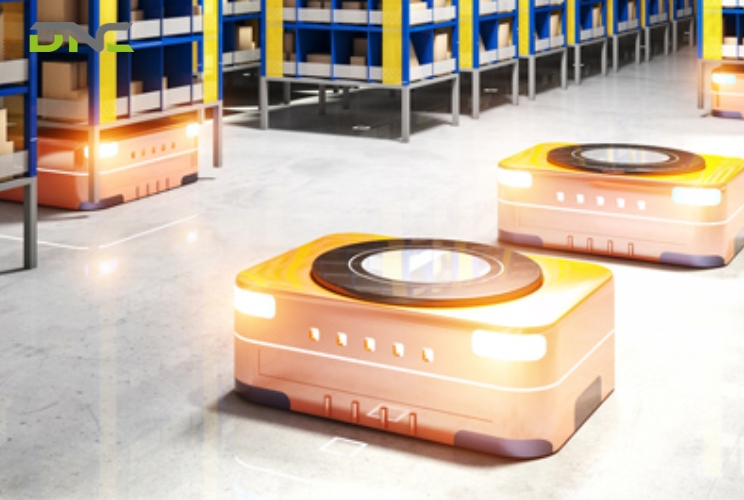
Types of Autonomous Mobile Robots in Manufacturing
AGV (Automatic Guided Vehicle)
AGVs — the earliest form of industrial autonomous mobility — follow fixed paths defined by physical infrastructure (magnetic tape, embedded wires, laser reflectors). While less “autonomous” than SLAM-based AMRs (they follow rather than decide), modern AGVs incorporate safety sensors, fleet management, and PLC-based decision logic that qualify them as autonomous within their defined operational domain.
Key characteristics: Fixed routes, physical infrastructure required, high positional accuracy (±1–5 mm), lower per-unit cost, proven in high-volume fixed-route transport.
AMR (Autonomous Mobile Robot)
AMRs navigate dynamically using SLAM and onboard intelligence — the full expression of autonomous mobile robotics principles. They build maps, plan routes, avoid obstacles, and adapt to environment changes without physical infrastructure.
Key characteristics: Dynamic routes, no infrastructure required, moderate accuracy (±10–30 mm), higher per-unit cost, rapid deployment, flexible operation.
Mobile Manipulator
Mobile manipulators combine an AMR or AGV platform with a robotic arm — creating an autonomous moving robot that both travels and performs physical tasks. These represent the most advanced commercially available autonomous mobile robotics systems.
Key characteristics: Mobility + manipulation, multi-station operation, highest complexity and cost, emerging market with rapid growth.
Autonomous Forklift
Autonomous forklifts apply AMR or AGV technology to forklift operations — lifting, transporting, and stacking pallets without human operators.
Key characteristics: 3D pallet detection, high payload (1,000–3,000 kg), replaces manual forklift operators, highest ROI in pallet-intensive warehouses.
The Autonomous Mobile Robotics Technology Stack
Understanding the complete technology stack helps manufacturers evaluate mobile robot solutions with informed perspective:
| Layer | Function | Technology |
| **Perception** | Sense the environment | LiDAR, cameras, ultrasonic, IMU |
| **Localization** | Determine position | SLAM, laser triangulation, magnetic |
| **Mapping** | Represent the environment | 2D grid maps, 3D point clouds |
| **Path planning** | Calculate routes | A*, Dijkstra, DWA, TEB algorithms |
| **Motion control** | Execute movement | PID controllers, motor drives |
| **Safety** | Protect humans and property | Safety LiDAR, bumpers, e-stop |
| **Fleet management** | Coordinate multiple robots | Traffic control, task assignment |
| **Integration** | Connect to factory systems | WMS, MES, PLC, ERP APIs |
Each layer contributes to the overall system capability. Weaknesses in any layer — poor LiDAR quality, slow SLAM processing, unreliable safety sensors — degrade the entire system’s performance and safety.
Why Autonomous Mobile Robotics Matters for Malaysian Manufacturing
Labor Market Reality
Malaysia’s manufacturing sector faces structural labor shortages that automation alone can address at scale. Demographic shifts, competition from service-sector wages, and post-pandemic workforce patterns have created persistent gaps in manufacturing labor supply — particularly for repetitive material handling roles. Autonomous mobile robots fill these gaps with scalable, consistent automation that does not depend on labor market conditions.
NIMP 2030 and Industry 4.0
Malaysia’s National Industrial Master Plan 2030 explicitly targets manufacturing automation as a pillar of national competitiveness. MIDA offers tax incentives (Pioneer Status, Investment Tax Allowance) and grants for companies investing in Industry 4.0 technologies — including autonomous mobile robots. These incentives reduce the effective cost of mobile robot investment by 15–30% for qualifying manufacturers.
Competitive Positioning
ASEAN manufacturing competition — from Thailand, Vietnam, and Indonesia — pressures Malaysian manufacturers to improve productivity per worker. Autonomous mobile robotics delivers measurable productivity gains: 200–300% picking productivity improvement, 60–80% lower material transport operating costs, and 24/7 operation capability that extends productive hours without proportional labor cost increases.
Technology Accessibility
Autonomous mobile robotics has transitioned from specialized, custom-engineered systems to standardized, commercially available products. Entry-level AMRs start under USD 50,000 total project cost. Deployment timelines have compressed from months to weeks. Fleet management software provides intuitive interfaces that operations managers — not robotics PhD graduates — can operate. The technology is ready for mainstream Malaysian manufacturing adoption.
Getting Started with Autonomous Mobile Robotics
Step 1: Identify the Opportunity
Map your facility’s material handling operations. Identify repetitive transport tasks — the same materials moving along the same routes at predictable intervals. High-frequency, low-variability routes deliver the fastest ROI from autonomous mobile robot automation.
Step 2: Understand Your Requirements
Define the parameters: payload weight, transport distance, frequency, environment conditions (floor type, aisle width, temperature, cleanliness), and integration requirements (WMS, MES, PLC connections). These specifications narrow the field to appropriate robot types and manufacturers.
Step 3: Evaluate Technology Options
Compare AGV vs. AMR approaches based on your route stability, layout change frequency, and accuracy requirements. Evaluate specific platforms from manufacturers whose products match your specifications. Request demonstrations or pilot deployments in your actual facility.
Step 4: Engage a System Integrator
Mobile robot deployment success depends heavily on system integration — connecting the robots to your existing factory control systems, WMS, and operational workflows. An experienced local system integrator provides application engineering, custom integration, commissioning, and ongoing support that manufacturer direct channels typically do not cover.
Step 5: Start Small, Scale Fast
Deploy a pilot fleet (2–5 robots) on your highest-ROI route. Measure performance against manual baseline. Use pilot data to validate ROI projections and inform full fleet investment decisions. Most successful autonomous mobile robotics programs start with a focused pilot and expand based on proven results.
DNC Automation guides Malaysian manufacturers through every step of autonomous mobile robot adoption — from opportunity identification and technology evaluation through pilot deployment, full fleet integration, and ongoing optimization.
Frequently Asked Questions About Autonomous Mobile Robotics
What Is an Autonomous Mobile Robot?
An autonomous mobile robot (AMR) is a self-navigating machine that moves through its environment using onboard sensors, computing, and algorithms — without fixed paths or continuous human guidance. The robot perceives its surroundings (LiDAR, cameras), knows its position (SLAM localization), plans routes (path planning algorithms), avoids obstacles (dynamic replanning), and executes material transport or other tasks assigned by fleet management software.
How Is Autonomous Mobile Robotics Different from Traditional Automation?
Traditional automation (conveyors, fixed robots) operates at fixed positions along fixed paths. Autonomous mobile robotics adds spatial freedom — robots move through the facility, adapt to environment changes, and serve multiple locations. This mobility transforms automation from point-specific to facility-wide, enabling flexible material handling that adapts to changing production requirements.
Do I Need Programming Knowledge to Operate Mobile Robots?
Modern industrial AMRs are designed for operation by manufacturing and warehouse personnel — not robotics engineers. Fleet management software provides web-based interfaces for creating missions, defining routes, monitoring status, and managing the fleet. Initial mapping and configuration require system integrator support; daily operation requires only standard interface familiarity.
How Safe Are Autonomous Moving Robots?
Autonomous mobile robots comply with ISO 3691-4 for driverless industrial vehicles. Safety-rated LiDAR creates protective zones; the robot decelerates and stops when humans enter these zones. Additional safety measures include mechanical bumpers, visual warnings, acoustic alerts, and emergency stop buttons. In properly configured installations, autonomous mobile robots are significantly safer than manual material handling — eliminating the human-error-driven accidents that account for the majority of material handling injuries.
What Is the Minimum Investment for Autonomous Mobile Robotics?
Entry-level autonomous mobile robot deployments start under USD 50,000 total project cost for a single AMR with standard fleet software and WMS integration. A mid-range deployment (3–5 AMRs with full fleet management and MES integration) ranges from USD 150,000–500,000. MIDA automation incentives can reduce the effective investment by 15–30% for qualifying Malaysian manufacturers.
How Long Does It Take to Deploy Autonomous Mobile Robots?
AMR deployment timelines range from 1–3 weeks for small fleets (2–5 robots with standard configuration) to 4–12 weeks for larger deployments with complex integration requirements. SLAM mapping takes 1–2 days; fleet software configuration and integration testing consume the majority of deployment time. AGV deployments take longer (4–16 weeks) due to physical infrastructure installation.
Can Autonomous Mobile Robots Work 24/7?
Yes — autonomous mobile robots with opportunity charging (quick charges during idle moments between tasks) operate near-continuously. Lithium-ion batteries provide 8–16 hours per charge cycle; fleet management schedules charging proactively to maintain fleet availability. A fleet of 5 AMRs with staggered charging can maintain continuous 24/7 operation with near-zero downtime.
How Do I Get Started?
Begin with a material flow audit of your facility — document transport routes, frequencies, payloads, and current handling methods. Identify the highest-volume, most repetitive routes for initial automation. Contact a local system integrator experienced in autonomous mobile robotics for a facility assessment. DNC Automation provides free pre-sales consultations including material flow analysis, technology evaluation, system design, and ROI projection for Malaysian manufacturing facilities.
Conclusion
Autonomous mobile robotics has matured from academic research into practical, commercially available manufacturing technology. The fundamental principles — perception, localization, path planning, and motion control — enable robots that navigate factory floors independently, transport materials without human operators, and adapt to changing environments through software rather than physical infrastructure. Malaysian manufacturers can access this technology through standardized AMR platforms, experienced local system integrators, and government incentive programs that reduce the investment barrier.
DNC Automation introduces Malaysian manufacturers to autonomous mobile robotics with expert guidance — from technology education and opportunity assessment through system design, deployment, and ongoing support. Our 35+ engineers deliver complete mobile robot solutions backed by 20+ years of factory automation experience.
- 98 views
- 0 Comment
Recent Comments