


Benefits of Custom Automation for an End-of-Line Packaging Line
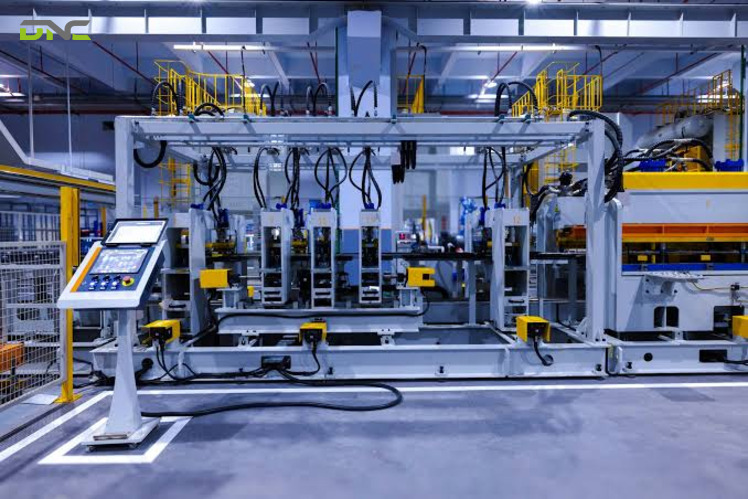
The benefits of custom automation on an end-of-line packaging line rarely come from the machine itself — a custom case packer, case sealer, or palletizer usually performs the same core motion as a standard one. What custom engineering actually buys is a machine specified against the stations on either side of it: the case erector that feeds it, the checkweigher that inspects what it produces, the palletizer that receives its output. A standard, catalog-sized machine is built to do its own job correctly. A custom-specified one is built to do its job correctly at the exact interface a specific line presents — case style, pack pattern, rate, and whatever erecting, sealing, filling, or weighing already exists upstream and downstream. That distinction, not raw automation capability, is where the real payback sits.
What “Custom” Actually Means on a Packaging Line
What “custom” actually means on an end-of-line packaging line is a range, not one fixed thing. At the narrow end, it can mean a standard case packer or case sealer frame with a modified tool change, an adjusted conveyor height, or a non-standard case-size range added to an otherwise catalog machine. At the wide end, it means a bespoke station engineered from scratch for a product that no catalog machine handles — an irregular shape, a fragile item, a pack pattern with no off-the-shelf equivalent. Both ends of that range get called “custom automation,” and the difference matters for cost and lead time, but the underlying decision is the same one: does the line’s product, case style, or rate fall inside what a standard machine was designed to cover, or outside it.
Competitor material on this keyword — system integrators and mechanical automation shops writing about manufacturing automation broadly — frames the standard-versus-custom choice as a machine-level one: does this station perform its function well, efficiently, and safely. That framing is accurate as far as it goes, but on a real end-of-line packaging line it skips the layer where custom automation earns its cost back, covered next.
What “Custom” Actually Means on a Packaging Line
The Interface Is the Benefit, Not the Machine
The interface between machines is the benefit custom automation actually delivers on a packaging line — not the machine considered on its own.
None of the competitor pages reviewed for this keyword — general manufacturing and CNC automation integrators, not packaging-line specialists — turn the custom-automation decision into a question about the joints between machines. Every one of them evaluates a custom machine against its own function: does it improve quality, reduce risk, cut labor. What that framing misses on a packaging line is that most of the actual failure points DNC’s own line-integration work has documented sit at the handoff between two stations, not inside either one.
Three concrete examples from across DNC’s own end-of-line packaging line research make the pattern specific rather than abstract. A case erector’s squareness and dimension tolerance is a mechanical precondition for the downstream sealer’s flap-folding and taping mechanism — an out-of-square case from the erector can show up as a flap gap or a skewed tape line at the next station, even though that station performed exactly as designed. Further downstream, the weighing inspection station only reads gross weight, so the tare of the sealed case — tape, flaps, any label — becomes the accuracy floor for judging the product’s net content, regardless of how precise its load cell is. And earlier in the sequence, whether a case packer’s loading axis is vertical (top-load) or horizontal (side or end-load) tends to decide whether that packer also erects and seals the case itself in one frame, or expects a standalone erector and sealer already installed on the line.
None of those three facts is a property of a single machine. Each one is a property of the handoff between two machines — and each one only becomes visible when a machine is specified against the line it will actually sit on, not against a generic product range. That is the benefit a standard, catalog-sized machine structurally cannot deliver: it was sized and built before anyone on a specific factory floor knew what would sit next to it.
The Interface Is the Benefit, Not the Machine
Where a Standard Machine Breaks Down
A standard machine breaks down, in the specification sense rather than the mechanical one, in three situations common on Malaysian end-of-line packaging lines. That is despite being built to a generic product envelope — case sizes, rate band, pack pattern — that covers most lines most of the time.
The first is multi-SKU or seasonal production, where pack pattern, case size, or product orientation changes often enough that a machine sized for one configuration turns every changeover into a manual adjustment or a full retooling. The second is a non-standard case style, product footprint, or fragile product — anything a catalog machine’s tooling wasn’t drawn around. The third, and the one competitor material on this keyword never names, is a line where erecting, sealing, filling, or weighing already exists as separate installed stations: a new machine bought without checking that inventory either duplicates a station the line already owns, or leaves a gap between two stations that neither one was built to bridge.
Where a Standard Machine Breaks Down
Summary So Far
The summary so far: custom automation on an end-of-line packaging line pays back at the interface between stations — erector-to-sealer tolerance, sealer-to-checkweigher tare, packer-to-palletizer orientation — not inside any single machine, which is the layer competitor material on this keyword consistently skips. Standard machines break down against multi-SKU variability, non-standard product, or a line where erecting, sealing, or weighing already exists and a new station has to fit the gap exactly.
Custom vs Standard Automation: Side-by-Side
Custom versus standard automation, laid out row by row below, carries the interface argument from the two sections above into a direct comparison against what a catalog machine accounts for and what it leaves out.
| Standard (Catalog) Automation | Custom-Specified Automation | |
| Built against | A generic product/case range | This line’s specific product, case style, rate |
| Interface awareness | None — sized before the line’s other stations are known | Specified against the station immediately before and after it |
| Multi-SKU / seasonal change | Manual adjustment or retooling per change | Tooling and control logic built for the known SKU range |
| Lead time | Shorter — off catalog | Longer — engineered to spec |
| Upfront cost | Lower | Higher, offset by avoiding downstream interface failures |
| Best fit | Single SKU, stable rate, generic case/bottle format | Multi-SKU lines, non-standard product, or a gap between existing stations |
Reading the interface row is the point of the table: it is the one row a generic automation catalog cannot fill in, because it depends on machines that aren’t for sale on that catalog — the erector, sealer, or checkweigher already sitting on a specific line.
Custom vs Standard Automation: Side-by-Side
Where Standard Still Wins
Standard automation still wins whenever custom engineering is not the default-correct answer, and treating it as the default misreads the trade-off as much as ignoring it does. A line running one SKU at a stable rate, in a generic case or bottle format that a catalog machine’s tooling already covers, gets nothing from custom specification except a longer lead time and a higher bill. The interface problem custom automation solves only exists when there is an actual interface to solve — a non-standard product, a multi-SKU changeover pattern, or an existing erector, sealer, filler, or checkweigher that a new machine has to integrate with precisely. Vendor pages reviewed for this keyword make the same point from the other direction, describing standard automation as the better fit for stable, single-product runs where a catalog machine’s tooling already matches the job.
Deciding Whether a Line Needs Custom Engineering
Deciding starts with an inventory, not a machine catalog: how many SKUs and pack patterns run through the line, and how often do they change. A single-SKU, stable-rate line pointed at a generic case or bottle format is a standard-automation candidate by default: the interface problem this comparison has been describing doesn’t exist yet.
The second question is what erecting, sealing, filling, and weighing already exist on the line as separate, installed stations. A new machine specified without that inventory risks either duplicating a station the line already owns or leaving a handoff gap neither existing station was built to cover — the same interface failure pattern behind the erector-sealer tolerance link and the sealer-checkweigher tare floor described above.
Payback horizon closes the decision. On Malaysian material handling and warehouse automation projects, DNC’s own project data across 1,000+ installations puts automation payback at roughly 2 to 4 years for mid-to-large manufacturers, driven by labor cost reduction, throughput gains, and error elimination — a range that applies to the automation decision generally, not to custom specification specifically, so it should be treated as a starting reference for the payback conversation rather than a guarantee for any one custom build. A related industry reference point, cited for hand-to-machine automation thresholds generally, places the switch from manual to machine-driven case handling at roughly three cases per minute, with higher-throughput machines specified well beyond that — useful as a rate check against a line’s actual output, not as a rule specific to custom versus standard.
DNC’s engineers walk through this same sequence on Malaysian end-of-line packaging lines: confirm SKU and pack pattern variability first, then map what erecting, sealing, filling, or weighing stations already exist, then match a custom or standard specification to whatever gap remains — never assuming custom is the safer default before checking whether an interface problem actually exists.
Deciding Whether a Line Needs Custom Engineering
Frequently Asked Questions
The frequently asked questions below cover what comes up most often when a Malaysian manufacturing line is weighing custom automation against a standard machine.
Is custom automation always more expensive than standard automation?
Upfront, yes — a custom-specified case packer, sealer, or palletizer typically costs more and takes longer to deliver than a catalog machine, since it is engineered against a specific line rather than pulled from stock. The cost comparison changes once downstream interface failures are counted: a standard machine that doesn’t account for an existing erector’s tolerance or a checkweigher’s tare floor can cost more in retrofits and rejects than the custom premium would have.
When does a standard, off-the-shelf machine make more sense than custom automation?
When a line runs a single SKU at a stable rate in a generic case or bottle format the catalog machine’s tooling already covers. Custom engineering solves an interface problem between machines; if that interface problem doesn’t exist yet, standard automation is the faster, cheaper choice.
Does custom automation always mean building a machine from scratch?
No. Custom scope on a packaging line ranges from a standard frame with a modified tool change or case-size range up to a fully bespoke station built for a product no catalog machine handles. Both ends get called “custom,” and the specification conversation should start by identifying which end of that range a line actually needs.
How long does custom automation on a packaging line take to pay back?
DNC’s project data across Malaysian material handling and warehouse automation installations puts payback at roughly 2 to 4 years for mid-to-large manufacturers. That figure describes automation investment generally rather than custom specification specifically, so it is a reference point for the payback conversation, not a fixed guarantee for any one custom build.
Specifying the Interface, Not Just the Machine
Specifying the interface between machines, not evaluating one machine’s function in isolation, is what actually determines whether custom automation pays off on an end-of-line packaging line. Erector-to-sealer tolerance, sealer-to-checkweigher tare, and packer-to-palletizer orientation are the concrete, already-documented examples of that interface problem — and none of them show up when a machine is judged only against its own catalog specification, which is exactly how the competitor material reviewed for this keyword frames the decision.
A short checklist follows from the two comparisons above: confirm SKU count and pack pattern variability before assuming either standard or custom is the default; map what erecting, sealing, filling, and weighing stations already exist on the line before specifying a new one; and treat published payback ranges and rate thresholds as starting references to check against a line’s own numbers, not guarantees. For a Malaysian line weighing this decision against its own material handling setup, and where a new station would sit against existing robotic palletizing systems or packaging equipment, the next step is to have DNC’s engineers review the specification against what the line already has installed before pricing a custom build.
Specifying the Interface, Not Just the Machine
- 11 views
- 0 Comment
Recent Comments