


Bag Palletizing Best Practices: What Actually Holds a Load
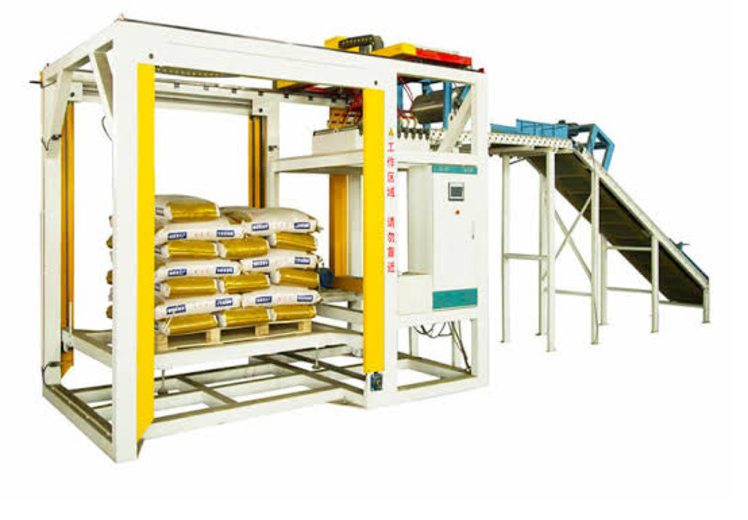
Bag palletizing best practices start from one fact every rigid-case discussion skips: a filled bag has no shape of its own until something presses one into it. A carton or crate arrives at the robot already square, so palletizing a case is a placement problem — where does this rigid object go next. A bag arrives soft, and stacking it without active compression produces a pile that leans and settles rather than a load that holds. Concetti’s own product range names this split directly — high-level and low-level bag palletizers, robotic and conventional and hybrid systems — but no source in this comparison explains why a plant picks one architecture over another. TopTier’s cement-bag guidance adds the environmental half: dust and humidity degrade the paper itself before the pattern ever gets tested in transit. DNC Automation supplies the robotic palletizing cell, conveyor, and load cell for Malaysian lines running bagged product, and the practices below follow from the one property every bag shares and every case does not: it has to be given a shape, not just a position.
Bag Palletizing Manufactures a Load’s Geometry — Case Palletizing Just Preserves It
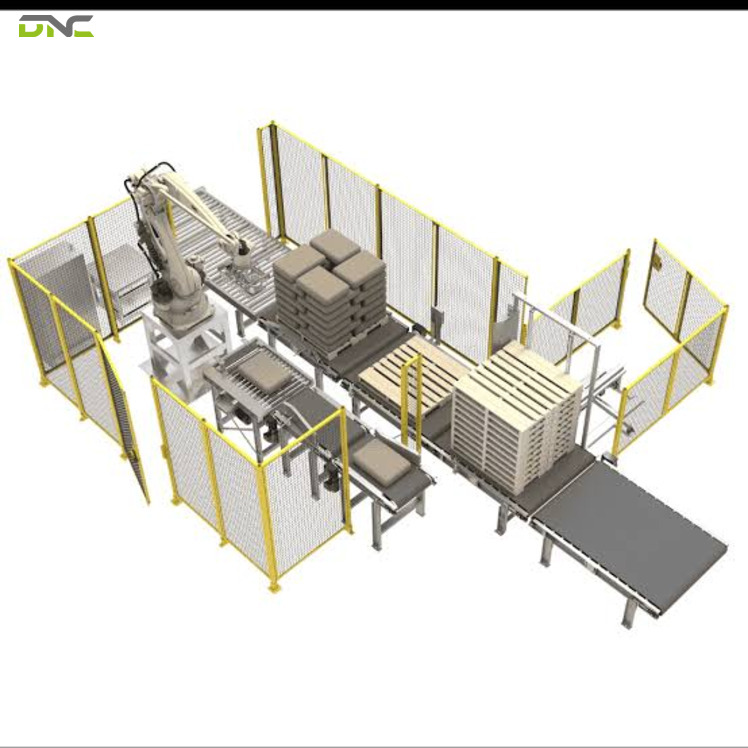
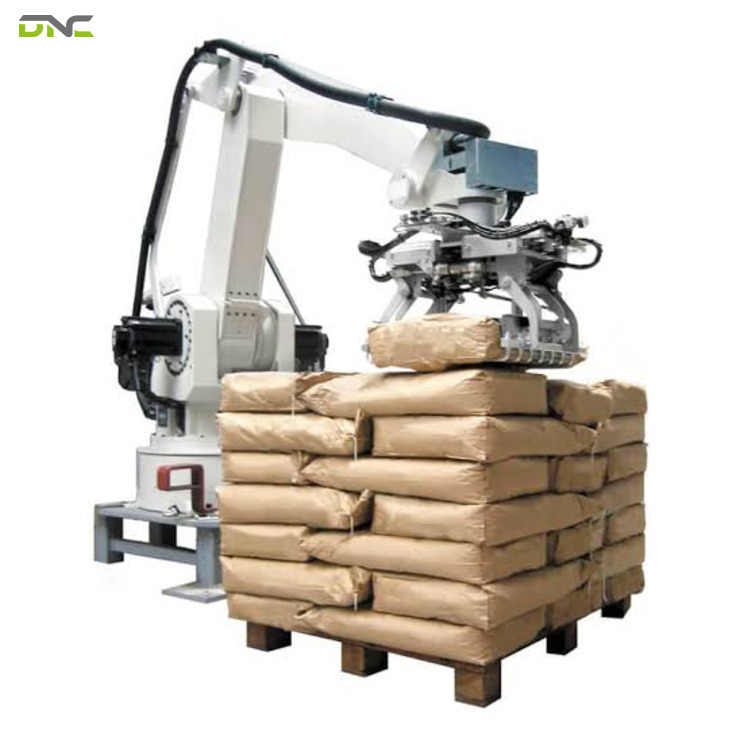
Bag palletizing manufactures the load’s geometry; case palletizing only preserves geometry the box already has. A rigid case keeps its footprint under its own strength, so a case palletizer’s job is placement accuracy: put the box at the right coordinate and the box does the rest. A bag has no such strength — its footprint is whatever the fill material and the packaging film allow it to be at the moment it lands, and that shape changes again as product inside it settles under the weight of every bag stacked on top. Votech states the mechanism plainly in a single FAQ line that the rest of this SERP never expands into a rule: choose a machine that “presses bags together overlappingly and firmly,” because an unpressed bag stack shifts or topples regardless of how accurately each bag was placed. Pressing is not a finishing touch on top of good placement — for a bag, pressing is what placement accuracy is for.
The consequence for line design is that a bag-handling robotic cell needs one more mechanical stage than a case palletizer: a compression or press-plate cycle after each layer, before the next layer lands. TopTier’s cement guidance confirms the same requirement from the opposite direction — bags “shift easily during transport because of their weight and flexible packaging,” and the fix it names is an interlocking pattern combined with controlled compression, not pattern alone. A pattern spreads weight across the pallet footprint; compression is what stops that spread pattern from re-collapsing into a pile once the bags above it start pressing down.
Bag Palletizing Manufactures a Load’s Geometry — Case Palletizing Just Preserves Itc
Overlap Pattern and Press Force Are Two Separate Specifications, Not One
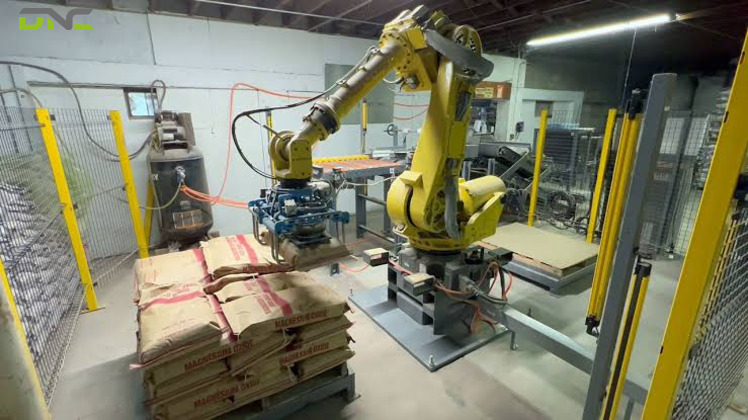
Bag palletizing literature routinely names “interlocking pattern” as if it were the whole answer, which hides that pattern and press force solve two different failure modes. Pattern — brick-bond overlap between bags in adjacent layers — resists a load sliding sideways, the same geometric principle that keeps a rigid-case pallet from shearing under transport vibration. Press force resists a load slumping vertically, which a sideways-resistant pattern does nothing to prevent: a perfectly interlocked stack of unpressed bags still settles downward as the paper or film relaxes under its own stacked weight, opening gaps the pattern was supposed to close.
Zero of the five bag-specific sources state the two as separate specification lines; each treats “pattern” as if it already implies adequate compression. A plant that specifies pattern software and skips the press-plate mechanism has bought half the stability system. Votech’s own qualifier — an “integrated pressing plate to flatten the layers evenly” — names the missing half as distinct equipment, not a pattern-software setting.
Overlap Pattern and Press Force Are Two Separate Specifications, Not One
High-Level and Low-Level Bag Palletizers Solve a Drop-Height Problem, Not a Footprint Problem
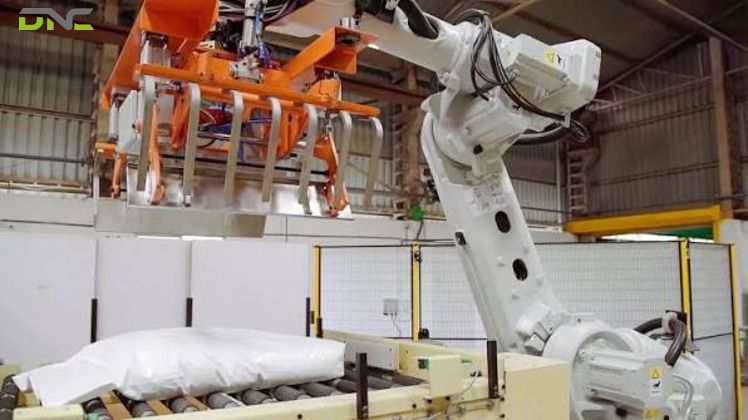
Concetti’s product taxonomy names high-level and low-level palletizers among its bag-palletizing system types. None of the five bag-specific sources explains what decides between the two. The distinction that survives across the industry’s own naming is drop height at the point the bag joins the stack. A high-level palletizer builds the layer at an elevated position and lowers the completed layer onto the growing pallet, so each bag’s final drop to its resting surface is short and constant regardless of how tall the pallet has grown. A low-level palletizer forms the layer near floor height and lifts the pallet itself upward between layers, which means the bag’s placement point never changes even as the stack height changes underneath it.
The choice matters for product that cannot absorb repeated impact without settling unevenly, or for powders, without compacting harder than the fill line produced. A low-level architecture removes the variable drop height entirely, at the cost of a pit or lifting platform the floor layout has to accommodate. Neither bag-specific source naming the split ties it to a product property — the reasoning above is this site’s own inference from the mechanical difference itself, not a claim sourced to any competitor.
High-Level and Low-Level Bag Palletizers Solve a Drop-Height Problem
Dust and Humidity Attack the Package Before the Pattern Is Tested
Dust and humidity attack the package on two separate paths, and TopTier’s cement-bag guidance is the only source in this comparison that treats the palletizing environment as a packaging-integrity variable rather than an equipment-maintenance variable alone. Dust accumulation degrades the machine first — it interferes with sensors, conveyor tracking, and robotic movement, a maintenance and uptime problem solved by routine cleaning and inspection. Excess moisture instead weakens paper packaging directly, increasing bag deformation during stacking before the load ever reaches a truck. The first failure stops the palletizer; the second failure produces a bag that fails the pattern and the press force were both specified to prevent, because the material itself lost the strength those specifications assumed it had.
The practical separation this creates: dust control is an equipment-siting and maintenance-schedule decision, while humidity control is a storage-condition decision that has to be enforced upstream of the palletizing cell, not compensated for at it. A press-plate mechanism calibrated for dry paper will over-compress or crush a bag whose paper has already absorbed ambient moisture, which is a second-order reason the two variables cannot be managed as one line item under “environmental controls.”
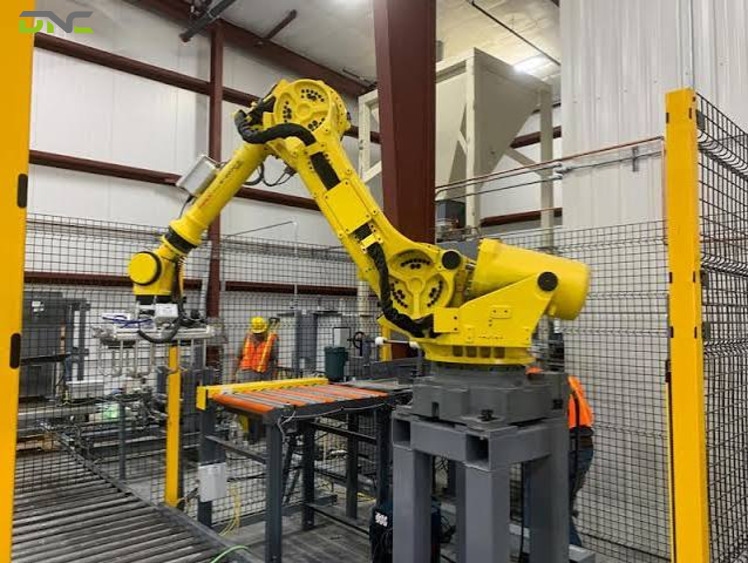
Choosing Between Conventional, Robotic, and Hybrid Architecture Follows From Changeover, Not Speed Alone
Concetti names three architectures — conventional, robotic, and hybrid — as a genuine decision, but every bag-specific source frames it as a speed trade and skips what actually drives the flexibility requirement: how often the bag format changes. A facility processing 25 kg bags today may need other formats as demand shifts, and the interface for reprogramming stacking patterns is what decides how expensive that switch becomes, not the top-line throughput figure.
A conventional mechanical palletizer reaches its highest volume on a single bag size and pattern because its pattern is built into fixed hardware — sweeps, layer formers, or push-plates sized to one footprint. A robotic cell reprograms the same physical hardware for a new bag size through software, which is the source of its flexibility, but that flexibility is bounded by end-of-arm tooling: a gripper sized and configured for one bag range does not automatically extend to a materially different size or weight, a constraint this site has established for case palletizing end-of-arm tooling and that applies without contradiction to bag-handling tooling as well. A plant running one bag size at high volume gains nothing from robotic flexibility it will never use; a plant running several bag formats through the same line pays for that flexibility once, in the robotic cell, rather than repeatedly, in mechanical retooling.
Choosing Between Conventional, Robotic, and Hybrid Architecture
Summary: What a Bag Line Specification Has to Cover That a Case Specification Does Not
A bag palletizing specification carries two requirements a rigid-case specification does not need to state at all: an active compression stage after every layer, sized against the bag’s own strength rather than against the pattern alone, and a drop-height architecture — high-level or low-level — chosen against product fragility rather than against floor footprint. Interlocking pattern still matters, but it answers sideways stability only; it does not answer the vertical settling that an unpressed stack of flexible packaging produces on its own. Environmental control splits the same way pattern and press force do: dust protects the equipment, humidity protects the package, and treating both as one line item under “housekeeping” misses that only one of them changes what the bag itself is capable of holding once it is on the pallet.
Sizing the Line: Capacity Margin and Changeover Time Are the Two Numbers That Matter
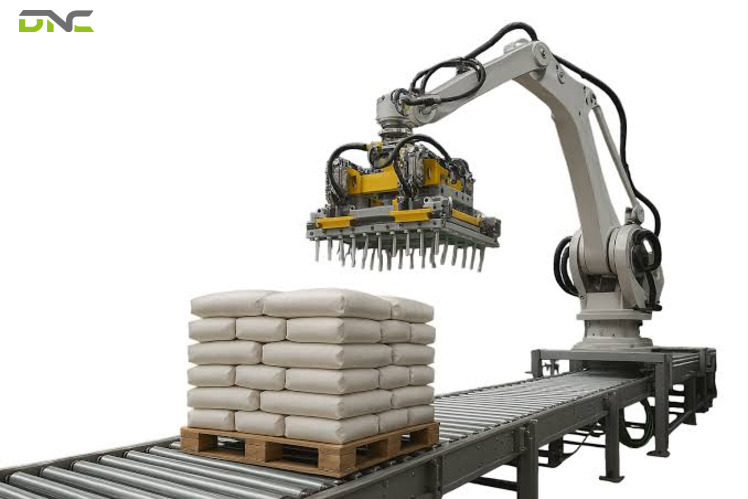
Votech’s FAQ answers the capacity question with a specific rule that the rest of this comparison leaves unstated: size the palletizer to the maximum output of the upstream filling machine, then add a 20% margin so the palletizer never becomes the line’s bottleneck. That rule only works if the plant has already measured its own peak filling rate, including seasonal or shift-pattern peaks, rather than an average — a palletizer sized to average throughput runs at its rated capacity during every peak period, which is exactly when a jam or a misfeed costs the most downstream time.
Changeover time is the second number, and it is where the architecture choice from the section above becomes a line-rate decision rather than a capital-cost decision. A robotic cell’s software-defined pattern change happens in the time it takes an operator to select a new product profile; a conventional mechanical palletizer’s changeover depends on how much physical retooling — guide rails, push-plate spacing, layer-former dimensions — the new bag size requires. A plant that changes bag format multiple times per shift pays the changeover cost that many times per shift, which is why the flexibility premium on a robotic or hybrid cell is recovered fastest on exactly the production pattern a single-format conventional line was never built to run.
| Decision | Governs | What gets it wrong |
| Overlap pattern | Sideways/shear stability | Assumes pattern alone stops vertical settling |
| Press force / compression plate | Vertical settling, load height consistency | Treated as a software setting instead of a mechanical stage |
| High-level vs low-level architecture | Drop height at bag placement | Chosen on floor footprint alone, ignoring product fragility |
| Dust control | Equipment uptime (sensors, conveyor tracking) | Confused with humidity control as one “environmental” line item |
| Humidity control | Paper/film strength before transit | Assumed covered by the same housekeeping schedule as dust |
| Robotic vs conventional vs hybrid | Changeover cost per bag-format switch | Framed as a speed trade rather than a changeover-frequency decision |
Capacity Margin and Changeover Time Are the Two Numbers That Matter
Where a Load Cell Fits on a Bagged-Product Line
Nothing in the five bag-specific sources examined names a scale, load cell, or in-motion weighing station anywhere on the bag palletizing cell itself — the same gap this site has documented for case and mixed-case robotic palletizing software, which treats case weight as a catalog value rather than a measured one. On a bagged line the same gap carries a different consequence: a bag’s fill weight is set upstream at the bagging or valve-filling station, and nothing in the palletizing cell verifies that the bag arriving at the robot actually holds the declared weight before it becomes part of a pressed, interlocked stack. A load cell and indicator positioned on the infeed conveyor ahead of the cell catches an underfilled or overfilled bag before it is compressed into a pattern that assumes every bag in the layer weighs the same — a mixed-weight layer is exactly the condition an interlocking pattern was never designed to distribute evenly.
Frequently Asked Questions
These frequently asked questions address bag palletizing best practices directly.
Why do bags need compression when cases do not?
A rigid case holds its own footprint under its own material strength, so placing it accurately is the whole job. A bag has no fixed shape — its footprint is set by the fill material and the packaging film, and it settles further under the weight of every layer stacked above it. Compression from a press plate is what stops that settling from reopening the gaps an interlocking pattern was built to close.
What is the difference between a high-level and a low-level bag palletizer?
Drop height at the point each bag joins the stack. A high-level machine forms the layer at an elevated position and lowers it onto the growing pallet, keeping the drop short and constant. A low-level machine forms the layer near floor height and lifts the pallet upward between layers instead, which removes drop-height variation entirely at the cost of a pit or lifting platform in the floor layout.
Does dust affect the bags or just the equipment?
Both, but differently. Dust interferes with sensors, conveyor tracking, and robotic movement — a maintenance and uptime problem. Humidity is the variable that weakens the paper or film itself, increasing bag deformation before the load ever reaches a truck. The two require separate controls, not one housekeeping schedule.
Should a plant with one bag format choose a robotic bag palletizer?
Not on flexibility grounds alone. A conventional mechanical palletizer reaches its highest volume on a single bag size because its pattern is built into fixed hardware, and a plant running one format gains no changeover benefit from a robotic cell’s software-defined flexibility. Robotic and hybrid architectures earn back their premium fastest on lines that switch bag formats multiple times per shift.
A DNC engineer can size a bag palletizing cell against your actual bag range, drop-height requirements, and changeover frequency — speak with a DNC engineer to review your line before you commit to an architecture.
Why do bags need compression when cases do not?
- 23 views
- 0 Comment
Recent Comments