


Automated Storage Retrieval Systems | DNC Automation
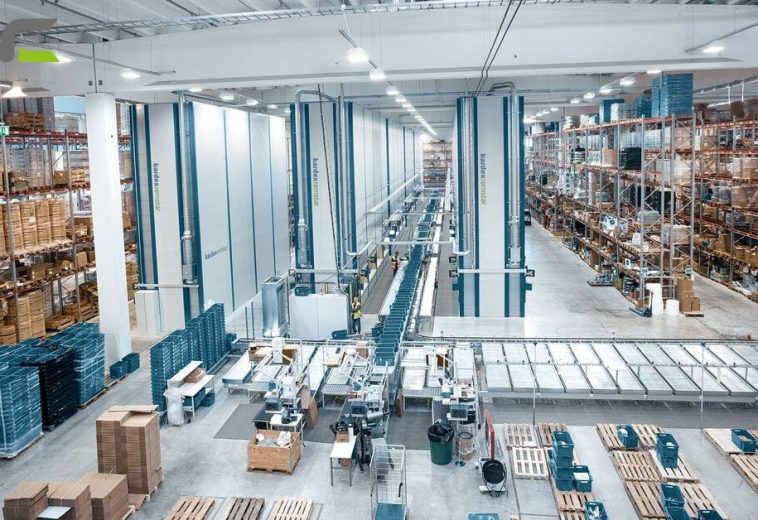
Automated storage retrieval systems (ASRS) are computer-controlled mechanisms that automatically place and retrieve loads from defined storage locations in a warehouse or distribution centre. In Malaysia’s manufacturing and logistics landscape, ASRS technology has moved from a niche investment reserved for large multinationals to a mainstream solution adopted by mid-sized food and beverage producers, electronics manufacturers, and pharmaceutical distributors who must manage growing SKU volumes within constrained floor space.
DNC Automation Malaysia designs and integrates ASRS solutions that align with local manufacturing requirements — including halal-compliant cold storage configurations, Industry 4.0 connectivity via SCADA and IoT, and compatibility with Malaysian Customs bonded-zone warehouse layouts.
What Is an Automated Storage Retrieval System?
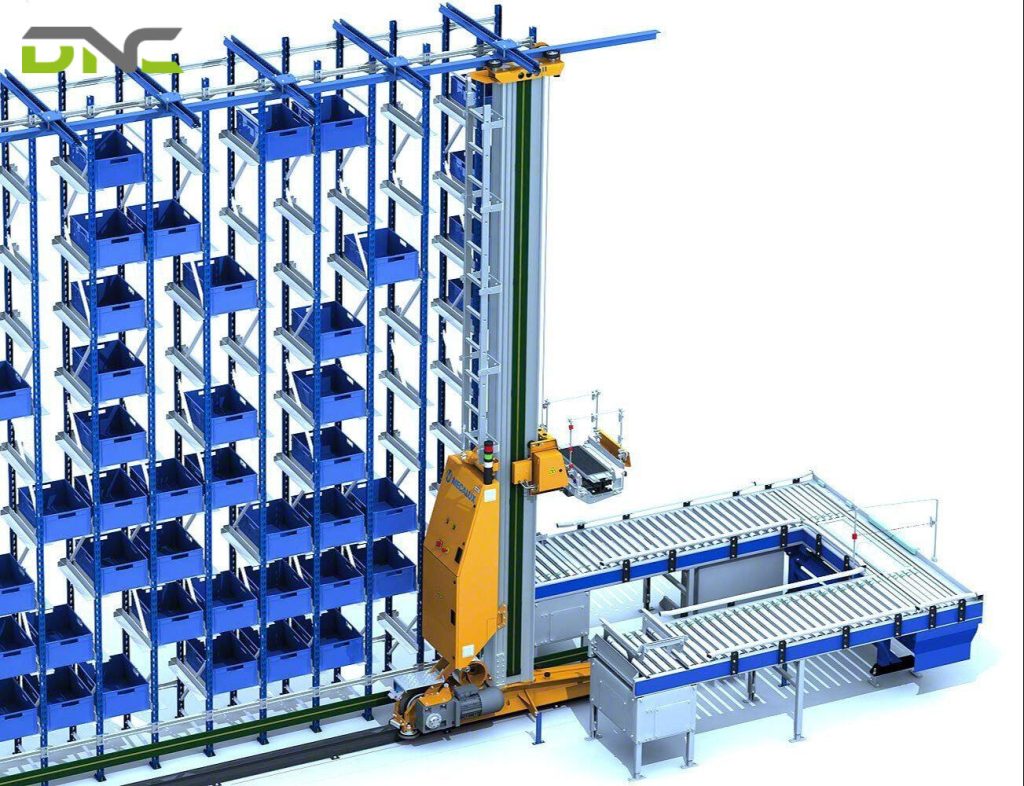
An automated storage retrieval system is a category of warehouse automation equipment that uses mechanical storage and retrieval machines — cranes, shuttles, carousels, or robotic vehicles — to move inventory items between storage locations and pick stations without manual operator intervention in the storage zone.
The defining attributes of an ASRS are:
Computer control: Every storage location is mapped in a warehouse management system (WMS) or warehouse control system (WCS). The system knows exactly what SKU is stored at each coordinate in real time.
Mechanised movement: Instead of forklift operators navigating aisles, a machine — stacker crane, mini-load crane, shuttle, or robotic arm — performs all horizontal and vertical travel to reach the correct location.
Defined storage addresses: Each bin, tote, pallet, or tray position has a fixed address. The control system routes retrieval orders to the nearest available machine, optimising travel time and sequence.
Integration with business systems: Modern ASRS connects to ERP (SAP, Oracle, Microsoft Dynamics) and WMS software, receiving inbound receipts and outbound order lines automatically and confirming movements as inventory transactions.
The result is a dramatically faster, denser, and more accurate storage operation compared to manual or forklift-based warehousing.
Types of Automated Storage Retrieval Systems
Unit Load ASRS (Pallet ASRS)
Unit load systems handle full pallets weighing between 500 kg and 2,000 kg. Stacker cranes travel along fixed rails in aisles between racking rows, reaching ceiling heights of 35–45 metres in clad-rack warehouse structures.
This configuration is suited to:
- High-volume raw material storage in automotive, steel, or plastics manufacturing
- Finished goods buffers in FMCG and consumer electronics
- Bonded warehouse operations requiring full traceability per pallet
A typical unit load ASRS in Malaysia stores 2,000–15,000 pallet positions per crane aisle, with throughput rates of 60–120 pallet moves per crane per hour.
Mini-Load ASRS (Tote and Carton)
Mini-load systems handle smaller loads — plastic totes, cartons, trays — typically between 5 kg and 100 kg. Cranes or shuttles retrieve standardised containers that hold individual SKUs or picked quantities.
Applications include:
- Pharmaceutical and nutraceutical small-pack warehouses
- Electronic component storage where anti-static totes are used
- Spare parts distribution for industrial equipment
Mini-load throughput rates in Malaysia-scale facilities range from 200 to 600 tote retrievals per crane per hour, with storage heights of 10–20 metres.
Vertical Lift Modules (VLM)
Vertical lift modules are enclosed self-contained units with trays stored in two columns and an automated extractor in the centre. The operator calls a tray to the access opening at floor level, picks the required item, and confirms the transaction.
VLMs offer the highest density per square metre footprint of any ASRS type — reducing floor space by 60–85% compared to conventional shelving — and are suited to:
- Tool cribs and MRO parts management in factories
- Small-parts picking in electronics assembly
- Pharmacy dispensing and medical device storage
Horizontal Carousel Systems
Horizontal carousels use oval tracks with bins that rotate to bring items to a fixed pick point. Multiple carousels are often installed in pods of three, with software interleaving orders so the operator picks from one carousel while the other two position for the next pick.
Throughput rates exceed 500 picks per operator per hour in well-configured carousel pods, making them effective for high-velocity, small-item SKU profiles.
Shuttle-Based ASRS
Shuttle ASRS uses battery-powered robotic shuttles that travel on rails within racking lanes. A lift transfers the shuttle between levels. Each lane or level may have a dedicated shuttle (single-level) or one shuttle may serve multiple levels (multi-level).
Shuttle systems offer:
- Higher throughput than single-crane solutions for large-volume operations
- Better redundancy — the failure of one shuttle does not stop the whole system
- Scalability — shuttles can be added incrementally as throughput grows
Pallet shuttle systems are common in cold storage warehouses across Malaysia where space, energy efficiency, and throughput are all critical.
Goods-to-Person Robotic Systems
The most recent generation of ASRS uses autonomous mobile robots (AMRs) that carry portable storage pods to fixed picking stations. Operators stand at ergonomic workstations; the robots bring the inventory to them.
This approach is suited to:
- E-commerce fulfilment with high order volumes and short pick windows
- Consumer goods distribution with mixed-SKU case picking
- Operations requiring rapid scalability without fixed racking infrastructure
ASRS vs. Manual and Semi-Automated Alternatives
Storage Density
In a conventional warehouse with 4-metre rack heights and standard forklift aisles, approximately 35–45% of the floor area is consumed by aisle space. An ASRS installation with a 30-metre stacker crane eliminates wide aisles entirely — aisle width reduces to the clearance required by the crane (typically 0.3–0.5 metres on each side).
The practical result: a manual warehouse that occupies 10,000 m² can often be replicated in 3,000–4,000 m² of ASRS footprint, or the same footprint can triple storage capacity.
Labour
Manual high-bay warehouses require forklift operators on every shift, plus floor-level supervisors and inventory counters. ASRS eliminates forklift operation within the automated zone entirely and reduces headcount to system operators and maintenance technicians.
In the Malaysian context, where skilled forklift operators command RM 2,000–3,500/month and high turnover is common, the labour savings from a well-designed ASRS typically contribute 30–50% of the ROI case.
Accuracy
Manual picking and forklift putaway achieve order accuracy rates of 98–99.5% in well-run operations. ASRS systems, with barcode or RFID confirmation at every transaction point, routinely achieve 99.97–99.99% accuracy, eliminating the cost of mis-picks, returned shipments, and customer service escalations.
Safety
In Malaysia’s manufacturing sector, forklift-related accidents remain a significant occupational health and safety concern under DOSH (Department of Occupational Safety and Health) regulations. Removing forklifts from the storage zone eliminates the primary cause of warehouse fatalities and injuries.
ASRS Integration with WMS and ERP
An ASRS system is only as effective as the software that controls it. DNC Automation integrates ASRS hardware with warehouse management systems across three layers:
Warehouse Management System (WMS)
The WMS handles inventory logic: which SKUs are stored, in what quantities, at what locations. It directs the ASRS control system to store incoming goods and retrieve outbound orders. WMS integration requires:
- ASN (Advance Shipping Notice) processing: Incoming pallets or totes are pre-labelled and assigned storage locations before they arrive at the receiving dock.
- Wave planning: Outbound orders are grouped into pick waves, and the WMS sequences retrieval requests to minimise crane travel.
- Location management: The WMS maintains the storage address map and updates it in real time as the ASRS reports completed moves.
Warehouse Control System (WCS)
The WCS is the real-time traffic manager between the WMS and the physical machines. It translates high-level inventory instructions (“retrieve pallet 12345 from location A-03-17”) into machine commands (“crane 1, travel to aisle A, level 3, position 17, extend forks, retract”).
The WCS handles:
- Machine routing and sequencing
- Fault detection and recovery
- Throughput balancing across multiple cranes or shuttles
ERP Integration
At the top layer, the ERP system (SAP, Oracle, Dynamics 365) manages purchase orders, production orders, and sales orders. WMS integration with ERP ensures that ASRS inventory movements are reflected in financial and production planning systems in real time.
DNC Automation’s integration approach uses standard middleware (REST APIs, SOAP, or database-level connectors) to connect ASRS WCS → WMS → ERP without custom development that is difficult to maintain after go-live.
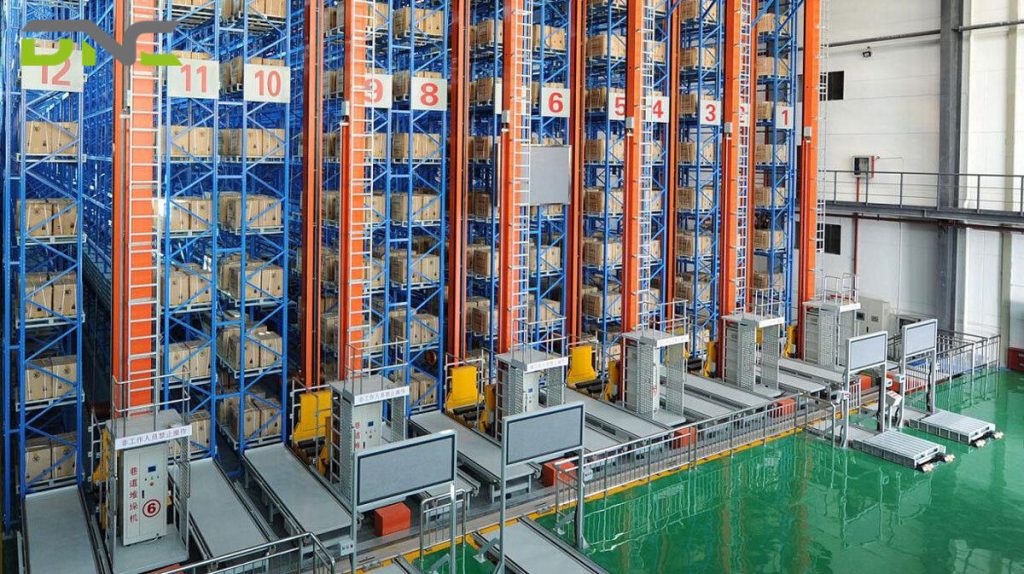
What are the basic components of ASRS?
ASRS in Malaysia: Industry Applications
Food and Beverage Manufacturing
Malaysia’s F&B manufacturing sector, covering food exports valued at RM 45 billion annually, uses ASRS primarily for:
- Finished goods buffer storage between production and truck loading
- Raw material FIFO management (especially for perishable ingredients)
- Automated cold storage for frozen and chilled products
Halal certification requirements impose strict segregation rules that ASRS enforces automatically through system-level SKU separation — more reliably than manual zone management.
Electronics and Semiconductor
Penang’s electronics manufacturing cluster, producing hard disk drives, semiconductor devices, and consumer electronics, uses mini-load ASRS and VLMs to manage:
- ESD-sensitive component storage in anti-static totes
- Work-in-progress (WIP) buffer between assembly stages
- Finished goods sortation and carton picking
Pharmaceutical and Medical Device
Under Malaysia’s NPRA (National Pharmaceutical Regulatory Agency) guidelines, pharmaceutical warehouses must maintain full lot traceability from receipt through shipment. ASRS systems with barcode or 2D matrix confirmation at every transaction point provide the audit trail required for GMP compliance.
Automotive and Industrial Parts
Automotive component suppliers in the Klang Valley, Penang, and Johor use unit load ASRS for:
- Just-in-time delivery sequencing to assembly lines
- Returnable container management
- Spare parts buffer for aftermarket distribution
ASRS Cost and ROI in Malaysia
Capital Investment
ASRS capital costs vary widely by system type and scale:
| System Type | Typical Scale | CapEx Range (RM) |
| VLM (single unit) | 500–2,000 tray positions | RM 150,000–400,000 |
| Mini-load (single crane) | 5,000–20,000 tote positions | RM 1.2M–3.5M |
| Unit load (single crane) | 2,000–8,000 pallet positions | RM 2.5M–6M |
| Shuttle ASRS (multi-aisle) | 10,000–50,000 positions | RM 5M–20M+ |
These figures include mechanical equipment, control software, electrical installation, and commissioning. Civil works (floor preparation, building modifications) are additional and depend on whether the building is existing or purpose-built.
Payback Period
In Malaysian manufacturing operations that are actively paying for warehouse space (rental at RM 2.50–5.00/sq ft in Selangor), employing forklift operators (RM 2,500–3,500/month), and experiencing inventory inaccuracy costs (returns, write-offs, expediting), ASRS investments typically achieve payback in 4–7 years for large systems and 3–5 years for VLMs and mini-load.
MIDA Incentives
Malaysian manufacturers can apply to the Malaysia Investment Development Authority (MIDA) for capital allowances and investment tax allowances on automation equipment. Under the Automation Capital Allowance initiative, eligible companies may claim 200% capital allowance on qualifying ASRS investments, materially improving the payback calculation.
DNC Automation provides documentation support for MIDA applications as part of the project implementation package.
DNC Automation’s ASRS Design Process
DNC Automation approaches ASRS projects through a structured six-phase process:
Phase 1 — Operations Analysis: Review of current inventory profile (SKU count, velocity, weight, dimensions), throughput requirements (inbound receipts/hour, outbound orders/hour), and peak-to-average demand ratios.
Phase 2 — Conceptual Design: Development of two to three ASRS configurations that meet the throughput and capacity requirements, with preliminary floor plan, crane selection, and rack configuration.
Phase 3 — Detailed Engineering: Full structural engineering for racking and building integration, electrical design, WCS software specification, and WMS interface design.
Phase 4 — Procurement and Manufacturing: ASRS mechanical components (cranes, shuttles, conveyors, racking) are sourced from qualified European and Asian manufacturers. DNC project-manages the supply chain.
Phase 5 — Installation and Commissioning: Mechanical installation, electrical connection, software commissioning, and Factory Acceptance Test (FAT) at DNC’s facility followed by Site Acceptance Test (SAT) at the customer’s warehouse.
Phase 6 — Training and Handover: Operator training (WCS interface, routine maintenance), supervisor training (WMS integration, KPI monitoring), and maintenance technician training (mechanical and electrical troubleshooting).
Post-commissioning, DNC offers preventive maintenance contracts and remote monitoring services that connect ASRS control systems to DNC’s technical team via secure VPN for real-time fault diagnostics.
Selecting the Right ASRS for Your Operation
Five questions determine which ASRS type fits your warehouse:
- What is the unit load? Full pallets → unit load ASRS or pallet shuttle. Cartons and totes → mini-load. Individual small parts → VLM or horizontal carousel.
- What is the required throughput? Low-to-medium throughput operations (under 100 pallet moves/hour) can use a single stacker crane. High throughput requires multi-crane or shuttle configurations.
- How much floor space is available? VLMs and carousels maximise vertical density in small footprints. Unit load ASRS requires building heights of 20–40 metres.
- What is the temperature environment? Cold storage ASRS (frozen: -25°C, chilled: 2–8°C) requires cold-rated mechanical and electrical components, heated operator cabins, and specific lubricants.
- What is the integration requirement? Operations with existing ERP systems need ASRS solutions with proven WMS/ERP connectors. Greenfield operations may select a WMS that is pre-integrated with the chosen ASRS platform.
Frequently Asked Questions
How long does ASRS installation take in Malaysia?
Mini-load and VLM projects typically require 12–18 months from project kick-off to live operation. Unit load and large shuttle systems require 18–30 months, including building construction if needed.
Can ASRS be retrofitted into an existing warehouse?
Yes. Existing warehouses can accommodate ASRS if floor loading capacity is adequate (typically 5–10 tonne/m² for unit load), ceiling height is sufficient (minimum 12 metres for mini-load, 20+ metres for unit load), and column spacing permits crane aisle layout.
What happens when the ASRS breaks down?
Modern ASRS systems are designed with redundancy — multiple cranes per aisle, bypass conveyors, and degraded-mode operating procedures that allow manual access to inventory during maintenance windows. DNC Automation designs fault recovery procedures into every system and provides 24/7 remote support for Malaysian customers.
Is ASRS suitable for SMEs?
VLM and mini-load systems start from RM 150,000–400,000 (single VLM unit), making them accessible to SMEs in pharmaceutical, electronics, and precision engineering sectors. Larger unit load systems are more suited to companies with annual warehousing costs exceeding RM 1M.
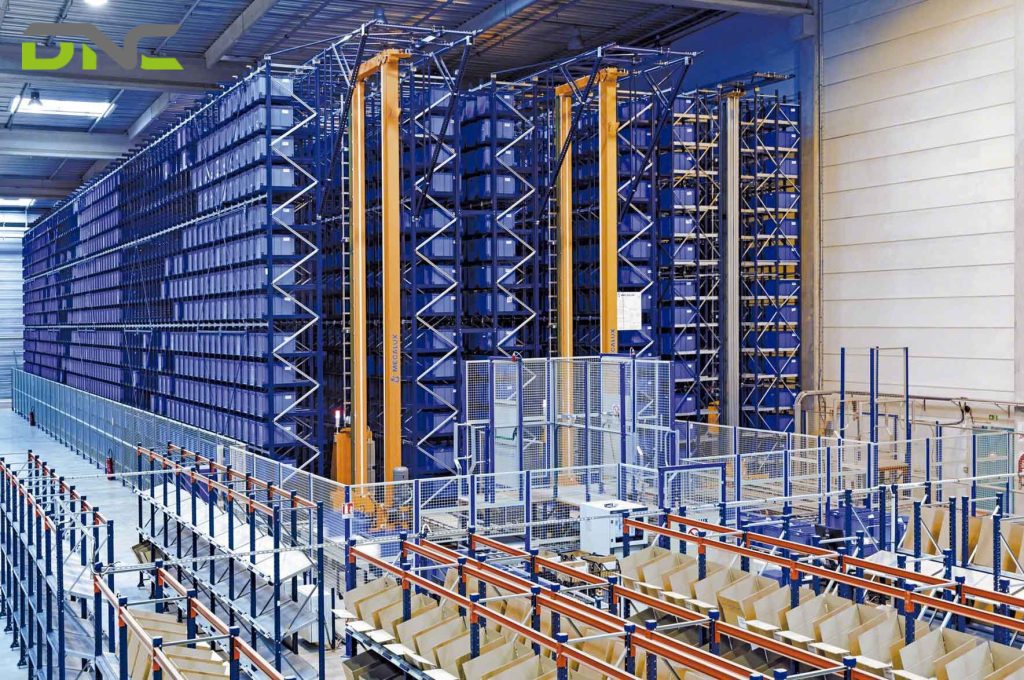
What types of ASRS are common today?
Conclusion
Automated storage retrieval systems deliver measurable improvements in storage density, inventory accuracy, labour productivity, and workplace safety. In Malaysia’s competitive manufacturing environment — where land and labour costs continue to rise and customers demand faster, more accurate fulfilment — ASRS investment provides a defensible operational advantage.
DNC Automation Malaysia designs, supplies, integrates, and maintains ASRS solutions across the full technology spectrum — from standalone VLMs to multi-aisle unit load systems — with deep expertise in WMS integration, MIDA incentive documentation, and Malaysian regulatory compliance.
Contact DNC Automation Malaysia to discuss your warehouse automation requirements and receive a preliminary ASRS feasibility study for your facility.
ASRS Maintenance and Lifecycle Management
An ASRS installation is a capital investment designed for a 15–25-year operational life. Protecting this investment requires structured maintenance across three horizons:
Preventive Maintenance
Preventive maintenance is scheduled based on manufacturer-specified intervals (time or cycle count) and covers:
- Monthly: Lubrication of crane travel wheel bearings, mast rail cleaning, cable tension inspection, barcode scanner lens cleaning
- Quarterly: Gearbox oil level check, drive belt tension measurement, crane alignment survey (level and plumb check), shuttle battery capacity test
- Semi-annual: Full rail alignment survey, mast straightness measurement, motor insulation resistance test, sensor calibration verification
- Annual: Full mechanical inspection, crane load test, control system hardware inspection, safety system functional test
DNC Automation provides preventive maintenance contracts with documented inspection reports for every visit, supporting ISO and GMP audit requirements.
Condition-Based Maintenance
Advanced ASRS installations integrate vibration sensors on crane bearings and IoT monitoring of motor current and temperature. Condition data is trended continuously; maintenance is triggered when parameters deviate from baseline rather than on calendar intervals. This approach reduces unnecessary maintenance activities and prevents in-service failures.
Spare Parts Strategy
Critical spare parts — crane drive motors, hoisting gearboxes, barcode scanners, shuttle batteries — should be held locally to minimise repair time. DNC Automation recommends a minimum spare parts kit for each ASRS system, maintained at the customer site, with DNC holding additional depth stock at our Malaysian warehouse.
For legacy ASRS systems (10+ years old), DNC Automation conducts obsolescence assessments — identifying electronic components approaching end-of-life and recommending proactive replacement or upgrade before failure in production.
ASRS Lifecycle Planning
Mechanical ASRS components (racking, crane masts, rails) last 20–25 years with proper maintenance. Electronic control components (PLCs, drives, HMIs) have shorter lifecycles — typically 10–15 years — and require upgrade or replacement to maintain vendor support and cybersecurity compliance.
DNC Automation provides lifecycle roadmaps for all systems we install, with 5-year forward-looking component replacement schedules and budget estimates.
ASRS Performance Benchmarks for Malaysian Operations
Operators evaluating ASRS performance should track the following KPIs monthly:
| KPI | Industry Benchmark | Best Practice |
| System availability (uptime) | ≥97% | ≥99% |
| Throughput efficiency (actual vs. designed capacity) | ≥85% | ≥95% |
| Inventory accuracy | ≥99.9% | ≥99.97% |
| Mean time between failures (MTBF) | ≥500 hours | ≥1,000 hours |
| Mean time to repair (MTTR) | ≤4 hours | ≤2 hours |
| Energy per pallet move (kWh) | 0.4–0.7 | 0.25–0.4 |
DNC Automation monitors these KPIs via remote SCADA connection for all systems under maintenance contract, providing monthly performance reports and proactive recommendations when metrics trend below benchmark.
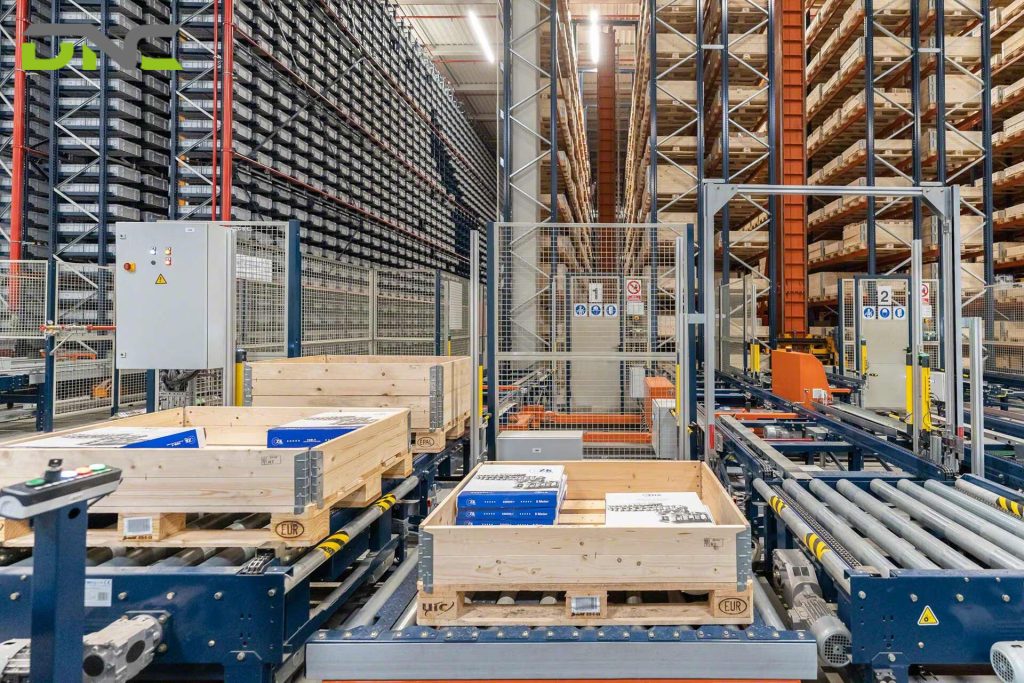
How does the ASRS warehouse operate?
ASRS Technology Trends Relevant to Malaysia
Energy Recovery Systems
Modern ASRS crane hoisting drives can recover energy during lowering — the motor acts as a generator, feeding power back into the DC bus for use by other crane functions. This energy regeneration reduces crane energy consumption by 20–35%, significant for high-cycle operations.
Faster Crane Speeds
New-generation stacker cranes achieve horizontal speeds of 200–250 metres per minute and hoisting speeds of 80–100 metres per minute — 30–40% faster than cranes from 10 years ago. Higher speed directly increases throughput without adding equipment.
AI-Driven Storage Allocation
Machine learning algorithms continuously reassign SKU storage locations based on real-time velocity analysis. Fast-moving SKUs migrate closer to the crane outfeed as sales patterns evolve, reducing average crane travel time and increasing effective throughput without hardware changes.
Digital Twin Integration
ASRS digital twins — virtual models updated in real time from WCS data — enable operators to visualise current system state, simulate layout changes, and train new staff in a virtual environment. DNC Automation integrates digital twin capability into all new ASRS projects as of 2024.
Summary: Key Decision Points for ASRS in Malaysia
Before committing to ASRS investment, Malaysian manufacturers should resolve the following:
- Is the storage problem primarily a density issue, a throughput issue, or a labour issue? The answer shapes technology selection.
- What is the existing ERP platform? WMS-ERP integration complexity and cost depend on this.
- Is the building new or existing? Retrofit vs. greenfield dramatically affects civil cost and timeline.
- Is cold storage required? Cold-rated ASRS carries a 15–25% cost premium and extends commissioning timeline.
- What MIDA incentive categories apply? 200% capital allowance can materially improve IRR.
- What is the 10-year throughput and SKU growth projection? ASRS must be sized for future capacity, not just current need.
DNC Automation Malaysia provides free preliminary assessments that address all six questions and produce a go/no-go recommendation with financial model for your specific situation.
Where is the most reputable place to provide ASRS in Malaysia?
ASRS Performance Benchmarks: What Malaysian Operations Should Target
Establishing clear performance benchmarks before ASRS commissioning is critical. Without agreed benchmarks, the acceptance test becomes subjective and disputes arise between customer and integrator over what “working” means.
Storage Density Benchmarks
| Operation Type | Manual (pallets/m²) | ASRS Target (pallets/m²) | Improvement |
| Ambient pallet | 1.0–1.5 | 4.0–6.0 | 3–5× |
| Cold store frozen | 0.8–1.2 | 3.5–5.0 | 3–5× |
| Small parts (totes) | 1.5–2.0 | 8.0–15.0 | 5–8× |
| Pharmaceutical VLM | 0.5–0.8 | 5.0–8.0 | 8–12× |
For Malaysian operations where industrial land costs RM 150–400/sqft (Selangor, Penang, Johor), storage density improvement translates directly to land cost avoidance — often the single largest ROI driver for high-density ASRS projects.
Throughput Benchmarks
Unit load stacker crane (pallet ASRS):
- Single-mast crane: 50–80 pallet moves/hour (combined in+out)
- Double-mast crane: 80–120 pallet moves/hour
- Triple crane aisle (3 cranes, 1 aisle): 150–200 pallet moves/hour
Shuttle system (pallet):
- Single-level shuttle: 80–150 pallet moves/hour per aisle
- Multi-level shuttle (lifts + shuttles): 200–500 pallet moves/hour per aisle
Mini-load ASRS (totes/cartons):
- Light-duty mini-load: 150–250 tote moves/hour per crane
- High-speed mini-load: 400–600 tote moves/hour per crane
VLM (vertical lift module):
- Standard VLM: 80–120 tray presentations/hour per unit
- High-speed VLM: 150–200 tray presentations/hour per unit
Accuracy Benchmarks
All ASRS technologies achieve significantly higher inventory accuracy than manual operations:
- Manual warehouse: 97–98.5% inventory accuracy (industry benchmark)
- Barcode-confirmed ASRS: 99.95–99.99% inventory accuracy
- RFID-confirmed ASRS: 99.99%+ inventory accuracy
The accuracy improvement from 97.5% to 99.97% represents a 98% reduction in inventory discrepancies — a critical metric for manufacturers with JIT supply commitments to automotive or electronics customers.
Availability Benchmarks
ASRS system availability is measured as percentage of scheduled operating hours the system is available for operation:
- New ASRS (year 1–3): 99.0–99.5% mechanical availability target
- Mature ASRS (year 4–10): 98.0–99.0% (more maintenance required as components age)
- Critical downtime allowance: No more than 4 hours per month of unplanned downtime for a 24/7 operation
DNC Automation designs preventive maintenance programmes that maintain mechanical availability above 98.5% throughout the system’s operational life, with 24/7 remote monitoring to detect and resolve faults before they cause production impact.
ASRS Lifecycle: From Design to Decommission
A warehouse ASRS installation is a 15–25-year asset. Understanding the full lifecycle helps Malaysian operations plan the total investment and maintenance requirements.
Years 1–3: Commissioning and Stabilisation
The first three years establish the system’s operating baseline. Typical activities:
- Software optimisation: WCS/WMS parameter tuning based on actual operations
- Mechanical adjustment: rail alignment corrections, crane calibration
- Staff development: operator and maintenance technician proficiency development
- Warranty claim management: component failures during infant mortality phase covered by warranty
Years 4–10: Stable Operations
The system operates at designed performance with planned preventive maintenance:
- Annual preventive maintenance (crane wheel inspection, rail wear measurement, gearbox oil change)
- Quarterly bearing replacement in high-wear components (crane wheels, lift pulleys)
- Software upgrades (WCS version updates, security patches)
Years 10–15: Mid-Life Refurbishment
Major components approach end of service life:
- Crane wheels and rail replacement (typically 10–15 year life)
- Hoisting rope or chain replacement
- Drive motor replacement
- Control system upgrade (PLCs from year 1 may reach end-of-support)
- Battery replacement (shuttle systems: LiFePO4 batteries, 8–12 year life)
DNC Automation plans mid-life refurbishment as part of the initial project financial model, so customers budget for this expenditure rather than treating it as an unexpected cost.
Years 15–25: Extended Service
With mid-life refurbishment complete, ASRS systems can operate effectively for 20–25 years. The economic decision at year 15–20 is: refurbish again, or replace with newer technology at higher throughput/density.
Digital twin simulation assists this decision — DNC Automation models the ROI of extended service versus replacement for customers approaching this decision point.
- 311 views
- 0 Comment
Recent Comments